1956 Quarter Error List with Pictures

Two small letters on the back can send a 1956 quarter into a different collecting category. A sharply preserved Type B example sold for $2,400 in January 2018.
The 1956 quarter errors below also include an upside-down mintmark impression, peeling silver, and designs squeezed onto smaller blanks. Estimated values cover $25–$5,000.
Read on with an ordinary quarter and a specially made collector Proof kept separate for comparison. The same-looking detail does not mean the same thing on both finishes.
1. 1956 Washington Quarter Small Clip near Seven O’Clock
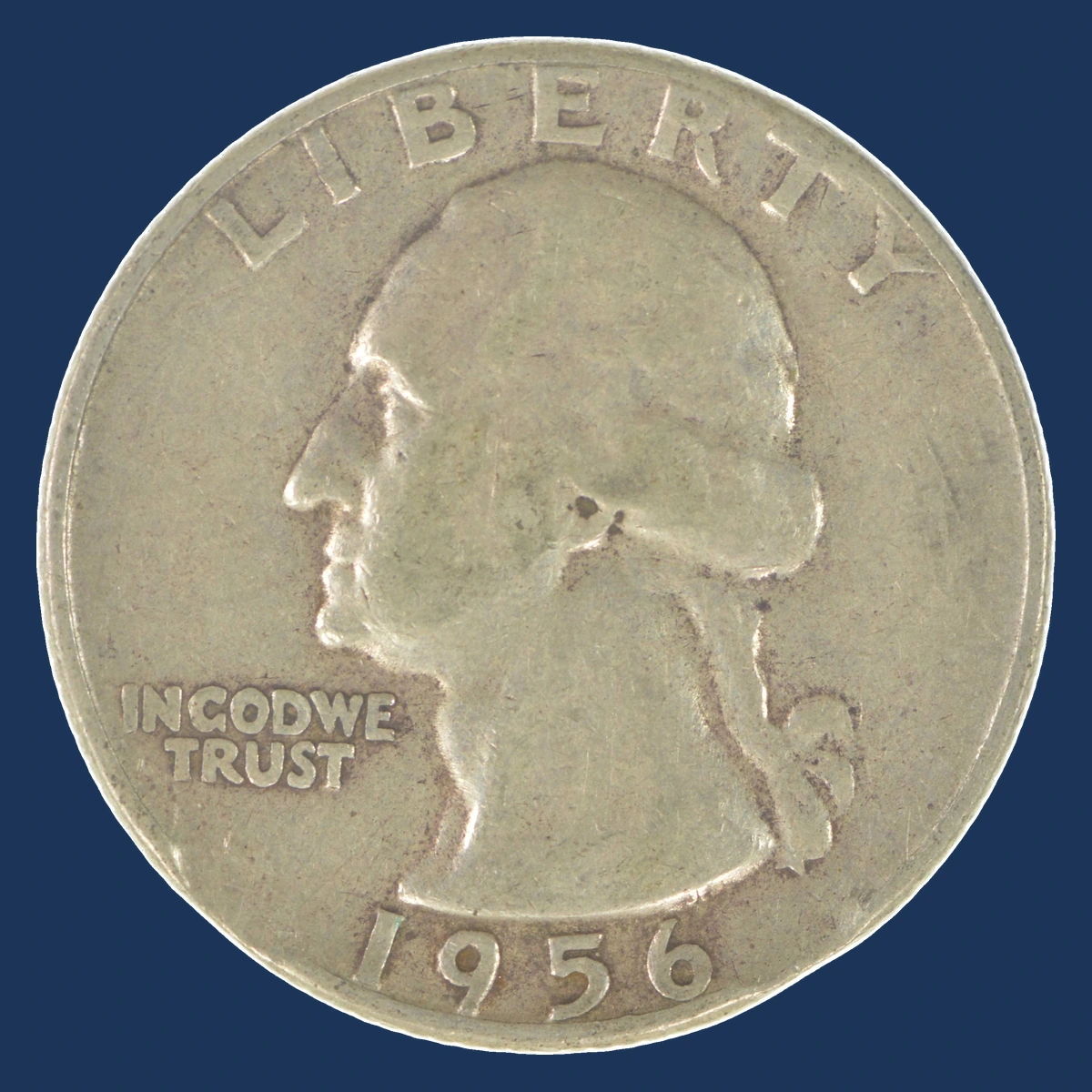
A tiny missing section can be easy to overlook among ordinary rim knocks. A genuine clipped blank lost that metal before the quarter received its design.
A dealer described a Philadelphia example as VF20 with a one-percent clip near seven o’clock. VF20 indicates circulation wear with much of the major design still visible.
Examine the shape of the gap and the silver at its ends. A small missing section alone does not identify when or how the metal disappeared.
Compare the way the border meets the missing section before deciding it is an original clip.
Estimated Value
Allow an estimated $25–$500 for authenticated small clips through more visible examples in better condition. A modest worn clip often adds only limited interest to the underlying silver quarter.
The reported one-percent VF20 coin belongs toward the modest end of that comparison. Its dealer description is not a recorded auction result.
Natural rim transitions and clear photographs help a buyer recognize the feature. A later nick or filed gap does not qualify for the same manufacturing-error premium.
How to Identify
Photograph the front upright, keeping the small gap near seven o’clock visible alongside nearby lettering. That view records where the missing section lies without letting the magnified image hide its size.
Look inside the gap and at both ends for saw lines, sharp burrs, or silver pushed aside by a blow. Then follow the struck rim into the opening to see whether it weakens naturally toward the missing metal.
Check the opposite border for weakness, although a tiny clip may leave only a subtle effect there. A scale is supporting evidence: the normal quarter weighs 6.25 grams, but wear also reduces weight and a one-percent clip makes only a small difference.
2. 1956 Washington Quarter Raised Line from a Gouged Proof Tool
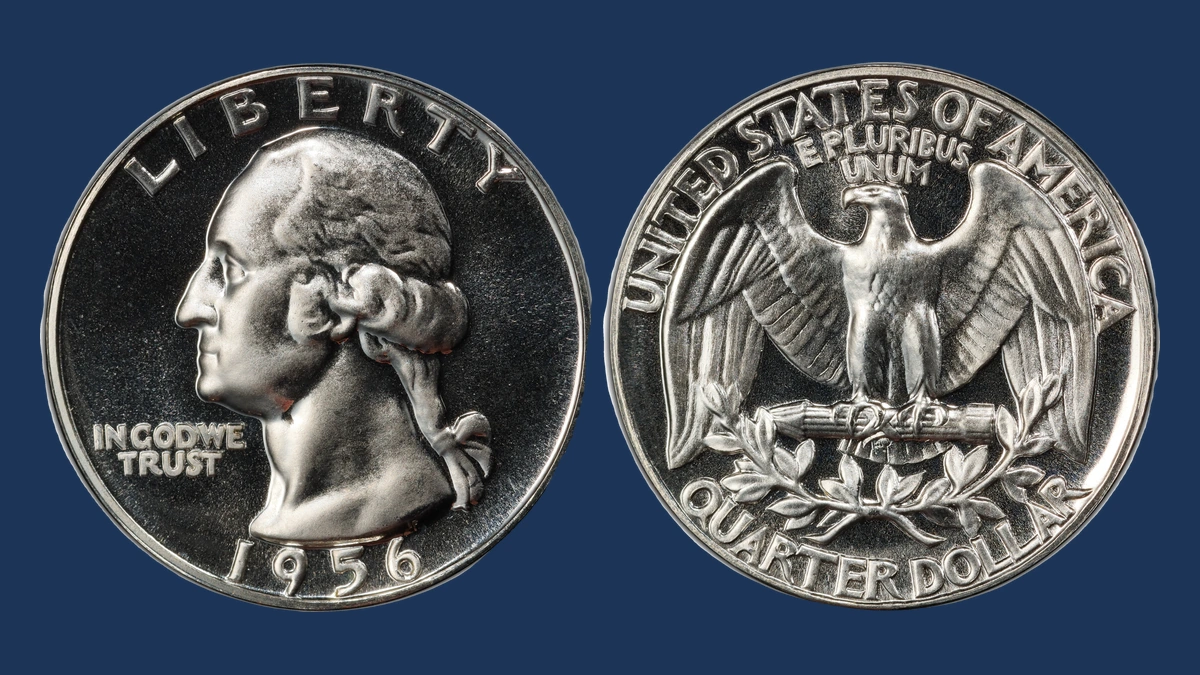
A cut in a stamping tool can leave a raised line on the coin. Metal fills the cut when the tool presses the design into the blank.
The recognized 1956 reverse die gouge belongs to Philadelphia Proofs, the specially made collector coins. A PCGS PR66 example is recorded under the FS-701 variety label.
The back mark must match the certified variety’s photographs. A line near an eagle on an ordinary quarter is not enough to make that identification.
This feature was copied from the tool. It differs from a scratch cut into a finished Proof afterward.
Estimated Value
For identified Proof die-gouge examples, estimate $50–$750, depending on preservation and how clearly the raised feature matches the variety. The underlying collector Proof is part of the whole-coin value.
PR66 describes a well-preserved Proof, although marks or fine wiping scratches can still affect appeal. A clear view of the raised line helps compare the coin with other examples.
A random back scratch should not receive the same price merely because the coin is shiny or carries a high numerical grade.
How to Identify
Start with the coin’s finish and certification, then select a photograph of the Proof reverse-gouge variety. A brilliant ordinary quarter needs a different comparison.
Under a magnifier, find the line shown in that reference and trace its entire path. Check its relationship to the neighboring eagle details instead of matching only one bright segment.
Move the lamp from side to side to reveal whether the line is raised. A cut made after striking lies below the surface and may have disturbed metal along its edges.
Keep the Proof uncleaned while examining it. Very fine wiping scratches can distract from the original raised feature and lower its value.
3. 1956 Washington Quarter Repunched and Inverted D Mintmarks
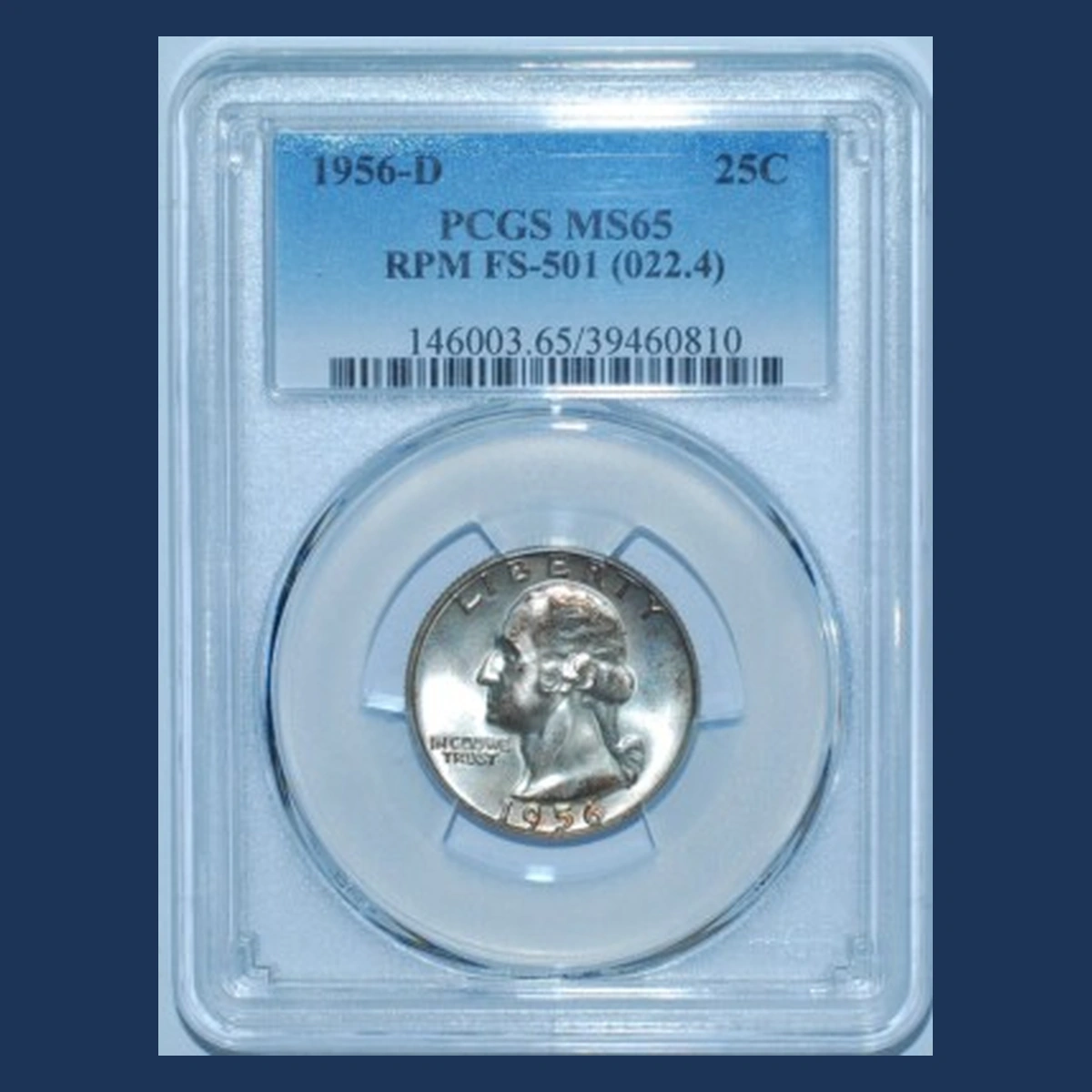
The Denver letter can preserve an earlier D beneath its final position. For one cataloged 1956 variety, that earlier punch was upside down.
This does not mean the whole coin was struck upside down. The misplaced letter was already in the back stamping tool, and later quarters copied the overlapping outlines.
Other reported patterns have earlier detail toward the upper right or show a turned impression. They need separate close-up comparisons within the same repunched-mintmark type.
The D sits below the wreath on the back. An ordinary thick D or a damaged curve does not prove an earlier punch.
Estimated Value
Estimate $25–$1,000 for authenticated 1956-D repunched-mintmark varieties across ordinary collectible grades. A clearly matched inverted-D pattern can attract more attention than a faint, hard-to-place extra edge.
The condition of the surrounding quarter still matters. Wear can obscure the earlier letter, and cleaning can add reflections that make identification harder.
Collectors need a quarter-specific variety match before paying for an earlier D. A thick letter, dirt in its opening, or a flat extra shelf does not establish the same error.
How to Identify
Read the final upright D below the wreath before examining the extra metal. Trace its straight side and curve with a magnifier so you can distinguish the main letter from any earlier remnant.
For the inverted-D variety, compare the extra outline with an identified quarter showing the earlier upside-down punch. For upper-right or turned impressions, choose photographs of those separate quarter varieties instead.
Move the lamp to check that the extra outline has real relief rather than a bright reflection. A thick D by itself does not show how many times the tool received that letter.
Compare the complete pattern and nearby tool marks with the same example. A flat shelf left by movement during striking should not be mistaken for the curved outline of an earlier punch.
4. 1956 Washington Quarter Rolled-Thick Silver Blank
The quarter can have normal-looking designs while carrying too much silver. If the strip was rolled too thick before blanks were cut, each affected disc could contain extra metal.
One Philadelphia example is cataloged as twenty percent rolled thick and graded PCGS AU53. Another record describes an NGC AU55 example weighing 7.5 grams.
A normal silver quarter weighs 6.25 grams, making thickness and weight useful starting points. Extra weight needs to come from the original silver disc rather than material added later.
This is not the same as using a nickel blank. The intended quarter-size silver disc was too thick.
Estimated Value
The PCGS AU53 twenty-percent-thick example sold for $126.50 in February 2009. AU53 describes some wear with much of the design preserved.
Estimate $100–$1,500 for authenticated thick-silver-blank examples, according to the excess metal and condition. A clear weight difference supported by an original edge makes the feature easier to demonstrate.
The range does not apply to a coin made heavier by plating, added solder, or two joined pieces.
How to Identify
Place the loose coin on a reliable scale and repeat the reading. Compare it with the normal 6.25 grams before interpreting a small difference.
Next inspect the whole edge for a seam, added coating, or solder. These can explain extra weight without an unusually thick original blank.
Use calipers to compare thickness at several points, taking care not to squeeze or scratch the silver. The disc should retain a quarter-sized outline rather than the smaller size of another denomination’s blank.
Check both faces for signs of two joined pieces, then compare the overall thickness with a certified example. The recorded NGC AU55 coin weighs 7.5 grams; measure the candidate itself instead of borrowing that figure.
5. 1956 Washington Quarter Peeling Silver on Proof and Ordinary Coins
A thin layer of silver can lift from the rest of the coin where the metal contains a weakness. This separation is called lamination.
A Philadelphia Proof graded NGC Proof-69 has a certified front-side lamination. Its grade describes exceptionally well-preserved collector surfaces, not the size of the metal flaw.
An owner also reported lamination on an ordinary Philadelphia Type B quarter. That coin and the certified Proof require separate photographs and comparisons.
Both are silver-alloy quarters, with the same metal mixture throughout the disc. Their peeling surfaces should not be confused with the bonded outer layers on later quarters.
Estimated Value
Estimate $50–$1,000 for ordinary authenticated laminations and $150–$2,000 for comparable Proof examples. The size of the peel and preservation of the surrounding coin both affect appeal.
The NGC Proof-69 front lamination sold at GreatCollections in April 2026; its public page does not show the price. Its exceptionally preserved collector surfaces need comparison with similar Proofs.
A broad natural peel deserves a different comparison from a small rough patch or later scraping.
How to Identify
An attached layer is fragile, so photograph it without trying to lift it. Hold a lamp low enough to reveal the layer’s edge and the surface underneath.
For the certified Proof, compare the front peel directly with the auction photographs. The ordinary Type B example needs its own comparison, since a similar error can occur in a different spot.
Follow stamped detail onto any surviving flap, checking whether the design and metal separation belong together. Corrosion and scraping instead damage a finished surface and can disturb the surrounding artwork.
Keep the Proof uncleaned and avoid brushing inside the opening. A specialist can inspect the connection between the original design and exposed layer without removing the metal that preserves those clues.
6. 1956 Washington Quarter Doubled Designs on Proofs and Ordinary Quarters
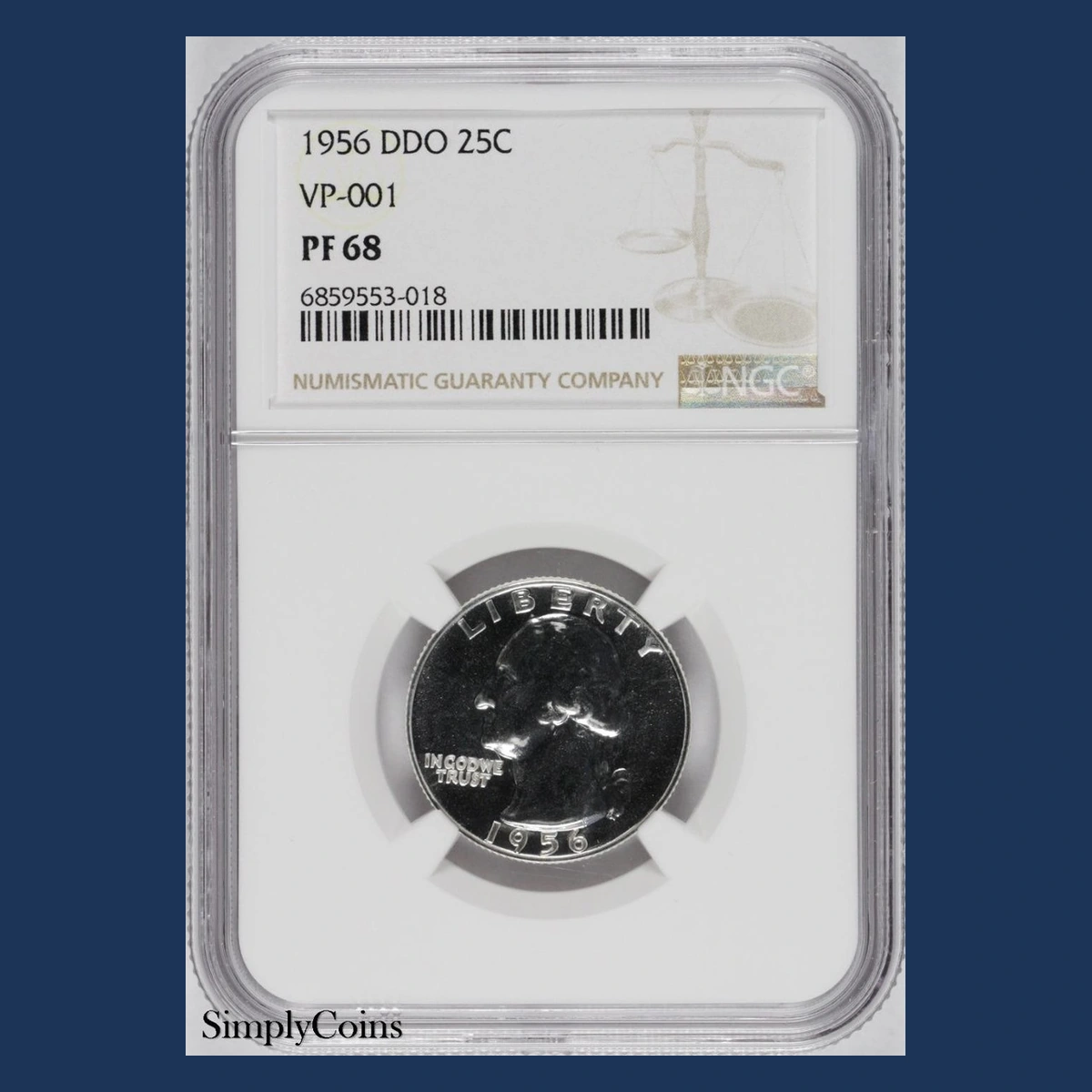
More than one raised outline can come from a doubled design already present in the stamping tool. The coin copies that extra detail during an otherwise normal strike.
Philadelphia Proof front patterns affect the motto, date, designer’s initials, lower ribbon, and parts of BERTY. One pattern shows three close outlines rather than only two.
Denver ordinary quarters have separate front thickening and back patterns around inscriptions, branches, and lower wings. Ordinary Philadelphia backs and Proof backs also have their own listed varieties.
Keep these comparisons separate by mint and finish. They are not interchangeable descriptions of one doubled quarter.
Estimated Value
An estimated $25–$2,500 covers identified doubled-design varieties in ordinary collectible condition through attractive Proofs. Clear repeated shapes and strong original surfaces support the more desirable comparisons.
Proof front tripling should be compared with the same pattern, while a Denver back needs a Denver reference. The repeated details and the whole coin’s condition both affect value.
The estimate does not price normal Type B letter spacing as doubling. A flat shelf caused during striking is also a different feature.
How to Identify
Write down the mint and finish before choosing a reference photograph. Ordinary Philadelphia, Denver, and Philadelphia Proof varieties show their extra details in different places.
For the Proof front, inspect the motto and date before following the listed pattern into the initials, lower ribbon, or BERTY. Three contours must match the particular tripled variety, not just an especially bright letter.
On a Denver back, compare the outer wording, branches, and lower wings. Philadelphia back patterns require their own examples.
Use angled light to check for rounded raised separation or matching notches. An extra flat ledge may come from movement during striking, while normal Type B spacing changes the design without duplicating a letter.
7. 1956 Washington Quarter Off-Center Strike
The blank can sit partly outside the space between the stamping tools. The resulting coin carries an incomplete design beside metal that never received the picture.
This off-center type is reported for ordinary Philadelphia quarters of 1956. Its precise direction and amount of displacement depend on the particular specimen.
Both faces need to support the same positioning problem. An uneven border on the front alone can come from a shifted tool instead.
A broadstrike can also have extra metal outside the normal border. Its complete design separates it from an off-center coin whose intended artwork misses the blank.
Estimated Value
For an authenticated 1956 off-center quarter, estimate $100–$3,000. A clear surviving date and an obvious original blank area help collectors appreciate the displaced design.
The amount of missing design and the condition of the surviving surface help place a coin within this estimated range. A readable year makes the error easier to identify and compare.
Do not assign a premium from an uneven rim alone. An altered edge or a tilted photograph can create a misleading impression.
How to Identify
Compare the whole outline with Washington’s portrait, then turn the coin over and check the eagle. An off-center strike should explain why both designs missed the available metal.
Find the untouched blank crescent and follow the opposite edge where artwork runs off the disc. Keep the visible date in the photograph alongside those features.
Inspect the boundary between struck and untouched metal under a magnifier. Filing, squeezing, or trimming after minting can remove letters without leaving an original blank crescent.
If all the intended artwork survives, compare an uneven broadstrike instead. A wide empty-looking margin by itself does not prove that part of the design missed the blank.
8. 1956 Washington Quarter Type B Proof-Style Back on an Ordinary Coin
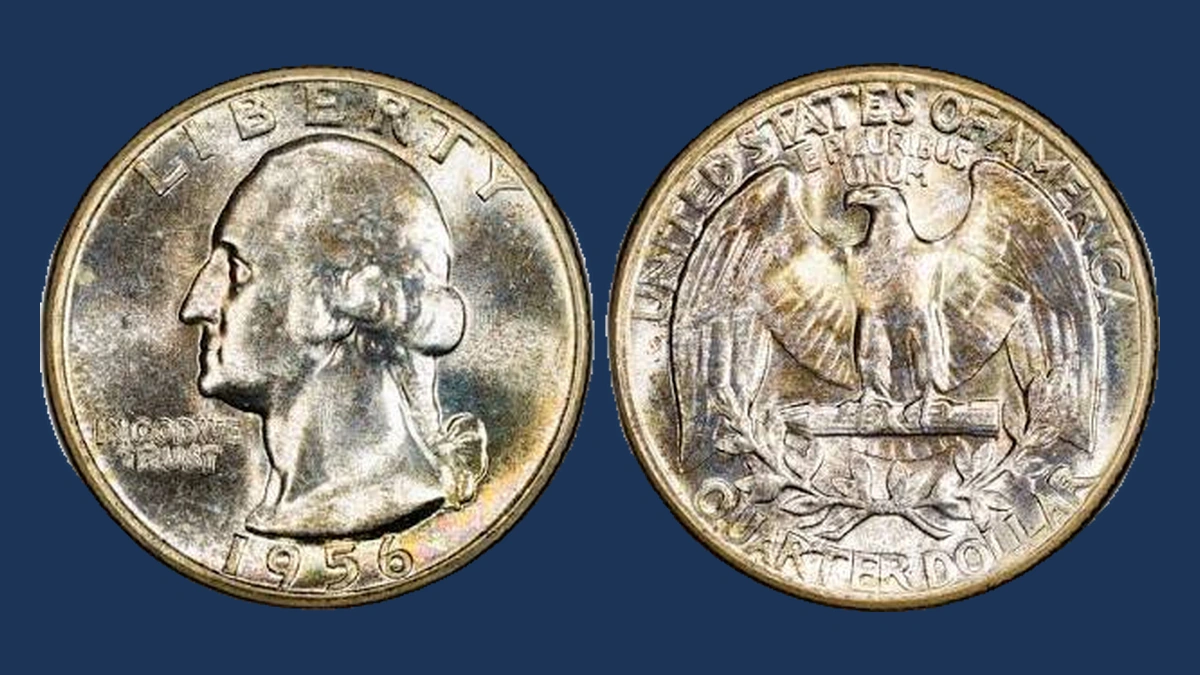
The back design prepared for Proofs differs from the usual design on ordinary quarters. Some ordinary Philadelphia coins received that Proof-style back in 1956.
This combination is known as Type B reverse, with FS-901 as its variety number. Reverse simply means the eagle side of the coin.
The E and S at the end of STATES are more clearly separated than on the usual Type A back. Branch and arrow-area details provide additional comparisons.
The finish remains important: a normal Philadelphia Proof is expected to carry a Proof-style back. Its Type B design alone does not make it an error.
Estimated Value
PCGS records a Type B MS66+ at $2,400 in January 2018. That grade describes an unusually well-preserved unworn coin, and its condition helped support the price.
Estimate $25–$3,000 across identified ordinary Type B examples of different grades. Worn pieces and especially clean unworn quarters require separate comparisons.
A similar back on a normal Proof does not earn this variety premium. Confirm the ordinary-strike combination before comparing the exceptional auction coin.
How to Identify
Begin with the difference between a Proof and an ordinary strike, using identified examples under similar lighting. A shiny surface alone does not prove that a coin is a Proof.
For an ordinary Philadelphia candidate, inspect the E and S in STATES through a magnifier. Compare their separation with the Type B reference, then check the leaves near the arrow bundle.
Look at several details together rather than deciding from one gap changed by wear.
Confirm that the back has no Denver D. The recognized combination here concerns ordinary Philadelphia quarters, not an assumed Denver counterpart.
Match the entire back design and the production finish before assigning FS-901. A normal Proof’s expected Type B back should remain in the normal Proof comparison.
9. 1956 Washington Quarter Struck on Cent, Nickel, or Silver Dime Blanks
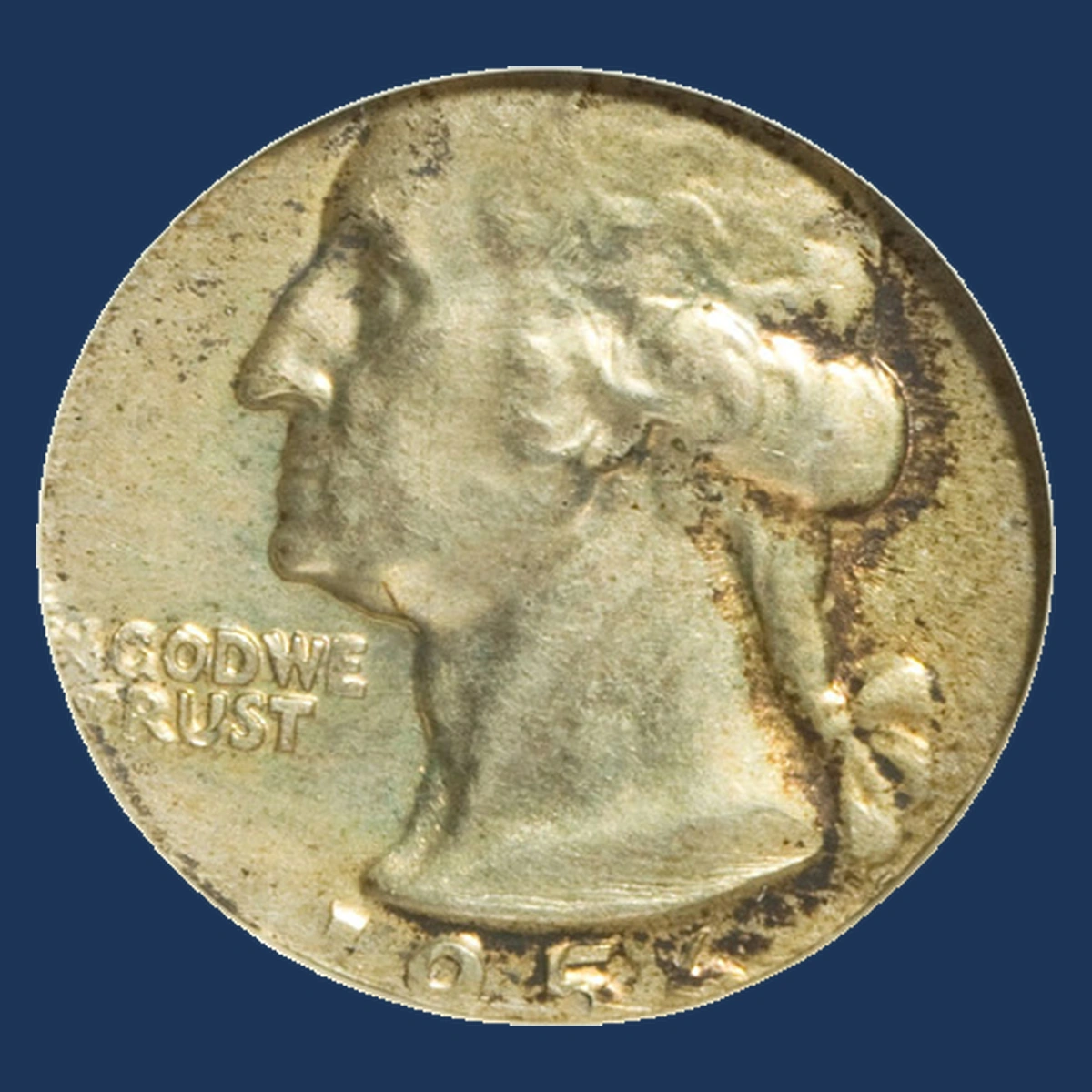
A blank intended for a smaller denomination cannot hold the quarter’s complete design. The outer artwork may run off the available metal, while the weight and alloy follow the wrong disc.
A Philadelphia cent-blank example graded NGC MS65 Brown weighs 3.08 grams. Separate nickel-blank records include a PCGS AU58 and a PCGS MS64.
A separate silver-dime example is pictured in an ANACS MS63 holder. The tiny silver disc leaves less space for the portrait, eagle, and outer lettering than an ordinary quarter.
These pieces received quarter designs on unused blanks. Another denomination’s finished portrait is not required for this error.
Estimated Value
The NGC MS65 Brown cent-blank quarter brought $1,265 in December 2009, as reported in Mint Error News. Its recorded weight is 3.08 grams.
Estimate $500–$5,000 for authenticated wrong-blank examples, depending on the metal, readable design, and preservation. Cent, nickel, and dime blanks need their own condition comparisons.
The estimate includes the whole error coin. A plated or trimmed ordinary quarter is not equivalent to a quarter design originally struck on a different denomination’s blank.
How to Identify
Use a scale and calipers on a loose candidate before judging it by color alone. A normal silver quarter weighs 6.25 grams and measures about 24.3 millimeters across.
A period cent blank is normally about 3.11 grams, a nickel blank 5 grams, and a silver dime blank 2.5 grams. These are comparison standards; the recorded copper example actually weighs 3.08 grams.
Inspect the edge for filing and the surface for an added coating. Trimming can remove letters from a normal quarter, while plating can imitate a copper color.
Now compare how the quarter design fills the smaller disc, allowing for some spreading under pressure. The coin’s metal and original edge should fit the proposed blank.
Read only the date digits that survive. A small blank may omit part of the year even on a genuine error.
Conclusion
A scale helps with an overweight blank, but magnification is more useful for an earlier D or repeated lettering. Choose the test that fits the visible feature instead of relying on color or shine.
The estimated $25–$5,000 range covers complete coins in the conditions described. Match ordinary strikes and Proofs separately, preserve delicate metal, and compare the surrounding design before assigning a variety name.