1950 Quarter Error List with Pictures

The most valuable clue on a 1950 quarter can hide beneath its tiny mint letter. A Denver D punched over an S helped one exceptional coin reach $29,375 in June 2013.
This guide to 1950 quarter errors includes both changed mintmarks and physical defects, with estimated values from $20 to $30,000. The top results belong to unusually well-preserved examples.
Read the letter shapes closely, or follow the edge and blank checks when the whole coin looks abnormal.
1. 1950 Washington Quarter San Francisco Straight Clip
One 1950-S quarter has a straight gap in its edge rather than a complete round outline. The blank was incomplete before the design was struck.
The recorded example weighs 6.12 grams and was graded F12 by ANACS. F12 means considerable circulation wear, with the main design still recognizable.
Its missing section is a clipped-blank error, separate from the normal wear on the portrait and eagle. A straight edge made by cutting a finished quarter can imitate the shape, so the boundary of the gap needs more attention than its silhouette alone.
Estimated Value
Estimate $20 to $300 for a genuine straight-clipped example. A small missing section on a worn coin generally attracts less interest than a clear clip on an attractive unworn piece.
The recorded F12 coin is a useful condition comparison because its circulation wear remains separate from the mint-made gap. Its 6.12-gram weight is not a required target for other clips.
A readable date and mint letter improve identification. Filing or heavy damage around the gap can reduce collector appeal.
How to Identify
Find the date and the S below the eagle before enlarging the straight gap. Those features identify the worn coin without depending only on its missing metal.
View the gap from the side and inspect for sawing, filing, or a fresh cut through finished details. Follow the rim into each end of the missing section to see how it formed during striking.
For a loose example, compare the actual weight with the normal 6.25 grams. The documented 6.12 grams belongs to this particular worn clipped coin, not every straight clip.
Photograph any weak area opposite the gap if present. Its absence alone does not reject a clip, especially when wear has softened the original rim.
2. 1950 Washington Quarter Lamination and Peeling Silver
A weak layer inside a silver blank can open into a peeling flap. If that flap detaches, it leaves a recess where part of the coin’s metal is missing.
This mechanism is called lamination. For a 1950 candidate, the claim needs to rest on the actual peeling metal and its boundary, rather than on a rough patch alone.
The quarter is made from a silver alloy throughout its thickness. It does not have the separate copper-nickel coverings of a later clad quarter, so a missing modern-style outer layer is not the explanation.
Estimated Value
For a confirmed lamination on a 1950 quarter, estimate $20 to $500. A small natural flake on a worn coin lies toward the lower end of the range.
A larger original separation with an attached flap can attract more interest when the design remains understandable. The condition of the surrounding surface still matters.
This is a conditional estimate for the physical defect. Corrosion, gouges, and silver lifted with a tool after minting require a different comparison.
How to Identify
Protect an attached flap from movement before doing anything else. Do not test its flexibility or try to open the separation with a fingernail.
Examine the connection between the flap and the remaining surface in magnified photographs. A natural weak layer should explain where the silver is separating, not just why one patch looks rough.
Compare any exposed recess with nearby lettering and the portrait to see how the original design meets the break. Look for digging marks, corrosion, or pushed-up edges that could reveal later damage.
A detached flake can reduce the coin’s weight. Keep loose fragments with the coin and let an error specialist inspect them without further disturbing the surface.
3. 1950 Washington Quarter Broadstrike
A broadstrike forms when the surrounding collar fails to restrain the blank normally. The collar is the ring that controls the coin’s width during striking.
The disk can spread while retaining the complete portrait, eagle, and lettering. Its edge grooves may also differ from those on a normal quarter.
A 1950 candidate should show that original relationship between a full design and expanded metal. A coin made wider by later flattening, or an off-center strike with missing design, does not establish the same collar failure simply because its rim looks unusual.
Estimated Value
Use an estimated $50 to $500 for a confirmed 1950 broadstrike. Visible spreading around a clear complete design supports a stronger price than a slight uneven border.
As a different-metal comparison, a 1966 clad uncentered broadstrike sold for $222 in June 2024. That sale does not document a 1950 silver example.
The estimate applies after the original striking cause is established. Flattened details and hammer marks can explain a wide coin without adding a mint-error premium.
How to Identify
Compare the candidate’s width with a normal 24.3-millimeter quarter at the same scale. A loose coin can be measured gently with calipers, while a sealed coin should remain in its holder.
Check all the outer lettering on both faces to establish whether the complete design stays on the metal. Loss of design opposite a plain crescent points toward an off-center strike instead.
Inspect the broad border and edge grooves together, looking for spreading that agrees with the original strike. Then examine the high points for crushing from later pressure, since a hammered quarter may widen while its portrait and eagle become unnaturally flat.
4. 1950 Washington Quarter Repunched S and D Mintmarks
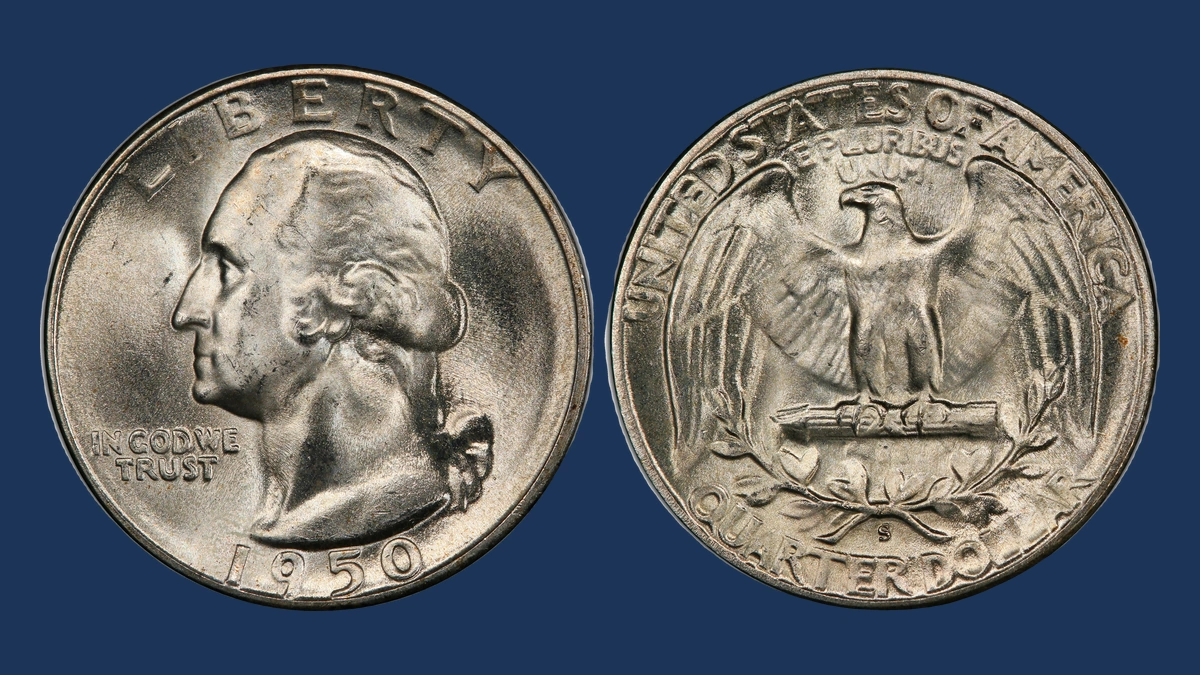
The same mint letter can appear in two slightly different positions. This happens when its punch enters the stamping tool more than once without lining up exactly.
The resulting feature is a repunched mintmark. Reports for 1950 include S-over-S and D-over-D circulation quarters, each with remnants of the earlier letter beside the final one.
The feature differs from an over-mintmark, where one letter replaces a different letter. A second S beside an S is therefore a different identification from a D visible beneath an S, despite their similar names.
Estimated Value
A confirmed repunched letter has an estimated range of $25 to $600. The clarity of the earlier outline and the condition of the whole coin affect the comparison.
PCGS records a 1950-D/D MS64 example at $264 in March 2018. MS64 means an unworn coin with some visible marks.
The S-over-S candidate needs its own matching letter pattern. A worn or flattened mintmark can lose the details that distinguish an original second punch from ordinary strike-related doubling.
How to Identify
Look below the eagle and trace the final mint letter first. Decide whether the extra shape could be part of another copy of that same letter.
With a 10× magnifier, follow the extra curves or upright edges into adjacent parts of the mintmark. A single bright ridge beside a scratch is not enough.
Compare with a confirmed same-year example from the same mint. Do not use the different-letter D/S variety as a substitute for a D/D comparison.
Inspect the surrounding surface for tooling or altered metal.
Tilt the light to check whether the earlier outline persists without becoming only a reflection or a flat shelf. Keep photographs of the full back alongside the enlarged letter.
5. 1950 Washington Quarter San Francisco Strike on an Underweight Blank
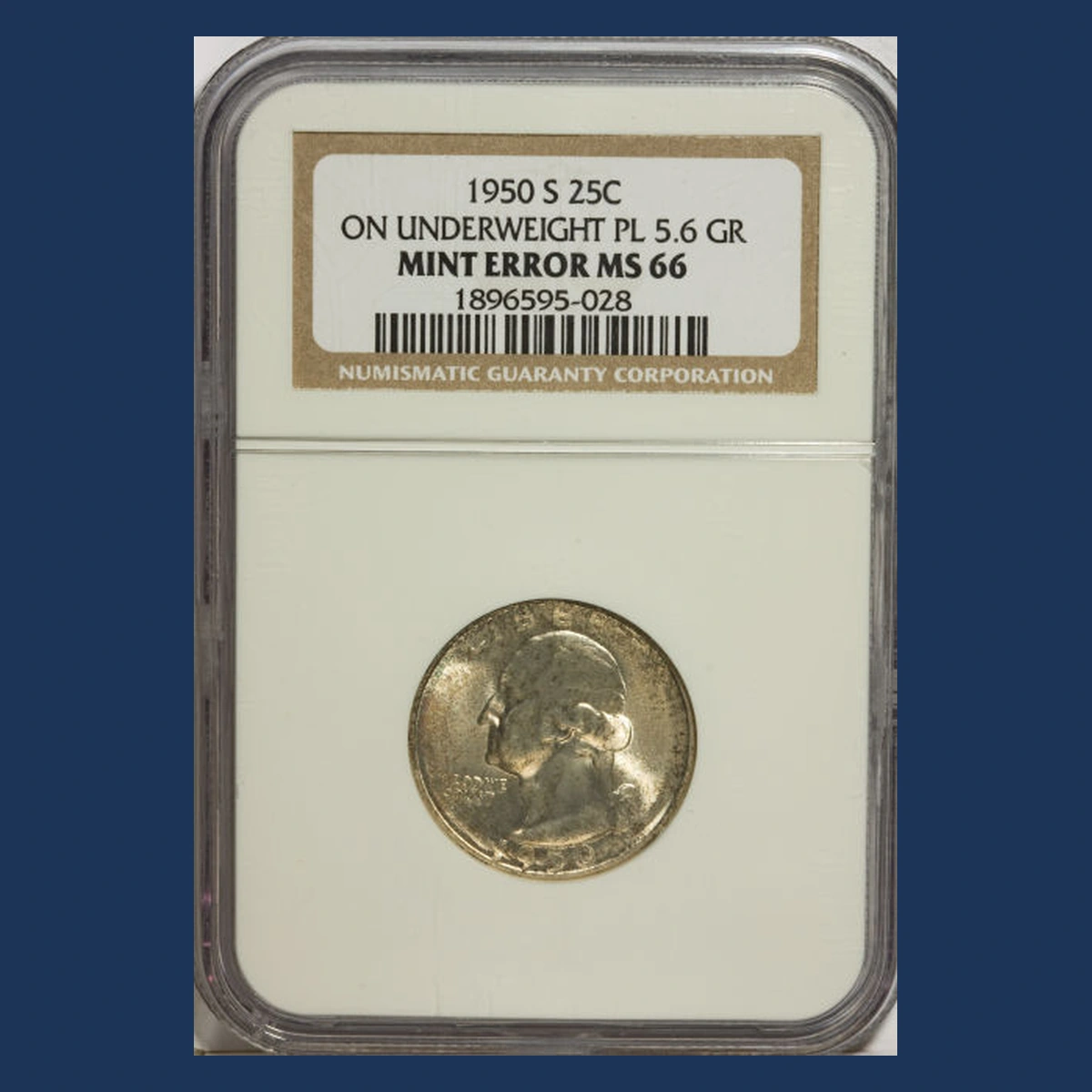
A 1950-S quarter recorded at 5.6 grams weighs less than the normal 6.25 grams. NGC graded this underweight-blank example MS66, an unworn coin with very few marks.
The low weight identifies a physical difference in the metal supplied to the press. It does not, by itself, name the exact manufacturing step that caused the shortage.
This example should not be described as missing a modern clad covering. It belongs to the silver-quarter era, and wear, trimming, or chemical damage can also make an ordinary silver coin lighter after minting.
Estimated Value
Mint Error News reports the MS66 underweight example at $120.75 in August 2009. Comparable authenticated underweight silver quarters have an estimated range of $75 to $750.
A clear weight record and well-preserved surfaces help explain the defect. Significant later damage can weaken that comparison even when the scale reading is low.
The 5.6 grams belongs to the documented coin. Other light quarters need their own examination rather than receiving the same price solely for falling below normal weight.
How to Identify
If the coin is loose, repeat the measurement on a reliable scale before looking for a rare explanation. Compare with the normal 6.25 grams and retain a photograph of the reading.
Examine the entire edge for trimming or filing that could remove silver after minting. Check both faces for heavy wear, corrosion, and unusual surface loss as alternative causes.
Compare the remaining thickness and struck detail with an ordinary 1950-S quarter. A mint-made shortage should fit the original coin’s structure, rather than being inferred from weight alone.
A sealed example should stay sealed; use its grading label and recorded measurements. The documented MS66 coin’s 5.6 grams must not be transferred to another specimen by appearance.
6. 1950 Washington Quarter Reported Off-Center Strike
An off-center strike gives the design only part of the blank to work with. A plain crescent remains on one side while the opposite side loses intended design.
Year reports describe Philadelphia examples around ten to fifteen percent off center and a San Francisco example around thirty percent. The latter is reported as MS65, an unworn coin with relatively few marks.
Those figures belong to separate reported examples. They do not establish identical positions, surface quality, or mintmarks on any other 1950 quarter with an uneven rim or displaced portrait.
Estimated Value
Estimate $50 to $1,500 for an authenticated off-center 1950 quarter. More visible displacement with a readable date and attractive surfaces can support the higher part of the range.
A different-year 1943-S silver quarter struck 35% off center sold for $2,640 in July 2022. That sale is a comparison, not a recorded price for the reported 1950-S coin.
Lost identity and later scratches can reduce value. A clear original blank crescent is more useful than damage resembling one.
How to Identify
Find the plain crescent and the missing design on opposite sides of the same disk. Check both faces to see whether one misplaced blank explains their boundaries.
Read the date before comparing percentages of displacement. Include the back-side S if it survives, and do not assign Philadelphia merely because the mintmark area was never struck.
Inspect the plain metal for erased lettering, filing, or a seam from added metal. It should be an original part of the blank that did not receive the design.
A complete design surrounded by extra rim metal calls for a broadstrike comparison. The difference is whether intended design actually ran beyond the edge, not whether the coin looks lopsided.
7. 1950 Washington Quarter Struck on a Silver Dime Blank
The recorded quarter-on-dime-blank example weighs 2.5 grams and was graded NGC MS63. Its smaller disk could not hold all the outer quarter design.
MS63 describes an unworn coin with noticeable marks. The blank has the silver alloy expected for a 1950 dime, so color alone does not separate it from an ordinary silver quarter.
The error concerns a blank intended for another denomination, not a previously finished dime with its own design underneath. The combination of crowded quarter details and reduced original metal supplies the useful physical evidence.
Estimated Value
Estimate $500 to $2,500 for a comparable authenticated 1950 quarter on a silver dime blank. A readable year and an original edge make the small strike easier to identify.
A different-year example, a 1954 quarter graded PCGS MS64, sold for $990 in September 2024. That is a comparison for the same blank error, not a sale of the 1950 MS63 coin.
Noticeable damage or missing date digits can lower interest despite the genuine wrong-denomination blank.
How to Identify
Inspect the quarter lettering as it approaches the small coin’s edge. Its loss should follow from limited blank space, rather than a later cut across a fully formed normal quarter.
For a loose candidate, check the weight against the documented 2.5-gram example and the normal quarter’s 6.25 grams. A silver dime blank starts near 17.9 millimeters across, although striking may spread it.
Look along the edge for filing or fresh cuts, and compare the remaining year with a clear photograph of the certified specimen. Both dime and quarter blanks used silver, so the color cannot replace measurements and evidence of an original struck boundary.
8. 1950 Washington Quarter Doubled Die Reverse
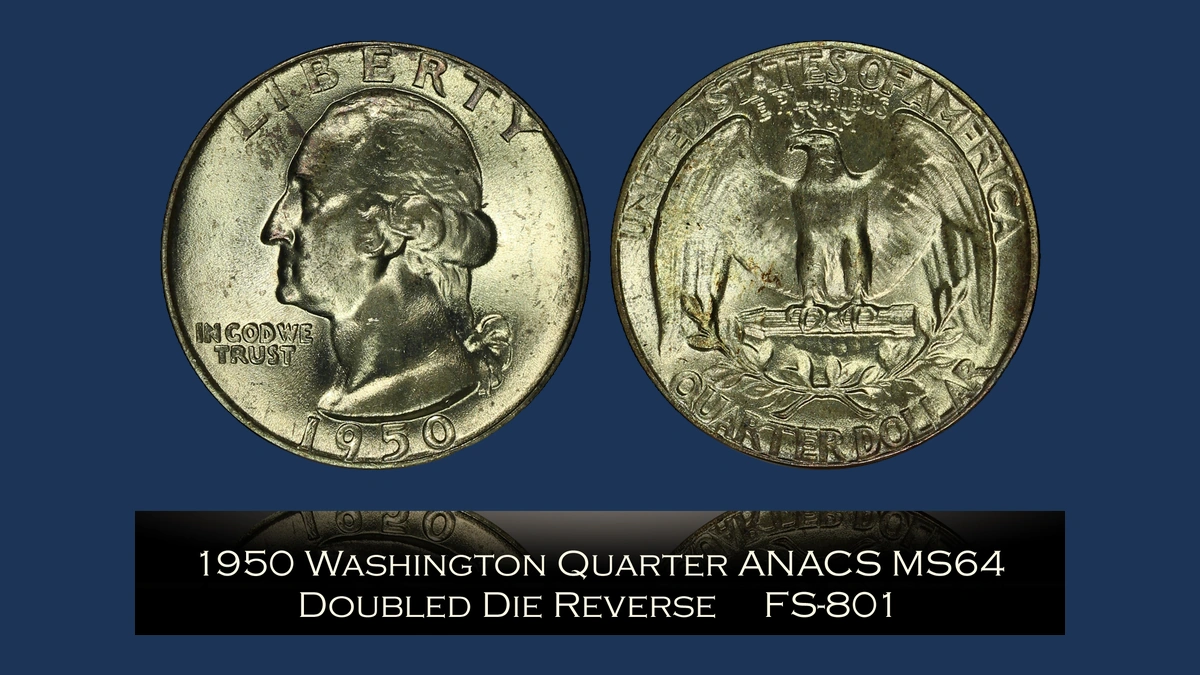
Extra outlines in the back design can originate on the die, the steel stamping tool. The coin then receives the doubled detail during an ordinary strike.
The 1950 reports include Philadelphia, Denver, and San Francisco circulation examples. PCGS recognizes separate Denver and San Francisco varieties, so their names and visible patterns should stay attached to the correct mint.
The mechanism affects design details rather than only a separately punched mint letter. Several matching doubled features provide better evidence than a lone thick letter or a flat shelf created as the coin moved during striking.
Estimated Value
Estimate $30 to $4,000 for correctly identified examples across the different mints and grades. Exceptional surface quality accounts for much of the upper range.
A Philadelphia MS67+ example sold for $3,525 in November 2016. In March 2018, a Denver MS66 brought $360 and a San Francisco MS66 brought $1,140.
These are different varieties and coins, not interchangeable price records. Compare the exact doubled pattern and preservation before applying a high-grade result to a worn candidate.
How to Identify
Establish the mint first using the letter below the eagle, or its normal absence on a Philadelphia circulation coin. Choose a back-side reference for that same mint and year.
Compare the reported doubled letters and nearby design features in a sharply focused photograph. Follow several ends and corners to see whether their extra outlines form one consistent pattern.
Check the shape under a second light angle. A reflection can create a false outline, while flat strike-related shelves may remove rather than repeat parts of a letter.
Keep an enlarged mintmark photograph separate from the doubled-design close-ups. A repunched letter does not establish that the rest of the back came from a doubled die.
9. 1950 Washington Quarter D over S and S over D Mintmarks
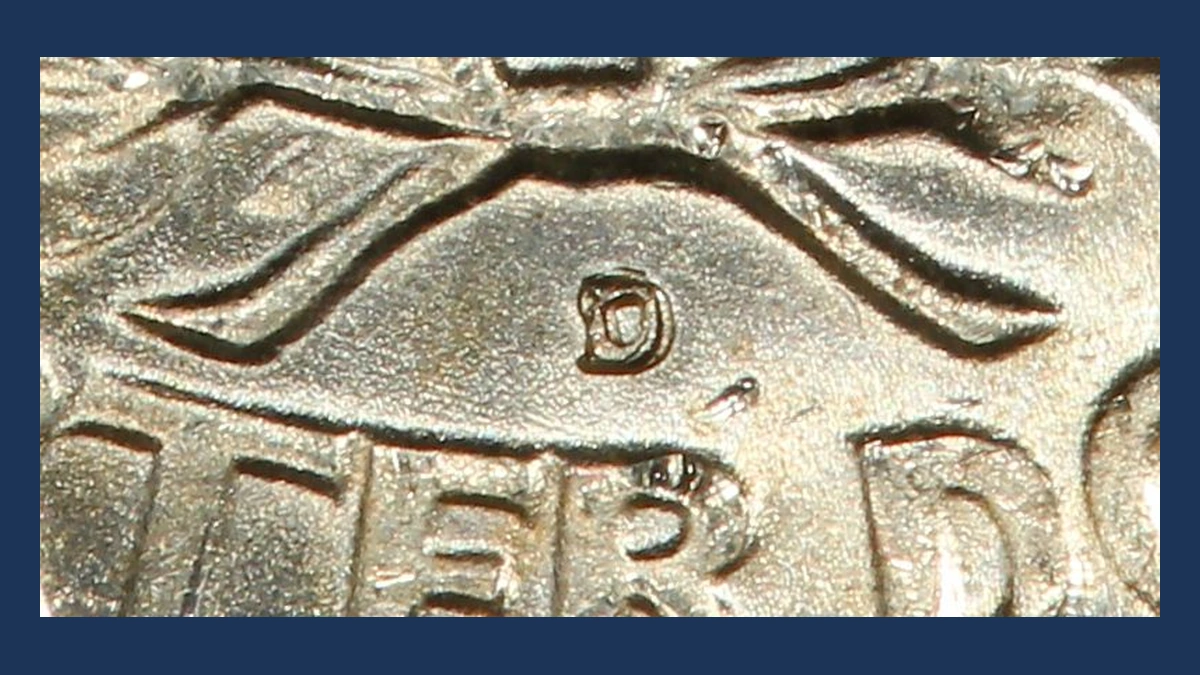
In one variety, a D partly covers an earlier S; in the other, an S covers an earlier D. Collectors call them over-mintmarks because one mint letter replaced a different letter on the stamping tool.
The D-over-S coin was struck at Denver, and the S-over-D coin at San Francisco. The final letter identifies the issuing mint.
On the Denver variety, remnants of the S appear above and toward the upper left of the D. Other apparent doubling beside that D may have a different cause and needs separate examination.
Estimated Value
Estimate $40 to $30,000 for D/S and $40 to $18,000 for S/D, depending heavily on condition. Ordinary worn examples sit far below exceptional unworn coins.
A D/S graded MS67 brought $29,375 in June 2013. An S/D of the same grade sold for $16,450 in September 2013.
MS67 means an exceptionally clean unworn coin. Those results do not apply to every doubled-looking mint letter or heavily worn example.
How to Identify
Read the final, strongest letter before searching for the earlier one. D/S requires a final D with parts of S beneath it, while S/D reverses that relationship.
For D/S, inspect above and toward the upper left of the D under magnification. Compare the surviving S curves with a confirmed example, rather than labeling all adjacent metal as another punch.
For S/D, match the surviving parts of the earlier D around the final S with a confirmed same-variety image. The different letter shapes matter more than simple thickness.
Inspect for tooling, added metal, and scratches around the mark. High-value candidates benefit from expert authentication because altered mint letters can imitate the appearance in a small photograph.
Conclusion
Estimated values range from $20 to $30,000, but a famous variety name does not put every worn coin near the top. Condition and a convincing match account for much of the difference.
The back can reveal a changed mint letter or doubled design, while weight and edge checks help explain an unusual blank. Keep those clues together with the correct mint and the price history of a comparable coin.