1845 Quarter Error List with Pictures

Above the top bar of the 5, a second date impression can survive in plain sight under a magnifier. An NGC MS64 example sold for $3,290 in June 2013.
The two features in this 1845 quarter error list also include a raised crack across the eagle side. Estimated whole-coin values range from $50–$5,000 across the conditions described.
Compare the repeated numeral and the cracked reverse separately using the checks below.
1845 Liberty Seated Quarter Cracked Reverse Die
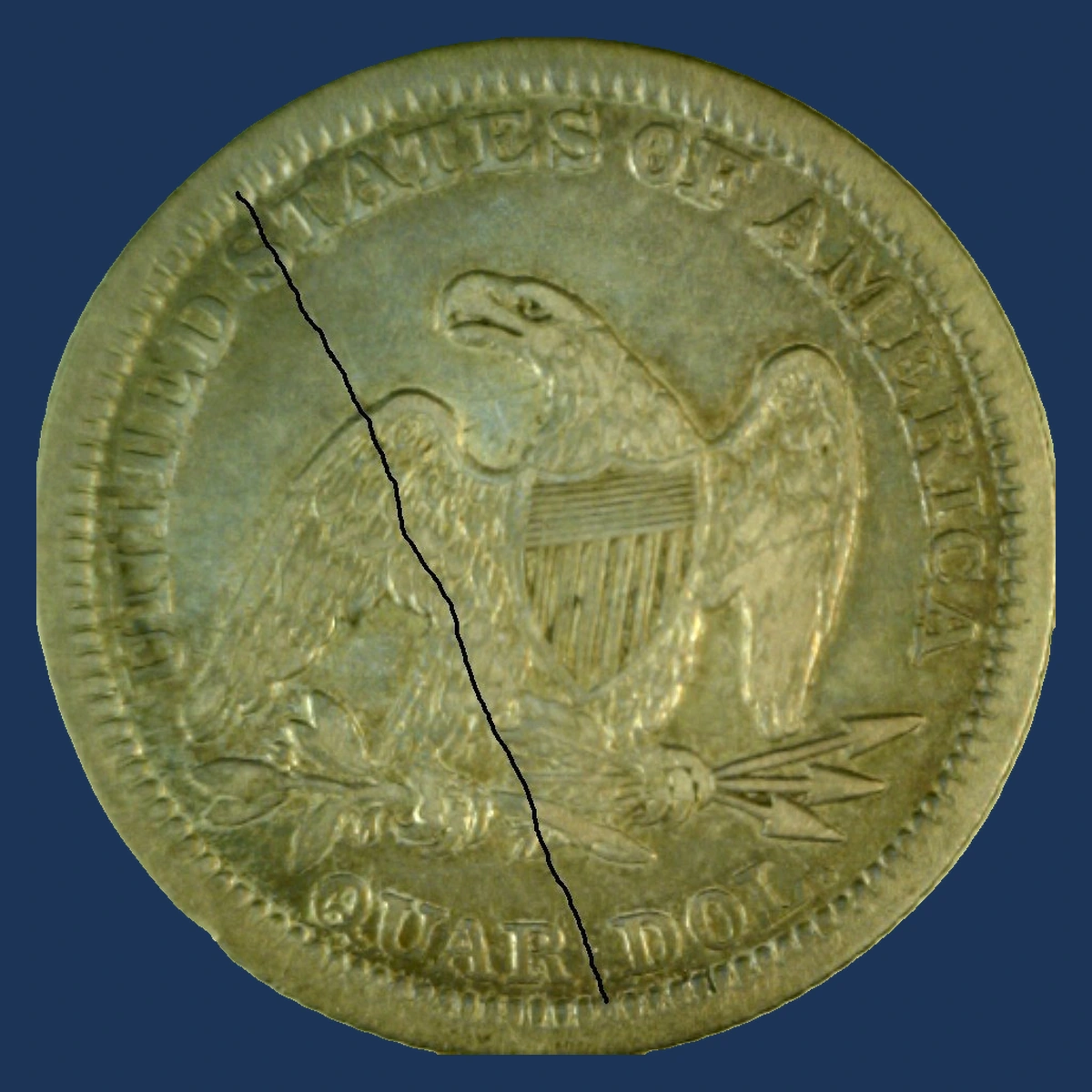
A raised line crossing the eagle side attracted Greg Johnson’s attention to an 1845 quarter in 2008. The coin was in Very Fine condition, meaning moderately worn with much of the design still visible.
The line came from a crack in the die, the steel stamping tool. Metal pushed into that narrow opening and formed an extra ridge when the quarter was struck.
Johnson found that the shield details closely matched the tool called reverse B in Briggs’ reference book. His example shows a conspicuous crossing crack, rather than just an isolated scratch near the lettering.
Estimated Value
For genuine cracks on circulated 1845 Philadelphia quarters, estimate $50–$1,500 for the whole coin. A long, easily followed raised crack can interest specialists more than a faint peripheral line.
Johnson’s moderately worn example demonstrates the kind of feature to compare, rather than a published sale price. Original surfaces and clear shield detail help establish a convincing match.
Prices for tiny cracks should remain closer to ordinary coins of similar preservation than to exceptional major breaks.
How to Identify
Use the shield as a landmark before following the crack across the reverse. Compare the shield’s small details with Johnson’s illustrated example so that the line is not judged in isolation.
Under a magnifier, check the line at several points with the lamp placed to one side. It should rise from the silver surface rather than cut a narrow channel through it.
If a scratch has pushed metal upward along its edges, inspect the groove between those ridges. Photograph the complete route across the eagle side, including where it reaches the surrounding design, and match that route rather than one short segment.
1845 Liberty Seated Quarter Repunched 1845/845 Date
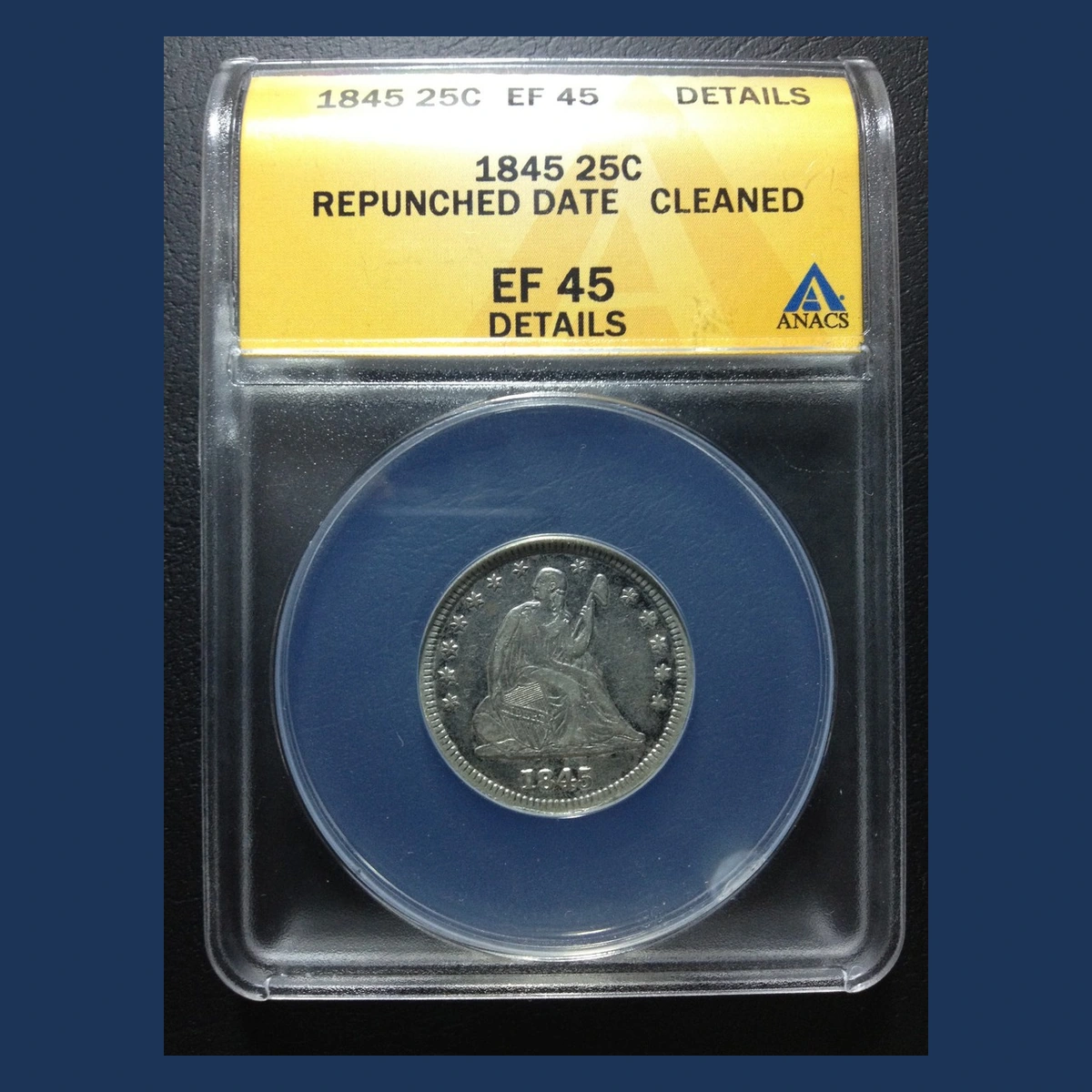
The top of the 5 is the easiest place to notice the repeated date on this Philadelphia quarter. Traces of an earlier entry remain near the final digits after the date was punched into the tool again.
The familiar name is 1845/845, or FS-301. It describes repeated numerals within the same year, not an 1845 coin made over a different dated coin.
Older descriptions called it a large date over a small date and proposed a punch meant for another denomination. That explanation is debated, while the visible extra digit shapes remain the practical identifying feature.
Estimated Value
Heritage sold an NGC MS64 example for $3,290 on June 5, 2013. The grade describes an unworn coin with relatively few marks, and the catalog notes a sharp strike.
An estimated $60–$5,000 spans identifiable worn examples through comparable high-grade pieces. Sharp surviving digit traces and attractive original surfaces make the better-preserved coins stronger comparisons.
A small date remnant on a heavily worn or cleaned coin does not imply the same auction value.
How to Identify
Enlarge the 5 with a 10× magnifier and look above its short top bar. That bar is often called the flag of the numeral.
Trace the extra shape before examining the 4 and 8 for other surviving date remnants.
Use a known FS-301 photograph to check how those small shapes relate to the final digits. Keep the whole date in view so that an isolated bump cannot hide its actual position.
Flat shelves beside a numeral can come from movement during striking. A random cut near the 5 is another common distraction.
Tilt the coin gently and compare the earlier raised outline above the 5 with the documented repeated digit.
Conclusion
The estimated $50–$5,000 range covers a repeated date and genuine tool cracks on 1845 quarters. One asks you to compare tiny numeral shapes; the other requires following a raised line across the design.
The dated auction example shows how preservation can matter alongside the variety. Keep scratches, flat strike doubling, and ordinary wear out of the comparison before deciding which price range fits.