1844 Quarter Error List with Pictures

A worn stamping tool carried over from 1843 left some 1844-O quarters with heavy cracks or an upside-down back. Philadelphia offers a different clue: extra strokes above the date.
NumisBids reports a $1,900 auction result in May 2024 for a Philadelphia repunched-date example. The listing does not specify whether that figure includes the buyer’s fee.
These 1844 quarter errors have estimated whole-coin values of $50 to $6,000. Follow the date, crack paths, and turning test to identify the feature on your own coin.
1. 1844 Liberty Seated Quarter Heavy Back Die Cracks on the New Orleans Issue
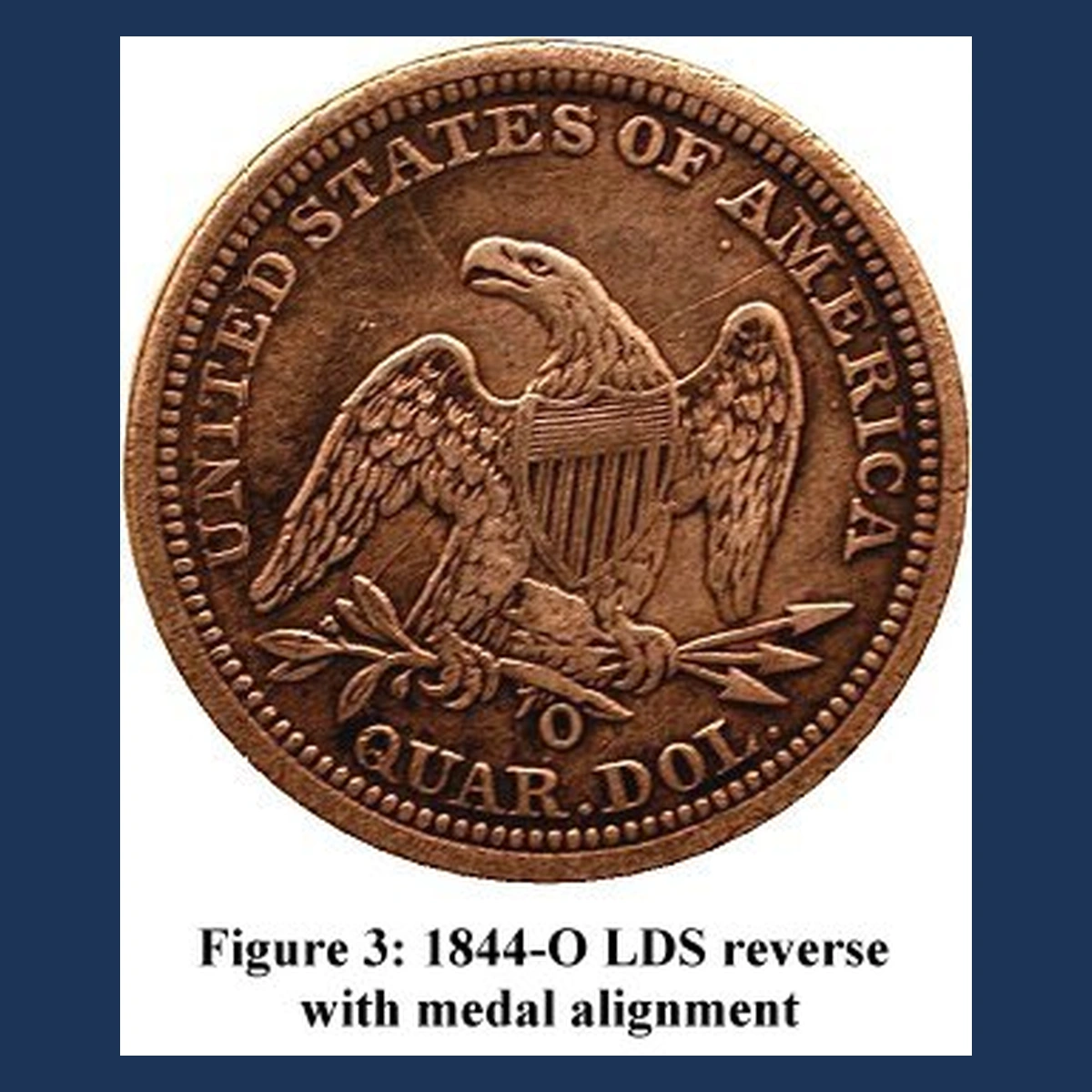
The back of some 1844-O quarters shows strong raised lines caused by cracks in the stamping tool. That die had already been used for large-O quarters dated 1843.
As the steel split, silver entered the cracks and formed ridges on newly struck coins. The lines therefore stand above the surface rather than cutting into it.
The first crack can appear on coins with normal front-to-back alignment. Later examples show two cracks, including the studied coins whose back is turned 180 degrees.
The O by itself is insufficient for identification, because other 1844-O quarters also have a large mint letter.
Estimated Value
Estimate $100 to $2,500 for circulated examples of the reused-tool variety showing clear cracks. Strong visible paths on an attractive coin make a better display than lines obscured by damage.
The range includes the value of the underlying 1844-O quarter. It is not a charge for each raised line.
A coin that also has the 180-degree rotation should be assessed as one combined example. Do not add this estimate to the rotation range for the same piece.
How to Identify
Follow each suspected line under low side lighting, keeping the nearby feathers and letters visible. A raised crack should remain a ridge as the direction of illumination changes.
Compare its path with the 1844 examples in the reused-tool study. The page also illustrates an 1843 coin, so keep its earlier date separate from the 1844 comparisons.
Check where the line meets the eagle’s inner wing area and other design features. Do not substitute any long scratch for the illustrated path.
The position of O and nearby raised lumps provide additional points to match. Once the back agrees, use the turning test below to see whether your coin also has the reported rotation.
2. 1844 Liberty Seated Quarter 180-Degree Rotation on the New Orleans Issue
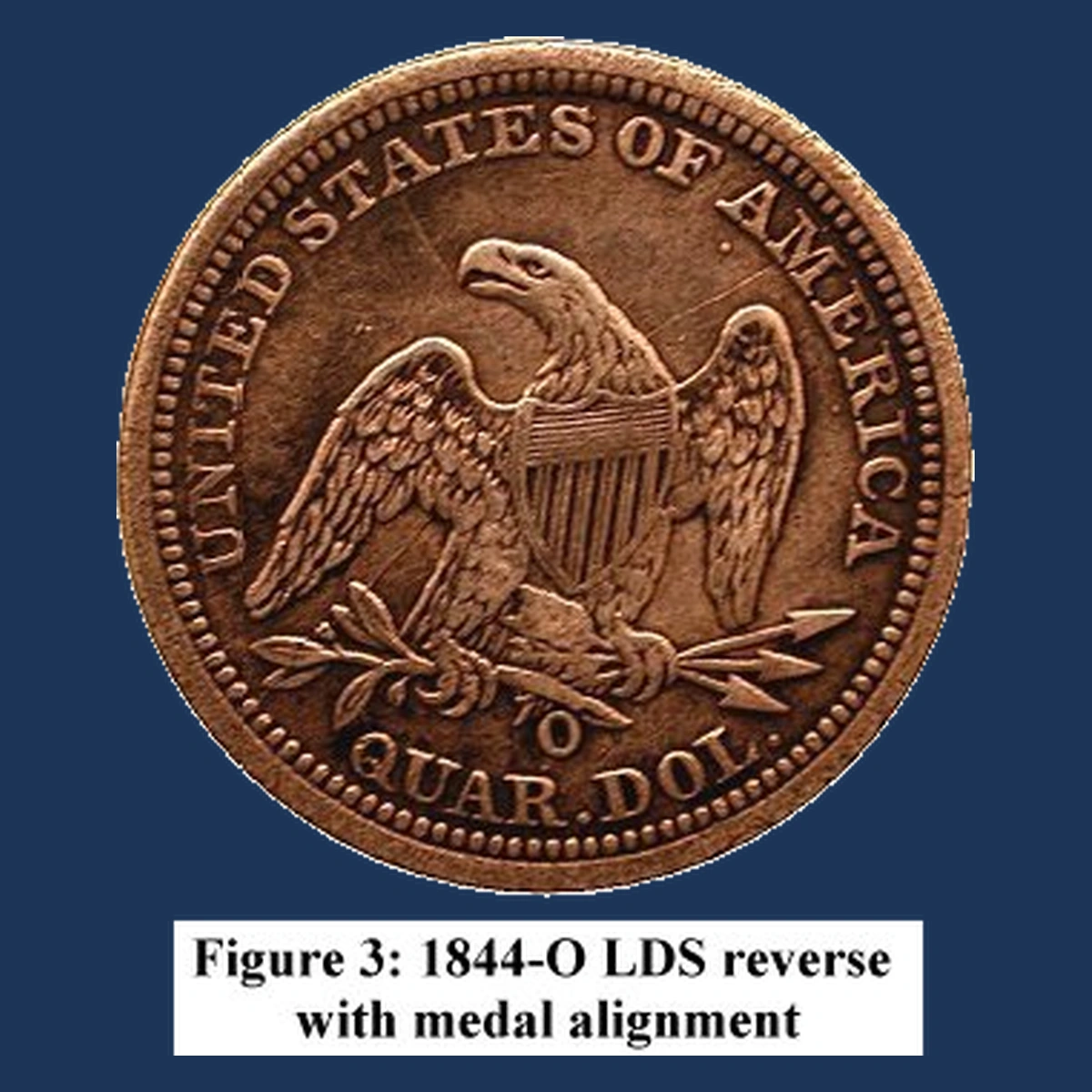
On this variety, flipping the coin top to bottom can leave the eagle upside down. A full half-turn separates that position from normal American coin alignment.
The back tool used earlier for 1843-O large-O quarters was sometimes installed or moved into this reversed orientation during 1844 production. Other coins from the same tool have normal alignment.
The rotation changes which way the picture faces, not necessarily how well it is centered. It is therefore different from an off-center strike.
The studied rotated examples also show the late back cracks. Their rotation and cracks describe the same coins from different viewpoints.
Estimated Value
Use an estimated $150 to $4,000 for genuine 180-degree examples, depending on wear, surface quality, and the clarity of the reused-tool features. This is a whole-coin estimate.
An LSCC newsletter published in January 2012 reported a collector paying $200 for one example. That was a reported private transaction, not a graded auction result.
Clear orientation photographs help demonstrate the unusual alignment. They should accompany enough date and back detail to establish the particular variety being offered.
How to Identify
Begin with Liberty upright and hold the coin at its left and right edges. Turn it over top to bottom while keeping those contact points steady.
The eagle should normally stand upright after that movement. If it finishes upside down, repeat the flip to rule out an accidental sideways twist.
You can also turn the coin left to right as a cross-check. This rotated example should then show the eagle upright, unlike normal American coin alignment.
Next match the large O’s position and the known back-tool marks, using a dated 1844-O comparison. The half-turn alone does not identify which tool made it.
For a sealed coin, demonstrate the same relationship through the holder without opening it.
3. 1844 Liberty Seated Quarter Repunched Date Above 1 and 8
Small extra strokes rise above the 1 and 8 on the described Philadelphia repunched-date quarter. They remain from an earlier application of the date punch to the steel tool.
The later impression did not completely cover the first. Coins made with that tool inherited the overlapping outlines.
The auctioned example also has vertical back-shield lines extending into the horizontal bars and below the shield’s lower border. Those details help match the complete coin.
This is a repeated date on an ordinary circulation strike. It is not an overdate showing a different year beneath 1844, or the New Orleans rotation variety.
Estimated Value
For this Philadelphia date-punch variety, estimate $50 to $6,000 across worn examples through well-preserved unworn coins. Grade and surface quality account for much of that spread.
NumisBids records $1,900 for the NGC MS64 example in May 2024. The posted figure does not state its buyer-fee treatment; MS64 means unworn with some visible marks.
A sharp date on attractive surfaces supports stronger interest. Cleaning or deep scratches can reduce value despite a correct variety match.
How to Identify
Concentrate on the space immediately above 1 and 8 rather than looking for a second complete date. The reported earlier strokes occupy those small areas.
Under a 10× magnifier, compare the outlines with the auction photograph and then check the nearby plain surface. A scratch crossing both numeral and background does not establish repunching.
Turn to the shield on the back and trace its vertical lines. On the described example, they run upward into the horizontal bars and downward beyond the lower border.
Keep both faces in the comparison because catalog numbers have been used inconsistently for these date varieties. Matching the actual raised strokes and shield details is more useful than relying on a number in a seller’s title.
Conclusion
The New Orleans cracks and rotation follow the history of one reused back tool. Philadelphia’s repeated date is a separate feature, so begin by checking the mint.
Estimated values span $50 to $6,000 across the examples discussed. A larger O alone does not identify the reused tool, and a scratch is not a raised crack.
Photograph both faces together to preserve the details needed for a useful comparison.