1819 Quarter Error List with Pictures

Two kinds of raised marks can meet at an 1819 quarter’s denomination: an extra outline and a fine crack. A high-grade example showing both sold for $32,900 in October 2014.
This 1819 quarter error list explains how to separate them and follow other cracks around the coin. Estimated whole-coin values run from $150–$35,000, covering worn pieces through an exceptional unworn example.
Start with the numbers under the eagle, then compare the crack routes below.
1819 Capped Bust Quarter Repunched 25 Denomination
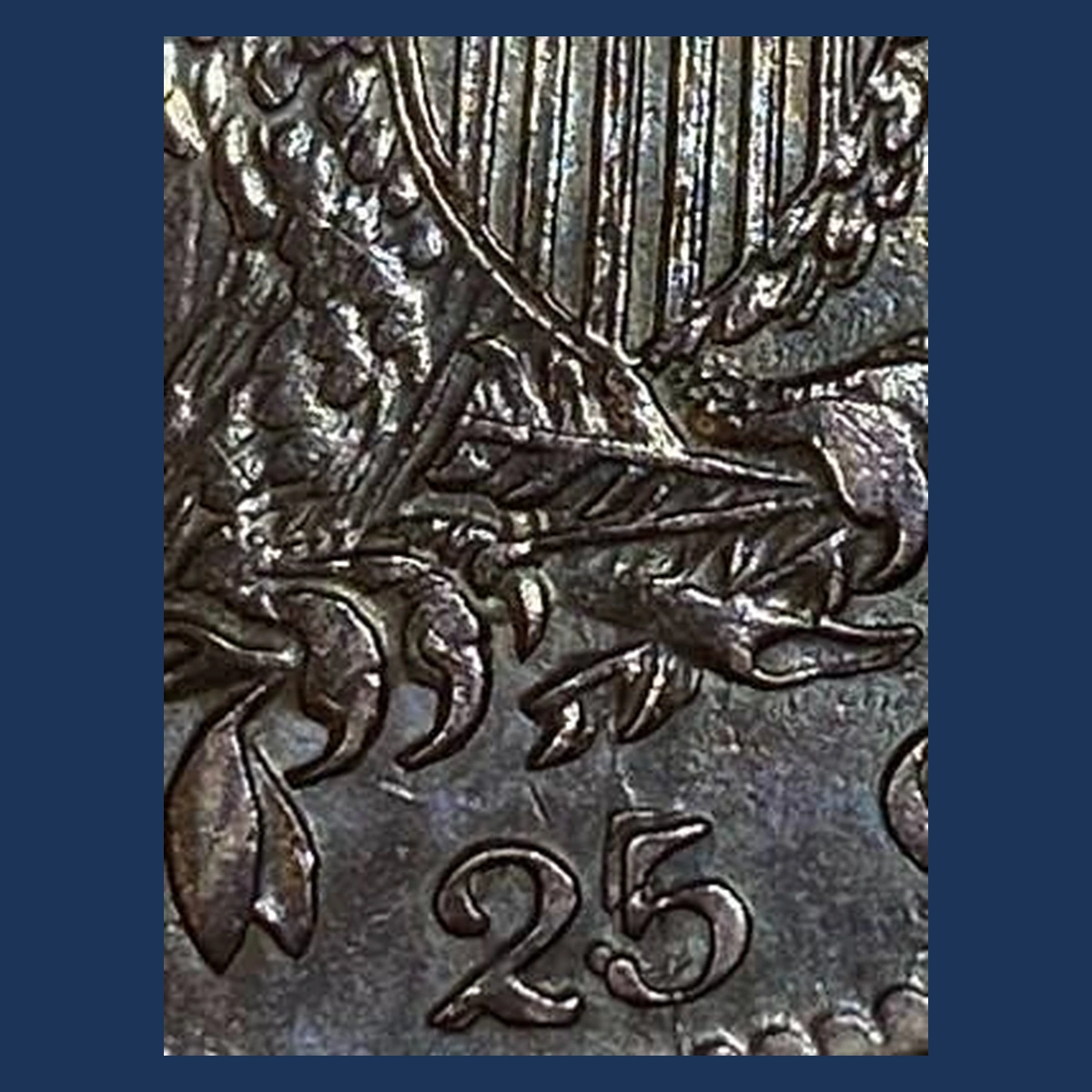
The 5 beneath the eagle can look broader than expected, with an extra raised outline. A smaller trace also appears on 2 in the Small 9 variety called Browning-3.
The numbers were punched into the die, the steel stamping tool, more than once. Part of the earlier position remained and was copied onto the coins.
This is a repeated 25, not a correction from 50 cents. A crack may also pass through the denomination on a later example, but that thin traveling ridge has a different cause from the doubled number.
Estimated Value
At Heritage in October 2014, an NGC MS66 Browning-3 quarter brought $32,900. Its grade indicates no circulation wear and very few marks.
Estimate $150–$35,000 from worn examples through a comparable exceptional unworn coin. Clear digits help identify the variety, while original surfaces and preservation explain most of that wide spread.
The sale coin also had cracks, so its price covers both features together rather than separate premiums added afterward.
How to Identify
Focus a magnifier on 5 first, where the extra outline is stronger. Move across to 2 and look for the smaller repeated trace.
The PCGS collection example describes this difference in strength. Comparing both digits is more helpful than calling any thick 5 a match.
Now follow anything that extends beyond the number. A thin ridge heading toward the arrow feathers can be a crack, while repunching stays tied to the shape of the numeral.
Tilt the coin gently to separate these raised details from shadows or cut grooves. The useful check is the paired extra outlines on 25, with 5 more obvious than 2.
1819 Capped Bust Quarter Die Cracks
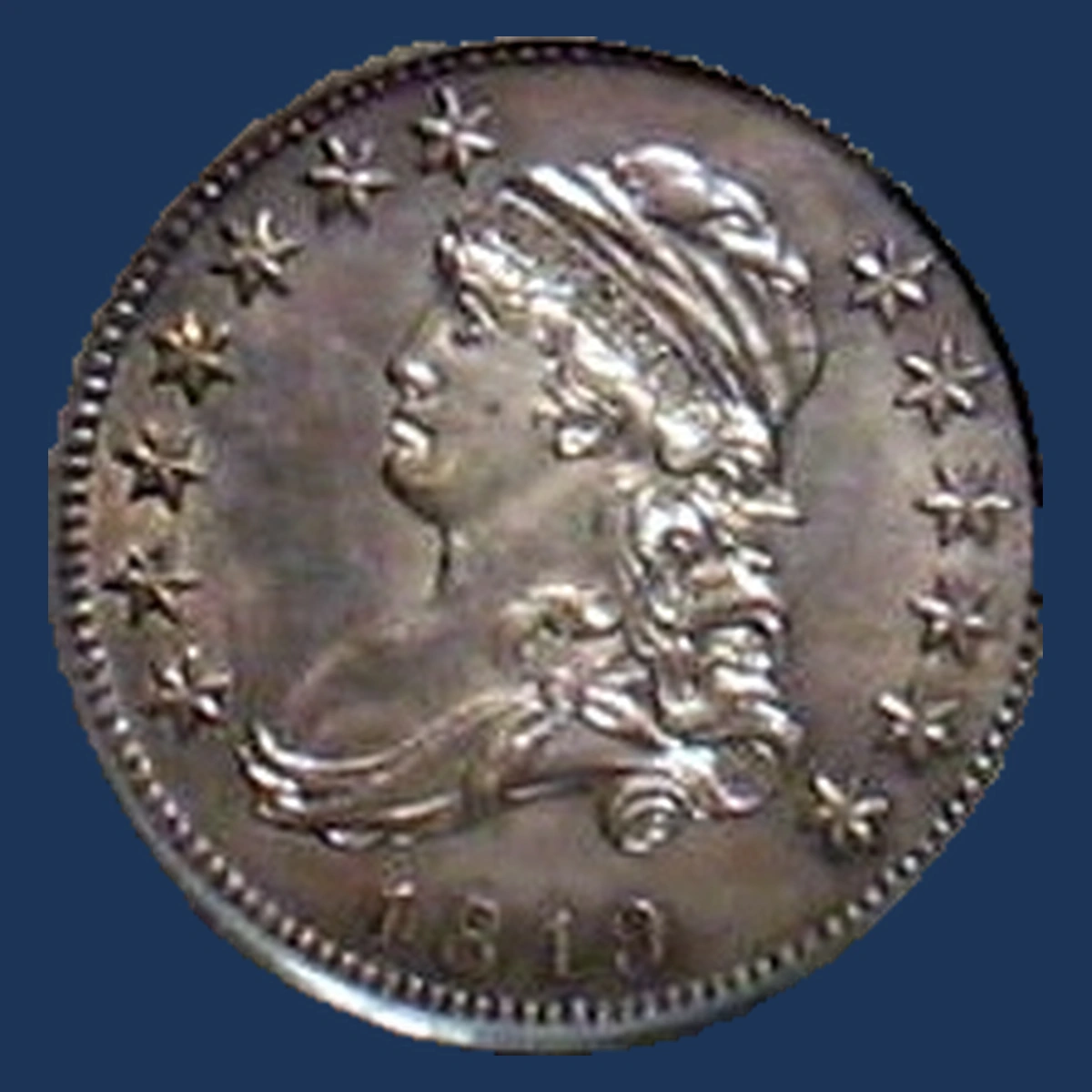
A narrow raised line can join stars, cross the date, or run toward the eagle. Silver entered a split in the stamping tool, leaving a ridge on the coin.
On Small 9 Browning-3, lines run through star eleven toward the bust and diagonally through the first date digit. Large 9 Browning-2 can show connected outer points of stars two through seven and a faint line between 18.
Two Large 9 varieties also have similar cracks beside UNITED. The Logan collection description distinguishes them by where the line begins at the border.
Estimated Value
The crack-bearing MS66 coin in the preceding section provides a $32,900 high-grade comparison, not a price for a typical worn example. Its repunched denomination and cracks share one selling price.
For the varieties covered here, estimate $150–$35,000 across worn through exceptional unworn condition. A scarcer tool pairing can affect the comparison as much as the line itself.
Deep scratches or cleaning can make a long crack less attractive than a subtle ridge on an original surface.
How to Identify
For a Large 9 coin, enlarge the border beside U in UNITED. Browning-1 starts between two small border teeth, called dentils; Browning-2 starts in the center of one.
Trace the Browning-2 line through U toward the wing, stopping short of it. Check its front for the star-two-to-seven line and the smaller connection between 18.
A Small 9 Browning-3 needs a different route.
Find star eleven on Liberty’s right and follow its line toward the bust, then examine the diagonal crossing the first 1. Use a magnifier with angled light to confirm raised silver rather than a scratched channel.
Compare the complete route on the correct variety; the border-tooth starting point is the sharpest distinction between the two similar U cracks.
Conclusion
The estimated $150–$35,000 range includes widely different conditions, not a fixed premium for every raised mark. An extra outline on 25 and a crack passing through that number can occur on one quarter.
Keep the two checks separate while judging the coin as a whole. For the other varieties, the star routes and the tiny starting point beside U help explain what you are seeing.