1796 Quarter Error List with Pictures

The first United States quarter is valuable before any error enters the picture. An exceptional MS66 example brought $1,740,000 in January 2022, a price for the rare coin and its preservation.
For the 1796 Draped Bust Quarter errors below, estimated ranges of $8,000–$300,000 focus on more modest grades. Some features are described on known coins; others remain reports that require a matching genuine example.
Read on to separate raised cracks, peeling silver, and misplaced impressions on this distinctive small-eagle design.
1. 1796 Draped Bust Quarter Peeling Metal
A small layer of silver can lift from the open area to the right of Liberty. Former ANA authenticator Tom DeLorey reported seeing this feature on a genuine 1796 quarter.
The error is called lamination: separation within the metal rather than a cut made through the finished surface. A retained flap may leave a narrow space beneath its edge.
That depth matters because a copied surface mark can resemble a line without containing any real separation. DeLorey has also described this distinction when discussing counterfeit coins.
A scratch alone does not show peeling metal.
Estimated Value
Estimate $8,000–$100,000 for a genuine circulated to modest unworn example with a small lamination. The rare date supplies most of the value.
For general condition context, a 1796 B-1 in PCGS AU58 sold for $49,350 in August 2015. That was a different coin, not a recorded sale of the reported lamination.
A lifting flap can reduce appeal or make the surface fragile. A larger defect therefore does not automatically mean a higher price.
How to Identify
Look at the reported area from a low angle, without touching any loose metal. A real flap can have an edge with visible space underneath; a copied outline may remain a solid surface.
Move the light around the right side of Liberty. Watch whether the same opening remains visible rather than disappearing as a painted-looking shadow.
The rest of the coin also needs to match genuine 1796 quarters. A correct-looking defect cannot authenticate a counterfeit design.
Do not lift the flap to test it.
Photographs taken straight down can hide the difference, so request an angled view of the separation. Visible depth beneath an untouched layer is the feature to check first.
2. 1796 Draped Bust Quarter Reported Clipped Blank
A clipped blank would leave part of the coin’s outer circle missing before the design was struck. A blank is the plain metal disc from which the coin is made.
Year-specific error lists include this report for the 1796 quarter. No particular missing shape or clock position belongs to the report as a whole.
A true clip begins during cutting of the blank, so the struck design can respond to the missing metal. A later saw cut simply removes part of an already finished coin.
The edge and nearby design must therefore be examined together.
Estimated Value
Use $15,000–$150,000 as an estimated whole-coin range for an authenticated example, from worn pieces through attractive lightly worn coins. This is a conditional estimate for the reported type.
The $49,350 sale of a normal 1796 B-1 in AU58 offers a same-year condition comparison, not a clipped-coin transaction.
Value depends on the remaining date, size of the original missing section, and surface quality. Later cutting damage does not earn the same error premium.
How to Identify
Inspect the missing section from the edge before enlarging the portrait or date. Parallel cutting grooves, a sharp modern cut, or rough pushed-up metal can point to later damage.
Now follow the design toward the opening on both faces. Metal may have spread toward the missing area during striking, leaving softened detail rather than a design abruptly sliced away.
Check the opposite rim for local weakness, which can support a clip but is not required on every example. Wear and the uneven striking of early quarters also affect rim strength.
A loose coin can be weighed against the normal 6.74 grams, allowing for wear. Reduced weight supports missing metal, but only the original edge and struck design can establish when it was lost.
3. 1796 Draped Bust Quarter Reported Broadstrike
An unusually spread coin with the complete design can be described as broadstruck. The term appears in a year-specific list for the 1796 quarter, but a wide border alone is not enough.
These early quarters were made before the later system that held each coin to a tightly controlled diameter. Their normal outlines can therefore be less regular than modern quarters.
The key question is whether the metal spread unusually during striking. Flattening after the coin left the Mint can also make it wider.
The complete design and edge help separate these possibilities.
Estimated Value
For a genuine example with unusual original spreading, estimate $15,000–$150,000. This conditional range includes the underlying value of a rare 1796 quarter.
Ordinary lightly worn examples already bring substantial sums, as shown by the $49,350 AU58 B-1 sale. That price is a condition comparison, not a broadstrike result.
Clear original surfaces and a strong, complete design favor the upper end. A flattened coin with damaged detail should be valued for its remaining collectible condition instead.
How to Identify
Compare the entire outline with several genuine quarters of this date, not a modern quarter. The normal diameter is about 27.5 millimeters, but one slightly larger measurement cannot prove this error.
Measure a loose coin across more than one direction with calipers. Record the readings without squeezing or marking the edge.
Check whether the date, stars, Liberty, and small eagle remain complete. A true off-center strike loses part of the design, while an unusually spread but complete impression presents a different pattern.
Finally, examine raised details for crushing and the edge for evidence of later hammering. Natural outward spreading with intact design details is the useful distinction from a coin simply flattened after manufacture.
4. 1796 Draped Bust Quarter Reported Front Design Doubling
Extra outlines on the front have been listed under the name doubled die obverse. A doubled die is a stamping tool carrying repeated design details, which it can pass to many coins.
For this early issue, the repeated feature must be identified before that name explains its cause. Individual letters and numbers were also placed by hand during tool preparation.
A coin struck twice can show another kind of doubling. The year-specific listing does not identify a particular doubled letter, portrait feature, or numbered variety.
Treat the visible pattern, rather than the label, as the starting point.
Estimated Value
Estimate $10,000–$200,000 for a genuine coin with meaningful, confirmed front design doubling, depending on wear and its cause. This is a conditional whole-coin estimate.
The ordinary AU58 comparison at $49,350 illustrates how strongly the date itself affects price. It does not establish a separate premium for this reported feature.
A repeated tool pattern on several coins is more persuasive than one blurred photograph. Flat doubled edges caused during striking should not receive the same variety premium.
How to Identify
Photograph the complete front before choosing one apparently doubled detail. Check whether extra outlines occur only on an individual punched character or follow several parts of the portrait and lettering.
Compare another genuine coin made with the same tools. Identical repeated contours in identical locations can point to a feature in the stamping tool.
If only this coin has the extra image, inspect the back and border for another strike. Separate impressions that shift together are different from a fixed doubled tool pattern.
Flat ledges beside letters can result from movement during striking rather than a doubled die.
Use clear close-ups to match the actual extra contours across coins before assigning the doubled-die name.
5. 1796 Draped Bust Quarter Reported Off-Center Strike
A blank crescent beside a partly missing design is the main feature of an off-center strike. The metal disc was not centered between the stamping tools when they came together.
Both faces should show the effect of the misplaced disc. A front design shifted within an otherwise ordinary coin can instead result from one tool being out of line.
The 1796 quarter appears in year-specific off-center error lists. Those reports do not establish a particular percentage or direction.
The readable date and surviving small-eagle design remain important parts of identifying an actual example.
Estimated Value
An authenticated off-center example has an estimated whole-coin range of $20,000–$250,000, depending on condition and how much design remains. A readable 1796 date is especially important.
For a different-year comparison, an 1838 Capped Bust quarter struck 20% off center sold for $4,140 in January 2005. Its much less costly normal date means that result cannot be applied directly to 1796.
The larger estimate reflects the rare first-year quarter as well as the striking error.
How to Identify
Lay photographs of both faces beside each other with the same physical edge aligned. The unstruck area should belong to the same part of the disc on both sides.
Look for design that actually runs beyond the available metal, not merely an uneven decorative border. Early quarters can be imperfectly centered without losing enough design to justify this label.
Confirm the remaining date and the small eagle within its wreath. This quarter has no 25C inscription to use as a location marker.
Examine the blank crescent for later grinding or cutting. Original metal beyond an incomplete impression on both faces is the key evidence of a misplaced blank, rather than damage or a single shifted tool.
6. 1796 Draped Bust Quarter Rotated Double Strike
Two slightly rotated impressions can leave overlapping parts of the same design. The coin turned between strikes instead of leaving the press after the first impression.
Error specialist Mike Byers recalled seeing a worn 1796 quarter with this feature around 1980. He described it as Good or Very Good, grades that indicate substantial wear.
The report concerns slight rotation, not a specified angle or a dramatic second impression far outside the first. Repeated details may survive only in protected parts of a worn coin.
This differs from a fixed doubled design already present in a stamping tool.
Estimated Value
For a worn to lightly worn authenticated double strike, estimate $20,000–$300,000. The visibility of both impressions and the survival of the date can make a large difference.
Byers’s recollection gives no sale price. The estimate combines the substantial normal value of a 1796 quarter with collector demand for a clear repeated strike.
A slight second image on a heavily worn coin belongs nearer the lower end. Strong surviving detail and original surfaces support a higher valuation.
How to Identify
Start with several separated points, such as a date digit, part of Liberty, and the border. A rotated second strike should move these remnants in a consistent relationship around the coin.
A small double edge on one letter is not enough. Check the back for corresponding repeated eagle or wreath details, allowing for one strike to have flattened parts of the other.
Use a magnifier only after the overall relationship becomes clear. Do not assign an angle from one isolated line or mistake a faint scratch for another impression.
The reported coin was worn, so a full second design is not expected. Several connected remnants that fit one rotated impression provide the strongest quick check.
7. 1796 Draped Bust Quarter Traces of the Opposite Design
Faint shapes from the opposite face can appear among the normal details on the back. These clash marks are known on some B-1 quarters, one of the two recognized tool pairings for 1796.
The front and back stamping tools struck each other without a blank between them. Marks left on the tools then appeared on later coins.
A clash does not require the coin itself to have been struck twice. It usually leaves partial traces rather than another complete design.
Compare actual contours, since ordinary scratches and original filing marks can also appear among the details.
Estimated Value
A working whole-coin range is $8,000–$300,000 for worn through attractive unworn quarters with genuine clash traces. Most of that value belongs to the rare date and condition.
PCGS records a B-1 sale at $264,000 in November 2017, then graded NGC MS64+. This is a high-grade variety comparison, not a measured clash premium.
Minor traces may add little, while an unusually clear pattern can interest specialists. Cleaning or damage can outweigh that interest.
How to Identify
Use a photograph of a confirmed clashed B-1, rather than assuming any line near Liberty’s neck belongs to this error. The back must show a shape that can be related to the opposite design.
Turn the coin beneath a lamp to make shallow traces easier to see. Compare their curves and positions with the confirmed example, keeping the normal eagle and wreath visible for orientation.
Lines made while adjusting a blank’s weight can resemble scratches, but they do not copy the opposite design. Later damage may also cross several normal features without forming a recognizable transferred shape.
Check more than one part of the suspected trace. A matching fragment of the opposite design is more useful than a lone unexplained line.
8. 1796 Draped Bust Quarter Raised Lines from Cracked Tools
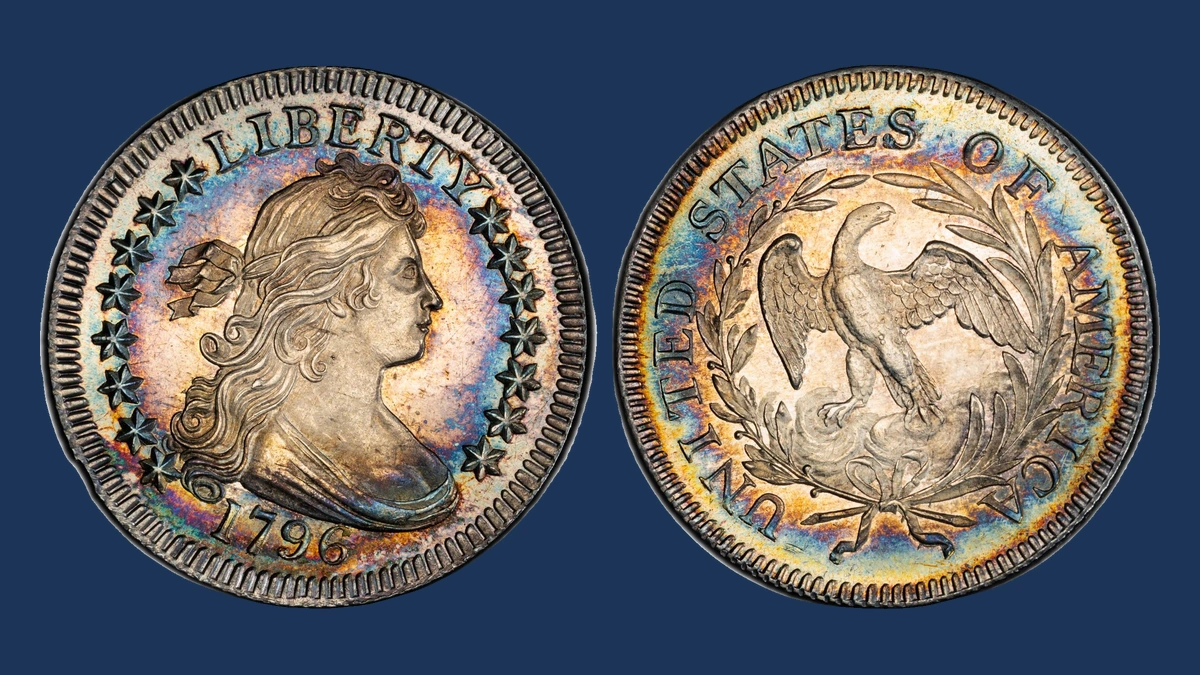
A narrow ridge may appear above the third left star on a B-2 quarter. Other examples show a crack between the F of OF and the first A of AMERICA on the back.
A later example also has a larger network around LIBERTY. These are different recorded patterns, not a checklist that every coin must satisfy.
The ridges formed when silver entered cracks in the steel stamping tools. The coin surface rises along the break instead of being cut into.
A scratch, by contrast, removes or pushes aside metal after the design is present.
Estimated Value
For worn through attractive unworn examples, estimate $8,000–$300,000. A crack can help identify the tools used, but it rarely explains the value of this rare date by itself.
The exceptional MS66 sale at $1,740,000 in January 2022 shows how far outstanding condition can exceed that working range. It is a general 1796 market comparison, not a price assigned to a particular crack.
Judge ordinary cracked examples against coins with comparable wear and surfaces.
How to Identify
Choose the matching variety before searching for a line. On B-2, inspect above the third star counted upward from the lower left; the other recorded paths belong to different examples.
On the back, examine the space between F in OF and A in AMERICA. A larger pattern around LIBERTY needs its own comparison photograph rather than being added to that back crack.
Check the height with angled light. A raised ridge supports a tool crack, while a groove suggests a scratch.
Some sections can disappear under wear or weak striking.
Follow the surviving path across neighboring details and compare it with the correct example. Matching its route and raised surface is the practical check, not simply finding any line.
Conclusion
For 1796 quarters, the coin’s identity and preservation matter before an error premium is considered. A real layer separation, connected crack, or repeated design needs a different kind of close inspection.
The working estimates here run from $8,000–$300,000, with exceptional high-grade coins reaching far more. Keep reported types separate from confirmed examples, and never treat a normal rare-date auction price as the added value of one small mark.