1801 Dollar Coin Error List with Pictures

Liberty can appear to wear a double collar on an 1801 dollar. One example with those clash marks sold for $4,935 in June 2016 at Heritage.
This 1801 Draped Bust Dollar error list also looks at missing letter feet and raised lines or bumps on the eagle side. Estimated whole-coin prices range from $1,000–$25,000.
Compare the features below before deciding whether an unusual line came from the Mint or later damage.
1. 1801 Draped Bust Dollar Missing Lower-Right Feet on T
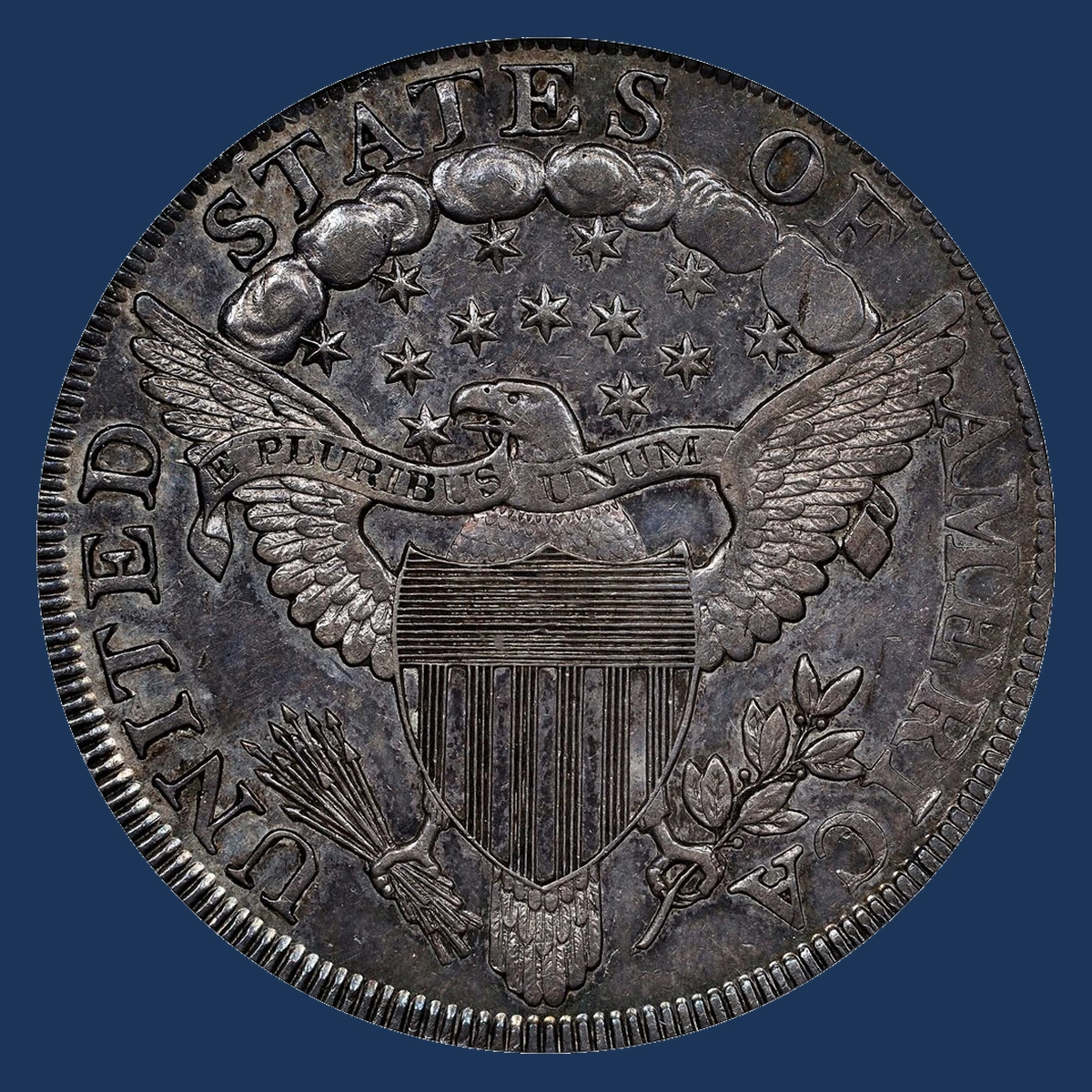
The lower-right foot of T can look incomplete in UNITED and STATES. This small letter extension is called a serif.
Catalogs describe partial loss on the BB-214 variety and complete loss on the related BB-213 back design. BB numbers identify particular pairs of stamping tools, not grades.
The missing part is a feature of the lettering carried by those tools. It should not be confused with a fresh piece chipped out of the finished coin.
Wear or a weak strike can hide small letter details too, so the surrounding lettering must remain clear enough for comparison.
Estimated Value
Identifiable examples in worn through lightly worn condition have an estimated whole-coin range of $1,000–$18,000. A tiny missing serif does not by itself put a dollar at the upper end.
Heritage’s October 2025 archive lists a cleaned BB-213 with Very Fine detail at $2,760. An environmentally damaged BB-214 with similar detail brought $1,320 in the same sale.
Those results show how condition problems can matter more than the small letter feature.
How to Identify
Place UNITED and STATES in the same close-up view so you can compare the T letters together. Use a magnifier to inspect the lower-right foot of each one.
If all nearby letter feet are worn flat, the missing extension may simply reflect circulation wear. Better-preserved neighboring letters give a more useful comparison.
Check the full coin against BB-213 or BB-214 photographs before assigning the feature. Partial and complete loss belong to different tool combinations, and one weak T cannot distinguish them reliably.
Use angled lighting to see whether dirt covers a surviving trace. Matching the two affected letter feet alongside the correct whole-coin design is the clearest test.
2. 1801 Draped Bust Dollar Raised Eagle-Side Cracks and a Small Letter Bump
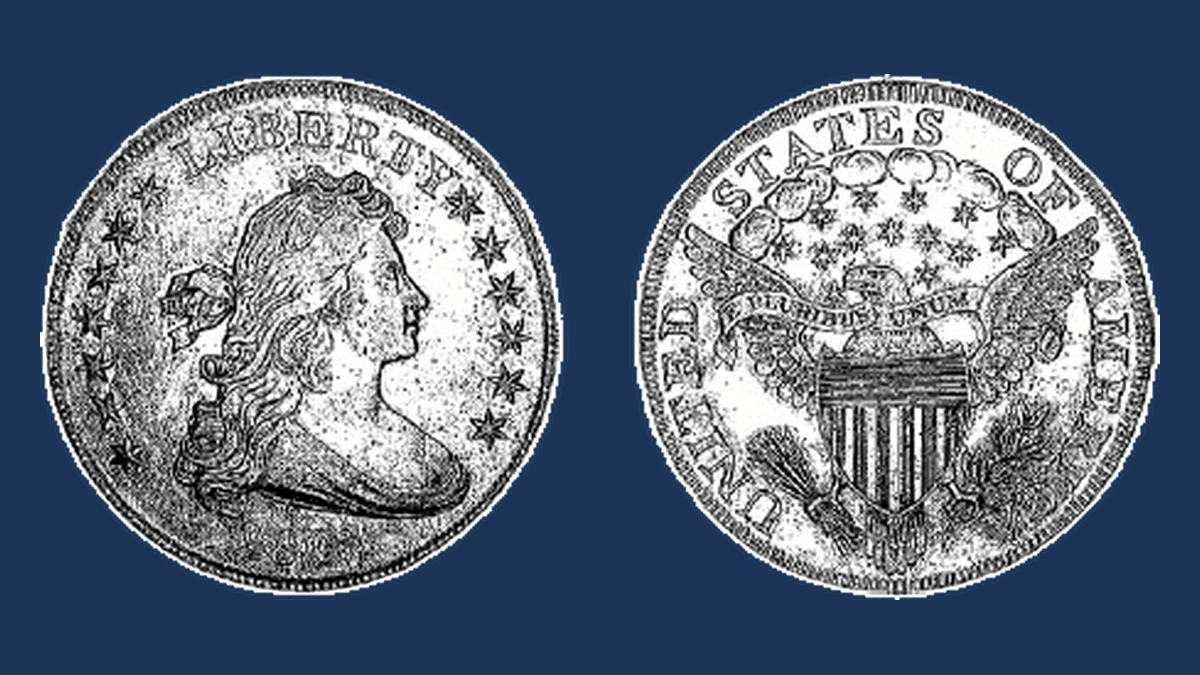
A fine raised line may join the eagle’s feathers to nearby lettering or the border. On BB-212, the listed paths include a feather-to-A connection and a tiny line from another feather to the left rim.
BB-214 has a separate line between the arrows and leg feathers. A later stage adds a line from the border toward cloud six.
One BB-212 dollar also has a small raised spot just right of the foot of I in AMERICA. That spot was described as a die chip, formed when metal filled a small break in the stamping tool.
Estimated Value
Estimate $1,000–$25,000 for circulated dollars with these identified cracks or the small letter-side chip. The range covers different tool pairs and levels of preservation.
The $4,935 BB-212 XF45 clash-marked coin discussed below is a same-variety market comparison. It should not be treated as the specific earlier collection coin with the reported chip.
Specialist interest may favor a clear crack pattern, but harsh cleaning, holes, or repairs can substantially reduce value.
How to Identify
Choose the correct back-design photograph before tracing lines: BB-212 and BB-214 do not share the same crack route. Their catalog numbers identify different pairs of stamping tools.
For BB-212, inspect the feather connections toward AMERICA and the left border under a magnifier.
For BB-214, look between the arrows and the eagle’s leg, then toward cloud six. Follow any line through the smooth spaces as well as the design.
A crack in the tool generally leaves a raised line, while a later scratch cuts into the surface. The small chip comparison belongs beside the foot of I in AMERICA.
Match the location and path, rather than treating every line near OF as a crack.
3. 1801 Draped Bust Dollar Extra Collar and Cloud Traces
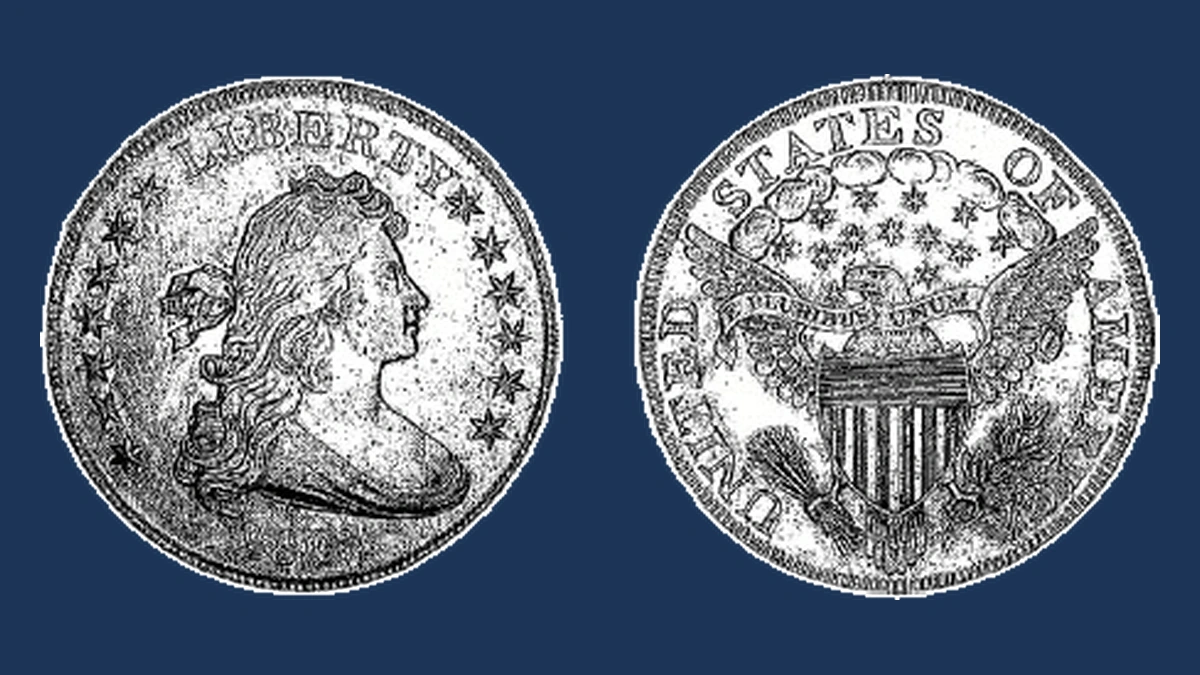
The extra collar below Liberty’s neck is a faint transfer from the opposite stamping tool. The tools struck each other without a blank between them, leaving marks that later appeared on coins.
On one stage of BB-212, two collar-like lines show near the top of the bust. Cloud traces appear near the date and extend toward star three.
After workers polished the tool, one collar line and much of the lower marking disappeared. A line through OF on the back is also described as clash transfer rather than a crack.
Estimated Value
Heritage’s PCGS XF45 example brought $4,935 on June 9, 2016. Its catalog explicitly notes double collar clash marks; XF45 means visible wear with much fine detail remaining.
Use an estimated $1,200–$25,000 for circulated BB-212 dollars with identifiable clash traces. Stronger marks make the feature easier to appreciate.
The early dollar’s overall preservation remains central. A single collar after tool polishing should not automatically be valued as an entirely different error.
How to Identify
Begin where Liberty’s neck meets the top of the bust. Under a magnifier, compare the extra collar-like lines with the shape of the eagle’s wing on the opposite face.
Check the date area and nearby star three for matching faint transferred shapes. These may be weaker after the stamping tool was polished.
Turn to OF on the back and compare the reported line with the front drapery. The specialist description identifies that line as a clash mark, so its position alone does not make it a crack.
Compare the pattern as a whole using angled light. The recognizable collar or cloud shape is more useful than simply finding an extra line.
Conclusion
The useful clues on an 1801 dollar are specific: two T feet, particular eagle-side lines, or a collar-like clash shape. Comparing the correct tool pair keeps unrelated marks from being mixed together.
Estimated whole-coin values span $1,000–$25,000 for the circulated examples covered here. Strong detail and original surfaces support better prices.
A faint mark may still be meaningful, but damage or weak striking can imitate the same small feature.