2012 Penny Error List with Pictures

The edge of a 2012 penny deserves as much attention as Lincoln’s portrait. A step, a missing piece, or a raised burr can point to very different mistakes.
This 2012 penny error list spans estimated values of $2–$2,000. For comparison, an older cent struck on a dime blank brought $372 in September 2025—a wrong-metal error, not an ordinary damaged edge.
Below, learn which details separate the reported types and which measurements help identify them.
1. 2012 Lincoln Penny Die Clash (Estimated Up to $100)
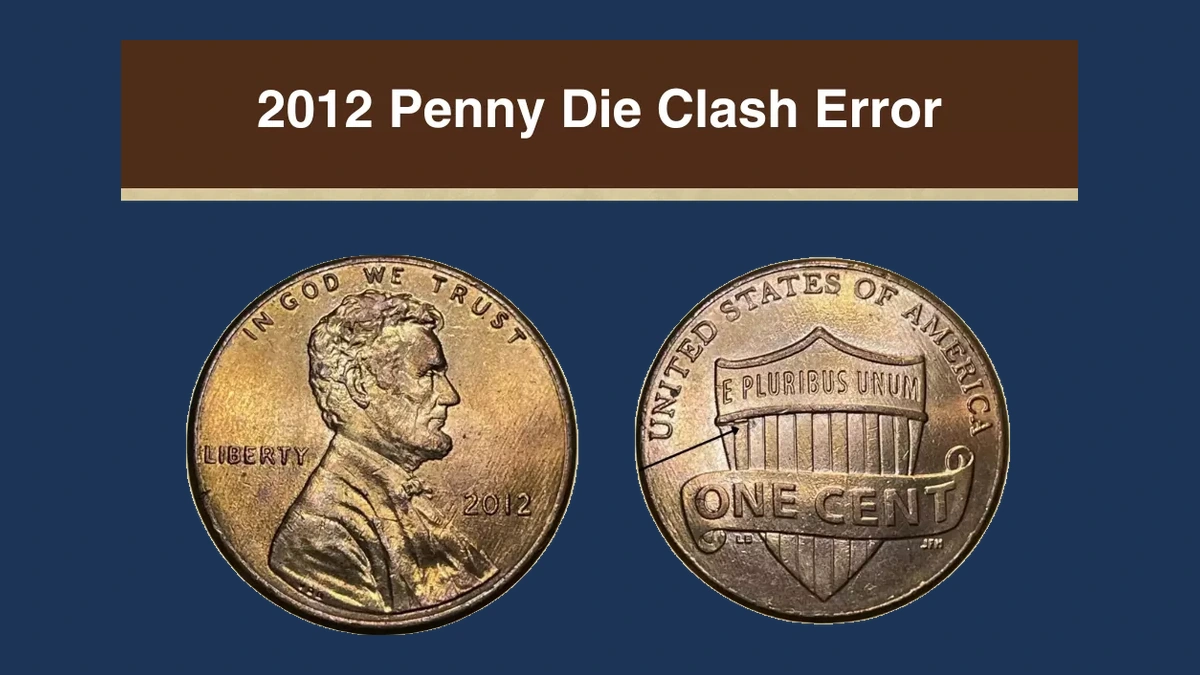
Lincoln’s outline belongs on the front, but parts of an opposite-side design can sometimes leave faint traces elsewhere. A collision between the stamping tools can explain that surprise.
The tools are called dies. When they touch without a blank between them, each may mark the other.
Coins made afterward can carry those extra lines alongside the normal portrait or shield. The lines need to fit the opposing design.
Clashes are reported for 2012, but no single position identifies every example. Scratches and lines left by polishing a tool require different explanations.
Estimated Value
Clash marks with a recognizable shape can be estimated at $5–$100. Faint examples tend toward the bottom; obvious traces on a clean, unworn penny support more.
This range compares similar modern Lincoln cent errors. It is not an auction result for one named 2012 specimen.
A magnified photograph should make the matching design understandable. If the seller cannot distinguish the lines from ordinary scratches, the asking price alone supplies no reason to pay an error premium.
How to Identify
Begin by tracing a suspected line on a photograph. Compare its curve with the other face rather than searching for any unusual mark.
The designs must fit the positions of opposing stamping tools. Several random scratches crossing Lincoln do not form a clash simply because they overlap.
Normal cents weigh 2.50 g and measure 19.05 mm. Use a scale and calipers when safely accessible, and inspect the normally smooth edge for later damage.
Under a 10× magnifier, separate surface cuts from lines formed with the coin. A mark from a polished tool is not automatically a clash.
An identifiable fragment of the opposite design provides a much stronger match than an isolated unexplained line.
2. 2012 Lincoln Penny Rim Burr (Estimated Up to $100)
A burr is a small projecting piece of metal along an edge. One listed 2012 Philadelphia penny carries a front-rim burr identified as a Mint error.
The same coin also has front-side damage. Those are two different facts about one specimen, not two Mint errors.
NGC described it as Uncirculated Details, meaning it has no circulation wear but does have a condition problem. That distinction can affect both appearance and price.
The burr’s exact position must be checked on the coin. A bent rim caused by a later impact should not receive the same identification.
Estimated Value
The estimated range is $10–$100 for an identified Mint-made rim burr on a modern penny. Size, visibility, and later damage all affect where a coin fits.
The 2012 GreatCollections listing ended in July 2026, but its sale amount is hidden from public view. Its $20 starting bid is not a sale price.
The damaged front of that coin also makes it a poor direct match for an otherwise clean example.
How to Identify
Keep a certified coin in its holder and read both parts of its label. On this example, the rim burr is the error; front-side damage is the condition problem.
For a loose coin, inspect the rim sideways with a 10× magnifier. Check whether the projection belongs to the original edge or follows a fresh dent.
The usual measurements are 2.50 g and 19.05 mm, with a smooth edge. A scale and calipers can check those when safe access permits.
Do not push the projection back into place or pull it off. Its undisturbed attachment helps an examiner distinguish a manufacturing burr from later bending.
3. 2012 Lincoln Penny Reported Feeder-Finger Marks (Estimated Up to $150)
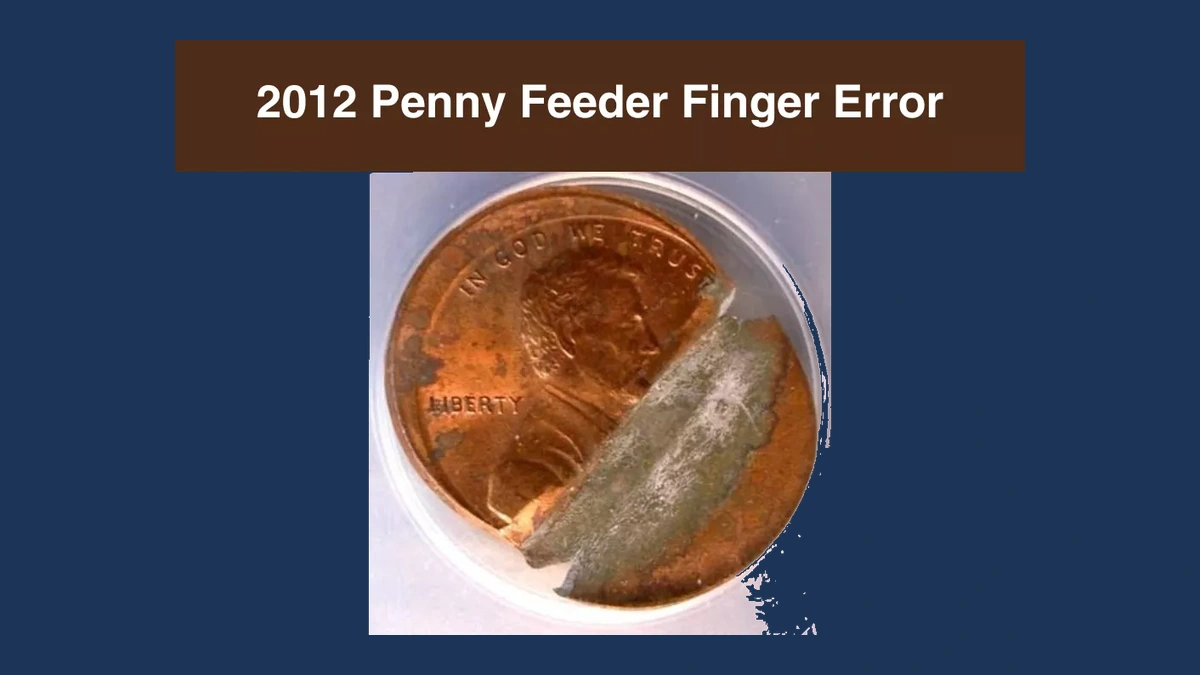
Parallel marks can draw attention to an otherwise normal-looking penny. Some 2012 reports connect them with a feeder finger, the machine part that moves blanks into position.
That name does not settle how a mark formed. Contact with a stamping tool can leave damage that later appears raised on coins.
A part trapped directly during striking can instead leave an impression. These are different paths to a visible mark.
The reported 2012 category needs that distinction resolved on the actual coin. Ordinary rubbing can also leave several lines running in the same direction.
Estimated Value
Use a conditional estimated range of $10–$150 after the marks are identified as a Mint production error. Clear, prominent features offer more collector appeal than faint lines.
The estimate compares minor tool-contact and struck-through errors on modern cents. It is not a confirmed 2012 feeder-finger sale.
A professional identification should explain which mechanism caused the marks. A seller’s nickname, or the mere presence of parallel lines, does not establish the price category.
How to Identify
Tilt the coin under one light and watch the shadows around each line. A raised ridge and a sunken groove need different explanations.
Use a 10× magnifier to follow the marks through nearby lettering. Later scratches can cut across already finished details and leave disturbed metal beside them.
If loose and safely accessible, check with a scale and calipers against 2.50 g and 19.05 mm. Look around the smooth edge for related scraping.
Record both faces without assuming that all parallel lines came from the same event. A clear photograph should show where each mark starts and ends.
The first useful distinction is whether the feature rises from the struck surface or cuts into it.
4. 2012 Lincoln Penny Doubled Die (Estimated Up to $150)
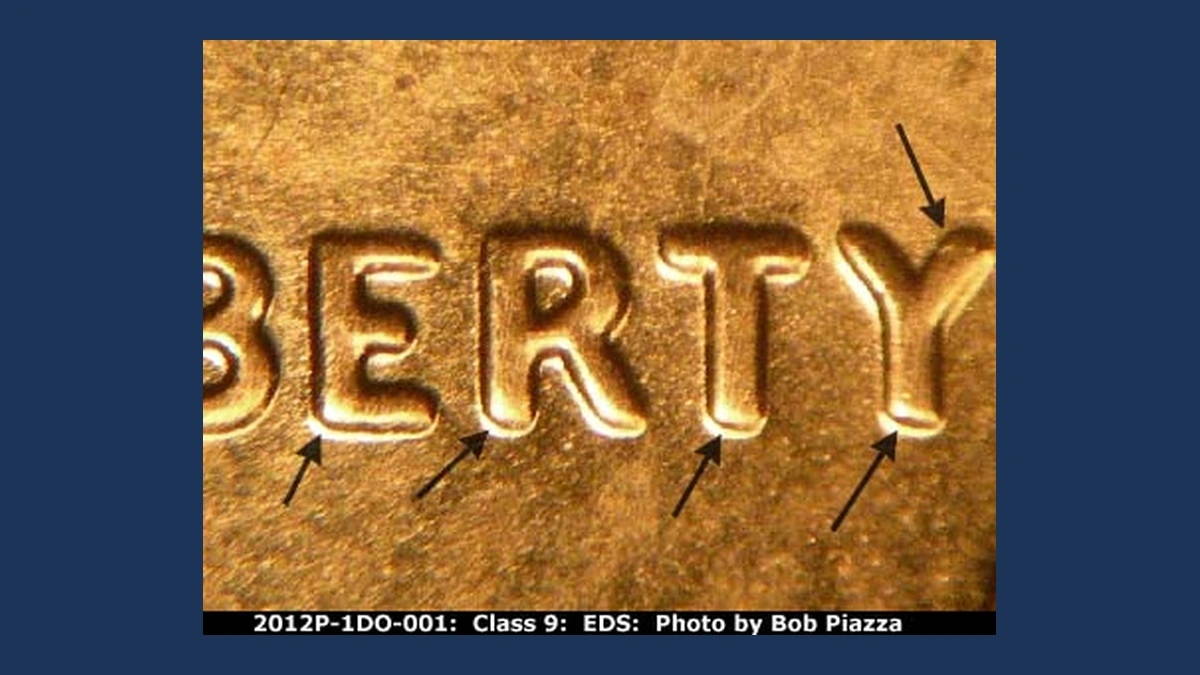
LIBERTY can look thicker than expected on some 2012 Philadelphia pennies. Other examples have thicker lower edges in OF AMERICA on the back.
A doubled die is a stamping tool carrying repeated detail. It passes that detail to the coins it makes.
John Wexler described a 2012 back-side variety whose extra thickness increases toward the right. The small designer initials JFM also show the effect.
The front and back reports concern different patterns. They should be checked separately, since a thick front letter does not prove the shield side has the same error.
Estimated Value
Minor identified doubling supports an estimated $5–$40. Stronger examples with clear letter shapes and attractive surfaces can fit approximately $40–$150.
No single price applies to every thick letter on a 2012 penny. A weak strike, worn tool, or reflection can resemble extra thickness without creating a collectible doubled die.
The figures compare modest modern cent varieties. They do not claim a completed sale for either the reported LIBERTY pattern or the separate back-side variety.
How to Identify
The most useful back-side comparison comes from Wexler’s 2014 report. Follow the lower letters in OF AMERICA from left to right, then examine JFM.
For the front, compare LIBERTY with the same confirmed variety under a 10× magnifier. Do not borrow a back-side feature to identify front-side doubling.
A normal penny is 2.50 g and 19.05 mm with a smooth edge. A scale and calipers check the blank when it is safely accessible.
Lighting can make ordinary letters look thick, so change the light direction. The stronger check is a matching extra shape at the same letter ends, rather than brightness or general swelling.
5. 2012-D Lincoln Penny Partial Collar (Estimated Up to $200)
Look at the edge rather than the portrait for this error. A step can form when only part of the blank sits within the collar.
The collar is the metal ring that limits outward movement during striking. One part of the edge stays restrained while another can spread farther.
A 2012-D example is reported with an MS64 grade, meaning unworn with some marks. The side view is important to its identification.
Two circles visible on a face are not enough. A rolled or squeezed edge can create a similar border after the coin leaves the Mint.
Estimated Value
Estimate $15–$200 for a genuine 2012-D partial-collar strike. A clearly visible edge step and attractive surfaces support the higher part of that range.
The reported MS64 description concerns condition, not a sale amount. These prices instead use comparable modern cent collar errors.
A subtle line that cannot be shown from the side is a weaker buying case. The edge must show the actual difference in restraint, rather than ordinary rim wear or a later squeeze.
How to Identify
Place an accessible penny beside a normal one and compare their edges at the same height. Avoid gripping a projecting edge with pressure.
Normal specifications are 19.05 mm and 2.50 g. Calipers can reveal uneven spread, while a scale checks that the full blank is still present.
View the edge with a 10× magnifier. A partial-collar strike should show a change in level between the held and expanded portions.
The cent’s edge is normally smooth, so missing grooves prove nothing. Check also for rounded metal pushed inward by later rolling.
A distinct edge step, supported by the surrounding struck shape, is the quickest way to separate this error from an ordinary double-looking rim.
6. 2012 Lincoln Penny Clipped Blank (Estimated Up to $250)
A missing section can make a penny look as though someone took a bite from it. A genuine clipped blank already lacked that metal before the design was struck.
The punching process can overlap an earlier hole or reach an unsuitable part of the metal strip. The incomplete blank may still pass through the press.
The 2012 report identifies the category without fixing one clip shape or percentage. Those details depend on the individual coin.
Later cutting leaves a different history. Its edge and the nearby design need to be inspected together.
Estimated Value
A 2021 Shield cent with a 5% straight clip sold for $114 in September 2025. It was graded MS64 Red: unworn with some marks and original copper-red color.
For 2012, estimate $15–$250 for genuine clips, depending on size and condition. The 2021 result is a different-year comparison, not proof of the same clip shape in 2012.
More missing metal does not always mean more value if the date or much of the design disappears.
How to Identify
A scale often records less than the normal 2.50 g when part of the blank is missing. That is a useful clue, but filing can also reduce weight.
Check an intact span with calipers against 19.05 mm. Examine the normally smooth edge, especially where the missing section meets undamaged metal.
Under a 10× magnifier, look for tool cuts and for design that formed beside the existing gap. The rim directly opposite a genuine clip may also be weak.
That opposite-rim weakness is helpful when present, but its absence does not decide the issue alone. The strongest quick check combines an original-looking gap with nearby design formed around it.
7. 2012-D Lincoln Penny Struck-Through Error (Estimated Up to $300)
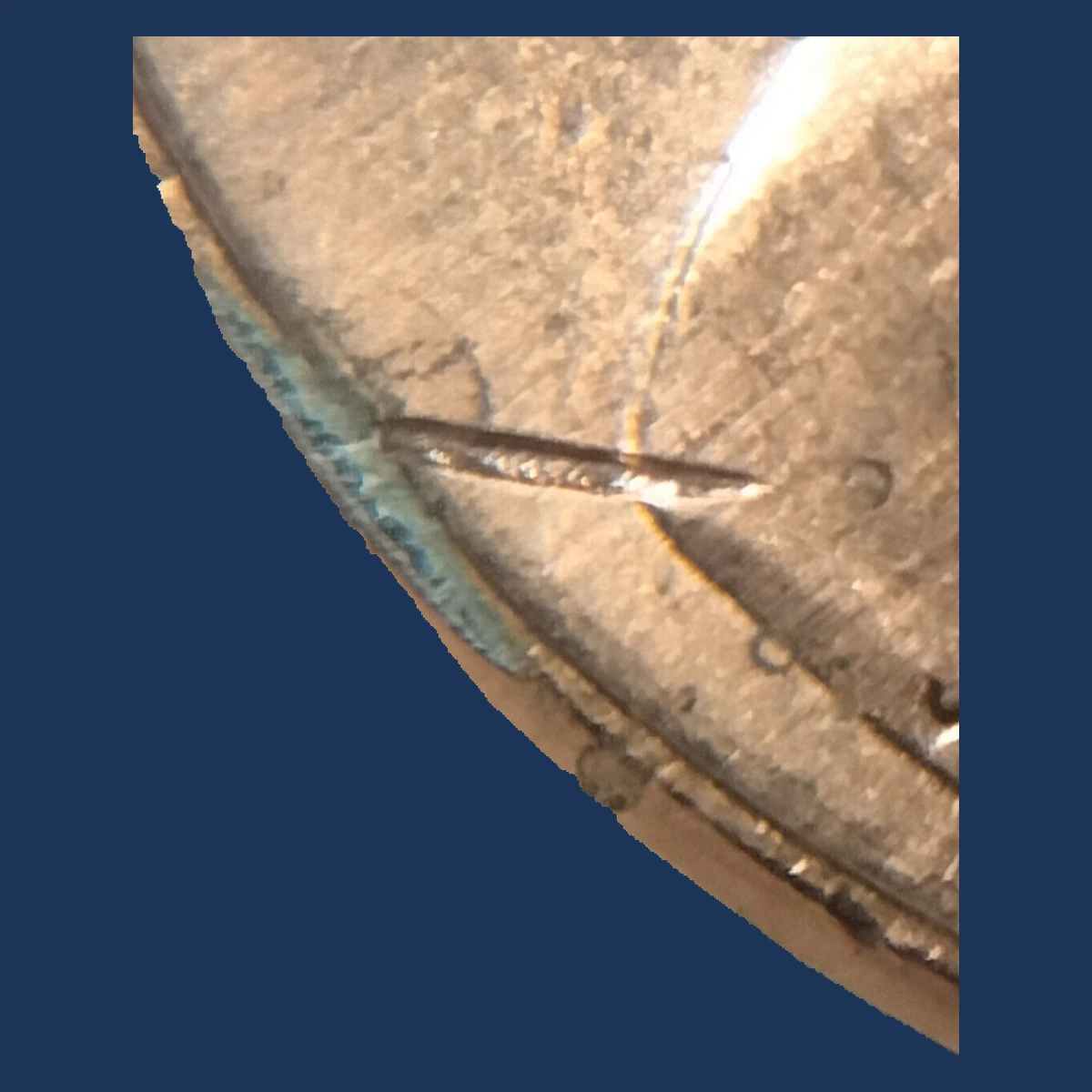
A shallow hollow can interrupt Lincoln’s side while nearby details remain clear. Something between the blank and stamping tool may have stopped the design from forming normally.
This is a struck-through error. The 2012-D report describes a front-side example graded MS64, or unworn with some marks.
The object is not identified by that description. An impression should not be called wire or fabric without a recognizable shape.
Wear, corrosion, and later gouges can also remove detail. Their effects on the surrounding surface help separate them from an obstruction present during the strike.
Estimated Value
Compare smaller blocked areas with an estimated $10–$60 range. A larger or more distinctive genuine impression can support roughly $60–$300.
For scale, a 2021-D cent struck through grease brought $84 in September 2025. The Heritage sale results also include other modern cent errors used for comparison here.
That later coin does not establish the material involved in the 2012-D impression. Price the visible feature and condition of the individual coin.
How to Identify
Follow a letter or portrait detail into the depression using a 10× magnifier. Notice whether it fades where the obstruction would have blocked the tool.
A sharp gouge may instead cut through a finished design and push metal along its sides. Corrosion often leaves a rougher, irregular surface.
Weigh an accessible coin with a scale, then measure its width with calipers. Normal values are 2.50 g and 19.05 mm; the edge is smooth.
Look at both faces so damage on the opposite side is not overlooked. The reported error is on the front, without a fixed object or location established here.
A local impression interrupting otherwise sharper original design offers the most direct starting point.
8. 2012 Lincoln Penny Broadstrike (Estimated Up to $350)
A broadstrike can look unusually spacious around the outside of the design. The blank spread beyond its normal boundary because the surrounding collar did not hold it properly.
The full intended design remains on the metal. It need not sit perfectly in the middle of the expanded shape.
A Philadelphia 2012 penny is reported in MS64 condition, meaning unworn with some marks. Philadelphia cents from this year normally have no mintmark.
The smooth edge is ordinary for a penny. Extra width and the way the design survives are the features that need attention.
Estimated Value
Broadstrikes with modest expansion can be estimated around $20–$80. A wider, visually stronger example with clean original detail may fit approximately $80–$350.
These estimates use comparable modern Lincoln cent errors. The reported 2012 MS64 grade does not supply a recorded selling price.
Collectors need to see natural outward spread, not crushed detail from later flattening. A large coin with heavy damage can be less desirable than a smaller but clearly genuine broadstrike.
How to Identify
First check the outer lettering on both faces. Missing words beyond an unstruck crescent suggest an off-center strike rather than a complete broadstrike.
Measure the width in several directions with calipers if the coin is accessible. Compare with a normal 19.05-mm penny and check its weight against 2.50 g using a scale.
The smooth edge may be wider or uneven. Under a 10× magnifier, search for signs that the coin was hammered or squeezed after striking.
Flattened high points and damaged letters weaken the broadstrike explanation. Complete, naturally struck details inside an expanded border provide the clearest contrast with an ordinary flattened penny.
9. 2012 Lincoln Penny Die Breaks and BIE (Estimated Up to $400)
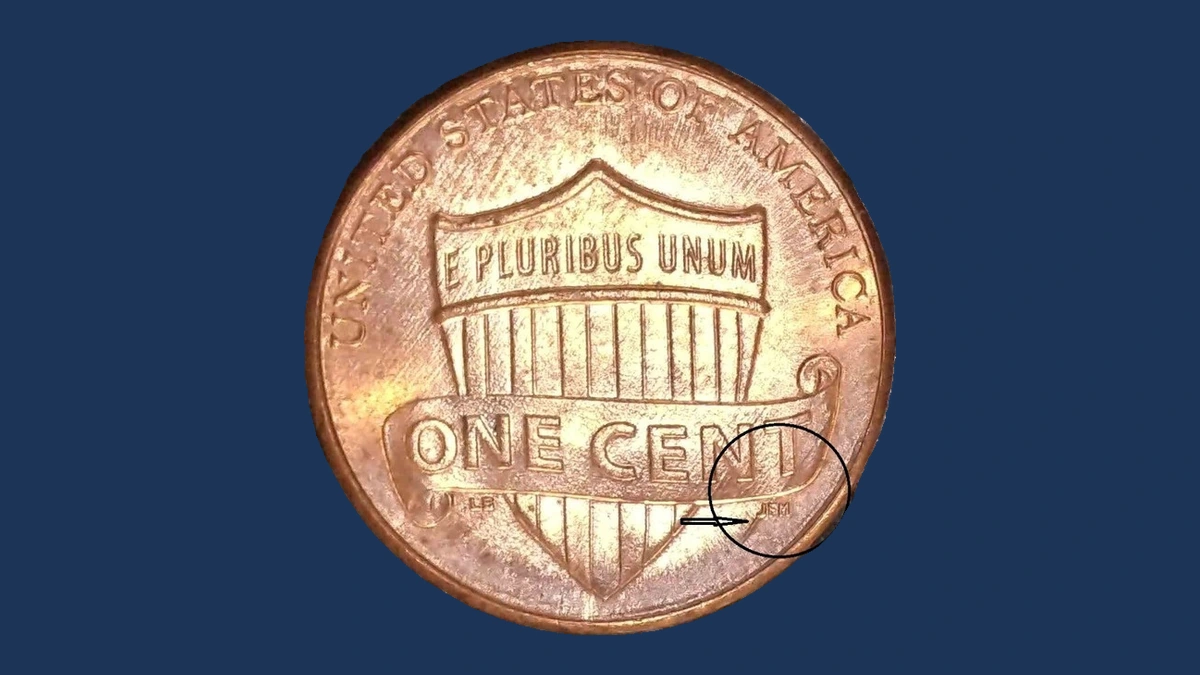
A thin raised line records a crack in a stamping tool. When a small piece breaks away, the same process can leave a raised bump instead.
A 2012-D BIE report places an I-shaped bump between B and E in LIBERTY. Larger Philadelphia reports include a rim-connected cud and a retained break.
A cud reaches the edge where a tool piece is missing. With a retained break, the damaged piece stays partly in place and can still stamp some detail.
These forms should not be identified by size alone. Their boundaries and surviving designs tell the fuller story.
Estimated Value
Allow an estimated $2–$50 for small cracks and BIE chips. Larger retained breaks or rim-connected cuds can fit approximately $50–$400.
A 2021-D Shield cent with a retained cud sold for $186 in September 2025. That separate coin supports a comparison for a broken tool piece, not a price for every tiny bump.
The 2012 reports cover different coins and conditions. Several marks on one penny should be valued together rather than added as separate full-price errors.
How to Identify
Raised metal is the first clue, but not the last. Copper-plating bubbles and attached dirt can imitate small tool breaks.
Check B and E in LIBERTY with a 10× magnifier. An I-like metal bump in that gap supports BIE; a random lump elsewhere does not.
For larger patches, trace their boundaries and look for remaining design. A retained piece can leave detail within the broken area, while a cud connects to the rim.
An accessible example can be checked with a scale and calipers against 2.50 g and 19.05 mm. The normal edge is smooth.
Follow the raised feature to its boundary: its connection to the rim and any surviving design distinguish the larger breaks.
10. 2012-D Lincoln Penny Off-Center Strike (Estimated Up to $500)
The reported 2012-D example is about 35% off center. A substantial area of its blank therefore sat outside the tools when the coin was struck.
The result combines an empty crescent with incomplete designs. Both sides should show the effect of the misplaced blank.
The example is described as MS63, meaning unworn with noticeable marks. That condition description is separate from the amount of offset.
A complete readable date gives collectors a clear identity. The direction of the shift must come from the actual coin, not from the percentage in its description.
Estimated Value
For small off-center shifts, an estimated $20–$100 is reasonable. Stronger examples with a clear date and attractive surfaces can fit roughly $100–$500.
The reported 35% 2012-D piece belongs to the more visible type of error. Its MS63 description does not establish one exact price.
These ranges compare similar modern cents. A large blank crescent adds visual interest, but lost dates, scratches, or damaged edges can reduce what a collector is willing to pay.
How to Identify
Keep the plain crescent in view when photographing the coin. A close crop of the portrait hides the most useful part of an off-center strike.
Look for 2012 and the D, which marks Denver. Turn the coin over and check that the back also has an incomplete design beside unstruck metal.
With a scale and calipers, compare an accessible example with the normal blank’s 2.50 g and 19.05 mm. The final outline can change during the misplaced strike.
Inspect the smooth edge and blank area with a 10× magnifier for later cutting or grinding. An intact empty crescent beside matching design loss on both faces identifies the basic error.
11. 2012 Lincoln Penny Reported Wrong-Blank Error (Estimated Up to $2,000)
A penny design can be struck on a blank intended for another coin. That can change its size, weight, color, or the amount of lettering that fits.
This is often called a wrong-planchet error; planchet simply means the prepared blank. The 2012 category does not identify a confirmed blank type or mint here.
It therefore needs a coin-by-coin metal check. A silver-colored penny alone cannot establish that it began as a dime blank.
Chemically removing copper exposes a modern cent’s gray zinc. Filing or corrosion can also reduce its size without creating a genuine wrong-blank strike.
Estimated Value
The working estimate is $300–$2,000 for an authenticated 2012 wrong-blank strike, depending on the metal and surviving design. It is conditional on identifying the actual blank.
An older 1981-D cent struck on a clad dime blank sold for $372 in September 2025. Its different design and known blank make it a comparison, not evidence of a 2012 dime-blank specimen.
Color changes or a low weight alone do not justify this range.
How to Identify
Record weight before guessing the metal. A normal 2012 penny weighs 2.50 g and measures 19.05 mm, with a smooth edge.
Use a scale and calipers when the coin is safely accessible. Compare the results with the proposed blank only after one has been identified.
A 10× magnifier helps reveal stripped copper, filed edges, or corrosion around missing detail. Those alterations can imitate the measurements of smaller coins.
Inspect the edge’s metal construction as well as its shape. Keep a sealed coin in its holder and use the grading service’s recorded findings.
The useful confirmation is a genuine 2012 cent design on an identified wrong blank, supported by matching metal and measurements.
Conclusion
The 2012 errors range from small raised BIE marks to designs struck outside their normal position. Estimated prices run from $2 to $2,000, with the highest range reserved for an authenticated wrong blank.
For an edge problem, a side view often tells more than another close-up of Lincoln. For doubling, compare the exact letters.
Keep scratches, corrosion, and added damage separate from the manufacturing feature you are trying to identify.