1994 Penny Error List with Pictures

A 1994 penny can carry an older year underneath its own. One cent struck over a 1993 dime sold for $3,120 in June 2024.
Other pieces in this 1994 penny error list reveal their difference through gray metal, an extra column, or a back design turned almost upside down. Estimated values range from $2 to $4,000.
The examples below explain those changes in plain language and show which details to check before comparing prices.
1. 1994 Lincoln Memorial Penny BIE Die Chip (Estimated Up to $75)
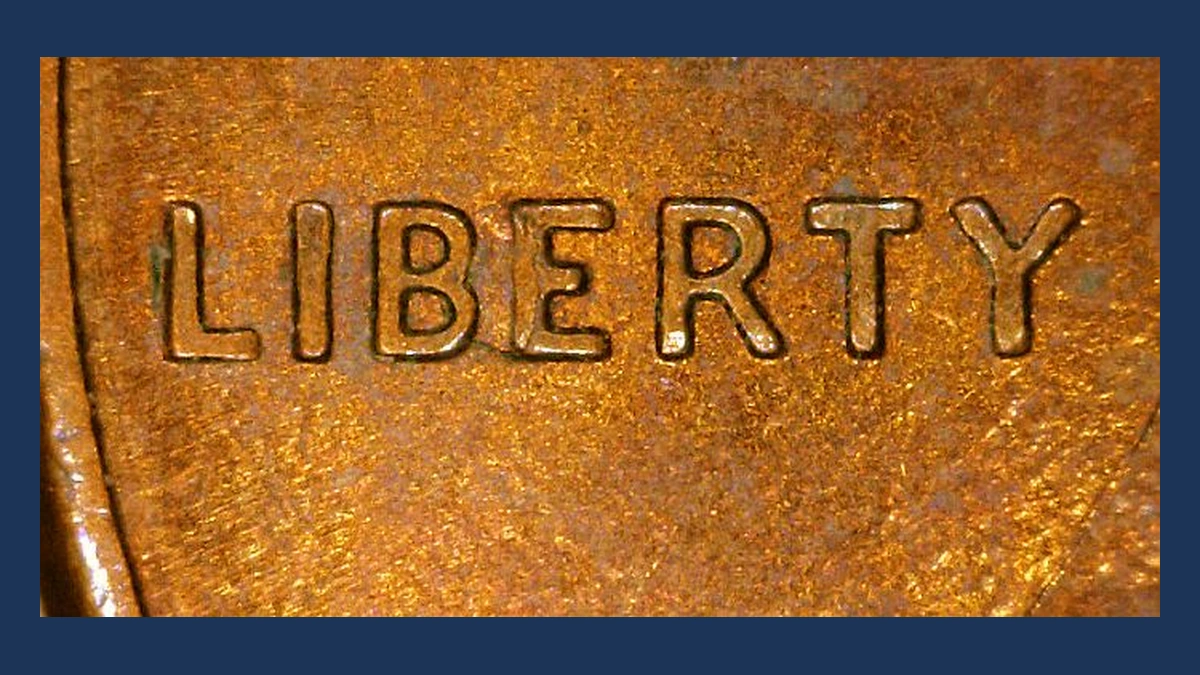
An extra-looking I between B and E in LIBERTY can actually be a small raised lump. Collectors use the nickname BIE for this particular letter-gap feature.
The stamping tool, called a die, lost a little piece of metal. During striking, coin metal filled that opening and formed the extra raised shape.
A BIE is reported for 1994 without a specific mint assigned to the example. The D or lack of a mint letter should be checked on each candidate.
This is a small interior tool break. It is different from a large raised patch connected to the coin’s rim.
Estimated Value
A realistic estimate for an identified small BIE is $2–$75. The strongest prices require a clear bar and an attractive original surface.
This is a working range for small Memorial-cent tool chips, not a claimed auction result for a particular 1994 specimen. A tiny worn lump may bring little above ordinary collector value.
The shape must be part of the coin. Dirt, glue, or a copper bubble near the letters should not receive the same premium.
How to Identify
With a 10× magnifier, center the space between B and E rather than searching all of LIBERTY at once. Check whether the raised feature forms a solid bar or lump.
Move the light across it to distinguish solid raised metal from a cut with pushed-up edges. Avoid picking at anything attached to the surface.
Inspect nearby copper for bubbles or corrosion that might explain the bump. The rest of the smooth edge should be checked for damage.
A loose coin can be weighed against 2.50 g and measured against 19.05 mm with calipers. Those normal figures do not prove a chip.
The best starting clue is an original raised feature specifically between B and E.
2. 1994 Lincoln Memorial Penny Grease-Filled Design (Estimated Up to $200)
The outer lettering can be much weaker than the middle of the coin. Grease or similar material filled parts of the stamping tool and blocked the design.
A 1994 example was cataloged as struck through grease and graded ANACS MS60 Red. That means an unworn coin with noticeable marks and remaining copper-red color.
Its weak border can resemble a very lightly struck test piece. The recorded explanation is grease-filled detail, rather than proof that someone was testing the press.
Weakness alone has several causes. Wear, low striking pressure, and later polishing can also reduce detail, so the surrounding surface matters.
Estimated Value
Estimate $5–$200 for confirmed grease-filled examples, with minor weak letters at the lower end. A broad, visible contrast between sharp and blocked detail can attract more interest.
A 2021-D cent struck through grease sold for $84 in September 2025. It provides a recent comparison, although that coin has a different back design.
Do not add a special test-coin premium to the reported 1994 example. Its value rests on the visible obstruction effect and its preserved surface.
How to Identify
Compare the center with the outer letters under a 10× magnifier. On the reported example, weakness becomes stronger toward the outside.
Look for original texture across those weak areas. Polishing lines or scraped metal can explain missing detail that once existed.
Check Lincoln’s high points to distinguish local weakness from general wear. A missing word by itself does not establish grease or a test strike.
Use a scale and calipers on a loose piece to compare 2.50 g and 19.05 mm. Examine the plain edge for later flattening.
The useful pattern is original surface with blocked outer detail and a better-formed center, rather than design removed after striking.
3. 1994 Lincoln Memorial Penny Rotated Back Design (Estimated Up to $400)
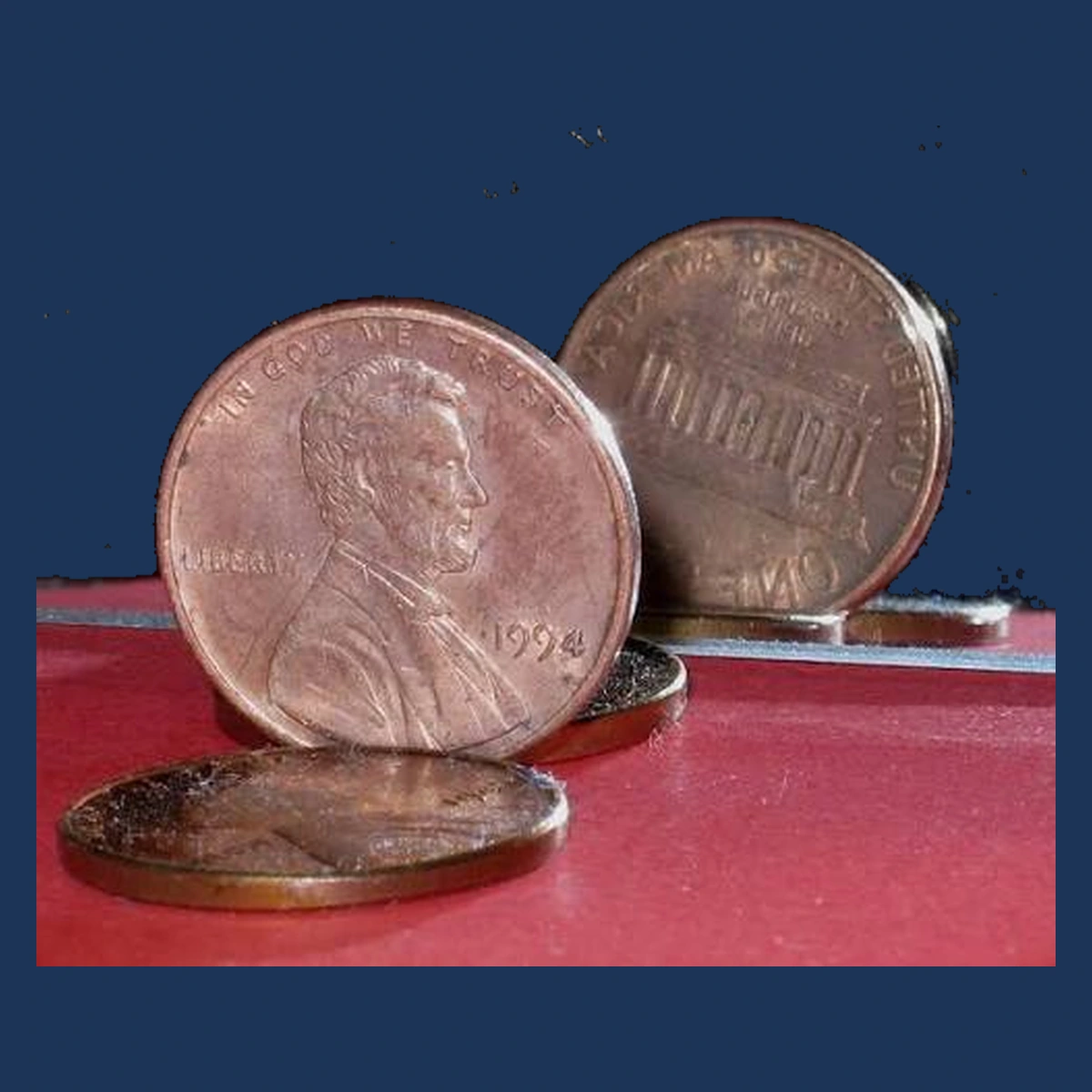
The Memorial can appear almost upside down after a normal top-to-bottom flip. One of the stamping tools was turned away from its intended position.
A listed 1994 example has a 165-degree clockwise rotation and a PCGS MS64 Red grade. That rotation describes the relationship between the faces, not a second strike.
United States coins normally use an alignment that makes the back upright after a top-to-bottom flip. Spinning either photograph independently hides that relationship.
The ordinary portrait and building can otherwise look normal. This error is about their fixed orientation on the same piece of metal.
Estimated Value
For an authenticated large rotation, use an estimated $50–$400. An obvious angle with a readable date and original surfaces is easier to collect than a slight turn.
The reported 165-degree example supplies a specific comparison, but its listing is not assigned a realized selling price here. The estimate follows other modern cent alignment errors.
Photographs must demonstrate the relationship properly. Two separately rotated images do not justify a premium even if they make the back appear inverted.
How to Identify
Hold Lincoln upright, then flip the coin over from top to bottom without turning it sideways. The Memorial should normally finish upright too.
Use an ordinary penny to check your method before judging the candidate. A left-to-right flip gives a different normal result.
Take aligned photographs or a continuous video that keeps the coin’s movement visible. A 10× magnifier can check the design and edge for signs of an assembled novelty piece.
A scale and calipers should show close to 2.50 g and 19.05 mm. Inspect the entire plain edge for seams.
A repeatable turned back after the correct flip supports a rotation; freely spun photographs cannot establish it.
4. 1994 Lincoln Memorial Penny Off-Center Strike (Estimated Up to $500)
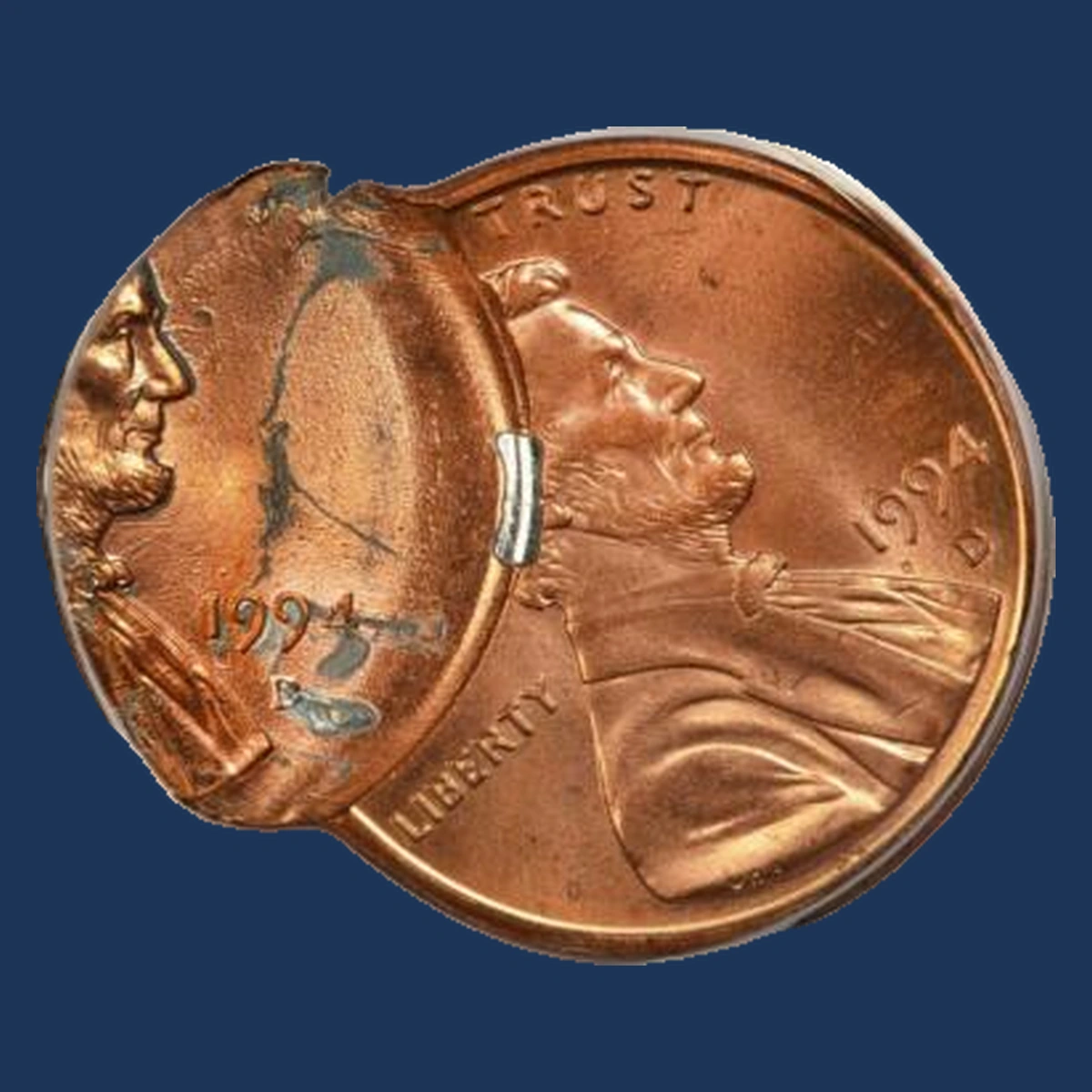
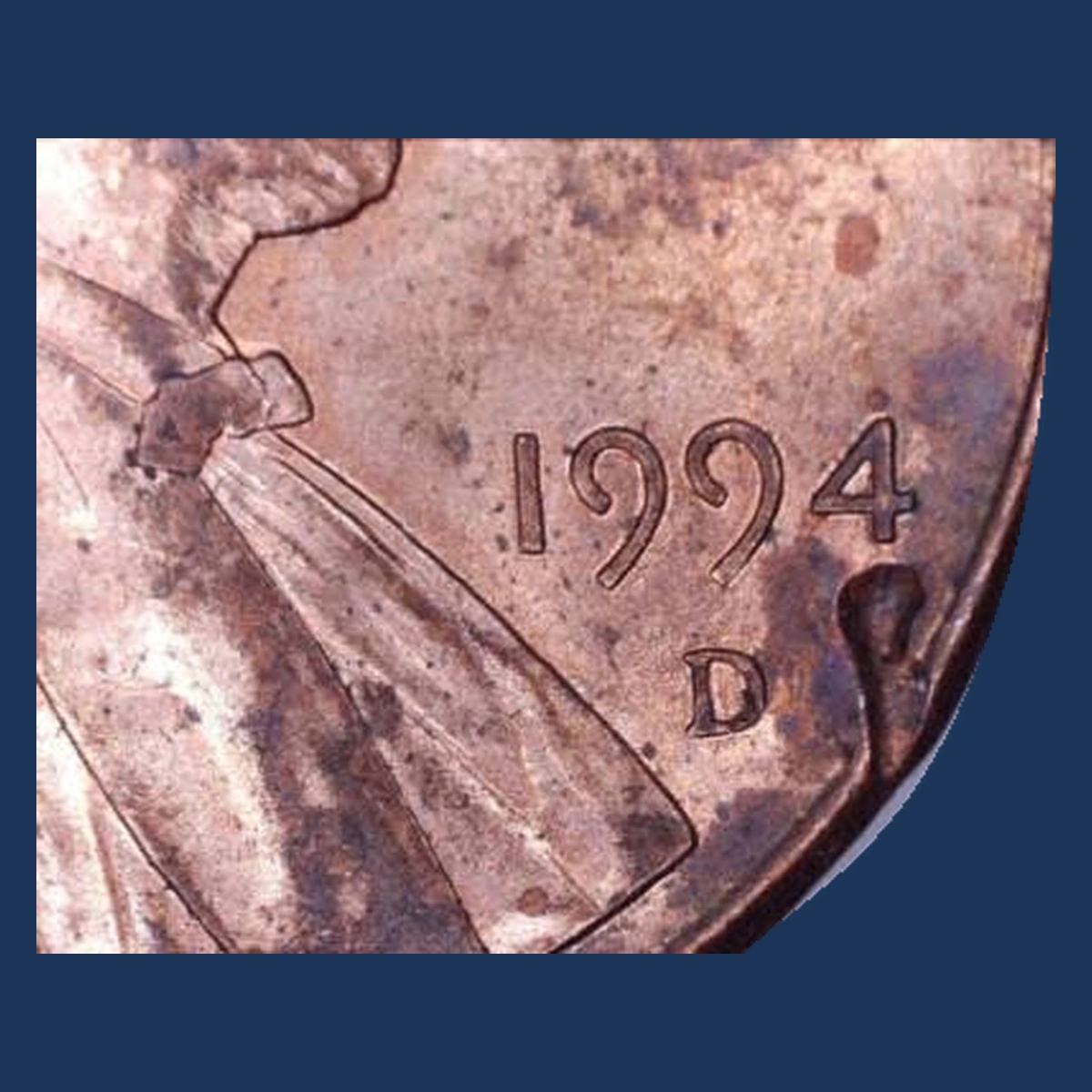
A plain crescent remains on one side while the design runs beyond the other. The blank sat partly outside the striking area.
Recorded 1994 examples include Philadelphia and Denver coins with substantial displacement. One Philadelphia coin was graded NGC MS65 Red, and a Denver piece carried MS66 Red.
The reports include a roughly 45% off-center design. The actual direction should be read from each full-coin image rather than assigned to all examples.
The blank metal is still present. Unlike a clip, the error does not require a piece to be physically missing from the original disc.
Estimated Value
An estimated $20–$500 covers small shifts through dramatic dated examples. Readable identity and original surfaces can matter as much as the displaced percentage.
A 2006 cent struck only 4% off center sold for $39 in March 2025. That modest error provides a recent lower-end comparison, not a price for the larger 1994 pieces.
A coin with much of its design missing may be hard to identify. A huge blank area alone does not guarantee the highest price.
How to Identify
Begin at the surviving date and any D below it. A 10× magnifier can help distinguish a faint digit from marks on the unstruck area.
Compare both faces to see whether design loss fits the same misplaced blank. A rim shifted only on one side may involve a tool misalignment instead.
Inspect the transition from plain metal to struck detail for later grinding. The smooth edge should not show that someone cut away the missing design.
Use a scale against 2.50 g and calipers against a normal 19.05 mm outline, allowing for spreading. Original metal usually remains despite the shift.
The important combination is unstruck metal beside matching design loss on both faces.
5. 1994 Lincoln Memorial Penny Full or Partial Missing Copper (Estimated Up to $700)
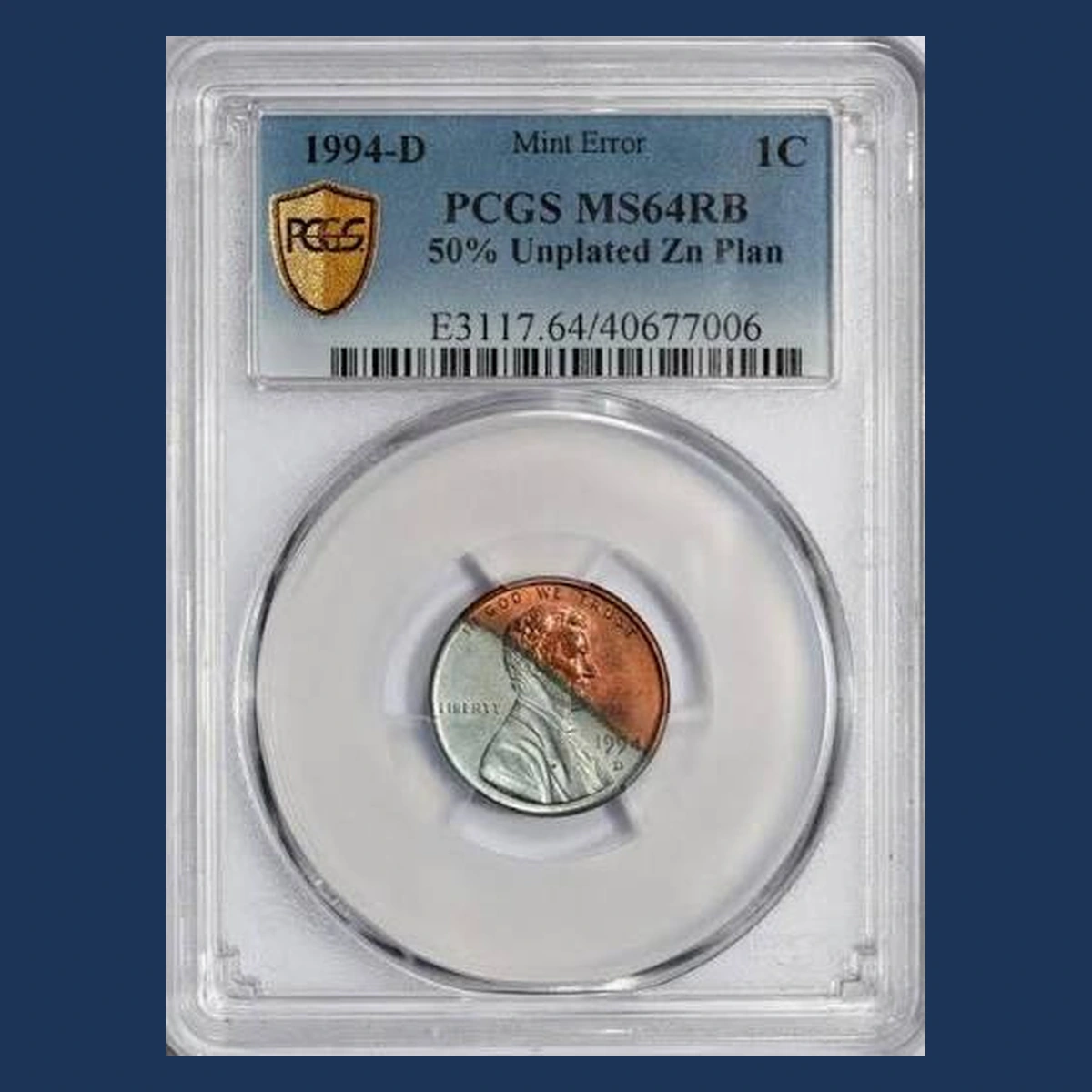
The zinc center of a penny is hidden by copper. If that coating is missing when the blank is struck, gray metal can appear across part or all of the surface.
A Philadelphia 1994 example was certified by NGC as an unplated cent. Denver records include an unplated example and another described as about 60% unplated.
The percentage belongs to that partial-coating specimen. It should not be applied to a different gray coin.
Color names on a label are not a metal test. Surface texture and the remaining coating are more useful for separating an original error from later stripping.
Estimated Value
Use an estimated $50–$700 for confirmed original missing plating. The photographed surface and condition matter more than the percentage alone.
The Philadelphia NGC MS65 example sold for $99 on October 24, 2018. A different-year 1995 unplated cent graded MS67 brought $660 in January 2023.
Those grades describe unworn coins with different levels of preservation. The higher result is a comparison, not a later transaction for the 1994 coin, and chemical stripping does not qualify.
How to Identify
On a partial example, inspect the boundary where copper meets gray zinc. Use a 10× magnifier to compare the fine design on both sides of that line.
For a fully gray coin, examine open areas and lettering for pitting or chemical roughness. Do not scrape the edge to expose more metal.
A scale can compare a loose piece with the coated cent’s normal 2.50 g. Calipers should show an outline near 19.05 mm unless another error changed it.
Check both faces and the smooth edge, then compare with a certified example. A slightly low weight does not distinguish original missing copper from later removal.
The original surface must support the missing-coat explanation.
6. 1994 Lincoln Memorial Penny Double and Multiple Strikes (Estimated Up to $1,000)
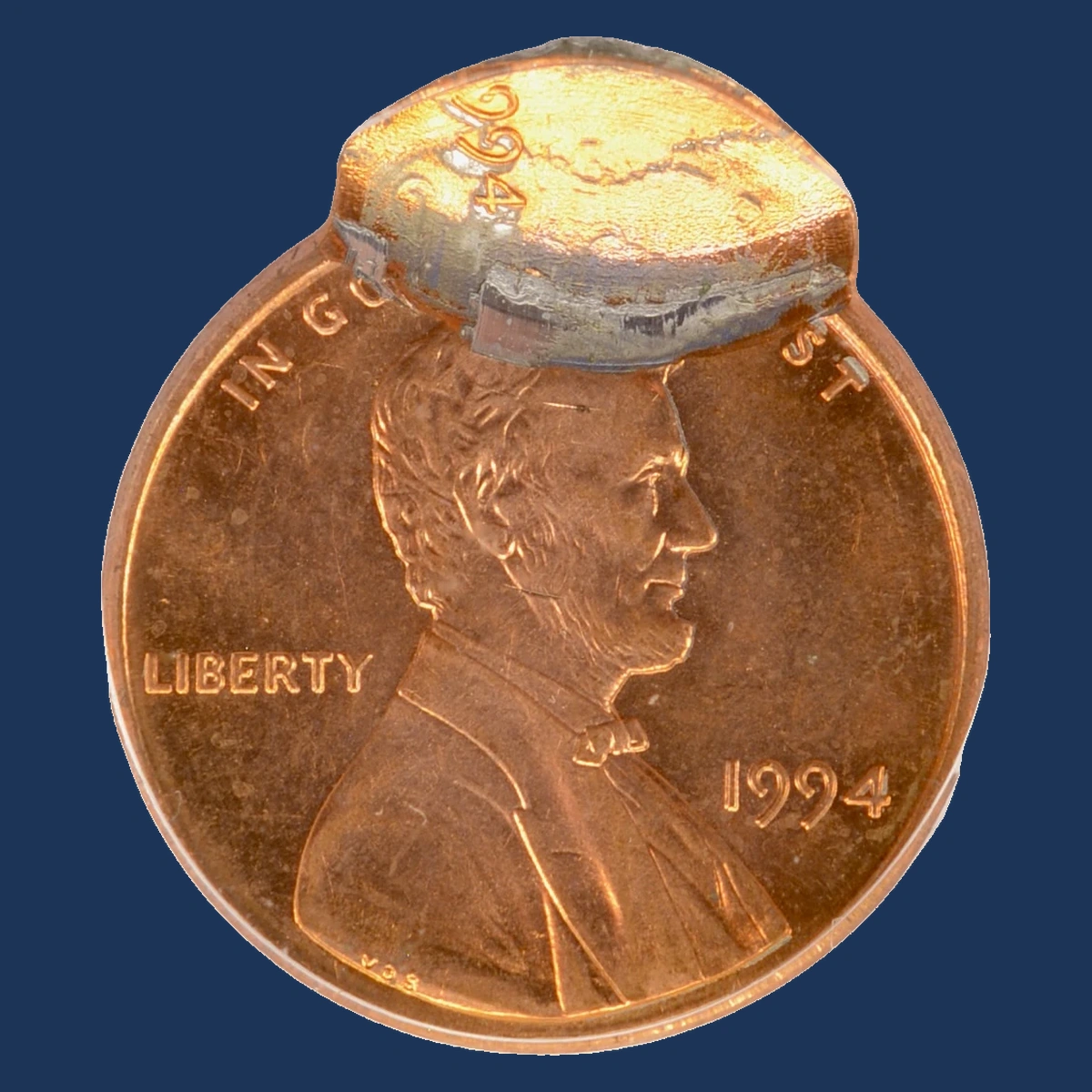
Several design positions can share the same piece of metal. A coin stayed in or returned to the press and received more than one blow.
Recorded 1994 examples include a shifted second strike, a triple strike, and repeated strikes combined with broad outward spreading. Those descriptions belong to different coins.
A Denver example received a second blow about 75% off center with one face blocked. That area lacks its normal second-strike design because another object interrupted contact.
This is different from small doubled outlines already present in a stamping tool. Here, the individual coin itself received additional strikes.
Estimated Value
Estimate $50–$1,000 for identified repeated strikes, depending on visible separation, remaining date, and condition. A clear overlap usually has more appeal than a confusing mass of flattened details.
A 1987 double strike showing two full dates sold for $408 in June 2023. That related-year result is a comparison, not a sale assigned to a 1994 example.
Repeated strikes and spreading on the same piece form one combined error. Their separate estimates should not simply be added together.
How to Identify
Use a 10× magnifier to locate one clear piece of each design position. Dates, portraits, or long stretches of lettering can show where the coin moved.
Turn it over and compare the same struck areas. On a blocked second strike, distinguish design that never formed from lettering scraped away later.
Do not infer an exact angle or number of blows from a few flat edges. Later strikes can erase much of an earlier impression.
Weigh a loose piece against 2.50 g and record its outline with calipers against 19.05 mm. Inspect the smooth edge for later crushing.
The defining evidence is more than one recognizable struck-design position on the same coin.
7. 1994 Lincoln Memorial Penny Broadstrike with Partial Brockage (Estimated Up to $1,000)
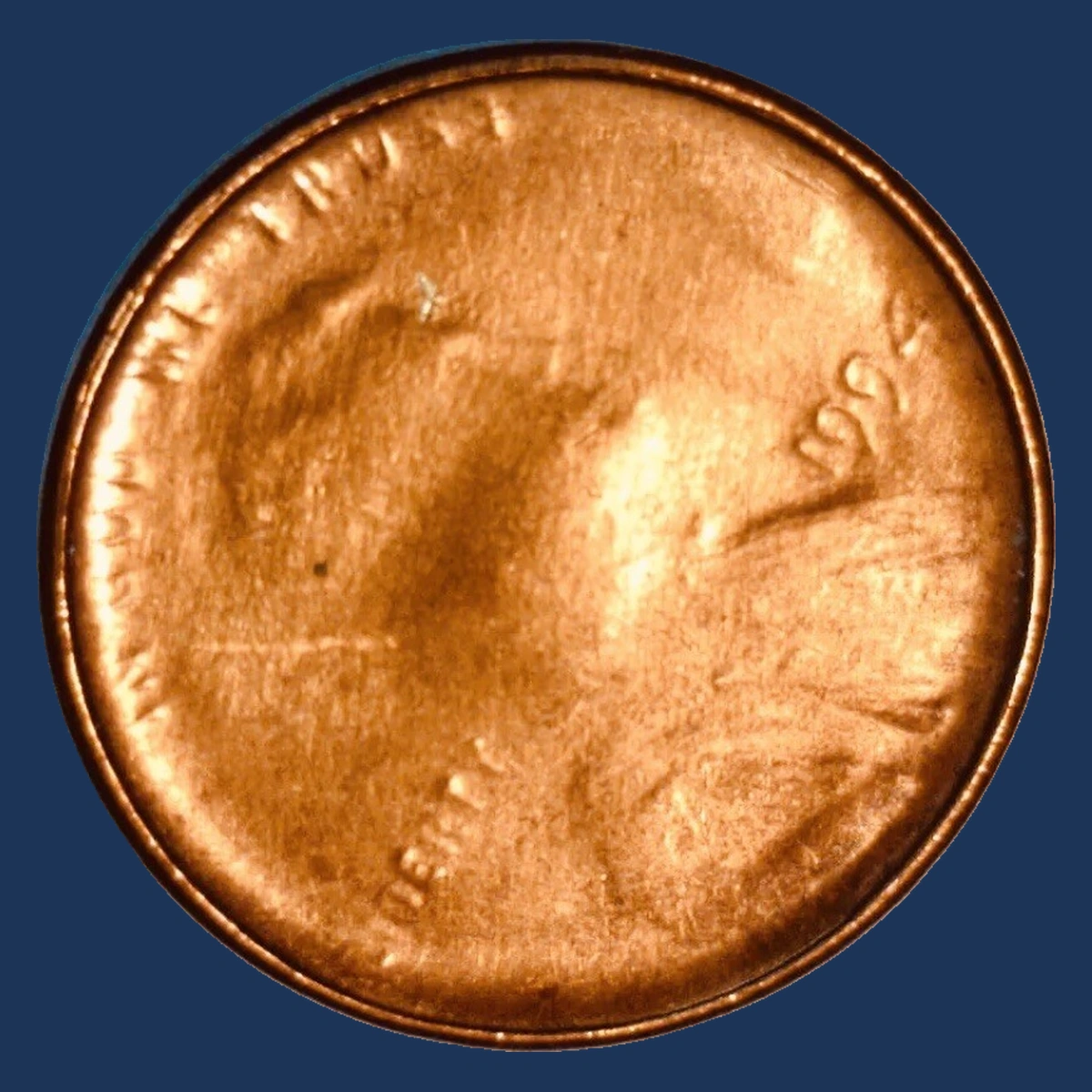
A backward image can occupy part of the back while the rest retains its normal design. Another struck coin acted as a stamp against the new piece.
The sunken mirror image is called a brockage. On the cataloged 1994 example, it lies toward about 4:30 when the back is viewed upright.
About 60% of the normal back design remains, while the backward details are weak. The coin also spread outward and developed a high lip at the front’s upper right.
These are linked features on one coin. A vague dent without readable backward detail needs a different explanation.
Estimated Value
For an authenticated combination, use an estimated $100–$1,000. Strong mirror detail and original surfaces can support the upper part of the range.
A simpler 2001 partial-front brockage sold for $79 in March 2025. Its smaller price shows why partial impressions should be compared by actual visibility rather than by the error name alone.
The reported 1994 piece has weak backward details, which matter to its appeal. Its outward spread and brockage should be valued as one object.
How to Identify
View the back upright and look toward the lower right, around 4:30. Under a 10× magnifier, search for sunken details that reverse the normal image.
Compare the remaining normal design with the affected area. Do not confuse weak backward shapes with a second raised cent design.
The front’s high lip and expanded outline should fit the same striking event. Examine the smooth edge for later squeezing or impacts.
A scale can compare the metal amount with 2.50 g. Calipers document any spread beyond the normal 19.05 mm, without proving a brockage by width alone.
A recognizable recessed mirror image within original struck surfaces provides the most useful first check.
8. 1994 Lincoln Memorial Penny Fragment of a Front Die Cap (Estimated Up to $1,200)
This piece is a remnant of a coin that had wrapped around a stamping tool. It is not simply a flat penny with a curved clip.
A stuck coin can be reshaped by repeated pressure into a cap. The cataloged 1994 front-cap fragment weighs 1.5 g and carries an NGC MS63 Red and Brown grade.
The remaining wall, distorted design, and broken edge explain its identity. The listing does not establish when the fragment separated from the cap.
Its low weight therefore belongs to a surviving fragment. It should not be used as evidence for an unusually light foreign blank.
Estimated Value
An estimated $100–$1,200 applies to an authenticated cap fragment with readable identity and a clear original shape. The estimate values the surviving object.
For comparison, a complete 2000 front cap sold for $312 in June 2025. A fragment may preserve less of the story, though an unusual remaining design can still interest collectors.
That full-cap sale is not a price for the 1.5 g 1994 piece. Condition and the evidence connecting the remnant to a cap matter.
How to Identify
Inspect the remaining wall and interior design together. A 10× magnifier helps distinguish stretched struck detail from marks made by later bending.
Look along the broken boundary without trying to smooth it or reconstruct the missing portion. The precise time of separation should not be guessed from an incomplete description.
A scale can compare a loose fragment with its recorded 1.5 g weight. A normal complete cent starts at 2.50 g and 19.05 mm, so calipers document the surviving shape instead.
Check the original plain-edge portions for tool marks. Keep a certified fragment inside its holder.
A cap-shaped wall carrying stretched original design is more meaningful than low weight alone.
9. 1994 Lincoln Memorial Penny Cent Struck on a Dime Blank (Estimated Up to $1,500)
The penny design can look crowded on a smaller silver-colored disc. A blank intended for a dime entered the cent press.
The wrong disc had not yet received a dime design. It therefore differs from a finished dime later struck with Lincoln and the Memorial.
A PCGS MS66 example and a separate NGC MS66 listing are recorded for 1994. The NGC description gives a weight of 2.28 g.
That measurement should not be transferred to the PCGS coin. Both involve dime-type metal, with silver-colored outer layers bonded around copper, rather than the usual copper coat over zinc.
Estimated Value
For a confirmed example, estimate $350–$1,500. A readable date, attractive surface, and clear wrong-blank identity support the stronger prices.
A 2007-D cent struck on a dime blank sold for $600 in March 2023. That recent comparison concerns the same basic mistake in a different year.
The two recorded 1994 MS66 listings establish separate descriptions, not one shared selling history. Neither the 2.28 g measurement nor a generic price-guide figure should be assigned automatically to the other coin.
How to Identify
Weigh a loose piece before judging its color. Compare it with a dime’s usual 2.268 g and a normal cent’s 2.50 g.
Calipers can compare the outline with a dime blank’s starting 17.91 mm and the cent’s 19.05 mm. Striking can spread the smaller disc.
Under a 10× magnifier, inspect the edge for bonded layers and the outer cent letters for limited room. An unused dime blank has no preexisting struck edge grooves.
Search both faces for an older Roosevelt portrait, torch, or dime lettering. Finding those features changes the category to a cent over a finished dime.
Dime metal with only the cent design supports the unused wrong-blank explanation.
10. 1994 Lincoln Memorial Penny Doubled Memorial Columns (Estimated Up to $2,000)
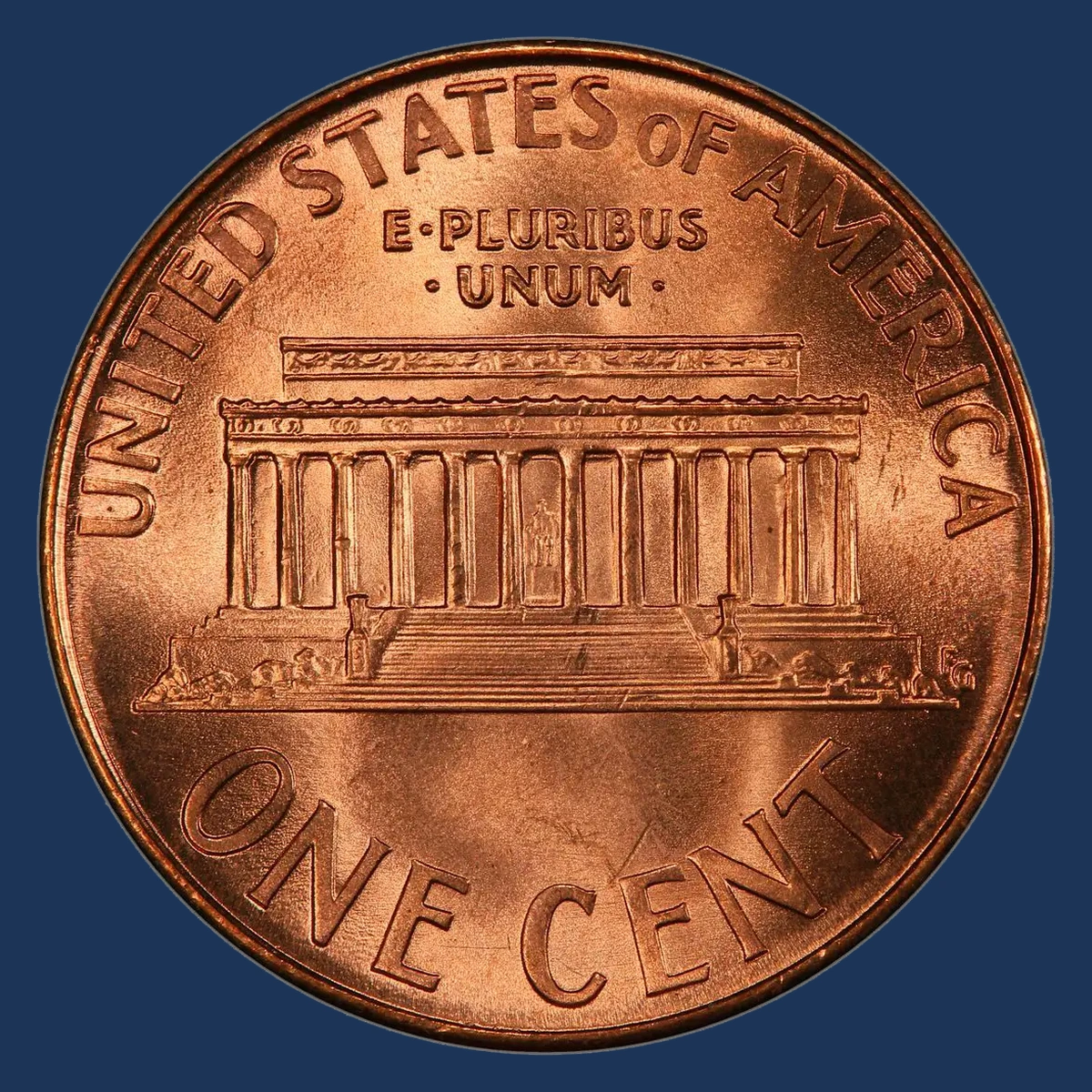
The extra design is on the back, among the Memorial’s rightmost columns. Additional column-like lines appear between the last three columns.
The stamping tool received a doubled design before making these coins. One normal blow could transfer both the intended column and its extra outline.
This Philadelphia variety is identified as FS-801. The number names the pattern, rather than describing its condition or how many times the penny was struck.
It should not be confused with an extra ear on a different year’s cent or a doubled front. The important feature here is the repeated building detail on the back.
Estimated Value
A PCGS MS67 Red example sold for $1,560 in February 2020. It was an unusually well-preserved unworn coin with remaining copper-red color.
Estimate $20–$2,000 across authenticated examples in different conditions. Most worn or less attractive pieces belong well below that high-grade result.
The figure applies to the recognized doubled-column variety, not any rough line in the building. A readable match and undamaged surface are more useful than a seller calling the whole coin doubled.
How to Identify
Turn to the back and count the Memorial columns from the left. With a 10× magnifier, focus on the gaps among the last three.
Compare the extra lines with the 1994 doubled-back photographs. The visible building pattern is what matters for identification.
Check that the raised shapes repeat parts of columns rather than cut across them as scratches. Normal steps, plating damage, and flat movement-related shelves can be misleading.
Use a scale and calipers on a loose coin to compare 2.50 g and 19.05 mm. Inspect the smooth edge for damage.
Matching extra column outlines in the correct right-hand openings provide the clearest starting test.
11. 1994 Lincoln Memorial Penny Cent Struck Over an Earlier Dime (Estimated Up to $4,000)
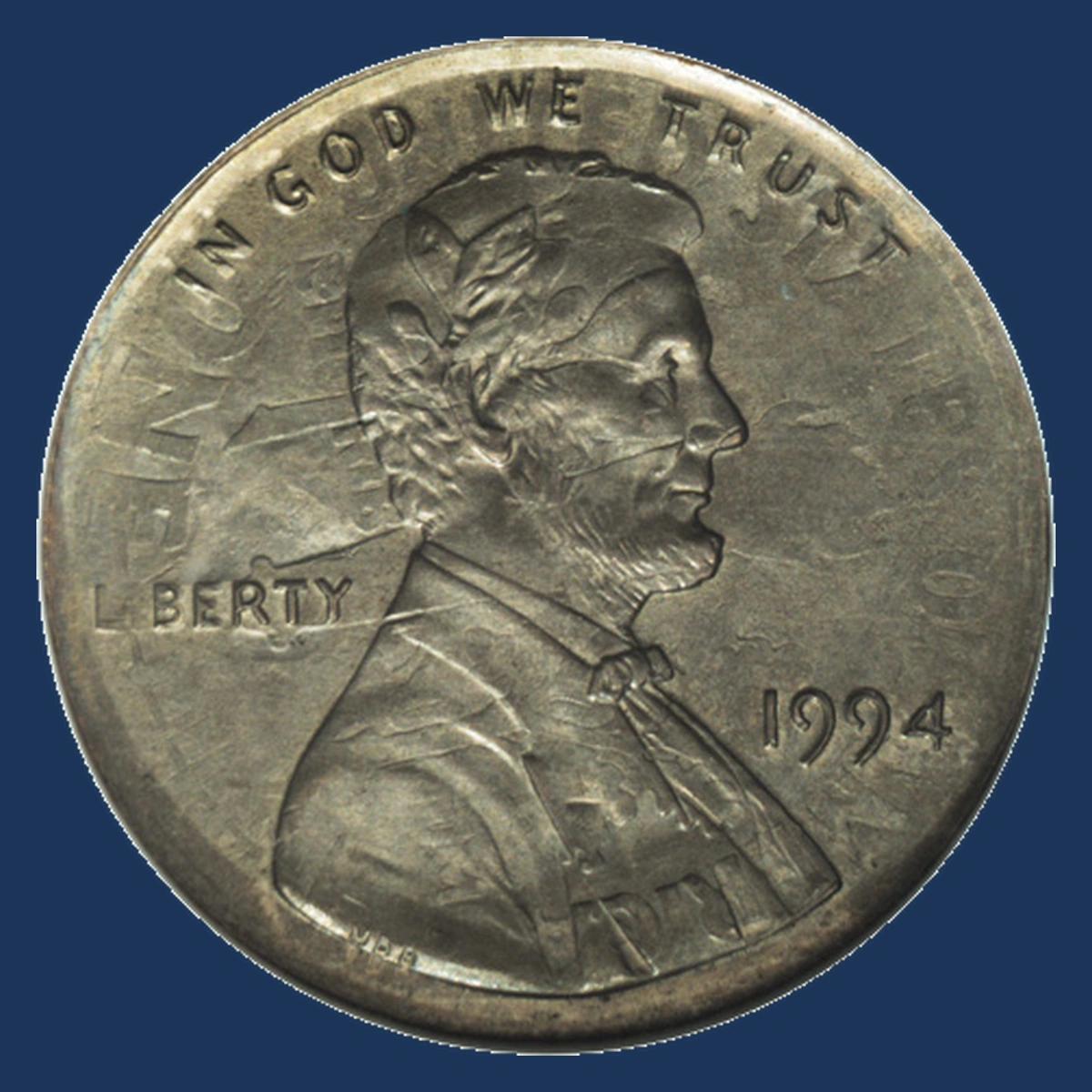
The dime beneath a 1994 cent need not share its year. Recorded examples use 1994-P, 1993, and even 1969-D dimes.
Each dime had already received its own design before entering the cent press. Surviving older letters or portrait details remain between the new Lincoln-cent features.
On one 1994-P host, Lincoln was struck over the dime’s torch side. The Memorial side retains part of the dime’s year and its P.
Those positions belong to that example alone. A 1969-D host still carries a 1994 cent strike, and the older date does not change the cent’s year.
Estimated Value
The example struck over a 1993 dime sold for $3,120 on June 17, 2024, graded PCGS MS66. Its two different dates help explain the combined design.
Use an estimated $700–$4,000 for identified 1994 cent-over-dime errors, depending on condition and visible detail. The auction record is for that particular specimen.
A different underlying year or mint needs its own comparison. Do not assume an older host automatically makes a less-readable coin more valuable.
How to Identify
First find a detail that belongs to the dime, such as Roosevelt or the torch. Then trace how the later cent design overlaps it with a 10× magnifier.
Read the two dates separately wherever they survive. A missing final digit should not be described as clear just because a catalog assigns the host a year.
For a loose coin, use a scale against the dime’s usual 2.268 g. Calipers can document spreading from its starting 17.91 mm, compared with 19.05 mm for a normal cent.
Inspect the layered edge and any remaining dime grooves for later alteration. A joining seam needs a different explanation.
Recognizable older dime design beneath the 1994 cent strike establishes the double denomination.
Conclusion
A rotated back, a gray surface, and two overlapping designs each need a different test. Start with the feature that is actually visible and keep the whole coin in view.
Estimated values of $2–$4,000 span small letter chips through clear cent-over-dime errors. Preserve original surfaces, compare the correct example, and keep any earlier dime date separate from the later cent date when describing a find.