1993 Penny Error List with Pictures

A Lincoln portrait on the front and a dime design on the back made one 1993-D cent worth $51,750 at auction in January 2010. That unusual pairing is called a mule.
This 1993 penny error list also covers smaller discoveries, from raised cracks to missing copper plating. Estimated values stretch from $0.01–$100,000, with the largest amounts reserved for major, identified errors.
Read on to learn which details to inspect and why similar-looking marks can have very different causes.
1. 1993 Lincoln Penny Sunken Lines from Tool Wear (Estimated Up to $5)
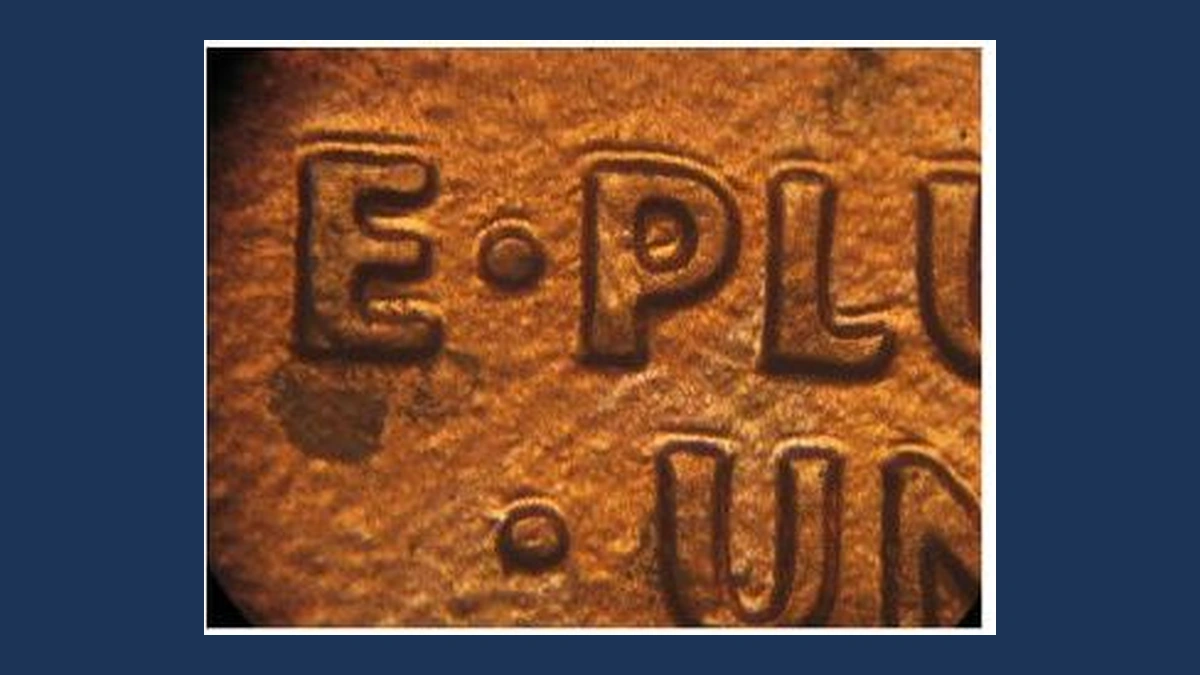
Faint sunken lines above E PLURIBUS UNUM can make the back motto appear doubled. Error-ref illustrates this effect on a 1993 Philadelphia cent.
The die, a steel stamping tool, had worn during use. Its changing surface produced extra shallow outlines instead of the rounded duplicate design associated with a doubled die.
This distinction matters even when the marks formed at the Mint. A minting effect does not automatically carry a large premium.
Look at the depth of the marks. A shallow depression above a letter is different from another full raised letter.
Estimated Value
An estimated $0.01–$5 suits ordinary examples showing this minor wear effect. A worn coin with faint lines may have no premium over face value.
Collectors may keep a clearer example to illustrate how stamping tools change with use. The interest comes from an easily visible effect, not from a rare doubled-die name.
This range is an estimate rather than a recorded 1993 sale. Paying for grading can exceed the value of a typical example.
How to Identify
Tilt the back under a small lamp so light crosses the motto from the side. Through a 10× magnifier, check whether the extra lines are shallow hollows above E PLURIBUS UNUM.
The original letters should still be distinguishable from those worn-tool outlines. Do not mistake a raised plating ridge or an ordinary scrape for the same effect.
A normal copper-plated zinc cent is 2.50 g and 19.05 mm across. A scale and calipers can check the coin without proving why its letters look doubled.
Compare a normal cent beside it. Sunken outlines above the motto, rather than rounded extra letters, are the clearest first distinction.
2. 1993 Lincoln Penny Raised Copper-Plating Shadows (Estimated Up to $10)
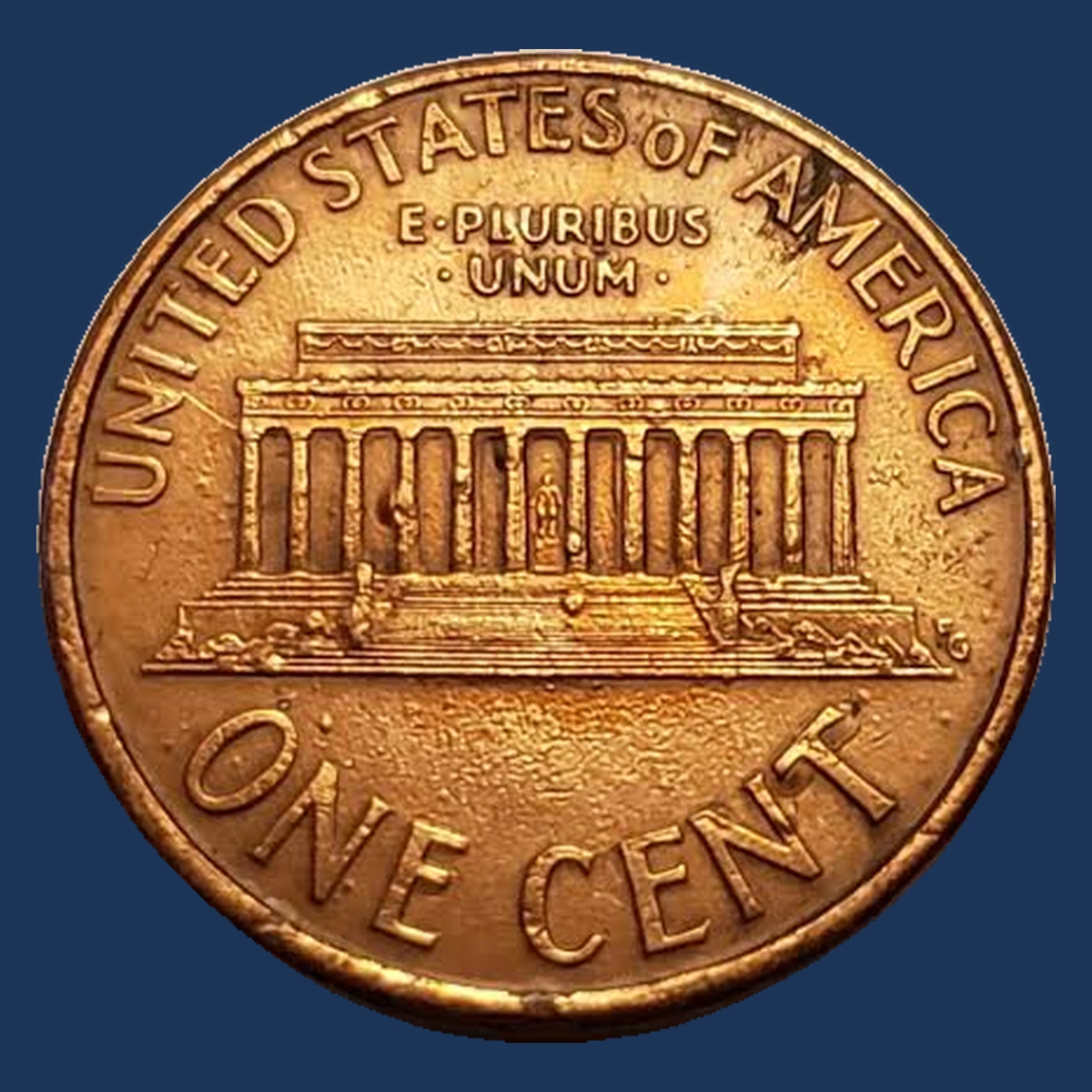
A thin copper skin can lift beside a design and create a second-looking outline. The movement affects the coating over the zinc center rather than doubling the stamping tool’s design.
Error-ref shows a Philadelphia example with a raised shadow to the right of Lincoln’s facial outline. Its Denver example has raised shadows above E PLURIBUS UNUM.
The positions differ, but both demonstrate disturbed plating. They should not be identified from a doubled-looking photograph alone.
An intact-looking ridge may be very thin. Pressing or scraping it can destroy the surface needed to explain what happened.
Estimated Value
Use an estimated $0.01–$10 for these plating-shadow examples. Most small disturbances attract less interest than a clearly doubled design already present on the stamping tool.
A sharp, visible shadow can make a useful teaching coin, especially if the rest of its surface is clean. That does not turn every raised copper line into a valuable variety.
The range reflects modest collector interest, not an auction result for the two illustrated 1993 specimens.
How to Identify
Compare the copper ridge with the nearby portrait or lettering at 10× magnification. On Philadelphia examples, inspect the right side of Lincoln’s facial outline; on the illustrated Denver piece, inspect above the back motto.
A ridge in the thin coating may look less solid than the normal raised design. Change the light direction before deciding whether it is raised or recessed.
Check the usual 2.50 g on a scale and 19.05 mm with calipers. These effects do not require a different-size blank.
Leave the copper untouched, even if an edge appears loose. A lifted coating shadow beside the normal design is the useful starting clue.
3. 1993 Lincoln Penny Raised Cracks into Lincoln’s Portrait (Estimated Up to $40)
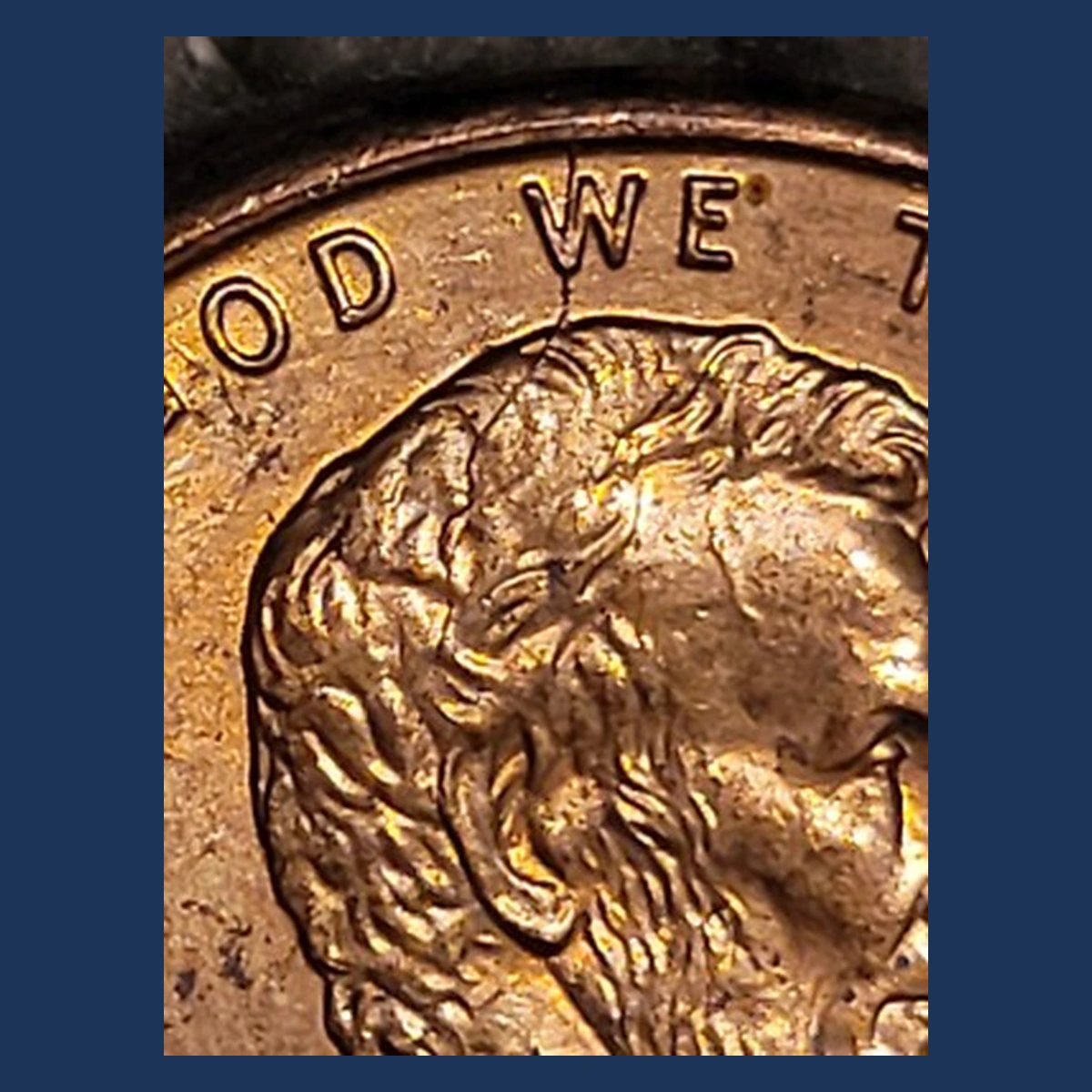
A fine raised line can run from the rim into Lincoln’s head. Metal entered a crack in the stamping tool and left that line on the struck cent.
The 1993 catalog records many separate examples. Their routes vary, so one line across the portrait should not be used to identify every specimen.
Some also have small raised chips or a crack near the bow tie. Others show another crack on the Memorial side.
The coin itself has not necessarily split. A tool crack usually creates added raised detail, while a scratch cuts into the finished surface.
Estimated Value
Expect an estimated $2–$40 for ordinary identified portrait cracks. A long clear line can be more appealing than a tiny segment visible only under strong magnification.
The many catalog entries describe different patterns, not a separate price ladder for every number. Wear may soften a raised line, and surface damage can make its route difficult to follow.
These estimates concern the crack as seen on the coin. They do not assume that each cataloged example has a known sale.
How to Identify
Find where the line meets the rim, then trace it inward with a 10× magnifier. Move the lamp across it to see whether the line stands above the surrounding metal.
Follow the actual route through the portrait instead of guessing from a catalog nickname. Turn the coin over to check for a second crack near the Memorial or lettering.
Weigh with a scale and measure with calipers against the normal 2.50 g and 19.05 mm.
Neither measurement identifies a specific crack pattern.
A scratch may have pushed-up edges beside its groove. Start with a continuous raised line running from the rim into the design, without a cut underneath.
4. 1993 Lincoln Penny Expanded Broadstrike (Estimated Up to $125)
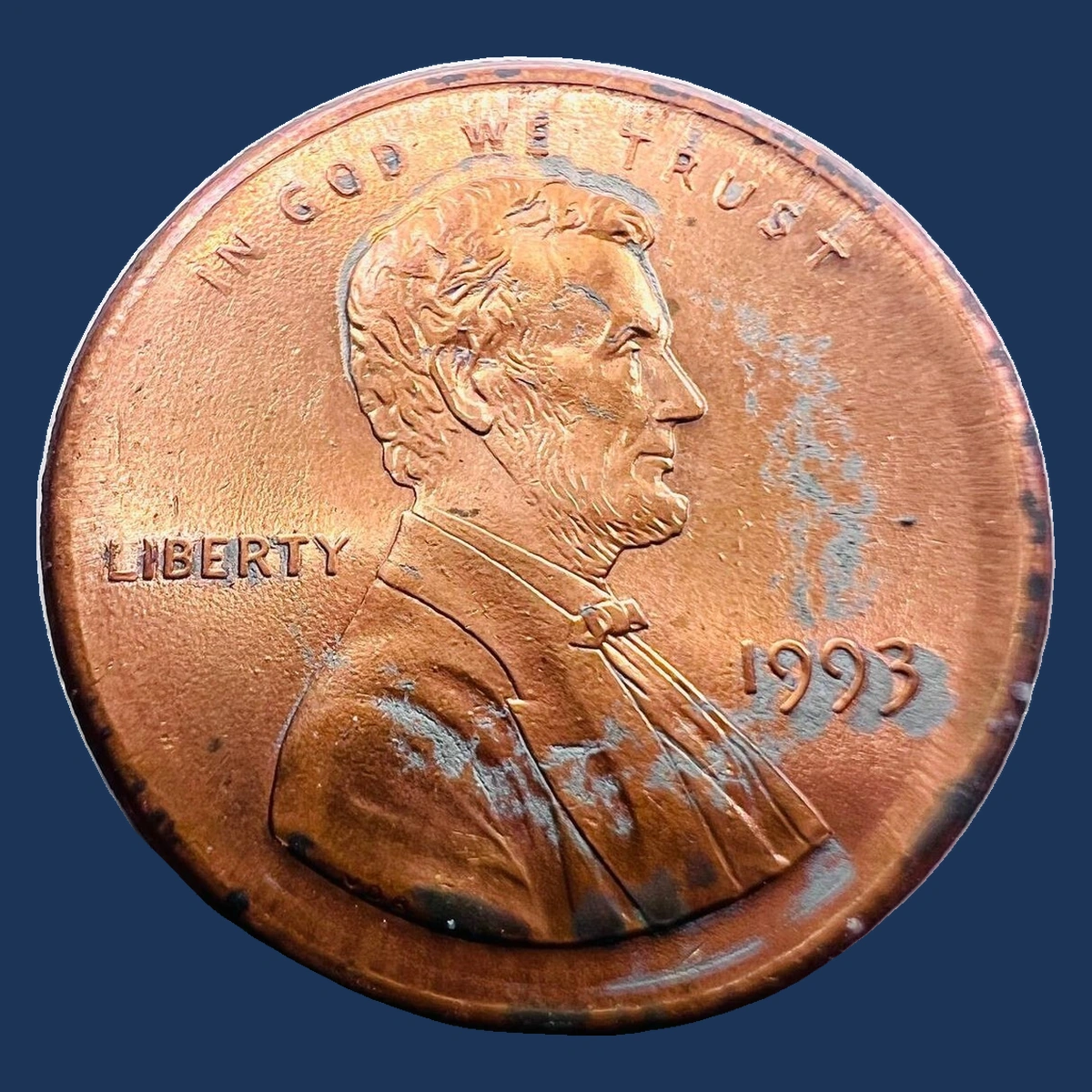
The Memorial and surrounding letters can remain complete even when a cent spreads wider than normal. Without the collar ring holding its edge, the blank can expand during the strike.
This is a broadstrike. A Heritage group lot described a 1993 example as MS64 Red, meaning unworn with fairly few marks and retained red copper color.
The design need not sit perfectly in the center of the expanded metal. Its completeness matters when separating this error from an off-center strike.
A penny flattened later can also become wider. Its damaged design and edge tell a different story.
Estimated Value
An estimated $10–$125 covers ordinary identified broadstrikes, from slight spreading to more visible expansion. Original surfaces and a complete readable design help the stronger examples.
The cataloged 1993 coin appeared in a group containing several dates and error types. A group price should not be assigned to this one cent.
An uneven border can be attractive without proving an off-center strike. Compare the preserved design and amount of spreading when choosing a similar coin for valuation.
How to Identify
Place a normal cent beside the suspect coin and compare the widened border, using calipers to record expansion beyond the usual 19.05 mm. A scale compares with 2.50 g because spreading redistributes the blank’s metal rather than adding a larger disk.
Through a 10× magnifier, trace every outer letter to see whether the intended design remains complete within the expanded border. The design can sit slightly to one side, so an uneven margin alone does not settle the error’s name.
Inspect the edge for hammer marks or worked metal, and the lettering for damage caused by later flattening. A complete original design within metal spread by the strike is the clearest starting point.
5. 1993 Lincoln Penny Extra Memorial Columns and Statue Details (Estimated Up to $150)
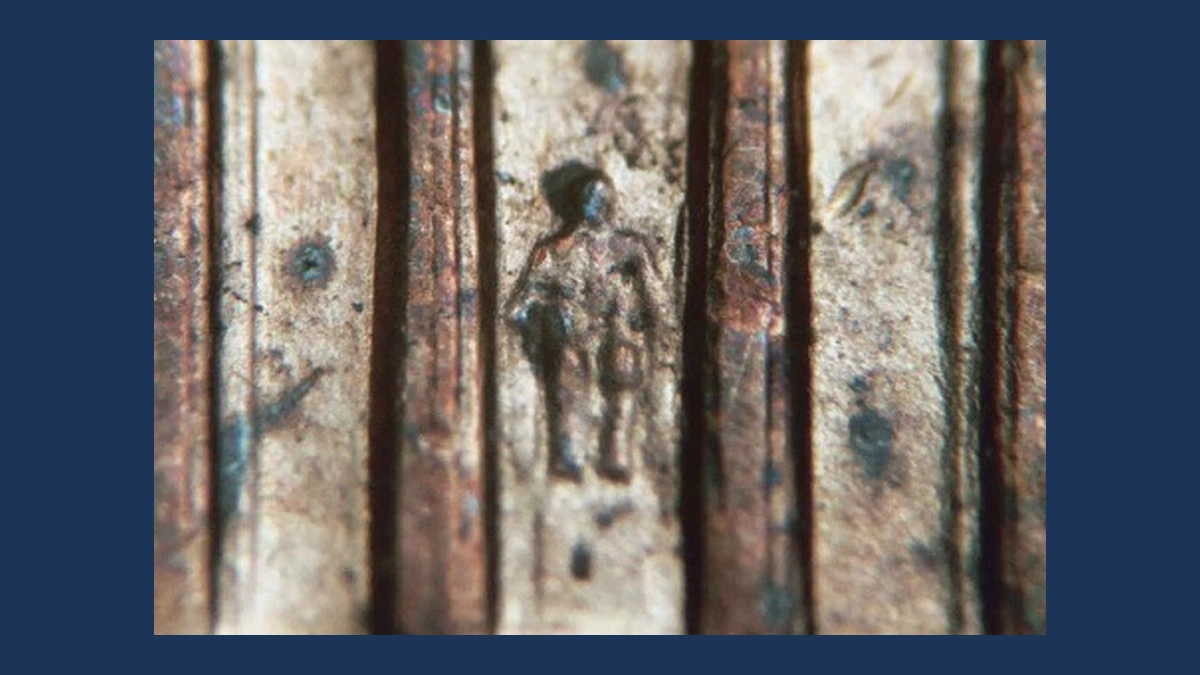
Look between the Memorial columns for a small piece of design that does not belong in the open space. Several 1993 varieties show extra column edges, while one Denver example repeats the statue’s feet and lower chair arms.
The extra detail was already on the stamping tool. Philadelphia and Denver examples have different positions and must be compared separately.
One Philadelphia variety repeats detail beside the seventh column, near the upper statue. A Denver example repeats the lower left edge of the sixth column.
Wavy steps alone are not enough. Their shape can have another cause.
Estimated Value
Estimate $5–$150 for these identified minor back varieties. Strong extra architectural detail on an unworn coin is easier to appreciate than a faint mark on a worn one.
These working amounts are not recorded sales for every catalog number. A variety’s name does not guarantee that any coin with an odd-looking Memorial deserves the upper end.
Look for a precise match before comparing condition. A copper bubble or unrelated ridge lacks the repeated design that collectors want.
How to Identify
Keep the whole Memorial in view while counting columns from the left. Then use a 10× magnifier to examine the extra detail without losing its position in the building.
For the Philadelphia seventh-column example, inspect beside the upper statue. Denver examples include doubling at the sixth column’s lower left and, on another variety, an extra pair of feet beneath the statue.
Check the mint letter before comparing those shapes. A scale and calipers should match the usual 2.50 g and 19.05 mm, since these are ordinary-size cents.
The quickest check is a repeated piece of architecture or statue in the correct cataloged position, not merely uneven steps.
6. 1993 Lincoln Penny Doubled Front Lettering and Earlobe (Estimated Up to $200)
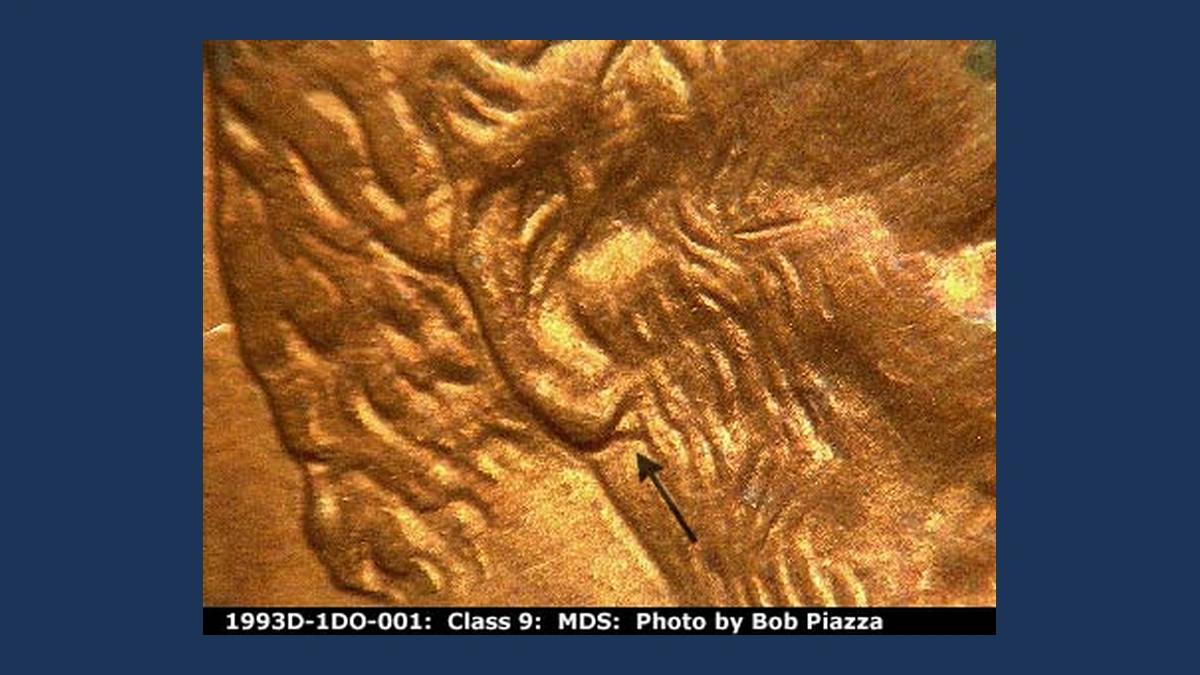
One 1993 variety repeats tiny parts of GOD WE TRUST and Lincoln’s upper hair. Another, made in Denver, adds part of an earlobe below and to the right of the normal ear.
These are front doubled-die varieties. The repeated design existed on the stamping tool before it struck the coin.
The Philadelphia lettering variety and Denver ear variety are separate examples. Finding a lump on a Denver ear does not establish the Philadelphia motto pattern.
Small scratches and flat strike-related shelves can imitate extra detail. A rounded repeated outline and matching surrounding features provide a better explanation.
Estimated Value
Use an estimated $10–$200 for identified examples, allowing for the strength of the doubling and the coin’s condition. These are modest varieties rather than a promise of the famous 1997 doubled ear’s auction values.
The Philadelphia motto and Denver ear patterns should each be compared with their own photographs. A clear unworn coin may attract more interest than a worn example whose extra outline is barely visible.
The range is an estimate, not a sale assigned to either catalog specimen.
How to Identify
On a no-mint-letter cent, use a 10× magnifier at GOD WE TRUST and the top hairline. Compare with Wexler’s 1993 photographs rather than treating all thick letters as doubling.
The Philadelphia example also has supporting raised marks below the D in GOD and around the front hair curl. For the Denver variety, examine the extra earlobe below and right of the normal one.
A scale and calipers check 2.50 g and 19.05 mm without establishing the variety by themselves.
Begin with the feature that fits the mint: repeated motto detail on the Philadelphia example, or the matched extra earlobe on Denver.
7. 1993 Lincoln Penny Clashed Design Traces (Estimated Up to $250)
Faint parts of the opposite design can appear where the cent normally has a smooth background. The two stamping tools touched without a blank between them, leaving marks that later coins received.
Collectors call this a die clash. The specialist index lists two unusual 1993 clash examples.
Their exact transferred outlines must be read from the individual coin. A generic extra line near Lincoln does not identify either example.
Some broken-tool specimens also show clash marks. A coin can carry both features, but the overlap does not mean that every crack or raised patch is a clash.
Estimated Value
An estimated $10–$250 covers identified minor through clearer clash patterns on cents of this kind. Strong recognizable outlines generally attract more interest than isolated faint marks.
This is a comparison range, not a completed sale of either indexed 1993 specimen. If the coin also has a rim break, judge the entire combination instead of adding two maximum prices.
Preserved surfaces matter because polishing and wear can hide shallow outlines. An unrelated scratch carries no clash premium.
How to Identify
Photograph both faces under the same light direction, keeping their orientation clear so a supposed match is not created by turning a picture. With a 10× magnifier, compare each faint extra outline with the portrait or building on the other side.
A real transferred mark should follow a recognizable part of that design instead of merely looking like an isolated scratch. The cataloged 1993 examples need their own picture comparisons because no single position identifies all clashes.
Use a scale and calipers for the normal 2.50 g and 19.05 mm, or existing measurements for a sealed coin. Begin by matching one clear piece of the opposite design within the faint marks.
8. 1993 Lincoln Penny Strike Through a Capped Tool (Estimated Up to $300)
Lincoln’s portrait may look flattened or distorted while the back still receives its normal design. Another cent stuck against the front stamping tool can block a fresh blank from direct contact.
The trapped cent is the cap. The new coin struck beneath it is a different object and need not have tall cup-shaped walls.
A 1993 year guide reports this front-side error. Its effect depends on how thick and worn the trapped cap was when the next blank arrived.
Ordinary wear and grease-filled lettering can also weaken a portrait. The pattern across the two faces helps distinguish the causes.
Estimated Value
The year guide reports a $70 example, without the primary sale details needed to treat it as a dated auction comparison. Use an estimated $30–$300 for an identified capped-tool strike.
Clear distortion across the front and better-preserved detail on the back make the effect easier to understand. A faintly weak portrait alone supports much less interest.
The coin beneath the cap should not receive the price of a deep, cup-shaped cap. They are different results of the same press problem.
How to Identify
Compare how much detail survives on each face before focusing on a single missing letter. With a 10× magnifier, inspect whether the front design fades or stretches across a broader area.
A normal back can help show that the whole coin was not simply worn smooth. Look for scratches or crushed high points that would instead suggest later damage.
A scale checks the normal 2.50 g, and calipers compare the outline with 19.05 mm.
The struck-through coin may remain fairly flat.
Check the date and mint letter only where they survive. A blocked front impression beside a separately struck back is the most useful first comparison.
9. 1993 Lincoln Penny BIE Chips and Rim Cuds (Estimated Up to $400)
A raised bar between B and E in LIBERTY can make the word seem to contain an extra I. This BIE shape comes from a small broken area in the stamping tool.
Larger breaks at the tool’s edge leave raised patches joined to the coin’s rim. These patches are called cuds and can replace lettering or other design.
The 1993 rim-break catalog lists several examples, including back-side breaks with clash marks. Each has its own outline.
A loose broken tool fragment can add further marks. That is different from assuming every raised patch came from an intact working tool.
Estimated Value
Estimate $3–$25 for ordinary BIE chips and $30–$400 for identified rim cuds. A large patch replacing visible design generally attracts more attention than a tiny bar between letters.
The year guide reports a $175 back-side break, but its brief account is not a dated primary sale used here. The broader range is an estimate.
Look at the whole surface before comparing prices. Added solder, copper bubbles, and edge damage do not receive the same premiums.
How to Identify
Inspect LIBERTY with a 10× magnifier and decide whether the B–E space contains a solid raised bar. Dirt or a loose plating bubble can occupy that space without being a tool chip.
For a cud, trace the patch until it meets the rim and note which design has disappeared.
Additional clash marks may belong to the same specimen, so record them without assuming a second coin.
The usual weight is 2.50 g and diameter 19.05 mm. Check these with a scale and calipers, avoiding pressure on the feature.
First find either the letter-space bar or a solid rim-connected patch replacing design; their locations separate the two forms.
10. 1993 Lincoln Penny Front Strike Through Material (Estimated Up to $400)
An object between the blank and a stamping tool can interrupt the design in one area. The resulting hollow or missing detail can preserve an outline of the material involved.
GreatCollections listed a 1993 Philadelphia cent struck through material on the front. The material itself was not identified in the description.
That matters when looking at the mark. A generic hollow should not be called a thread, wire, or piece of cloth without the matching shape or texture.
The unaffected design supplies the comparison. A later impact can also make a hollow, but it damages an already finished surface.
Estimated Value
An estimated $15–$400 covers identified front-side strike-throughs, with size, texture, and condition affecting interest. A small plain interruption usually falls below a large, sharply shaped example.
The cataloged 1993 coin was PCGS MS65 Red, meaning unworn with relatively few marks and retained red color. That description supports its identity but is not a selling price.
An especially recognizable object impression can change the comparison. Do not assign that extra interest to a hollow whose shape reveals no such detail.
How to Identify
Study the hollow’s edge through a 10× magnifier and follow nearby letters or portrait details into the interrupted area. A later dent can crush an already finished design and push displaced metal against the boundary.
Fine parallel texture could suggest a thread, but a plain hollow cannot identify the object that caused it. A scale and calipers compare the normal 2.50 g and 19.05 mm without explaining the surface mark themselves.
Avoid rubbing or picking inside the depression, since that can remove the delicate texture needed for comparison with another example. Start with a clearly shaped interruption whose boundary fits the surrounding original struck design.
11. 1993 Lincoln Penny Off-Center Strike (Estimated Up to $450)
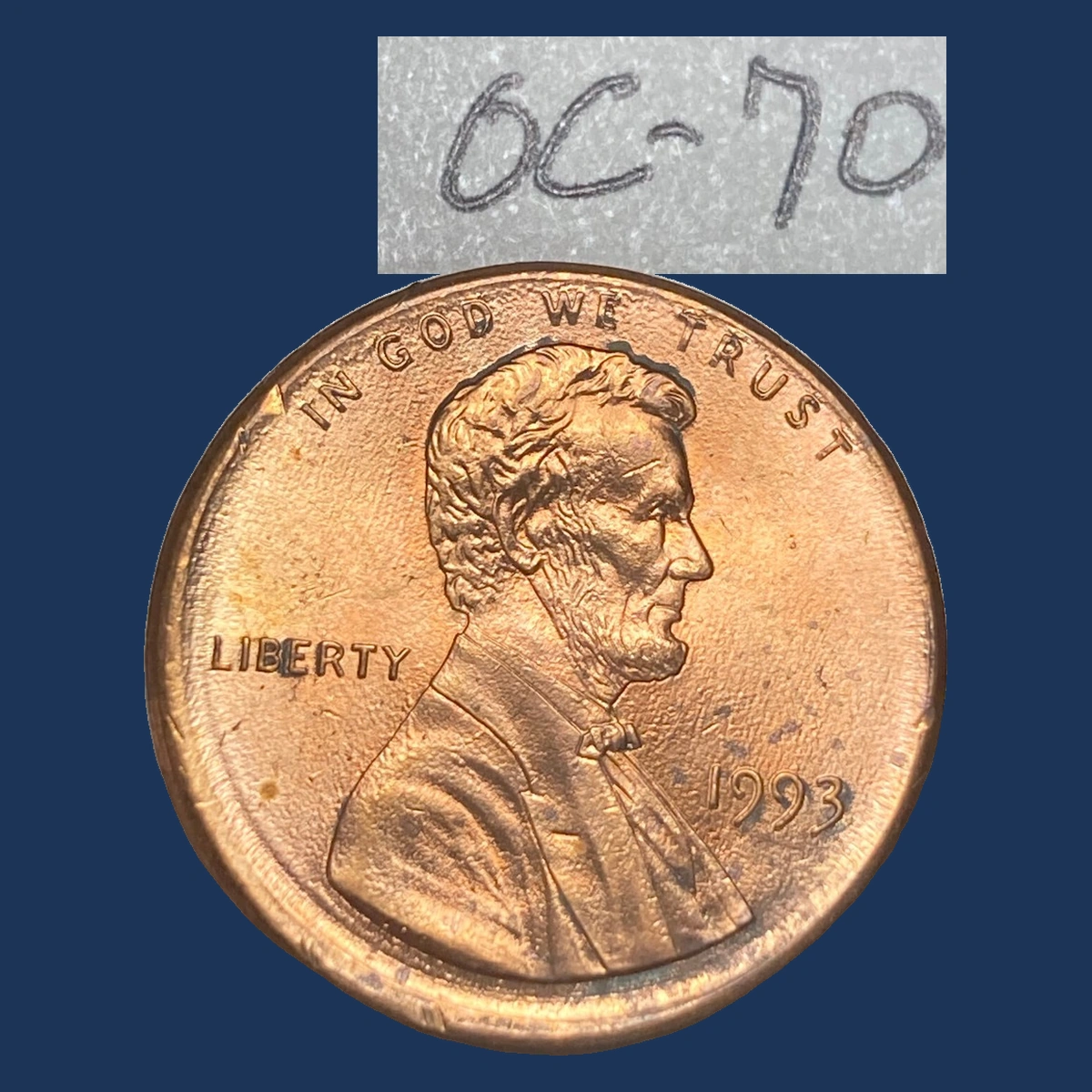
Much of the blank can remain smooth when it enters the press in the wrong position. Only the part between the stamping tools receives the design.
A Heritage group lot described a 1993 Philadelphia cent about 75% off center. A separate year-guide report describes a Denver example about 50% off center.
The percentages describe different coins. Neither should be used to assign a direction or grade to another specimen.
The blank area has not been cut away. It remains part of the coin, beside an incomplete design whose date may or may not survive.
Estimated Value
An estimated $20–$450 allows for modest through dramatic identified off-center strikes with different levels of preservation. Retaining the date often helps collectors identify and compare an example.
The guide reports its Denver half-off-center coin above $60, without primary sale details used here. The Philadelphia example was part of a mixed group, so that lot cannot provide its individual price.
A dramatic shift is not the only factor. Heavy damage or a missing date can reduce appeal.
How to Identify
Locate the boundary where the design stops and untouched blank metal begins. Through a 10× magnifier, inspect the same shifted area on the opposite face.
If the full design remains within a wide uneven border, consider broadstrike instead. An off-center strike loses part of the intended design because the blank was not fully beneath the tools.
A scale normally compares with 2.50 g. Calipers record the changed outline rather than forcing it to match the standard 19.05-mm circle.
Check that the blank-looking area has not been ground smooth. An incomplete impression on both faces beside original unstruck metal is the clearest early check.
12. 1993 Lincoln Penny Repeated and Stretch Strikes (Estimated Up to $750)
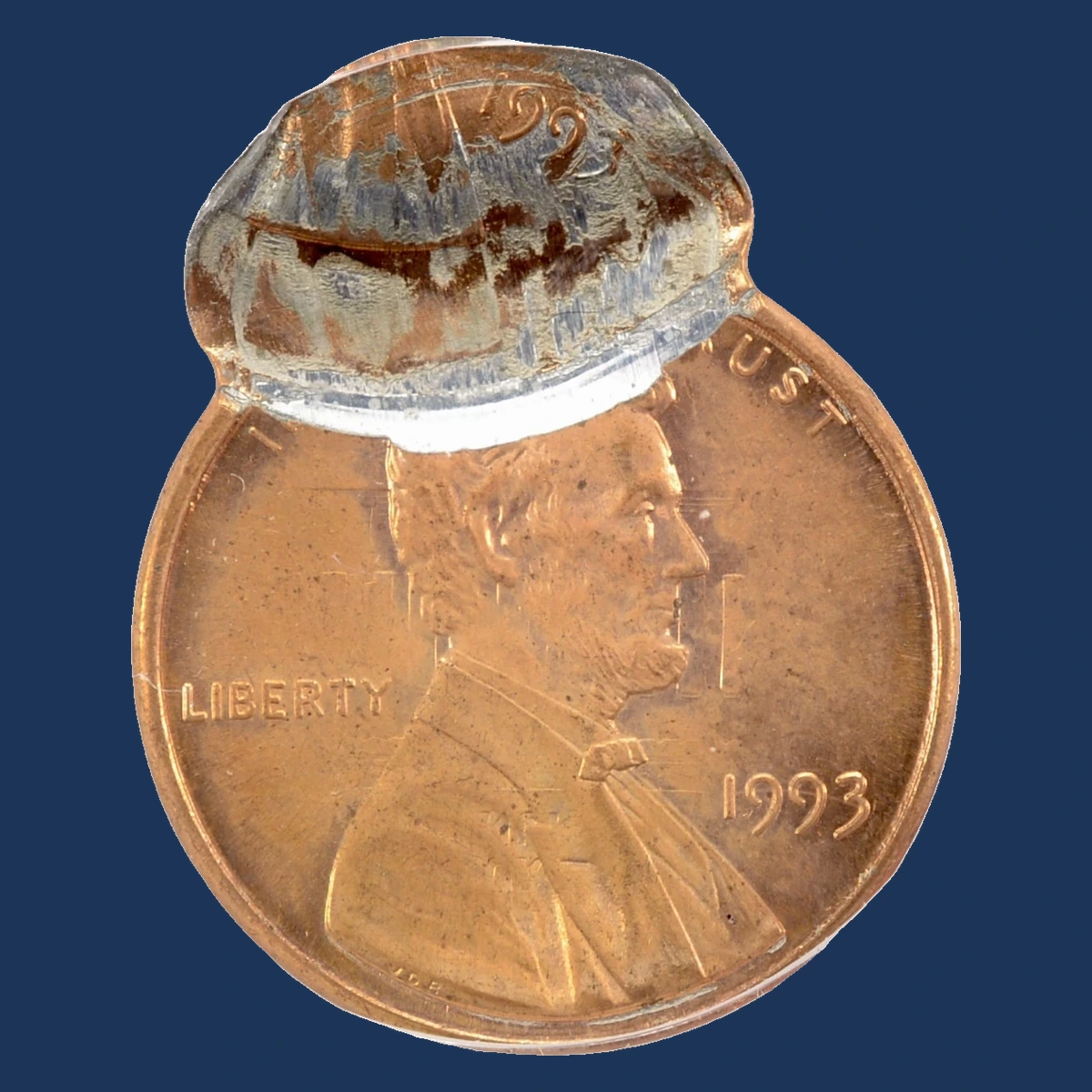
Two sets of cent details can show how a coin moved between blows. Heritage documented a 1993 double strike with its second impression off center.
Other 1993 examples followed more complicated paths. One flipped over before a 90% off-center strike stretched its still-readable date.
Another first spread without collar support, then received an 80% off-center second blow. A new blank blocked direct contact with the front tool during that later strike.
These are separate coins with different sequences. Their percentages explain those specimens rather than a required shape for every 1993 double strike.
Estimated Value
A 1993 double strike in NGC MS66 Red sold for $276 in December 2020. It was unworn with few marks and retained red color.
Use an estimated $40–$750 for identified repeated-strike examples, depending on how clearly the impressions show the sequence. A flip or blocked second blow can change the appearance considerably.
Judge the entire coin rather than adding a price for each blow. A small repeated detail and a dramatically stretched readable date are different comparisons.
How to Identify
Find a surviving date or group of letters from the first impression. Trace the second design with a 10× magnifier to see whether the coin shifted, turned, or flipped between blows.
On the described flip-over piece, the second blow crosses and stretches the earlier date. The separate broadstrike combination has a blocked side because another blank entered above it.
Weigh with a scale against 2.50 g and use calipers to document expansion from 19.05 mm.
Flat shelf-like doubling alone does not show two full strikes.
The fastest useful check is two genuine impressions whose overlap explains a specific movement between blows.
13. 1993 Lincoln Penny Backward Design from Fallen Tool Filling (Estimated Up to $1,000)
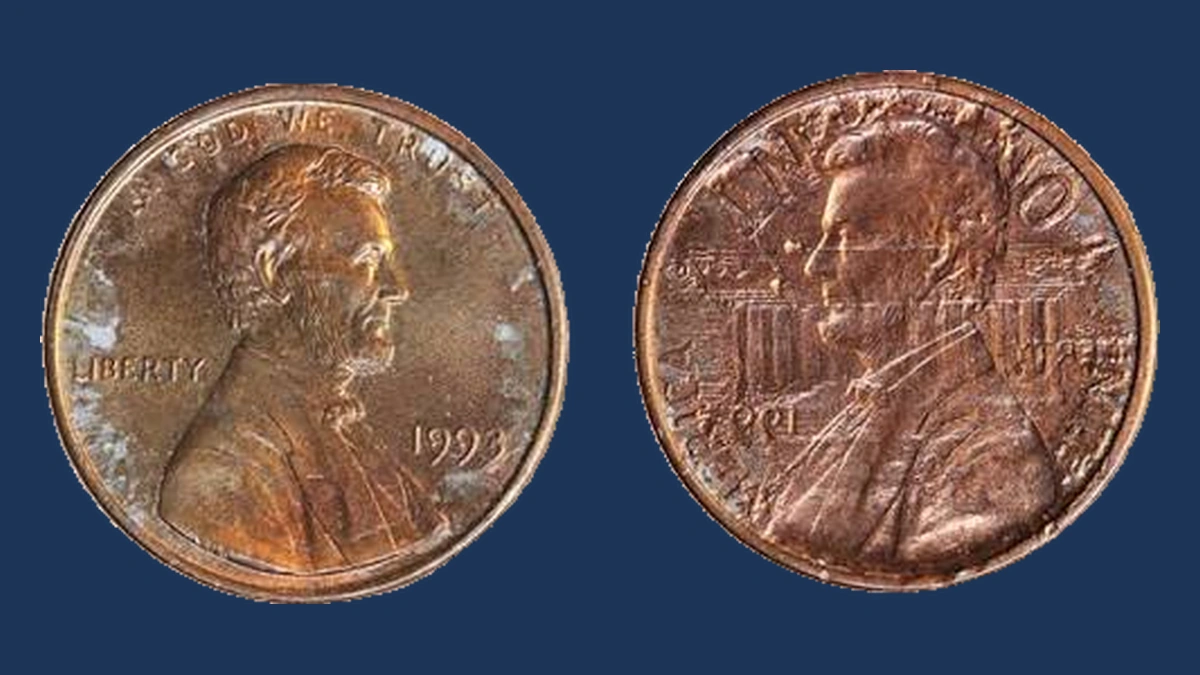
A backward Lincoln-side impression appears on the back of the studied 1993 cent. Unlike a normal raised design, the transferred image lies below the surface.
Error-ref explains this as a brockage made by a large piece of compacted material that fell from a stamping tool. The fragment carried a design shape and impressed it into the next blank.
The cent received this mark during its first strike while inside the collar ring. It did not need an earlier normal strike of its own.
The visible reversed image matters more than guessing the fragment’s exact route through the press.
Estimated Value
For this identified unusual mechanism, use an estimated $150–$1,000. Readable backward detail and an intact surface make the explanation easier for a collector to follow.
The Error-ref specimen does not have a realized price used here. As a different-year comparison, a 2001 partial-front brockage graded MS64 Red brought $79 in March 2025.
That ordinary brockage is not the same cause or side arrangement. The wider estimate allows for the more unusual fallen-filling explanation without calling the comparison a 1993 sale.
How to Identify
Look at the back through a 10× magnifier and determine whether the unexpected design is both backward and recessed. Compare its shapes with the Lincoln side, keeping the coin’s orientation clear.
The study identifies a first-strike event inside the collar. A scale and calipers can therefore compare the coin with the ordinary 2.50 g and 19.05 mm, while photographs document the transferred image.
Coins pressed together after minting can also leave reversed marks. Check for crushed existing details and other impact damage before relying on the unusual explanation.
Begin with a sunken backward front design that matches the studied example on the back.
14. 1993 Lincoln Penny Missing or Partial Copper Plating (Estimated Up to $1,500)
Without its usual copper coating, a zinc cent can look gray instead of reddish brown. Partial coverage can leave copper-colored areas beside exposed zinc.
A GreatCollections example of an unplated 1993 cent was recorded at 2.4 g. Heritage separately sold a 1993-D cent described as partially plated.
These are two different coins. The unplated specimen’s weight should not be assigned to the Denver example.
Copper loss after minting can imitate the color. Acid, corrosion, or deliberate stripping may remove the coating from an ordinary cent, so appearance alone does not establish a minting error.
Estimated Value
The 1993-D partially plated cent sold for $750 in September 2024, graded NGC MS66 Red. Its grade describes an unworn coin with few marks, not complete copper coverage.
An estimated $75–$1,500 spans identified partial and fully unplated examples with different degrees of preservation. The visible coverage and originality of the surface affect the comparison.
A chemically stripped penny belongs outside that range. The silver-gray color needs a mint-made explanation before the auction example becomes useful.
How to Identify
Check both faces and the plain edge under a 10× magnifier, noting where copper ends and gray metal begins. Do not scrape a boundary to test which metal lies below it.
Weigh on a precise scale and compare with the normal 2.50 g. The documented unplated example is 2.4 g, but a similar weight alone cannot prove that another coin escaped plating.
Calipers check the usual 19.05-mm diameter. Look for corrosion, rough stripping, or altered surfaces that could explain missing copper after minting.
For a sealed example, use its recorded measurements. Original struck zinc surfaces and a convincing copper boundary are the most useful first checks.
15. 1993 Lincoln Penny Cent Design on a Dime Blank (Estimated Up to $2,000)
The coin can have a silver-colored surface while showing only Lincoln and the Memorial. A prepared blank meant for a dime received cent designs before it had any dime design.
A 1993 auction example was graded ANACS MS65. The catalog describes both cent impressions as shifted toward the viewer’s left, with the designs still readily recognizable.
This is a wrong-planchet error, meaning the wrong prepared metal disk entered the press. It differs from striking over a finished dime.
Color by itself cannot settle the question. An unplated zinc cent may also look gray but has a different composition.
Estimated Value
Use an estimated $200–$2,000 for an identified 1993 cent on a dime blank. Its condition, retained date, and strength of the cent design affect value.
The cataloged example’s MS65 grade means unworn with relatively few marks. The estimate is not presented as that particular coin’s auction result.
For context, a 2001 dime-blank cent graded MS66 brought $446.20 in January 2009. That different-year example supplies a same-mechanism comparison, while later striking and condition differences still matter.
How to Identify
A precise scale compares the dime blank’s nominal 2.268 g with a normal cent’s 2.50 g, while calipers record the smaller outline. The starting dime blank is usually 17.9 mm, against the cent’s 19.05 mm, although striking can expand the finished shape.
Use a 10× magnifier along the edge to examine the metal without filing it, then inspect the cent design near the smaller boundary. Search both faces for an earlier Roosevelt portrait, torch, or branch, which would change the explanation to an overstrike.
Chemical testing can damage the surface and is unnecessary for a first comparison with documented examples. Matching dime-blank metal and measurements, without an earlier dime design, gives the useful initial distinction.
16. 1993 Lincoln Penny Cent Struck Over a Finished Dime (Estimated Up to $3,000)
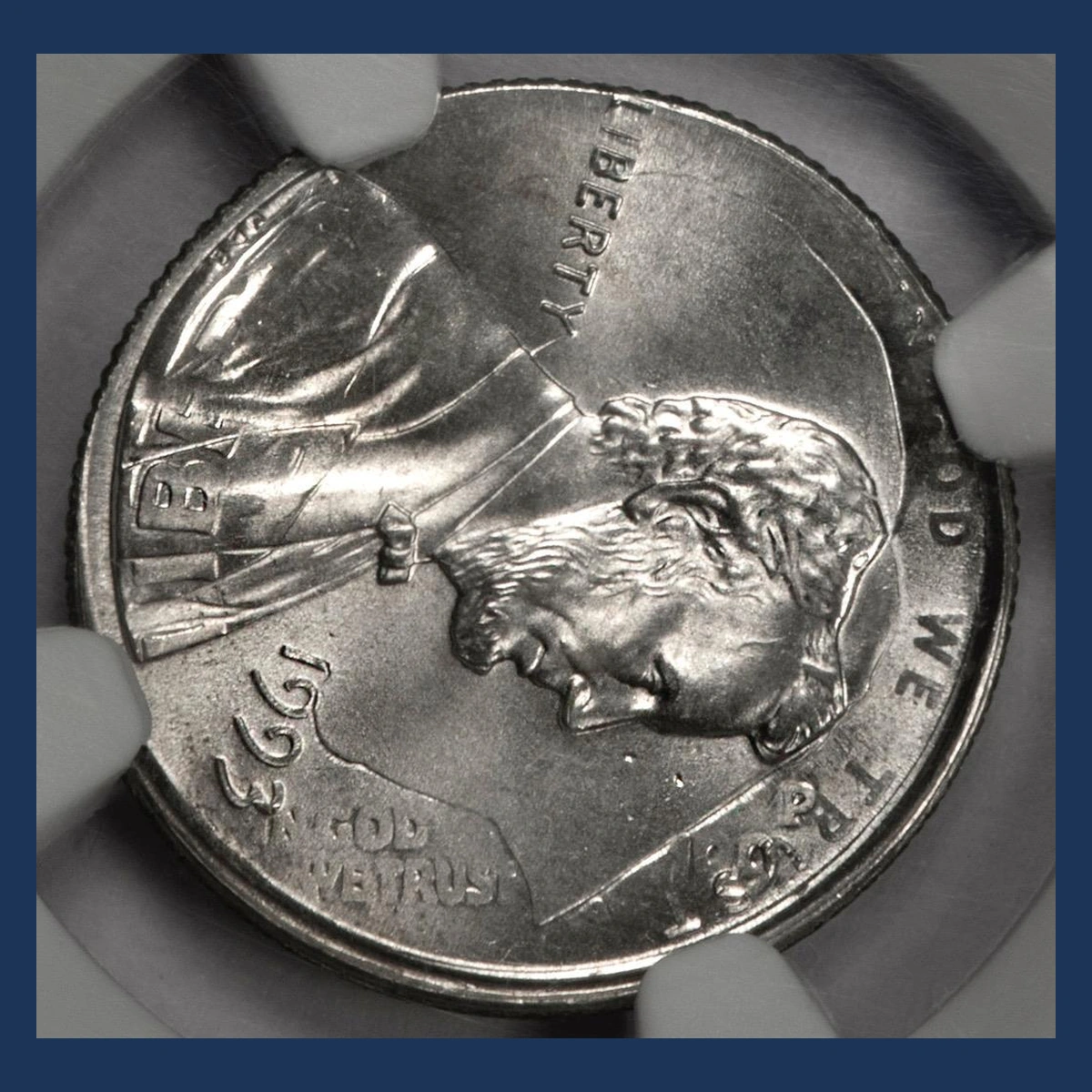
An olive branch across Lincoln’s portrait can be a remnant of an earlier dime. The 1993 Philadelphia auction example also preserves Roosevelt beneath the Memorial.
The finished dime entered the cent press and received another denomination’s designs. Parts of its earlier date and P mint letter survived the later blow.
A year guide separately reports a Denver cent over a Denver dime. That report should remain distinct from the pictured Philadelphia example, whose mint identity is visible.
This is an overstrike, not a mule. Both denominations left overlapping details instead of providing one clean design on each face.
Estimated Value
The Philadelphia example brought $862.50 in April 2010 in NGC MS67. That describes an unworn coin with very few marks.
An estimated $500–$3,000 suits identified cent-over-dime examples, with readable dates and surviving older detail influencing appeal. The Philadelphia sale does not establish a separate realized price for the Denver report.
Check the actual mint identity and both designs before comparing condition. A cent on an empty dime blank lacks the same visible two-stage striking history.
How to Identify
With a 10× magnifier, follow the branch across Lincoln and locate Roosevelt’s outline below the Memorial. On the auctioned Philadelphia example, parts of the dime date lie near CA in AMERICA.
Look for the surviving P and the remaining cent date without filling missing details from another photograph.
A scale should read near the clad dime’s usual 2.268 g. Calipers record how its original 17.9-mm blank spread when it received the cent design.
The normal cent reference is 2.50 g and 19.05 mm.
For a claimed Denver piece, inspect its own mint letters. Recognizable dime details underneath genuine cent impressions give the quickest direct check.
17. 1993 Lincoln Penny Lincoln Front Paired with a Dime Back (Estimated Up to $100,000)
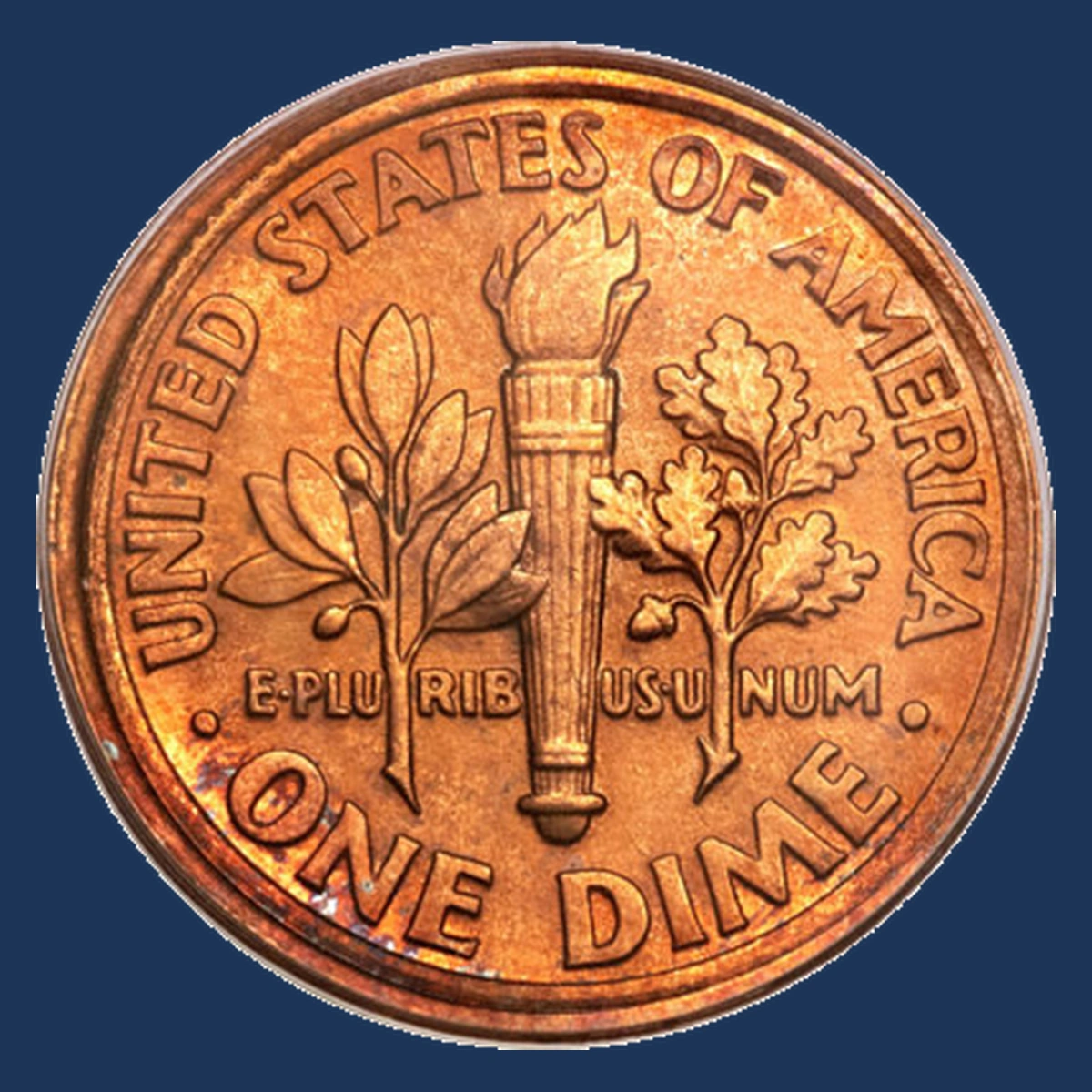
Turn this cent over and the Memorial is gone. A dime’s torch and branches appear instead, struck by a tool intended for another denomination.
The 1993-D mule pairs a Lincoln front tool with a Roosevelt dime back tool. The resulting designs are separate faces, not overlapping remnants of an earlier coin.
The auctioned specimen has a high, broad rim on the dime side. Some front detail near the edge is weaker, consistent with the unusual pairing.
Two ordinary coins joined together can imitate the basic idea. A continuous original edge and genuine struck surfaces are essential.
Estimated Value
Heritage sold the PCGS MS65 Red mule for $51,750 in January 2010. MS65 means unworn with relatively few marks, while Red describes its retained copper color.
Use an estimated $50,000–$100,000 for the documented kind of major pairing error. This is an estimate around a rare, specific object rather than a price for an unusual-looking ordinary penny.
The 2010 result is an actual sale. It does not guarantee what the same coin would bring today.
How to Identify
First confirm the basic pairing: 1993-D Lincoln on the front and the dime’s torch and branches on the back. Neither face should require an overlapping earlier coin to explain its main design.
Under a 10× magnifier, inspect the plain edge for a seam and compare the high broad back rim with the known example. Joined pieces may reveal disturbed edges or incompatible surfaces.
The cent blank is normally 2.50 g and 19.05 mm. Use recorded scale and caliper measurements for a certified coin rather than opening its holder.
An intact struck cent with the correct dime back and no joining seam is the essential first check.
Conclusion
A close look at both faces tells more than a strange color or one extra line. Check whether the feature rises above the surface, sinks into it, or belongs to an earlier design.
Estimated values run from $0.01–$100,000. Small wear-related effects may bring little, while missing plating, repeated strikes, and the cent–dime mule appeal to different collectors. Keep the original surfaces untouched while you compare.