1990 Penny Error List with Pictures

Before looking for a missing S, check what kind of penny you have. An ordinary 1990 Philadelphia cent normally has no mint letter; the valuable No S error belongs to specially made collector coins called Proofs.
One No S Proof reached $20,700 in August 2007. This 1990 penny error list also covers misplaced strikes, odd metal, and overlapping designs, with estimated values from $2 to $22,000.
Use the visible clues below to choose the right comparison for your coin.
1. 1990 Lincoln Memorial Penny BIE Letter Chip (Estimated Up to $75)
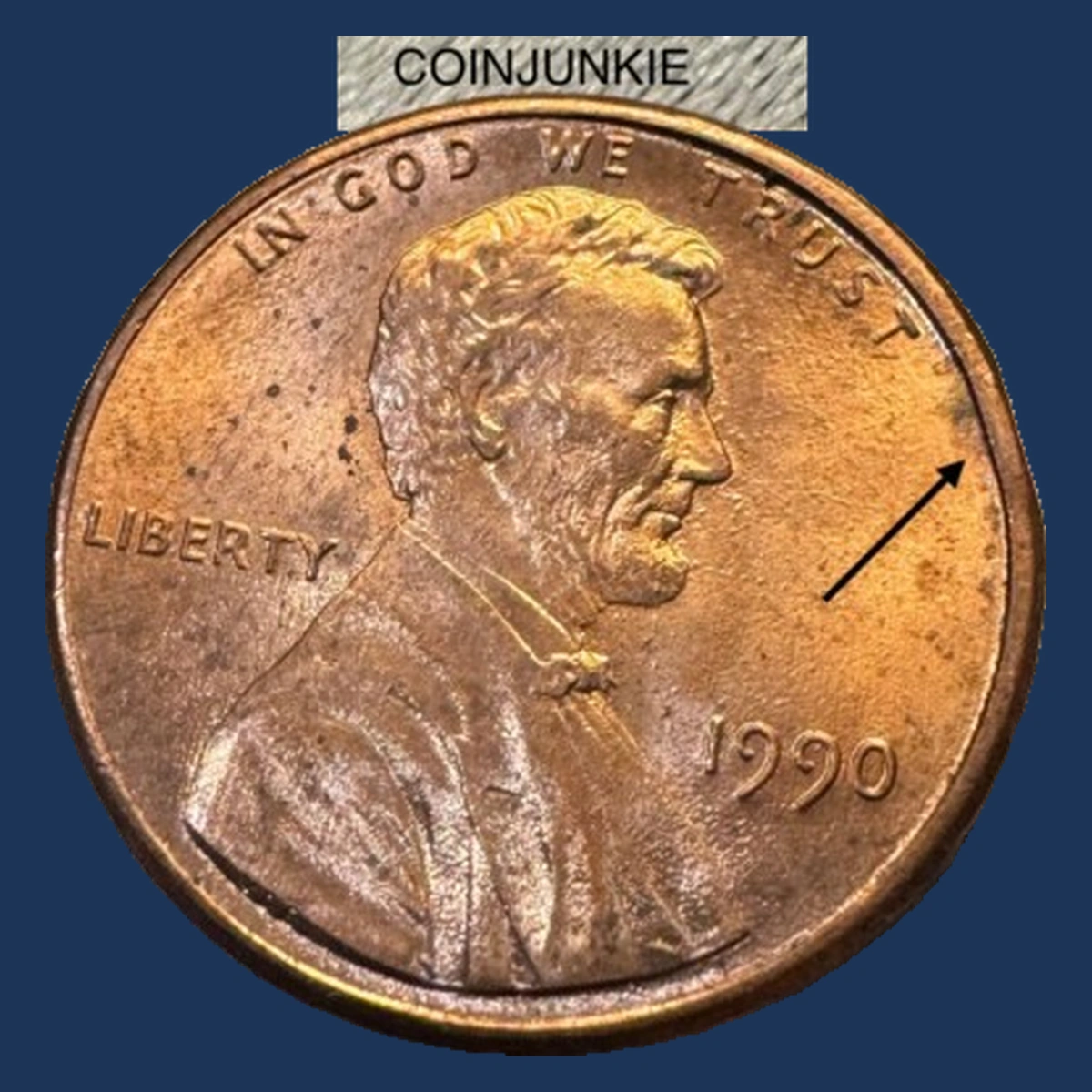
An extra-looking I can interrupt LIBERTY even though no new letter was intended. A small raised bar occupies the space between B and E.
The cause is a chip in the die, the steel stamping tool. Coin metal fills the small missing area when the design is pressed into the blank.
This BIE feature is reported for 1990 cents without one mint or exact shape assigned to every example. Its position supplies the nickname.
A bump elsewhere in the word needs its own description. Dirt, a lifted copper bubble, and damage beside a scratch can also create extra-looking metal.
Estimated Value
Use an estimated $2–$75 for an identified small BIE chip. A clear bar on an unworn coin can draw more interest than a tiny lump hidden by wear.
The range compares minor letter chips on Memorial cents. It is not a recorded sale assigned to the reported 1990 example.
Clarity matters more than a dramatic error label. Most small chips are modest collectibles, and a loose object on the surface does not receive the same value.
How to Identify
Place LIBERTY under a 10× magnifier and find the B–E gap first. Check whether the bar rises from the original surface rather than sitting on it.
Change the light direction to look for a scratch beside pushed-up metal. Copper bubbles tend to form rounded shells instead of a solid tool-made bar.
Keep the date and mint area in your photograph so the feature stays tied to the correct coin. Do not scrape a lump to test it.
Use a scale and calipers on a loose piece against 2.50 g and 19.05 mm. Inspect the smooth edge for damage.
The identifying clue is a solid original raised feature specifically between B and E.
2. 1990 Lincoln Memorial Penny Doubled Front or Back Design (Estimated Up to $200)
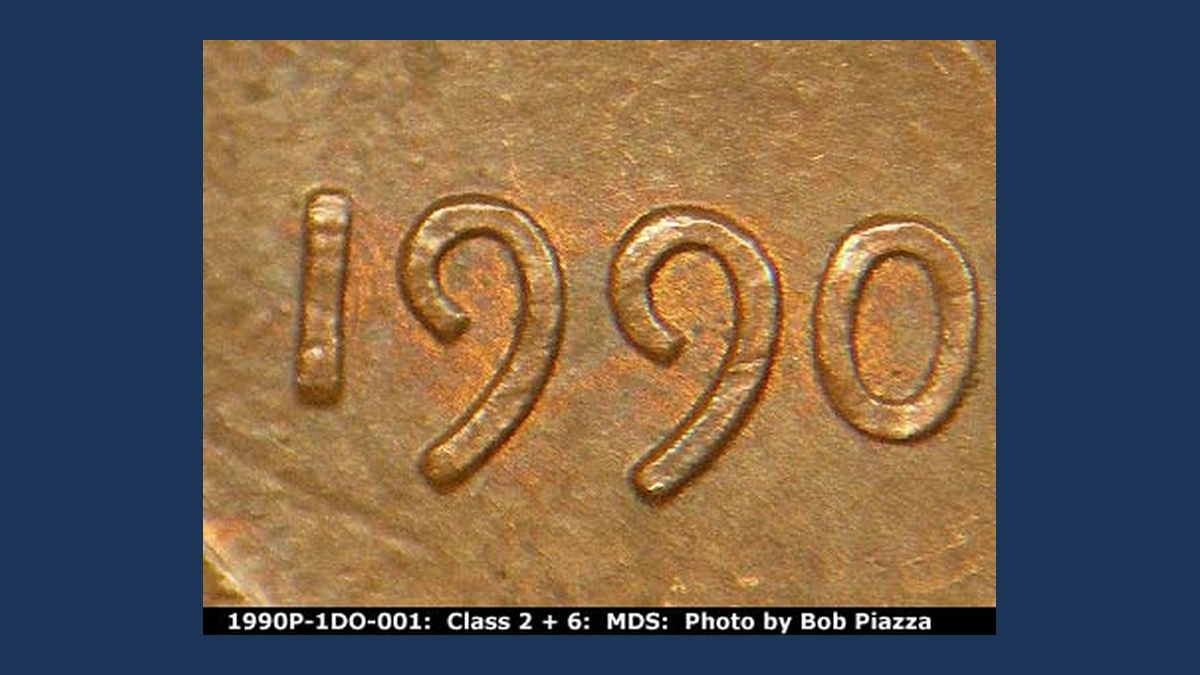
A letter or portrait edge can show an extra outline without the whole design being struck twice. The repeated detail may already have been present in the stamping tool.
Year-specific reports include front and back doubled designs for 1990. These reports do not establish one exact letter, mint, or direction that applies to all candidates.
The front and back therefore need their own comparisons. Extra-looking Memorial detail should not be matched to an unrelated doubled date photograph.
Flat ledges can also form when a tool moves during striking. Those shelves differ from a repeated rounded part of the original design.
Estimated Value
An estimated $5–$200 is suitable for identified minor doubled-design varieties. The range is for a matched extra design feature, rather than any thick-looking letter.
Strength and preservation help determine the price within that range. A small effect on a worn coin should not inherit a major doubled-die auction record from another year.
The general 1990 reports do not provide a realized price for each possible pattern. Look for a specific, repeatable photographic match before paying the higher estimate.
How to Identify
Photograph the suspected extra detail together with the surrounding letter or design. A 10× magnifier helps show whether it is a rounded duplicate or a flat shelf.
Check the date and mint letter before choosing a reference. Keep front-side and back-side patterns separate, and do not borrow a feature from a different year.
Look for split copper, corrosion, or scratches that may create a bright second edge. These can occur beside normal design without a doubled tool.
A scale and calipers should show around 2.50 g and 19.05 mm on a normal loose coin. Inspect the plain edge too.
A repeated design outline matching an identified 1990 example is more useful than general thickness.
3. 1990 Lincoln Memorial Penny Clipped Blank (Estimated Up to $250)
A curved gap, a straight missing edge, or two missing sections can start before the design is struck. The metal disc was incomplete when it reached the press.
Blanks are punched from a strip. Overlapping an earlier hole or an unsuitable strip boundary can leave part of the new disc absent.
The 1990 reports include several clip shapes without a fixed mint or percentage for each. Design near the gap should be examined on the actual coin.
Later cutting removes metal from a finished penny and can look similar. The missing outline by itself cannot establish when the cut occurred.
Estimated Value
For an original clip, estimate $10–$250, depending on the amount missing and the coin’s condition. Several clear gaps can be more interesting than one tiny missing section.
A 2021 straight-clip cent sold for $114 in September 2025. That recent different-year comparison does not establish a 1990 mint, shape, or exact price.
The remaining date and the cut’s original surface help a buyer evaluate the piece. Sawed or filed coins do not belong in the same error range.
How to Identify
Inspect each gap from the face and the side under a 10× magnifier. Look at how the nearby rim and letters formed against the incomplete outline.
An opposite weak rim can support a clip, but its presence or absence is not a complete test. Check for fresh cutting grooves or filing at the gap.
Weigh the coin against the normal 2.50 g to see whether the missing metal fits the shape. Use calipers along the intact width against 19.05 mm.
The remaining edge should be smooth like a normal cent’s. Do not work on the cut to improve its appearance.
Original struck detail meeting a preexisting missing section is the key relationship.
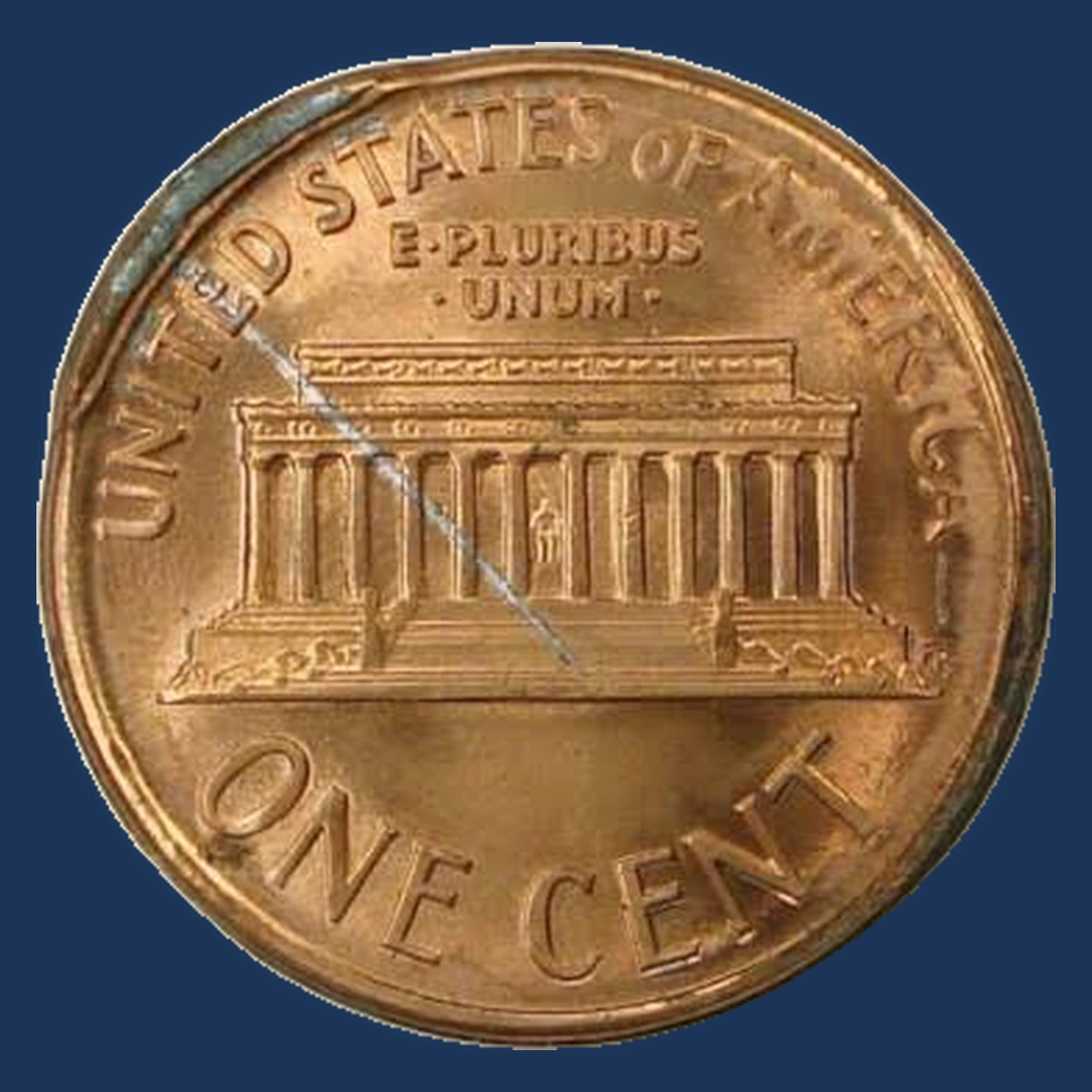
4. 1990 Lincoln Memorial Penny Broadstrike (Estimated Up to $350)
The whole design can fit inside an enlarged border when the blank spreads too far. The retaining ring, called the collar, failed to hold its edge.
A listed 1990 broadstrike also has split copper on the back, exposing gray zinc. That surface tear belongs to the spreading coin rather than proving it started without plating.
The portrait and lettering should remain on the expanded metal. A shifted strike instead loses some design beyond the blank.
An uneven border can still be genuine. The complete design and its relationship to the extra width matter more than whether the outline is round.
Estimated Value
An estimated $15–$350 covers clear broadstrikes with different degrees of spread and preservation. The original design should remain understandable.
A 1999 broadstrike graded MS65 Red sold for $67 in March 2023. That means an unworn coin with relatively few marks and remaining copper-red color.
The later-year sale is a comparison. Split plating on the reported 1990 piece is part of its condition and striking history, not an automatic extra premium added to the broadstrike estimate.
How to Identify
Check the outermost letters on both faces before measuring the width. A broadstrike retains its design inside the spreading metal rather than cutting part of it off.
Use calipers in several directions against the normal 19.05 mm. A scale can compare the metal amount with 2.50 g.
Under a 10× magnifier, inspect any exposed zinc beside torn copper. Do not treat every gray line as an originally unplated area.
Examine the plain edge and raised design for later hammering. Flattening after minting can enlarge a coin while damaging the details already on it.
The useful evidence is complete original design within genuine outward spread, with any plating tears fitting that movement.
5. 1990 Lincoln Memorial Penny Material Blocking the Design (Estimated Up to $500)
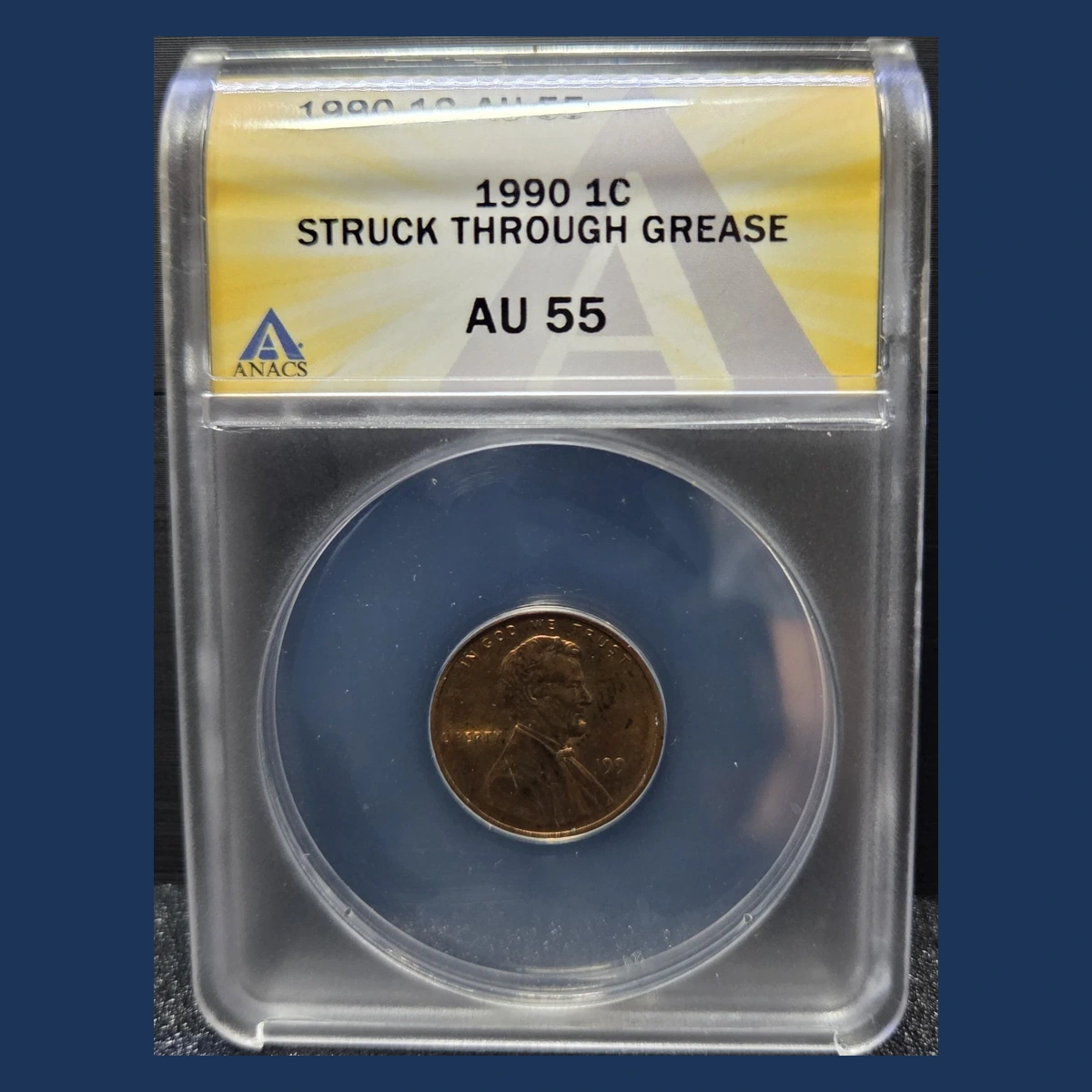
A local interruption can form when material sits between the blank and a stamping tool. It may leave a depression or prevent a small part of the design from appearing.
Ordinary 1990 struck-through examples are reported without a specific object assigned to them. A separate S Proof has a documented interruption at the date.
Proofs are specially made collector coins. The recorded Proof’s PR67 Deep Cameo grade describes its condition and strong contrast between raised design and mirrorlike background.
The affected date does not establish the No S variety. These are separate types of error that need different evidence.
Estimated Value
Estimate $5–$500 across minor blocked letters through clear impressions on attractive examples. A distinct mark on a Proof can appeal to a different buyer than faint ordinary-strike weakness.
A 2017-D front-side struck-through cent sold for $228 in March 2025. It supplies a recent comparison without pricing the 1990-S Proof directly.
Preserved surrounding detail helps explain the error. Later dents, polishing, or ordinary wear should not receive the same premium just because they remove part of a design.
How to Identify
Compare the interrupted area with the sharpest nearby detail using a 10× magnifier. Look for original surface continuing into the weak or depressed patch.
On the S Proof, begin at the date and check the collector finish separately. Do not turn a blocked date area into a missing-mintmark claim.
For an ordinary coin, examine whether general wear explains the weakness. A later dent may push metal into a raised border around its impact.
A scale and calipers can check 2.50 g and 19.05 mm on a loose coin. Inspect the plain edge for later pressure.
The boundary should explain an obstruction during striking rather than damage to design that already existed.
6. 1990 Lincoln Memorial Penny Off-Center Strike (Estimated Up to $500)
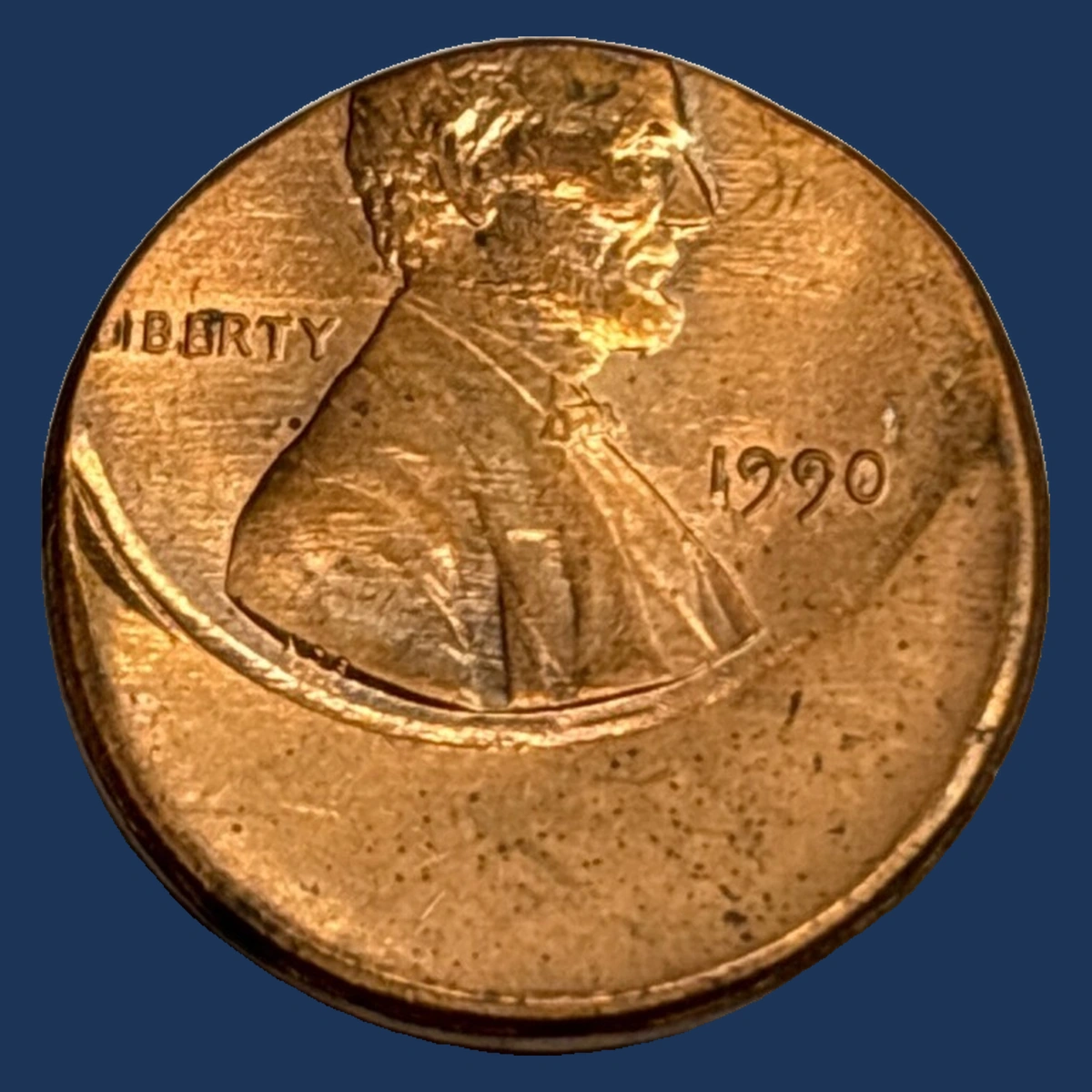
Half the expected design can be missing while the original metal remains. The blank sat partly outside the area reached by the stamping tools.
A recorded Philadelphia example is about 50% off center. A separate Denver coin is about 60% off center and carries its own D.
The percentages describe design displacement, not a matching percentage of lost weight. The untouched area is still part of the disc.
An off-center strike differs from a broadstrike with a complete design inside extra metal. A readable date is especially useful when a large shift leaves only part of Lincoln or the lettering.
Estimated Value
Use an estimated $20–$500 for genuine dated off-center cents, with preservation and visual clarity guiding the comparison. A large shift is not a price formula.
A small 4% off-center 2006 cent sold for $39 in March 2025. That nearby-type result illustrates a modest error rather than the specific value of either 1990 coin.
Check how much identity survives as well as the plain area. A missing year or heavy damage can reduce demand despite a dramatic displacement.
How to Identify
Keep the entire outline in view while locating the date. A 10× magnifier can help read surviving digits without filling in ones that are absent.
Compare design loss on both faces to confirm the same misplaced blank. A shift limited to one rim may come from one tool being out of position.
Inspect the transition between struck and untouched metal for grinding or other later work. Check the plain edge for cuts.
Use a scale against 2.50 g, then document the outline with calipers against 19.05 mm. Striking can change the shape without removing much metal.
A genuine untouched crescent opposite lost design provides the first practical check.
7. 1990 Lincoln Memorial Penny Elliptical Planchet (Estimated Up to $600)
The coin’s outline is oval instead of the expected circle. A 1990 cent was cataloged as struck on an elliptical planchet, meaning an unusually shaped prepared metal disc.
That example weighs 2.24 g and carries an NGC MS65 Red grade. The lighter disc left less room for the complete cent design.
The unusual boundary is part of the original blank. It should not be explained by stretching an already finished penny unless the surface shows evidence for that different history.
The listing does not supply exact long and short dimensions. Those measurements need to come from the specimen itself.
Estimated Value
An estimated $100–$600 is appropriate for an authenticated elliptical blank with readable identity. A clear original boundary is central to its appeal.
This is a comparison-based estimate for an unusual blank shape, not a recovered sale amount for the 2.24 g example. MS65 Red describes an unworn coin with relatively few marks and original copper-red color.
Later squeezing can make a normal cent oval too. That alteration should not receive the same value even when its outline looks similar.
How to Identify
Photograph the entire oval with the date visible, then examine its boundary under a 10× magnifier. Look for struck design that naturally meets the smaller original surface.
Calipers should record both the long and short dimensions instead of treating the coin as a circle. A normal cent is 19.05 mm across.
Compare a loose piece on a scale with the recorded 2.24 g and the normal 2.50 g. Do not transfer that specimen weight to every oval candidate.
Check the smooth edge for filing and the design for flattening from later pressure. Those changes can explain an artificial oval.
The key is an original irregular blank boundary receiving the cent design.
8. 1990 Lincoln Memorial Penny Split Blank with Off-Center Strike (Estimated Up to $650)
A break in the coin’s metal is different from a raised line left by a cracked stamping tool. The actual blank split on this reported 1990 example.
The same coin was struck about 10% off center and graded NGC MS66 Red. Its shifted design and metal split belong to one piece.
The catalog description does not establish the exact path or depth of the break. It should not automatically be described as a whole layer separating from the coin.
Examine how the split meets the struck surface. Later tearing can produce a similar opening without sharing the same minting history.
Estimated Value
For a confirmed original split combined with an off-center strike, estimate $50–$650. The range values the entire coin rather than adding two separate prices.
A clear opening with preserved surrounding design can make the event easier to understand. Severe later damage may obscure that evidence and reduce interest.
This is an estimate for related split-blank errors, not a sale assigned to the reported MS66 coin. An ordinary cent torn with tools belongs outside the same mint-error comparison.
How to Identify
View the break from both faces without opening it farther. Under a 10× magnifier, inspect how its edges meet the original design.
Separate the split from the unstruck area caused by the 10% displacement. One concerns whether the metal stayed in one piece; the other concerns where the tools reached it.
Use a scale to record any loss from the normal 2.50 g. Calipers can compare intact portions with a normal 19.05 mm outline.
Look along the plain edge for fresh tool marks, pulling, or later cuts. Do not describe a full layer separation unless the actual structure shows it.
An original break fitting the surrounding strike supports a split-blank explanation.
9. 1990 Lincoln Memorial Penny Unplated Zinc Blank (Estimated Up to $700)
The normal zinc center can be visible across a penny when its copper covering is missing. A 1990 Philadelphia example was certified as an unplated cent by NGC.
The zinc received the design without its usual copper skin. This is different from a copper tear caused by spreading during a broadstrike.
Its MS65 grade describes an unworn coin with relatively few marks. The label does not mean that every gray penny has the same origin.
Chemicals can strip copper from a finished coin, and corrosion can expose the center too. Original surface evidence is needed to separate those possibilities.
Estimated Value
For a confirmed unplated example, estimate $50–$700. Preservation of the exposed zinc helps determine how it compares with other certified pieces.
A 1994 unplated cent graded NGC MS65 sold for $99 in October 2018. A higher-grade 1995 example brought $660 in January 2023.
Those other-year sales illustrate a broad condition range, not the selling history of the recorded 1990 coin. A stripped cent does not acquire the same premium simply because it has a similar gray color.
How to Identify
Use a 10× magnifier to inspect fine letters in the gray metal. Look for original struck detail instead of pitting, etched areas, or residues from chemical treatment.
Compare the faces with the plain edge, leaving all surfaces untouched. Copper-free edges alone do not establish that the blank lacked plating before the strike.
On a loose coin, record the weight with a scale against the normal coated cent’s 2.50 g. Calipers can check its outline against 19.05 mm.
A slightly light reading can fit either missing original copper or later stripping. Use a specialist’s surface examination for a serious candidate.
The decisive issue is the history of the surface, rather than its color alone.
10. 1990 Lincoln Memorial Penny Small Indent with Broadstrike (Estimated Up to $750)
A small smooth depression can mark where another blank overlapped the penny during striking. The covered area did not receive the normal design.
A cataloged 1990 example combines an indent of about 5% with a broadstrike. Its expanded outline and local depression belong to the same coin.
The indentation need not show backward lettering. A recognizable sunken mirror design would instead suggest contact with a previously struck surface.
The listing does not specify the affected face or exact clock position. Those details must come from the coin rather than from a different example with a similar percentage.
Estimated Value
Estimate $50–$750 for a confirmed indent-and-broadstrike combination. A clear original depression and an attractive expanded design help support collector interest.
The reported coin’s PCGS MS64 Red grade means unworn with some marks and remaining copper-red color. It does not supply a selling price by itself.
This range values one combined-error coin. A small 5% overlap should not automatically receive the price of a dramatic full-face indentation, and later dents do not qualify for the same estimate.
How to Identify
Follow the depression’s boundary with a 10× magnifier and angled light. Compare how the surrounding design ends or changes where the other blank blocked it.
Check whether the interior is featureless or carries readable backward detail. Do not invent lettering simply to turn an indent into a brockage.
Measure the expanded outline with calipers against a normal 19.05 mm cent. A scale should be compared with 2.50 g if no metal was lost.
Inspect both faces and the smooth edge for crushing after minting. A later blow may flatten already completed design around a dent.
An original blocked-design area within a naturally spread coin supports the combined error.
11. 1990 Lincoln Memorial Penny Front Brockage with Broadstrike (Estimated Up to $1,000)
Backward design pressed below the surface can appear on Lincoln’s side. A previously struck coin transferred its raised image into the next piece.
This sunken mirror impression is called a brockage. A 1990 example was cataloged with a front brockage and outward spreading from a broadstrike.
Its NGC MS65 Red and Brown grade describes an unworn coin with mixed copper-red and brown color. The listing does not establish that the entire front is covered.
The expanded outline is part of the same error. A faint line transferred through a tool clash or a simple smooth dent needs a different explanation.
Estimated Value
An estimated $75–$1,000 covers identifiable front brockages with spreading and different levels of clarity. The amount of readable mirror detail is especially useful for comparison.
A 2001 partial-front brockage sold for $79 in March 2025. That recent different-year result shows that a genuine partial impression can remain affordable.
The recorded 1990 coin must be priced from its own appearance. Do not assume a full mirror face or add a separate broadstrike amount to value the same object twice.
How to Identify
Look for a letter or design fragment that can be read when reversed left to right. A 10× magnifier and side lighting help confirm that the image is sunken.
Follow its boundary into the surrounding normally struck surface. Compare both faces rather than deciding from one cropped impression.
Calipers can record the spread beyond the normal 19.05 mm. A scale can check whether the metal amount remains close to 2.50 g.
Examine the plain edge for evidence of squeezing between finished coins. That treatment can make misleading mirror marks along with damage.
A recognizable recessed backward design within original struck metal is the essential clue; width alone cannot establish a brockage.
12. 1990 Lincoln Memorial Penny Strike Through a Shifted Cap (Estimated Up to $1,000)
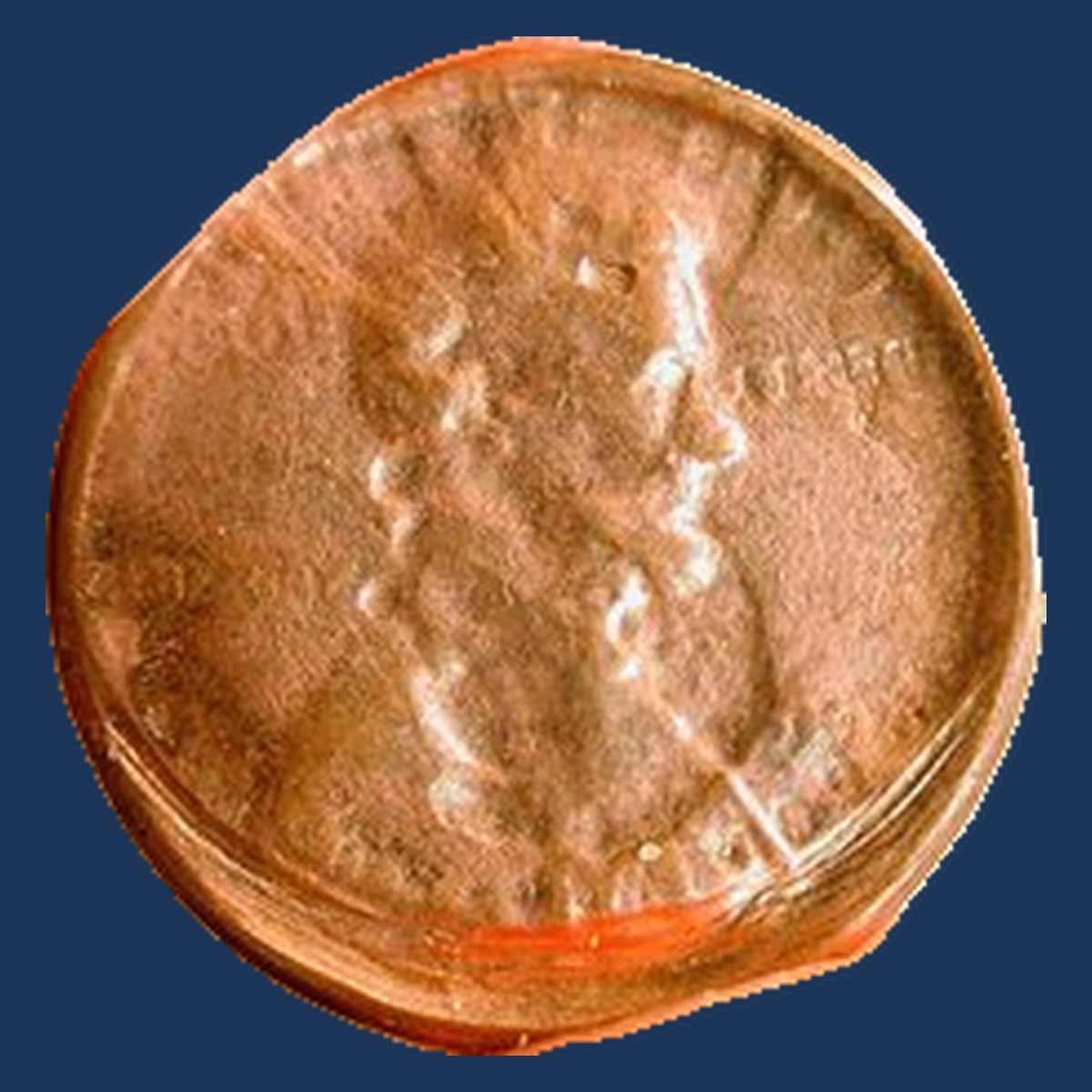
A coin stuck to a stamping tool can become a thin cover, called a die cap. When that cover moves, it changes the impression on the next blank.
The 1990 example was struck through a cap that turned 180 degrees and shifted upward. It left a clear but weakened Lincoln image with additional sunken detail.
Some of that recessed design faces in the normal reading direction. Not every sunken image is therefore a simple backward brockage.
This penny received the covered-tool strike. It is not the cap that stuck to the tool, and it does not need to be cup-shaped.
Estimated Value
For a recognizable shifted-cap impression, estimate $100–$1,000. Clear relationships between the weakened portrait and extra sunken design help explain the premium.
A 1995 cent struck through a late-stage cap sold for $180 in March 2025. It is a related covered-tool comparison, not the same shifted pattern as the 1990 example.
This estimate applies to the whole impression on one coin. A weak portrait from wear or later surface damage should not be priced as the documented cap event.
How to Identify
Compare the portrait and recessed detail together in the illustrated shifted-cap example. A 10× magnifier helps separate the faint raised image from the sunken additions.
Check whether the recessed letters face normally or backward. Their direction matters to the explanation and should not be guessed from a small photograph.
Inspect both faces for scraping or crushing that could produce later impressions. The edge should also be checked for tool damage.
A scale and calipers provide the normal 2.50 g and 19.05 mm comparisons on a loose piece. Keep sealed examples in their holders.
The useful match is the specific portrait-and-recessed-design relationship left by the shifted cover.
13. 1990 Lincoln Memorial Penny Repeated Strikes and Flipover (Estimated Up to $1,500)
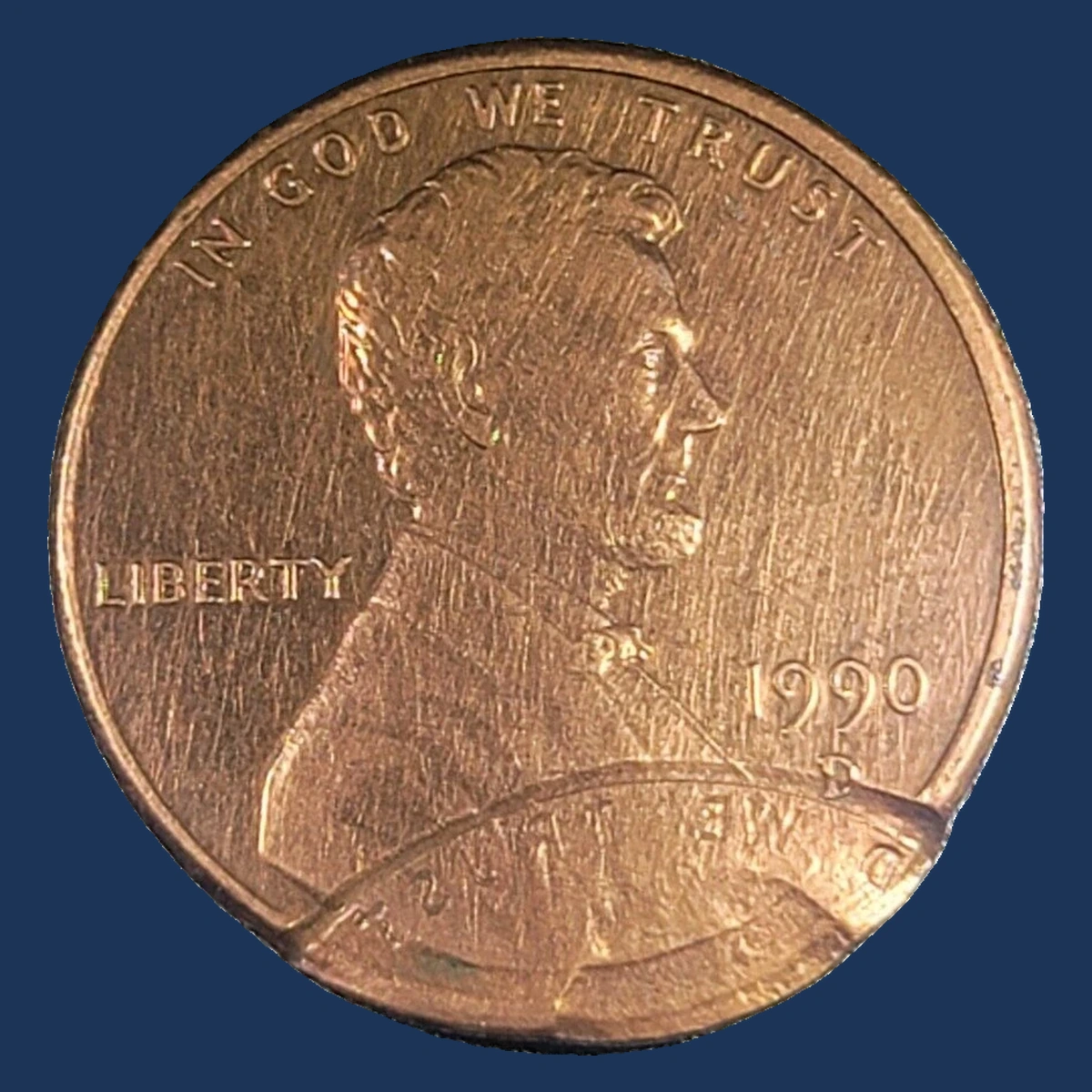
Two or more design positions can remain when a coin receives extra blows. Movement between them can shift, turn, or flip the coin.
Ordinary 1990 examples include second strikes far off center, a flipover, and a triple-struck piece. A flipover can mix Lincoln and Memorial remnants on one face.
A 1990-S Proof has a rotated repeated front design. That visible movement is different from the normal repeated, aligned blows used to make a Proof.
Each piece needs its own sequence. A percentage from an ordinary coin or a turning angle from another year should not be assigned to the Proof.
Estimated Value
For ordinary repeated strikes, estimate $50–$1,000; an authenticated Proof with clear rotated impressions can fit approximately $300–$1,500. Different production and movement affect the comparison.
A 1997 flipover cent sold for $144 in March 2026. That recent ordinary-strike result gives a lower-level comparison rather than a price for the 1990-S Proof.
The number of claimed blows is not enough. Look for readable original impressions and surfaces that make the movement understandable before applying a stronger estimate.
How to Identify
Trace each surviving portrait, date, or group of letters under a 10× magnifier. Find where a later impression interrupts an earlier one.
For a flipover, identify front and back design remnants on the same face. For the S Proof, compare the repeated front positions without treating ordinary aligned Proof striking as an error.
Check the opposite face and plain edge for later squeezing. A narrow flat shelf beside one letter does not demonstrate another full blow.
Use a scale against 2.50 g and calipers against a normal 19.05 mm outline. Extra strikes can move metal without adding it.
Distinct struck positions with a visible relationship establish the movement more reliably than a strike-count label.
14. 1990 Lincoln Memorial Penny Cent on a Dime Blank (Estimated Up to $1,500)
A smaller silver-colored disc can leave too little room for the cent’s outer design. A blank meant for a dime reached the cent press instead.
A 1990 Philadelphia example was certified by PCGS as MS65. Its unusual metal has bonded silver-colored layers around a copper center.
That structure differs from the thin copper covering over zinc in a normal penny. Gray color alone cannot distinguish the two.
An unused dime blank carries no earlier Roosevelt portrait or torch. If those details survive beneath Lincoln, the starting object was a finished dime and belongs in the overstruck group below.
Estimated Value
An estimated $350–$1,500 covers confirmed cents on dime blanks with different condition and surviving identity. Strong design and an undamaged surface help the comparison.
A 2007-D example graded PCGS MS66 sold for $600 in March 2023. That newer sale is a related-type comparison, not a transaction for the recorded 1990 MS65 coin.
Judging the metal correctly matters before discussing price. A stripped zinc cent or a penny with an added silver-colored coating does not fit the same range.
How to Identify
Begin with weight and the edge rather than the surface color. A dime blank normally starts near 2.268 g and 17.91 mm, compared with 2.50 g and 19.05 mm for a cent.
Use a scale and calipers on a loose coin, allowing for expansion during striking. Keep measurements attached to the actual specimen.
A 10× magnifier can reveal the copper center between outer layers at the edge. An unused blank has no preexisting struck dime grooves.
Search the faces for old dime lettering or portrait details before calling it an unused blank.
Correct dime-type metal carrying only the cent design supports this wrong-blank error.
15. 1990 Lincoln Memorial Penny Matching Double-Strike and Indent Pair (Estimated Up to $2,500)
Two coins can preserve different sides of the same accident. Matching contact areas explain why they belong together as a pair.
A cataloged 1990 pair includes a double-struck cent with its second blow about 90% off center. The other coin has an indent covering about 15% of its front.
Both were graded PCGS MS65 Red. Their individual surfaces and corresponding contact areas need to be compared together.
These remain two separate coins, not two blanks permanently bonded into one object. A shared date and similar color do not prove a pair unless the strike evidence links them.
Estimated Value
Estimate $500–$2,500 for the complete matching pair. The fit of the original contact evidence and the condition of both coins guide the comparison.
A different 2001 matching error pair sold for $1,320 in March 2025. That is a recent whole-pair comparison, not a separate value assigned to either 1990 member.
The 1990 catalog description establishes the pair without supplying a sale used here. Keeping both coins and their records together helps preserve the explanation of the event.
How to Identify
Compare full photographs of both pieces at the same scale. Find the contact area associated with the off-center second strike and the corresponding front indent.
A 10× magnifier can help trace the matching boundaries. Avoid forcing the coins together to demonstrate a fit.
Weigh loose pieces separately against 2.50 g each. Calipers can record their changed outlines from a normal 19.05 mm starting disc.
Check the smooth edges for later filing, since artificially worked coins can be made to fit. Use recorded measurements for sealed examples.
A specific original contact relationship between the struck areas supports a matching pair; two unrelated errors with the same date do not.
16. 1990 Lincoln Memorial Penny Cent Struck Over a Finished Dime (Estimated Up to $4,000)
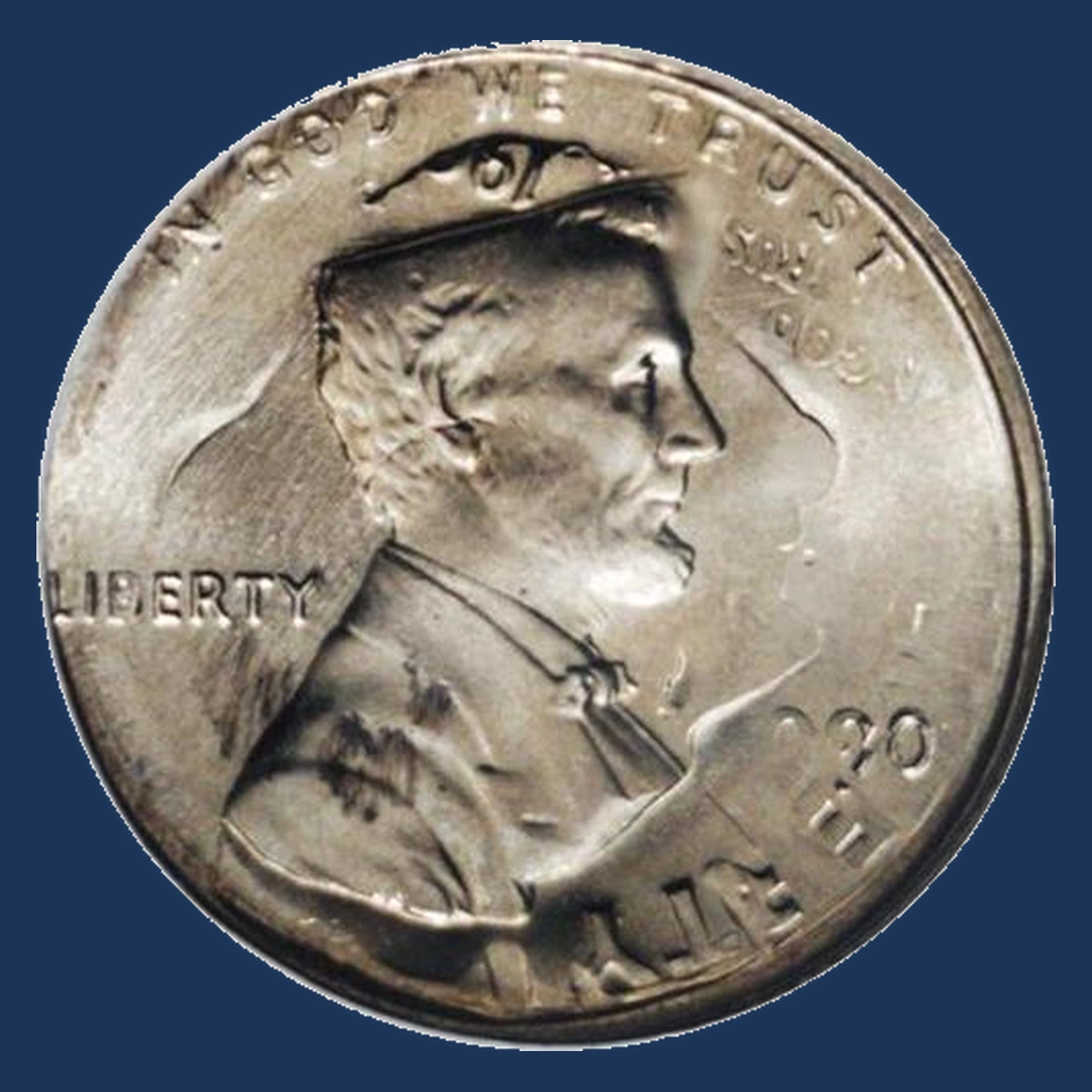
Two different designs can survive on one piece of dime metal. A completed dime received a later 1990 cent strike.
Recorded examples include hosts dated 1990-P and 1989-P. Their dates, grades, and portrait positions belong to separate specimens.
One 1990-P host shows both dates and its P, with Roosevelt turned almost upside down relative to Lincoln. Another cataloged example has the upper cent year in parentheses because it is attributed rather than fully visible.
The older dime image is what separates these coins from cents struck on unused dime blanks. A double date alone is not the whole identification.
Estimated Value
A cent over a 1989-P dime sold for $2,160 on September 29, 2025, graded ANACS MS63. That grade describes an unworn coin with noticeable marks.
Estimate $700–$4,000 across authenticated 1990 cent-over-dime examples. The recent result belongs to the older-dated host, not every 1990-P dime example.
Clear surviving pieces of both designs help collector interest. An underlying year should only be read where the original coin actually preserves it.
How to Identify
Find a recognizable Roosevelt or torch detail before searching for a second date. A 10× magnifier can help trace the older image beneath the cent strike.
Keep each date and mint letter with its own design. Do not treat an attributed year in parentheses as four fully readable digits.
A loose piece should be compared with the dime’s usual 2.268 g, not the cent’s 2.50 g. Calipers record changes from the dime’s original 17.91 mm diameter.
Inspect the layered edge and any surviving grooves for later alteration or seams. The second strike can distort the edge.
Genuine earlier dime details beneath a later cent design establish the combined denomination.
17. 1990 Lincoln Memorial Penny Older Copper-Alloy Blank (Estimated Up to $20,000)
A penny can look copper-colored yet contain a different metal. A 1990-D cent has been reported on an older copper-alloy blank instead of the normal copper-coated zinc.
The heavier disc is around 3.1 g, compared with 2.50 g for an ordinary 1990 cent. Its familiar color can hide the difference until it is weighed.
The recorded example appears in an ICG AU58 auction listing. AU58 means slight wear, not a statement about the metal recipe.
How an older blank reached the press is a question. Weight and professional metal testing should establish the object before a production story is assumed.
Estimated Value
For an authenticated older copper-alloy blank, estimate $3,000–$20,000. The mint, condition, and strength of its identification affect the comparison.
A 1989-D cent on an older 3.1 g copper blank sold for $7,500 in January 2018. That adjacent-year example provides a real comparison without becoming a sale assigned to the 1990-D coin.
The estimate does not apply to an ordinary plated-zinc cent made heavier by added metal. An altered date on an older copper cent must also be excluded.
How to Identify
Check a precise scale with a known weight, then measure the coin. A reading around 3.1 g is worth investigating, but cannot establish its composition alone.
Use calipers against the usual 19.05 mm diameter and inspect the smooth edge for added metal or a seam. The ordinary 1990 cent weighs 2.50 g.
A 10× magnifier helps examine 1990 and the D for alteration. Do not scratch the surface to expose the center or rely on a sound test.
Professional metal analysis can distinguish an older copper-rich alloy from coated zinc. Keep any measured composition tied to that specimen.
A genuine unaltered date on verified heavier copper-alloy metal is the necessary combination.
18. 1990 Lincoln Memorial Penny No S Proof (Estimated Up to $22,000)
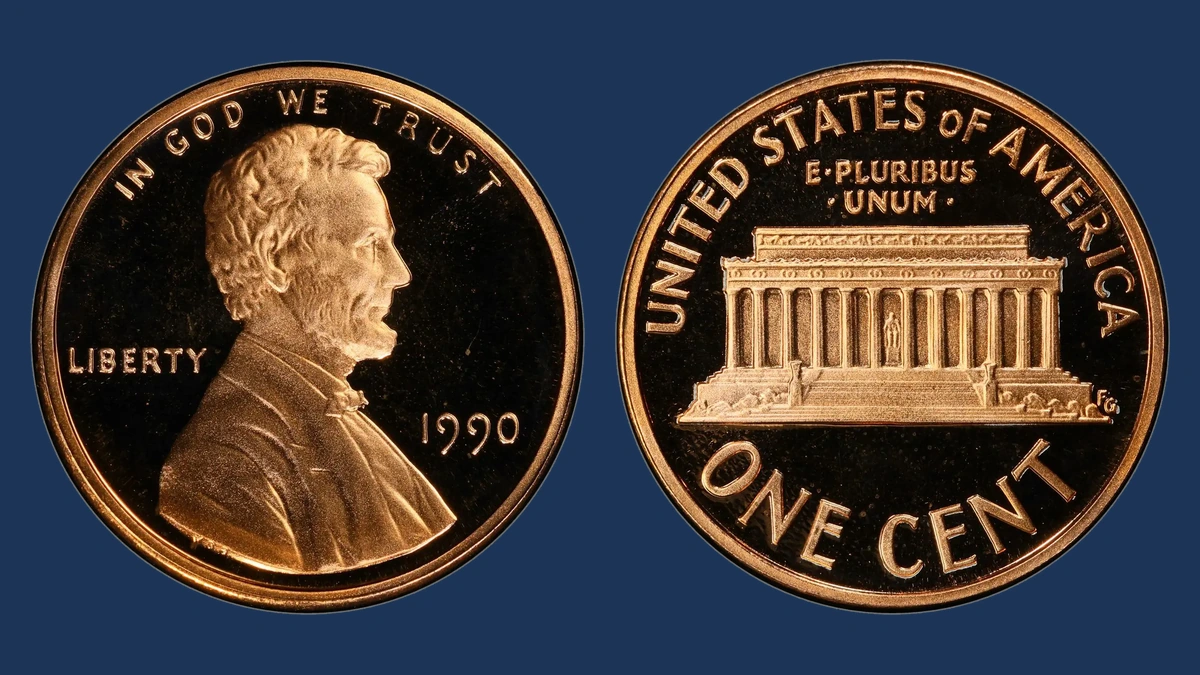
The missing letter matters only on the right kind of coin. A 1990 Proof from San Francisco should normally have S below the date.
Some Proof cents were made with a front tool lacking that letter. They retain the specially prepared collector finish even though the mintmark space is empty.
An ordinary Philadelphia cent also has no letter, but that is its normal design. Polishing it until shiny does not turn it into a No S Proof.
The rare combination is genuine Proof manufacture and an originally absent S. Damage that removes a letter after striking creates a different object.
Estimated Value
A PR69 example brought $20,700 at Bowers & Merena in August 2007, as recorded by PCGS. That grade describes exceptionally high preservation.
Estimate $3,000–$22,000 across authenticated No S Proofs with different condition and contrast. Deep Cameo describes strong contrast between frosted raised design and mirrorlike fields.
The record is not a price for an ordinary no-letter Philadelphia penny. The coin’s actual Proof identity must be established before applying any part of this range.
How to Identify
Compare the suspected coin with a genuine 1990-S Proof, including the prepared fields, raised details, and rims. Shine by itself is not enough.
Inspect the area below the date through a 10× magnifier. Look for an original undisturbed surface rather than scraping where an S might have been removed.
Check the whole coin for polishing or alteration. Original set records can help, but a loose coin still needs its own examination.
Both ordinary and Proof cents are about 2.50 g and 19.05 mm with a plain edge. A scale and calipers therefore cannot separate them by normal specifications.
The essential match is an authentic Proof cent with an originally missing S.
Conclusion
A missing mint letter means very little until the coin’s normal version is identified. For 1990, the rare No S belongs to a genuine Proof, while ordinary Philadelphia pennies normally lack a letter.
Estimated values across these errors run from $2–$22,000. For the other types, follow the shape, original design, and metal together; an unusual color or a thick letter is only the beginning of a useful check.