1975 Penny Error List with Pictures

A split-looking D, a cup-shaped penny, and a cent carrying traces of a dime tell very different stories. The last of these brought $960 at a 2018 auction.
Finding a 1975 penny error means working out which story the metal supports. The examples below have estimated values from $2 to $3,000, including one estimate for a complete two-coin pair.
Continue through the guide for the visible differences, practical checks, and price examples that matter.
1. 1975 Lincoln Memorial Penny Doubled Dies (Estimated Up to $150)
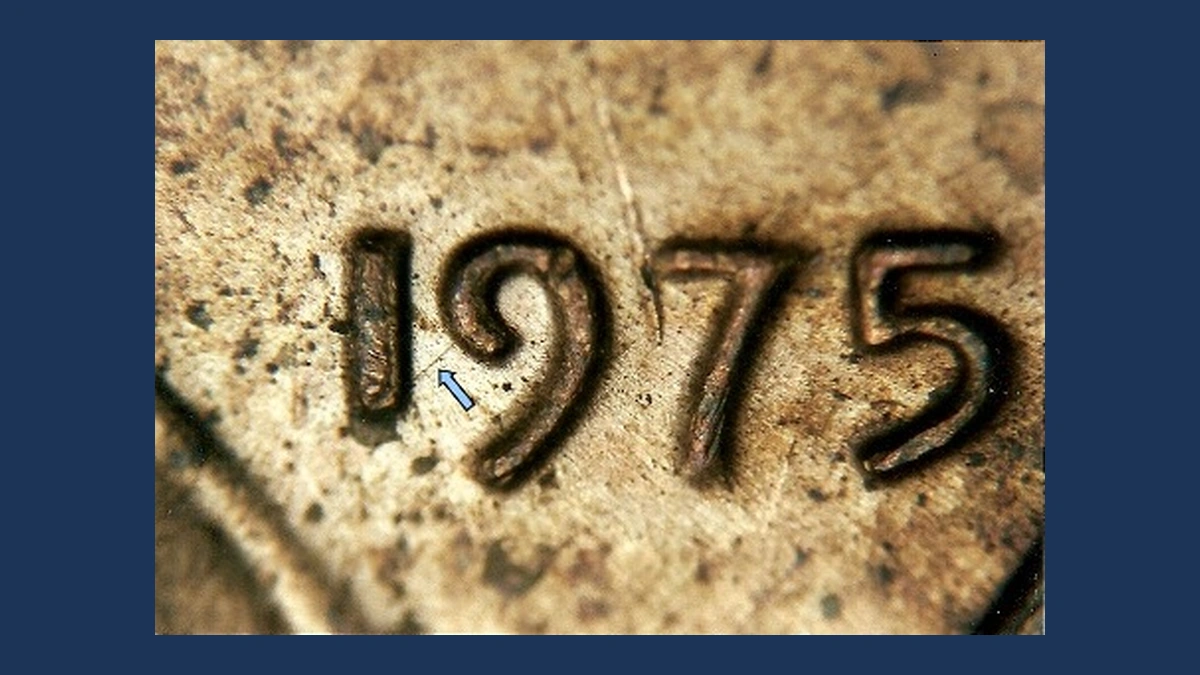
An extra edge or a fork at a letter corner may reveal a design repeated on the stamping tool. Collectors call that tool a doubled die.
Several 1975 Philadelphia varieties are recorded on the front, and another affects lettering on the back. Their directions and small supporting marks differ.
A Denver front-side variety is also reported, but it needs its own confirmed identification. A Philadelphia photograph cannot establish the Denver claim.
Flat doubling from tool movement during the strike can appear on the same coin as a genuine variety. Each extra-looking feature must be judged separately.
Estimated Value
Estimate $3–$150 for confirmed minor 1975 doubled-die varieties. The price depends on the strength of the extra design, preservation, and how readily a collector can recognize the specific variety.
This comparison-based range is not a verified auction result for every listed tool. Denver candidates need an established match before receiving the same variety premium.
A flat shelf beside a letter, or ordinary thickening from tool wear, does not automatically carry that value.
How to Identify
Compare the suspect lettering with a normal coin before studying tiny scratches. The extra design itself should be present; supporting marks only help identify the particular tool.
With a 10× magnifier, follow rounded extra edges and forked letter corners. For a back-side variety, do not mistake a flat ledge for another design outline.
Read the date and check for a D. Keep Philadelphia and Denver comparisons separate.
The ordinary 1975 cent weighs 3.11 g and measures 19.05 mm; check with a scale and calipers, and inspect its plain edge. Added metal or squeezing can create misleading shapes.
Find the same doubled design at the same letters as the confirmed variety, then use supporting marks to strengthen the match.
2. 1975 Lincoln Memorial Penny Repunched D Mint Mark (Estimated Up to $150)
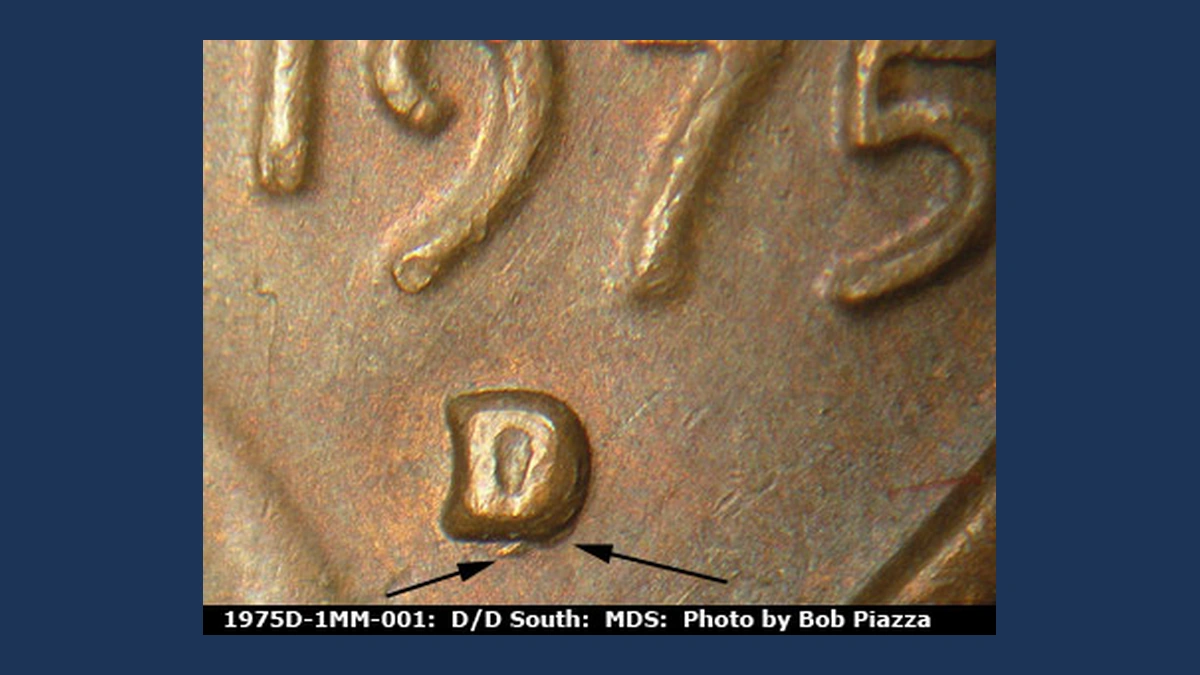
A second curve or upright can appear beside the D below the date. It can remain when the mint-letter punch moves between blows on the steel stamping tool.
The resulting repunched mint mark repeats on coins made with that tool. Listed 1975-D examples show several positions, including overlaps to the northwest, west, and south.
One common lookalike needs special attention. A damaged punch can produce a split-looking lower end of the D without a second punch position.
That extra edge is not enough to identify a rare variety. The full mint-letter shape must support the claim.
Estimated Value
Confirmed repunched mint marks have an estimated $3–$150 range, based on comparable minor Lincoln-cent varieties. Strong, easily followed extra outlines are generally more appealing than very close overlaps.
The damaged-punch lookalike does not receive this RPM premium. Its value remains that of an ordinary coin in the same condition.
An impressive close-up is useful only when it shows a genuine earlier D impression. Matching the complete pattern is more important than counting isolated lines.
How to Identify
Look at the lower end of the D, but do not stop there. A split-looking tip is common enough to require more evidence.
Use a 10× magnifier to trace the upright and curved portions of any second letter. Compare the whole pattern with the 1975-D mint-mark examples and damaged-punch comparison.
Inspect nearby surfaces and the plain edge for dents or squeezing. Check a loose coin against 3.11 g on a scale and 19.05 mm with calipers.
Catalog names can differ, so rely on matching photographs rather than assuming similar numbers describe the same tool. Small background lines may help confirm a match.
Follow a separate recognizable part of the D beyond the common damaged lower tip.
3. 1975 Lincoln Memorial Penny Broadstrike (Estimated Up to $250)
The coin can be wider than usual while retaining all its lettering. Its metal escaped the normal width limit during striking.
That limit is set by the collar, a ring surrounding the disc. A broadstrike forms when the ring does not contain the metal properly.
A 1975-D example is recorded with an ANACS MS63 Red and Brown grade. The grade describes an unworn coin that retains some red copper color.
The outer margin need not be perfectly even. What separates this from an off-center strike is a complete design inside the extra spread, rather than design lost beyond the edge.
Estimated Value
A reasonable estimated range is $20–$250 for a confirmed 1975-D broadstrike. More striking spread and cleaner surfaces can support a higher price.
A 1999 broadstrike graded PCGS MS65 Red sold for $67 in March 2023. That newer copper-plated zinc coin differs in metal from the solid copper-alloy 1975 cent.
The sale provides general market context for the same striking mistake. It is not a sale record for the ANACS 1975-D example.
How to Identify
Compare the outside letters with a normal cent and check that the whole design remains present. Extra width alone is not enough.
Use calipers across several directions, taking 19.05 mm as the ordinary diameter. An uneven margin can still result from a genuine broadstrike.
Check the weight with a scale against 3.11 g. The coin should not become much lighter simply because its metal spread outward.
A 10× magnifier can reveal hammering along the plain edge or flattened letters from later treatment. Keep those damaged areas separate from any original strike features.
Examine both faces rather than the widest side alone. Confirm intact struck lettering inside the expanded outline, without evidence that someone hammered the coin flat.
4. 1975 Lincoln Memorial Penny Split Blank (Estimated Up to $400)
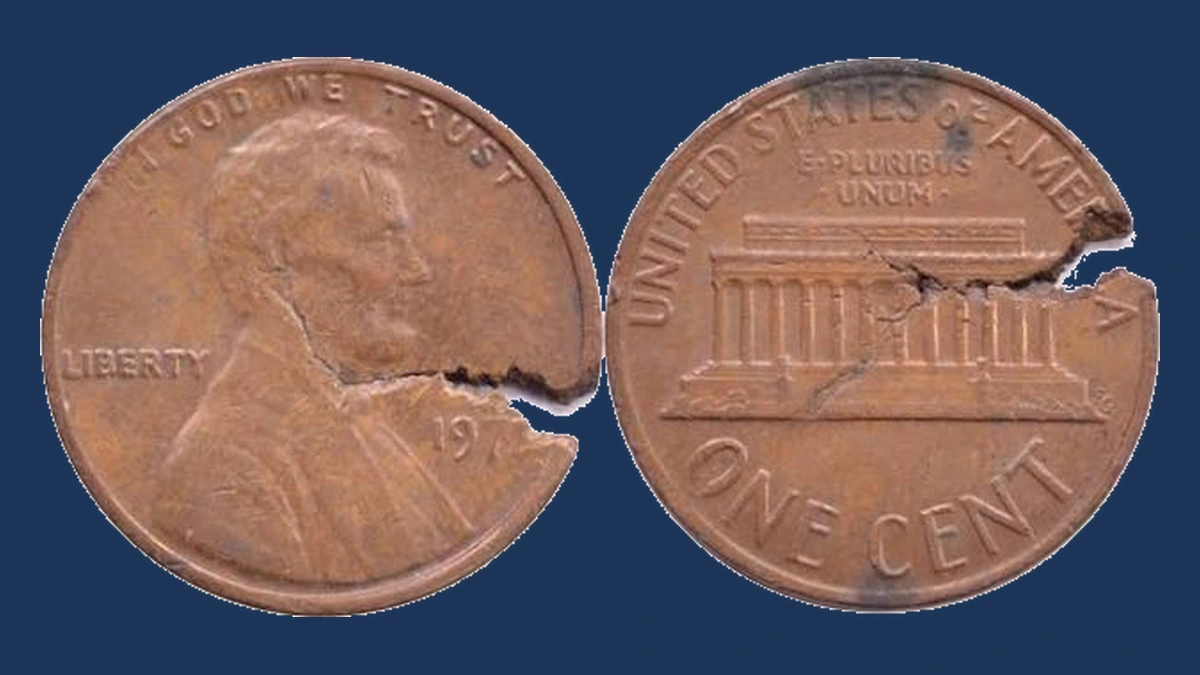
A penny can be much thinner than normal because the metal separated through its thickness. The recorded 1975-D split-disc example weighs 1.57 g.
That is close to half the normal 3.11 g weight. A weak area within the copper alloy allowed a layer to separate.
The remaining design and split surface help establish whether separation happened before or after striking. The short auction description alone does not settle that sequence.
This date uses copper alloy throughout the disc. A split is therefore not the loss of a thin copper coat from the zinc core found in later cents.
Estimated Value
Estimate $50–$400 for a confirmed 1975-D split-disc error. This range compares similar Lincoln-cent split-metal errors rather than quoting a verified sale for the 1.57 g example.
The timing of the split, readable design, and preservation all affect appeal. A clear natural separation surface can be more useful than a dramatic low weight alone.
A coin ground down after striking may weigh about the same, but it does not receive the mint-error premium.
How to Identify
Put the coin on a scale and record the actual reading. A substantial loss from 3.11 g supports a thin-disc problem, but filing can also remove that much metal.
Use a 10× magnifier on both faces and the plain edge. Natural split texture differs from repeated abrasive lines made by grinding.
Calipers can compare the thickness with a normal coin and the diameter with 19.05 mm. Do not force a thin piece flat to measure it.
Look for design struck onto the separated surface or design lost when the layer came away. Those features help place the split before or after the strike.
Confirm a naturally separated surface and matching thinness, rather than relying only on the 1.57 g figure.
5. 1975 Lincoln Memorial Penny Off-Center Strike (Estimated Up to $600)
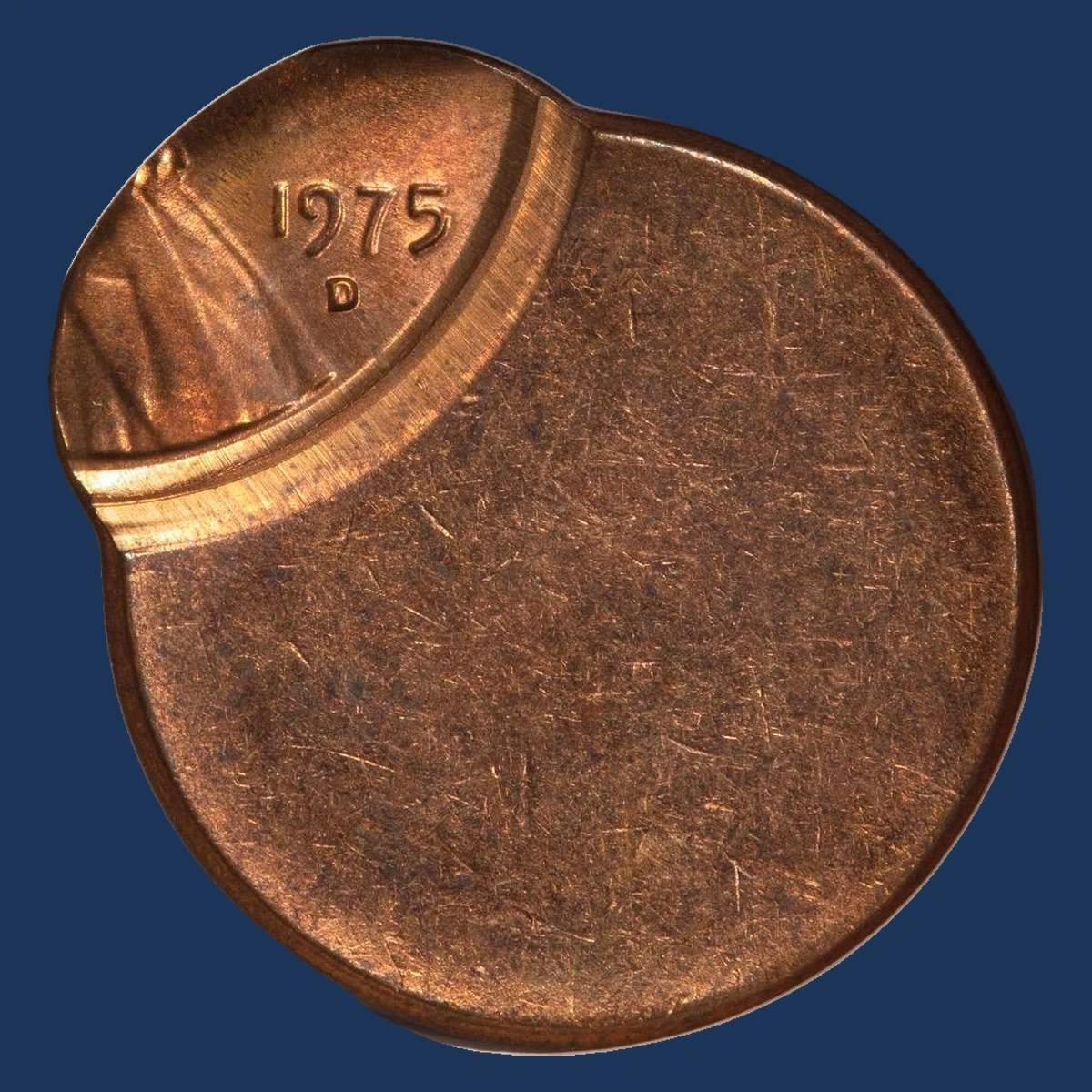
A large blank area shares the disc with a design pushed toward the opposite edge. The disc was misplaced when the stamping tools came together.
One recorded 1975-D piece is about 65% off-center toward nine o’clock. Other Denver examples range from 40% to 75%, while a Philadelphia listing reaches 90%.
These percentages describe separate coins, not stages of one changing coin. Each needs its own visible date and design boundary.
A greater displacement leaves less room for the year. Collectors often prefer a bold shift that still preserves enough of the date to identify the piece.
Estimated Value
For dated examples, estimate $20–$600. The strongest prices generally require a visually clear shift, readable identity, and an attractive original surface.
A 1982 copper-plated zinc cent struck 70% off-center sold for $74 at Heritage in June 2025. That is a useful market comparison for displacement, although the later cent has different metal.
The percentage alone does not set value. A dramatic but dateless or heavily damaged piece can bring less than a smaller, clearer error.
How to Identify
Read every surviving date digit before estimating the shift. The most dramatic outline is not automatically a confirmed 1975 coin.
Under a 10× magnifier, inspect the boundary between untouched metal and the struck design. Compare both faces to distinguish an off-center disc from a tool shifted on only one side.
Check the plain edge for later cutting. Use a scale against the normal 3.11 g, since a simple off-center strike normally retains the disc’s metal.
Measure the outline with calipers relative to the usual 19.05 mm diameter. Do not turn an estimated area of blank metal into an exact percentage by eye.
Find the untouched area opposite the missing design, then confirm the remaining date and mint letter independently.
6. 1975 Lincoln Memorial Penny Struck Through Material or a Cap (Estimated Up to $600)
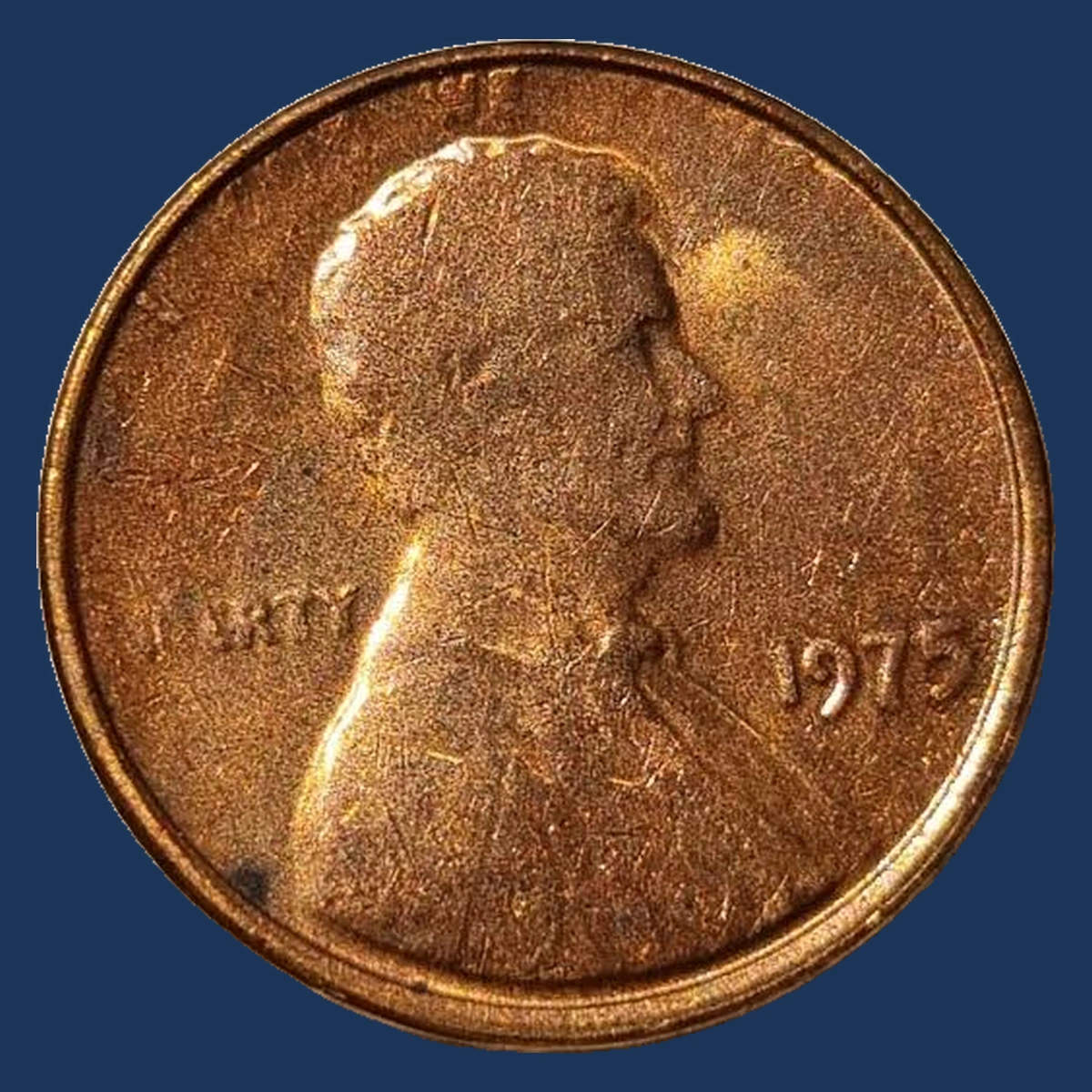
The portrait may be blurred, hidden, or replaced by an impression left by trapped material. Something stood between the disc and a stamping tool.
A recorded 1975-D example has a blurred front and normal back after being struck through a thin coin cap. A cap is an earlier coin stuck over the tool.
Other Philadelphia reports include a fully obstructed front, cap-related obstruction, and a detached metal flake. The flake need not have come from that same coin.
Another Denver report includes possible partial collar contact. Its impression and any edge step need separate examination.
Estimated Value
A broad estimated range of $10–$600 covers small obstructions through striking, clearly defined examples. Recognizable impressions and a large affected area can increase appeal.
A 1995 cent struck through a late-stage cap sold for $180 in March 2025. That comparison applies to the cap-related form, rather than proving a price for a metal-flake impression.
The specific 1975 combinations differ. Price the whole coin according to its visible features instead of adding a separate value for every label term.
How to Identify
Inspect the affected surface before deciding what caused it. A clear impressed shape may identify an obstruction, but weak letters alone do not identify cloth, grease, or metal.
With a 10× magnifier, compare the front with the back. The recorded Denver cap strike should retain a normal back despite its blurred portrait side.
For possible partial collar contact, look along the plain edge for a natural step between different widths. Do not assume the collar itself was the trapped object.
Check with a scale against 3.11 g and calipers against 19.05 mm. Keep any retained fragment in place and look for scraping that could explain missing detail.
Match the untouched impressed surface, cap distortion, or edge step to the particular error being claimed.
7. 1975 Lincoln Memorial Penny Double Strike (Estimated Up to $800)
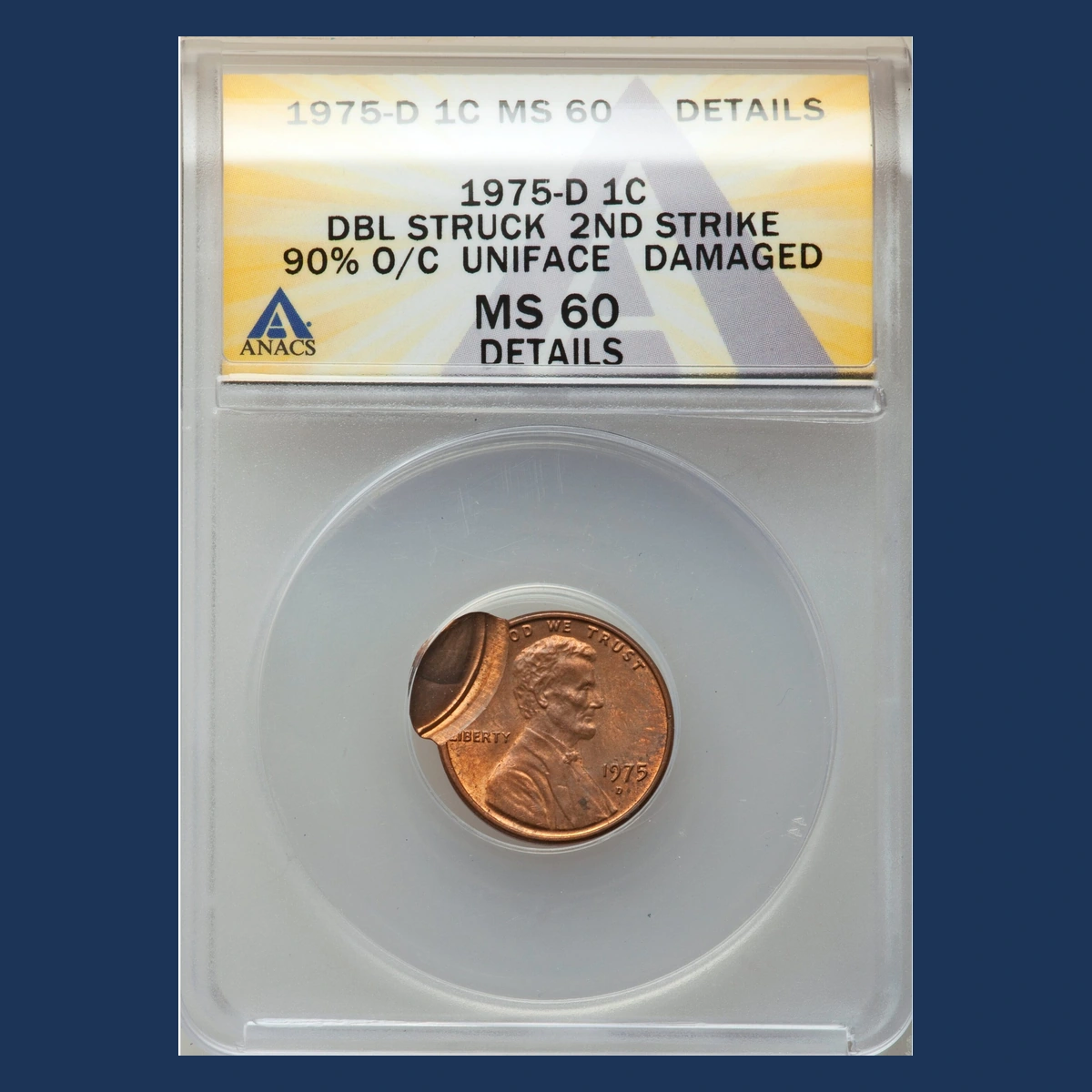
Two distinct impressions can remain when a coin receives another blow instead of leaving the press. Movement between strikes changes where the later design lands.
One Philadelphia example has a second strike 95% off-center with only one side receiving that later design. Separate Denver coins include ordinary off-center second strikes and a flip between blows.
A Denver combination also spread beyond the collar during the striking sequence. The collar is the ring that limits the coin’s width.
These are separate examples. A 95% label alone does not tell you whether the coin flipped or one side was blocked.
Estimated Value
The one-sided Philadelphia second strike sold for $144 on March 8, 2021, graded ANACS MS64 Red and Brown. A Denver double-strike and broadstrike combination brought $168 in October 2019.
These sales support an estimated $50–$800 range across the group. A readable second date and an appealing arrangement can matter more than a very large off-center percentage.
Some recorded coins also have later damage. Their condition should not be ignored when comparing prices.
How to Identify
Find where the later impression crosses or interrupts the first. Under a 10× magnifier, follow actual design details rather than treating flat letter edges as another strike.
On a claimed flipover, look for a second design from the opposite face. For a one-sided later strike, inspect the corresponding area on the other side for the blocked design.
Check the plain edge for vise or hammer damage. The listed Denver coins do not all share the same second-strike percentage or direction.
Use a scale against the normal 3.11 g and calipers against 19.05 mm, recording any spread. Two strikes do not automatically double the metal amount.
Trace two separate impressions and confirm any claimed flip or blocked side directly on the coin.
8. 1975 Lincoln Memorial Penny Cuds, BIE, and Die Cracks (Estimated Up to $1,200)
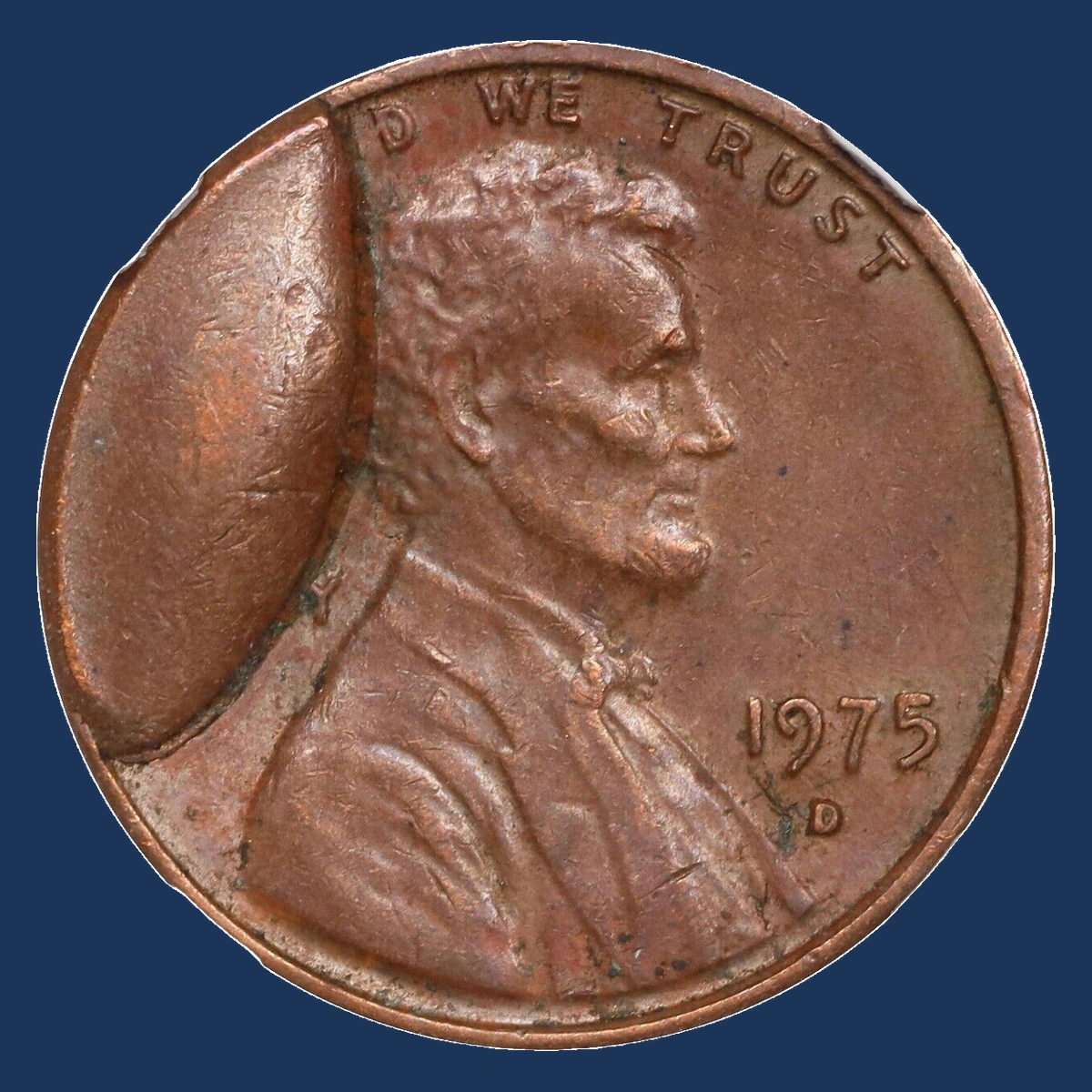
One 1975-D variety has a large, football-shaped raised area on the front. A piece of its stamping tool broke away, allowing metal to rise into the gap.
This rim-connected blob is called a cud. Other listed breaks affect only the rim, so not every cud covers a large part of the design.
Smaller faults can leave a line above the head or an I-shaped bar between B and E in LIBERTY. The latter is nicknamed BIE.
Philadelphia and Denver examples have different shapes. A growing break can also change its outline as the same tool continues to strike coins.
Estimated Value
An estimated $2–$1,200 spans small bars and cracks through large, attractive cuds. A tiny BIE does not carry the price of a dramatic missing-tool section.
For comparison, a 1979 Philadelphia cud graded PCGS MS64 Brown sold for $1,020 in May 2021. That different-year result shows the market potential for a desirable large break.
The exact shape, condition, and collector interest determine the value. The 1979 sale is not a transaction for the 1975-D football-shaped example.
How to Identify
Check the raised area’s connection to the rim before choosing an error name. A small BIE bar sits inside the lettering and should be assessed on its own scale.
With a 10× magnifier, follow the boundary of the large area or the path of a thin crack. Original raised metal differs from a scratch cut into the surface.
Compare the same mint’s catalog photograph. A rim-only break should not be forced to match a large face-covering blob, and later stages may show extra growth.
Inspect the plain edge for pushed-in damage. Check the weight against 3.11 g with a scale and the width against 19.05 mm with calipers.
Match the complete raised shape and its natural connection to the surrounding design, not just the shared year.
9. 1975 Lincoln Memorial Penny Die Cap (Estimated Up to $1,500)
The penny’s outer metal rises into a cup-like wall instead of lying flat. It stuck to the portrait-side stamping tool and stayed there during later press cycles.
The repeated pressure pushed metal around the tool’s side. That stuck coin is a die cap.
Recorded 1975-D examples include a deep NGC MS64 Red and Brown cap and a PCGS MS65 Red and Brown cap. They should be compared as individual pieces.
The cap itself is different from a flatter coin struck through it. A blurred portrait alone does not establish that the coin was the stuck covering.
Estimated Value
Estimate $150–$1,500 for confirmed Denver die caps, with depth, visible original details, and surface quality affecting the price. No separate realized price is assigned to either listed 1975-D piece here.
A 1979-D deep front-side cap graded PCGS MS64 Red sold for $329 in January 2016. That is a direct same-mechanism comparison from another year.
An intact deep wall can be appealing, but bending an ordinary penny into a cup adds no such value.
How to Identify
Examine the wall from several angles while keeping the coin supported. Do not push it flat or attempt to test its flexibility.
A 10× magnifier can show how surviving design details flow into the raised metal. Compare with a confirmed portrait-side cap rather than a coin that only has a weak portrait.
Check the plain edge for plier marks and repeated pinches. The natural cap wall should not look assembled from a series of sharp folds.
Use a scale against the ordinary 3.11 g and calipers to record width and height. Its changed shape makes the normal 19.05 mm flat diameter only a comparison.
Follow the smoothly drawn wall and original design together, ruling out later bending.
10. 1975 Lincoln Memorial Penny Foldover Strike (Estimated Up to $1,500)
A fold through the disc changes both the outline and the way the design fits. The metal entered the striking area in an abnormal position and folded under pressure.
A Philadelphia 1975 example graded PCGS MS65 Red and Brown appeared in a public display. A separate Denver foldover is reported in a year-specific listing.
The Denver claim needs a specimen match without borrowing the Philadelphia example’s features or grade. Their folds may differ.
A bent penny can look dramatic, too. The timing of the bend, shown by the design on the folded metal, separates the mint error from later damage.
Estimated Value
For confirmed examples, use an estimated $250–$1,500 range. This estimate compares folded copper-alloy cents and does not turn either reported 1975 example into a verified auction sale.
A readable date and strong original detail across the fold improve collector appeal. The upper end requires convincing authentication and an attractive piece.
The Denver report receives the same estimated range only after its identity is confirmed. An ordinary coin bent after striking has no comparable mint-error premium.
How to Identify
Look for details that were struck while the metal was folded, rather than a finished design stretched by later bending. The relationship between design and fold is central.
Use a 10× magnifier on the ridge and adjoining areas. Keep the fold closed and avoid tools that could scrape its surface.
The scale should read close to 3.11 g unless part of the metal is missing. Use calipers to record width and thickness, not to force a 19.05 mm circle.
Inspect remaining plain-edge sections for gripping marks. Match the year and mint to the actual example instead of treating all folded cents as interchangeable.
Find original struck details that follow the fold’s shape without the tearing or distortion of a later bend.
11. 1975 Lincoln Memorial Penny Struck on a Dime Blank (Estimated Up to $1,500)
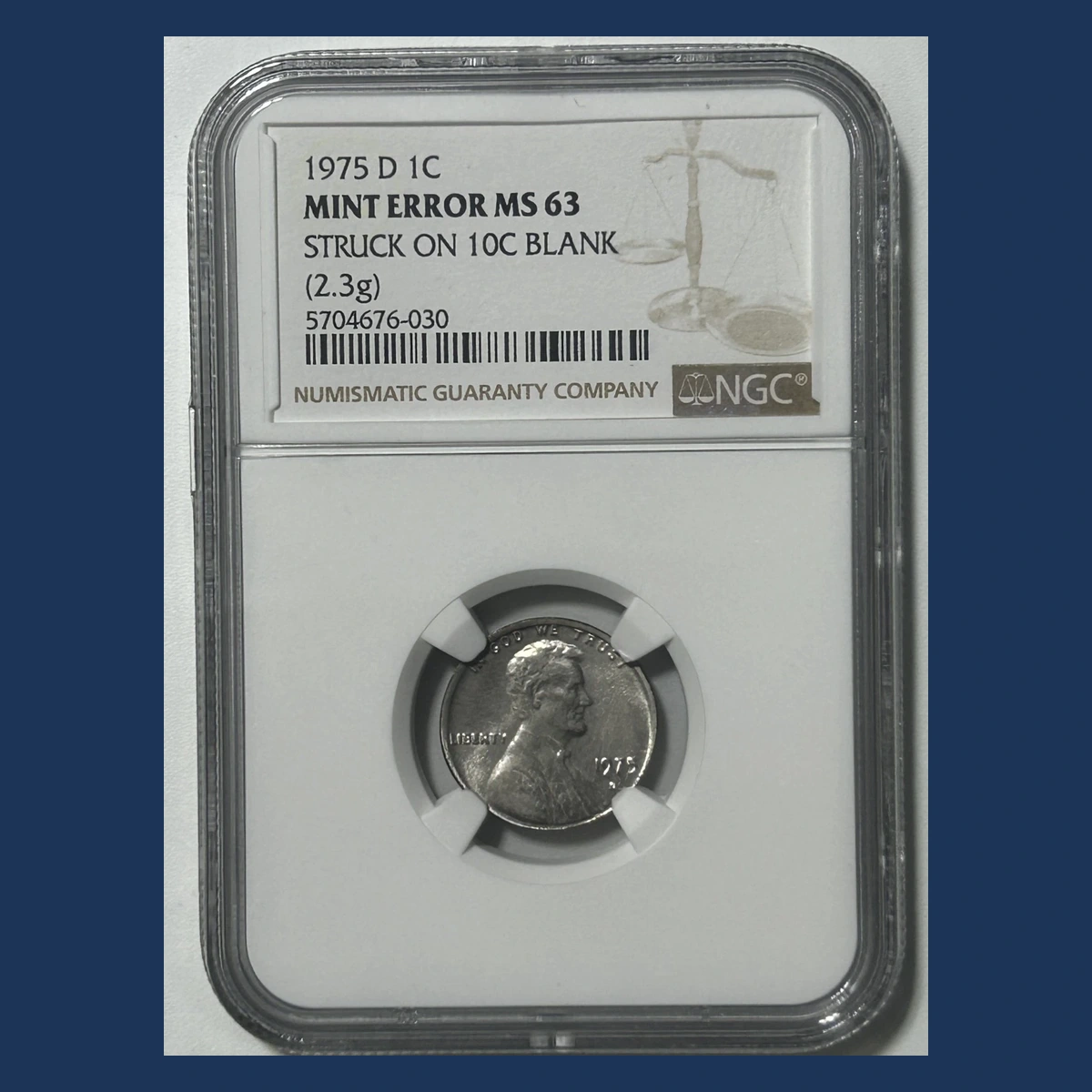
The cent design runs short of room on a smaller, differently colored disc. A dime blank reached the cent press before receiving any dime design.
A blank is the prepared metal disc used for striking. The Philadelphia example was recorded at 2.3 g, while a Denver piece was listed at 2.26 g.
The Denver disc was described as Type 1, meaning it had not yet received the raised edge prepared before striking. That term does not mean a different dated coin design.
Both are wrong-disc errors. Neither should be called an overstruck dime unless an older dime design is present.
Estimated Value
Estimate $350–$1,500 for confirmed 1975 cents struck on dime blanks. A clean, readable date and a clear wrong-metal identity generally improve demand.
A 2007-D example graded PCGS MS66 sold for $600 in March 2023. This later coin provides a same-mechanism comparison rather than a price for either 1975 piece.
The recorded Denver example has a Details grade, indicating a condition problem. Its price should account for that problem instead of matching an undamaged coin automatically.
How to Identify
Compare the scale reading with the expected metals: a normal 1975 cent is 3.11 g, while a dime is about 2.268 g. A wrong disc needs more than a color match.
Use calipers against the ordinary 19.05 mm cent and 17.91 mm dime diameters. Extra pressure in the cent press can spread the smaller disc.
Under a 10× magnifier, examine the edge for silver-colored outer layers bonded around a copper center. Do not require finished dime grooves on an unused blank.
Check both faces for any Roosevelt or torch detail. Those older images would place the coin in the overstruck-dime category.
Look for dime-like metal and weight with only the cent design struck into the disc.
12. 1975 Lincoln Memorial Penny Full Brockage (Estimated Up to $2,000)
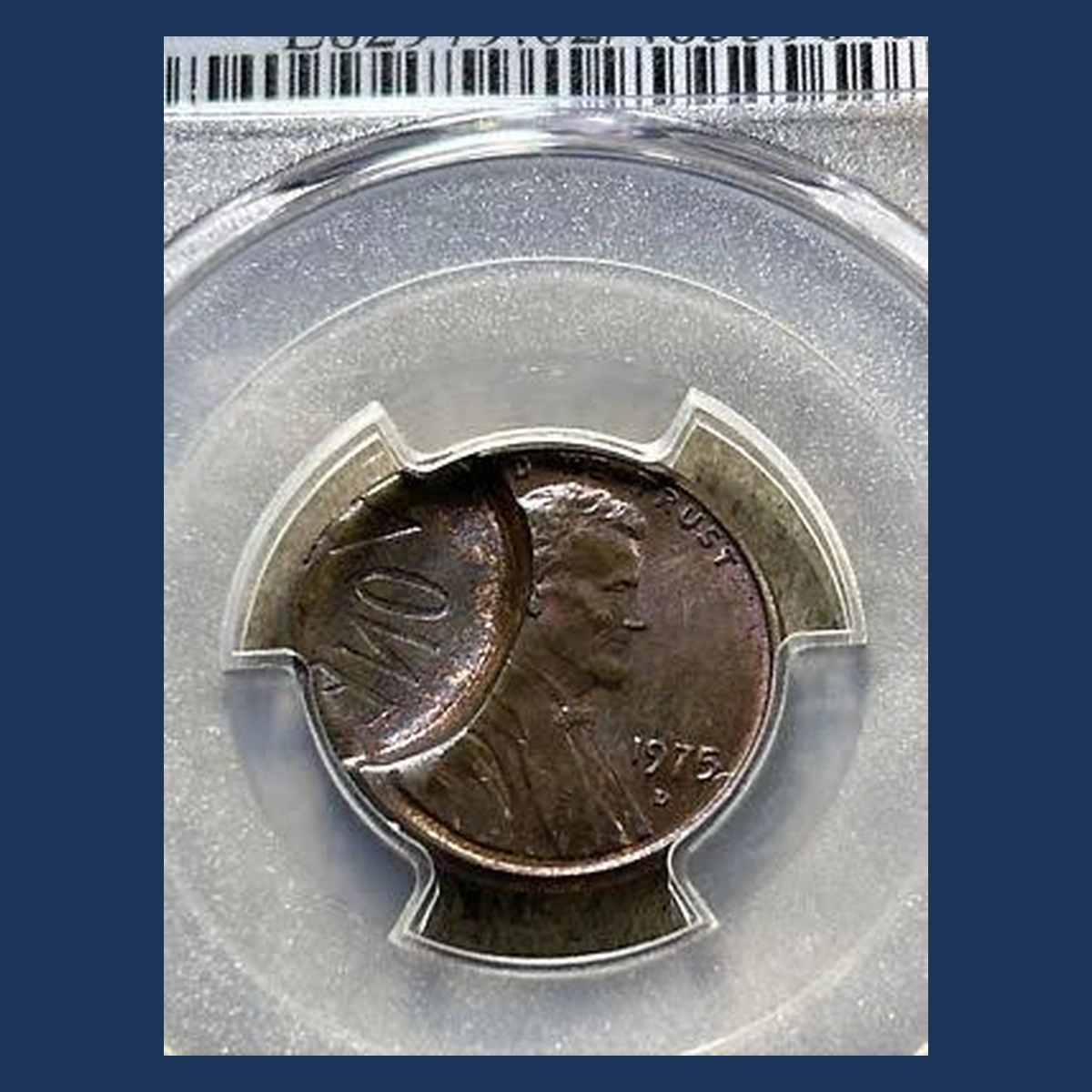
A complete reversed image can occupy one side of the coin. It was pressed into the fresh disc by another coin that remained between it and a stamping tool.
The result is called a brockage. Raised details on the blocking coin become sunken details on the next piece.
A recorded 1975 Philadelphia example is labeled 100% obverse brockage and graded PCGS MS64 Red. The full impression makes it different from a small partial patch.
This is not a faint outline showing through thin metal. The backward design should be physically impressed into the surface, with its own clear height difference.
Estimated Value
An estimated $200–$2,000 is appropriate for a confirmed full 1975 brockage. The upper end favors a complete readable image, strong original surfaces, and little distracting damage.
This range compares full Memorial-cent brockages rather than claiming a verified selling price for the listed PCGS coin. A small partial impression should not automatically receive the same estimate.
Later squeezing can create a backward image as well. Authentication of the whole coin is therefore important to the price.
How to Identify
Compare a photograph of the unusual face with a mirrored normal design. The reversed letters and portrait should fit together as one recognizable impression.
Light the surface from the side and use a 10× magnifier to confirm that the image is sunken. Mere discoloration or a faint outline is not enough.
Inspect the opposite face and the plain edge for crushing from a vise. Pressing two finished coins together after minting can leave a false brockage-like image.
Use a scale against 3.11 g and calipers against 19.05 mm, recording any spread without treating it as proof. Check that the date and surviving normal details identify the coin.
Confirm a full backward, sunken image within an otherwise naturally struck and undamaged piece.
13. 1975 Lincoln Memorial Penny Mated Error Pair (Estimated Up to $3,000)
Two errors can preserve parts of one accident. When their shapes and impressions fit that shared event, collectors call them a mated pair.
A 1975-D pair is reported with consecutive NGC certificates and MS66 Red and Brown grades. The coins are separate pieces rather than one bonded cluster.
The connection must come from the metal and design. Consecutive certificate numbers alone do not prove that two coins were struck together.
The contact needs to be established from both coins. It should not be assumed to be a mirror impression or a bond just because the pair is described as mated.
Estimated Value
For a convincingly authenticated 1975-D pair, estimate $500–$3,000 for both coins together. The range compares matching two-coin mint errors rather than a verified sale for the reported pair.
Clear evidence linking the two pieces can make them more desirable as a set than as unrelated errors. Their condition also matters.
The estimate should not be doubled again as though it were a price per coin. Two ordinary errors with consecutive grading numbers do not establish this premium.
How to Identify
Compare photographs of both coins side by side before looking at certificate numbers. Identify the exact surfaces or shapes claimed to have interacted.
Use a 10× magnifier to follow matching boundaries and any transferred design. The two pieces should tell one consistent story, not merely share similar colors or dates.
Check both plain edges for later alteration. A scale and calipers should record each coin separately against the ordinary 3.11 g and 19.05 mm standards.
Keep them apart rather than pressing the surfaces together to test a fit. Confirm the individual dates and Denver mint letters on the appropriate coins.
Find specific matching contact features on both pieces that establish the same original minting event.
14. 1975 Lincoln Memorial Penny Struck Over a Finished Dime (Estimated Up to $3,000)
Parts of a dime design remain beneath Lincoln and the Memorial. A completed dime entered the cent press and was struck again with cent designs.
The recorded 1975 example was graded NGC MS66 Brown. Its two different denominations share one piece of metal rather than being joined from separate coins.
Look for recognizable dime features, such as the older portrait, torch, or lettering. The surviving parts depend on how the cent strike overlapped them.
This is different from using an untouched dime blank. An unused blank could supply the wrong metal and size but would not contribute an earlier design.
Estimated Value
The NGC MS66 Brown example sold for $960 on August 19, 2018. Estimate $700–$3,000 for confirmed examples with different condition and visibility of the two designs.
A later comparison is a 2001 cent over a 2001-P dime that brought $1,320 in September 2025. That is another year’s coin, not a later sale of the 1975 piece.
Clear surviving dates and easy-to-follow overlapping designs can improve collector demand.
How to Identify
Find a feature that belongs to a Roosevelt dime before relying on the coin’s unusual color. A torch segment or older portrait can establish the second design.
With a 10× magnifier, trace where cent details cover the older dime details. Read surviving dates separately instead of assuming that one readable year proves both.
The metal should match a dime’s bonded outer layers and copper center. Inspect the edge and compare the scale reading with about 2.268 g, rather than a cent’s normal 3.11 g.
Use calipers to record the outline against ordinary dime and cent diameters of 17.91 and 19.05 mm. The later strike can spread the disc.
Identify a genuine older dime design underneath the cent design on one continuous piece of metal.
Conclusion
The estimated $2–$3,000 range covers small tool faults, major striking errors, and a complete mated pair. Each price depends on the exact feature and the coin’s condition.
A forked D tip alone is not a repunched mint mark, and a bent penny is not automatically a foldover. Keep surfaces untouched, use the correct 3.11 g standard, and match the visible evidence before assigning a premium.