1977 Penny Error List with Pictures

An aluminum 1977 cent weighing just 1.04 g reached $42,000 in August 2025, as recorded in NumisBids’ Heritage auction results. Its metal made it very different from the normal copper-alloy penny.
This 1977 penny error list also includes more accessible finds, such as a repeated D and raised tool breaks. Estimated values range from $3–$60,000, depending on the specific feature and condition.
Look through the examples to learn where the clues appear and how to distinguish similar-looking effects.
1. 1977 Lincoln Penny Repunched D to the North (Estimated Up to $100)
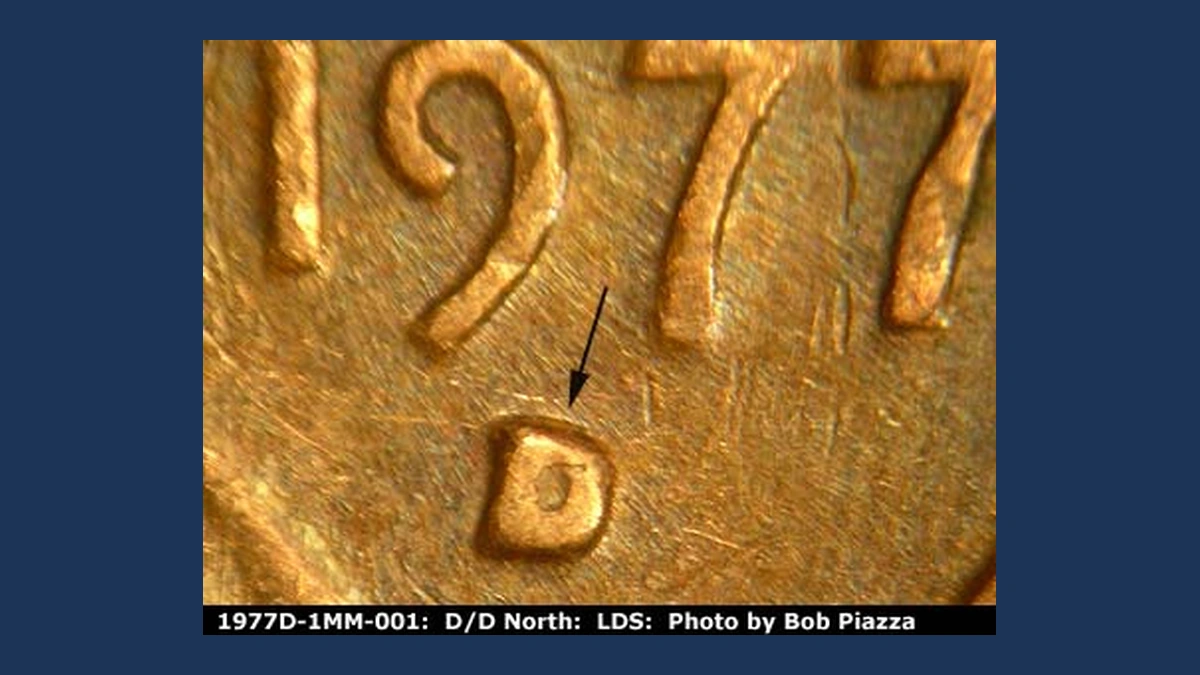
The top of the D can show part of an earlier mintmark impression. Coppercoins lists a 1977-D pattern with the extra detail above the main letter.
The mintmark punch was applied more than once to the die, the steel tool that stamps the coin. A small shift left a second outline that later appeared on struck cents.
Tool lines behind Lincoln’s collar, toward the Y in LIBERTY, help support the match. They are separate from the mintmark.
A damaged D can also have an odd top edge. The additional metal must follow another letter outline rather than an accidental bump.
Estimated Value
For this identified repunched D, use an estimated $5–$100. A clear northern remnant on an unworn coin is easier to compare than a trace weakened by wear.
The catalog establishes the pattern, not a realized sale used for this range. The supporting lines should be checked before a seller’s mintmark label is accepted.
The upper amount estimates a strong, well-preserved example. A random lump above D or a flat strike shelf does not justify the same premium.
How to Identify
At 10× magnification, trace the top of D and look for the extra outline on its upper side. Compare the Coppercoins photographs while keeping the date and mintmark visible together.
Then inspect behind the collar toward LIBERTY’s Y for the stronger old tool lines. A genuine pattern should connect the mintmark detail with those supporting marks on the same coin.
The normal copper-alloy cent weighs 3.11 g and measures 19.05 mm. Check with a scale and calipers without scraping the mintmark.
Follow the extra northern D segment into a letter-shaped outline, rather than naming the variety from one raised dot.
2. 1977 Lincoln Penny Doubled Back Words (Estimated Up to $175)
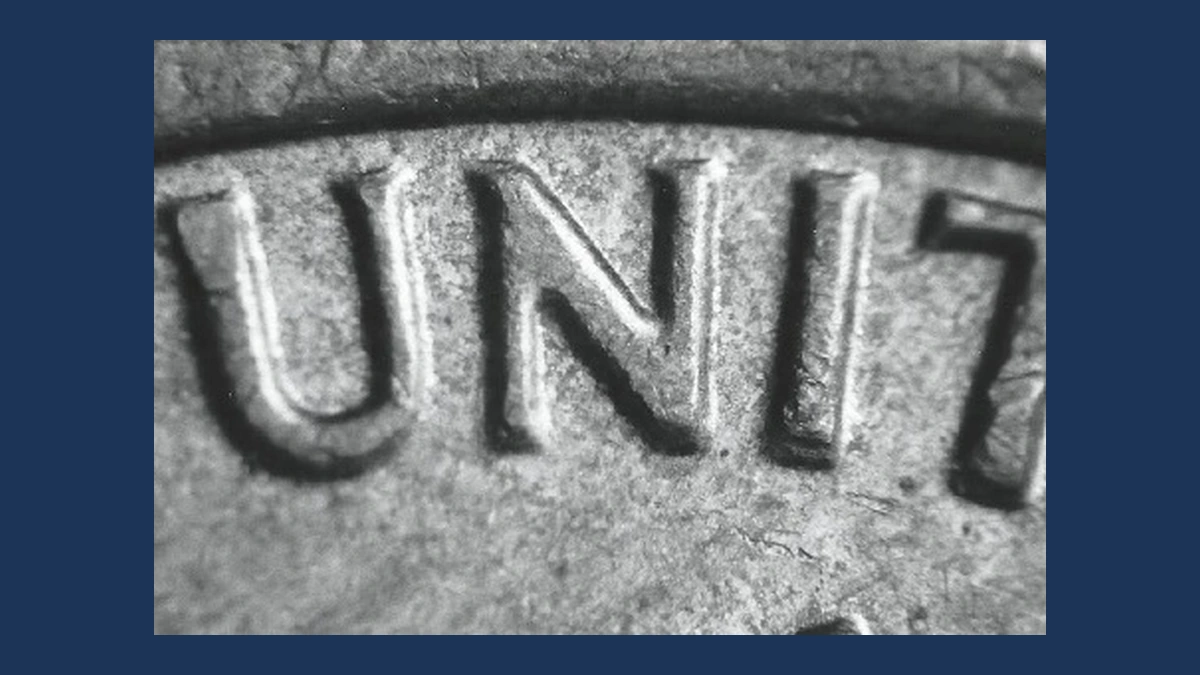
Extra raised edges can show beneath ONE CENT and along the top of UNITED. Wexler’s first listed 1977 back doubled die has separation directed toward the coin’s center.
The repeated detail was already present on the stamping tool. It appears when that tool strikes the blank, without requiring a second blow on the coin.
Short diagonal lines near ICA in AMERICA and a short line in the second column opening support identification. They help distinguish the listed pattern from general thick lettering.
The Memorial has many normal straight lines. Only the matching extra detail belongs to this doubled-design explanation.
Estimated Value
An estimated $10–$175 covers identified examples with different preservation and strength. Clear repeated edges in the listed words support more interest than a vague thick-lettered appearance.
This is a working estimate rather than an auction price assigned to Wexler’s specimen. The small supporting marks help establish the correct pattern before grade or color is compared.
Wear can flatten the separation and make the variety less obvious. An ordinary high-grade cent does not receive this premium simply for having sharp lettering.
How to Identify
Inspect ONE CENT from below the lettering with a 10× magnifier, then move to the upper edges of UNITED. Check whether the extra detail faces inward on both parts of the design.
Compare the short lines near ICA in AMERICA and in the second column opening with the cataloged example. Keep the whole building visible when counting openings from the left.
A scale and calipers compare the usual 3.11 g and 19.05 mm.
The normal plain edge should remain untouched.
Return to the repeated word edges after checking the supporting lines, and confirm that the same separation is visible under a different light angle.
3. 1977 Lincoln Penny Reported Doubled Front Design (Estimated Up to $200)
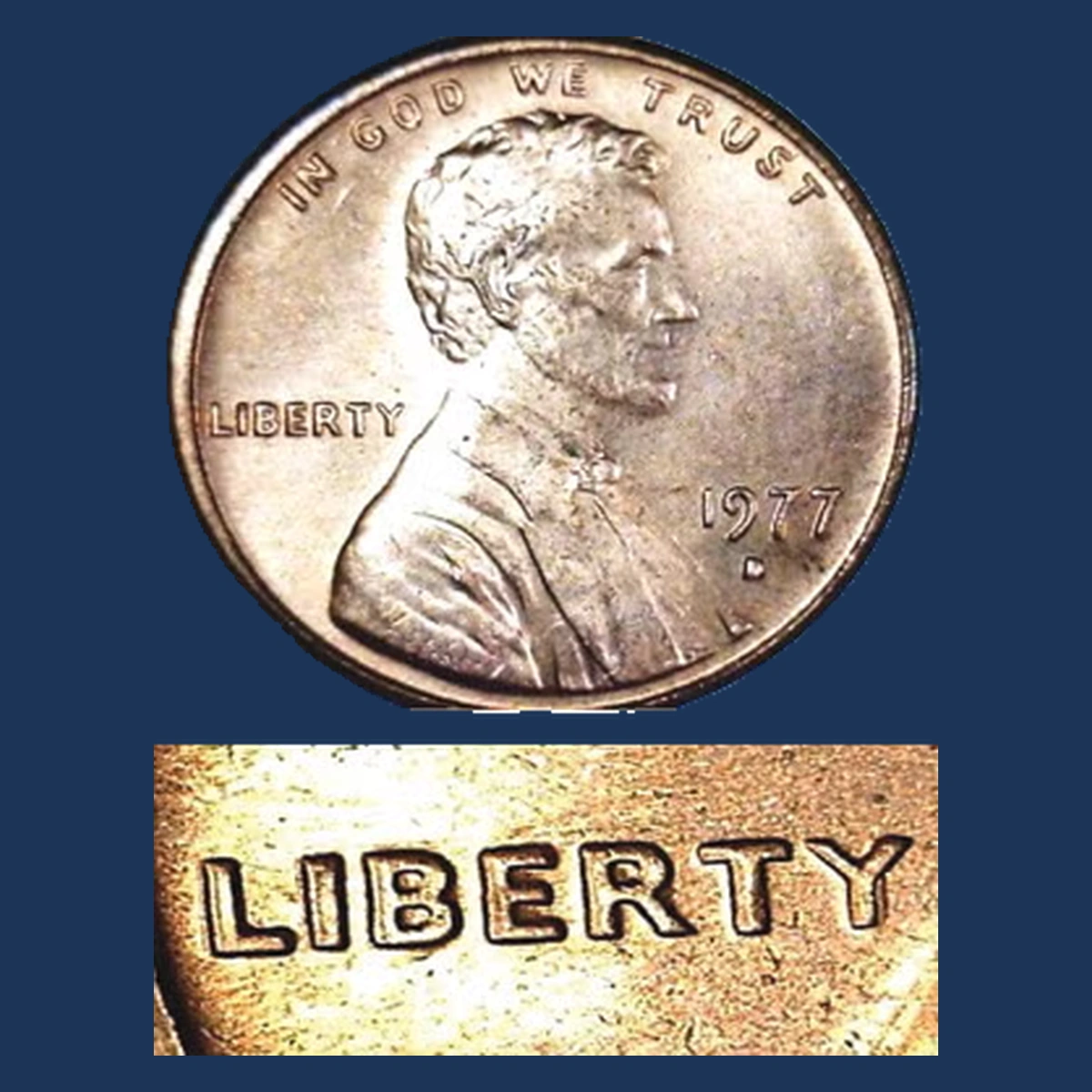
The date or front lettering may appear to have another raised outline. A 1977 year guide reports Philadelphia doubled-die examples involving the date, LIBERTY, and IN GOD WE TRUST.
The report does not identify a matching catalog number for a particular specimen here. It guides inspection without establishing one required split letter or portrait mark.
A doubled die carries the repeated image on the tool itself. Flat shelves caused during striking can look doubled without that tool-making error.
Inspect the outline’s shape and depth. General letter thickness alone does not show which mechanism made it.
Estimated Value
Estimate $5–$200 for an identified minor doubled front design. That range is not a recorded sale for the general Philadelphia report.
A distinct rounded repeat on a preserved surface is more useful than weak or flattened lettering. If the apparent doubling is a flat strike shelf, its value needs a different comparison.
The year-guide label is a starting description, not a guaranteed premium. The coin should match a specific visible pattern before the upper part of the range becomes relevant.
How to Identify
Photograph the whole front, keeping 1977 and the area below the date clear, before enlarging any suspected letter. A Philadelphia example has no mint letter, which is normal for this year.
Use a 10× magnifier to trace the raised contours in the date and words rather than judging one thick-looking edge. Compare their height with any flat shelf that may have reduced the original letter’s shape.
A scale checks the usual 3.11 g and calipers compare 19.05 mm.
Neither measurement identifies the doubled design.
Look for a second rounded outline that follows a real design element, not merely excess thickness or a flattened ledge.
4. 1977 Lincoln Penny BIE Chip and Rim Cud (Estimated Up to $400)
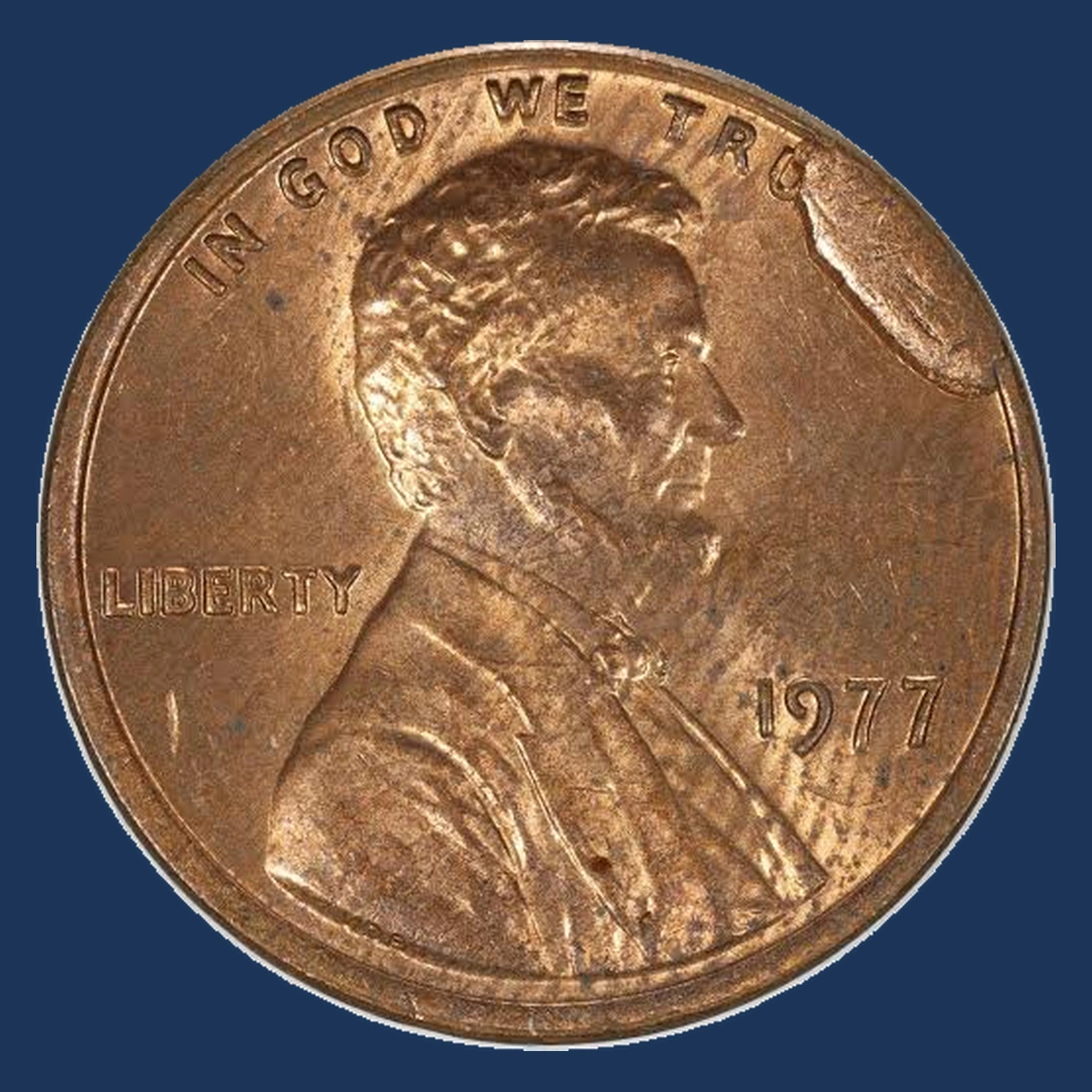
An upright bar between B and E in LIBERTY can resemble an extra I. The year guide reports this small broken-tool effect on 1977 cents.
A larger missing tool piece at the edge can leave a raised patch joined to the rim. Collectors call this patch a cud, and Heritage sold a separately certified 1977 example.
The BIE bar and rim cud occupy different places. One fills a letter-space gap, while the other replaces design at the coin’s boundary.
Added material and surface damage can imitate raised metal. The patch must fit the way the original design was struck.
Estimated Value
The PCGS MS63 Red and Brown cud sold for $138 in May 2021. It was unworn with noticeable marks and mixed copper color.
Estimate $3–$25 for ordinary BIE chips and $25–$400 for identified rim cuds. The cud’s recorded price should not be assigned to a tiny bar between letters.
A larger solid patch can have stronger visual appeal when its outline remains clear. Scratches, wear, or attached metal affect the comparison and can change the explanation entirely.
How to Identify
At LIBERTY, inspect the B–E gap with a 10× magnifier and look for a raised bar continuous with the struck surface. Dirt or a foreign lump can occupy the same space without being a chip.
For a cud, follow the patch until it reaches the rim and record the design that it replaces. Compare the opposite face for related weakness, without requiring every specimen to show it strongly.
The ordinary 3.11-g weight and 19.05-mm width can be checked with a precise scale and calipers. Keep a small letter-space bar distinct from a broad rim-connected patch when carefully matching the photographs.
5. 1977 Lincoln Penny Off-Center Strike (Estimated Up to $450)
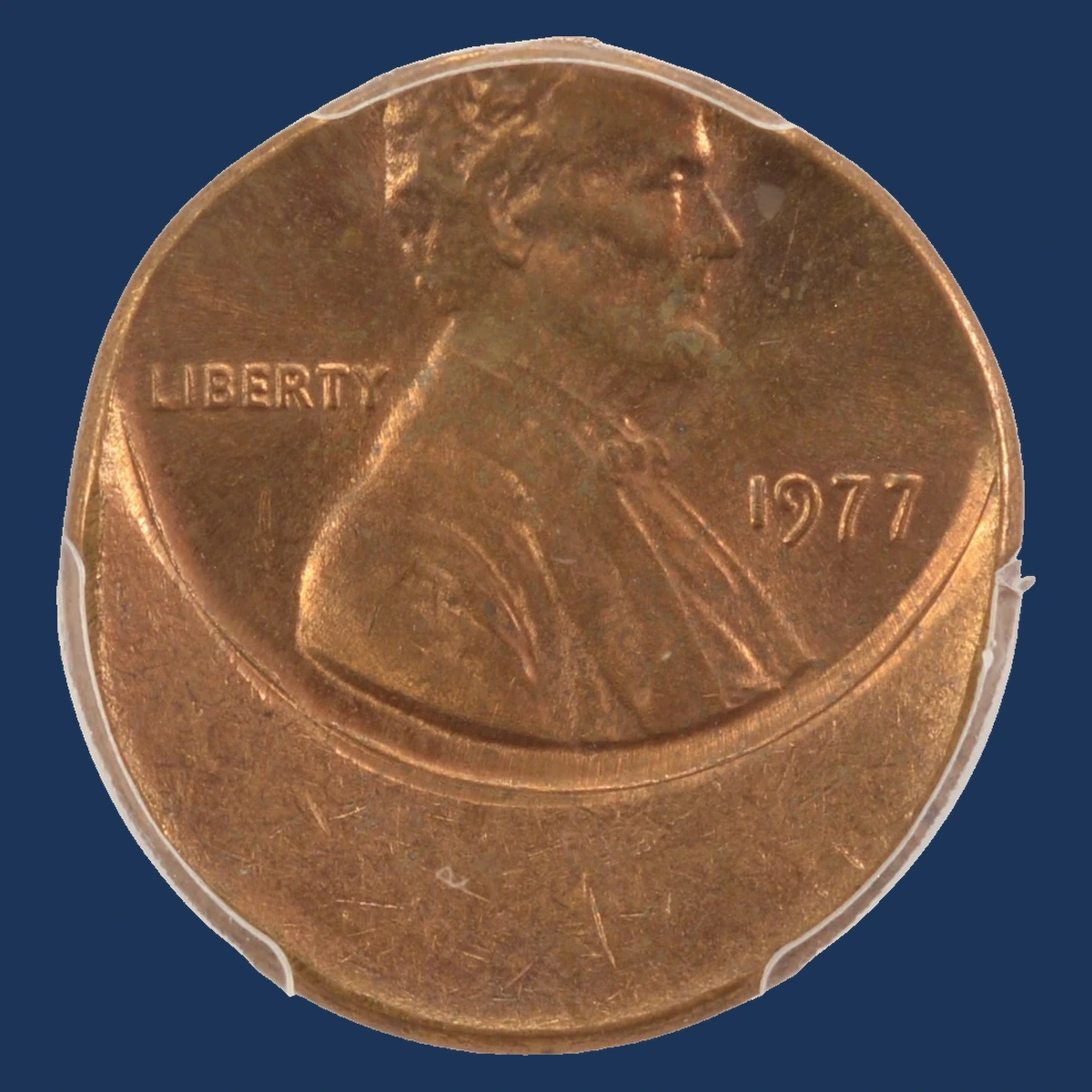
A blank crescent beside an incomplete Lincoln design shows that the disk entered the striking area off center. Some metal remained beyond the reach of the tools.
A 1977 Philadelphia example in a mixed auction lot was about 30% off center toward twelve o’clock. A separate Denver example was 85% off center toward ten o’clock.
The different directions belong to different coins. A large displacement can leave only a small part of the design, making the remaining date especially useful.
The crescent is still metal, not a cut-out piece. A ground-away design or uneven ordinary rim needs a different explanation.
Estimated Value
The Denver 85% off-center example brought $45 in January 2022, graded ANACS MS62 Red. It was unworn with more marks than higher grades and retained red color.
Use an estimated $15–$450 for identified examples with different displacement, date visibility, and condition. The Philadelphia 30% example belonged to a mixed lot, so its group price is not an individual sale.
The actual Denver result shows why percentage alone is insufficient. Readability and preservation still matter.
How to Identify
Locate the end of the struck design and follow its boundary under a 10× magnifier. Compare the opposite face to see whether the blank missed the tools in a consistent position.
For the documented Philadelphia piece, compare the shift toward twelve o’clock. Keep Denver’s ten-o’clock direction separate rather than assigning it to every 1977 example.
A scale compares the ordinary 3.11 g, while calipers record the shape against a normal 19.05-mm cent.
Look carefully for scratches or grinding in any blank-looking area.
Follow the original unstruck crescent into the incomplete impression, then check how much of the date actually survives.
6. 1977 Lincoln Penny Double Strike with a Blocked Second Side (Estimated Up to $750)
Two sets of Lincoln details can show where a coin moved before another blow. The listed Denver example received a second strike about 85% off center.
The second-strike area also has a blank-looking side, described as uniface. Another blank can block direct contact with one tool while the opposite face receives its design.
This 1977-D cent appeared in an auction lot with a different 1976 coin. Their dates, striking sequences, and condition should remain separate.
The Denver coin’s grading description notes scratches. Those are later condition problems, not an extra part of the double-strike mechanism.
Estimated Value
An estimated $30–$750 covers identified double strikes of this kind, depending on the overlap, surviving date, and condition. The listed 1977-D piece was described as ANACS MS60 Details with scratches.
The coin was judged unworn, but its scratches prevent an ordinary numerical grade. The mixed lot’s price is not this cent’s individual result.
A different 1989 double strike in MS66 Red sold for $70 in January 2016. Compare its cleaner surface separately from this scratched example.
How to Identify
Trace a clear letter or date from each impression with a 10× magnifier, then compare where the second blow falls on the disk. Turn it over to find the corresponding blank-looking area that explains the blocked side.
The later strike should have a consistent position across the two faces, even though only one received direct tool detail there. A scale and calipers compare the normal 3.11-g starting blank and 19.05-mm outline with the resulting spread.
Inspect scratches separately so they are not mistaken for surviving early design. Follow the two genuine impressions across their overlap and identify which side was blocked during the second blow.
7. 1977 Lincoln Penny Cent on an Empty Dime Blank (Estimated Up to $2,000)
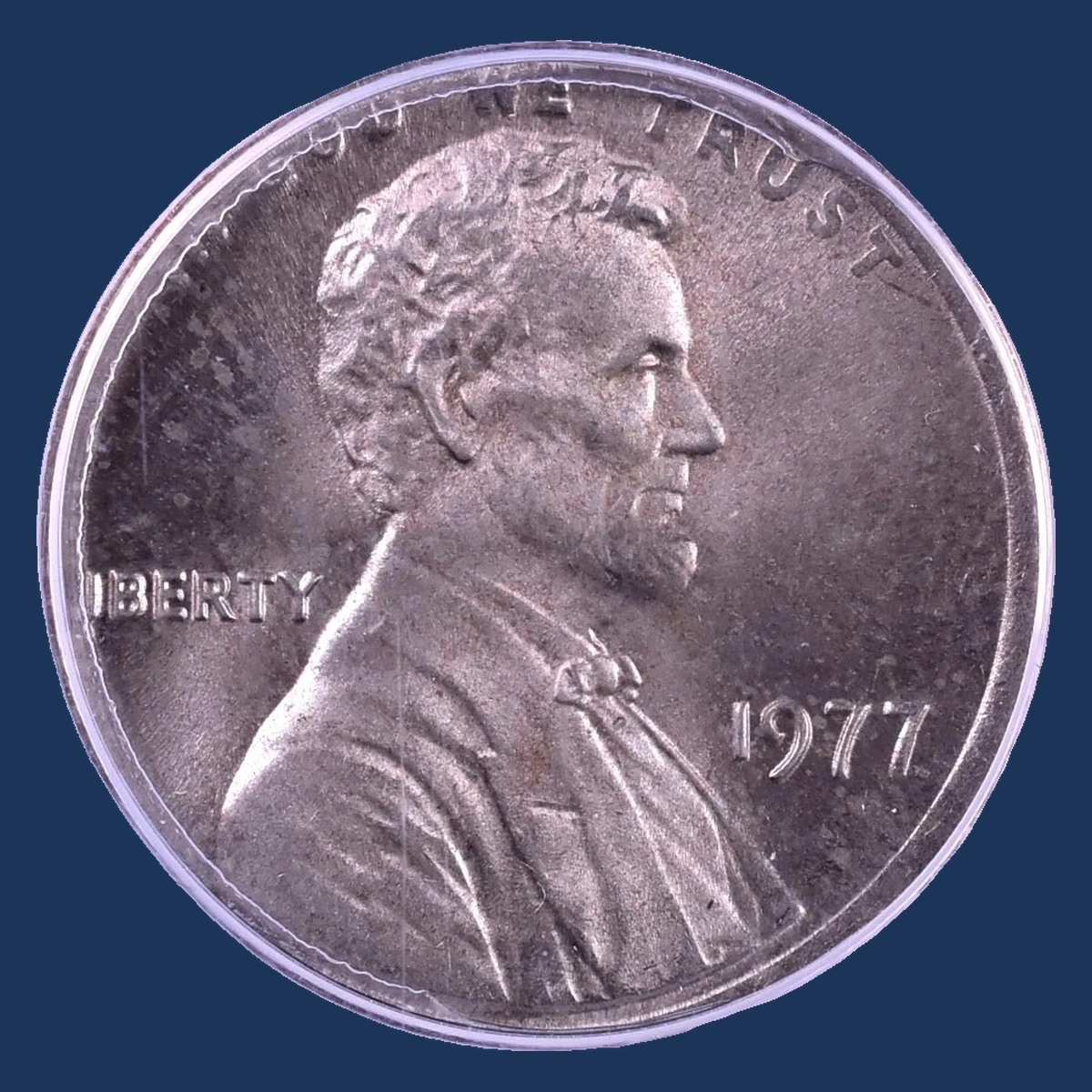
A silver-colored cent can come from the wrong blank entering the press. The auctioned 1977 example used a dime blank recorded at 2.3 g.
The smaller size leaves less space for the outer Lincoln and Memorial details. The clad metal also differs from the copper alloy used for a normal cent.
A planchet is the prepared blank before it receives any coin design. In this case there was no earlier Roosevelt portrait or dime date beneath the cent impression.
A plated or chemically changed copper cent can also look pale. Metal, weight, and size must agree with the wrong-blank explanation.
Estimated Value
The dime-blank cent sold for $552 in January 2022, graded NGC MS65. The grade describes an unworn coin with relatively few marks.
An estimated $200–$2,000 allows for comparable identified wrong-blank examples with different preservation and surviving cent detail. A readable date helps keep the error attached to the correct year.
The recorded 2.3 g is a specimen measurement, not the normal cent standard. A white-colored ordinary penny should not receive the same price without matching the dime blank’s physical properties.
How to Identify
Use a precise scale to compare the coin with the normal cent’s 3.11 g and a clad dime blank’s nominal 2.268 g. The cataloged 1977 specimen is recorded at 2.3 g.
Calipers can compare the smaller blank with a dime’s usual 17.9 mm and the cent’s 19.05 mm. Allow for spreading caused by the cent strike rather than requiring an unchanged dime diameter.
Under a 10× magnifier, inspect the edge metal and search both faces for any older dime design.
Do not file the edge to expose its layers. Look for dime-type metal and measurements with only the later cent design present.
8. 1977 Lincoln Penny Cent Over a Struck Roosevelt Dime (Estimated Up to $3,000)
Roosevelt can remain visible beneath Lincoln when a finished dime receives a cent strike. A year guide describes a 1977 example with the two portraits facing opposite directions.
This is a double-denomination error: one piece of metal carries impressions from two kinds of coin. The older dime design survives only where the cent strike did not fully replace it.
The reported portrait arrangement helps explain what to inspect. It does not establish the underlying dime’s date or mint letter.
An empty dime blank lacks an older portrait. Recognizable earlier details are what distinguish this overstrike from that simpler wrong-blank event.
Estimated Value
Estimate $500–$3,000 for an identified cent-over-dime combination with readable overlapping designs. The 1977 year-guide report has no primary selling price used here.
For comparison, a 1985 cent over a 1985-P dime in NGC MS67 sold for $747.50 in April 2011. That is an unworn different-year example with very few marks, not a sale of the reported 1977 coin.
The visible older portrait and any surviving dates affect appeal. Judge those details before relying on a grade label.
How to Identify
With a 10× magnifier, separate Lincoln’s outline from Roosevelt’s and trace the older portrait beneath the cent impression. Compare the opposite face for additional dime details that support the same sequence.
Read whatever older date or mint letter is actually visible. Do not assign a year to the underlying dime simply because the cent says 1977.
Compare the scale reading with a clad dime’s nominal 2.268 g, rather than a cent’s 3.11 g.
Calipers record expansion from the dime’s 17.9-mm blank against a 19.05-mm cent design.
Follow a recognizable Roosevelt feature into the later Lincoln strike to show which design came first.
9. 1977 Lincoln Penny Cent Struck in Aluminum (Estimated Up to $60,000)
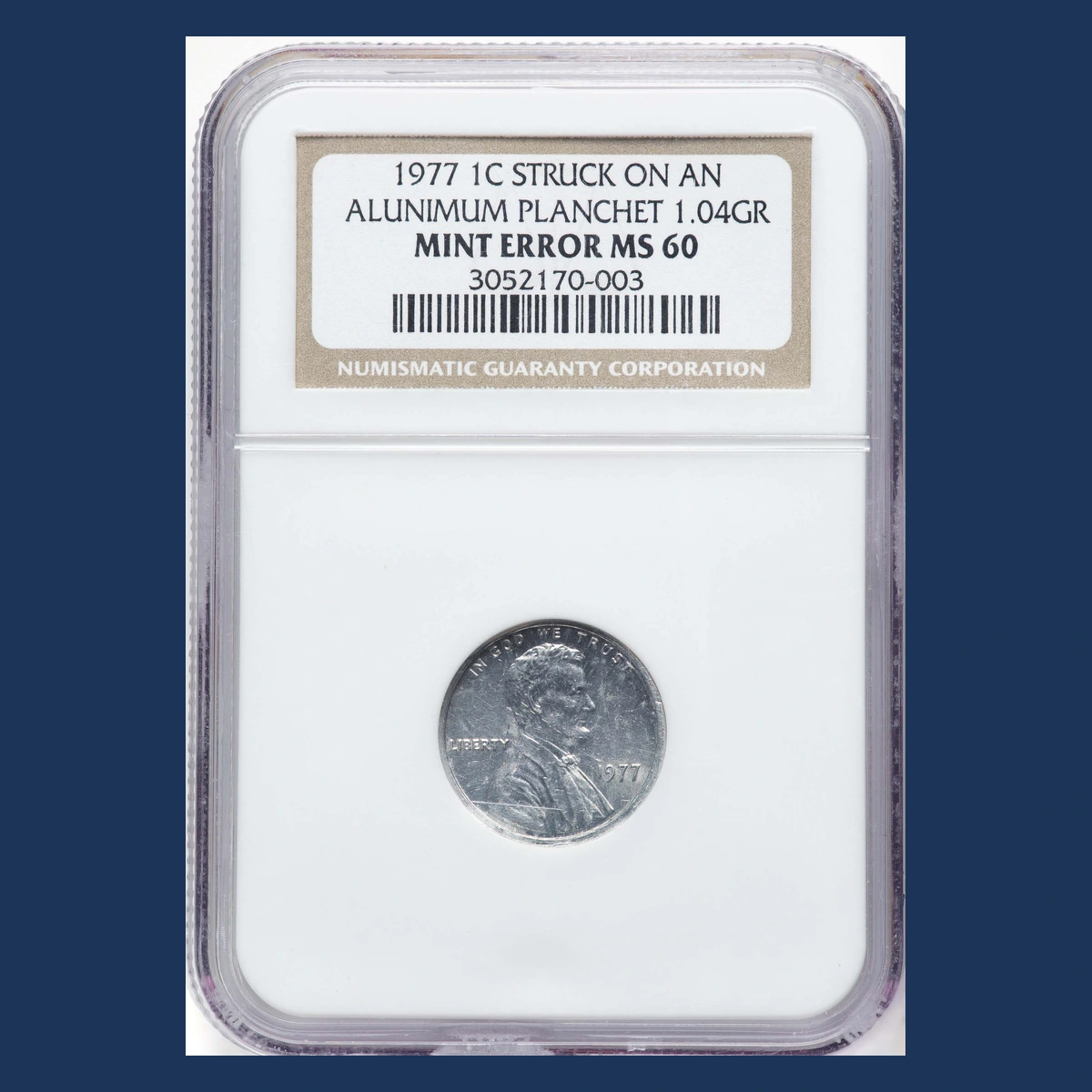
The pale surface hides the largest difference: this cent weighs only 1.04 g. The auction catalog identifies its metal as aluminum, far lighter than a normal copper-alloy 1977 cent.
Lincoln and the Memorial remain recognizable. The catalog describes a good strike, soft shine, and small rim marks.
The reason an aluminum blank received the 1977 design is not established. Suggested explanations include an intentional piece, a trial, or an older aluminum blank left from earlier production.
Those are possible histories, not proof of one event. A silver-colored coating on a copper penny would not create the same composition.
Estimated Value
NumisBids’ Heritage result lists $42,000 realized in August 2025 for the NGC MS60 specimen. MS60 means no circulation wear, but with more marks or surface limitations than higher mint-state grades.
Use an estimated $30,000–$60,000 for the documented aluminum kind, supported by that actual result. This is not a range for ordinary pale or plated 1977 cents.
The 1.04-g weight and identified metal are central. A similar color without the same physical evidence is a different comparison.
How to Identify
Check the weight with a calibrated scale or the specimen’s existing certification records: the auctioned aluminum cent is 1.04 g. A normal 1977 copper-alloy cent is 3.11 g and 19.05 mm, so calipers and weight provide useful first comparisons.
Use a 10× magnifier to inspect the date, full designs, and edge without scratching or chemically testing the pale metal. Color alone cannot separate aluminum from another light-colored metal or an added surface coating.
Non-damaging professional composition testing can establish the metal when the weight raises the question. Confirm the genuine 1977 designs together with aluminum composition and the documented light weight.
Conclusion
The aluminum example shows why color, weight, and composition belong together. On ordinary copper-alloy cents, the useful clue may instead be an extra D outline, repeated lettering, or a rim-connected break.
Estimated values span $3–$60,000. Compare the actual mechanism before the grade, and keep an empty dime blank separate from a finished dime with older designs underneath. Small visible details can change the explanation completely.