1944 Penny Error List with Pictures

For 1944 pennies, the metal can change everything. A San Francisco cent struck on steel instead of the normal copper alloy sold for $408,000 in August 2021.
Most finds are much more modest. This 1944 penny error list covers estimated values from $5 to $500,000, including peeling metal, repeated letters, misplaced strikes, and several wrong blanks.
Start with what your coin actually shows. The checks below explain why a magnet, a magnifier, and the full date answer different questions.
1. 1944 Lincoln Penny Lamination and Splitting After the Strike (Estimated Up to $350)
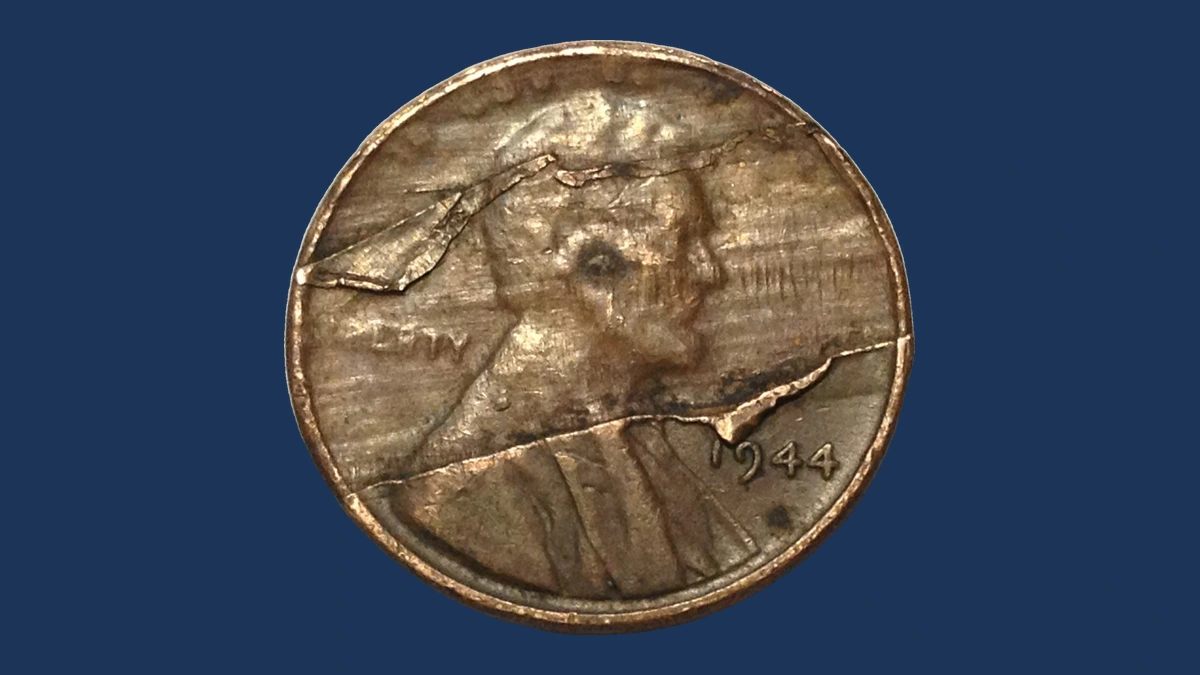
A copper layer can lift from a 1944 penny like a flake. If separation extends through much of the coin, the remaining piece can become very thin.
This is a weakness inside the alloy. Small surface peeling is called lamination.
A collector’s recorded 1944 example is described as split after striking, with a 1.20-gram weight and AU55 Brown grade. That grade indicates some wear.
Its freshly exposed inner face differs from the original struck surface. It should not be described as a thin blank that received a new design after splitting.
Estimated Value
Small laminations can be estimated at $5–$75; larger separations or clear split-after-striking pieces may fit $50–$350. These ranges reflect the size and clarity of the metal failure.
A 1952-D front lamination sold for $35 in July 2013. That later Wheat cent is a comparison for peeling, not a sale of the reported 1.20-gram 1944 piece.
Preserve an attached flap. Removing it can destroy evidence that made the original error understandable and appealing.
How to Identify
Compare the two faces before using weight to name the error. A normal stamped face opposite an exposed internal surface can fit separation after the strike.
Use a 10× magnifier to follow the peeled boundary. Avoid lifting any remaining flap or pressing the thin piece flat.
The reported split example weighs 1.20 grams, while a complete 1944 cent is about 3.11 grams. Record its own scale reading rather than assigning that light weight to every lamination.
Calipers can compare width with 19.05 millimeters and reveal reduced thickness. Examine the smooth edge for filing or a cut through the coin.
An original struck face remaining beside a natural layer separation is the useful pattern to establish.
2. 1944 Lincoln Penny Clipped Planchet (Estimated Up to $400)
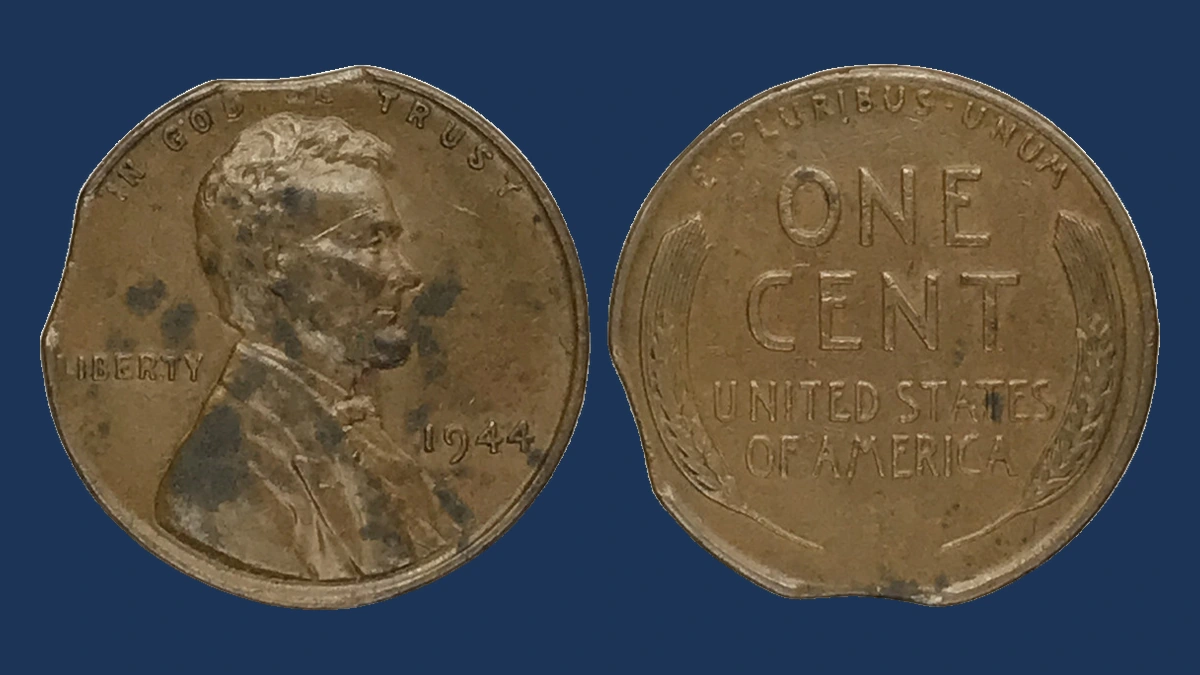
A blank with an incomplete edge can still receive a penny design. Its missing section survives as a gap in the finished coin.
Collectors call this a clipped planchet, using planchet to mean the prepared coin blank. The nearby rim or letters may look weak where metal moved toward the gap.
Reports include a 1944 cent described with both clipping and lamination. Peeling metal is a separate feature on that same piece.
The missing boundary needs to be examined directly. The report does not establish a specific direction or mintmark for every clipped 1944 cent.
Estimated Value
An estimated $10–$400 suits confirmed 1944 clips, with the larger original gaps generally drawing more interest. Surface condition and a readable date still matter.
A 1967 cent with a 13% straight clip brought $39 in July 2021. That later copper-alloy cent offers a modest comparison rather than a 1944 sale.
If peeling accompanies a clip, value the actual combined coin. Adding two separate maximum estimates would not describe what a buyer receives.
How to Identify
Hold the coin above a plain background to see whether metal is actually missing. An unstruck crescent on an off-center penny still contains metal.
A scale records the loss against the normal 3.11 grams. Use calipers across an intact part of the outline to compare it with 19.05 millimeters.
Now magnify the gap from both sides. A manufacturing clip can affect the nearby rim and design as they form; later cutting leaves disturbed completed detail.
Look for saw marks or fresh burrs along the normally smooth edge. Weakness at the opposite rim can help, but does not prove the case alone.
Original lettering flowing toward a natural missing-blank boundary is more persuasive than a bite-shaped outline by itself.
3. 1944 Lincoln Penny Broadstrike (Estimated Up to $450)
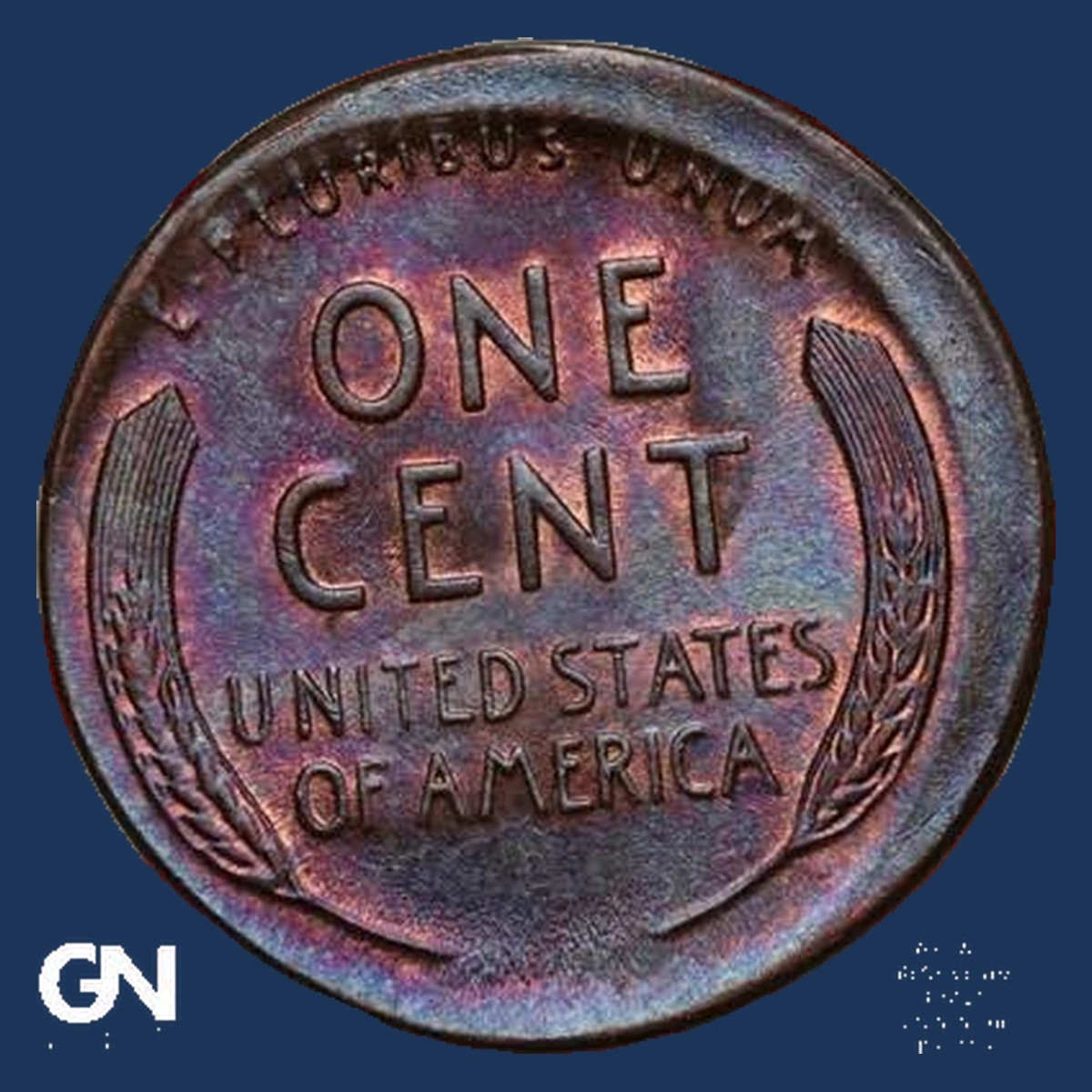
The design can stay complete while the penny spreads wider than intended. This happens when the surrounding retaining ring, called the collar, does not contain the strike.
A Philadelphia 1944 example was certified PCGS MS63 Red and Brown. That describes an unworn coin with visible marks and mixed copper color.
A separate San Francisco broadstrike was listed with a wheel mark. The mechanical scrape is later damage, not the cause of its expanded shape.
Keep those two features apart when examining it. Original broadstriking does not make every surface mark a Mint error.
Estimated Value
For a genuine broadstrike, estimate $50–$450. Wider original spreading and stronger preservation support more than slight expansion on a damaged coin.
A 1946-S broadstruck Wheat cent sold for $89 in December 2024. Its year and mint differ from the Philadelphia example described here.
The reported 1944-S wheel mark needs a separate condition adjustment. Buyers may want the striking error while paying less because of that later scrape, so broadstrike prices should not ignore it.
How to Identify
Read the lettering around both sides before calling an expanded penny off center. On a broadstrike, the intended design remains present inside the widened metal.
Put a normal cent beside it and measure with calipers. A standard 1944 cent is 19.05 millimeters across and weighs about 3.11 grams on a scale.
Study the outer band with a 10× magnifier. Genuine spreading should agree with the strike rather than look like an added ring or a hammered rim.
Follow the smooth edge into both faces. On the San Francisco example, distinguish a later scraped patch from the coin’s overall shape.
Complete design within an expanded original disc is the quick way to separate broadstriking from missing off-center detail.
4. 1944 Lincoln Penny Doubled Die (Estimated Up to $500)
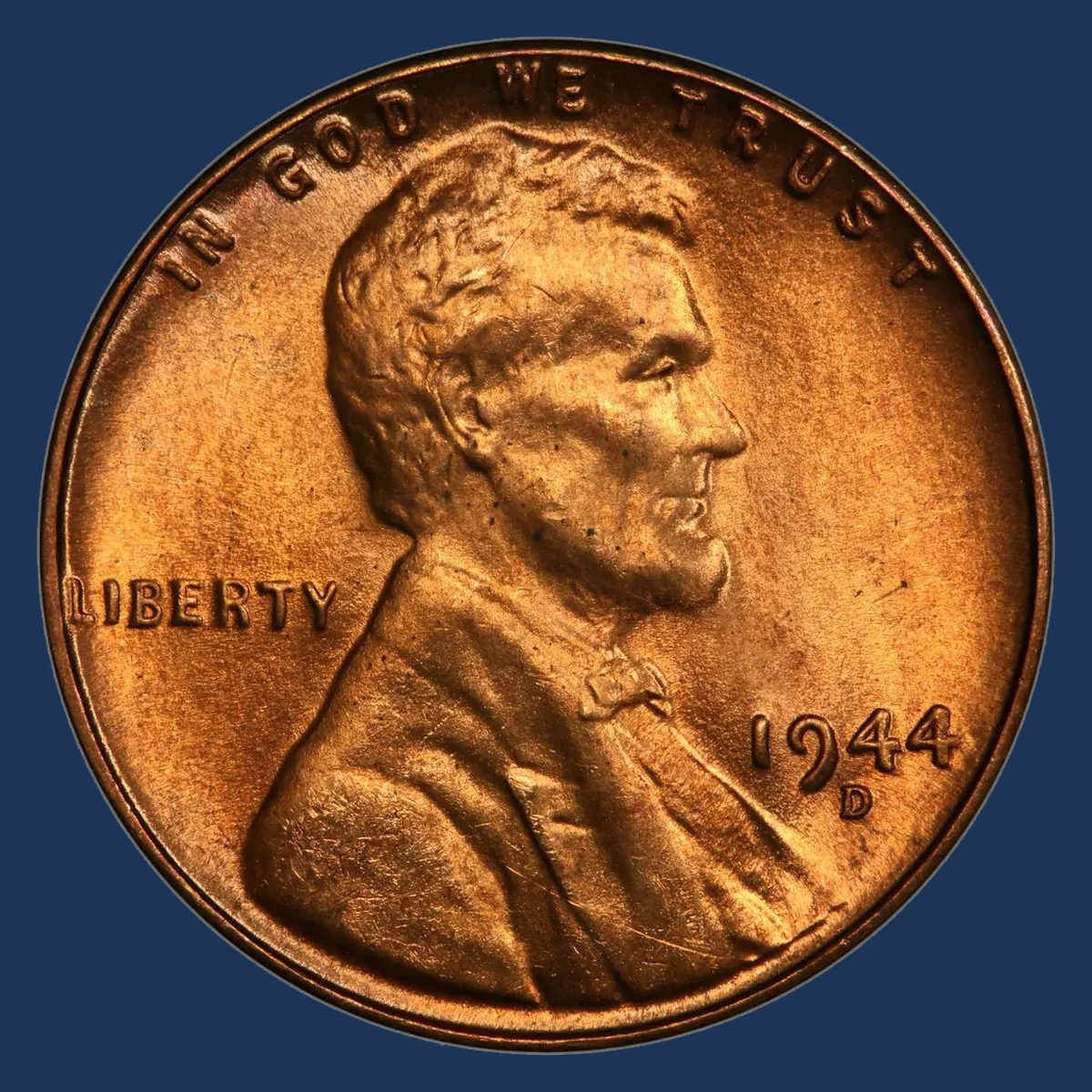
A second raised outline in a word can repeat across coins made by one tool. The tool itself carries the doubled design before striking begins.
This is called a doubled die; a die is the steel tool that stamps the coin. Philadelphia and Denver reports include front and back varieties.
Denver front examples show thickening around the date, LIBERTY, and the motto. Philadelphia reports also involve date or LIBERTY detail.
On the back, particular Philadelphia examples affect C in CENT and N in ONE. Denver examples instead direct attention to the motto and Wheat stems.
Estimated Value
Estimate $10–$500 for identified minor 1944 doubled-die varieties, depending on their clarity and preservation. The price requires a matching repeated feature.
This is a comparison-based range for small Wheat-cent varieties, not a quoted sale for each mint and side. Thick letters alone cannot justify the upper end.
A stronger, well-preserved example can attract more attention than faint doubling on a worn coin. Match the correct front or back variety before considering a condition premium.
How to Identify
Write down the mint and affected side first. Philadelphia has no letter below the date; Denver has D.
Normal-size checks are useful before studying a tiny feature: about 3.11 grams on a scale and 19.05 millimeters with calipers. Inspect the smooth edge when safely accessible.
For a Philadelphia back candidate, compare the C of CENT and N of ONE under a 10× magnifier. A Denver back candidate needs its own motto and Wheat-stem photographs.
Front candidates require matching date or letter details, not a borrowed back-side feature. Flat shaved-looking shelves can come from movement during striking.
The strongest quick match is the same raised extra shape on the same letter, side, and mint.
5. 1944 Lincoln Penny Thick Planchet (Estimated Up to $700)
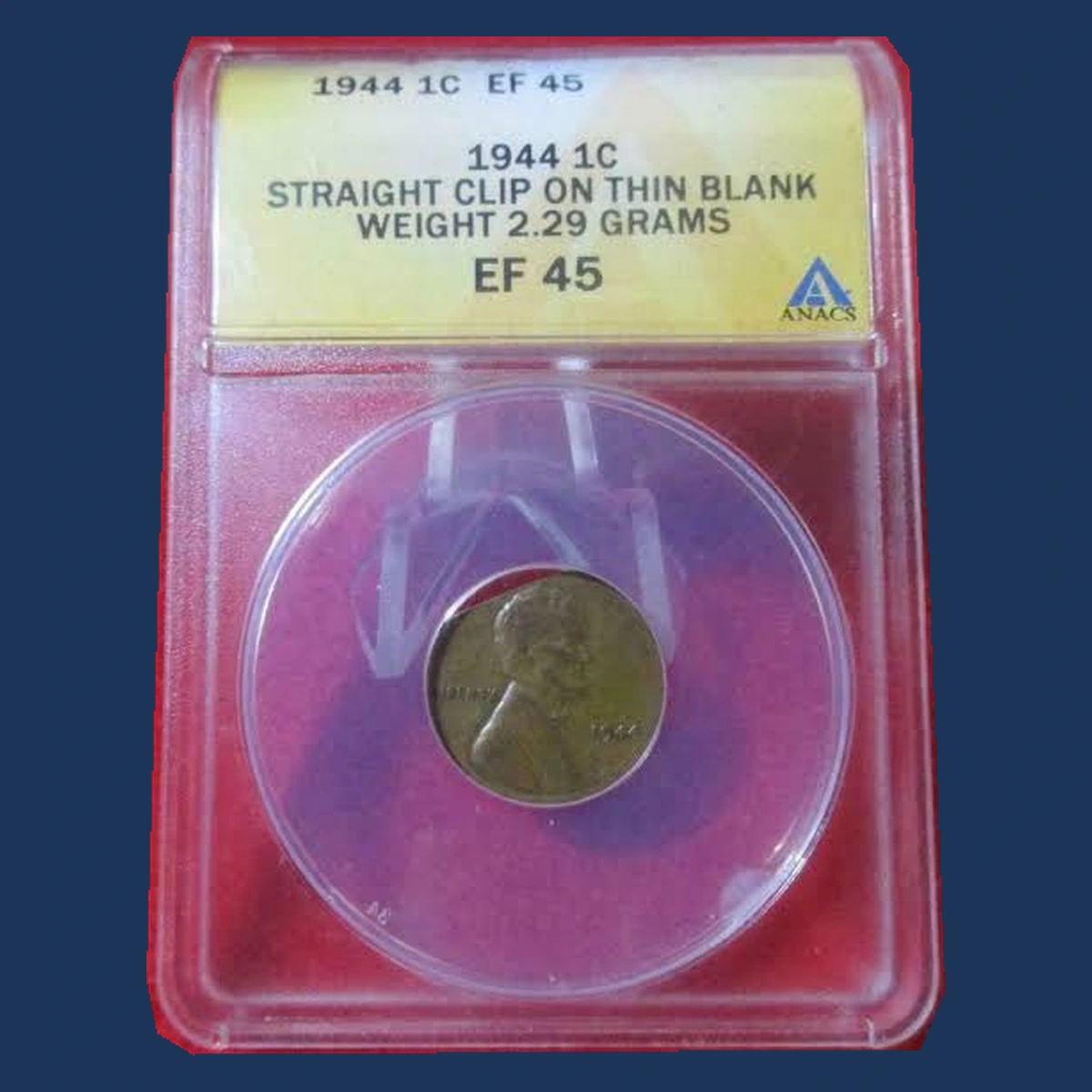
Some 1944 cents contain too much metal because their blanks were cut from unusually thick stock. The finished disc is heavier than a normal copper-alloy penny.
One documented example is listed at 66.3 grains, approximately 4.30 grams. It was graded PCGS MS64 Red and Brown, indicating an unworn coin with some marks.
Another example is described as struck on rolled-thick stock. That describes excessive starting thickness rather than an extra layer added to the finished coin.
Weight does not identify a foreign blank by itself. Nor does it make a thick penny an experimental issue.
Estimated Value
The 66.3-grain 1944 cent sold for $198 in September 2025. An estimated $100–$700 covers comparable authenticated thick-blank pieces with varying thickness and condition.
That result belongs to the MS64 Red and Brown example. The separate rolled-thick listing should not inherit its exact weight or sale history.
A clear original thick edge and genuine struck surfaces support the comparison. Added metal, two joined coins, or an inaccurate scale can produce a heavy reading for entirely different reasons.
How to Identify
Check the units on the scale. The historical listing uses grains; 66.3 grains converts to roughly 4.30 grams, not 66.3 grams.
A normal 1944 cent is about 3.11 grams. Repeat the weighing after checking the scale, then use calipers to compare thickness and the usual 19.05-millimeter width.
Turn the coin sideways under magnification. The smooth edge should be one continuous piece, without a join between discs or a built-up coating.
Compare thickness at more than one point so a bent coin does not create a misleading result. Look for the design flowing naturally across both surfaces.
Genuine extra thickness supported by extra weight is the pairing to confirm before assigning this error.
6. 1944 Lincoln Penny Off-Center Strike (Estimated Up to $1,000)
About half the intended image missed the blank on one documented 1944 cent. The remaining design occupies one area beside a broad plain section of metal.
The coin was graded PCGS MS63 Brown. Its no-mintmark identity places it with Philadelphia production for this year.
This error begins when a blank sits in the wrong position beneath the tools. Both sides receive design only where the metal and tools overlap.
The plain area is still part of the original blank. A clipped cent instead lacks metal, even though its outline can also look unusual.
Estimated Value
The 50% off-center Philadelphia example sold for $156 in September 2019. It provides a specific 1944 sale for comparison.
An estimated $40–$1,000 covers authenticated examples of different shifts and preservation. A clearly readable year and original blank area help attract buyers.
The most extreme shift is not always the most valuable. If the date disappears, the cent may become harder to identify, while scratches across the unused metal can reduce its appeal.
How to Identify
Compare the blank area on the front with the corresponding area on the back. They should fit one displaced disc, rather than a normal back paired with one misaligned front design.
Find all four date digits and keep them visible in photographs. Do not infer 1944 from a partial number when another year also fits.
Under a 10× magnifier, inspect the meeting point between the struck and plain surfaces. Grinding can remove detail but leaves a different texture.
Weigh the coin against 3.11 grams and measure the altered outline against the normal 19.05-millimeter width. Examine the smooth edge for cutting.
Original blank metal beside a matching incomplete design on both sides gives the clearest starting check.
7. 1944 Lincoln Penny Multiple Strike and Flipover Double Strike (Estimated Up to $3,000)
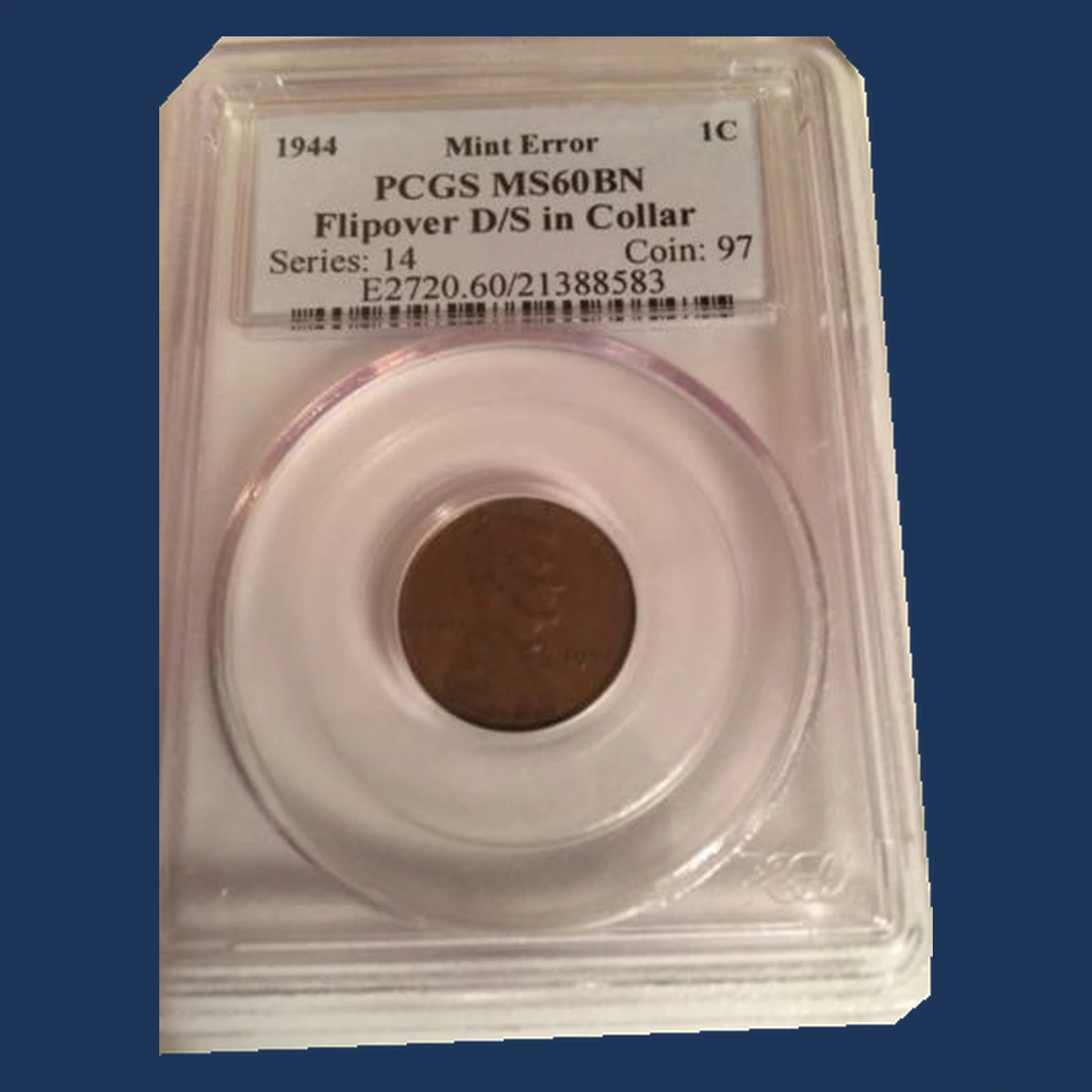
A date can appear on the Wheat-ear side when the cent turns over and gets struck again. One 1944 flipover example preserves earlier date digits near PLURIBUS.
Its second strike took place inside the retaining ring. The front and back designs overlap because the coin’s sides changed places between blows.
Other reports include a coin struck four times and a double strike whose second impression is 80% off center with one face blocked. Those are different events.
Repeated striking moves whole design elements. A doubled tool instead repeats a particular feature during a single coin’s strike.
Estimated Value
A 1944 cent struck four times and graded PCGS MS64 Brown sold for $1,527.50 in November 2013. That is a sale of the four-strike coin.
Estimate $100–$3,000 across authenticated double and multiple strikes, with the visible sequence and condition guiding the comparison. The flipover and 80% second-strike examples need their own assessment.
A blocked face on a combined error is part of the same coin. It should not receive a second full price added to the first.
How to Identify
For the flipover example, begin on the back with the earlier date near PLURIBUS. Trace where its front design lies beneath the later Wheat-ear impression.
The four-strike coin needs a different tracing exercise: each surviving impression should fit another position of the same design. Do not force four portraits onto a coin merely because its listing says four strikes.
A normal blank begins near 3.11 grams and 19.05 millimeters across. Record scale and caliper readings and examine the smooth edge for later squeezing.
Use a magnifier to distinguish raised struck detail from shallow damage. An earlier front feature under the later back design is the useful flipover clue; separate positions identify other repeat strikes.
8. 1944 Lincoln Penny Struck on a Silver Dime Blank (Estimated Up to $6,000)
A silver dime blank is too small for the full penny design. If it reaches the cent press, Lincoln and the Wheat ears are stamped onto the wrong material.
Documented 1944 examples include Philadelphia and Denver coins. These were unused blanks, so an earlier finished-dime picture is not part of their identity.
The smaller disc can lose outer lettering or leave weak areas where the metal does not fill the design. The exact missing letters depend on each coin’s position.
A normal copper cent coated to look silver is different. Its core and usual weight remain those of a penny.
Estimated Value
Two 1944 silver-blank cents sold in November 2013: a Philadelphia example graded PCGS XF40 brought $3,055, and a Denver MS65 brought $4,406.25.
XF40 describes a worn coin; MS65 describes an unworn, better-preserved one. Estimate $2,000–$6,000 for comparable authenticated examples.
Those sales concern separate coins and conditions. A silvery coating on an ordinary cent does not qualify, and the recorded prices do not apply automatically to an unrelated foreign blank.
How to Identify
A small silver-colored coin with Lincoln on it calls for measurements before a price comparison. An ordinary cent is 3.11 grams and 19.05 millimeters wide.
A silver dime blank has a nominal 2.50-gram weight and about 17.9-millimeter diameter. Those are blank standards, not reported measurements of the two auction coins.
Use a scale and calipers where safely accessible, allowing for spreading during the cent strike. Check the edge for plating over copper.
Under magnification, distinguish missing outer cent detail from an earlier dime design. Professional metal testing can establish the silver alloy without scratching the coin.
The combination to seek is silver material, a smaller original blank, and a genuine cent design with no older dime image.
9. 1944 Lincoln Penny Struck on Foreign Coin Blanks (Estimated Up to $12,000)
The picture can be American while the blank was intended for another country’s coin. Two recorded 1944 Philadelphia cents illustrate that mismatch.
One was struck on a Philippine five-centavos blank. The other used a Netherlands twenty-five-cent blank.
Both carry Lincoln cent designs. They are not ordinary foreign coins dated 1944, and they are not described as cent designs struck over already finished foreign coins.
Their blank sizes and metals must be checked separately. A pale color or an unusual weight cannot identify the country by itself, especially when several wrong blanks can look similar.
Estimated Value
The Philippine-blank example graded PCGS MS62 sold for $6,462.50 in November 2013. The Netherlands-blank MS63 example brought $7,637.50 in the same auction.
Both grades describe unworn coins with visible marks. Estimate $4,000–$10,000 for the Philippine type and $5,000–$12,000 for the Netherlands type.
These ranges concern confirmed blank identities. The separate sales must stay with their own countries and specimens rather than becoming a single generic price for any oddly colored 1944 cent.
How to Identify
Read the certification’s full blank description before comparing two foreign-blank cents. Philippine five centavos and Netherlands twenty-five cents are different intended coins.
Measure the candidate itself with a scale and calipers, then compare those results with its claimed blank type. A normal 1944 cent is about 3.11 grams and 19.05 millimeters, with a smooth edge.
Do not substitute those normal-cent figures for the wrong blank’s actual measurements. Metal testing and the complete holder description should agree.
Next examine the front and back with a magnifier for real Lincoln and Wheat-cent detail. An ordinary foreign coin will carry its own designs instead.
A cent design combined with the correctly identified foreign blank is the necessary match.
10. 1944 Lincoln Penny Mirror Brockage (Estimated Up to $25,000)
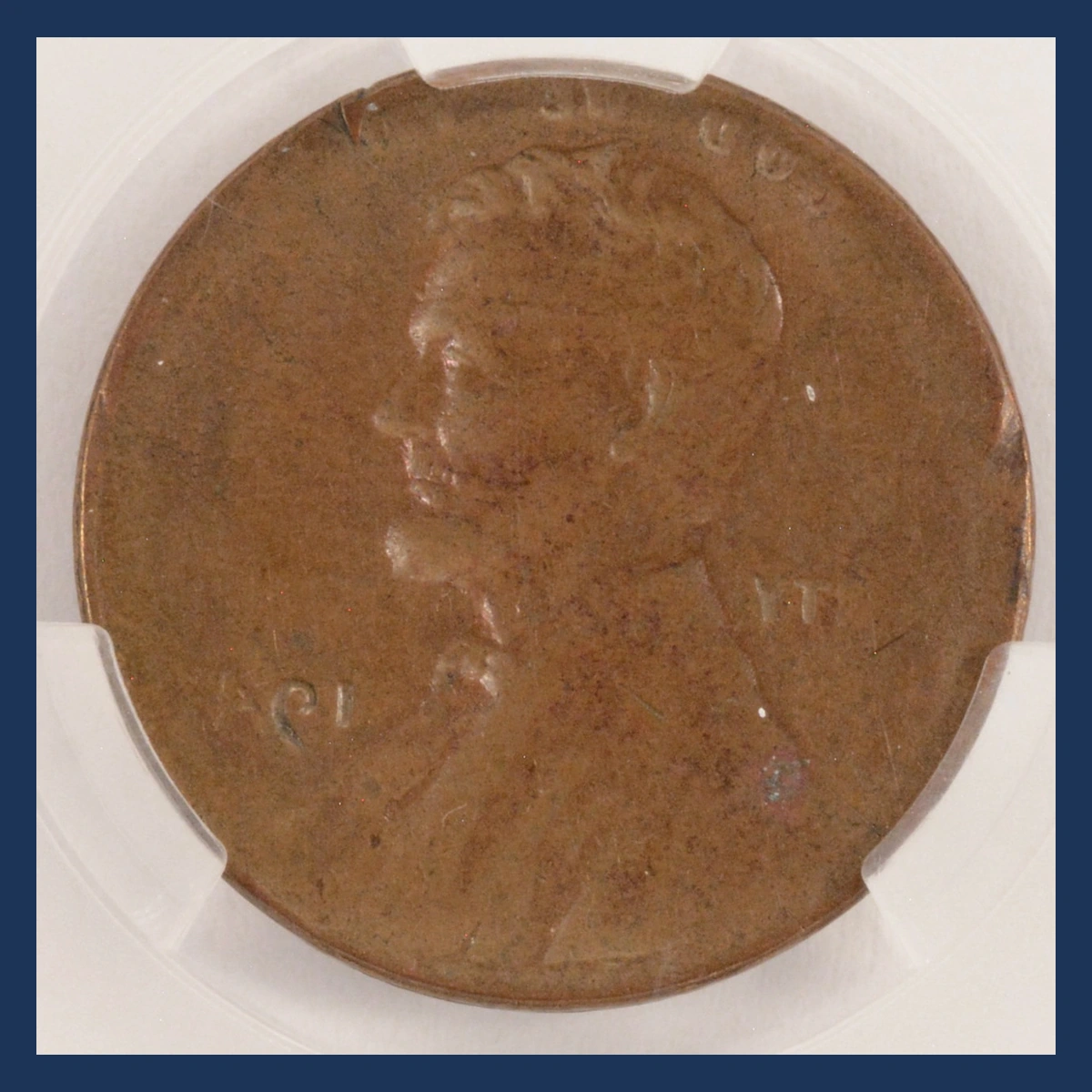
Turn this penny over and Lincoln appears again, but the image is backward and pressed below the surface. That is a mirror brockage.
The previous struck coin had stuck to the back stamping tool. Its raised front design then pressed a reversed impression into the next blank.
The resulting 1944 coin has a normal front and the sunken transferred image on its back. The transferred image is weaker near its outer edge.
It was graded CACG AU50, indicating wear. This is not a flipover strike with two ordinary raised designs overlapping after the coin turned over.
Estimated Value
The CACG AU50 mirror brockage sold for $18,000 in August 2025 at Heritage Auctions. That recent result belongs to the specific full transferred-image example described here.
An estimated $5,000–$25,000 gives a working range for comparable authenticated 1944 mirror brockages. Preservation and the clarity of the backward image matter greatly.
Small partial impressions are different comparisons. A normal coin squeezed against another after minting also does not inherit this rare piece’s value.
How to Identify
Reverse a clear photograph of the affected side on screen. Its backward letters and portrait should become recognizable as the cent’s front design.
Tilt the physical coin under light to check that this copied image is sunken. The normal side should retain raised Lincoln detail.
Look especially at how the image fades near the border rather than demanding equal sharpness everywhere. Compare both faces for later crushing or unrelated damage.
The normal copper-alloy starting measurements are 3.11 grams and 19.05 millimeters. Use a scale and calipers when accessible and inspect the smooth edge without opening a sealed holder.
A recessed, backward Lincoln opposite a normal raised Lincoln is the immediate pattern that identifies the brockage type.
11. 1944 Lincoln Penny D Over S and Repunched Mintmarks (Estimated Up to $50,000)
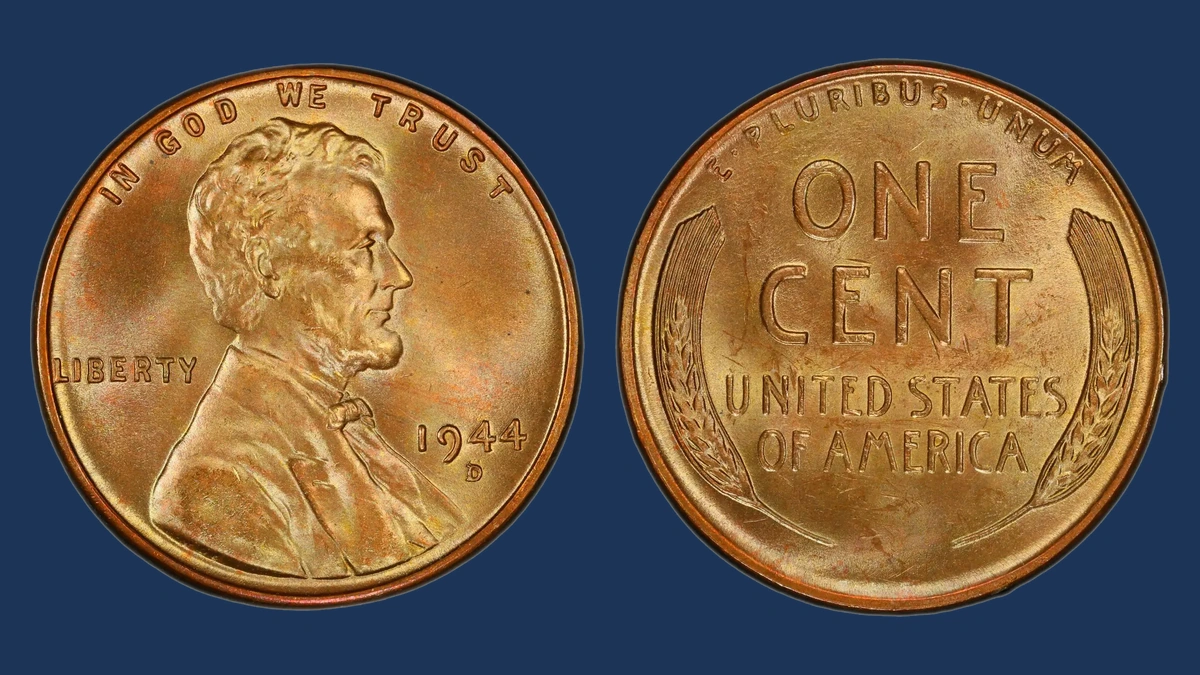
The letter under the date may hide another letter. On the famous 1944-D/S variety, a D was punched over an earlier S in the stamping tool.
Parts of that S remain visible above or within the D on one form. Another form shows the earlier S lower and to the left.
Same-letter repunching also occurs: D over D and reported S over S. Those leave another outline of the same letter rather than an S beneath D.
All are small raised features. Dirt or a thick mintmark without a recognizable earlier outline is not enough.
Estimated Value
Minor same-letter repunching has an estimated $5–$300 range. D-over-S examples may fit $50–$5,000 across ordinary collectible conditions, with exceptional red coins in a higher bracket.
A PCGS MS67+ Red D/S sold for $49,937.50 in October 2020. That unusually high grade describes outstanding unworn preservation.
Allow roughly $20,000–$50,000 for such exceptional top-grade examples. The record is not the expected value of a worn D/S or a minor D-over-D penny.
How to Identify
Determine which letter remains underneath before searching by a variety name. A second D curve is a different finding from remnants of an S.
Use a 10× magnifier inside and above the main D for the higher S form. For the other D/S form, compare the lower-left remnant with a matching photograph.
Do not reverse the explanation into S over D. The main visible letter on the D/S cent is D.
These varieties keep normal cent specifications: about 3.11 grams, 19.05 millimeters, and a smooth edge. Record scale and caliper readings when safe, then look for added metal or altered letter edges.
A recognizable surviving S shape beneath the D is the essential D-over-S clue.
12. 1944 Lincoln Penny Struck on a Zinc-Coated Steel Blank (Estimated Up to $500,000)
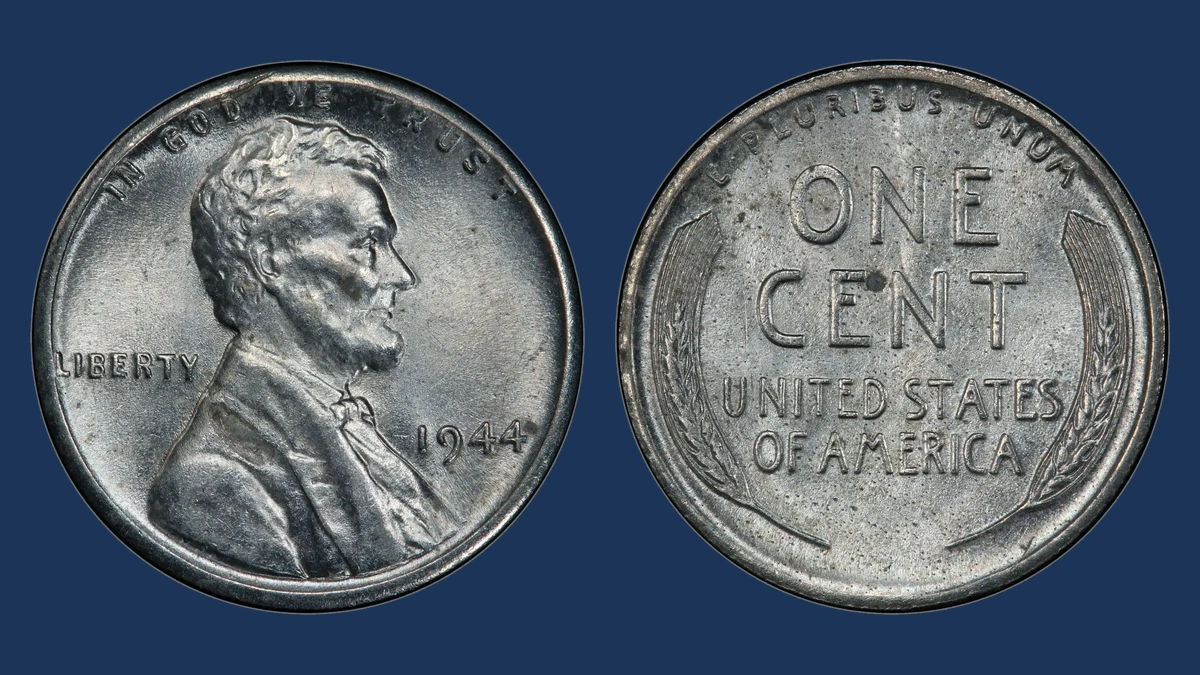
Steel was normal for most 1943 cents, but the Mint returned to copper alloy in 1944. A small number of 1944 pennies were nevertheless struck on zinc-coated steel blanks.
Known examples include Philadelphia, Denver, and San Francisco coins. This wrong material makes them very different from ordinary brown 1944 Wheat cents.
Steel is attracted to a magnet, and its blank is lighter than the normal copper-alloy one. Those are useful screening clues, not proof of a genuine rarity.
A changed date on a 1943 steel penny can imitate the basic appearance and magnetic response.
Estimated Value
The 1944-S graded PCGS MS66 sold for $408,000 in August 2021, as recorded by PCGS auction records. MS66 indicates a well-preserved unworn coin.
Use a broad estimated $20,000–$500,000 across authenticated steel cents of different mints and condition. The exceptional S sale belongs near the top, not to every surviving piece.
An altered date or plated normal cent falls outside this range. Exact mint identity and professional authentication are central to any comparison.
How to Identify
Read the last date digit before trying the magnet. Under a 10× magnifier, look for cuts or reshaped metal that could turn a 1943 into a false 1944.
A genuine steel blank is magnetic and normally about 2.70 grams; an ordinary 1944 copper-alloy cent is about 3.11 grams. Use a scale and bring a magnet close without scraping the surface.
Calipers can compare the diameter with the normal 19.05 millimeters. Inspect the smooth edge, coating, and any D or S for alteration.
Keep a certified coin sealed and have a specialist assess the date and material together. A magnetic coin with an original, unaltered 1944 date is the promising combination; color alone is not.
Conclusion
A 1944 penny’s color can be misleading, while a tiny mintmark remnant can be important. Check the whole coin before deciding which feature explains it.
Estimated values in this list span $5 to $500,000. Ordinary small defects occupy the lower end; authenticated steel coins and exceptional varieties can reach much higher.
Protect loose metal and leave surfaces uncleaned. Clear date pictures, measurements, and a correct explanation of the error make a price comparison far more useful.