1923 Penny Error List with Pictures

A missing piece of the rim and a fine line on Lincoln’s portrait tell very different stories. On a 1923 Wheat penny, even a small shift during striking can be worth a closer look.
A 1923-S penny struck 10% off center sold for $384 in 2019. Estimated whole-coin values for the errors below span $2–$900.
Follow the visible clues below to separate damaged metal, faulty stamping tools, and coins that moved in the press.
1. 1923 Lincoln Wheat Penny Lamination (Estimated Up to $150)
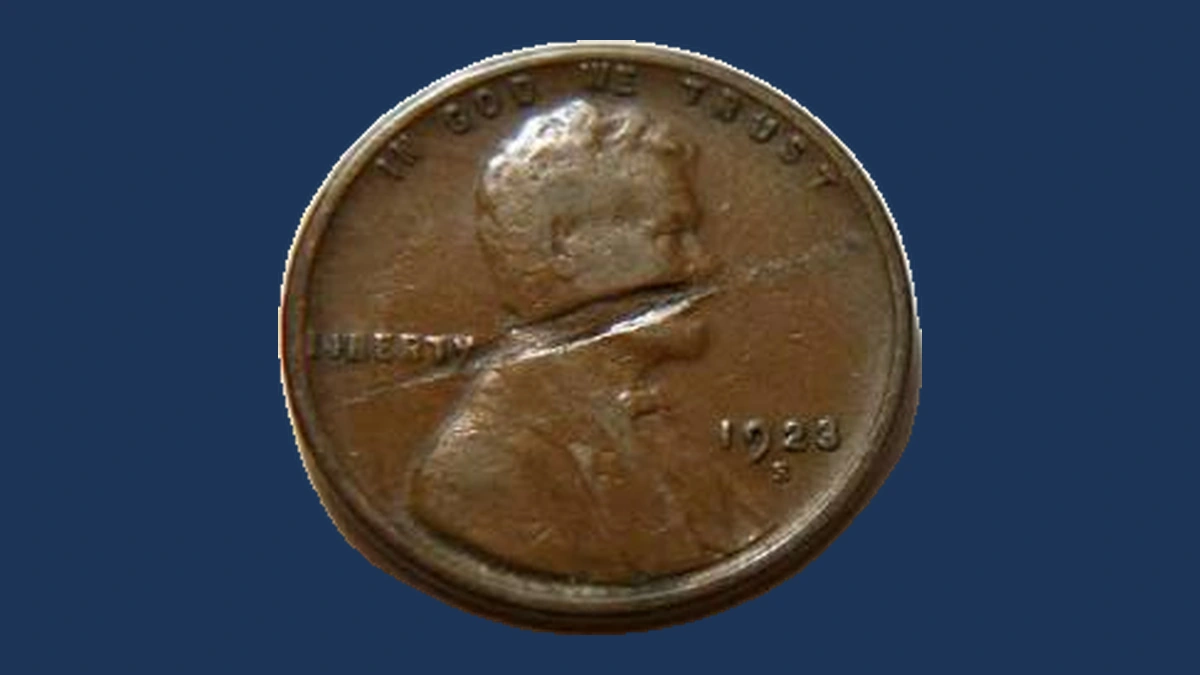
A thin flap of copper may lie almost flat against the coin rather than sticking up. A reported 1923-S example has this feature near five o’clock on the front.
This is a lamination: part of the coin’s own metal separates along a weak layer. Pressure can push the flap back against the surface without removing its outline.
Philadelphia examples with peeling on the back have also been reported. Their appearance should be judged separately from the San Francisco piece.
A raised flap is not automatically foreign material. Its connection to the original metal is the important difference.
Estimated Value
Allow an estimated $5–$150 for genuine 1923 laminations on ordinary circulated or modest-grade coins. A large visible flap may attract more interest than a fine surface seam.
For comparison, a 1966 cent with front lamination, graded MS63 Brown, sold for $61 in 2021. That is a later copper cent, not a 1923 sale.
The estimate includes the coin itself. A better-preserved 1923-S can carry value beyond the peeling feature alone.
How to Identify
Leave the flap in place. Lifting it can break original metal and make the coin harder to assess.
For the reported S example, find the mint letter below the date before examining the lower-right front. A 10× magnifier and low side lighting should reveal the seam around the pressed-down flap.
Follow that seam into the copper, looking for a natural thin layer rather than an attached object. Examine the plain edge too, since peeling can sometimes reach it.
A scale and calipers provide the normal comparisons of 3.11 g and 19.05 mm. A retained flap need not cause a weight loss.
Trace the flap’s joined edge into the original coin metal; that connection separates lamination from a loose object on the surface.
2. 1923 Lincoln Wheat Penny Doubled Die Obverse (Estimated Up to $200)
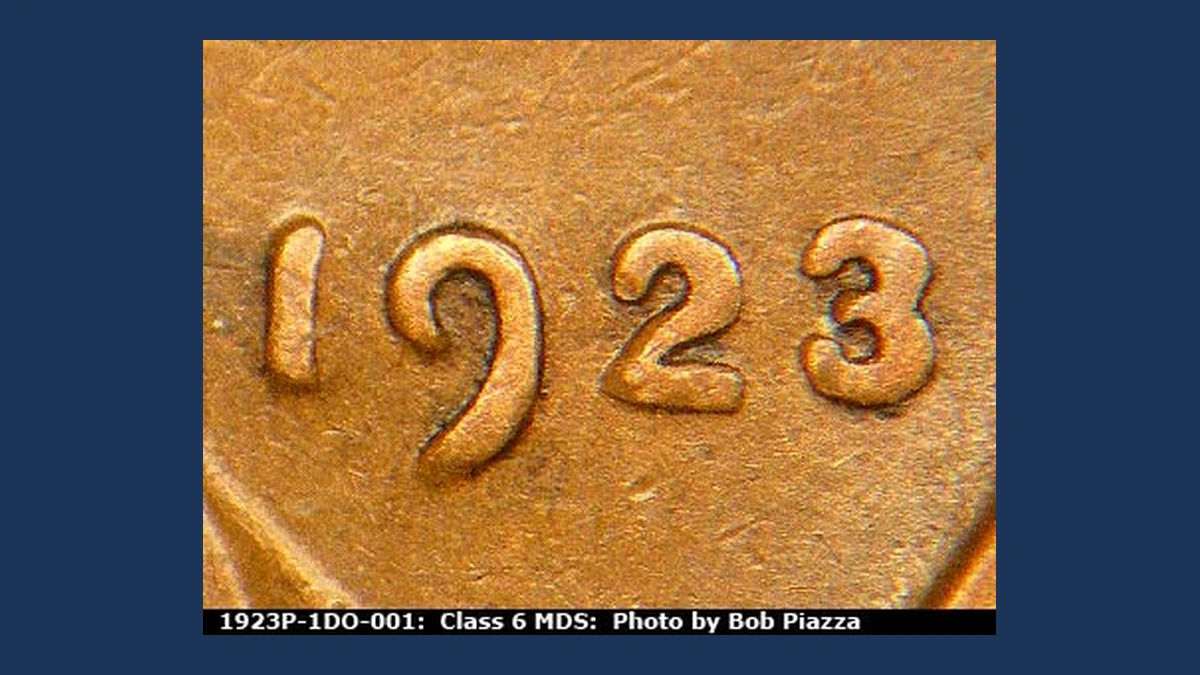
Look closely at Lincoln’s eye. The reported Philadelphia variety shows an extra eyelid outline, a much smaller feature than a second complete portrait.
The doubling was built into the die, the steel tool that stamps the coin. Coins struck by that tool can repeat the same extra outline.
Collectors call this a doubled die obverse, meaning a doubled design on the front. It does not mean the coin passed through the press twice.
A blurry eye alone is not enough. Wear, shifting light, and ordinary striking effects can all make a small feature look doubled.
Estimated Value
A clear, correctly identified example has an estimated whole-coin range of $15–$200. The upper end favors sharp details and attractive original surfaces.
This estimate uses modest Wheat cent doubled-design varieties, not the much stronger and more expensive 1927 or 1955 types. It is not a quoted 1923 auction result.
The eyelid must remain readable for the variety to add meaningful value. Heavy wear can hide the very feature a buyer wants to see.
How to Identify
Choose a Philadelphia coin: it should have no mint letter beneath 1923. This eyelid report should not be applied to an S coin just because its eye looks unusual.
Compare the eye with a normal penny under matching light through a 10× magnifier. Move the light while keeping the coin still; a genuine second outline stays in the metal.
Check whether the extra line has a stable shape rather than a flat, scraped-looking shelf. Photographs of the recognized variety are more useful than an unrelated doubled date.
Use a scale and calipers to check the normal 3.11 g and 19.05 mm, and inspect the plain edge for alteration. Finish by matching the extra eyelid outline to the same Philadelphia variety.
3. 1923 Lincoln Wheat Penny Struck Through Thread (Estimated Up to $250)
A fine sunken line can record something that briefly came between the coin and a stamping tool. In the documented 1923 example, that object was identified as thread.
The thread blocked the tool from pressing its full design into that narrow strip of metal. Once the thread fell away, its shape remained below the surrounding surface.
PCGS graded the recorded Philadelphia penny MS64 Red and Brown, meaning an unworn coin with a mix of copper colors. Its thread mark is on the front.
This explanation differs from a raised crack line or a scratch made after minting.
Estimated Value
An estimated $40–$250 suits a genuine 1923 thread strike, depending on its clarity and the coin’s condition. The recorded MS64 Red and Brown example brought $156 on January 15, 2018.
Coin World’s auction listing records that Heritage result. It is an actual sale, not a current asking price.
A distinct original impression helps the error stand out. Later scratches, cleaning, or corrosion can reduce what buyers pay.
How to Identify
First decide whether the line sinks into the surface or rises above it. A raised copper ridge suggests another cause, while the missing thread normally leaves a depression.
Inspect the plain edge and weigh the penny before concentrating on the line. The usual 3.11 g weight and 19.05 mm diameter, checked with a scale and calipers, should remain broadly unchanged.
Through a 10× magnifier, examine how the design meets the depression. A scratch often pushes metal into sharp lips; a thread blocked the design during the strike.
Do not assume the trace must cross the date or a particular part of the face. Look for a narrow original depression that interrupts the struck design without the cut-metal edges of a later scratch.
4. 1923 Lincoln Wheat Penny Broadstrike (Estimated Up to $300)
A penny can be wider than normal without losing part of its design. When the surrounding collar fails to contain the metal, striking pressure allows the disc to spread outward.
The collar is the ring that normally controls the coin’s edge and width. A broadstrike occurs when that restraint is absent during the strike.
A worn 1923 example graded XF45 has been reported as an uncentered broadstrike. The design sits unevenly within its enlarged border, but remains complete.
That last point matters. Missing outer design would instead suggest a true off-center strike, while flattening after minting can imitate extra width.
Estimated Value
The working estimate is $35–$300 for a genuine 1923 broadstrike. More visible spread and better preservation can increase interest, but an uneven border alone does not determine price.
A 1939 broadstrike graded MS62 Red and Brown sold for $46 in 2004. That older, different-year sale is a comparison, not a price for the reported 1923 XF45 coin.
This estimate allows for the earlier date and stronger examples. It excludes pennies expanded by later hammering.
How to Identify
Measure across several directions with calipers, using 19.05 mm as the ordinary diameter. Extra width should correspond to naturally spread metal rather than one edge bent outward.
With the whole coin visible, read every outer word on both faces. An unevenly placed but complete design can belong to a broadstrike; a border that cuts through the intended design needs a different explanation.
Compare the rim and plain edge with a normal penny through a 10× magnifier. Hammering often flattens existing features and leaves damaged edges.
A scale reading near the normal 3.11 g supports a full copper disc, though wear affects weight. Follow the complete lettering around the expanded border to distinguish this error from a strike that ran off the disc.
5. 1923 Lincoln Wheat Penny Die Cracks, Chips, and Cuds (Estimated Up to $400)
A thin raised line records a crack in the stamping tool. A small missing piece of that tool can leave a raised chip instead.
If a larger break reaches the tool’s edge, the coin may show a lump joined to its rim. Collectors call that rim-connected feature a cud.
The Cuds on Coins catalog lists a Philadelphia 1923 example. Other 1923 reports describe smaller cracks and chips.
These are related forms of tool damage, but they do not share one fixed location on every coin. Their raised metal must be separated from scratches, corrosion, and attached material.
Estimated Value
Small genuine cracks may bring only a modest premium, while a bold cud can be far more noticeable. An estimated $2–$400 covers that spread across ordinary 1923 examples.
The range compares similar Wheat cent tool breaks; it is not a recorded sale for the cataloged Philadelphia cud. Size, visibility, and original surface quality drive much of the difference.
A barely visible line belongs near the lower end. A damaged rim with no genuine mint break does not qualify.
How to Identify
For a suspected cud, start at the rim and follow the lump inward. It must connect to the border; a small isolated bump inside the design is a chip instead.
Check the opposite face for possible weak detail across from a large break. That can support the explanation, but it does not replace examining the lump itself.
Raised lines need side lighting and a 10× magnifier to separate them from sunken scratches. Avoid scraping a suspicious bump to see whether it comes off.
The normal copper penny is 3.11 g and 19.05 mm; record scale and caliper readings and inspect the plain edge. Identify whether original raised metal forms a line, an interior chip, or a rim-connected cud before naming the error.
6. 1923 Lincoln Wheat Penny Clipped Planchet (Estimated Up to $400)
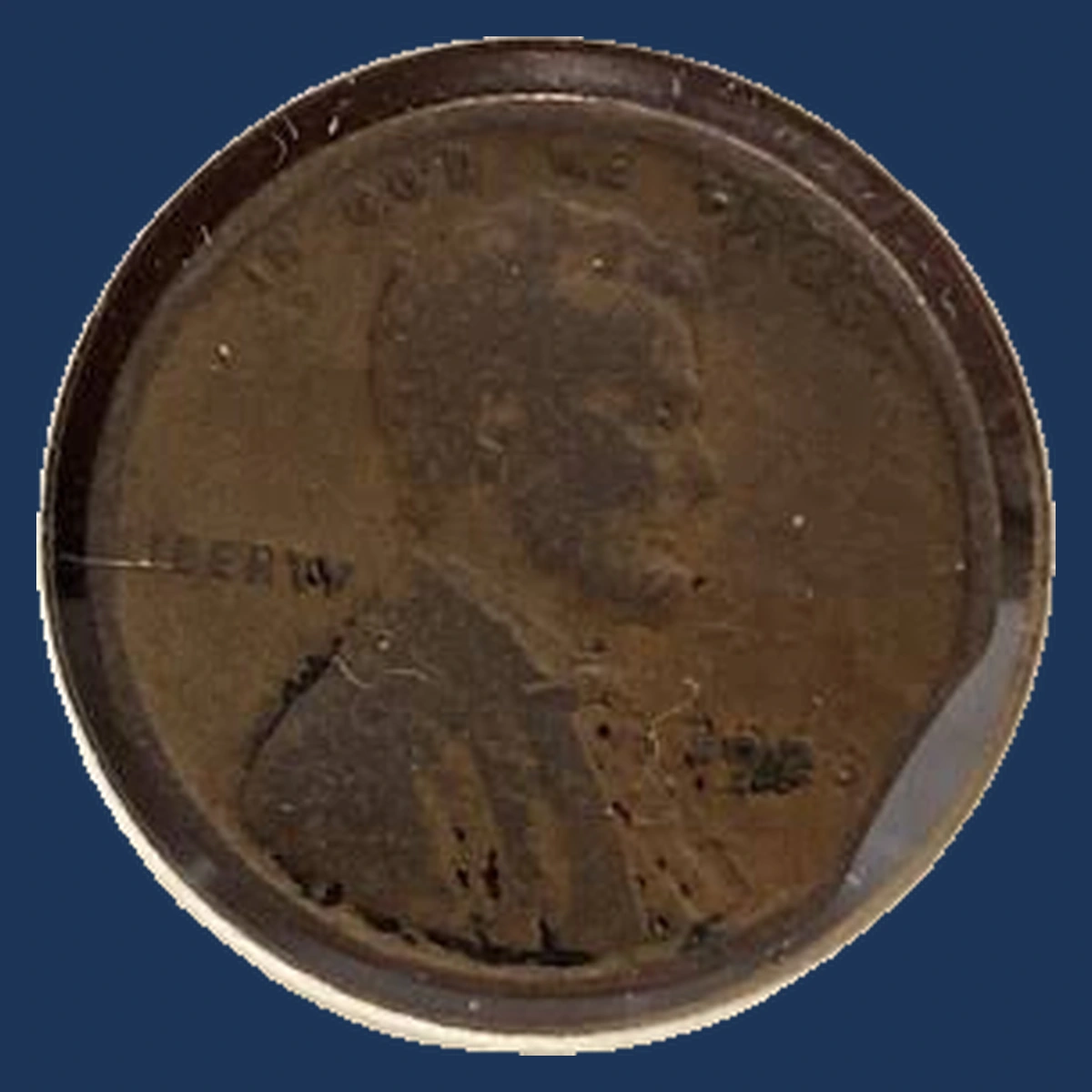
Part of the coin’s outline is missing before the design is struck. A planchet is the prepared metal disc, and a clipping mistake leaves that disc incomplete.
Reports include a Philadelphia straight clip and a San Francisco penny with two curved clips. These shapes describe missing metal, not two different dates or designs.
The S example was listed as ANACS MS60 Details with a reported weight of 2.99 g. A Details label means a condition problem prevents a normal numerical grade.
A Philadelphia rim-clip penny graded ANACS AU55 appeared at GreatCollections in 2025. Later cuts can resemble these mint-made gaps.
Estimated Value
Genuine 1923 clips have an estimated range of $20–$400, including the value of the underlying penny. A small clip on a worn coin usually attracts less attention than a clear double clip.
The 2025 Philadelphia AU55 auction confirms an offered example, but its visible listing does not supply a usable sale amount. For a price comparison, a 1939 clip graded MS64 Brown sold for $180 in 2023.
The S coin’s condition problem also affects its value.
How to Identify
A light reading alone cannot establish a clip. Compare a scale measurement with the normal 3.11 g, then use calipers on the surviving full width against 19.05 mm.
At each gap, inspect both ends where the ordinary plain edge meets the missing section. A 10× magnifier can reveal sawing marks or sharp edges left by later cutting.
Now look across the coin for a weak opposite rim, a possible clue to an incomplete blank. Its absence does not automatically rule out every genuine clip.
The reported 2.99 g belongs to one seller-described S coin, not all clipped 1923 pennies. Judge each gap by its natural edge transitions and surrounding strike, rather than accepting missing metal as proof by itself.
7. 1923 Lincoln Wheat Penny Partial Collar Strike (Estimated Up to $500)
Turn the penny sideways. A partial collar strike can leave one part of its edge at normal width while another part spreads outward, creating a step.
The metal disc was not seated correctly in the collar, the ring around the striking area. Only part of its edge received the ring’s support.
A Philadelphia 1923 penny graded PCGS MS62 Red combines this edge error with closely overlapping strikes. The same coin therefore shows two different effects from the minting process.
Even a plain-edged cent can show the step. It does not need the grooves found on a dime or quarter.
Estimated Value
An estimated $50–$500 covers genuine 1923 partial-collar coins with readable edge distortion. The recorded MS62 Red example sold for $312 at Heritage on April 29, 2018.
That coin also had multiple close overlapping strikes. Its $312 sale paid for the complete combination, so it should not be treated as a price for the edge feature alone.
Condition and the clarity of the step affect other examples. The ranges here are whole-coin estimates, not charges to add together.
How to Identify
Keep the edge at eye level and rotate the coin slowly under a lamp. The useful feature is a change between a confined edge and metal that spread beyond it.
Photographs taken only from above may conceal that step. Use a 10× magnifier from the side to distinguish the original shape from dents or a folded-over rim.
Calipers can compare the narrow and expanded portions with the normal 19.05 mm. A scale should be compared with 3.11 g, allowing for wear rather than assuming a new metal composition.
Examine the plain edge all the way around, then check the overlapping face designs separately. Locate a genuine step between the supported and expanded edge portions before calling this a partial collar strike.
8. 1923 Lincoln Wheat Penny Off-Center Strike (Estimated Up to $750)
The design sits too far toward one side of the disc, leaving an uneven unused border. This happens when the blank is not centered between the stamping tools.
A 1923-S example graded NGC MS63 Brown was struck about 10% off center toward ten-thirty. Most lettering remained visible, but the L in LIBERTY was weak.
A separate Philadelphia penny has been reported with a 10% shift toward seven o’clock. Its direction should not be copied onto the S example.
An off-center strike affects how the whole design fits on the disc. A slightly uneven rim alone is not enough.
Estimated Value
The 1923-S MS63 Brown example sold for $384 on September 10, 2019. That gives a same-year sale for a modest but clear displacement.
An estimated $50–$750 covers circulated through better-preserved 1923 examples with a readable date. Stronger displacement can help, provided the coin still identifies itself clearly.
The San Francisco issue’s preservation also contributes to price. This range should not be read as a fixed payment for each percentage point off center.
How to Identify
Set the candidate beside a centered penny and compare both faces, not just the portrait’s position. A mismatch confined to one face may instead involve one displaced stamping tool.
On the recorded S example, locate the weak L and the upper-left shift together. For a Philadelphia coin, assess its own displacement rather than expecting those same positions.
The date and mint letter establish which coin you are examining. Under a 10× magnifier, inspect the unused metal and plain edge for later trimming or flattening.
Check 3.11 g on a scale and use calipers against the normal 19.05 mm width, allowing for strike distortion. Compare both designs with the unstruck area to confirm that the disc itself sat off center during the strike.
9. 1923 Lincoln Wheat Penny Multiple Close-Overlap Strikes (Estimated Up to $900)
Two nearby outlines can come from separate blows rather than a doubled stamping tool. On the reported 1923 multiple-struck penny, successive impressions overlap closely.
The coin remained in the striking area for additional pressure instead of leaving after its intended strike. Slight movement allowed earlier and later details to appear together.
PCGS graded the Philadelphia example MS62 Red. It also has a partial collar strike, visible as a change in its edge profile.
The surviving description does not establish a strike count or movement direction. Those details should come from the actual overlapping impressions, not from an assumed second portrait.
Estimated Value
Use an estimated $150–$900 for genuine close-overlap multiple strikes on 1923 pennies. Clear repeated design details and attractive original copper can support stronger prices.
The MS62 Red compound-error coin brought $312 at Heritage in April 2018. That is the same sale discussed under partial collar strikes, not a second transaction.
The upper end allows for more conspicuous examples. Minor flat doubling from ordinary press movement belongs to a different category and does not earn this estimate.
How to Identify
Find one design feature that appears in more than one position, then test that movement against another nearby feature. A repeat strike should tell a consistent story across the affected area.
Use a 10× magnifier to follow overlapping strokes where one impression partly presses over another. Do not count every visible line as a separate strike.
The plain edge matters here because the recorded coin also has a step from a partial collar. Measure the widest and narrowest areas with calipers against 19.05 mm, and compare its scale weight with 3.11 g.
Check both faces for the effects of repeated pressure rather than relying on one doubled letter. Trace matching displaced outlines across more than one feature to separate repeat strikes from a doubled tool or flat shelf-like doubling.
Conclusion
The estimated $2–$900 range covers everything from small raised cracks to genuine repeat strikes. A clear error matters, but so do the mint, wear, and original surface.
Look at the edge as carefully as the portrait. Keep the partial-collar and multiple-strike features of the recorded compound coin together when judging its price, and never count the same coin’s value twice.