1913 Penny Error List with Pictures

A 1913 penny cataloged as fifteen percent off-center sold for $276 in September 2019. Much of its front motto was missing, while the back lettering looked stretched.
That example shows why the 1913 penny error list needs more than a glance at one odd letter. Estimated values for the circulation-coin features below range from $3 to $1,800.
Compare the visible details and both faces as you read, especially when a letter seems weak, doubled, or crowded against the rim.
1. 1913 Lincoln Wheat Penny Weak or Missing Letters
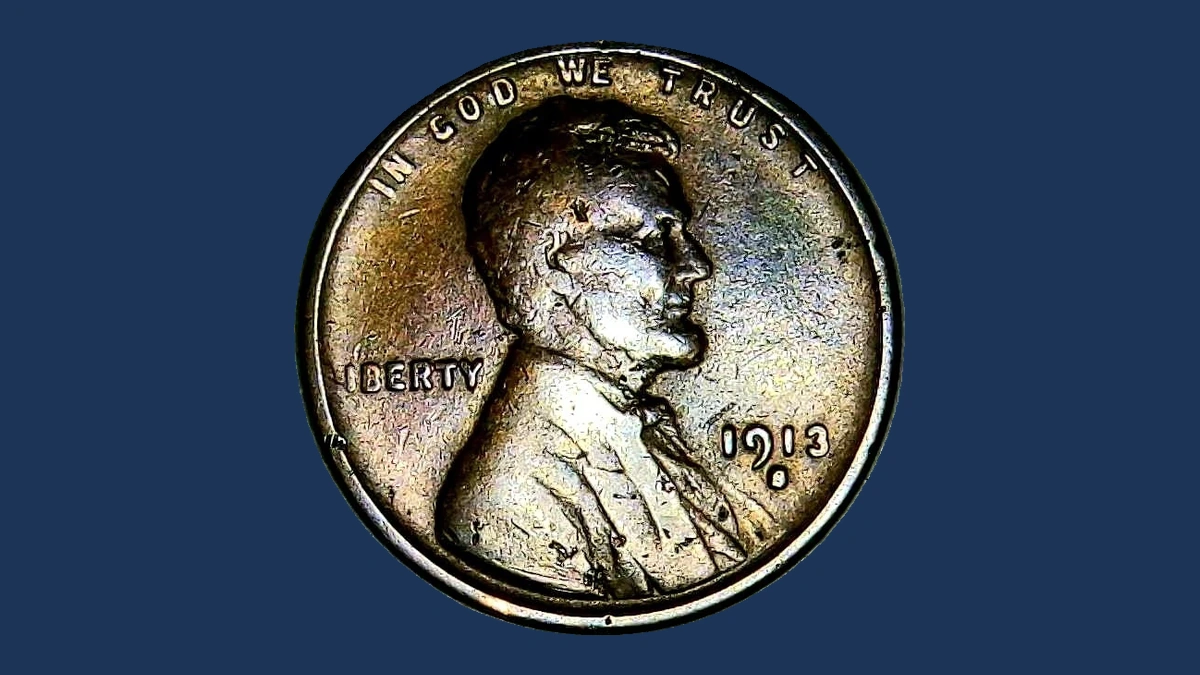
Some letters may fade while other parts of the coin remain easier to read. A 1913-S report describes weak or missing portions of OF AMERICA on the back.
Another report concerns the first L in LIBERTY on a San Francisco penny. These are separate observations, not a requirement that both appear on one coin.
A weak strike, a blocked stamping tool, wear, or later damage can all reduce lettering. The visible absence of a letter does not establish which cause applies.
The surface around the affected area is therefore just as important as the missing character.
Estimated Value
Estimate $3–$150 for modest, genuine mint-made weak-letter features on circulated 1913 cents. A substantial premium requires more than ordinary wear or a familiar weak area.
A year guide reports $497 for a missing-L example, but supplies no usable grade or dated auction comparison. That reported figure should not become the default price for every faint L.
Judge the original condition and the reason for the missing detail before applying an error premium.
How to Identify
Before judging an absent letter, inspect the amount of wear across both faces. Similar flattening on the highest portrait and wheat details may explain the weakness.
A loose cent should be compared with 3.11 g on a scale and 19.05 mm with calipers. Those checks do not establish why a letter is missing.
For the back report, include the surrounding OF AMERICA letters in the photograph. For the front report, show the L position and the rest of LIBERTY.
Inspect the affected surface at 10×. Grooves crossing that area can show where finished lettering was scraped away.
Tilt the lamp to follow the change from sharp to faint detail. A smooth transition without cut metal better supports a problem during striking.
2. 1913 Lincoln Wheat Penny Repunched Denver Mintmark
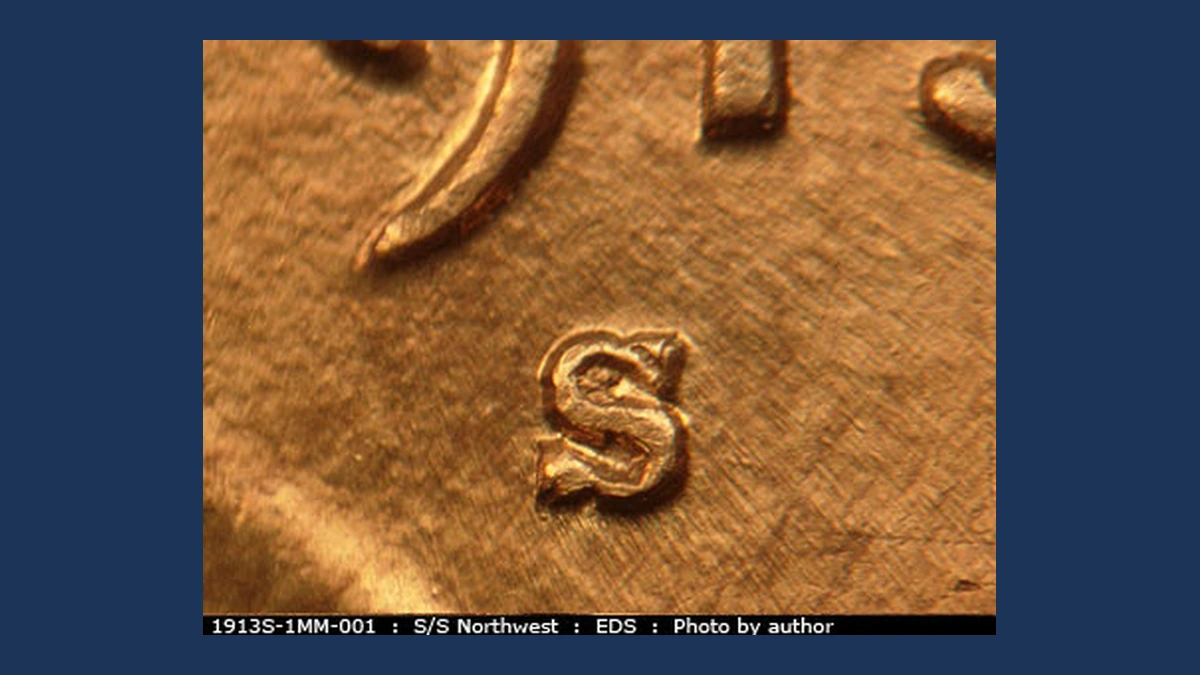
The small D below the date may contain part of an earlier D outline. Mintmarks were punched by hand into the die, the steel tool that stamps the coin.
A shift between punch blows could leave extra letter strokes in the tool. Those strokes would then appear on coins made from it.
The 1913-D year listing reports repunching without identifying one exact direction for every example. A photograph must therefore show the actual extra curve.
A shadow or damaged edge on the D is not enough to establish a second punch impression.
Estimated Value
A clear 1913-D repunched mintmark can fit an estimated $10–$250, depending on preservation and the strength of the earlier stroke. This is a comparison range, not a claimed sale of one numbered variety.
Subtle patterns usually need good photographs to show why they deserve a premium. Wear, stains, or a damaged mintmark can hide the detail even when much of the rest of the penny remains readable.
Compare the entire coin’s condition as well as the small letter.
How to Identify
Keep the lower date and the entire D in view under a 10× magnifier instead of examining an isolated bump. Follow any extra curve around the letter to see whether it fits another impression of the same D.
Changing the lamp angle separates a raised stroke from a dark shadow that merely follows the edge of the main letter. Take a photograph with the date upright so that the apparent position of the extra stroke stays consistent.
A scale and calipers check the loose bronze cent against 3.11 g and 19.05 mm, but cannot establish a repunch. If the mintmark appears altered, inspect its base for cuts, a seam, or metal added around the supposed extra curve.
3. 1913 Lincoln Wheat Penny Doubled Front Design
A small repeated edge on the date or LIBERTY is the feature reported for a 1913-D doubled front. The year guide describes this as mild doubling, not the wide spread found on famous later varieties.
A doubled die carries a repeated design before it strikes a blank. Coins made with that tool can share the same extra outlines.
Movement during a strike can create a different effect: a low, flat shelf beside normal detail. That shelf should not be given the price of an identified doubled die.
The reported areas need comparison under the same lighting.
Estimated Value
An estimated $10–$300 is suitable for an identified minor 1913-D doubled front across differing wear levels. The range concerns subtle date and LIBERTY features, rather than a major separated design.
A large price for a famous 1917 or 1955 doubled die does not transfer to this report. Clear matching detail, a sound original surface, and better preservation can support the upper comparisons.
A faint line that disappears when the light changes offers little basis for an added premium.
How to Identify
Compare the date and LIBERTY with a normal 1913-D penny under the same light, using a 10× magnifier for the smaller edges. Look for repeated outlines or split corners in several characters rather than one unusually bright line.
Check the D below the date and, on a loose coin, use a scale and calipers against 3.11 g and 19.05 mm. These checks establish the ordinary coin being examined, while its letter shapes determine whether doubling is present.
A low, flat shelf beside a normal letter can result from movement during striking rather than a doubled stamping tool. Follow the suspected extra detail through neighboring letters to see whether the same full, raised pattern repeats.
4. 1913 Lincoln Wheat Penny Clipped Blank
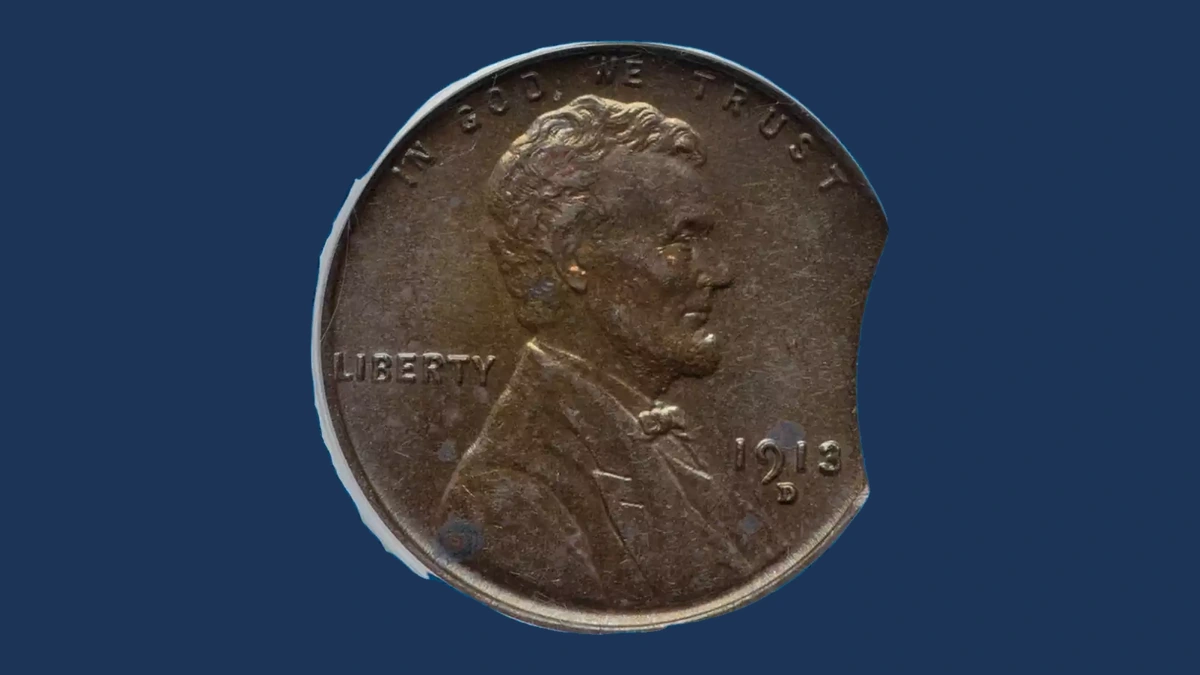
Part of a penny’s outline may be missing because its blank was incomplete before striking. A curved gap can result when the blank-cutting punch overlaps a previously cut hole.
Other incomplete blanks may have straighter or uneven missing edges. The year listing includes clips without fixing a single shape, mint, or position for 1913.
The surrounding rim and letters can show how the press worked around that missing metal. Their appearance helps distinguish a mint-made clip from a later cut.
A gap alone tells you metal is absent, but not when it disappeared.
Estimated Value
For authenticated 1913 clips, estimate $15–$300 according to missing area, condition, and how clearly the rim supports the diagnosis. The year listing does not supply a sale for every possible clip shape.
A nearby-year comparison is the 1925 Philadelphia curved clip, ANACS VF20 and 2.92 g, sold for $56 in March 2023. VF20 indicates clear circulation wear.
That price belongs to the specific worn curved-clip coin, not automatically to any 1913 penny with a notch.
How to Identify
Follow the original round outline across the surviving metal before estimating the size of a clip. Calipers should span an intact part when comparing with the normal 19.05 mm diameter.
A precise scale can show whether the loose coin is below the normal 3.11 g. Missing weight supports lost metal but cannot distinguish a mint clip from a later cut.
Inspect both ends of the gap with a 10× magnifier. Weak nearby rim detail, and sometimes weakness on the opposite edge, can support an incomplete blank struck in the press.
Saw grooves, filing, or bent finished letters point in another direction. Include the edge surface in photographs so these clues remain visible.
5. 1913 Lincoln Wheat Penny Struck Through Material
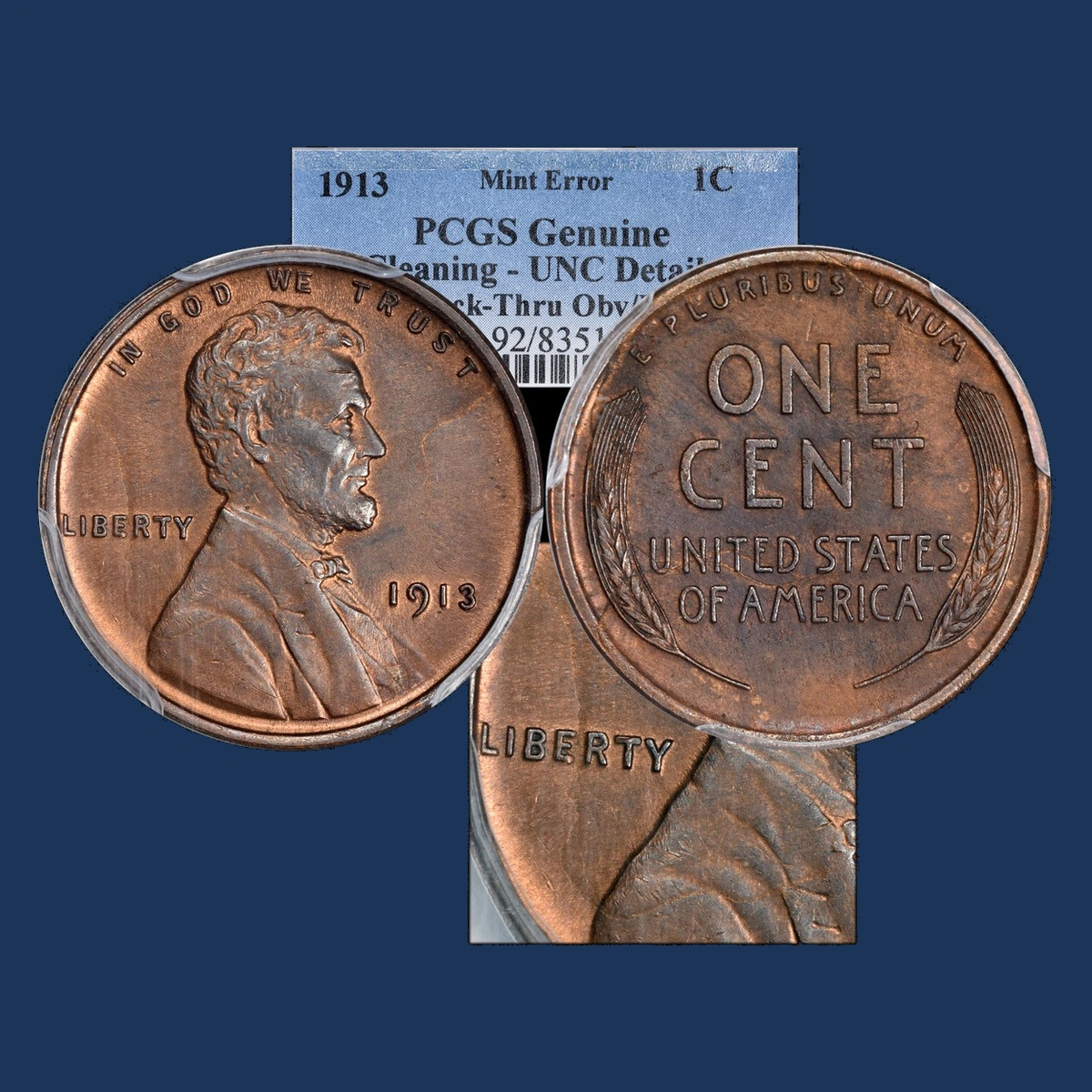
A small object between the blank and a stamping tool can keep part of the normal design from forming. It may leave a depression or copy its texture into the coin.
A year guide reports this kind of struck-through error on a 1913-D penny. It does not establish one particular object or a fixed affected location for every example.
Grease can block fine detail, while a solid object can leave a more defined impression. Those different appearances should be judged from the coin.
A dent made after striking has a different history, even if it looks similar.
Estimated Value
The year guide reports a $50 eBay sale for a 1913-D struck-through example. No grade or sale date accompanies that figure, so it offers limited comparison detail.
Estimate $10–$500 for confirmed examples, from small interruptions to clearer impressions on better-preserved coins. The shape, size, and surviving original surface affect the estimate.
An unidentified dent should not receive this range merely because it resembles the reported error; the surrounding design must support an obstruction during striking.
How to Identify
Begin with the mark and the physical edge together in a photograph. A related blow at the rim may help explain a dent made after minting.
Use a 10× magnifier to follow a letter or portrait line into the affected patch. Decide whether it stops smoothly or was cut across after forming.
A loose bronze cent normally reads 3.11 g on a scale and 19.05 mm with calipers. Record any difference without assuming it identifies the material responsible.
Photograph texture inside the depression and leave any embedded material in place. Removing it would destroy part of the feature.
Check for a thin sheet above an internal opening. That visible separation points toward peeling metal within the penny rather than an outside object blocking the tool.
6. 1913 Lincoln Wheat Penny Rim Cuds and Die Cracks
A broken piece of stamping tool can leave a raised lump where normal design should be. When the missing piece reaches the tool’s edge, the resulting rim-connected lump is called a cud.
A narrower opening produces a thin raised line instead. These die cracks can pass through portrait detail or approach the rim.
The 1913 year guide lists both kinds of tool failure. It does not give a single crack route or cud position shared by all reported examples.
Scratches cut into a finished surface, so their appearance differs from copper that filled an opening during striking.
Estimated Value
Estimate $3–$50 for small raised cracks on circulated 1913 cents, with larger genuine rim cuds around $40–$500. A visible loss of design within a broad raised patch supports a different comparison from a hairline crack.
For context, a 1946-S Wheat cent with a major break sold for $288 in March 2021. Its price belongs to another year’s substantial tool failure.
Size and condition should guide the comparison rather than the presence of any raised speck.
How to Identify
A cud should join the physical rim and replace some of the intended design with a raised patch of metal. Turn the edge under a 10× magnifier to inspect that connection and any letters that disappear within it.
For a thin line, move the lamp across its length to distinguish raised copper from a groove left by a scratch. A scratch can push metal aside, but the groove remains below the finished surface beside it.
A scale and calipers compare the loose coin with 3.11 g and 19.05 mm before closer examination of suspicious added metal. Inspect the patch’s base for a joint or solder, and the opposite face for an impact from squeezing the edge.
7. 1913 Lincoln Wheat Penny Off-Center Strike
One 1913 Philadelphia cent lost much of IN GOD WE TRUST when its front design ran beyond the blank. Heritage cataloged the coin as fifteen percent off-center toward one o’clock.
Its back design remained complete, although E PLURIBUS UNUM looked stretched. This particular description is more useful than assuming every off-center coin loses identical details on both sides.
PCGS graded it MS63 Brown, meaning unworn with noticeable marks and brown copper color. The portrait also showed some weak detail.
The coin’s unused metal and displaced design distinguish its shape from a piece simply cut away after minting.
Estimated Value
The MS63 Brown Philadelphia example sold for $276 in September 2019. Its fifteen-percent shift and complete date provide a specific comparison.
Use an estimated $40–$1,500 for authenticated dated 1913 off-center cents, allowing for more dramatic displacement, mint, and surface quality. Large blank areas can attract interest when the year survives clearly.
The auction coin’s complete back and stretched motto should remain part of its description when comparing another piece.
How to Identify
Compare the front’s surviving motto with the back before deciding how the coin was struck. The recorded Philadelphia example loses much of IN GOD WE TRUST but keeps the back design, with stretched E PLURIBUS UNUM.
At 10×, examine where the displaced design meets unused metal. Grinding may remove letters while leaving scratches through an already struck surface.
Photograph the coin’s outline and record loose-coin measurements with a scale and calipers. A normal blank begins at 3.11 g and 19.05 mm, although striking can reshape it.
Use both face photographs together for a more complex or uneven-looking example. The specific combination of displaced front and stretched back lettering matters more than forcing both sides to look identical.
8. 1913 Lincoln Wheat Penny UNUM at the Rim
The last word of the back motto can appear unusually close to the outer rim. A 1913 Philadelphia year report describes UNUM running into the edge and attributes it to tool misalignment.
Misalignment means one stamping tool sat away from its intended position. It can move a design toward one side of the coin.
The reported appearance needs more than a close-up of the tall rim. Wear, damage, and the relationship between both faces help explain what happened.
Crowded letters identify the area to inspect, but they do not alone prove the press mechanism.
Estimated Value
A year guide reports a $1,800 auction result for a 1913 UNUM-at-the-rim example, without a dated lot or grade. Treat that as a reported figure rather than a fully described price comparison.
A conditional estimated $25–$1,800 covers genuine misalignment examples of differing strength and condition. The high end needs a convincing, conspicuous mint-made displacement.
Ordinary rim wear or letters damaged after striking do not qualify simply because UNUM appears close to the edge.
How to Identify
Place straight-on photographs of both faces side by side at equal size. Their relative positions can reveal more than a close-up of UNUM alone.
Compare the space around the full back border. If one word crowds the rim, check what happens at the opposite side of the design.
Calipers can compare the coin’s width with 19.05 mm, and a scale checks the usual 3.11 g. Normal measurements do not prove which tool was shifted.
Inspect the tops of UNUM through a 10× magnifier for cuts or flattening. A tall rim can also conceal letters in an angled photograph.
Move the light and view the word straight on again. Letters physically rubbed away support a different explanation from lettering struck into an unusually narrow border.
Conclusion
A missing letter and a displaced design can look similar in a tight photograph. Keep both faces and the rim visible when comparing a 1913 penny with a reported error.
The estimated $3–$1,800 range includes small cracks, modest letter varieties, and larger striking problems. Actual sales with a stated grade make stronger comparisons than a price attached to a vague description.
Match the feature before deciding what condition and mint add to its value.