1909 Wheat Penny Error List with Pictures

The S below the date can hide part of an earlier, sideways S. One exceptionally preserved example sold for $32,900 in July 2022.
Identity comes first in this 1909 Wheat penny error list: the sideways-S variety belongs to the San Francisco coin without VDB, while the doubled-front varieties discussed here have VDB.
Estimated values run from $5 to $33,000. Read the matching feature below, keeping Lincoln cents separate from the Indian Head pennies also made in 1909.
1. 1909 Lincoln Wheat Penny Grease-Filled Design (Estimated Up to $100)
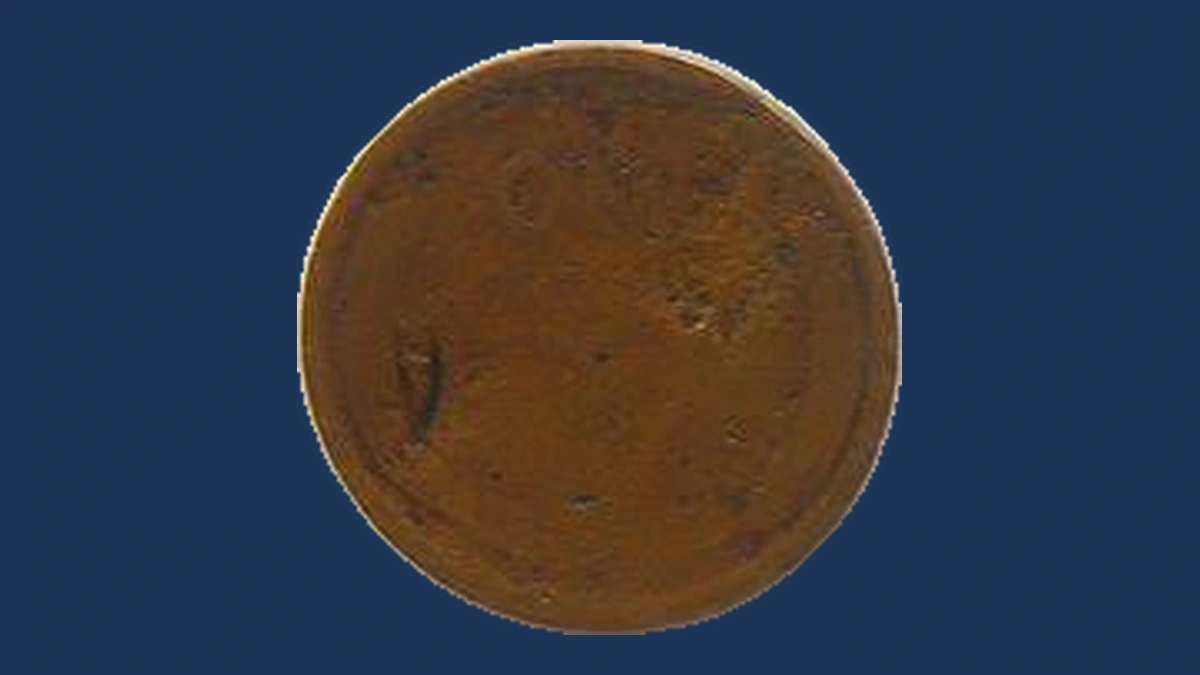
A patch of design can fail to form when grease or packed debris blocks a stamping tool. The surrounding coin may retain clearer letters and portrait detail.
A 1909 VDB example appears in an auction record with an ANACS MS60 Details grade. That describes an unworn level of detail with an additional condition problem noted by the grading service.
The exact blocked area needs the coin’s own photograph. It should not be assigned a missing letter simply from the error name.
Missing VDB is especially misleading here. Ordinary 1909 cents were also deliberately made without those initials.
Estimated Value
For a genuine minor grease-filled design, estimate $5–$100, depending on its clarity and the coin’s condition. Small weak patches may add little to an otherwise ordinary penny.
The ANACS Details example is not a problem-free grade comparison. The public auction listing establishes the reported error, but no realized price from it is used here.
Compare the interrupted design with original nearby detail. A normal no-VDB version, worn lettering, or a polished patch should not acquire the same error premium.
How to Identify
Read the full Details description before treating this as an undamaged MS60 coin. A scale and calipers can check an accessible example against 3.11 grams and 19.05 millimeters, while its smooth edge may show later alteration.
Now compare the weak patch with nearby letters under a magnifier, moving the light to reveal polishing lines or rubbed high points. A local blockage needs a different surface pattern from general wear.
If the supposed error is missing VDB, establish the version before proceeding: those initials belong at the bottom of the back on VDB cents. Deliberately made no-VDB coins are normal, so their missing initials do not demonstrate grease in the stamping tool.
2. 1909 Lincoln Wheat Penny Clipped Planchet (Estimated Up to $350)
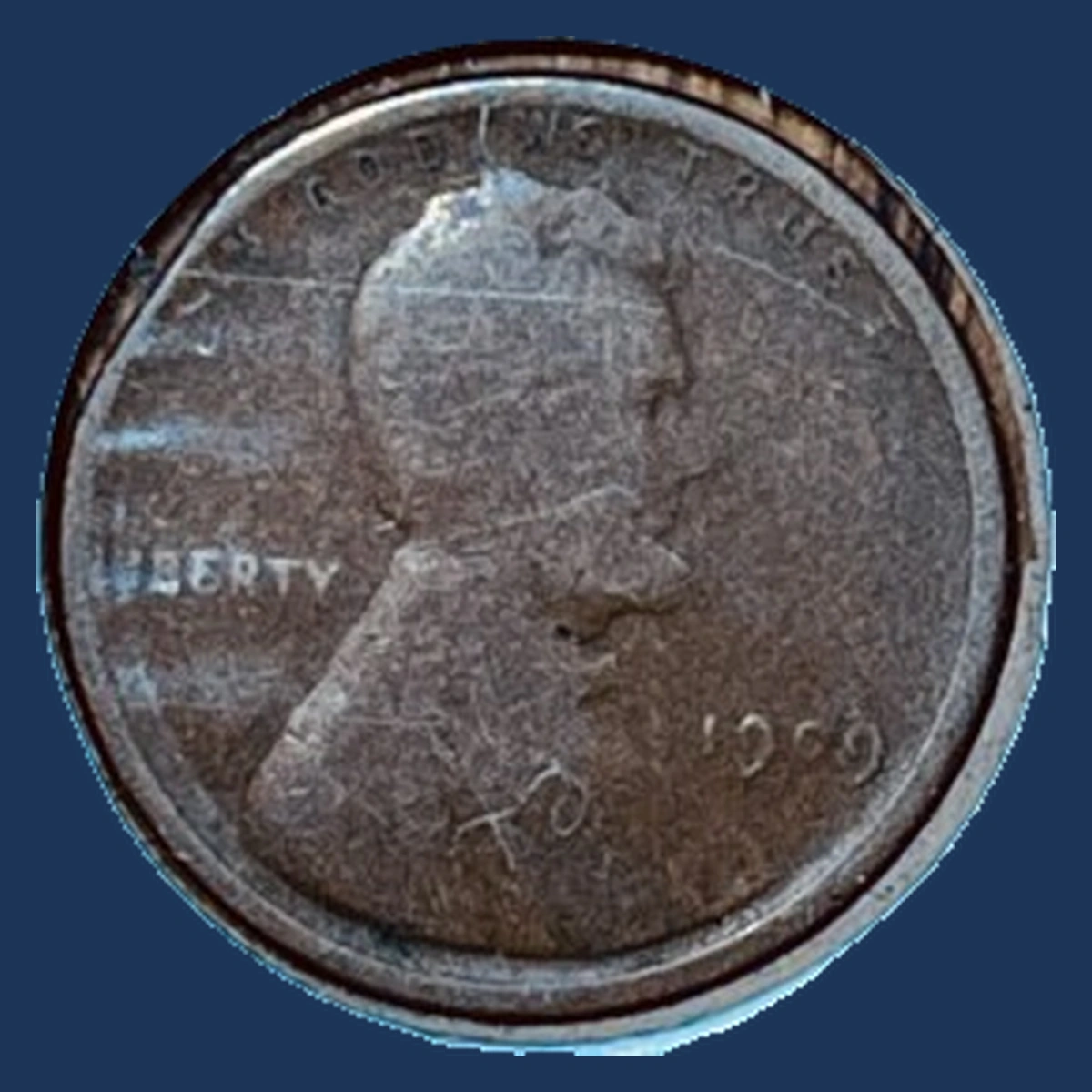
A blank can be incomplete before it ever receives Lincoln’s portrait. If the press strikes it anyway, the finished penny retains the missing section.
Collectors call this a clipped planchet, with planchet meaning the prepared blank. A curved gap, straight boundary, or ragged edge needs its own visual comparison.
The 1909 listing does not establish one mint or VDB version for every reported clip. Those details must be read from the actual coin.
Rim weakness opposite the gap can support identification. It is not a compulsory feature on every genuine clip, and a later cut may mimic the overall shape.
Estimated Value
Small clips on ordinary Philadelphia coins fit $15–$100. Larger missing sections or better-preserved examples may reach roughly $100–$350, with the coin’s version also affecting the comparison.
These ranges describe general clipping examples rather than an auction result assigned to an unpictured 1909 specimen. A genuine mintmark and the presence or absence of VDB need to be established separately.
Damage at the edge does not create the same premium. Compare the original strike beside the gap before judging a seller’s percentage.
How to Identify
Examine both ends of the gap with a 10× magnifier. The nearby rim and letters should fit metal that was absent before striking, rather than a cut through an already completed design.
Check the remaining smooth edge for saw marks, filing, and fresh burrs. Photograph its side profile along with the whole coin.
A scale records the remaining weight against the normal 3.11 grams. Calipers can compare an intact span with 19.05 millimeters, but a measurement across the gap is not a full original diameter.
Look opposite the gap for rim weakness without making it your only test. Finally record the date, mintmark, and back initials so the correct 1909 version accompanies the edge comparison.
3. 1909 Lincoln Wheat Penny Broadstrike (Estimated Up to $500)
The penny’s metal can spread beyond its intended width while keeping the full design. A broadstrike forms when the surrounding ring does not contain the blank normally during the blow.
That ring is called the collar. Its absence allows extra metal to spread outward into a wider border.
Broadstrikes are included in the 1909 error reports without one fixed mint or VDB version established. The coin itself needs to supply those identities.
The L in LIBERTY naturally sits near the rim on these pennies. Its position alone does not show spreading or establish a broadstrike.
Estimated Value
An ordinary Philadelphia broadstrike can fit $20–$500, depending on its spread and preservation. An original wide border offers a better comparison than a coin flattened after manufacture.
A 1920 broadstrike graded NGC MS62 Brown sold for $119 in March 2026. It is a later Wheat-cent comparison, not a transaction for a particular 1909 version.
The full design and expanded metal must agree. An L close to the rim receives no broadstrike premium by itself.
How to Identify
Measure the widest and narrowest parts with calipers, using 19.05 millimeters as the normal width. Then weigh the accessible coin against 3.11 grams; spreading alone does not remove its metal.
Trace the outer design on both faces. A broadstrike should keep the intended image on the blank, while an off-center strike loses part beyond the edge.
Do not use the position of the L in LIBERTY as a shortcut. Compare the entire border with a normal coin of the same version.
Under a magnifier, inspect the smooth edge for added metal or a join. Look across Lincoln’s portrait for crushing that might accompany later hammering rather than an original expanded strike.
4. 1909 Lincoln Wheat Penny Die Clash (Estimated Up to $500)
A faint shape near Lincoln’s chin or beneath the back’s C in CENT can come from the opposite design. The stamping tools may have collided without a blank between them.
These tools are called dies, and the event is a die clash. Marks left on their surfaces can pass to later coins.
The reported VDB clash can occur with a doubled-front variety. That combination describes two features on one penny, not necessarily two separate specimens.
Each trace should match a part of the other face. A scratch or reflection that resembles an outline is not enough to identify a clash.
Estimated Value
For a clear clash on an otherwise ordinary example, estimate $20–$500. Strength, surface quality, and the underlying 1909 version affect the comparison.
A penny that also has a recognized doubled front needs a single whole-coin valuation. The doubled-die range later in this article provides that separate variety comparison.
Do not add the top of both ranges together. A faint clash on a valuable doubled-die coin does not establish that the full sale price was paid specifically for the clash marks.
How to Identify
Locate the reported chin mark and the trace below the C of CENT in whole-face photographs. With a magnifier, follow their physical shapes before marking them on copies.
Align front and back correctly when comparing the opposite designs. Freely rotating an outline until random lines coincide can create a misleading resemblance.
Inspect the smooth edge for later pressing and record accessible weight and width with a scale and calipers against 3.11 grams and 19.05 millimeters. These checks cannot identify the faint design by themselves.
A penny may also show doubled date or LIBERTY detail. Photograph those features separately while keeping them attached to the same coin; a clash cannot explain every repeated letter outline.
5. 1909 Lincoln Wheat Penny Off-Center Strike (Estimated Up to $1,500)
Part of the blank can escape the striking area when it sits off center. The coin then has an incomplete design beside a crescent of unused metal.
The surviving date establishes the year. For an undated Lincoln cent, genuine VDB initials at the bottom of the back can support a 1909 identity.
That exception does not turn every undated Wheat cent into a 1909 error. Initials at Lincoln’s shoulder belong to later designs and cannot be substituted.
The mint and VDB status must be read from the specimen. A normal Philadelphia example should not inherit an assumed San Francisco identity.
Estimated Value
For ordinary Philadelphia-type examples, estimate $50–$1,500, depending on shift, preservation, and how securely the year can be identified. Clear date digits generally make comparison easier.
A 1916 Philadelphia cent struck 20% off center sold for $210 in January 2022. This nearby-year sale is a mechanism comparison, not a price for a 1909-S rarity.
Do not assign a missing mintmark or a valuable VDB version from appearance alone. The surviving design must support the specific coin being valued.
How to Identify
Weigh an accessible off-center penny against 3.11 grams, then record its outline with calipers against the usual 19.05-millimeter width. The blank can remain complete even though part of its design is missing.
Check the unused metal and smooth edge under a magnifier for grinding that removed a finished image. Compare both faces to see whether their incomplete designs fit one displaced blank.
Now establish the year from the surviving date, or obtain confirmation from genuine VDB at the bottom of the back when the date is absent. Shoulder initials belong to later designs and cannot supply a 1909 identity.
Keep the mintmark question separate if that part of the front never received a readable strike.
6. 1909 Lincoln Wheat Penny Flipover Double Strike (Estimated Up to $4,000)
A penny can turn over before another strike, placing a front design over earlier back detail and vice versa. This is a flipover double strike.
A dealer listed a 1909 VDB example graded PCGS XF40, meaning worn with much detail remaining. Its back preserves parts of the earlier Lincoln design, motto, date, and initials within the overlapping images.
Those remnants need to be read as parts of the two strike positions. They should not be rearranged into an invented second design.
A sunken mirror impression from another coin is a different process. The flipover requires evidence of successive press blows.
Estimated Value
The PCGS XF40 example was offered at $2,250 in a Fred Weinberg price list. That is a dealer’s asking price, not a completed auction sale.
An estimated $1,000–$4,000 covers comparable genuine flipover pieces with different wear and surviving overlap. The amount of readable earlier design is especially important.
The visible VDB identity adds context, but it does not replace checking the strike sequence. Damage or a later coin-to-coin impression needs a different assessment.
How to Identify
A seam between separate pieces can imitate a complicated-looking coin, so inspect the smooth edge before tracing the images. Check accessible weight and width with a scale and calipers against 3.11 grams and 19.05 millimeters, leaving certified holders intact.
Next mark the earlier and later features on copies of whole-face photographs. Identify which surviving portrait and letters belong beneath the opposite-face design.
Use a magnifier at the crossings. Their positions should fit a coin turning over and receiving another press blow, rather than unrelated surface ridges.
Compare the back with the front before completing the sequence. A sunken mirror impression from contact with another coin is a different process and cannot by itself establish this flipover.
7. 1909 Lincoln Wheat Penny Doubled Die Obverse (Estimated Up to $32,000)
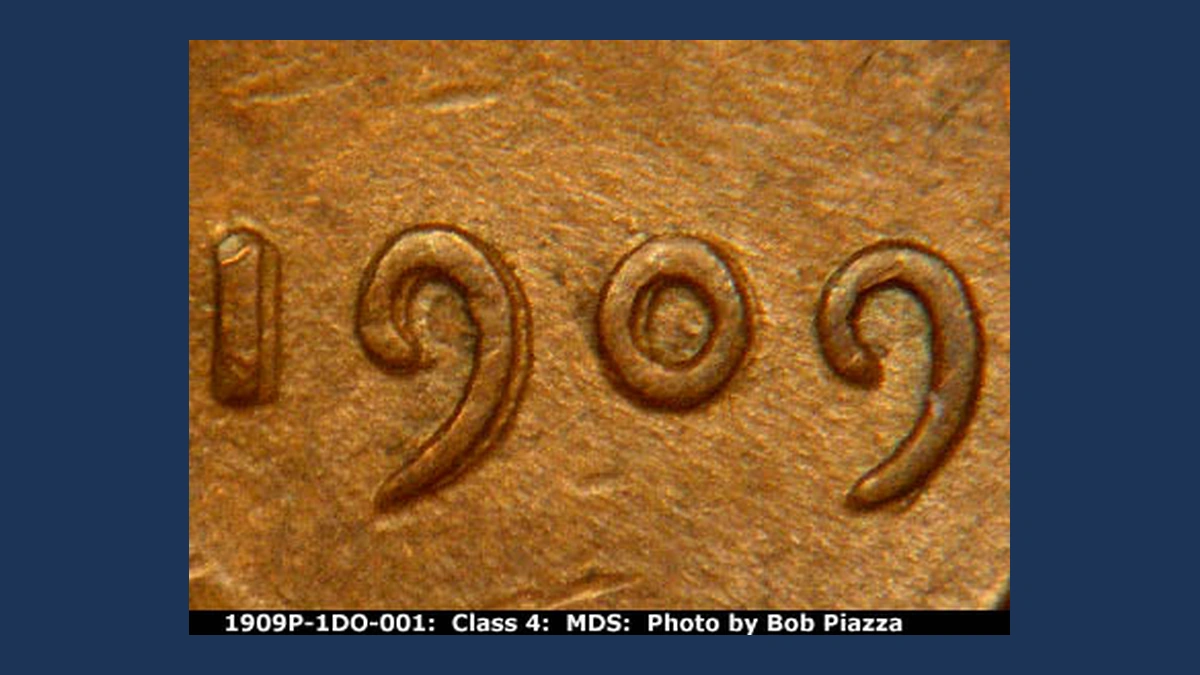
The date and the end of LIBERTY can carry raised repeated outlines. These features come from a repeated design in the stamping tool, called a doubled die.
The stronger 1909 VDB Philadelphia variety shows its doubling mainly in the date and RTY of LIBERTY. Another recognized form has different details and may also show clash marks.
Both belong to ordinary VDB cents without a mintmark. The VDB initials appear at the bottom of the back.
The repeated outlines should be matched letter by letter. A flat shelf beside a letter can arise during striking without representing either cataloged variety.
Estimated Value
A PCGS MS67+ Red example sold for $31,200 in May 2023. That grade describes an exceptionally preserved unworn coin with original red copper color.
Estimate $150–$6,000 for many matched circulated through better unworn examples, with roughly $6,000–$32,000 reserved for exceptional high-grade comparisons. The two varieties do not share one automatic price.
A coin with both doubling and a clash still receives one whole-coin valuation. Its grade, color, and correct variety must match the price comparison.
How to Identify
Confirm VDB at the bottom of the back and the absence of a mintmark before selecting a doubled-front photograph. The stronger variety is most clearly compared at the date and RTY in LIBERTY.
Under a 10× magnifier, follow an extra outline around a letter ending or date digit. Its shape and separation should match the correct variety.
A flat low shelf beside a narrowed letter needs a different explanation. So does a scratch that merely crosses the lettering.
Record safely accessible scale and caliper measurements against 3.11 grams and 19.05 millimeters, and inspect the smooth edge for alteration. Keep whole-face pictures with the close-ups.
If clash traces also appear, record them on the same coin without replacing the raised-letter comparison.
8. 1909 Lincoln Wheat Penny S Over Horizontal S (Estimated Up to $33,000)
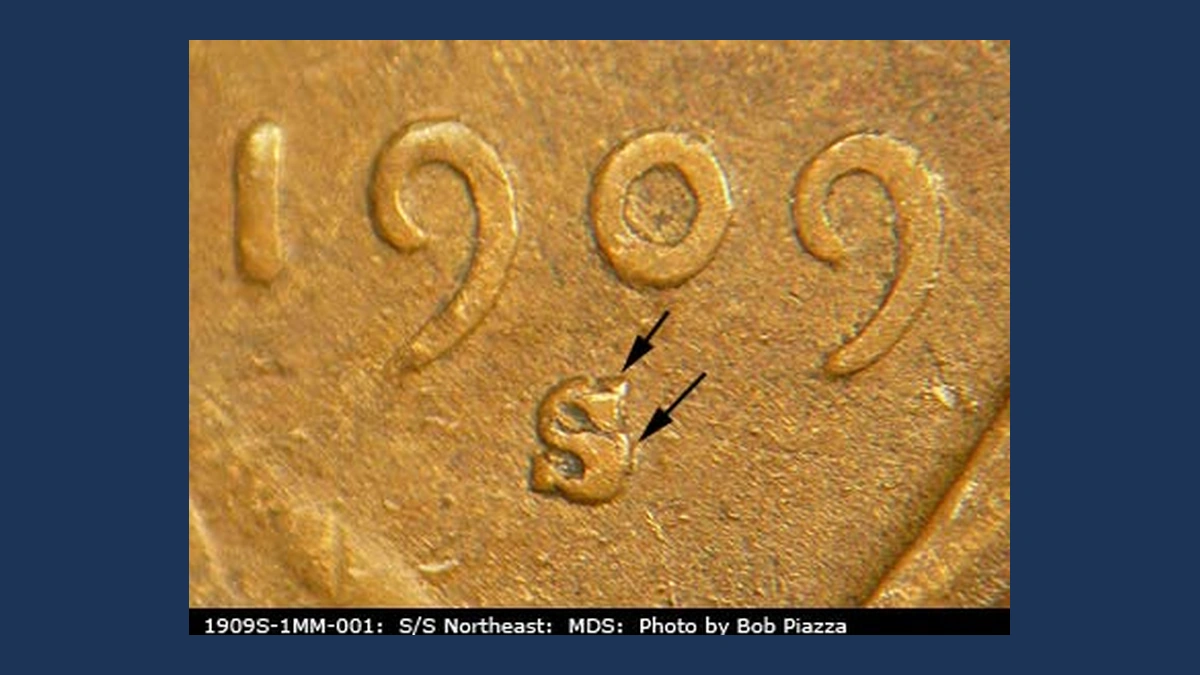
The upright S below the date can have small extra strokes at its sides. These remnants belong to an earlier S punched sideways into the stamping tool.
The mintmark was punched again in its upright position, leaving portions of the first impression visible. Coins made with that tool reproduced the combined shape.
This variety belongs to the 1909-S Lincoln cent without VDB. It must not be assigned to the VDB version or the Indian Head cent from the same year.
The name describes the mintmark preparation. It does not mean the finished coin rotated and received another full strike.
Estimated Value
PCGS records a $32,900 sale in July 2022 for an MS67 Red example. That is an exceptionally preserved unworn coin with red copper color.
Estimate $130–$4,000 for many circulated through better unworn examples, with roughly $4,000–$33,000 covering exceptional high-grade comparisons. A worn mintmark does not inherit the record price.
The coin must be the no-VDB version with genuine sideways-S remnants. Grade and original surface color remain part of the whole-coin value.
How to Identify
Verify the no-VDB Lincoln back before choosing the horizontal-S comparison. Inspect the mintmark’s base and smooth edge for alteration, recording safely accessible scale and caliper readings against 3.11 grams and 19.05 millimeters.
With the date upright, follow the extra strokes beside the main S through a 10× magnifier. The surviving curves should fit parts of a sideways earlier S.
An isolated lump or flat shelf does not supply that letter shape. Move the light while keeping the coin’s orientation fixed, so reflections do not become extra punch strokes.
Keep a known example alongside the close-up rather than rotating an ordinary doubled-looking S until it seems similar. The version and both punch positions must match the same variety.
Conclusion
For 1909, the mintmark and VDB version are part of the error’s identity. The sideways-S variety and the Philadelphia doubled front cannot exchange those details just because their dates match.
Estimated values span $5–$33,000, from modest blocked details to exceptional red examples of the strongest varieties. The $2,250 flipover listing is an asking price, while the $32,900 mintmark record is a sale.
Keep those price types separate when comparing your coin.