1912 Penny Error List with Pictures

Two shifted designs explain why one 1912 penny sold for $1,920 in June 2025. Its second strike was 10% off center, leaving overlapping detail on a well-preserved coin.
This 1912 penny error list covers estimated values from $2 to $10,000, including whole Matte Proof collector coins with a small early doubling feature. Proof prices need a separate comparison.
Read on to match the visible feature. Remember that a normal 1912 penny has no VDB initials; their absence is not an error.
1. 1912 Lincoln Penny Weak Strike (Estimated Up to $150)
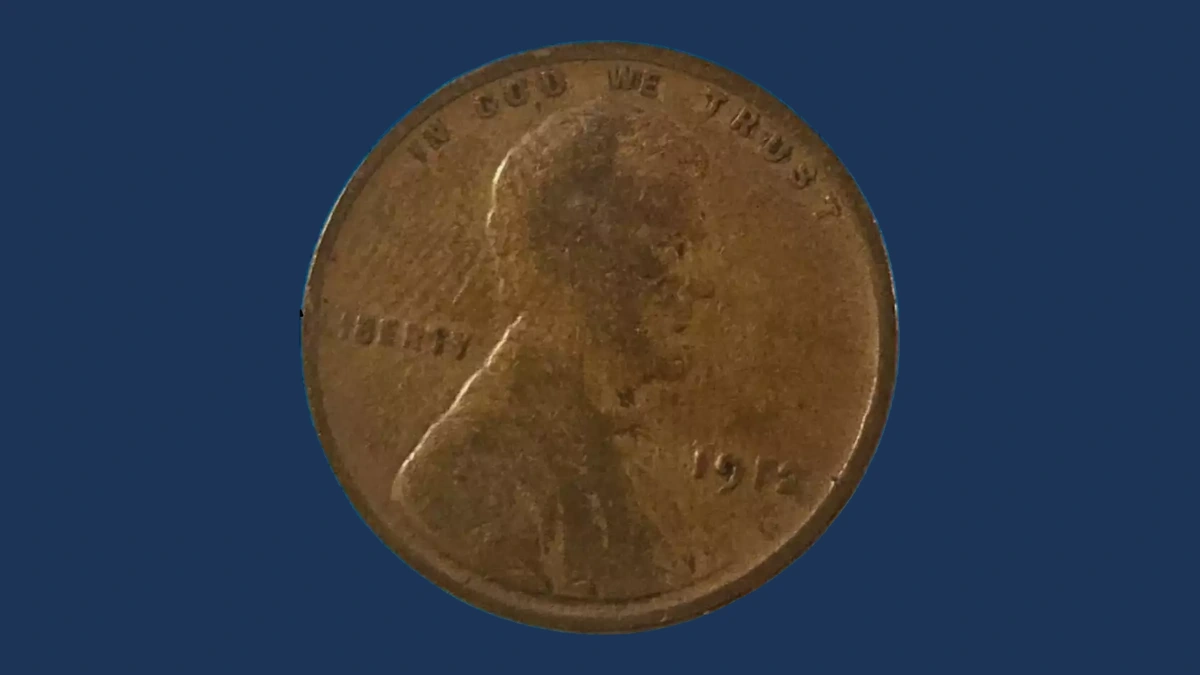
A penny can leave the press without all its detail fully formed. High parts of Lincoln’s portrait, lettering, and borders may appear soft rather than sharply raised.
Weak strikes are reported for 1912, but softness alone does not identify low striking pressure. Worn tools, circulation, and later polishing can create similar appearances.
The question is whether the weak areas formed that way during manufacture. Surviving original surface around them can help answer it.
The normal lack of VDB initials is unrelated. Those initials were not part of the 1912 design, so their absence is not evidence of this error.
Estimated Value
For a genuine unusual weak strike, use an estimated $5–$150. Minor softness may add little to the coin’s ordinary value, especially when it is typical for its issue.
The range compares small striking defects on Wheat cents. It is not a confirmed auction result for a particular 1912 low-pressure error.
A clearly original surface helps separate manufacturing weakness from wear. A rubbed portrait, cleaned patch, or normally absent VDB should not receive a weak-strike premium simply because detail is missing.
How to Identify
Before blaming striking pressure, check an accessible coin with a scale and calipers against 3.11 grams and 19.05 millimeters. Examine the smooth edge for metal removal that could explain a lighter or unusually thin coin.
Now compare the portrait’s high points with protected lower areas under a magnifier, using a normal same-mint cent beside it. Circulation rubs exposed features, while polishing can leave lines across completed detail.
Moving a lamp can reveal original surface where a weakly struck feature never fully rose, without the rubbed appearance of wear. Missing VDB does not help identify this error because those initials were absent from the normal 1912 design.
2. 1912 Lincoln Penny Repunched Mintmark (Estimated Up to $350)
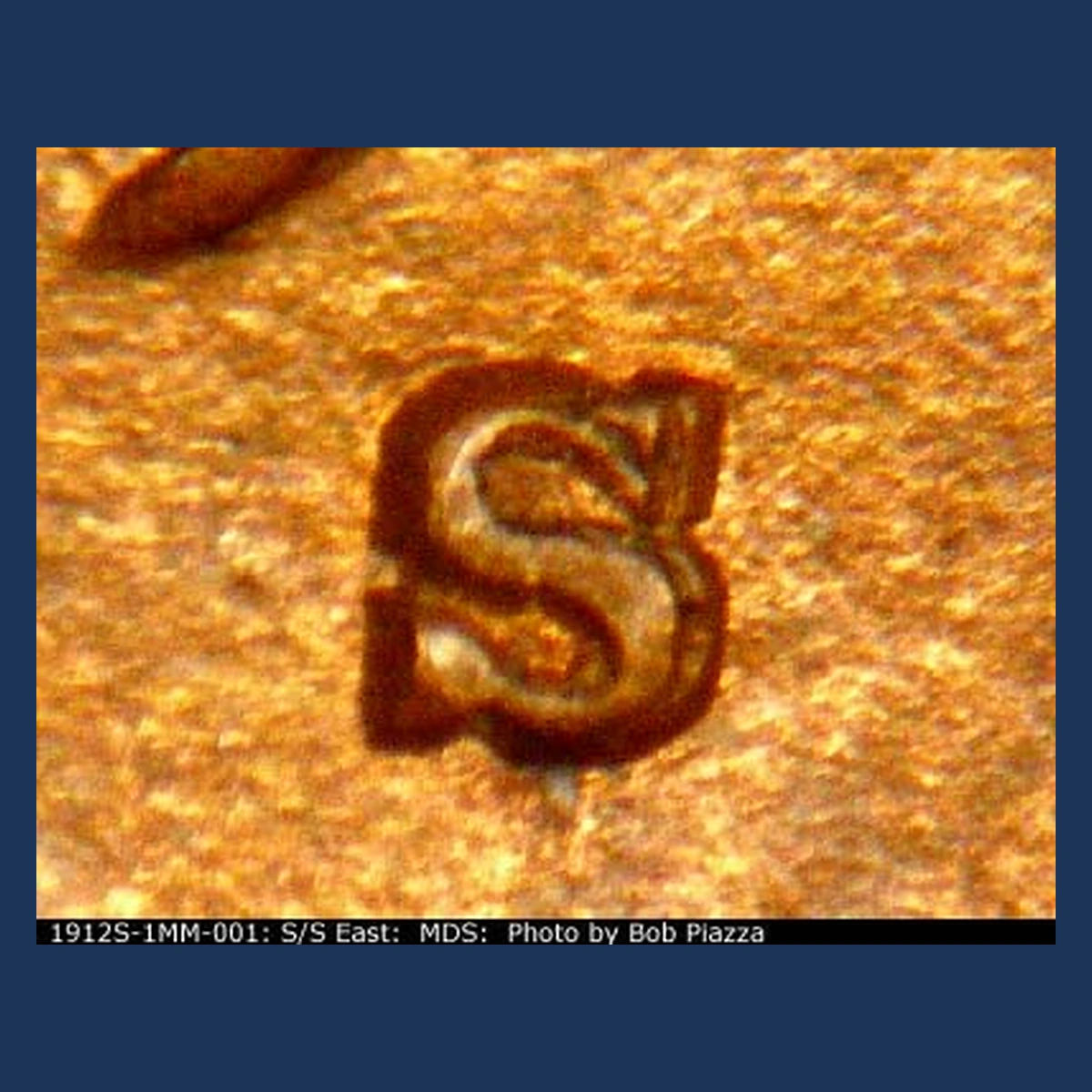
An S can show a second curved outline to its right or upper right. Catalogs describe 1912-S repunches with slightly different directions, while keeping patterns identifiable.
Workers punched mint letters by hand into the steel tools that stamped coins. A shifted repeat impression could leave part of an earlier letter.
A Denver pattern has a low D with repeated upper and lower end strokes. Its position near Lincoln’s vest helps locate it, but low placement alone is not an error.
Worn tools can blur the San Francisco outline. The earlier letter needs to remain recognizable rather than merely look thick.
Estimated Value
Estimate $10–$350 for a correctly matched 1912 mintmark repunch. Better-preserved extra strokes provide stronger comparisons than a broad or blurry letter.
This range follows minor early Wheat-cent repunches. It is not a sale price assigned to each catalog pattern, and the ordinary value of the mint and grade remains part of the whole coin.
The low Denver mintmark needs repeated strokes to earn this premium. A normal position difference, a filled letter, or a scratch beside it is not enough.
How to Identify
A low D is a starting location, not the diagnosis. Under a 10× magnifier, follow the upper end stroke and the bottom of the upright to see whether another letter shape survives.
Check the smooth edge and record safely accessible scale and caliper readings against 3.11 grams and 19.05 millimeters. Normal measurements will not identify the mintmark variety.
On an S coin, compare the extra curve to the right or upper right with the matching catalog picture. Keep the date upright and move only the lamp when checking whether a bright edge is a reflection.
Late tool wear can make the S broad and blurry. If its extra shape cannot be traced, obtain a clearer matching example before assigning that repunch.
3. 1912 Lincoln Penny Die Clash (Estimated Up to $400)
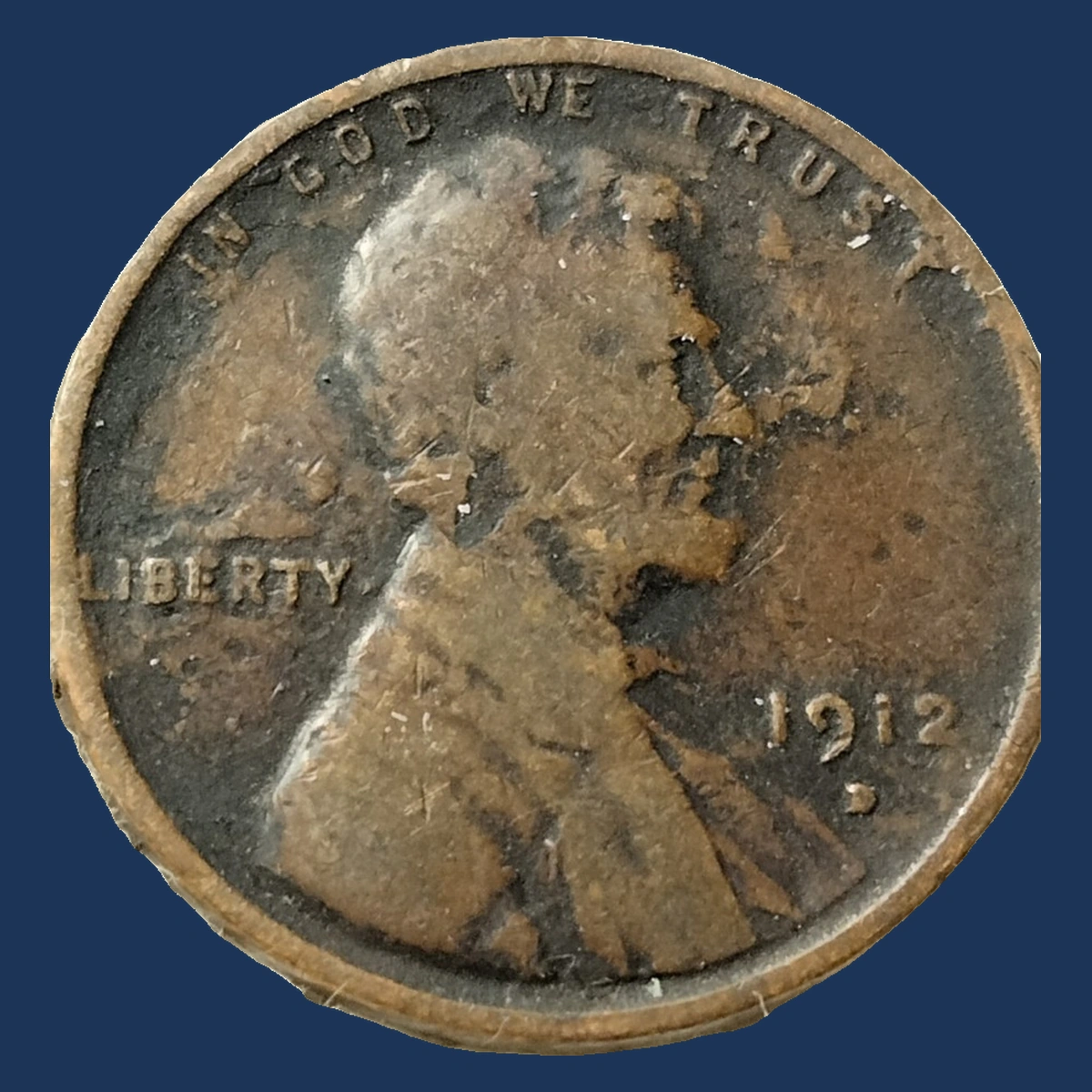
A faint part of one face’s design can appear in the open space on the other. This can happen after the stamping tools collide without a blank.
The tools are called dies, and that collision is a die clash. Later coins can carry traces copied from the damaged tool surfaces.
A 1912-S collector report describes chin, jaw, and portrait-like traces between the Wheat ears. That proposed match needs surface examination, not an outline imagined from shadows.
Other 1912 clash reports do not fix a mint or location. Their features should not be treated as identical to the San Francisco report.
Estimated Value
A clearly matched clash can fit an estimated $10–$400. The design connection, visibility, and condition determine which comparisons are useful.
For the collector-reported San Francisco portrait traces, this remains a conditional estimate requiring a genuine tool-clash match. It is not a recorded sale or a claim that a grading service has confirmed the nearly complete profile.
Random lines are common on worn pennies. A price for a clash should follow recognizable transferred design rather than a description of a face.
How to Identify
Begin with unmarked photographs of both faces, including the date, mintmark, and rim. If the coin is accessible, also record its weight and width against 3.11 grams and 19.05 millimeters with a scale and calipers.
Those readings cannot confirm a clash. Inspect the smooth edge for later pressing, then use a magnifier and side lighting on the proposed chin and jaw between the S coin’s Wheat ears.
Does the mark stay visible as a physical feature when the light moves? A changing shadow is not enough.
Align normal front and back designs correctly in a separate comparison image. Do not freely rotate Lincoln until random lines seem to match.
The resulting shape must fit a tool collision, but it need not consist entirely of sunken marks.
4. 1912 Lincoln Penny Broadstrike (Estimated Up to $500)
The whole design can remain on a penny even when its outline spreads too wide. A broadstrike occurs when the blank is not normally contained by the surrounding ring during striking.
That ring is called the collar. Without its usual restraint, metal can move farther outward and create extra border around the image.
The type is reported for 1912 without a fixed mint or a specific measured example established here. The coin therefore needs its own shape and surface checks.
A flattened penny can also become wider. The difference is whether spreading happened while the original design was being struck.
Estimated Value
Use an estimated $30–$500 for a genuine broadstrike, depending on the visible spread and preservation. An intact original border supports more than an outline widened by damage.
A 1920 NGC MS62 Brown broadstrike sold for $119 in March 2026. It is a later Wheat-cent comparison, graded unworn with noticeable marks and brown color.
That sale does not establish a mint or dimension for a 1912 specimen. Match the full design and original expanded surface before applying the range.
How to Identify
A pair of caliper measurements can show whether the outline has spread evenly or more on one side. Compare with the normal 19.05-millimeter width, then weigh against 3.11 grams on a scale.
Trace the outer letters on both faces next. A broadstrike keeps the intended design within the metal, although the border and strike may be uneven.
If part of the image falls beyond the blank, inspect it as a possible off-center strike. Extra empty border on one side alone does not decide the type.
Under a magnifier, check the smooth edge for a join or added ring. Crushed portrait details and later flattening may explain a wide outline without an original broadstrike.
5. 1912 Lincoln Penny Clipped and Ragged-Edge Blanks (Estimated Up to $600)
A gap can form when the blank is cut from metal that cannot supply a full disc. The incomplete blank may still pass through the press and receive the penny design.
A San Francisco rim-clip example has a small missing section near one-thirty. Denver also has a recorded rim clip.
A separate San Francisco dealer listing describes a ragged clip with scratches. Its irregular blank boundary is the proposed mint error; the scratches are later surface damage.
These examples need their own shape and position. The rough edge on one coin does not identify the small rim clip on another.
Estimated Value
Estimate $20–$600 for genuine clipped blanks, allowing for mint, condition, and the amount of metal missing. Small worn rim gaps generally need more modest comparisons than dramatic original defects.
A 1920 cent with a 7% curved clip sold for $49 in March 2025. That different-year example provides a comparison rather than a price for the 1912 rim or ragged clips.
A grading label noting surface problems does not erase a genuine clip, but scratches still affect the whole coin’s value.
How to Identify
Record what metal remains before choosing a clip name. Weigh the accessible coin against 3.11 grams and measure an intact span with calipers against 19.05 millimeters; do not treat the gap as part of a full diameter.
The San Francisco rim-clip example has its gap near one-thirty. Examine that gap and its meeting with the struck border under a magnifier, keeping its location separate from the Denver and ragged-edge pieces.
A saw cut through completed lettering suggests later removal. On the ragged example, also photograph the scratches separately from the missing boundary, and include a side view of the surviving smooth edge.
Opposite-rim weakness may support a small clip. Its absence alone does not settle the question of whether the gap existed before striking.
6. 1912 Lincoln Penny Die Cracks, Chips, and Reported Cuds (Estimated Up to $800)
A raised line can reproduce a crack in a stamping tool. Missing small tool pieces can instead leave lumps, including reported San Francisco chips inside the date’s 2 and the S of TRUST.
San Francisco tool stages show cracks near LIBERTY and between the lower portrait and rim. Each stage needs a comparison.
Larger rim-connected patches, called cuds, are also reported for 1912. A collector’s S coin has five proposed patches along the front’s left edge.
That last identification is disputed, with rolled edge metal offered as another explanation. The patches remain features to inspect, not five automatically confirmed cuds.
Estimated Value
Small original cracks and chips can fit an estimated $2–$50. For a genuine larger rim cud, use approximately $30–$800, guided by size and preservation.
The five-patch San Francisco report qualifies for that cud range only if the patches prove to be original tool-break features. Rolled edge metal would call for a different assessment.
A later 1946-S major break sold for $288 in March 2021. Its whole-coin price should not be multiplied by five for the reported 1912-S example.
How to Identify
Move a lamp across a small line or lump first. A crack in the stamping tool leaves raised metal, while a scratch cuts into the finished surface.
Use a scale and calipers when safely accessible to check 3.11 grams and 19.05 millimeters. Then examine the smooth edge from the side, especially on the S coin reported with five patches.
Folded or rolled edge metal can form lumps without any tool piece breaking away. Compare the same border on both faces before treating those patches as cuds.
For the cataloged small chips, return to the date’s 2 and the S of TRUST with a magnifier. Keep each crack with its matching tool stage rather than assembling lines from different pictures into one coin.
7. 1912 Lincoln Penny Lamination (Estimated Up to $1,000)
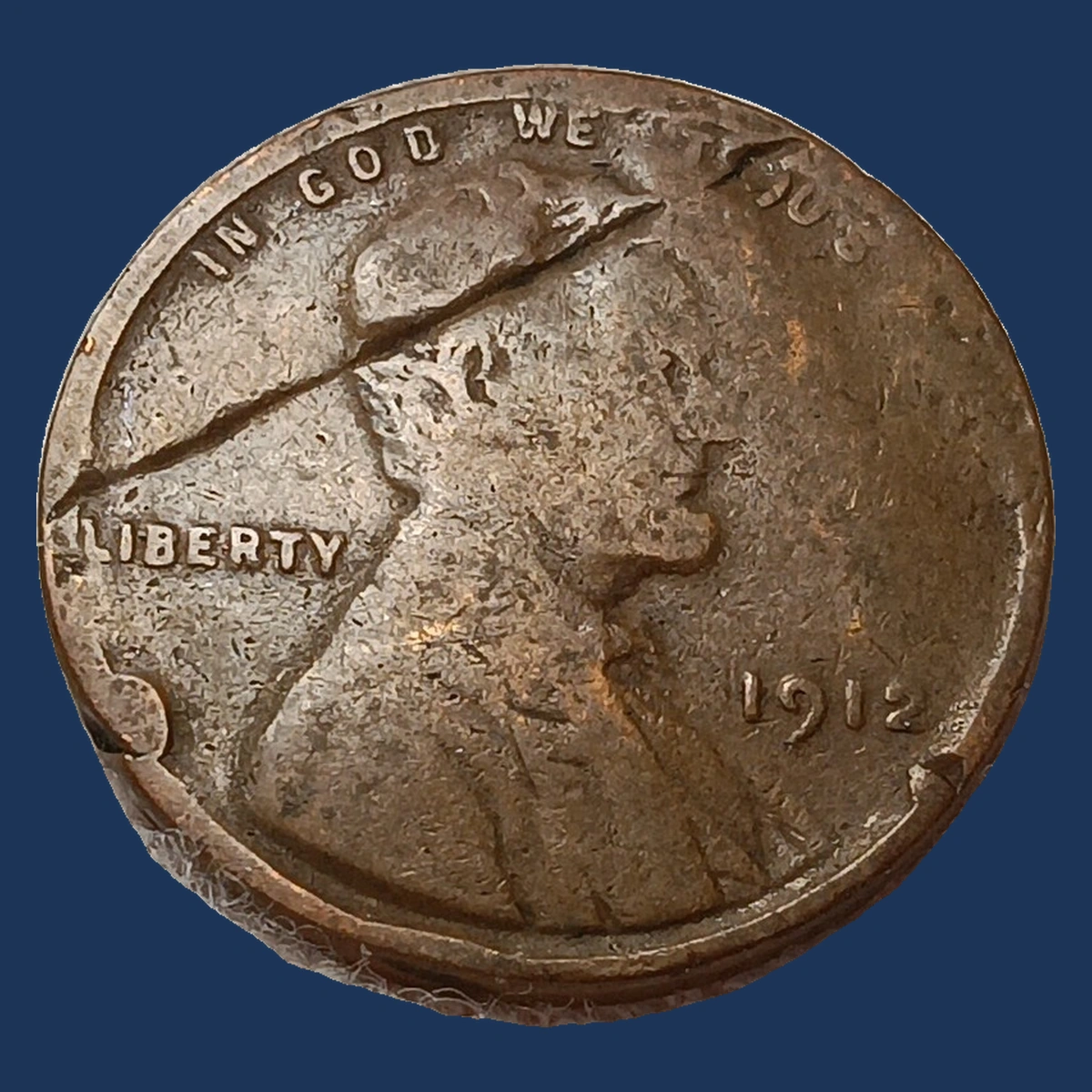
A thin sheet can stay attached where part of the alloy has separated. A Philadelphia 1912 penny with this front-side lamination was graded PCGS MS66 Brown.
Lamination means a layer failing inside the metal. It differs from the thin copper coating coming off a modern zinc penny, since the 1912 coin is copper-rich alloy throughout.
A separate San Francisco example is graded ICG XF40, and an older catalog reports minor back peeling on another S coin. Their positions and condition should not be combined.
An attached sheet can preserve useful evidence. Removing it would change the very feature being examined.
Estimated Value
The Philadelphia MS66 Brown example sold for $632.50 in April 2008. That grade describes a well-preserved unworn coin with brown surfaces, and the price covers the entire piece.
Estimate $5–$1,000 across smaller worn peels and better-preserved attached layers. The San Francisco XF40 example has visible wear and should not automatically inherit the Philadelphia grade comparison.
The San Francisco auction’s page does not supply a price used here. Preserve the layer and compare actual condition rather than only the error name.
How to Identify
Look at the root of an attached layer, where it still meets the solid coin. Side lighting and a magnifier can show the separation already present beneath it.
Do not pull the sheet upward. A scraped patch or corrosion pit may look rough without exposing a continuous thin layer inside the alloy.
Confirm which face and mint you are examining before using the Philadelphia front or San Francisco comparison. The reported examples are separate coins.
A normal complete cent weighs 3.11 grams, but that standard is not a measured weight for every lamination specimen. Use a scale when safe and calipers only on sound metal against 19.05 millimeters.
Include the smooth edge in photographs wherever the peeling approaches it.
8. 1912 Lincoln Penny Off-Center Strike (Estimated Up to $1,500)
The final date digit and part of the upper lettering can run off the blank. The Philadelphia coin was struck 20% off center toward three o’clock.
Parts of WE TRUST, UNUM, and the right Wheat ear are also missing from the image. These cut-off features fit one blank displaced beneath the stamping tools.
NGC graded the example AU58, indicating slight wear. A thin horizontal mark on Lincoln’s chin is a separate surface trace, not another mint error.
The incomplete image differs from a complete design surrounded by an expanded broadstrike border. Both faces show how the blank sat during striking.
Estimated Value
The NGC AU58 example sold for $528 in September 2019. An estimated $75–$1,500 allows for different genuine dated off-center examples and their preservation.
The sale concerns a lightly worn coin with a 20% shift. It does not establish an identical price for an undated piece or one whose visible design has been altered.
Date clarity remains important even on a dramatic error. Surface marks, cleaning, and the amount of intact lettering all affect which comparison a buyer should use.
How to Identify
The documented coin’s final date digit is partial. Begin with a full front photograph and read the surviving year together with the surrounding design, rather than assuming the listing supplies a missing digit.
When safe, weigh against 3.11 grams and record the outline with calipers against 19.05 millimeters. Inspect the smooth edge and plain metal for grinding that erased an already struck image.
Now compare WE TRUST on the front with UNUM and the right Wheat ear on the back. Their missing portions should fit the same three-o’clock displacement.
Under a magnifier, separate the fine line on Lincoln’s chin from the original strike boundary. That surface trace is not another mint error to add to the off-center description.
9. 1912 Lincoln Penny Double Strike (Estimated Up to $3,000)
Two design positions can remain when a penny moves before a second press blow. The later strike overlaps the first, leaving letters or portrait lines in different places.
Philadelphia records include 10% off-center second strikes on separate PCGS AU53 and NGC MS65 Brown coins. Their grades and surfaces are not interchangeable.
A different PCGS F15 example has a second strike 20% off center. Its heavier wear leaves a different comparison from the unworn coin.
These errors are not merely doubled designs inside one stamping tool. Each needs visible evidence of another blow and the coin’s movement between the two positions.
Estimated Value
The NGC MS65 Brown 10% example sold for $1,920 in June 2025. Its grade describes a well-preserved unworn coin with brown color.
The worn 20% PCGS F15 example brought $528 in April 2021. A separate lightly worn 10% PCGS AU53 coin sold for $431.25 in September 2010.
Estimate $300–$3,000 for these multiple-strike forms. The different results show why a larger second-strike percentage does not guarantee a higher price when preservation and visible overlap differ.
How to Identify
A worn 20% double strike and an unworn 10% example need different photographs. Establish which coin you are comparing before trying to trace an earlier image through later detail.
Check the smooth edge for joins or later pressing. A scale and calipers can record safely accessible measurements against 3.11 grams and 19.05 millimeters, but the number of blows must be read from the design.
Choose a date digit and another letter that shifted with it. At 10×, follow both positions where the later design crosses the earlier one; their movement should agree.
If only a flat shelf appears beside a single letter, a full second strike has not yet been demonstrated. Look for another connected part of the shifted design.
10. 1912 Lincoln Penny Doubled Design and Proof E Doubling (Estimated Up to $10,000)
The E in WE can carry slight doubling on early examples of the 1912 Matte Proof. These collector coins have a grainy finish rather than ordinary circulation surfaces.
PCGS describes the small E feature and a supporting back line running leftward from the M in UNUM. That line is a tool marker, not a separate error to price.
Ordinary-coin front doubling is also reported, without a specific matched pattern established here. The Proof feature should not supply that missing identification.
A doubled design can originate in the stamping tool itself. It does not require the coin to receive another blow.
Estimated Value
For a matched minor ordinary-coin doubled design, estimate $20–$500. For an authenticated Matte Proof with the early E feature, allow roughly $1,000–$10,000 for the whole coin, depending on grade and color.
PCGS records a PR67 Brown Proof sale of $9,500 in October 2018. PR67 means a highly preserved Proof.
That record is a Proof-value comparison. It does not confirm the sold coin’s early E feature or establish a separate doubling premium.
How to Identify
The weight and width cannot separate ordinary cents from Matte Proofs: both use the normal 3.11 grams and 19.05 millimeters. Record them with a scale and calipers only when safely accessible, leaving certified holders intact.
Compare the full front, back, rim, and smooth edge to establish the special Proof finish. The absence of a mintmark does not establish that finish.
For a genuine Proof candidate, use a 10× magnifier on the E in WE. Early tool-state examples can show a slight repeated edge there.
Then compare the back line extending left from the M in UNUM. It supports the Proof identification rather than creating another separately priced error.
An ordinary-coin doubling claim still needs its own raised-feature match; these Proof markers cannot supply it.
Conclusion
The year’s normal design has no VDB, and its Matte Proof finish needs a different comparison from a circulation coin. Start with those identities before interpreting missing details or a tiny repeated edge.
Estimated ranges run from $2 to $10,000. Most of that upper value belongs to the whole Proof coin, while the ordinary double-strike example brought $1,920.
Protect loose layers and compare each coin’s actual feature, wear, and mint before choosing a price.