1891 Penny Error List with Pictures

An 1891 penny can show part of the wreath on the portrait side if it flipped before a second strike. A heavily worn flip-over example sold for $528 in November 2020.
This 1891 Indian Head penny error list covers estimated whole-coin values of $5–$5,000. It includes small repeated letters, missing surface layers, and larger changes to the way the coin was struck.
Follow each feature from its visible shape to its likely cause, then compare coins with similar wear and surfaces.
1. 1891 Indian Head Penny Clash Marks
A faint outline can belong to the design on the opposite face. The steel stamping tools, called dies, touched without a blank between them and marked each other.
Coins made afterward could receive those extra traces along with their normal design. That is a die clash, rather than another complete strike on the penny.
An auction listing records an 1891 cent with clashed dies. The available text does not specify the exact mark’s location.
A short line by itself is therefore insufficient. Its shape needs to match a recognizable part of the opposite design on the actual coin.
Estimated Value
For a matched clash on an 1891 cent, estimate $5–$400. The strength of the transferred outline and the complete coin’s preservation guide the useful comparison.
The auction listing establishes a reported example without a completed sale price used here. A few faint lines on a worn penny can add little to its ordinary collector value.
Use photographs of the same tool pattern before comparing prices. A scratch does not qualify merely because it crosses a place where clashes sometimes occur.
How to Identify
Put full front and back photographs at the same scale before comparing a possible transferred outline. If one photograph is enlarged differently, an unrelated curve may appear to match.
Trace a recognizable part of the opposite design with a 10× magnifier, watching for scratches that cut into the surface. A scale and calipers compare a loose coin with 3.11 grams and 19.05 millimeters, while the plain edge should be checked for alteration.
The reported 1891 example has no named location in its auction description. Match a documented outline on the actual coin rather than choosing a line at a position suggested by another year’s penny.
2. 1891 Indian Head Penny Front Lamination
A bronze layer can separate from the surface and leave an irregular opening. This is called lamination, a weakness in the coin’s metal rather than a broken stamping tool.
A GreatCollections archive entry identifies an 1891 penny with front lamination, graded PCGS Good 4. That grade describes heavy wear with the main outline and date still recognizable.
The listing does not specify a path through the portrait or lettering. The actual layer boundary must supply that location.
A local peel is also different from the whole disc splitting apart. Corrosion and scraping can leave rough patches with other causes.
Estimated Value
Estimate $10–$600 for genuine 1891 front laminations across worn and stronger-preserved examples. The documented Good 4 coin needs comparison with other heavily worn pieces.
An 1890 lamination graded NGC MS62 Brown sold for $104 in April 2010. That unworn coin provides a same-design comparison, with very different remaining detail.
A bigger opening does not always increase value. Missing portrait detail and unstable loose metal can reduce appeal, while a small clear layer flaw can be easier to preserve.
How to Identify
Leave any attached flap in place. Begin with low side lighting and use a 10× magnifier to follow the thin boundary between the loose layer and intact surface.
Look for original design meeting that boundary rather than fresh grooves crossing the portrait.
A scale compares a loose coin with 3.11 grams, but a small surface peel may change the weight only slightly. Keep calipers on intact edges when measuring against 19.05 millimeters.
Inspect the plain edge if the flaw reaches it.
For the heavily worn recorded example, broad pitting alone cannot identify the layer. The remaining separation surface must explain a metal flaw that is distinct from wear, corrosion, or later scraping.
3. 1891 Indian Head Penny Cracks, Cuds, and Retained Rim Breaks
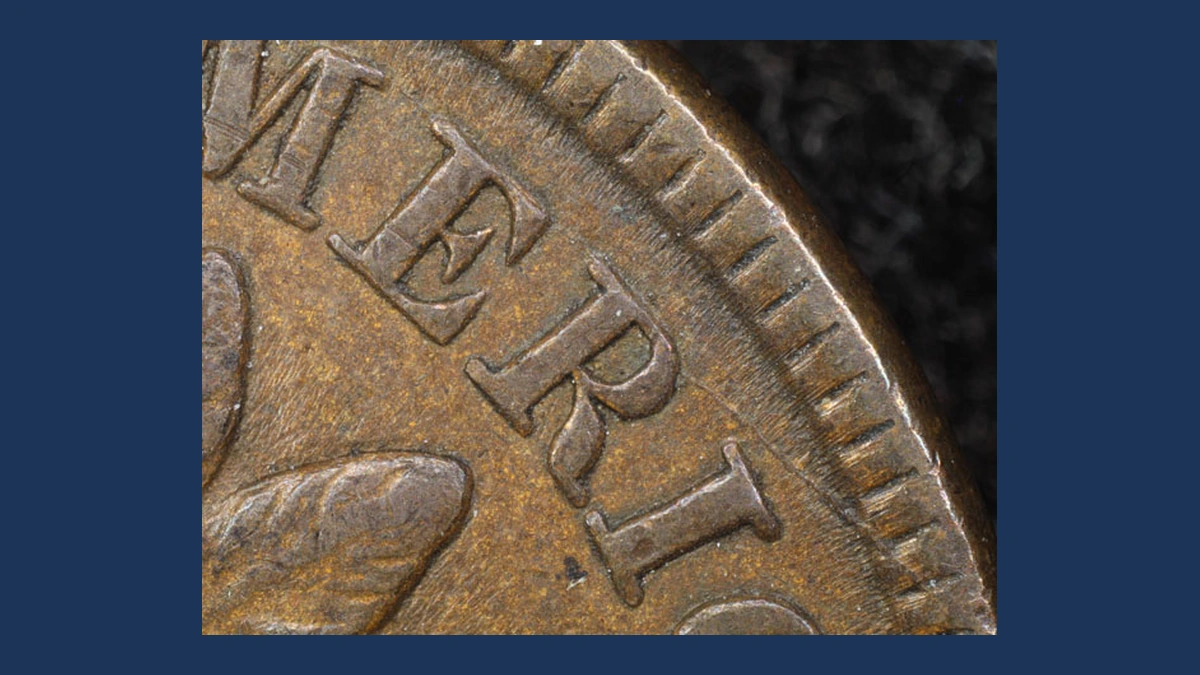
A raised patch joined to the rim is called a cud, formed when a stamping-tool piece breaks away. One front example lies between eleven and eleven-thirty.
A different back tool has a retained break from eleven-fifteen to twelve-forty-five. Its broken piece stayed in place, so some design could survive inside the shifted area.
Thin raised cracks also occur on other back tools, extending inward from several points around the rim. They are forms of tool damage.
The positions belong to separate examples. One coin does not need every crack and both large patches to match its variety.
Estimated Value
Small cracks can fit an estimated $5–$150, while clear cuds and retained breaks can fall around $50–$1,000. These amounts cover whole coins, including wear and surface quality.
An 1866 cent with a back cud sold for $504 in March 2021 at MS62 Brown. That unworn example is a comparison for a substantial tool failure, not a price for every 1891 crack.
Surviving detail within a retained break also matters. A fully missing tool piece leaves a different-looking patch.
How to Identify
Inspect the plain edge where the raised area meets the rim. Folded bronze, solder, or a later blow can create a lump without any tool failure.
For the retained back break, enlarge the top area with a 10× magnifier and look for design within its boundary. The front eleven-o’clock cud requires its own photograph.
A loose cent should be compared with 3.11 grams on a scale and 19.05 millimeters with calipers.
If the feature is a thin line, change the light and follow its full route into the wreath. A raised ridge copied from a cracked tool differs from a groove scratched into the finished surface.
4. 1891 Indian Head Penny Dropped A Impression
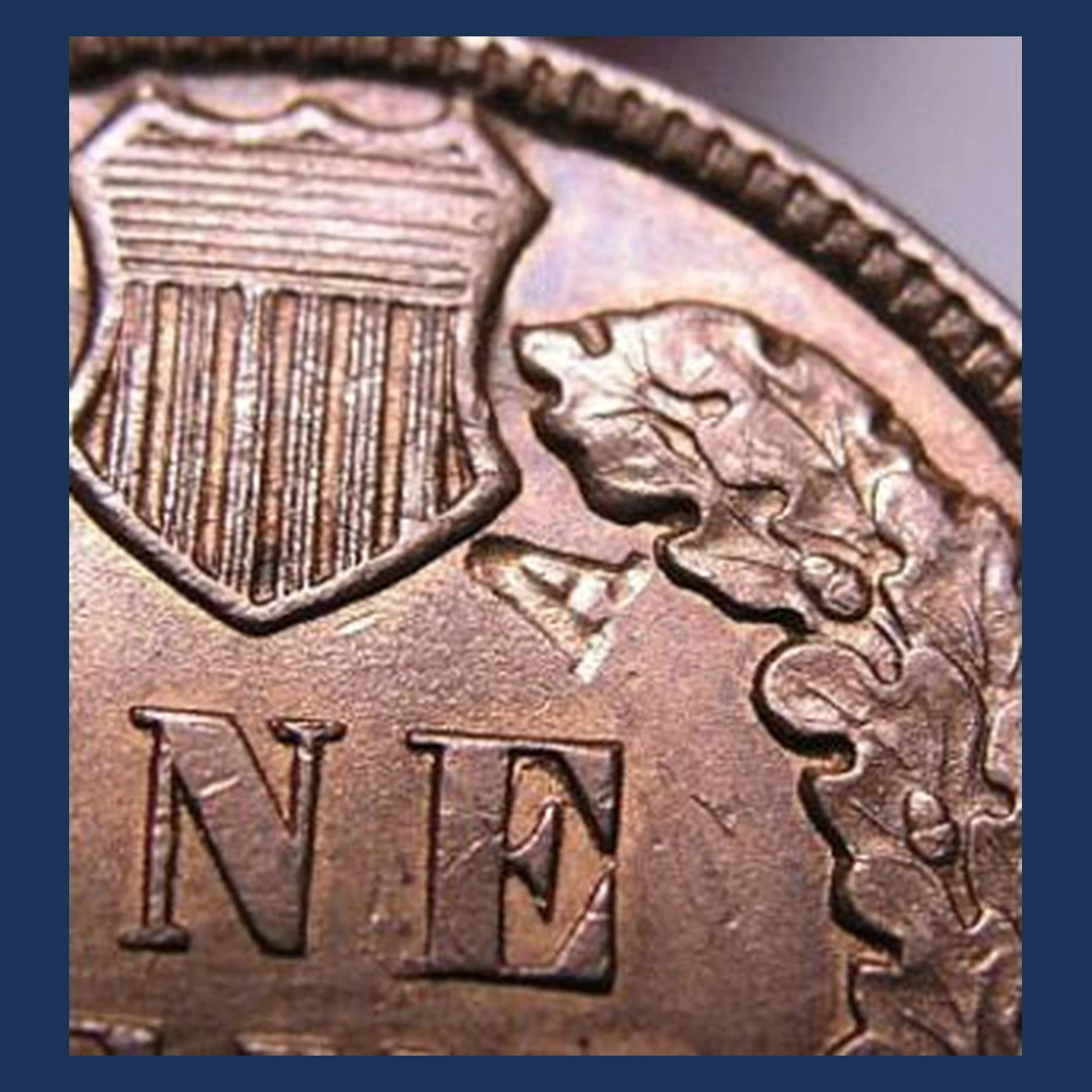
A plug of packed material can form inside a recessed letter in a stamping tool. If it falls onto a blank, the next strike can press its shape into the coin.
The error is called a dropped filling. CONECA illustrates an 1891 Indian cent with a recessed A on the back, attributed to an A in AMERICA.
The extra letter is a depression, not a newly raised letter added to the design. It also differs from a doubled tool copying the same lettering twice.
The A’s recognizable form is the clue. A triangular dent does not establish the same cause.
Estimated Value
For a dropped-A example, estimate $100–$1,500, depending on the impression’s clarity and the coin’s preservation. The illustration is not assigned an auction result here.
A later 1920 cent struck through a metal fragment sold for $134 in March 2025. That different obstruction offers only broad context for material pressed into a coin during striking.
A recognizable letter shape can attract more attention than a vague depression. The range requires an original dropped-filling impression rather than an added punch mark.
How to Identify
Confirm that the extra A sinks into the surface instead of rising above it. Tilt the back under a 10× magnifier and follow the two legs and crossbar where they remain visible.
Compare that shape with the documented dropped-A example. Do not assign a clock position from an unrelated struck-through coin.
Check for a sharp displaced lip or other signs that a letter was punched into a finished penny. Inspect the opposite face and the plain edge for related crushing.
A scale and calipers can compare a loose coin with 3.11 grams and 19.05 millimeters. Those measurements support basic identity, while the recessed letter and undisturbed surrounding strike support the error explanation.
5. 1891 Indian Head Penny Repunched Dates
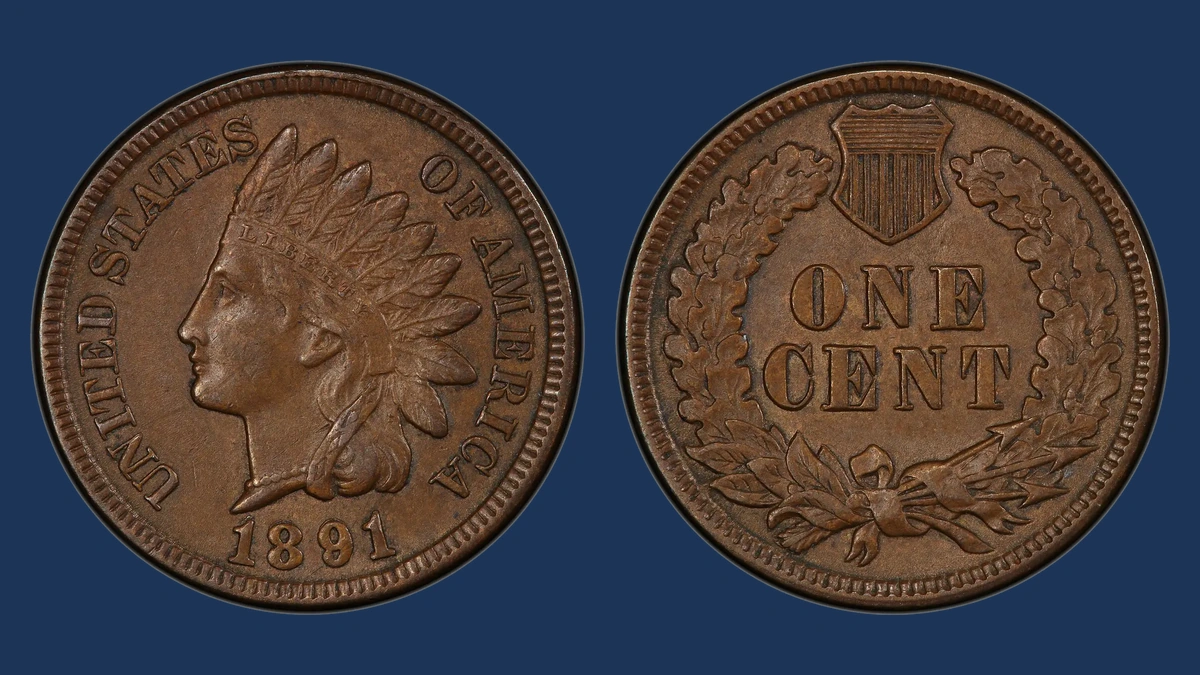
A small earlier stroke can sit below the base of the first 1. The date punch was applied again to the tool, leaving part of a previous impression uncovered.
Other 1891 varieties repeat parts of 8, 9, or the final 1 in different directions. One pattern has remnants above several digits; another repeats parts of 9 both above and below.
These are separate date arrangements, not one required cluster of marks. A single strike from each prepared tool could copy its whole pattern.
The date still reads 1891. Repunching does not establish that an earlier year lies underneath.
Estimated Value
Estimate $15–$2,000 for identified 1891 repunched dates, from worn readable patterns to stronger examples with attractive surfaces. The specific tool pattern matters alongside preservation.
An 1895 Snow-1 repunched date graded MS64 Brown sold for $264 in November 2022. That unworn coin offers a same-series comparison, not a result for an 1891 variety.
The extra date strokes must match before its grade becomes a useful guide. An isolated lump or a flat shelf beside a numeral needs a different explanation.
How to Identify
The first-1 pattern is best checked at the digit’s base, while other varieties require the curves around 8 and 9. Keep all four date digits together under a 10× magnifier before selecting a matching photograph.
If a loose coin is being examined, use a scale and calipers to compare 3.11 grams and 19.05 millimeters. Check the date and plain edge for later alteration as well.
Follow each earlier numeral stroke far enough to see its shape and direction. A curve below the first 1 cannot substitute for remnants above 891, and marks pointing in different directions should not be combined into one imagined pattern.
6. 1891 Indian Head Penny Misplaced Digits below the Date
The small border teeth beneath 1891 can hide tops of additional date digits. The date punch touched that lower area while the stamping tool was being prepared.
One recorded pattern shows misplaced 18. Another contains two sets of 891 tops among the teeth below the normal 8, 9, and final 1.
The second pattern appears with more than one back tool. A matching front therefore need not have every back line shown on another example.
These low fragments differ from repunching close to the intended date. A worn tooth can also resemble a numeral top without being one.
Estimated Value
For matched 1891 misplaced dates, estimate $25–$2,000. Clarity of the extra fragments, remaining condition, and the exact pattern guide the complete coin’s value.
An 1878 Snow-2 with misplaced 78 fragments brought $1,920 in October 2019 at MS65 Red. Its unworn surfaces and original copper color were important parts of that price.
The different year’s sale is a comparison not an 1891 result. Two low groups of digits on one tool do not mean two separate variety prices should be added.
How to Identify
Compare the border with a normal 1891 penny before naming an extra digit. Keep the date and all nearby teeth visible in the enlarged view.
For a loose cent, a scale reading near 3.11 grams and caliper width near 19.05 millimeters help establish its ordinary bronze size. Inspect the plain edge for alteration.
Then use a magnifier below the normal 18 or below 891, depending on the pattern. Trace the raised tops actually present rather than filling in complete numbers from rough corners.
If the front matches the two-set pattern, record both faces for the correct back pairing. A back line from another pairing is not required to complete the misplaced-digit match.
7. 1891 Indian Head Penny Off-Center Strike
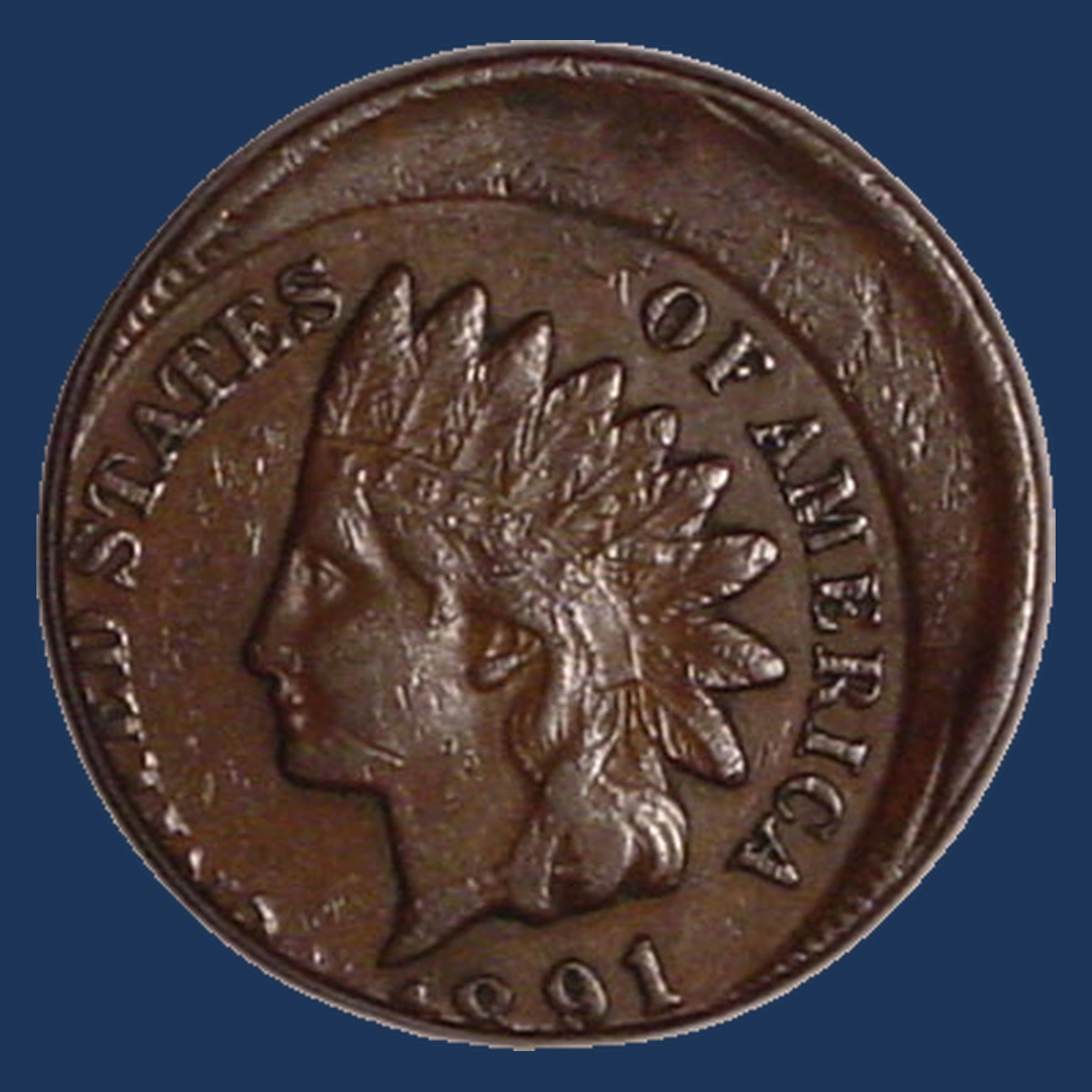
The design shifts toward the lower left on the recorded 1891 collection coin. Its published description gives a fifteen-percent off-center strike toward eight o’clock.
The blank was partly outside the correct position when the tools came together. One part of the design missed the metal, while an unused crescent remained opposite it.
This is a single displaced strike. The multistruck 1891 coin in the same collection is a separate example.
A wide border without lost design needs another explanation. Metal can spread around a full design during a broadstrike, or one tool alone can sit slightly out of place.
Estimated Value
Estimate $100–$2,500 for dated 1891 off-center cents across varied wear and displacement. The fifteen-percent collection description is not a completed sale price.
A very lightly worn 1895 cent struck 10% off center sold for $231.80 in March 2026. That nearby-year result helps frame a modest off-center error.
A more dramatic shift can be attractive, but readable date digits and original surfaces still matter. Do not transfer another example’s condition or clock direction to the collection coin.
How to Identify
Begin with a full view of both faces, with the readable 1891 date upright. Check whether the lower-left shift and opposite unstruck crescent fit the recorded eight-o’clock example.
Follow the point where lettering runs beyond the blank under a magnifier.
Use a scale to compare a loose coin with 3.11 grams, since an off-center strike need not remove metal. Measure its outline with calipers beside the normal 19.05-millimeter size.
Inspect the plain edge and bare crescent for grinding or flattening.
If the back stays centered while only the front shifts, reconsider the cause. Both faces of a true off-center strike must fit the same misplaced metal disc.
8. 1891 Indian Head Penny Doubled Front or Back Designs
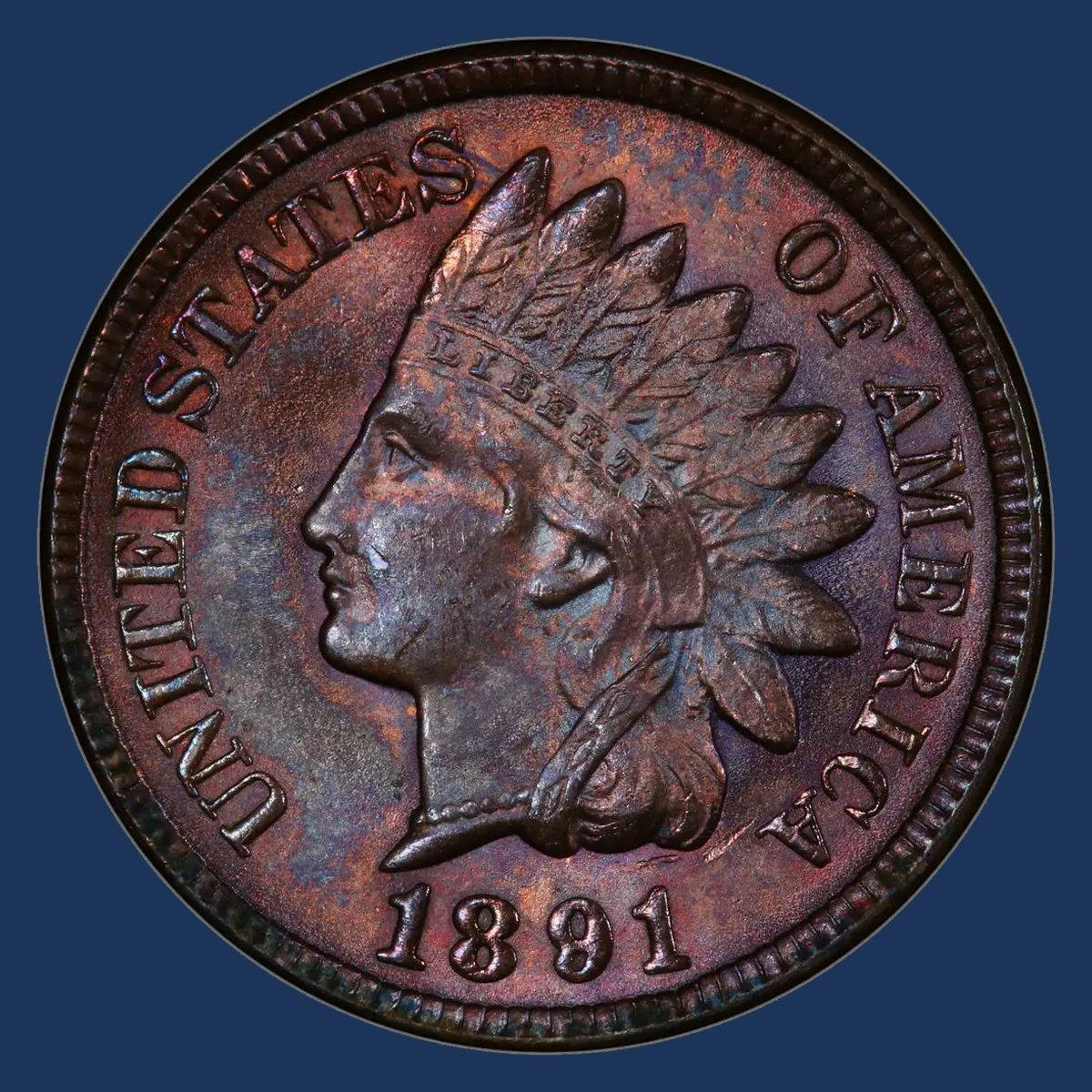
Repeated letter edges can originate in the tool before a penny is struck. Each normal blow then copies the doubled design, without striking the coin twice.
The front pattern includes parts of TATES OF AMER and LIBERTY. The repeated shapes in OF and the headband need comparison with the same front variety.
Back varieties affect different details, including left oak leaves, C in CENT, the ribbon, or right-side wreath veins. Some combine back doubling with a repunched date.
These patterns share a cause but have separate identities. Thick-looking letters or ordinary raised outlines alone do not establish a doubled tool.
Estimated Value
Use an estimated $20–$3,000 for identified 1891 doubled designs, allowing for wear, the particular pattern, and surface quality. Clear doubling helps identify the right comparison.
An 1889 cent with back doubling sold for $240 in July 2025 at AU55, meaning light circulation wear. That is a different-year comparison rather than a price assigned to an 1891 front or back pattern.
If date repunching appears on the same penny, assess the complete combination once. Its features do not create separate coins.
How to Identify
Choose the affected face first: the front letters and headband need different photographs from the back’s leaves and ribbon. Under a 10× magnifier, keep several adjacent details visible so their extra outlines can be compared.
The pattern should remain recognizable as the light moves.
For a loose cent, use a scale against 3.11 grams and calipers against 19.05 millimeters; keep a certified example sealed.
Inspect a suspect letter for a flat shelf that makes its original shape narrower. Such a shelf can arise during the strike rather than in the prepared tool.
Compare the repeated leaves or letter edges themselves with the matching variety, instead of relying on the thickness of one isolated corner.
9. 1891 Indian Head Penny Broadstrike with Uneven Expansion
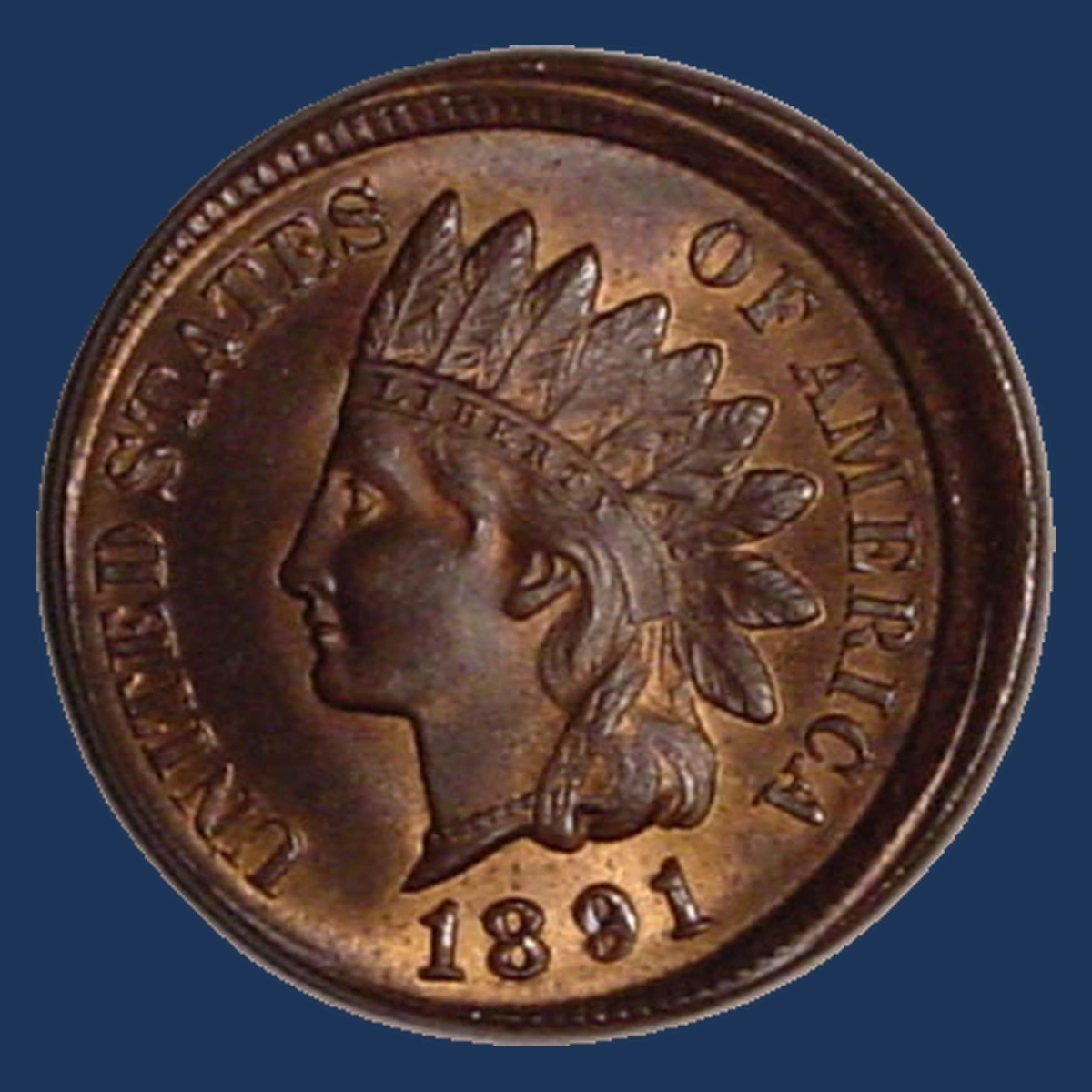
The coin spreads outward when the surrounding ring fails to hold the blank at its intended width. That ring is called the collar.
The recorded 1891 collection example is an uncentered broadstrike. Its design sits unevenly within the expanded outline, but a broadstrike retains the intended design on the metal.
This differs from the separate fifteen-percent off-center penny whose design partly missed the blank. Both can have a wider border on one side.
The amount of surviving design helps separate them. Hammering or squeezing a finished penny can also widen it while crushing the original letters and portrait.
Estimated Value
For genuine 1891 broadstrikes, estimate $100–$4,000, depending on preservation, expansion, and surface quality. The collection illustration shows an example without a completed sale price used here.
A very lightly worn 1893 broadstrike sold for $414.80 in March 2026. It is a useful nearby-year comparison for outward-spread metal around a complete design.
The highest estimate suits a much better-preserved example than a flattened circulation coin. Increased diameter alone does not create a collectible Mint error or establish its price.
How to Identify
Measure several widths with calipers before judging how far the coin spread. Compare a loose example with the normal 19.05-millimeter circle and its scale weight with 3.11 grams.
Next follow the outer lettering around both faces. A complete design within the available metal supports broadstriking even when the surrounding border is uneven.
Under magnification, inspect the plain edge for filing or later squeezing. Check whether the central portrait and letters remain naturally struck instead of generally flattened.
The collection’s uncentered example needs its own full-coin comparison. Do not use the separate off-center coin’s missing letters to explain this wider but complete design.
10. 1891 Indian Head Penny Double, Flip-Over, and Multiple Strikes
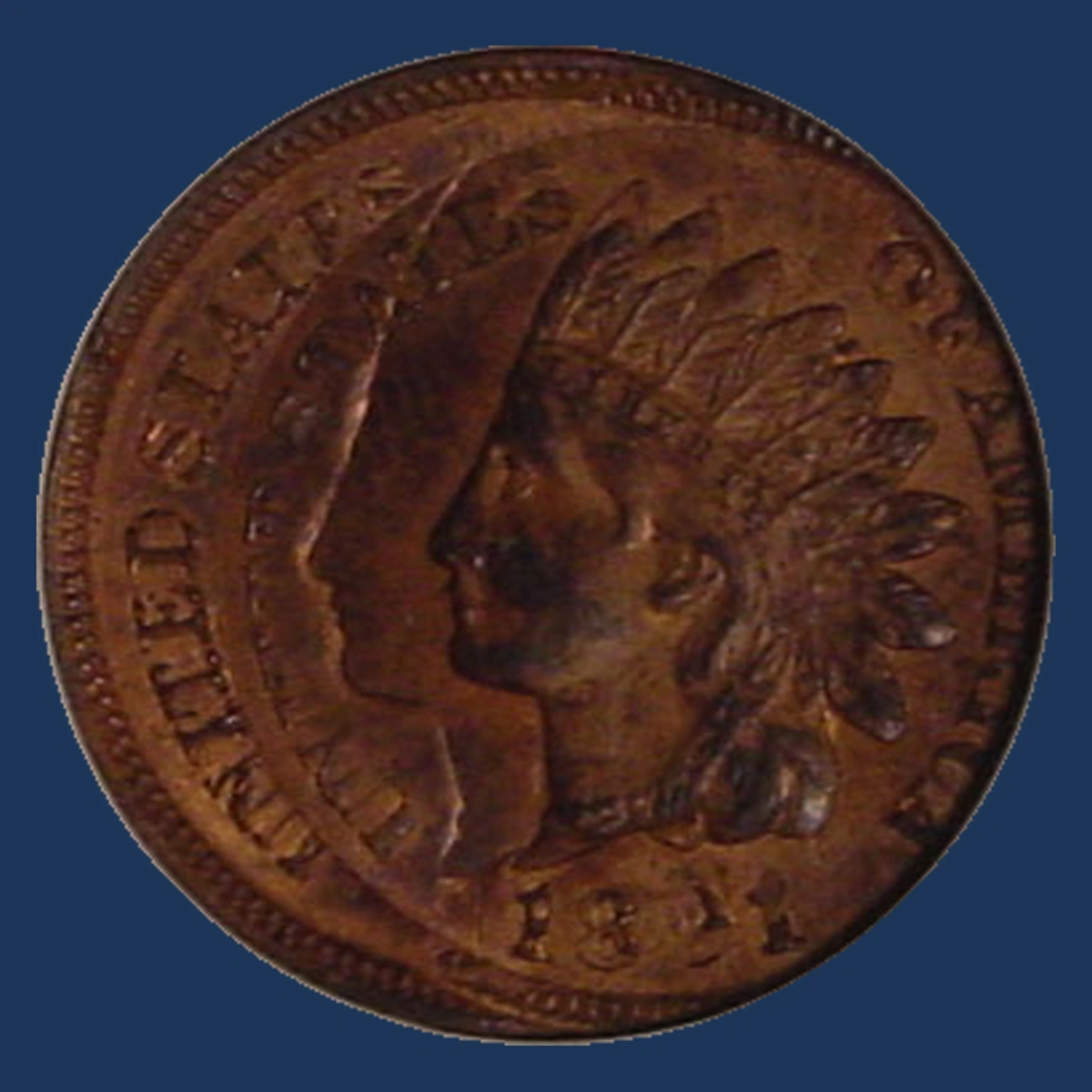
A portrait or wreath fragment can survive when a coin receives another blow after moving. If it turns over between strikes, front and back details can appear on the same face.
A worn 1891 example was sold as a flip-over double strike, with its second blow off center. That description does not supply a precise percentage or direction.
A different collection coin began with a centered strike and received multiple impressions twenty percent off center toward three o’clock.
Those later impressions belong to one multistruck coin. They should not be combined with the flip-over example to invent a striking sequence.
Estimated Value
The flip-over double strike graded NGC Good 6 sold for $528 on November 6, 2020 at Heritage. Good 6 means heavy wear with major design still visible.
Estimate $200–$5,000 for genuine repeated strikes across different conditions and overlaps. The multistruck collection coin has no sale price assigned here.
Clear separation of the designs can increase interest. A larger number of barely visible blows does not automatically outweigh the appeal of one clear extra impression.
How to Identify
Look for details that belong to opposite faces if a flip-over strike is claimed. A wreath fragment beside the portrait is more useful than a single unexplained raised line.
For the multistruck example, instead trace the repeated right-side design groups under a magnifier. Check where later impressions flatten earlier ones.
Photograph both full faces before counting the blows.
Use a scale and calipers on a loose coin to compare 3.11 grams and record its outline against 19.05 millimeters. Inspect the plain edge for a join or later crushing.
Keep the twenty-percent, three-o’clock description with the multistruck coin. The worn flip-over example needs evidence from its own overlapping front and back details.
Conclusion
The shape of an extra mark is more useful than its size alone. A recessed A, a raised crack, and a wreath fragment over the portrait point to different events.
Estimated whole-coin values run from $5–$5,000. Match the actual design, wear, and surface condition before using a price comparison, and keep each collection example’s direction and amount of displacement attached to that same coin.