1885 Penny Error List with Pictures

Even a specially prepared collector penny could escape the press with an unusually wide border. An 1885 Proof broadstrike brought $7,475 at the 2009 FUN auction.
The 1885 Indian Head penny errors below also include hidden date fragments, broken-tool marks, and a striking mistake that left half the blank unused. Estimated values span $10–$10,000, covering ordinary coins and separate Proof examples.
Start with the visible feature, then use its matching identification steps and price comparison.
1. 1885 Indian Head Penny Front Lamination (Estimated Up to $500)
A thin flap lifting from the front can reveal a separation within the bronze. Collectors call this a lamination, which may remain attached or leave a rough area after separating.
The type is reported for 1885, without a fixed location for every example. Its size and relationship to the portrait need to be judged on the actual coin.
This differs from an outside fragment lying between a blank and the stamping tool. The penny’s own metal is separating here.
A scrape can also remove surface metal. The boundary and remaining layer help distinguish that later damage from a metal flaw.
Estimated Value
Use an estimated $15–$500 for a front lamination on an ordinary 1885 cent. A small flaw may add little, while a clear attached layer can attract more interest.
These are whole-coin estimates across different conditions, not a reported sale for a particular front-flap specimen. The amount of readable design and damage to fragile metal affect the comparison.
Do not transfer the price of a struck-through fragment to every peeling surface. The two errors involve different relationships between metal and design.
How to Identify
Leave the flap untouched and photograph its opening under angled light. With a magnifier, follow where the penny’s own metal separates; a later gouge may push metal aside without exposing an internal layer.
If metal has broken away, a scale reading can fall below the normal 3.11 grams. Check safely accessible width with calipers against about 19 millimeters, and inspect the plain edge for filing before interpreting low weight as part of the flaw.
Follow nearby portrait detail toward the split without pressing the layer flat. A peeling part of this coin must be distinguished from an outside object that blocked the stamping tool, because both can leave an irregular area but for different reasons.
2. 1885 Indian Head Penny Die Clash (Estimated Up to $500)
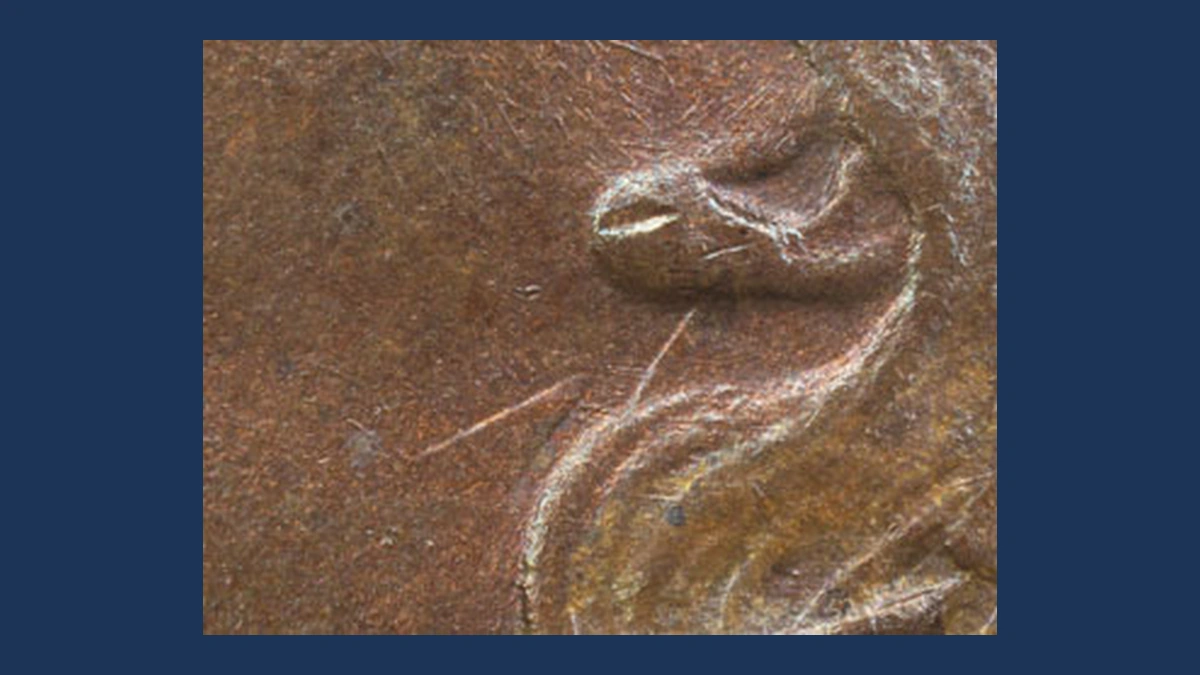
Part of a back letter can turn up as a mark on the front. The documented 1885 example includes a trace connected with the N in CENT.
The front and back stamping tools touched without a blank between them. These tools, called dies, picked up marks from one another and passed them to later coins.
The back also has portrait traces. This die-clash example is illustrated on a coin graded MS64 Brown, meaning unworn with some surface marks.
The transferred outline is not a second normal strike. Other small tool marks on the same coin still need their own explanation.
Estimated Value
For examples with a recognizable clash, estimate $15–$500, with visibility and condition guiding the comparison. The illustrated MS64 Brown coin should not be treated as a known sale at the top of that range.
A clear letter trace helps more than an unexplained line. Wear can erase the small connecting details needed to recognize the opposite design.
If repunched digits or cracks also appear, value the complete coin once. Adding a separate maximum for each feature would overstate the comparison.
How to Identify
Take a normal back photograph and locate the N in CENT before studying the unusual front line. Align that opposite-face design with the documented clash photograph, rather than expecting a normally placed N on the portrait side.
Use a magnifier to follow the physical mark while moving the light. A highlight alone can change position; the actual line should remain fixed.
Check the plain edge for squeezing and compare safely accessible scale and caliper readings with 3.11 grams and about 19 millimeters. Then examine the back’s portrait traces as a second part of the comparison.
If the front line cannot be connected with the expected letter shape, a random scratch has not established a clash.
3. 1885 Indian Head Penny Struck Through a Thin Metal Flake (Estimated Up to $750)
Some of the back design can remain visible through an area that looks blurred. A thin metal flake lay between the blank and the tool during the strike.
Richard Snow described this 1885 example in the Robert Lutzel error collection. The obstruction was a thin lamination fragment, meaning a flake separated from coin metal.
It acted as a barrier during striking. That is different from the finished penny’s own front layer peeling afterward.
The surviving blurred design matters because the covering was thin enough to transmit some pressure. The report does not establish one clock position for all such marks.
Estimated Value
An estimated $50–$750 fits genuine examples with a recognizable area struck through a thin flake. The remaining design and the coin’s preservation affect the whole-coin value.
A later 1920 Lincoln cent struck through a metal fragment sold for $134 in March 2025. That bronze-cent sale illustrates the general mechanism, with a different date and a different obstruction.
It is not a sale for the Lutzel 1885 penny. A plain worn patch without evidence of interrupted striking needs another explanation.
How to Identify
Trace a back letter from a sharp section into the softened area under a magnifier. In the described example, design continues through the affected area but loses clarity.
Do not mistake a flap lifting from this coin for proof that an outside flake blocked the strike. The connection between the surface and any remaining material needs separate examination.
Photograph both faces and the plain edge without picking at the affected area.
Safely accessible scale and caliper readings can be compared with 3.11 grams and about 19 millimeters. They help check the basic coin but cannot identify what once lay over its back.
Examine the transition again: a later scrape cuts through completed detail, whereas the thin barrier reduced how clearly that detail formed.
4. 1885 Indian Head Penny Die Cracks and Cuds (Estimated Up to $1,000)
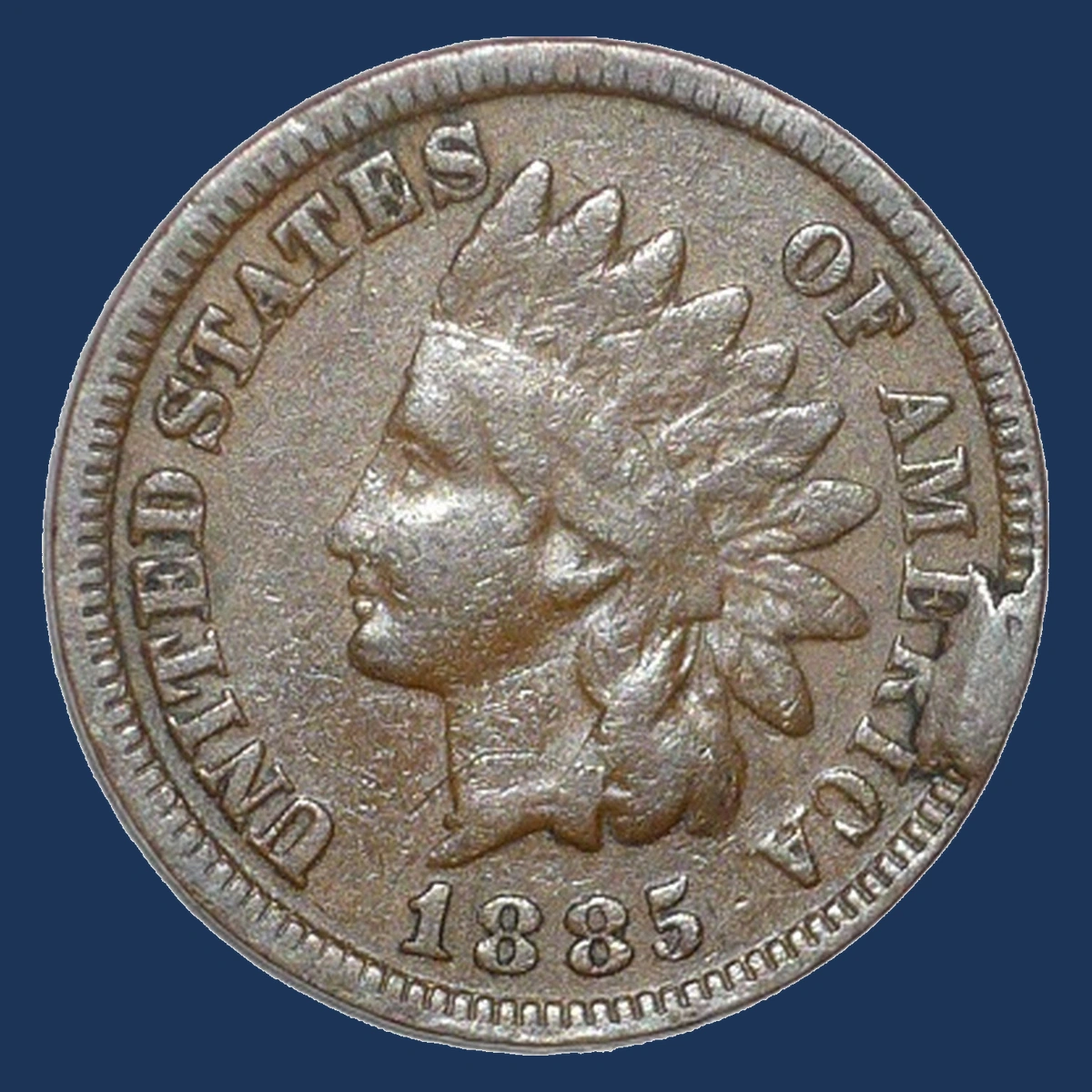
Raised lines and rim-connected lumps show different amounts of damage to the stamping tool. A crack leaves a narrow line, while a missing edge piece can leave a broad lump called a cud.
One 1885 front cud lies around 3 to 4 o’clock. Another documented example occupies about 10:15 to 11 o’clock.
They are separate examples, not two patches that every affected penny must carry. Other listed coins have thinner cracks through letters or near the wreath.
A small chip inside the design is not automatically a cud. Connection to the rim helps identify the missing-edge-piece type.
Estimated Value
Minor cracks can fit an estimated $10–$100, while clear cuds may fall around $50–$1,000. Size, remaining detail, and overall condition determine where a particular coin belongs.
A 1946-S Lincoln cent cud sold for $288 in March 2021. That later bronze-cent example provides a comparison for broken-tool metal rather than a direct price for either 1885 location.
A scratch or folded rim does not earn the same premium. Compare the raised feature itself before using the larger-error range.
How to Identify
First decide whether you see a thin line or an area of lost design replaced by raised metal. That choice determines whether to compare a crack or a cud.
For the two documented front cuds, keep the 3–4 o’clock and 10:15–11 o’clock photographs separate. With a magnifier, follow each patch to the rim and inspect what happened to adjacent letters or border detail.
Check the plain edge alongside the lump for folding, solder, or a join. A scale and calipers can compare safely accessible metal with 3.11 grams and roughly 19 millimeters.
When examining a narrow line instead, look for a groove at its center. A scratch can push up its sides without becoming an original raised die crack.
5. 1885 Indian Head Penny Misplaced Date (Estimated Up to $1,500)
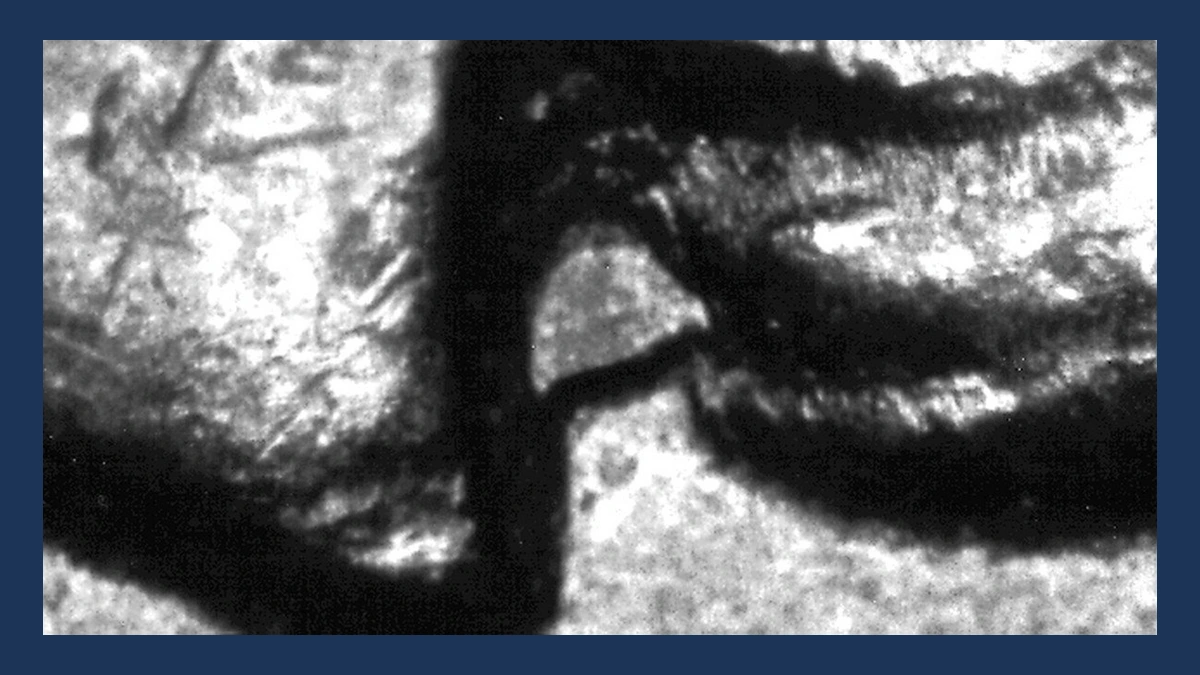
A small number can hide among the border teeth below the normal date. One 1885 pattern includes a misplaced 5 beneath the second 8.
The date punch touched an unintended area of the tool, leaving a digit fragment that later appeared on coins. This is called a misplaced date.
Another example has the bottom of a digit between the ribbon end and a hair curl. Its catalog description allows either an 8 or a 5, so the surviving curve should not be forced into one number.
Those locations describe separate patterns. A worn tooth or scratch can imitate either fragment.
Estimated Value
Estimate $25–$1,500 for an identified misplaced-date example, according to the visibility of the fragment and preservation. The coin with a border 5 needs its own comparison to the separate hair-area variety.
An unworn 1908 Indian cent misplaced date graded MS65 Red and Brown has a recorded $1,187 eBay result from 2021. That later-year result is useful context, not an 1885 sale.
Price the raised feature that can actually be matched. A possible curve alone does not establish a valuable variety.
How to Identify
Inspect the border beneath the second 8 alongside a normal date photograph. Under a 10× magnifier, trace the raised part of the extra 5 without treating ordinary border teeth as missing pieces of it.
If your mark is by the hair instead, use the separate ribbon-end comparison. The catalog’s 8-or-5 description does not require choosing a complete numeral from an incomplete fragment.
Before accepting either mark, examine the plain edge and nearby surface for tooling. Compare safely accessible scale and caliper measurements with 3.11 grams and about 19 millimeters.
Change the lighting to distinguish raised metal from a scratch cut into the surface. Keep the visible fragment’s actual shape when comparing photographs.
6. 1885 Indian Head Penny Off-Center Strike (Estimated Up to $2,500)
Half the blank can remain outside the intended strike while the year still survives. The 1885 example is about 50% off center toward 12:30.
Its date and the portrait’s profile remain visible, making the coin identifiable despite the missing outer design. PCGS graded it XF40, indicating noticeable circulation wear with substantial detail remaining.
The blank entered the press in the wrong position. Its unused area belongs to the original metal rather than a section cut away later.
This coin should not be confused with an undated Indian cent of another design period. A similar-looking crescent cannot supply a missing year.
Estimated Value
The PCGS XF40 example sold for $920 in August 2004 at Heritage. The result belongs to the dated coin struck 50% off center, not an undated neighboring auction lot.
Estimate $150–$2,500 for genuine dated examples across different displacement and preservation. The intact year and readable portrait help explain interest in the documented coin.
A larger empty crescent does not always mean a higher price. Missing date digits, cleaning, or later edge damage can make another specimen a weaker comparison.
How to Identify
Read 1885 before estimating the percentage under a magnifier. For the documented example, locate the design’s shift toward 12:30 and compare the still-readable profile.
Then turn to the back. Both design boundaries must fit the same misplaced blank, rather than a front tool shifted over an otherwise centered coin.
Use a scale to compare safely accessible weight with 3.11 grams, and calipers to record the spans beside a normal cent’s roughly 19-millimeter outline. An off-center shape can have unusual dimensions without having lost half its metal.
Inspect the plain edge and bare crescent for filing. A cut or ground-down border cannot recreate untouched metal that never received the design.
7. 1885 Indian Head Penny Proof Doubled Die Reverse (Estimated Up to $5,000)
The right wreath’s leaf veins and arrow tips can show extra raised outlines pointing toward the center. This documented 1885 variety belongs to a Proof back tool.
Proofs are collector coins made with special preparation. Their tools can still contain doubled detail, which a normal strike then copies onto the penny.
The term doubled die reverse means doubling built into the back stamping tool. It does not describe two misplaced blows to one coin.
Use the leaves and arrow tips to establish the feature. A shiny ordinary cent or a doubled-looking front letter does not match this specific Proof variety.
Estimated Value
For a matched Proof with this back doubling, estimate $300–$5,000 as a whole coin. Preservation, surface color, and Proof quality can account for much of the price.
As a different-year comparison, a 1901 Proof with a repunched date brought $8,700 in August 2019 in exceptional PR67 Red condition. That is neither this back-doubling pattern nor an 1885 sale.
Do not assign the full range as an added doubling premium. A damaged Proof and a pristine example belong to different comparisons.
How to Identify
Keep a certified Proof sealed and compare its photographs before taking measurements. On accessible metal, scale and caliper checks use 3.11 grams and about 19 millimeters, with a plain edge.
Confirm the Proof identity before enlarging any doubled detail. Polishing an ordinary circulation coin can make it shiny without giving it a Proof’s original preparation.
Use a magnifier to follow the right wreath’s leaves and veins toward the center.
Compare the arrow tips as well. Their extra outlines need to match the illustrated back tool, rather than a reflection that shifts when you move the lamp.
If only a front letter seems doubled, choose a different comparison. The documented 1885 feature is on the back, regardless of the portrait side’s appearance.
8. 1885 Indian Head Penny Repunched Date (Estimated Up to $10,000)
Not every repeated date stroke in 1885 belongs to the same variety. On the ordinary pattern, remnants point upward around the lower loops of the second 8 and the 5.
A Proof pattern has extra detail inside the first 8’s lower loop and at the base of 5. The distinction changes which photograph should be used.
Both came from the date punch entering the tool more than once. A single strike could then copy those remnants to a coin.
Stack’s Bowers described the Proof pattern on a PR67 Red example. That grade indicates exceptionally well-preserved collector surfaces, not two dates.
Estimated Value
Ordinary examples can be estimated at $20–$1,000; suitable Proofs span roughly $300–$10,000 depending on quality. These are complete-coin estimates for different finishes.
The exceptional 1885 PR67 Red coin appears in the 2019 auction catalog, without a realized price used here. A 1901 repunched-date Proof in PR67 Red sold for $8,700 in August 2019.
That other-year sale supports the high-quality Proof comparison. It does not give an ordinary penny the same value merely because its 5 has an extra stroke.
How to Identify
Make two small date comparisons: first 8 versus second 8. With the date upright under a magnifier, note which loop actually contains an extra raised stroke before looking at the 5.
For the ordinary pattern, follow the upward remnants around the second 8 and 5. For the Proof pattern, return to the first 8’s lower loop and the bottom of 5.
Do not rotate the photograph to force the two patterns into alignment.
Check safely accessible weight and width with a scale and calipers against 3.11 grams and about 19 millimeters, and inspect the plain edge for alteration. Then compare the coin’s finish with the appropriate ordinary or Proof photograph; the date alone cannot change one into the other.
9. 1885 Indian Head Penny Broadstrike (Estimated Up to $10,000)
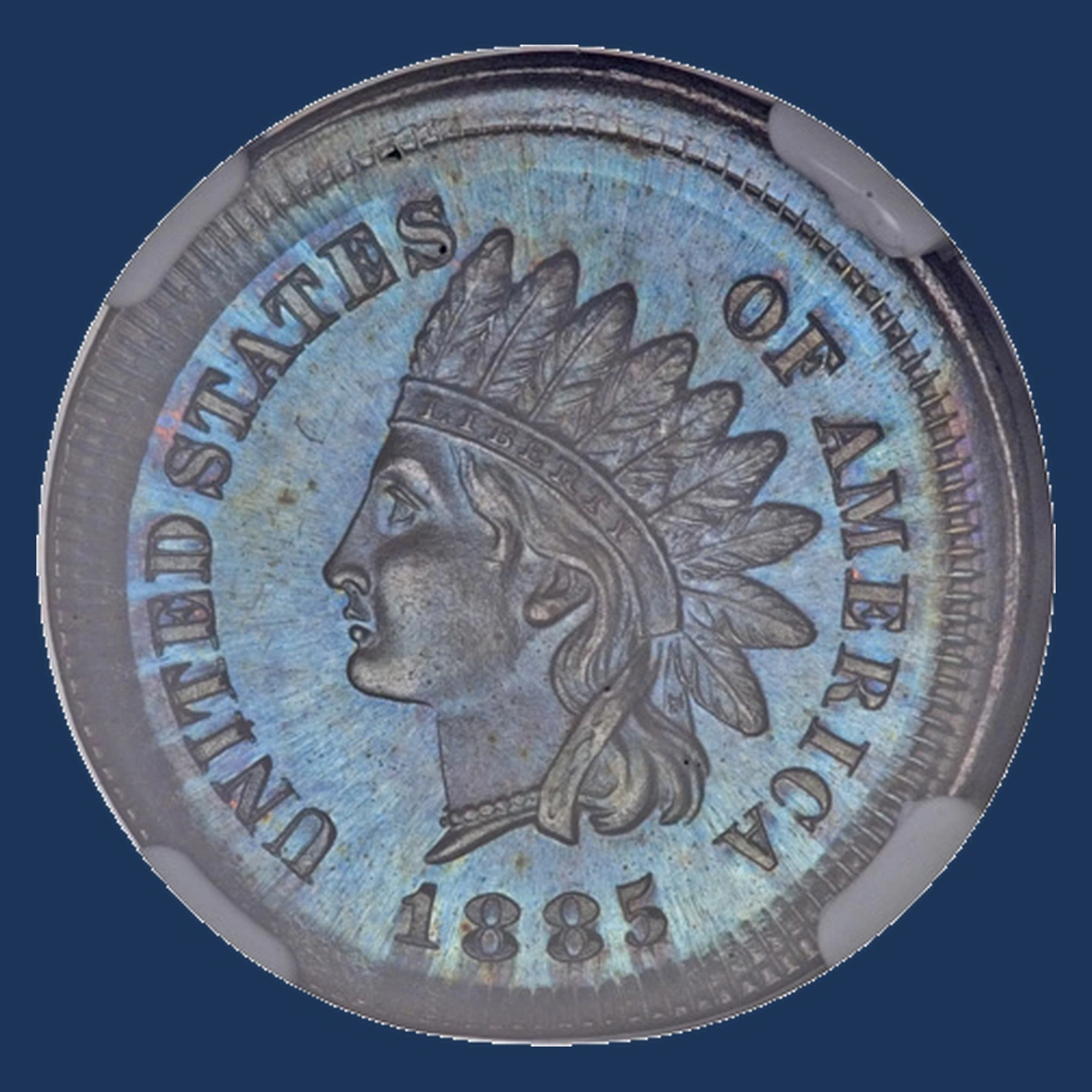
An expanded border can surround a complete design when the retaining ring fails to contain the blank. The ring is called a collar, and the error is a broadstrike.
The 1885 examples include an ordinary ANACS MS63 Brown coin and an NGC PR66 Brown Proof. The first is unworn with marks; the second is a well-preserved collector coin.
Their surfaces and values differ despite the shared mechanism. Measure each coin separately to compare the amount of expansion.
Normal repeated blows used to make Proofs do not automatically create a double-strike error. The unusual border is the feature being compared here.
Estimated Value
The NGC PR66 Brown broadstrike brought $7,475 at the 2009 FUN auction, reported by Mint Error News. Its Proof identity is central to that result.
Estimate $75–$1,500 for ordinary broadstrikes and $3,000–$10,000 for suitable Proof examples. The ordinary MS63 coin is not assigned the Proof’s sale price.
Compare the complete design, original surfaces, and amount of spreading within the correct finish. A penny widened by later hammering does not belong in either mint-error range.
How to Identify
Record the widest and narrowest spans with calipers, comparing accessible metal with a normal cent’s 19-millimeter diameter. Weigh it against 3.11 grams because spreading alone does not remove metal, and inspect the plain edge for later hammering.
Now follow the complete outer design under a magnifier. A broadstrike keeps that design on the expanded metal, whereas an off-center strike loses some beyond the displaced blank.
Look for crushed portrait detail that might accompany later flattening before choosing an ordinary or Proof photograph for comparison. The finish must match too: an expanded border cannot transform a circulation penny into the specially prepared collector coin that brought $7,475.
Conclusion
Prices here range from an estimated $10 for modest flaws to $10,000 for exceptional Proof examples. The $7,475 Proof broadstrike and $920 half-off-center cent are distinct completed sales, with different finishes and errors.
A hidden digit needs a close photograph; a wide border needs a view of the whole design. Keep peeling front metal separate from a thin fragment that blocked the back during striking.