1882 Penny Error List with Pictures

A cleaned 1882 penny struck twice brought $1,140 at Heritage in January 2018, according to Greysheet’s sale record. Two complete dates can make a striking mistake much easier to spot.
This 1882 penny error list covers estimated values from $5 to $5,000. Some clues are much smaller: a broken curve in the 2, an extra date stroke, or a tiny digit among the necklace beads.
Read on to learn which features belong together and where to look for each one.
1. 1882 Indian Head Penny Peeling Metal on the Front
A thin piece of the front surface can separate from the bronze underneath. Collectors call this peeling or splitting a lamination error.
An 1882 example graded ANACS VG8 appeared at GreatCollections. That grade describes a heavily worn coin, and its label identifies the layer defect on the front.
The problem starts inside the metal, where a weak layer can loosen during striking or later handling. It differs from a scoop cut into an otherwise solid coin.
Wear can soften the boundary, so a low-grade example may need careful lighting to show where the layer ends.
Estimated Value
For a worn 1882 penny with a modest front lamination, estimate $15–$150. Better-preserved examples with clear peeling can fit around $75–$300.
As a different-year comparison, an 1890 NGC MS62 Brown example sold for $104 in April 2010. That coin had no circulation wear, unlike the 1882 VG8 example.
The 1882 GreatCollections listing opened at $1 in August 2025; that starting bid should not be treated as its final selling price.
How to Identify
Leave any attached flap in place. Lifting it can remove part of the original coin.
Under a 10× magnifier, follow the edge of the peeling area while moving a lamp across the front. A shallow layer boundary differs from the sharp trench left by a scraping tool.
If metal has fallen away, a scale may read below the normal 3.11 g. If the layer remains attached, the weight may stay close to normal.
Use calipers gently across solid edges to compare the usual 19.05 mm diameter. The 1882 auction listing identifies a front defect; inspect its actual boundary rather than assuming a particular path across the portrait.
2. 1882 Indian Head Penny Curved Clip
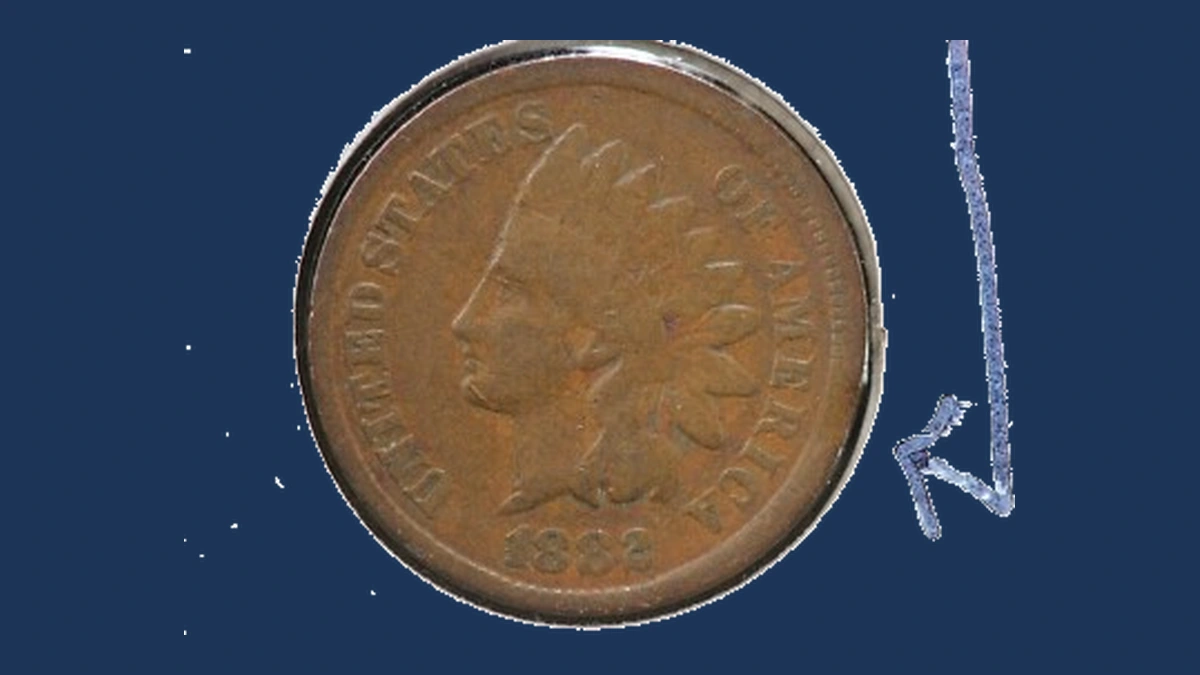
This mistake leaves a curved piece missing from the coin’s outline. It begins when the punch cutting a new blank overlaps an existing hole in the metal sheet.
The incomplete metal disc, called a blank, then receives the coin design. Its missing section was already absent before striking.
The Rippere Collection included an 1882 curved clip weighing 3.08 g. ANACS graded it VG8 Details, meaning heavy wear plus a separate condition problem.
That example is distinct from an uncertified clipped penny offered by another seller. Their gaps and surfaces should not be combined into one supposed coin.
Estimated Value
An estimated $25–$150 suits many worn 1882 curved clips, including examples with condition problems. A clearer clip on a better-preserved coin can reach roughly $100–$400.
These are estimates, not a final sale assigned to the Rippere penny. Its 3.08 g weight identifies that example but does not establish its price.
The size and appearance of the missing segment matter, while corrosion, cleaning, or other surface problems can reduce what buyers will pay.
How to Identify
The Rippere penny is only 0.03 g below the normal 3.11 g. That small difference shows why weighing alone cannot prove or reject a clip.
For a loose coin, record the weight on a scale and measure the intact width with calipers against 19.05 mm. Do not measure across the missing segment as if it were the original diameter.
Examine both ends of the gap with a 10× magnifier. Follow how the original rim approaches them and check the curved surface for fresh cuts or grinding marks.
Weakness opposite the gap can support a genuine clip, but it must actually be visible on that coin. A finished rim cut cleanly through by a tool points toward later damage.
3. 1882 Indian Head Penny Broken Date Numerals
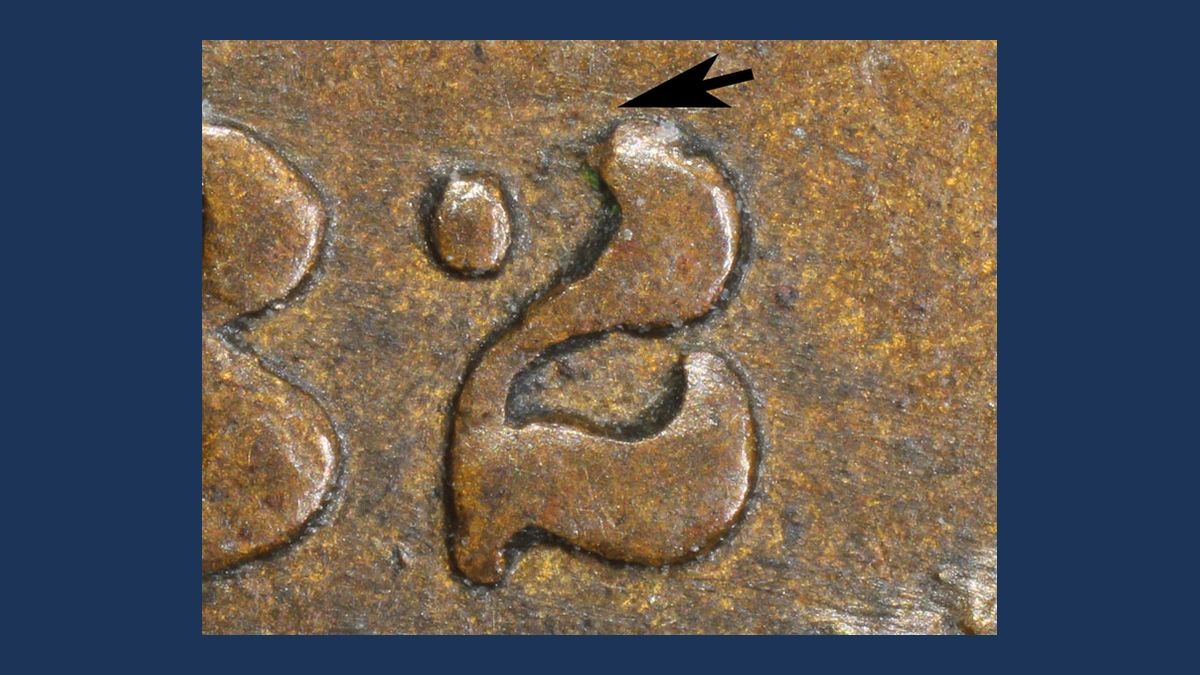
Part of the upper curve of the 2 can be missing even when the surrounding date remains readable. This is the feature collectors call the Broken 2.
The punch used to place the date in a die, the steel stamping tool, had damaged detail. Coins copied the incomplete numeral from that tool.
A separate 1882 example has a missing section at the top of an 8. It belongs to the same kind of punch problem.
Later polishing of the stamping tool can make weak detail less visible. A missing stroke alone therefore needs a close comparison.
Estimated Value
PCGS records a Broken 2 AU50 Brown example at $360 on eBay in January 2019. AU50 means light circulation wear; this was a marketplace result for that specific variety.
Estimate $25–$500 for identified Broken 2 examples across worn and better-preserved grades. For the separate broken-top 8, use approximately $20–$150.
The two numerals need their own comparisons: the recorded $360 amount should not automatically be applied to every weak or incomplete 1882 digit.
How to Identify
Keep all four digits in view beneath a 10× magnifier. Compare the missing upper curve of the 2 with the strength of the nearby 8s.
If the entire date is equally worn, the gap may be ordinary loss of detail. A scraped area can also remove a stroke, often leaving lines across the surrounding surface.
The Broken 2 photographs show the shape of the remaining numeral, not merely an empty spot. Compare that outline before deciding that grease or wear explains the gap.
A scale and calipers check a loose bronze penny against 3.11 g and 19.05 mm; neither measurement identifies the punch. For the separate broken 8, examine its top directly rather than using the 2 as the guide.
4. 1882 Indian Head Penny Raised Cracks and Rim Breaks
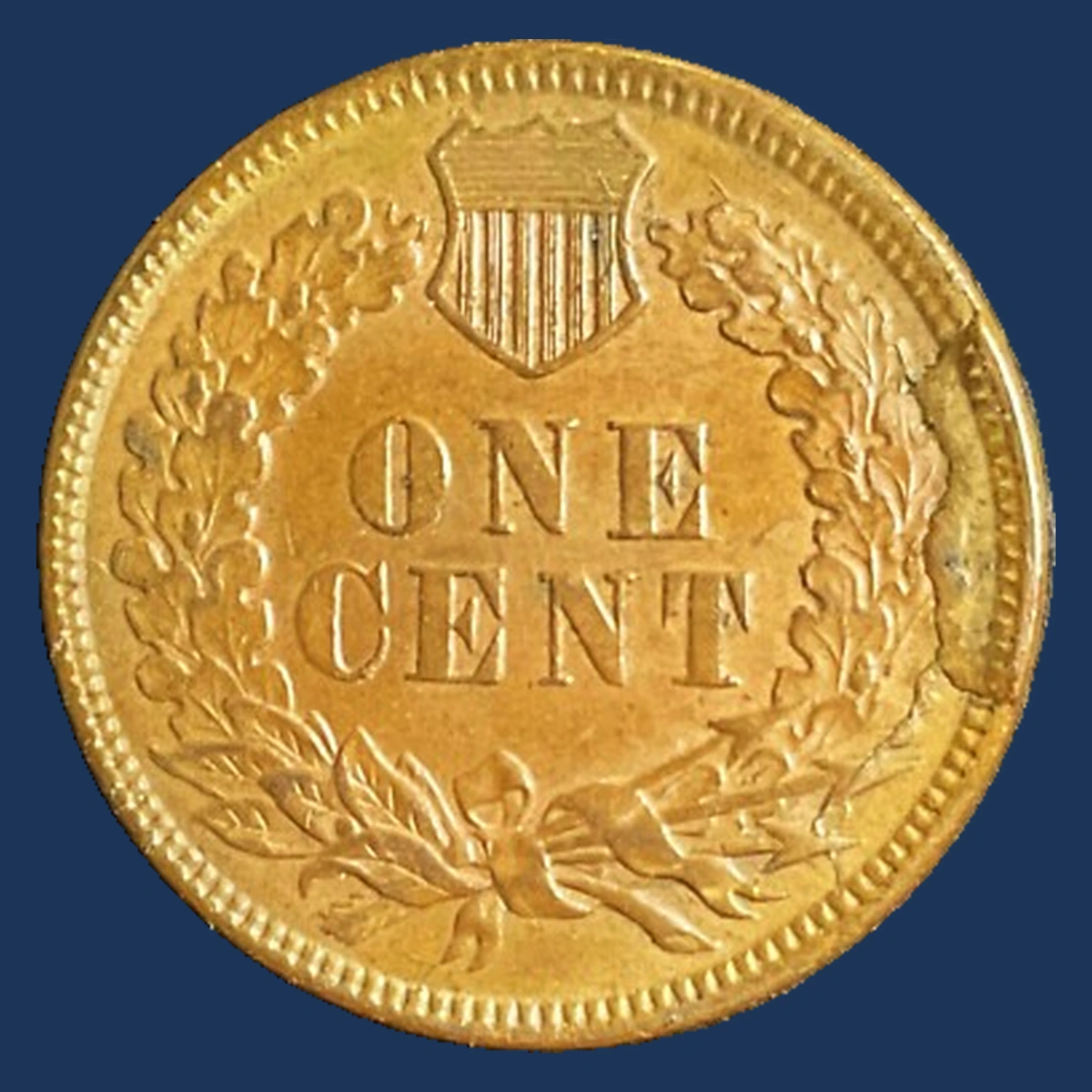
A raised line through the wreath and a thick lump at the rim can both come from a damaged stamping tool. Their size reflects how much of that tool failed.
An 1882 back crack runs from the right wreath near two o’clock through the middle and lower arrows. Bronze filled the narrow opening and left a ridge.
A larger front break extends from seven-forty-five to nine-thirty. A rim-connected lump of this kind is called a cud.
Another rim break spans ten-thirty to two on a penny with misplaced digits in the necklace. These are separate examples.
Estimated Value
Small raised cracks can fit an estimated $5–$75 on worn 1882 pennies. Larger rim breaks and clear cuds can bring roughly $75–$750, depending on their size and the coin’s condition.
These ranges describe different degrees of tool damage, rather than a sale of each illustrated example. A broad lump that interrupts the design usually attracts more attention than a fine line.
For the necklace-digit coin, assess the misplaced date and rim break together instead of adding two full prices.
How to Identify
Turn the coin over first if the suspicious mark crosses the arrows. Under a 10× magnifier, follow it upward toward the right wreath near two o’clock.
A crack copied from the tool stands above the surface. Change the lighting to distinguish that ridge from a scratch cut down into the bronze.
For a front cud, inspect where the lump meets the rim and replaces normal detail. Check the edge beside it for a blow that pushed existing metal inward.
On a loose penny, use a scale for the normal 3.11 g and calipers for 19.05 mm. For the necklace example, compare its upper rim break with that same coin’s digits; the lower-left cud belongs to another example.
5. 1882 Indian Head Penny Repunched Date
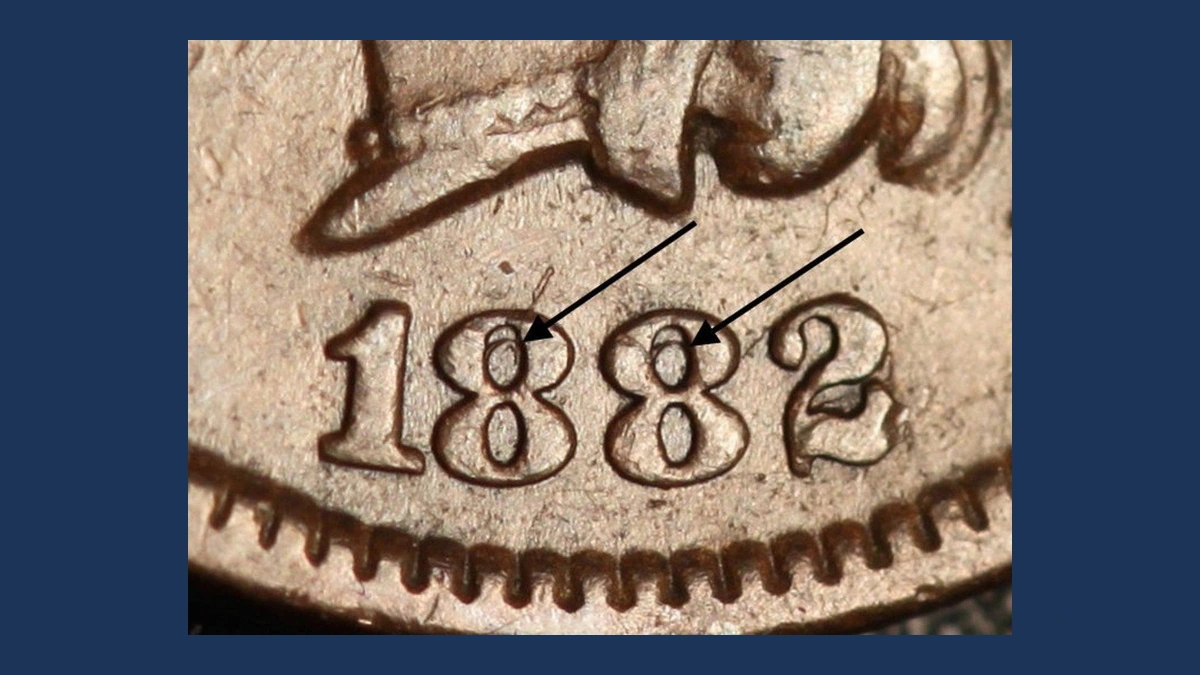
An extra curved stroke inside an 8 may be part of an earlier date impression. The date punch entered the stamping tool again in a slightly different position.
On a recorded 1882 pattern, the earlier marks sit below the normal detail inside both upper 8 loops. Another trace lies beneath the upper curve of the 2.
Other examples have the 18 repeated upward and the 2 downward. The direction is specific to each pattern.
Unlike the Broken 2, a repunched date adds surviving strokes from another impression. It does not simply leave a piece of a numeral missing.
Estimated Value
A Snow-1 repunched date graded ANACS AU55 sold for $84 at Heritage in July 2025, as listed by Greysheet. That grade means light wear.
Use an estimated $25–$1,000 for identified 1882 repunched dates, from worn coins to stronger examples with little or no wear. The $84 result gives one recent circulated comparison within that range.
Stronger extra strokes help buyers recognize the variety, but brown surfaces, original color, and overall preservation also affect the whole-coin price.
How to Identify
Take one close photograph containing the entire date, then enlarge the upper loops of both 8s. A 10× magnifier helps separate a thin earlier curve from dirt or a lighting reflection.
The repunched-date explanation includes an 1882 example. Compare where the added strokes sit relative to the normal digits, including the trace beneath the upper curve of the 2.
The usual 3.11 g weight and 19.05 mm diameter can be checked with a scale and calipers on a loose coin. Those measurements establish its size, while the earlier numeral shapes establish the date variety.
A flat shelf following an existing digit differs from a rounded extra stroke that traces another numeral.
6. 1882 Indian Head Penny Date Fragments in the Necklace and Border
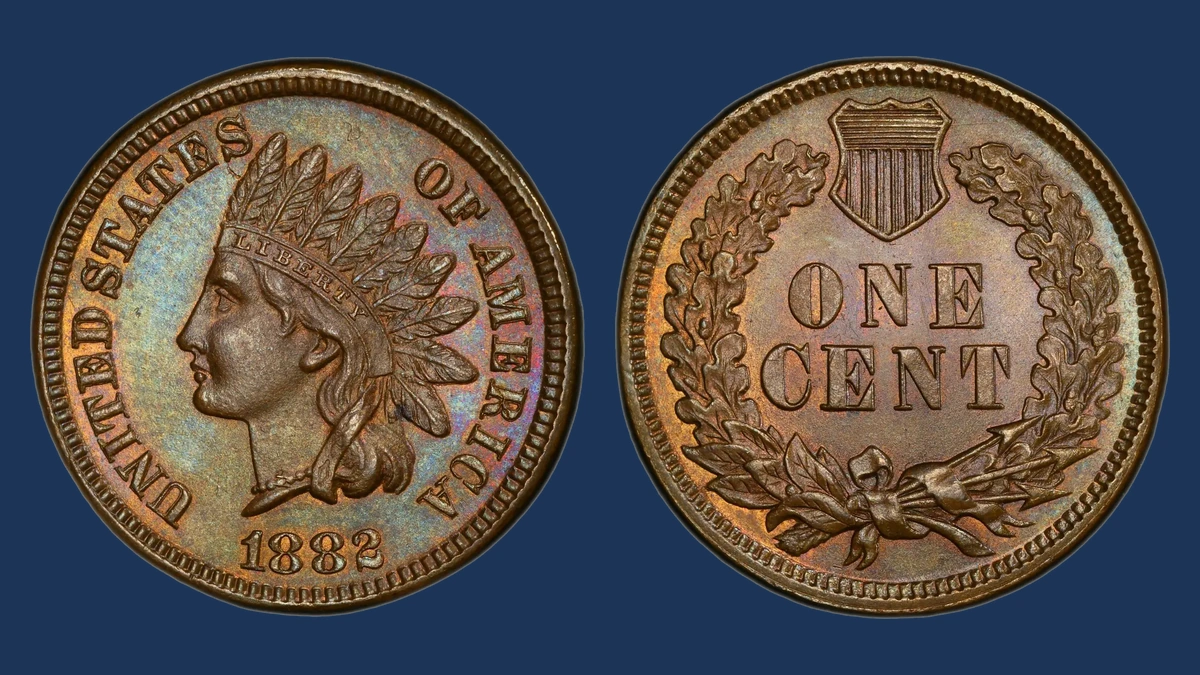
The necklace can hide fragments of numbers that belong in the date. An early impression of the date punch landed too high or too low on the stamping tool.
The 1882 catalog describes a base of 1 between the first two beads and another near the fourth and fifth. An 8 fragment can appear near the portrait base, ribbon, and hair curl.
Other examples place tops of 8 and 2 among the border teeth beneath the normal date. These locations belong to different varieties.
The familiar Snow-6 example is often called “Digits in Pearls.”
Estimated Value
Greysheet lists an ANACS MS62 Brown Snow-6 misplaced date at $282 in January 2015. MS62 describes an unworn coin with noticeable marks, and Brown describes its surface color.
Estimate $40–$1,500 for identified 1882 misplaced dates, depending on the particular pattern, wear, and preservation. Smaller fragments on circulated coins generally belong toward the lower part of that range.
A necklace-digit coin can also have a rim break. Both features belong to its single total price rather than two separate amounts.
How to Identify
Find the necklace beads under a 10× magnifier and count their positions along the visible strand. Compare the spaces between them, not the rounded beads themselves.
The 1882 variety catalog separates the necklace, hair, and lower-border patterns. Choose the photograph with the same location before matching the small numeral fragment.
For a border example, include the second 8 and 2 in the photograph so their lower-left fragments have clear landmarks.
Use a scale and calipers on a loose coin to check 3.11 g and 19.05 mm. Then change the light over the suspected digit: a real raised curve stays in the same place, while a shadow beside a bead moves.
7. 1882 Indian Head Penny Broadstrike
The design can remain complete while the coin’s outline spreads wider than normal. This happens when the retaining ring, called the collar, does not hold the blank during striking.
Heritage has cataloged an 1882 Indian cent as Broadstruck, NGC VG8. Heavy circulation wear remains part of that example’s appearance.
A broadstrike is judged from the whole coin, not just one wide-looking rim. The bronze must show spreading caused by the strike.
Pressing a finished penny between hard surfaces can also widen it. That later damage often flattens details that an original broadstrike can still retain.
Estimated Value
For a worn 1882 broadstrike, estimate $50–$250. Clearer examples with stronger remaining detail can fit roughly $200–$1,500.
An additional 1882 coin described as both broadstruck and triple struck sold for $121 in February 2010, according to Greysheet. It was graded NGC VG10, so its price included heavy wear and two kinds of striking error.
That combination provides context for circulated examples; it is not a sale of the separate VG8 broadstrike described here.
How to Identify
Measure a loose example across several directions with calipers, comparing the normal 19.05 mm diameter. Record the widths rather than assuming the spread must be evenly round.
Weigh it on a scale against 3.11 g. A spread blank can retain roughly its normal mass even though its outline changes.
Next, inspect the outer letters and date with a 10× magnifier. A full design within the expanded outline supports a broadstrike; missing design from an off-center blow tells a different story.
Examine both faces for broad areas of crushing or smoothing from later pressure. The important combination is expanded metal around a struck design, rather than a wide rim viewed on only one face.
8. 1882 Indian Head Penny Off-Center Strike
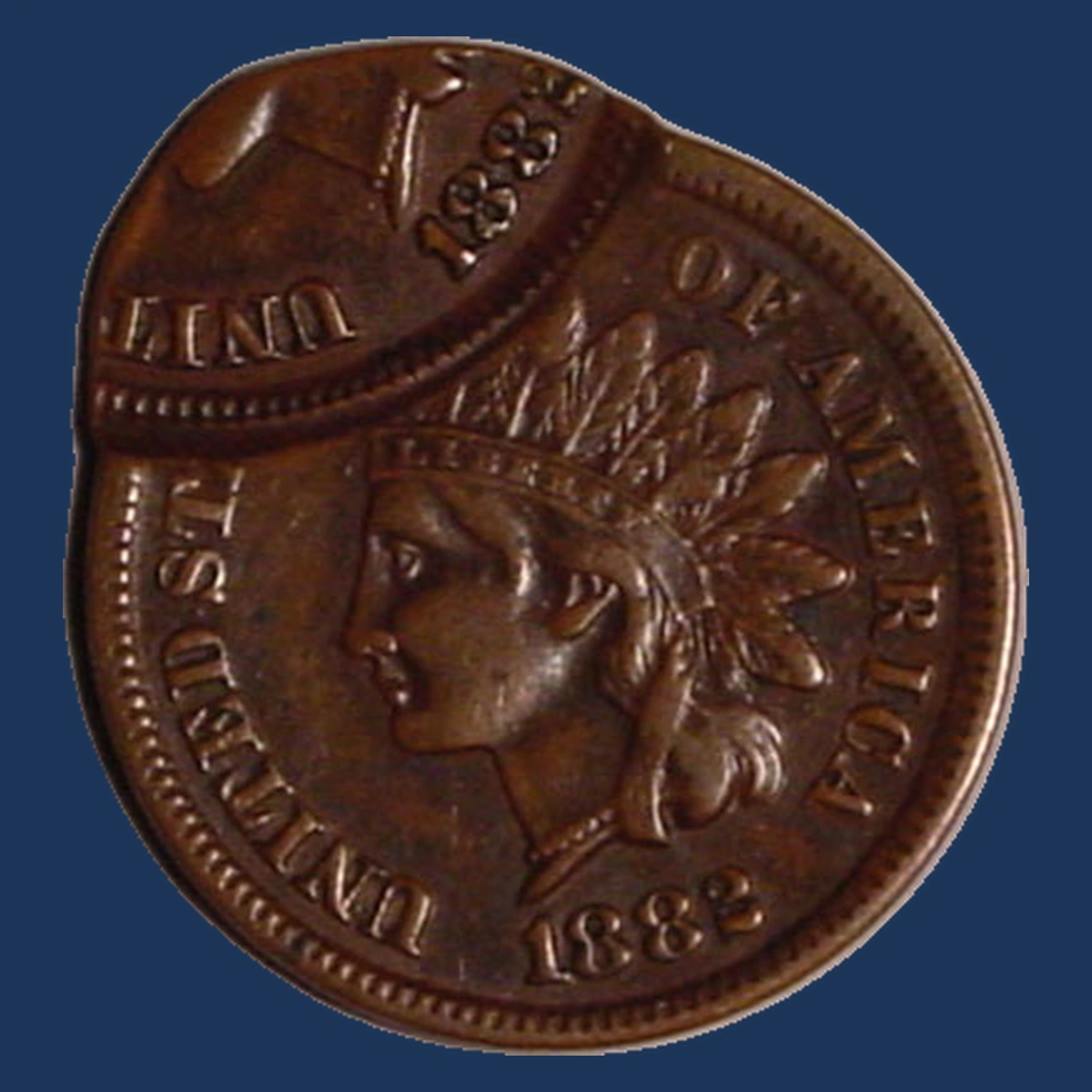
A blank that sits partly outside the stamping tools receives only part of the intended design. A crescent of untouched metal remains beside the shifted image.
A dealer listing in a 1988 issue of Coin World describes an 1882 Indian cent struck twenty percent off-center toward ten o’clock. Its VG description indicates substantial wear.
The same listing offered another 1882 penny struck twice. That separate coin should not be used to explain the single off-center strike.
For a genuine example, the shifted design must belong to the strike itself. Cutting away a finished rim does not create this blank crescent.
Estimated Value
Estimate $100–$600 for a worn 1882 penny with a clear off-center strike. Better-preserved examples with a readable date and stronger displacement can fit roughly $500–$2,500.
The 1988 dealer asked $40 for the twenty-percent example. That old asking price is neither a recent market value nor a recorded completed sale.
The amount of missing design matters, but keeping the full date visible helps establish which year the error belongs to and makes comparison easier.
How to Identify
Put the front and back photographs side by side before judging the amount of displacement. A shifted design on only one face may come from a differently positioned stamping tool.
At 10×, inspect where the struck design ends and the untouched crescent begins.
The full 1882 date should remain readable if the coin is being sold under this year. A damaged numeral cannot safely be filled in from the seller’s description alone.
For a loose penny, use a scale against 3.11 g and calipers against the normal 19.05 mm outline. An off-center blow can distort that outline without removing a crescent of metal.
Trace the blank area’s surface into its edge; saw marks or grinding grooves reveal a different cause.
9. 1882 Indian Head Penny Double and Triple Strikes
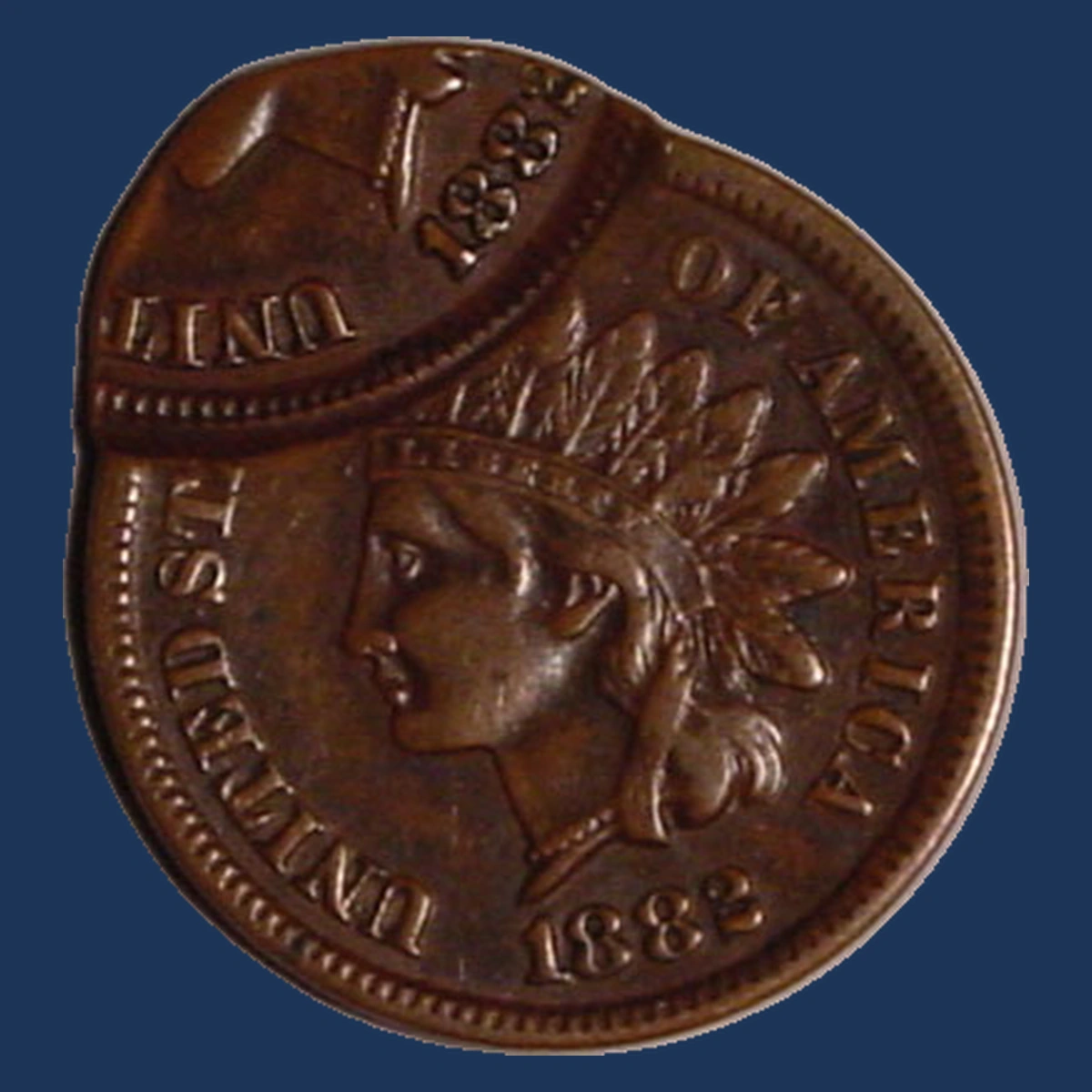
Two full dates appear on the double-struck 1882 penny illustrated by Mint Error News. Its first blow was centered, and the second landed seventy-five percent off-center toward eleven o’clock.
The penny stayed in the press long enough to receive another blow after moving. NGC graded this example AU50 Brown, with light wear and brown surfaces.
A separate Stack’s Bowers example was struck three times, with the last blow off-center. ANACS graded that coin EF40, meaning moderate wear with substantial detail remaining.
Repeated designs across the coin distinguish these strikes from tiny extra strokes within one date.
Estimated Value
An ANACS AU Details double strike described as cleaned brought $1,140 at Heritage in January 2018, according to Greysheet’s sale record. Cleaning affected its surfaces, but the striking mistake still drew a substantial price.
Estimate $400–$5,000 for 1882 multiple strikes, depending on the clarity of the separate blows and remaining condition.
The $1,140 coin is a different example from the published AU50 two-date penny and EF40 triple strike. Neither should inherit its sale price.
How to Identify
Start by locating both complete dates on the published AU50 coin. Use a 10× magnifier to follow nearby letters or portrait lines into each separate impression.
A scale can compare a loose example with 3.11 g, while calipers record how its outline differs from the usual 19.05 mm. Another blow moves existing metal rather than adding a second blank.
Compare the back as well: its overlapping designs should agree with the movement visible on the front.
For a proposed triple strike, mark three distinguishable sets of design details on photographs. Counting random extra lines is not enough.
The two-date example offers a simple starting check: each readable 1882 belongs to a separate impression, not a small doubled edge within one numeral.
Conclusion
For 1882 pennies, the smallest useful clue may sit inside a date loop or between necklace beads. Larger mistakes can change the edge or leave more than one complete date.
The estimated range runs from $5 for minor cracks to $5,000 for stronger multiple strikes. Compare similar wear and surface condition, and remember that a listed price is different from a completed sale.