1874 Penny Error List with Pictures

LIBERTY is not the only place to check for doubling on an 1874 penny. The tiny designer’s L, the eye, and parts of the feathers can show it too.
An unworn example of that doubled-front variety brought about $1,821 at Heritage in July 2014. This 1874 penny error list covers estimated whole-coin values of $10–$4,000, including clipped blanks and off-center strikes.
Continue below for the visible clues, price comparisons, and differences between marks that can appear on the same coin.
1. 1874 Indian Head Penny Cracks, Chips, and Rim Breaks
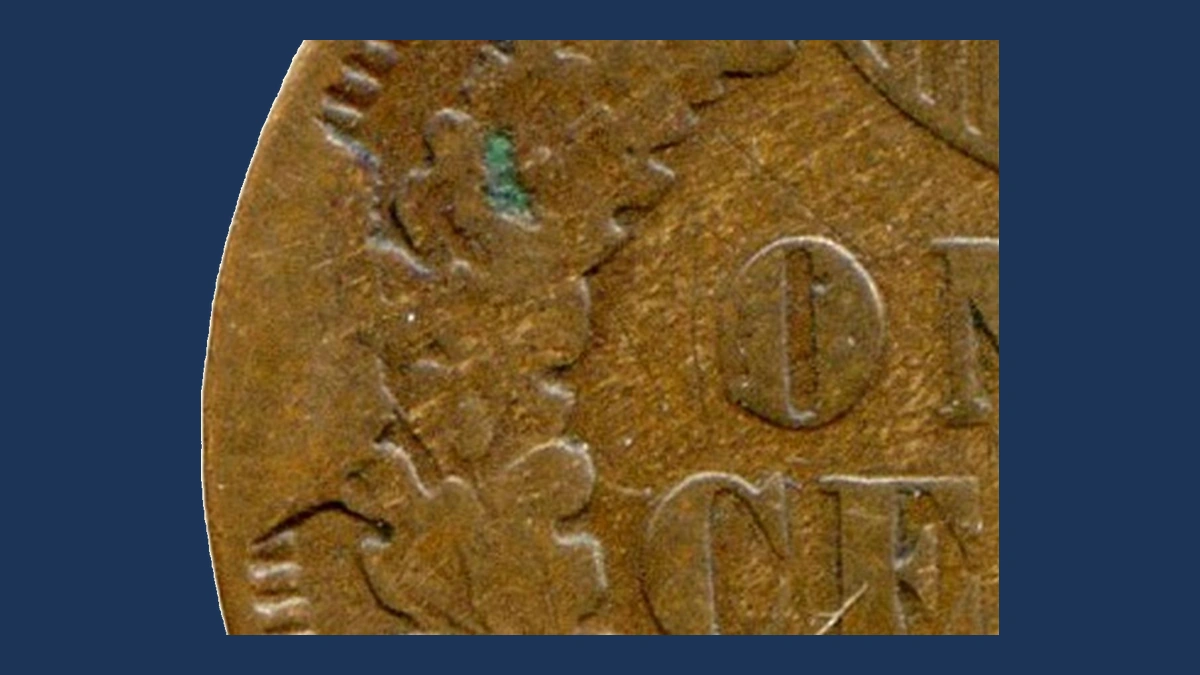
Lines and lumps on an 1874 penny can record different amounts of damage to a die, the steel stamping tool. A narrow crack leaves a ridge, while a missing piece can leave a larger raised patch.
One front rim break lies between eight and eight-thirty. Separate back examples lie at eight-thirty to ten or three-thirty to four-thirty.
Smaller chips appear around the portrait, including behind the first hair curl. They need not touch the rim.
A recorded crack also runs from the date’s base toward nine-thirty. The doubled-front variety has other cracks across letters and the back wreath.
Estimated Value
For modest cracks or chips on worn 1874 pennies, estimate $10–$150. Clear rim-connected breaks can fit roughly $75–$1,250, depending on their size and the coin’s condition.
The larger patches are called cuds, but a small interior lump is a chip rather than a cud. Their different appearances help select a useful comparison.
These are estimated whole-coin ranges. When cracks accompany the doubled-front variety, do not add a second full variety price for the same penny.
How to Identify
Decide whether the mark is a line, an interior lump, or a patch that reaches the rim. A 10× magnifier and light from the side help show whether it rises above the surrounding surface.
For the date crack, follow the ridge toward nine-thirty. For a cud, instead examine the physical edge beside the patch for pushed metal, a solder seam, or a later dent.
A loose bronze penny normally weighs 3.11 g on a scale and measures 19.05 mm with calipers. Compare the correct side and clock position with a recorded example; the front eight-o’clock break does not establish either of the separate back breaks.
2. 1874 Indian Head Penny Reported Misplaced Date
A misplaced date is a numeral fragment left away from the date’s intended position. The date punch touched the stamping tool in the wrong place before the proper date was completed.
The Indian Varieties catalog lists an 1874 entry called MPD-001 or Snow-5. Its listing does not show a specific numeral location that a reader can match.
That matters when inspecting a possible example. A bump beside the necklace or a rough border tooth cannot be named as this variety from the title alone.
An extra stroke next to a normal date digit may instead be a repunched date.
Estimated Value
For an 1874 coin with a verified misplaced-date feature, use an estimated $50–$1,500 across circulated and better-preserved examples. This range does not turn an unidentified mark into a named variety.
A nearby-year comparison is the 1878 Snow-2, with fragments of 78 in the lower border. An MS65 Red example sold for $1,920 in October 2019, reflecting its strong preservation as well.
That other coin’s visible position and sale belong to 1878; they cannot be assigned to the 1874 listing.
How to Identify
Photograph the whole front before enlarging the proposed numeral. Keep the main date in the frame so the position of the extra mark can be measured against it.
Check a loose penny with a scale and calipers against 3.11 g and 19.05 mm.
Then inspect the mark under a 10× magnifier for a recognizable curved stroke, straight stem, or base. Compare it with the shapes of the normal date digits.
The Snow-5 listing provides a name, not a usable location photograph. A specialist needs to match the actual mark before that name is applied to a coin.
A raised numeral shape is essential; one isolated dot or an ordinary border tooth is not enough.
3. 1874 Indian Head Penny Repunched Date
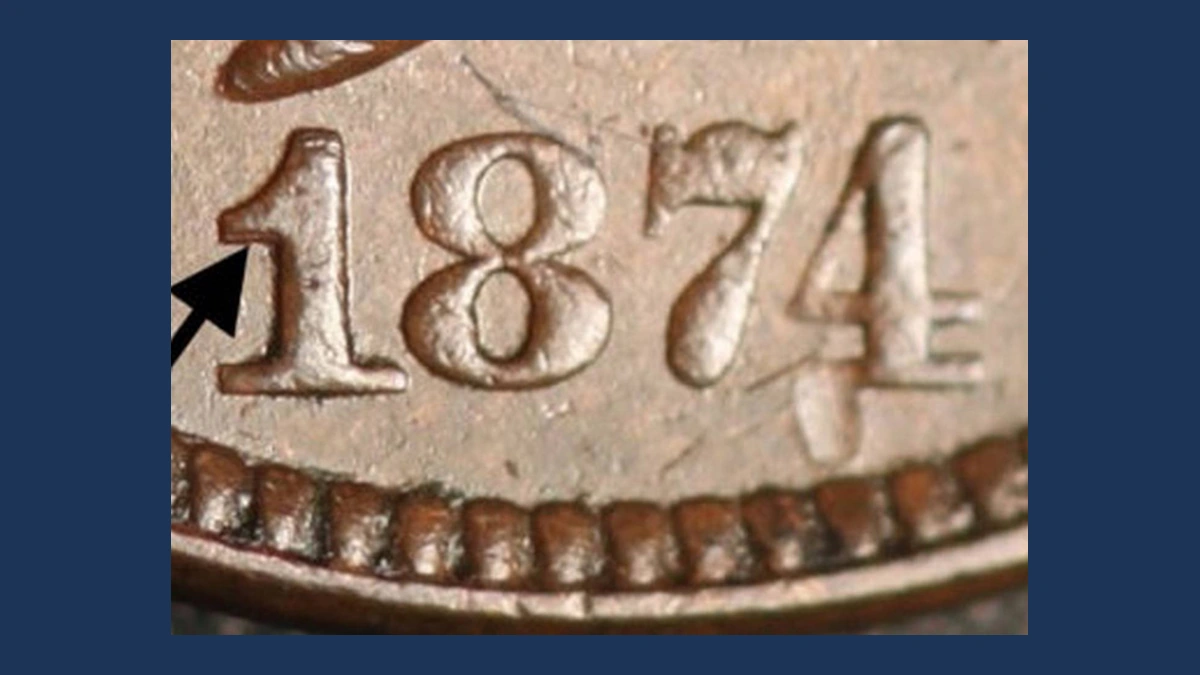
The extra strokes on one 1874 variety point in different directions. An earlier 1 sits below the main numeral, while earlier parts of 7 and 4 remain above.
The date punch entered the stamping tool more than once. Its changed position left parts of the earlier impression uncovered.
Another example has a trace above the left base of 1 and remnants within the 8’s loops. These are separate date patterns.
Some repunched-date pennies also show clash marks near the eye and inside CENT. Those faint transferred designs have a different cause from the repeated date strokes.
Estimated Value
Estimate $30–$1,500 for identified 1874 repunched dates, from worn examples to stronger coins with little or no circulation wear. The exact pattern and its remaining clarity matter.
An 1882 repunched date graded AU55 brought $84 at Heritage in July 2025. That lightly worn, different-year example offers a broad comparison, not a sale of an 1874 date pattern.
If clash marks or small chips also appear on your coin, evaluate that actual combination rather than adding separate upper estimates.
How to Identify
At 10×, compare the space below the 1 with the areas above 7 and 4. These opposite directions should agree on the variety that carries all three traces.
For the other pattern, turn attention to the left foot of 1 and the loops of 8. Do not expect the first example’s 74 marks to establish this second one.
A scale and calipers check a loose penny against 3.11 g and 19.05 mm. Those ordinary measurements help establish the coin’s size but cannot name a date pattern.
Take a close photograph with all four digits sharply focused. A curve from an earlier numeral differs from a flat shelf that simply follows an existing edge.
4. 1874 Indian Head Penny Clash Marks near the Eye and on the Neck
A faint curve before Liberty’s eye can come from the C in CENT on the opposite stamping tool. The back can show a matching nose outline inside that C.
The tools touched without a blank between them and damaged each other. Later coins copied parts of the transferred designs, producing clash marks.
A separate 1874 example has displaced, border-shaped marks on the neck. The catalog calls these an off-center clash.
The suggestion that those neck marks came from a tool-hardness test is an explanation proposed by the author. It is not a demonstrated event for every clashed penny.
Estimated Value
Ordinary 1874 clash marks can fit an estimated $25–$400 on circulated or moderately preserved examples. A clear displaced-neck pattern on a stronger coin can fit roughly $150–$2,000.
The catalog’s illustrated neck example is PCGS MS65 Red-Brown, an unworn coin retaining some original copper color. That high preservation contributes to its whole-coin value.
No final sale is assigned to that illustration here. A repeated date or nearby chip remains part of the same coin rather than a separate amount to add.
How to Identify
Use two photographs: one of the eye area and one of the C in CENT. Under a 10× magnifier, compare the curved front trace with the letter and the back trace with Liberty’s nose.
For a loose coin, record its scale weight and caliper width against 3.11 g and 19.05 mm. A clash changes the tool’s design, so an ordinary weight is expected.
The neck example requires its own close-up rather than the eye-area comparison.
Inspect each mark under changing light to separate a raised transferred outline from a cut scratch. A row of border-like shapes on the neck is different from the single C-shaped curve before the eye.
5. 1874 Indian Head Penny Fifteen-Percent Curved Clip
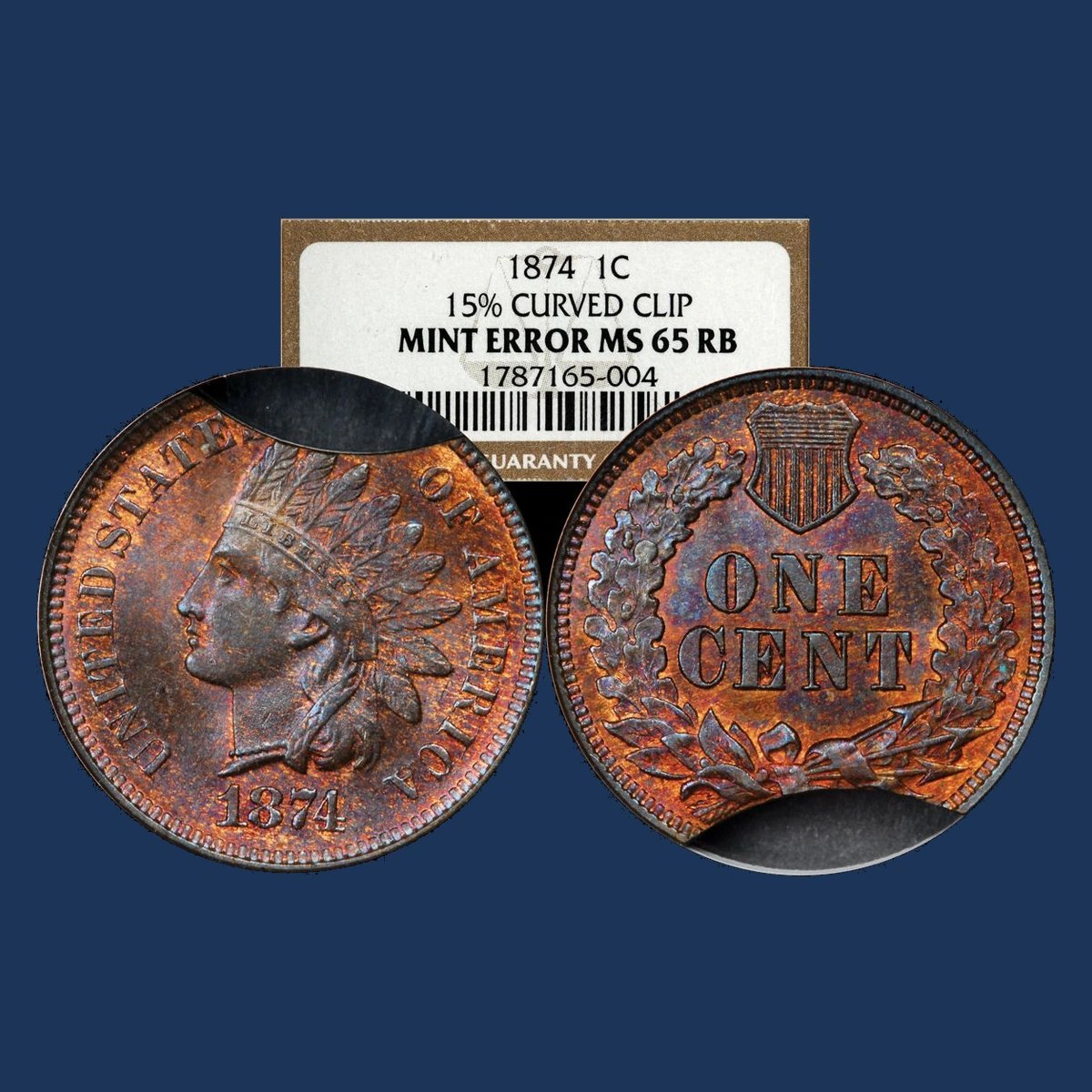
A curved section is missing from the edge of the 1874 penny in the Charmy Harker Collection. The published description calls it a fifteen-percent curved clip.
The blank-cutting punch overlapped a hole already present in the metal sheet. That left an incomplete blank to receive the coin’s design.
NGC graded this example MS65 Red-Brown, meaning no circulation wear and some original copper color remaining. It is distinct from a dealer’s worn example of the same year.
A clip removes part of the outline before striking. It does not create the untouched crescent found beside an off-center design.
Estimated Value
For worn 1874 curved clips, estimate $50–$300. Stronger examples with large, clearly original clips can fit approximately $300–$3,000.
The collection coin’s MS65 Red-Brown grade puts its preservation well above that of a circulated example. Its estimated whole-coin value therefore includes more than the missing segment alone.
These ranges are not a reported sale of the collection piece. The published fifteen-percent description also does not establish an exact weight or a price for every clip of similar size.
How to Identify
Compare the two ends of the curved gap under a 10× magnifier. The rim’s approach to each end can reveal whether the blank was incomplete before it received the design.
Check the gap’s surface for parallel saw grooves or fresh filing marks. Keep any opposite-rim weakness in the photograph, if present, without treating it as a required visible feature on this particular example.
The collection display identifies the fifteen-percent clip.
Use a scale against the normal 3.11 g and calipers across intact edges against 19.05 mm. Judge the missing curve together with the original rim transitions, rather than calculating authenticity from the stated percentage alone.
6. 1874 Indian Head Penny Doubled Front Design
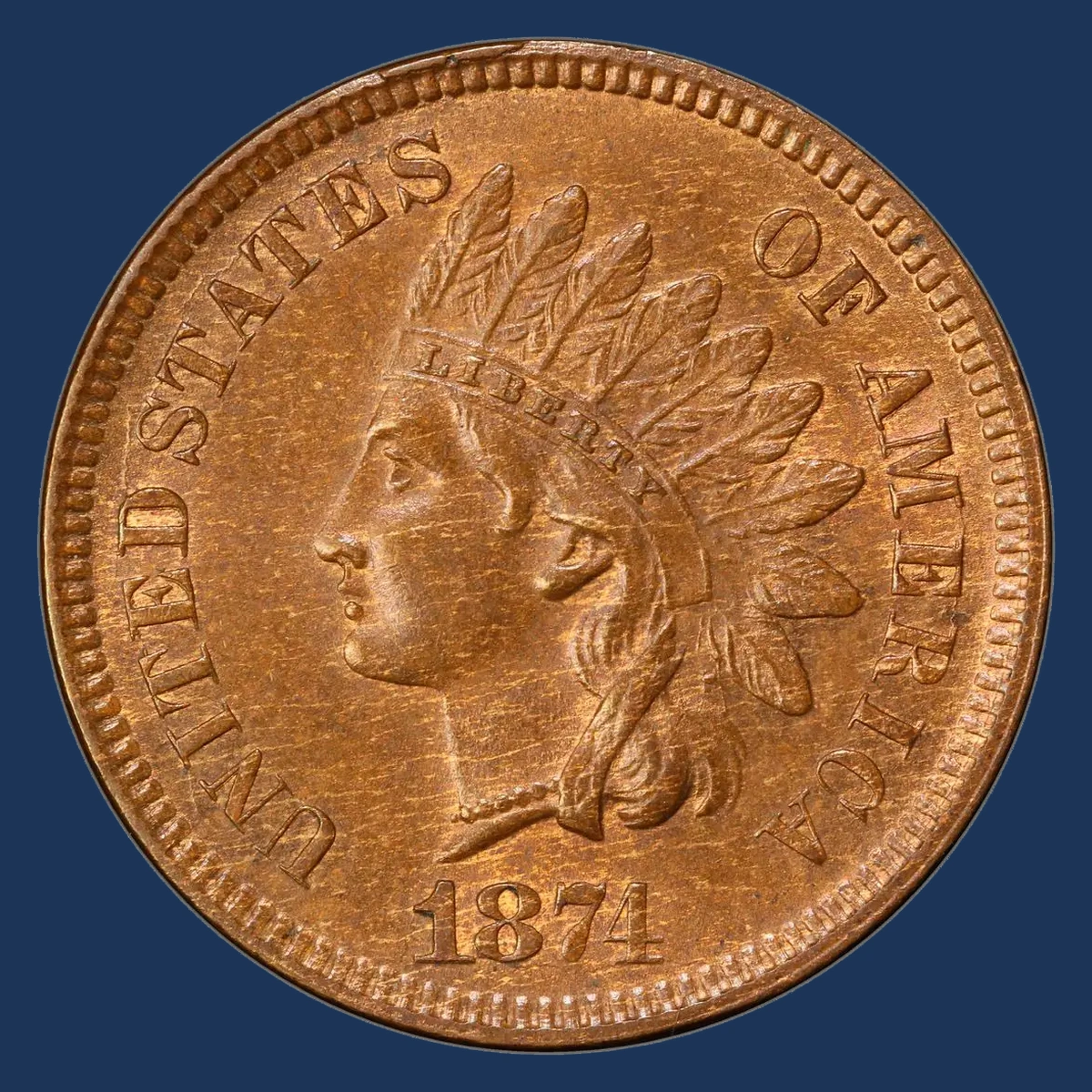
More than one front detail shows the same small shift on this variety. Extra edges appear in LIBERTY, the designer’s tiny L, the eye, and parts of the hair and feathers.
The stamping tool received its design with a slight change in alignment. Every normal blow from that doubled tool could then copy the extra detail.
The pattern is called Snow-1 or FS-101. Its offset runs clockwise across the affected design.
Cracks across some surrounding letters and the back wreath can help match examples. Those cracks are companion marks, not the cause of the doubled front.
Estimated Value
PCGS records a Snow-1 doubled-front example at about $1,821 from Heritage in July 2014. The listed MS65 grade indicates an unworn coin with relatively few marks.
For identified 1874 examples, estimate $75–$3,500 across circulated and better-preserved coins. Strong original detail makes the small doubled shapes easier to see and compare.
The auction amount concerns the whole coin. A matching crack through the lettering should not have its own full price added to that result.
How to Identify
Start at the eye if LIBERTY is worn smooth, then examine the small L near the lower neck under a 10× magnifier. Compare the surviving edges with the Snow-1 image instead of relying on the thickness of one letter.
A scale and calipers can check a loose coin’s normal 3.11 g and 19.05 mm before detailed photographs. Keep the light low enough to show the physical height of an extra edge.
Follow the same clockwise separation into any readable headband letters and feather details. The strongest match is repeated design in several named locations; a crack through UNITED alone cannot establish the doubled tool.
7. 1874 Indian Head Penny Ten-Percent Off-Center Strike
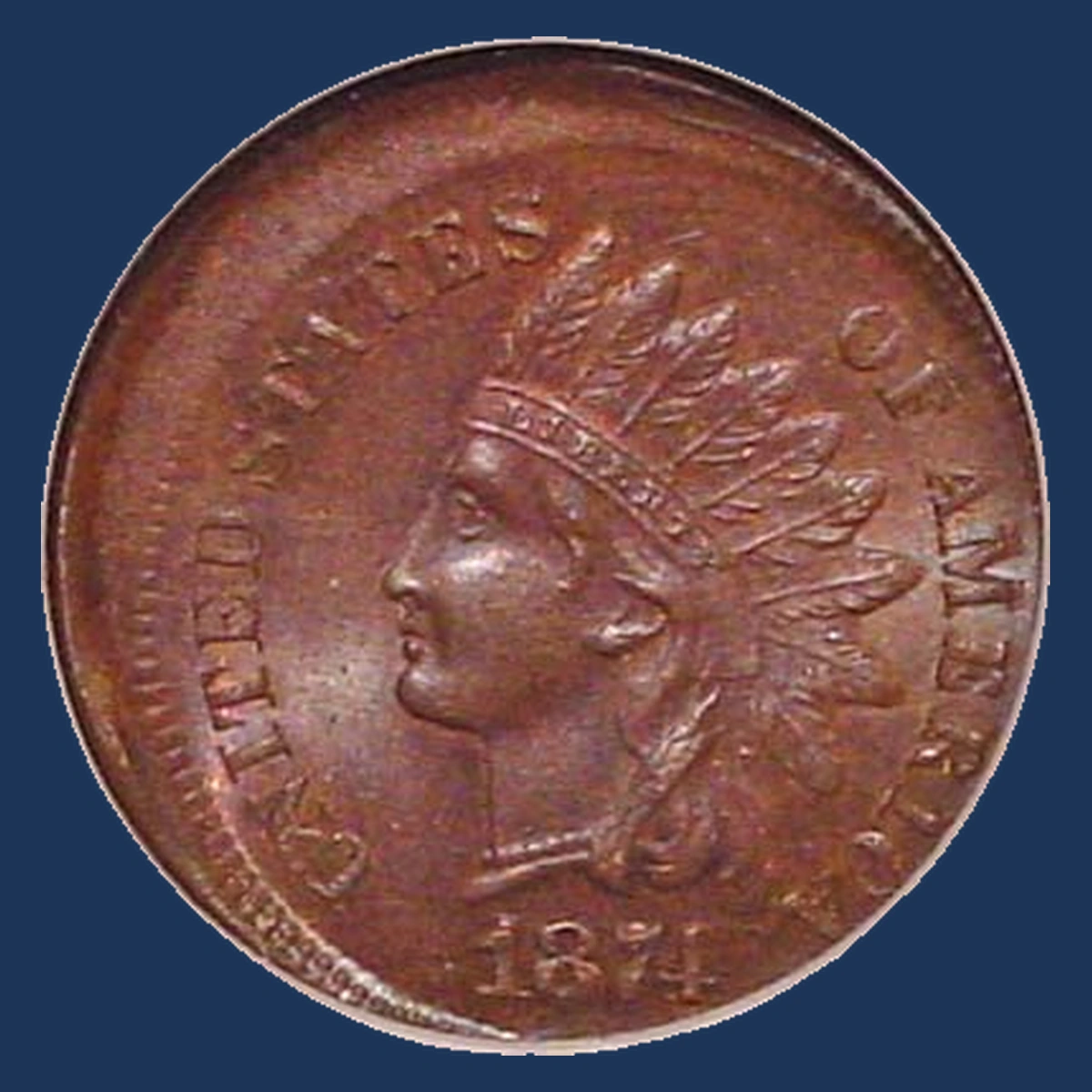
A narrow crescent beside the design can reveal that the blank was not centered under the stamping tools. Part of the intended design then missed the metal.
Mint Error News illustrates an 1874 Indian cent struck ten percent off-center toward five o’clock. NGC graded it MS65 Brown, an unworn coin with brown surfaces.
That description belongs to a single off-center strike, not a second blow over an earlier design. The portrait and lettering occupy one displaced position.
The small shift can be easier to judge from both full faces than from a close-up of only the wide border.
Estimated Value
An estimated $150–$750 suits many circulated 1874 cents with a recognizable off-center strike. An unworn example with strong surfaces can fit around $750–$4,000.
The illustrated MS65 Brown coin belongs to the better-preserved group, but its collection photograph is not a recorded sale. The ten-percent shift alone does not set the price.
Check the date, surface quality, and amount of surviving design together. A larger offset on a worn or damaged penny need not be worth more than a smaller error.
How to Identify
Set the 1874 date upright and locate the reported shift toward five o’clock. Then turn to the back without changing the coin’s orientation in your comparison photographs.
At 10×, inspect the line where the struck design ends beside unused metal. A broadstrike with the full design present needs a different explanation from a design partly falling beyond the blank.
Calipers record the changed outline against the usual 19.05 mm.
A scale compares the loose coin with 3.11 g, since an off-center blow need not remove any metal. Keep a certified example sealed and use its photographs or recorded measurements instead.
Both faces should support the same displaced blank; a centered back with only a shifted front suggests a different alignment problem.
Conclusion
A small raised stroke can have several causes on an 1874 penny. Compare the eye and lettering for doubled-tool detail, the date for earlier punch strokes, and both faces for clash marks.
Estimated values range from $10 to $4,000 across the examples and conditions discussed here. Keep the reported misplaced-date listing separate from a proven numeral location, and assess coins with several related features as one complete piece.