1870 Penny Error List with Pictures

One 1870 penny can carry more than one recognizable mistake. A lightly worn example combining a doubled front with a misplaced date sold for $780 in May 2022.
This 1870 penny error list spans estimated whole-coin values of $40–$5,000. It also includes a clipped blank, transferred design marks, and a small thirteen-degree rotation.
Read on to separate those features from the year’s normal back-design styles and see which clues belong to the same coin.
1. 1870 Indian Head Penny Small Back-Design Rotation
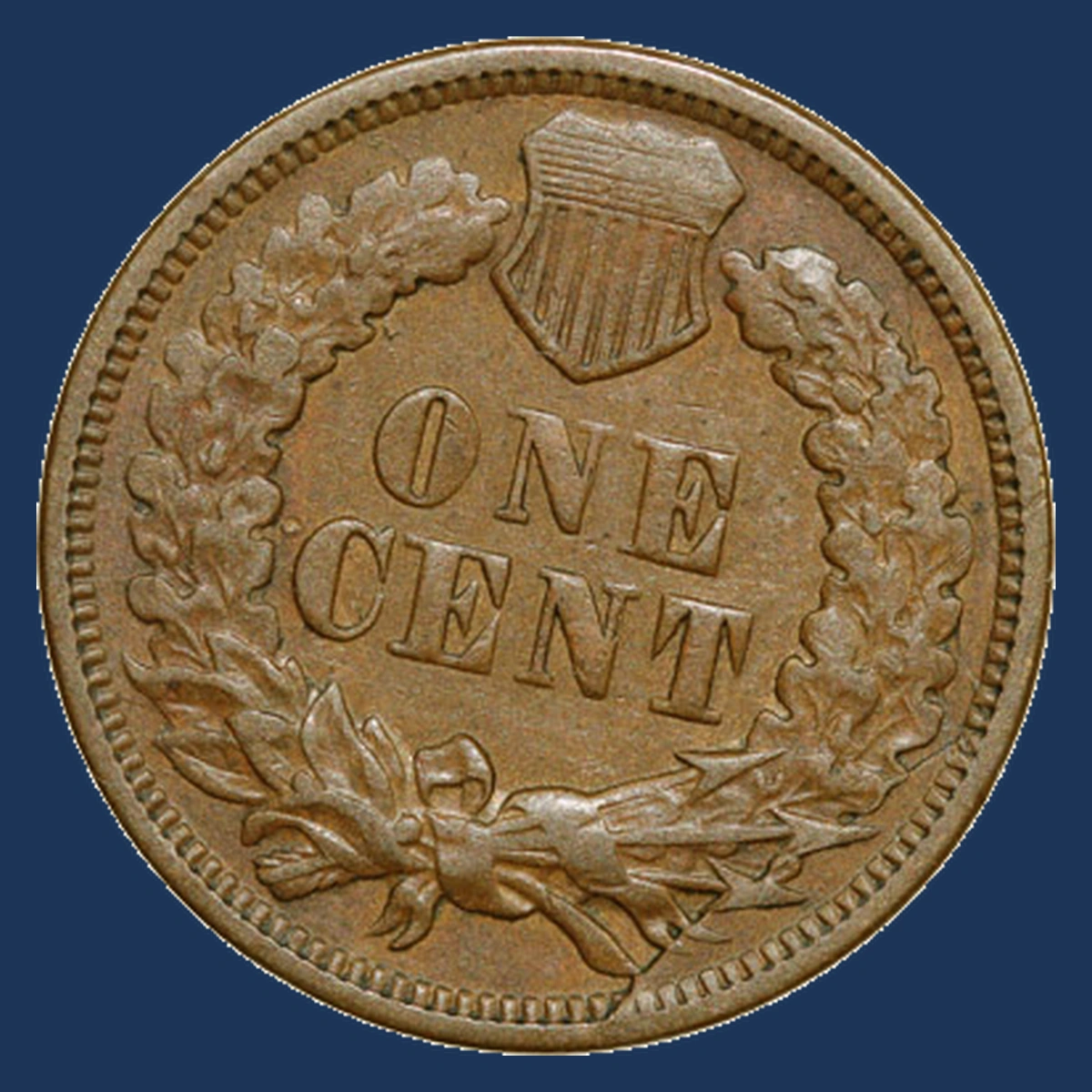
The back sits at a slight angle after the front has been held upright and flipped top to bottom. On the recorded Type I Variety 4, that tilt is thirteen degrees clockwise.
The two stamping tools were not aligned at exactly the normal angle. Their changed relationship stayed visible on the finished coin.
Thirteen degrees is a small rotation, not a sideways or upside-down back. Camera placement can easily make a photograph look more dramatic.
The catalog’s example also has misplaced digits, back doubling, cracks, and clash marks. The rotation is one feature of that same coin.
Estimated Value
For circulated 1870 pennies with a comparable small rotation, estimate $40–$300 as whole coins. Much of that amount may come from the date and remaining condition.
A thirteen-degree tilt is not comparable to a major ninety-degree or half-turn error. Its value should not be based on those more dramatic mistakes.
The catalog illustrates a worn F15 example with other identifiable features. Assess that combination once rather than pricing the small rotation as an additional complete coin.
How to Identify
Hold the front upright with the date level. Flip the penny top to bottom around a horizontal line through its center, without twisting it sideways.
Photograph both positions against a fixed straight line and measure the back’s tilt with a protractor. Repeat the flip to see whether the same small angle returns.
A 10× magnifier helps locate the shield’s center and the lettering axis when wear makes them hard to judge.
For a loose coin, a scale and calipers check the normal 3.11 g and 19.05 mm; these measurements do not establish the angle. A repeatable thirteen-degree clockwise tilt after the controlled flip matters more than a tilted auction photograph.
2. 1870 Indian Head Penny Transferred Design Marks near the Eye and CENT
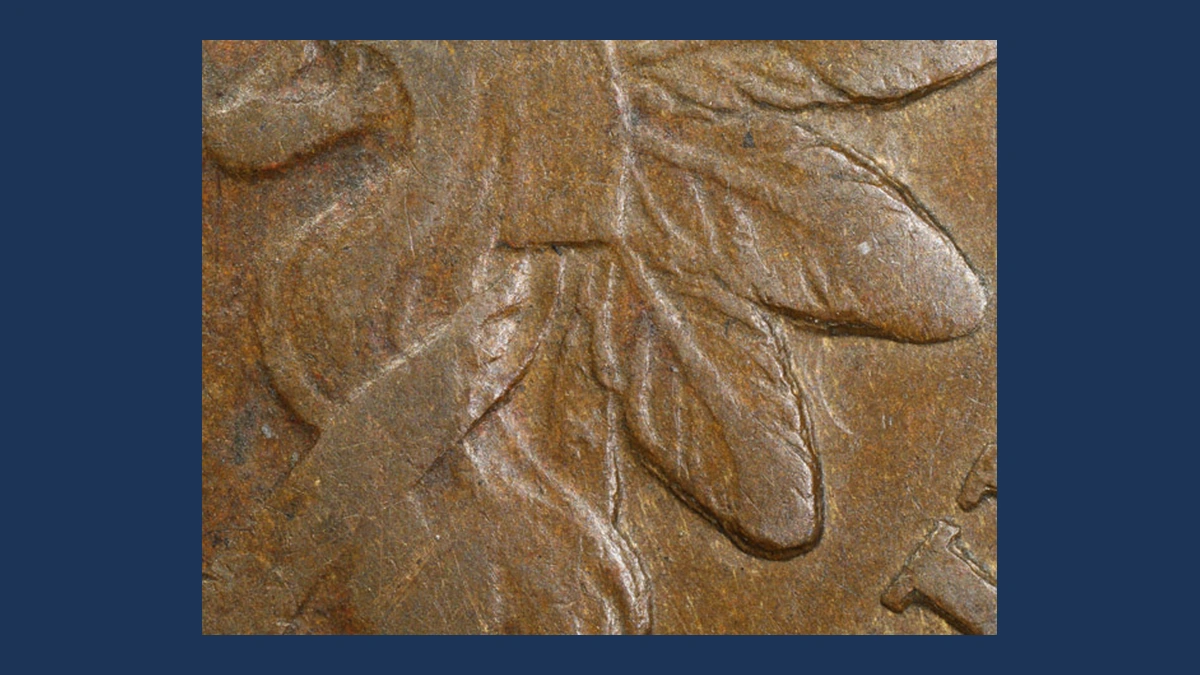
An unexpected outline before the eye can be a trace transferred from the opposite stamping tool. A related mark appears through the C in CENT on the back.
The steel tools, called dies, touched when no blank lay between them. Their damaged surfaces then copied faint extra outlines onto later pennies.
The specialist records these marks on 1870 Type I Variety 4. The same tool pair also produced back doubling and a small clockwise rotation.
A clash mark follows part of the opposite design. It is not another complete strike on the coin or a random scratch across its surface.
Estimated Value
Estimate $40–$500 for circulated to moderately preserved 1870 pennies with recognizable clash marks. Their strength and the coin’s overall condition affect the comparison.
On Type I Variety 4, the clash shares the coin with misplaced date fragments and a doubled back. Those linked features should receive one combined assessment.
This is an estimated range, not a final auction price assigned to the catalog illustration. A mark that cannot be matched to the transferred design should not receive the same treatment.
How to Identify
With a 10× magnifier, examine the C in CENT before turning to the eye area. Compare the shape and placement of the extra marks with the Type I Variety 4 photographs.
The year also has ordinary differences in its back lettering, so choose the correct design style. A deeper N is not itself a clash mark.
Weigh a loose example on a scale against 3.11 g and compare 19.05 mm with calipers. A clash changes what the tool impresses, rather than removing a piece of the blank.
Use side lighting across the eye area to follow the extra outline. An irregular trench cut across the surface is different from a faint trace matching the opposite design.
3. 1870 Indian Head Penny Clipped Blank
Part of the blank was missing when this 1870 penny received its design. A clipped blank can result when the punch overlaps a previous hole or an edge of the metal sheet.
A May 2006 Coin World advertisement lists an 1870 clipped example graded PCGS EF40. That grade indicates moderate wear with substantial detail remaining.
The incomplete outline is the feature to examine. Its shape and the rim beside the gap can help show whether the metal was missing before striking.
Cutting a finished penny can also remove an edge segment, but that is later damage.
Estimated Value
The 2006 advertisement asked $375 for the PCGS EF40 clipped penny. It was a dealer’s price, not a recorded auction result or a current offer.
For genuine 1870 clips, estimate $100–$1,500 across worn and better-preserved examples. The missing segment’s appearance and the remaining surfaces both matter.
A small gap can still be collectible when its original formation is clear. The advertised number alone cannot establish its percentage, condition, or present price without seeing the same coin.
How to Identify
Inspect the physical gap rather than beginning with its advertised percentage. At 10×, look at how the rim ends on each side and whether the missing section has cutting or grinding grooves.
A scale can compare the remaining mass with 3.11 g, but wear or corrosion can also lower weight. Measure intact portions with calipers against 19.05 mm rather than measuring through the gap.
Keep the full date in the photograph alongside the missing segment and inspect the opposite rim for any related weakness. That weakness supports a clip only when the gap itself also fits an incomplete blank; a sawed edge cannot be authenticated by weight alone.
4. 1870 Indian Head Penny Cracks and Broken Rim Sections
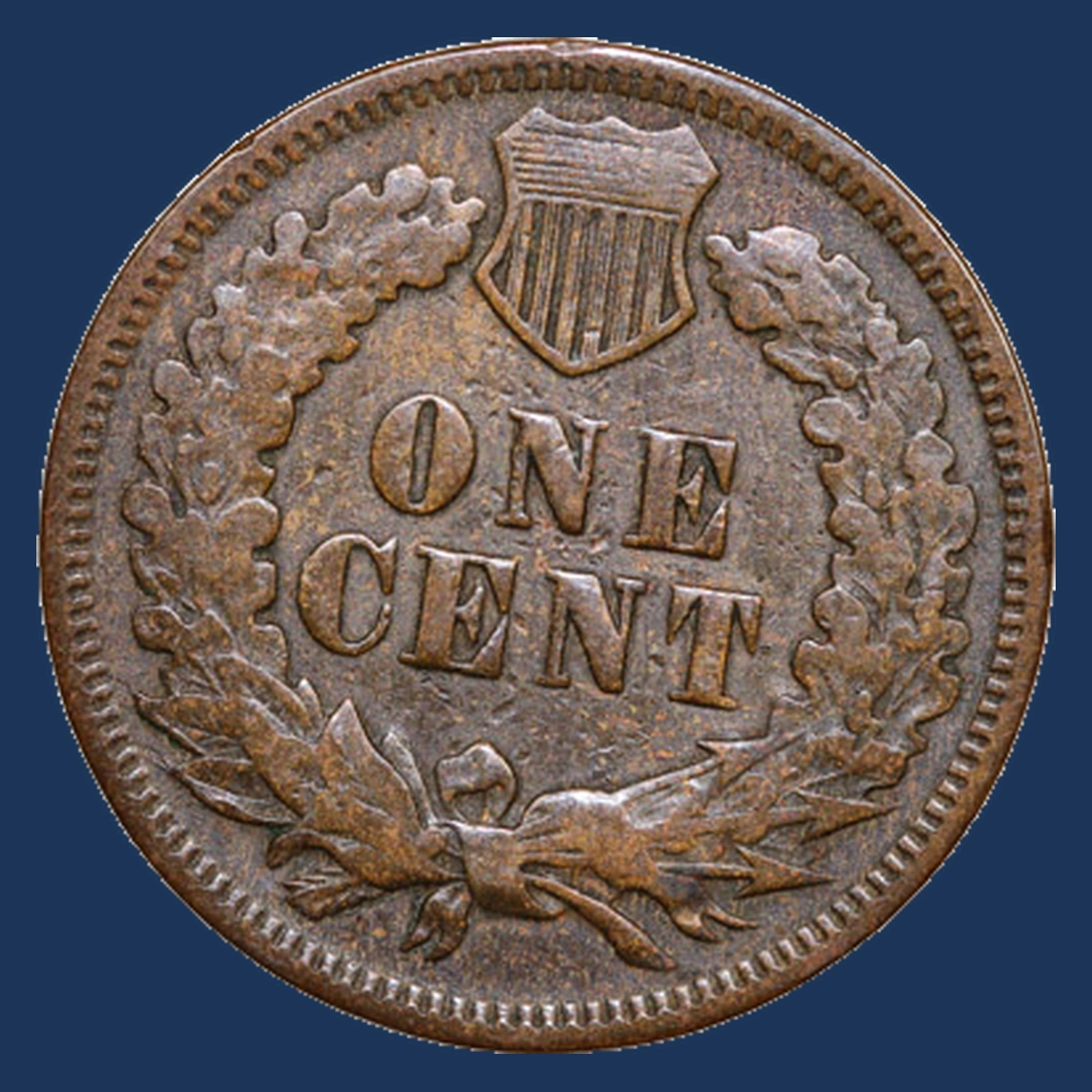
A raised line joining the bottoms of the date digits can record a crack in the stamping tool. One 1870 example runs from five o’clock through the date to seven.
Larger failures can leave broad patches connected to the rim. The catalog records a back cud from three-thirty to five o’clock.
Another example has a retained break between three-forty-five and five-fifteen. Here, the cracked piece stayed inside the tool long enough to keep some design visible.
These failures occur on Type I back designs. A separate back crack between three-fifteen and five belongs to another recorded example.
Estimated Value
Minor cracks on circulated 1870 pennies can fit an estimated $40–$200. Clear cuds or retained breaks can fit roughly $100–$1,500, with the date’s value and preservation included.
The larger raised patch should be compared with a similar broken-tool feature, not merely any damaged edge. Remaining design inside a retained break helps distinguish it from a fully missing tool piece.
These estimates do not assign an auction result to each example. Several cracks on one penny still belong to one coin.
How to Identify
For the date-spanning line, begin at the lower rim near five o’clock and follow it under the numerals with a 10× magnifier. A genuine tool crack leaves a raised ridge rather than a scratch cut into the surface.
Examine the back separately if the feature is a rim patch.
Photograph any design that remains inside its boundary. A retained piece can leave a shifted section with detail still present, while a missing piece can leave a blank raised lump.
Use a scale and calipers on a loose coin against 3.11 g and 19.05 mm.
Tilt the physical edge beside the patch toward the light; a folded rim or added metal needs a different explanation from a broken stamping tool.
5. 1870 Indian Head Penny Repunched Date
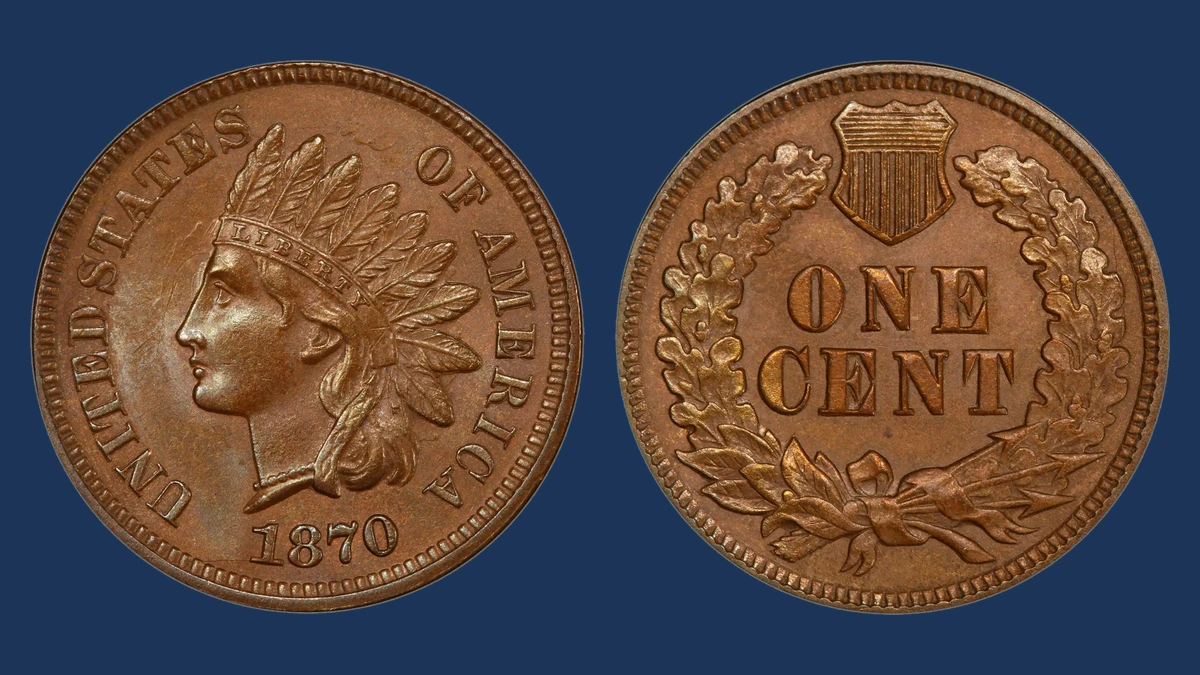
The date can show strokes from an earlier position of its punch. A second impression in the tool failed to cover every part of the first.
One Type I example has traces below the base of 1 and below parts of 8, while an earlier 0 sits higher. Another repeats parts of 1 and 8 toward the upper left.
A Type II example instead has earlier detail above the top of 1 and within the upper and lower loops of 8.
These types describe normal back designs. They help select the correct coin photograph, not separate error causes.
Estimated Value
An older dealer advertisement priced an 1870 Snow-4 repunched date graded ANACS VF30 at $300. This was an asking price for a coin with visible circulation wear.
Estimate $75–$2,000 for identified 1870 repunched dates across worn and better-preserved examples. Clear earlier strokes and original surfaces help determine a useful comparison within that range.
When the same penny carries a doubled design or misplaced numeral, assess the complete combination. Its individual features do not create several independently priced coins.
How to Identify
Identify the back style before selecting the date photograph for comparison. Under a 10× magnifier, trace the earlier strokes around all visible parts of 1, 8, and 0.
A mark below the foot of 1 should not be matched to an example showing the remnant above its top. The neighboring digits must agree with the same pattern.
For a loose bronze coin, check the normal 3.11 g with a scale and 19.05 mm with calipers. Keep the surfaces unchanged while photographing the small date remnants.
Compare the curve inside 0 as well as the easier marks beside 1. A complete pattern of earlier strokes is more convincing than thickness on one digit alone.
6. 1870 Indian Head Penny Misplaced Digits below the Main Date
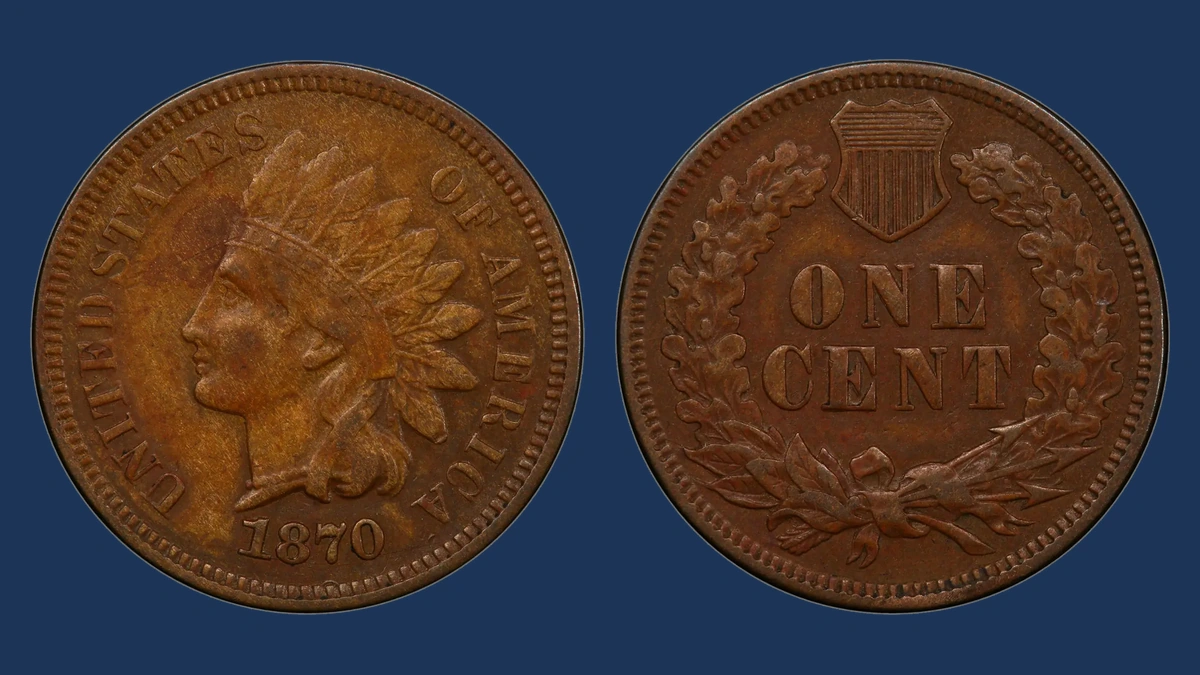
The top of an extra 0 can appear among the border teeth below 7. This is one misplaced-date pattern recorded on 1870 pennies.
The punch used to add the date touched the stamping tool outside its intended position. Part of the wrong impression remained after the correct date was added.
The Type II Snow-5 example combines that low 0 with front doubling and date repunching. Type I examples have different groups of misplaced fragments beneath the date.
One front tool was used with different back tools. A matching low fragment therefore need not mean every back detail also matches.
Estimated Value
A worn Snow-5 coin combining a doubled front and misplaced date sold for $780 in May 2022. That result belongs to the complete combination, not to the low 0 alone.
Use an estimated $100–$3,000 for identified 1870 misplaced-date varieties across circulated and stronger preserved examples. The particular pattern, wear, and color all affect the total.
The Type I group has different digit fragments and back pairings. It should not inherit every feature or price of the Type II Snow-5 coin.
How to Identify
For the Type II example, put the normal 7 at the center of a 10× view and examine the border directly below it. Follow the curved top of the extra 0 rather than filling in a whole numeral from one bump.
Check a loose example on a scale and with calipers against 3.11 g and 19.05 mm.
Type I coins need their own enlarged lower-border photograph. Their several fragments can overlap the teeth and should be compared as a group.
Include both full faces when recording the coin because the same front tool was paired with different backs. Match the actual fragment positions first, then use the back design to distinguish the correct pairing.
7. 1870 Indian Head Penny Doubled Front or Back Design
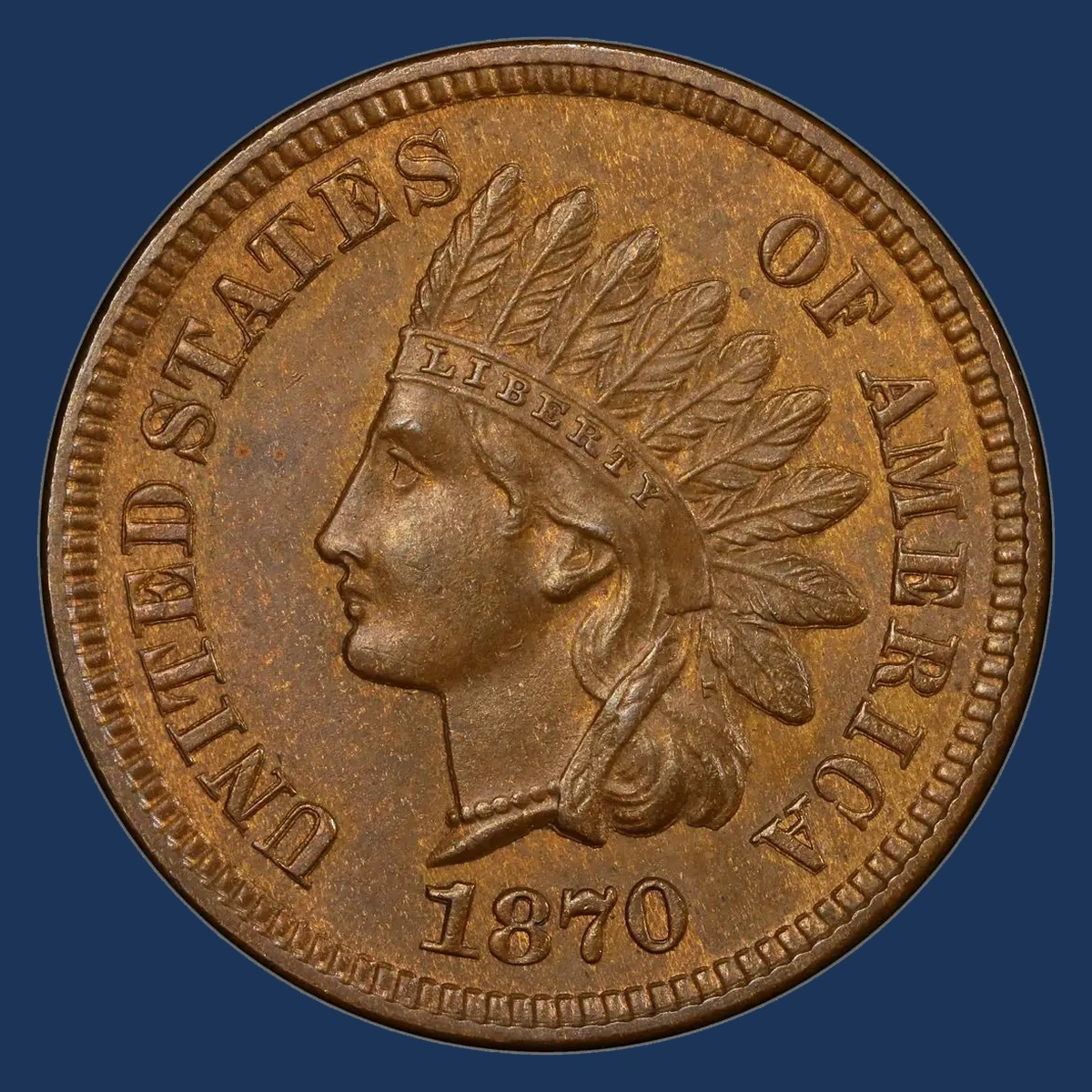
LIBERTY can show extra letter edges on the front, while ONE CENT can carry repeated outlines on the back. Different 1870 examples show different combinations.
One front pattern affects TY, and another extends through IBERTY. Back examples can repeat the N or EN, with other patterns reaching the shield bars, wreath, and border teeth.
The extra detail was already present in the stamping tool. One blow from it copied the repeated shapes onto the coin.
1870 also has ordinary shallow and bold versions of the N. That normal design change must be separated from actual doubled outlines.
Estimated Value
The Snow-5 doubled-front and misplaced-date coin sold for $780 at Heritage in May 2022. PCGS graded it AU50 Brown, meaning light wear and brown surfaces.
Estimate $100–$5,000 for identified 1870 doubled-design varieties across circulated and high-grade examples. Front-only, back-only, and two-sided combinations need their own comparisons.
The $780 result is the same combined coin discussed under misplaced dates. It should be counted once, not added again because two of its features have separate explanations.
How to Identify
Use a normal back of the same design style as your comparison. A bold N beside a shallow N can look different even when neither coin has doubled detail.
With a 10× magnifier, inspect the physical edges of the letters rather than their overall darkness. For front examples, check whether the repeated strokes match TY or the longer IBERTY pattern.
Then examine any claimed doubling in the shield, wreath, or lower-left border against that particular back variety.
A scale and calipers check a loose penny against 3.11 g and 19.05 mm, but cannot determine whether the tool was doubled. Rounded, separated outlines at the matching locations matter; a flat shelf beside an isolated letter can come from movement during striking.
Conclusion
The headband, date, and lower border can each reveal a different 1870 penny variety. On the back, normal differences in the N must be separated from actual doubled edges.
Estimated whole-coin values here range from $40 to $5,000. Several features may share one penny, so compare the complete combination once rather than adding separate prices for its doubled design, misplaced digits, cracks, clash marks, or small rotation.