1845 Cent Error List with Pictures

A missing edge section can make an old copper cent worth a closer look. A clipped 1852 large cent sold for $384 in June 2024, offering a different-year comparison for the reported clips on 1845 cents.
This 1845 penny error list covers estimated whole-coin values of $25–$5,000. One recorded coin combines fine peeling on the back with raised breaks along both rims.
The checks below separate missing metal, blocked detail, and flaws copied from damaged stamping tools.
1. 1845 Braided Hair Cent An Incomplete Copper Outline
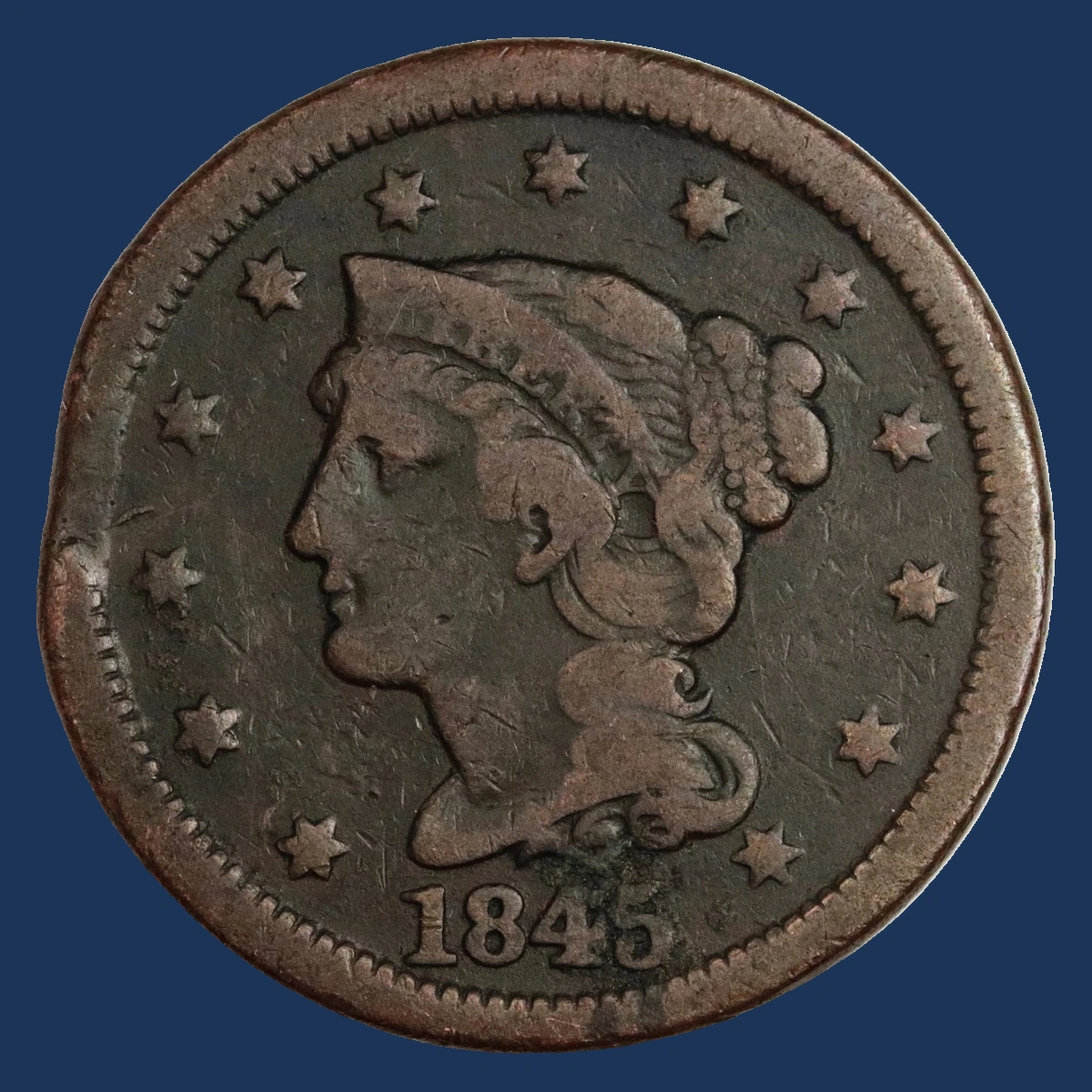
A clipped cent began as an incomplete disk of copper. The tool cutting plain disks from a metal strip overlapped an opening or the strip’s outer edge.
The missing section therefore existed before the portrait and lettering were struck. Curved, straight, and irregular gaps can result from different cutting positions.
The year guide reports a small clip on an 1845 cent. It does not establish a particular clock position or percentage for that piece.
Look beyond the shape of the opening. A later cut can make a similar gap but leaves different evidence where the finished design meets it.
Estimated Value
For genuine 1845 clips, estimate $40–$200 on worn cents and $200–$500 for cleaner, clearer examples. A visible opening and readable date help collectors judge the error.
The year guide reports a small clip offered around $40. That is a seller’s asking price, not a completed sale.
A separate 1852 clipped large cent graded NGC MS63 Brown brought $384 in June 2024. It was unworn with noticeable marks and provides a nearby-year comparison.
How to Identify
Follow the plain edge into both ends of the opening with a 10× magnifier, watching for filing lines or sharp burrs. Then trace the nearest lettering to see whether a later cut sliced through an already finished letter.
A scale can record a loose cent’s weight against 10.89 grams, while calipers measure intact spans near 27.5 millimeters. Both an original clip and a later cut remove copper, so weight loss alone cannot decide between them.
Check for a weak rim opposite the gap, although that supporting feature is not clear on every genuine clip. Turn the opening toward the light to compare its surface with the surrounding struck metal.
2. 1845 Braided Hair Cent An Impression Left by Trapped Material
A shallow hollow may preserve the outline of something caught in the press. The obstruction kept part of the copper from receiving its intended design.
Collectors call this a struck-through error. A thin object can leave a narrow impression, while soft material may simply blur or erase nearby detail.
The category is reported for 1845 cents without establishing a particular piece of wire, cloth, or other material. The shape on an individual coin must support any more specific name.
Wear is different: it gradually lowers exposed details rather than placing an object between the blank and tool.
Estimated Value
An authenticated 1845 struck-through feature has an estimated value of $50–$250 on a worn coin. A clear, dramatic impression with attractive surrounding detail can fit $250–$750.
These are estimates for the complete cent, based on the visibility of the mint-made interruption. They are not a sale record for an identified object trapped in an 1845 press.
A recognizable outline is easier to assess than a vague weak patch. Scraping and ordinary wear do not justify the same premium.
How to Identify
Start outside the hollow and compare the nearby hair, stars, or letters. Sharp surrounding details make a local blockage more plausible than general wear.
At 10× magnification, follow the entire boundary. A scratch often has a cutting path or pushed-up lip, whereas a blocked strike interrupts the design where material lay between the surfaces.
Weigh a loose copper cent against 10.89 grams on a scale. Calipers can compare its width with 27.5 millimeters, while an edge view can reveal squeezing around an affected patch.
The normal edge is plain. If any material remains attached, leave it in place.
Photograph it from the face and side without cleaning or lifting it. The contact between the material and coin may help explain how the impression formed.
3. 1845 Braided Hair Cent Fine Peeling beneath the Back Lettering
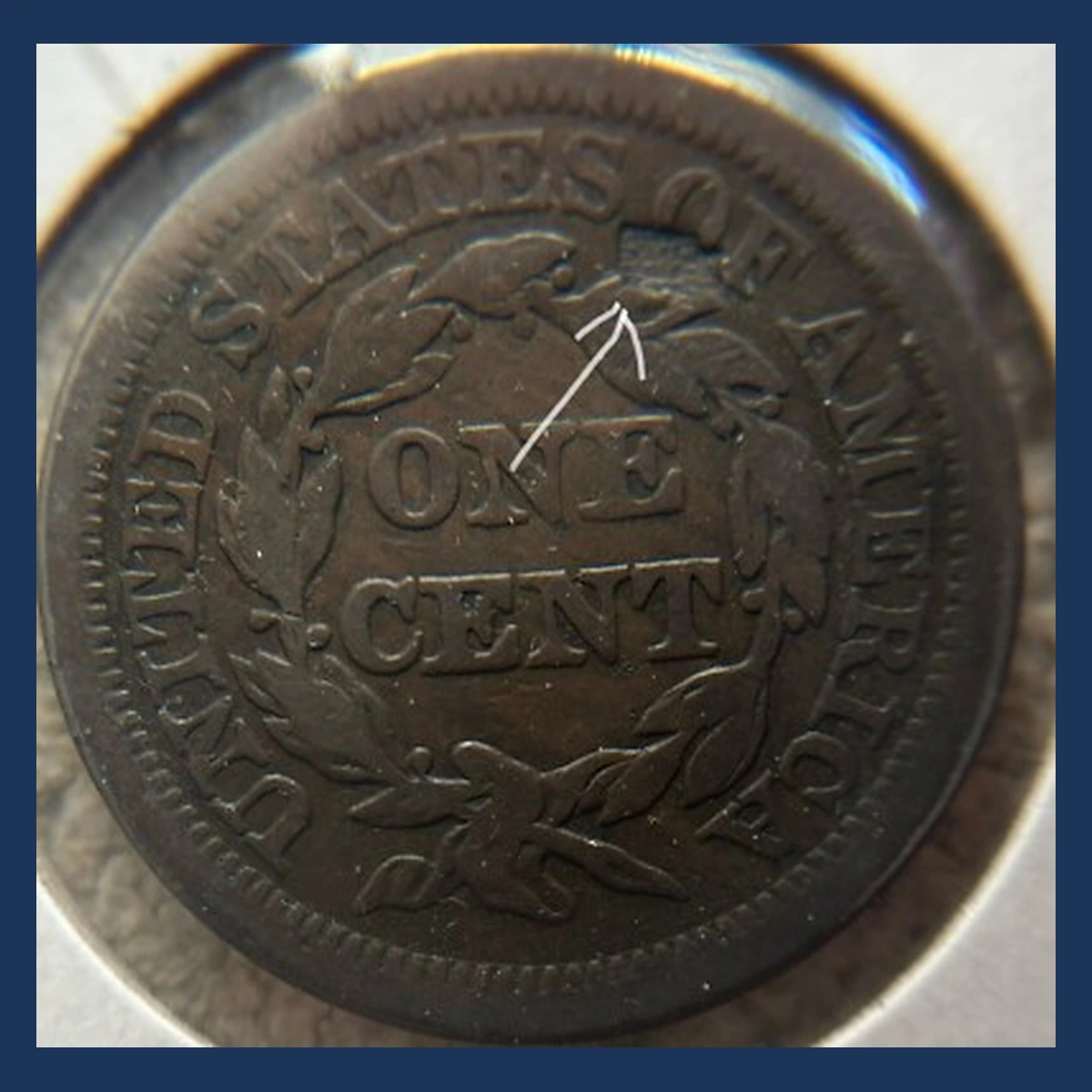
One recorded 1845 cent has a fine copper separation along the bottom of S-OF-A on the back. The auction describes this small lamination as present when the coin was struck.
Lamination occurs when a weak layer within the copper separates. A flap may lift or a small sheet may be missing, rather than the whole coin splitting in half.
This example was cataloged as VF25, meaning moderate wear. Its surfaces were described as smooth apart from minor marks.
It also has substantial raised rim breaks. Those come from damaged stamping tools and are separate from the peeling copper.
Estimated Value
Estimate $40–$300 for worn 1845 cents with a clear local lamination and $300–$1,000 for attractive examples with stronger remaining detail. These are complete-coin estimates.
The N-13 coin with fine peeling and two rim breaks received an auction estimate starting at $400. That catalog figure is not a reported selling price.
Its unusual combination cannot be priced as a lamination alone. A tiny copper separation on an otherwise ordinary worn cent belongs in a more modest comparison.
How to Identify
Keep fingers and measuring tools away from the peeling copper. Even a fine separation can be damaged by an attempt to clean it.
With the back upright, find OF and the neighboring S and A. A 10× magnifier should show the thin separation along the lower edges of this lettering on the recorded coin.
Move the light almost level with the surface to reveal the boundary. Do not scrape a dark line to test whether it is dirt.
A scale can compare a loose cent with 10.89 grams, although a tiny flaw may cause little measurable loss. Calipers can check intact parts of the 27.5-millimeter outline.
Inspect the plain edge and raised rim patches separately. Those thicker patches came from broken stamping tools, unlike the fine layer separating within the copper.
4. 1845 Braided Hair Cent Raised Tool Cracks and Long Rim Patches
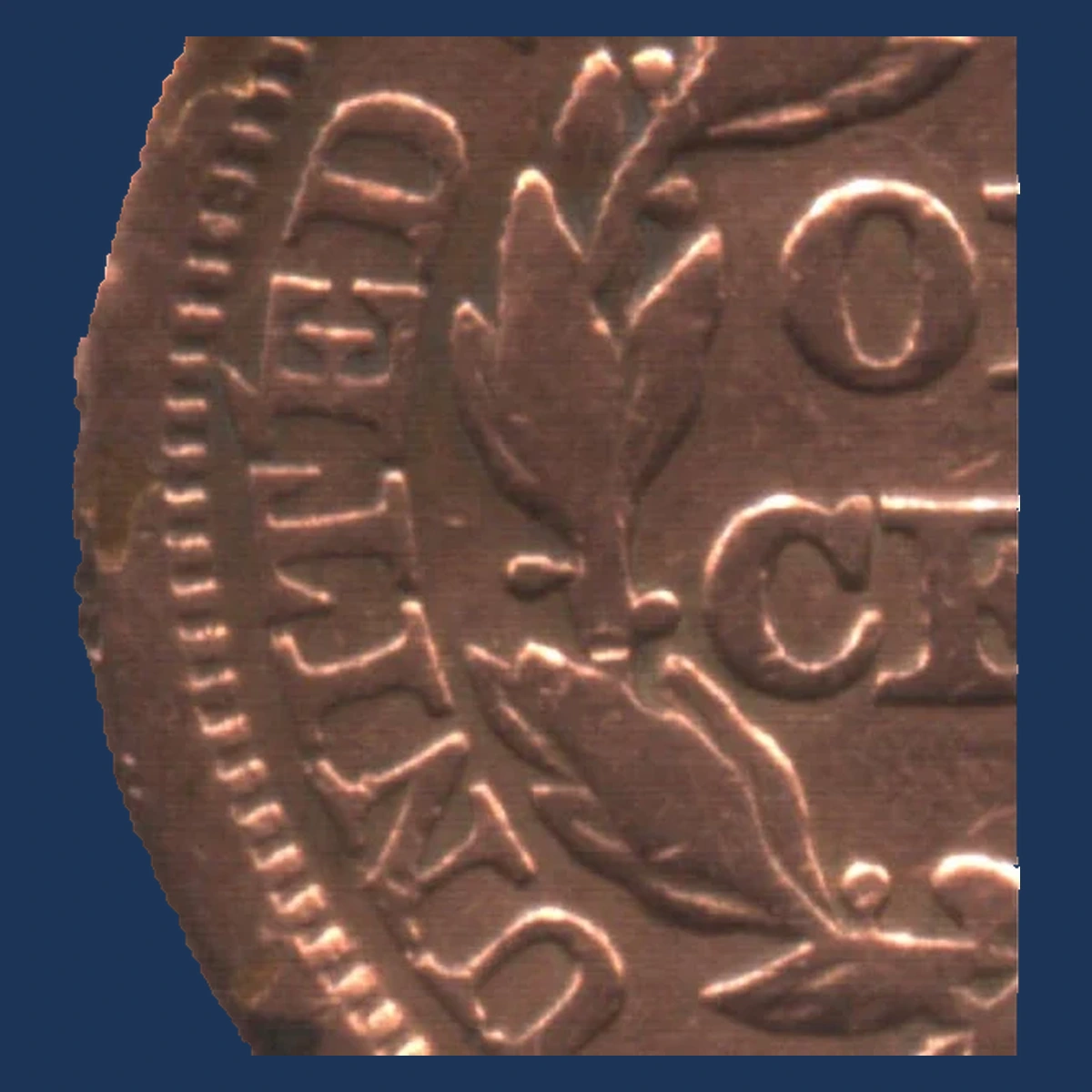
A broken stamping tool can leave extra copper above the design instead of removing metal. Pressure pushes the blank into the tool’s damaged area.
The N-13 example has a long raised front patch running clockwise from right of star twelve to below star three. Another patch lies between CA in AMERICA and the wreath’s stem tip.
These rim-connected breaks are called cuds. Thin cracks in the same kind of tool failure produce raised lines instead.
A separate N-10 coin has a slightly raised retained break above E in UNITED. Here, the broken part of the tool stayed in place.
Estimated Value
Allow estimated whole-coin ranges of $25–$200 for modest cracks and $150–$2,000 for pronounced rim breaks. Surface quality and the visibility of the broken-tool pattern influence the comparison.
The N-13 auction description gave an estimate starting at $400 for its worn example. That cent also has the fine lamination described above.
The two features share one value. Do not add the lamination range to the rim-break range for that same object.
How to Identify
Count the front stars from the lower left with Liberty upright. Follow the N-13 patch from the right of star twelve around the lower border toward star three.
Turn to CA in AMERICA and the wreath’s stem tip for the second break. A 10× magnifier and low light help show that both patches stand above the copper and connect with the rim.
The separate N-10 break belongs above E in UNITED, where part of the damaged tool remained in place. Do not transfer that location to the N-13 coin.
Inspect the plain edge for dents beside each raised area. For a loose cent, a scale and calipers can record the usual 10.89 grams and 27.5 millimeters without pressing on the patches.
5. 1845 Braided Hair Cent A Misplaced Strike Leaving Bare Copper
The portrait can move toward an edge when the blank enters the press away from the tools’ centers. An opposite portion of copper then misses the blow entirely.
An older Heritage catalog lists an 1845 large cent ten percent off center. It describes the coin as Fine 12 with corrosion, meaning a worn example with damaged surfaces.
The displacement is the minting error; the corrosion is a later condition problem. Their effects should be considered separately when judging the coin.
A larger displacement can remove the date altogether. More empty copper does not automatically make an example easier to identify.
Estimated Value
Estimate $150–$1,000 for worn 1845 off-center cents and $1,000–$5,000 for stronger examples with good surfaces and a clear date. These ranges allow for different degrees of displacement.
The cataloged ten-percent piece has corrosion, which can hide the original surface. Its appearance differs from an attractive unworn example.
A complete date and undisturbed bare copper make comparison easier. Heavy corrosion can hide the original surface, while later trimming changes the shape and reduces collector interest.
How to Identify
Weigh a loose cent against 10.89 grams on a scale, then measure its outline with calipers near the original 27.5 millimeters. A misplaced strike leaves copper unstruck, so a large loss of weight needs another explanation such as corrosion or cutting.
Find the date and use a 10× magnifier to inspect where the design ends beside the plain crescent. Grinding can leave scrape lines or faint design fragments in an area that initially appears to be unstruck.
Compare both faces to distinguish a misplaced copper disk from a shifted tool that affected only one design. Finish at the plain edge, checking for trimming and separating rough corrosion from the original outline.
Conclusion
For the 1845 errors discussed, estimated whole-coin values extend from $25–$5,000. A missing section, a shallow depression, and a raised rim patch are different kinds of evidence.
The documented N-13 cent shows why one coin can have more than one feature. Its thin peeling flaw and raised breaks still belong to a single object with one combined value.
Use gentle lighting, complete photographs, and measurements to explain what you see without changing the copper.