1800 Cent Error List with Pictures

An old date can remain visible beneath a new one without the coin being struck twice. An 1800/1798 cent graded XF40 brought $7,800 at auction in January 2024.
This 1800 penny error list explains that distinction alongside missing metal, broken-tool marks, and backward portraits. Estimated whole-coin values for the examples below run about $100–$25,000.
Some pieces combine more than one feature. Compare the dates, edges, and overlapping designs below before deciding which explanation fits your coin.
1. 1800 Draped Bust Cent Reported Clipped-Blank Possibility
A clip is a piece missing from the blank before the design is struck. It can begin when a cutting punch overlaps a previous hole in the copper strip.
The incomplete disc then passes through the press. Its opening may affect how the nearby border and design fill out.
The 1800 year guide discusses this possibility through an example from 1804. It does not identify a specific clipped 1800 large cent.
That leaves a feature to investigate rather than a confirmed specimen to match. A cut made after minting can create a similar-looking gap.
Estimated Value
For a confirmed clipped 1800 large cent in worn condition, estimate $200–$1,500. This is an estimate for that type of flaw, not a valuation of an established 1800 example.
The guide’s different-year comparison was an 1804 cent with a twenty-percent clip offered at $2,550. That was an asking price for a much scarcer date.
A buyer should assess how clearly the gap formed before striking. Missing copper alone does not create a collectible Mint error.
How to Identify
Weigh a loose candidate before judging its missing portion. A scale should be compared with the original 10.89 grams, while calipers record intact widths against roughly 29 millimeters.
A lower weight can follow either an original clip or later cutting. Use a 10× magnifier inside the opening to look for saw marks, file lines, or freshly exposed metal.
Then examine the nearby design and the rim opposite the gap. Softness produced during striking can support a clip, but one weak spot is not a complete diagnosis.
Photograph the plain edge and both faces with the date visible. Check that the back reads ONE CENT, since an 1800 half cent is a different coin.
2. 1800 Draped Bust Cent Transferred Marks behind the Hair
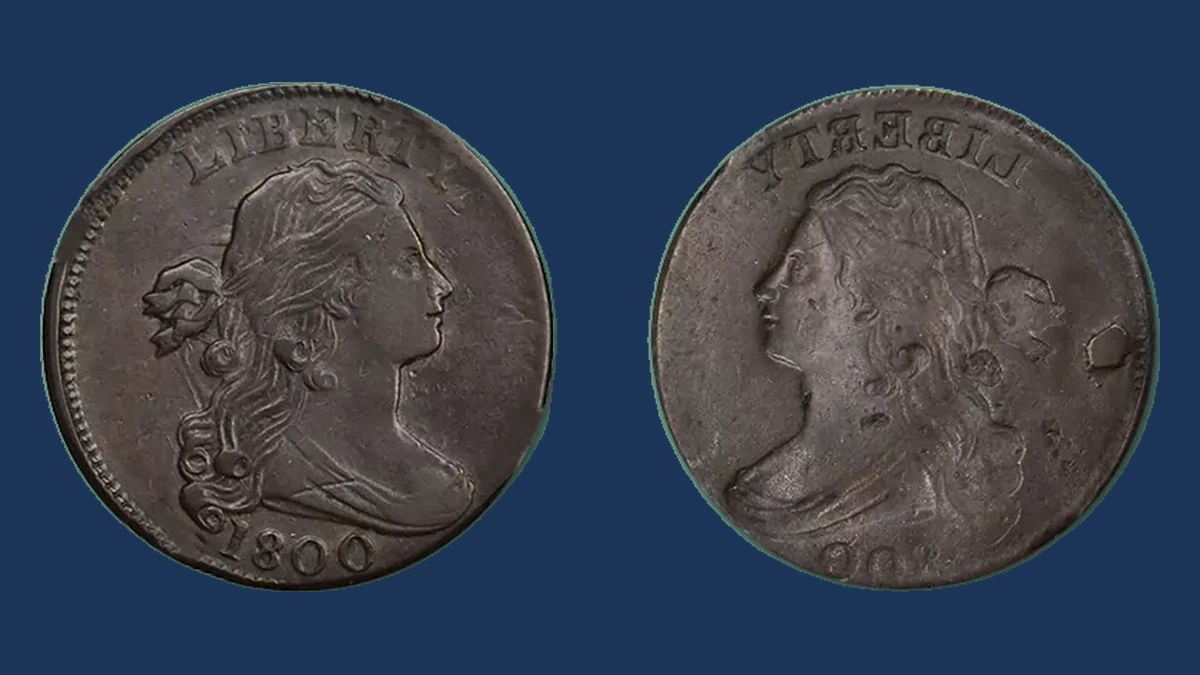
An extra shape behind Liberty’s hair may be a trace of the back design. The tools that stamped the coin can hit each other when no blank is between them.
The contact marks are copied onto coins struck afterward. This process is called a die clash.
A documented 1800 brockage has these traces behind the hair on its normal portrait side. A separate overdate cent is also cataloged with clash marks, without a specific location given.
These examples must be compared separately. A partial transferred line differs from the full backward design on a brockage face.
Estimated Value
Worn 1800 cents with recognizable clash marks fit an estimated $150–$2,000 whole-coin range. The amount also depends on the date variety and the condition of the copper.
The overdate example was described as VF35, with light to moderate wear and retoned surfaces. No sale amount is assigned to that catalog appearance.
For a nearby-year comparison, an 1812 clashed cent in PCGS VF35 was reportedly purchased for $1,500 in 2025. That owner-reported payment is not an 1800 auction result.
How to Identify
The normal portrait side of the documented S-209 carries the faint traces behind Liberty’s hair; its other face has a full backward impression. Compare that normal portrait with a separate image of an ordinary wreath-side design using a 10× magnifier.
Before interpreting weak lines on a loose candidate, check its copper surfaces and plain edge for pressure damage. A scale and calipers can record the usual 10.89 grams and roughly 29-millimeter diameter, though matching these measurements does not establish a clash.
Turn or mirror the comparison image until the opposite design explains the extra outline behind the hair. The separate overdate coin needs its own matching examination, because its catalog description does not specify the same location.
3. 1800 Draped Bust Cent Raised Breaks at the Rim and over the Curls
A broken stamping tool can leave more than a thin raised line. An 1800 example has a broad affected area covering Liberty’s lower curls.
The broken tool section remained in place, creating what collectors call a retained cud. Some design can remain visible within such a shifted section.
The same example has a swollen back design with parts of its lettering weakened. It was cataloged as G4+, with heavy wear.
A different reported 1800 has a break along the lower back rim. Its location should not be transferred to the coin with the affected front curls.
Estimated Value
Allow an estimated $100–$2,500 for worn 1800 cents with clear large tool breaks. A readable date, natural surfaces, and an obvious affected area help buyers compare examples.
The heavily worn retained-cud coin has no sale amount assigned here. As a different-year example, an 1829 Coronet cent with three rim breaks sold for $810 in September 2020.
That coin was PCGS AU50, with light wear. It provides context for a visible break, not a direct price for either 1800 specimen.
How to Identify
Examine the curls under a 10× magnifier before deciding whether a raised area is a dent. A retained break can preserve parts of the design while shifting their level relative to the surrounding copper.
Turn the same coin over to assess the reported swelling and weak letters. Do not mistake the separate lower-back cud example for this second face.
For a loose cent, a scale and calipers can record about 10.89 grams and 29 millimeters as normal comparisons. A tool break does not itself require a large loss of metal.
Inspect the plain edge beside a rim-connected patch. A crushed edge with copper pushed inward suggests a blow after minting rather than a space left in the stamping tool.
4. 1800 Draped Bust Cent Displaced Strike with Unstruck Copper
When a blank sits away from the center of the press, part of the design can miss the copper. An untouched arc remains on the opposite side.
A published dealer list includes an 1800 large cent ten percent off center toward eight o’clock. It describes the coin as Good, meaning heavy wear.
Another auction record identifies an off-center 1800 graded NGC VG8. That is a separate specimen, so the first listing’s direction and percentage should not be assigned to it.
Two complete faces help distinguish a misplaced blank from a tool that shifted on only one side.
Estimated Value
Worn 1800 cents with modest off-center strikes fit an estimated $200–$1,500; clearer or better-preserved pieces can fit $1,500–$3,500. A readable date remains useful when some design is absent.
The ten-percent example was listed at a $275 minimum bid. That is not a reported completed sale.
The price should reflect the coin’s condition and visible displacement together. Corrosion or a missing date can matter more than a small increase in the off-center percentage.
How to Identify
Align the front and back photographs to the same physical edge. Compare which design portions miss the copper and where the untouched area remains.
A 10× magnifier helps separate original blank metal from a design removed by grinding. Follow the edge of the struck area rather than judging only the width of an empty crescent.
For the listed Good example, keep the eight-o’clock displacement in mind. Use its ten-percent description only for that coin.
A normal loose copper blank began near 10.89 grams and 29 millimeters. Record its weight with a scale and its surviving widths with calipers.
Examine the plain edge beside the empty area for filing or cutting, which can imitate missing struck detail.
5. 1800 Draped Bust Cent Repeated Strikes and Striking over a Brockage
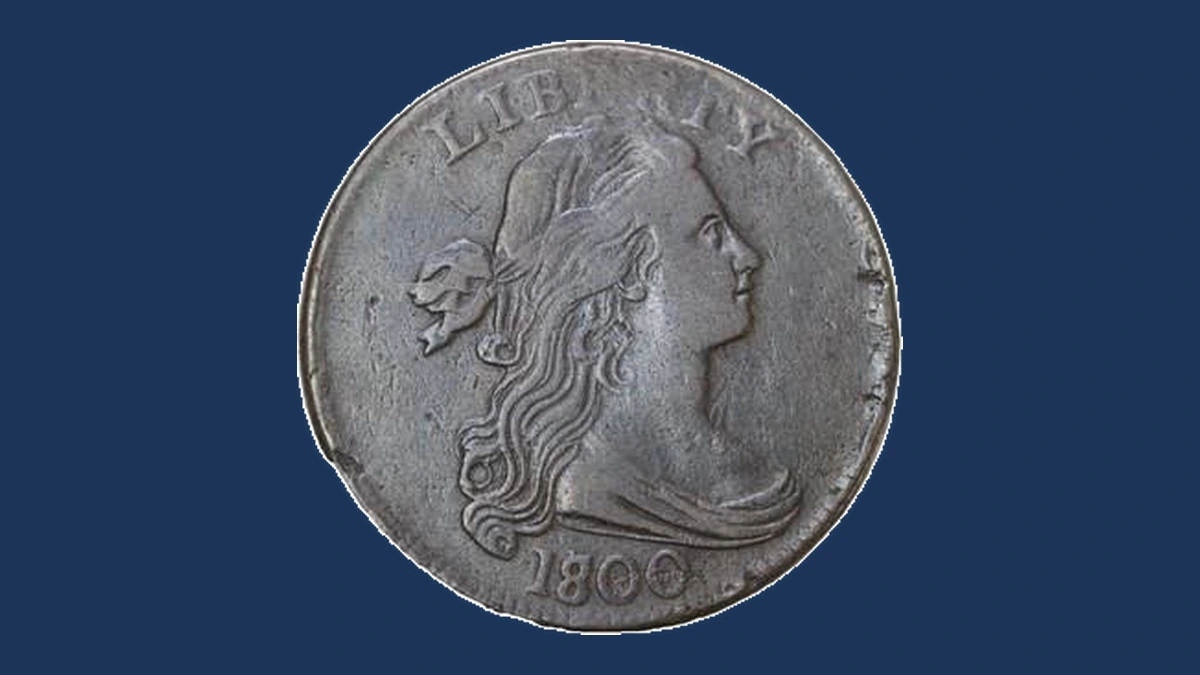
Two sets of ON appear on a cataloged 1800 cent after it received separate blows. The first strike shifted toward six o’clock, and the next toward about one-thirty.
Traces of the earlier design survive on both faces. They are about a millimeter apart, rather than confined to a tiny shelf on one letter.
Another recorded cent began as a brockage, with a backward design sunk into the copper, before being struck again. The later normal design overlies that earlier impression.
These are different sequences. Both require surviving evidence of more than one striking event.
Estimated Value
For a worn 1800 double strike, estimate $250–$3,000, rising to roughly $3,000–$15,000 for a convincing strike over an earlier brockage. These are whole-coin estimates, not sales assigned to the two recorded examples.
The ordinary double-struck specimen had heavy wear, an X scratched across the portrait, and a rim dent. Those later marks lower its appeal.
An 1817 double strike with heavy wear and environmental damage sold for $264 in 2019, providing a different-year comparison for an impaired coin.
How to Identify
On the ordinary double strike, inspect ON in ONE through a 10× magnifier and look for another ON above it. The scratched X across the portrait is later damage, not evidence of the second blow.
For the other sequence, find a backward sunken feature underneath the normal raised design. A second raised outline alone does not establish that a brockage came first.
Use a scale and calipers on a safely handled loose candidate against the normal 10.89 grams and roughly 29 millimeters. The historical overstruck-brockage record reports a larger 31-millimeter coin, so size needs to be assessed with its striking history.
Photograph the plain edge and both faces, keeping the low, backward remnants distinguishable from the later raised design.
6. 1800 Draped Bust Cent Older Date Numerals beneath 1800
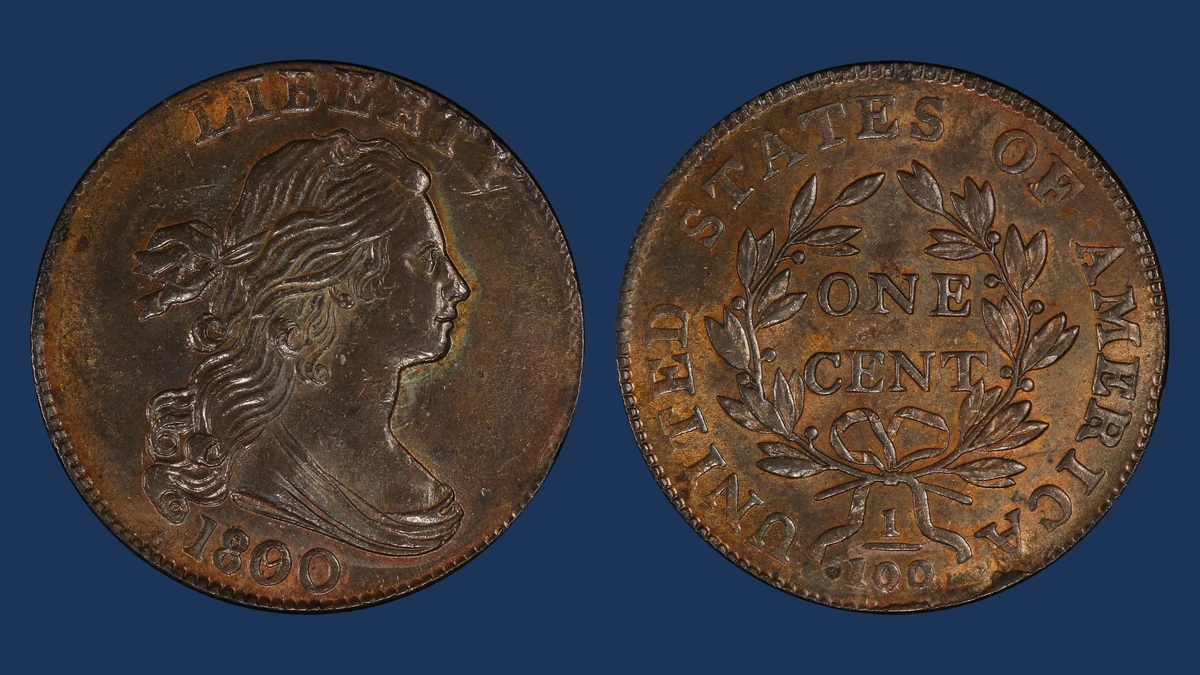
Older numeral fragments can remain around the date when a stamping tool is updated for another year. Coins struck from that tool copy the combined date in one blow.
The 1800/1798 group belongs with the portrait called Style One Hair. A different group, called 80 over 79, belongs with Style Two Hair.
These names describe different hair designs and different date patterns. A close-up from one group is not an exact match for the other.
The extra pieces should follow recognizable numeral shapes. Random bumps from corrosion or cuts around an altered date can give a misleading impression.
Estimated Value
Worn overdates fit an estimated $200–$5,000 range, with strong, lightly worn examples around $5,000–$15,000. The particular date pattern, surfaces, and remaining detail all affect the whole-coin price.
PCGS records an 1800/1798 S-191 at $7,800 in January 2024, graded XF40 Brown. XF40 means light to moderate wear with much detail remaining.
That result belongs to the Style One group. It should not be copied automatically onto a worn Style Two 80-over-79 cent.
How to Identify
Select a full-coin reference with the matching hair design and clear date before enlarging the date. Under a 10× magnifier, compare the surviving older strokes around all four numerals rather than inspecting one convenient bump.
For a loose copper cent, a scale and calipers check the normal 10.89 grams and roughly 29-millimeter outline. Its edge is plain, but correct measurements alone cannot prove that the date is original.
Move a lamp across the suspected older strokes and inspect the surrounding surface for tool cuts or smoothing. The added shapes should resemble the appropriate earlier numerals while preserving the natural copper around them.
7. 1800 Draped Bust Cent Backward Portrait Sunk into the Other Face
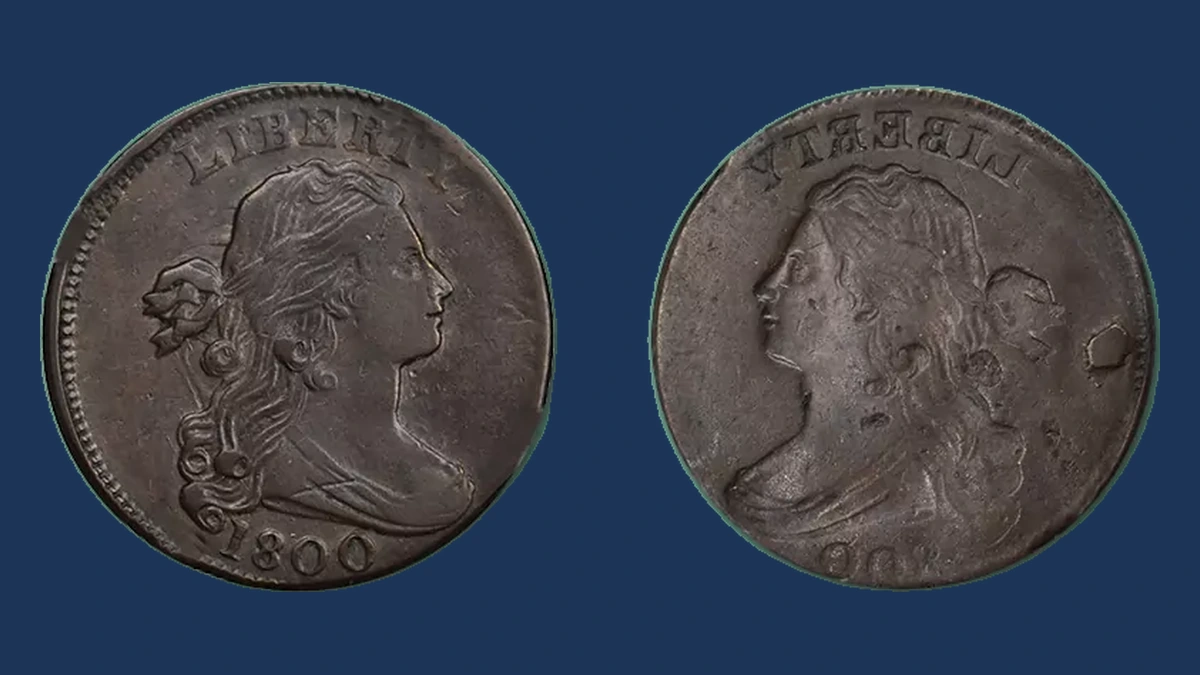
The back can show Liberty’s portrait instead of the wreath, but with the design backward and pressed into the copper. This is a brockage.
A previously struck coin remained between the tool and the next blank. It pressed its raised portrait into that blank during the blow.
Stack’s Bowers describes an 1800 example with the normal portrait slightly displaced toward three o’clock. The backward side stretches toward nine o’clock.
The two directions belong to the same piece. They do not describe two separate cents, and the backward side is not a second normal front.
Estimated Value
An identifiable worn 1800 brockage fits an estimated $5,000–$25,000 whole-coin range. A complete backward portrait and smooth copper can be especially appealing on this early design.
The 1800 cataloger described AU50 sharpness, consistent with light wear. No sale price is assigned to it here.
An 1817 NGC VF20 brockage reached a $7,500 winning bid before fees in 2015. That later Coronet coin, with moderate wear, provides a comparison rather than an exact price for the 1800.
How to Identify
Read the lettering on the unusual face, then tilt it under a lamp. Backward letters must also be sunk into the metal, which a mirrored photograph cannot demonstrate by itself.
With a 10× magnifier, compare the normal portrait against the reversed impression. The featured 1800 example has different displacement directions on those faces.
The normal front should remain recognizable rather than crushed by a later squeeze between two coins. Photograph that face as carefully as the unusual one.
Use a scale against 10.89 grams and calipers against about 29 millimeters if the coin is loose and safe to handle. Record the plain edge without forcing it flat.
Ask a specialist whether the low, backward design and the normal raised side fit a single original brockage strike.
Conclusion
An older numeral beneath 1800, a raised patch over the curls, and a backward portrait have different causes. Estimated whole-coin values across these examples run from $100–$25,000.
Look at both faces and keep the correct date pattern in view. Several features on one cent should be evaluated together, without adding several full coin prices.
For a suspected clip or an overstruck backward impression, clear edge views and a specialist’s examination can resolve details that ordinary photographs miss.