1837 Cent Error List with Pictures

Liberty’s face can leave a faint outline on the back of an 1837 cent. Other examples show peeling copper, incomplete edges, or a wreath turned away from its normal position.
This 1837 cent error list uses estimated whole-coin ranges of $20–$3,500. For an auction comparison, a rotated 1852 cent sold for $2,350 in November 2014; that is a different year, not an 1837 sale.
Read on to compare the visible marks and avoid confusing normal portrait varieties with errors.
1. 1837 Coronet Head Cent Heavy Peeling on the Back
Parts of the copper surface can separate from the metal below, leaving a peeled area or a thin flap. This separation is called lamination.
The Early Copper collection records an 1837 cent with heavy lamination on its back. The written description does not place the exact boundary beside particular letters or leaves.
A weak layer in the original copper can separate before or after striking. Struck detail sometimes remains on a flap that has not broken free.
The report does not establish a blank split completely through its thickness. Heavy surface peeling and a whole separated half-blank are different claims.
Estimated Value
For worn 1837 cents with back lamination, estimate $20–$150. Larger, clear separations on better-preserved examples can fit roughly $150–$750.
The collection example has no sale price used here, so these are estimated whole-coin ranges. Its description of heavy peeling does not establish a high grade.
For nearby-year context, an 1840 Large Date cent with lamination and other surface issues sold for $108 including premium in May 2025. That cataloged VF30 coin had moderate wear and a different flaw location.
How to Identify
Under a 10× magnifier, compare the peeling boundary with the wreath and lettering immediately beside it. Do not assume that every rough patch on the back belongs to the recorded separation.
Light from the side can reveal whether a thin copper sheet remains attached. Never lift the flap to inspect underneath.
On a loose cent, calipers check a diameter around 28 mm and a scale compares the original 10.89 g weight. Lost surface metal and circulation wear may reduce the weight.
Follow any surviving struck detail onto the peeling sheet. Scraped grooves through finished lettering or scattered corrosion pits without a layered edge suggest a different cause.
2. 1837 Coronet Head Cent Missing Section of the Original Rim
A blank with a missing edge section can still pass through the press and receive the cent design. Its incomplete outline remains on the finished coin.
GreatCollections lists an 1837 Matron cent with a rim clip from the Rippere Collection. Matron and Coronet are names used for this large-cent family.
The example is graded ANACS F12, indicating substantial wear with the main design still readable. Its summary does not give the clip’s exact shape, size, or position.
The term rim clip therefore should not be pictured automatically as a curved bite. A small original shortage can also interrupt the edge.
Estimated Value
Estimate $50–$350 for worn 1837 rim clips of modest size, and about $350–$2,000 for clearer examples with better-preserved surfaces. These are whole-coin estimates.
The ANACS F12 example establishes a circulated comparison, but its auction price is not used here. A clip’s size cannot be priced from the grade label alone.
Look for an original edge, readable date, and consistent struck detail. A large later cut may look dramatic while adding none of the value associated with a mint-made incomplete blank.
How to Identify
Photograph the gap with nearby stars or letters still in view. A 10× magnifier lets you inspect where the original border ends on either side.
An incomplete blank can leave a weak rim opposite the gap, but wear can weaken a rim too. Use that sign together with the missing edge, not on its own.
Weigh a loose copper cent on a scale against 10.89 g and measure intact spans with calipers around the usual 28 mm diameter. Keep a sealed ANACS coin in its holder.
Examine the gap’s wall for file marks or a sharp cut across already struck detail. The original strike should shape the adjoining edge instead of stopping at a newly cut surface.
3. 1837 Coronet Head Cent Quarter-Turn and Half-Turn Back Alignment
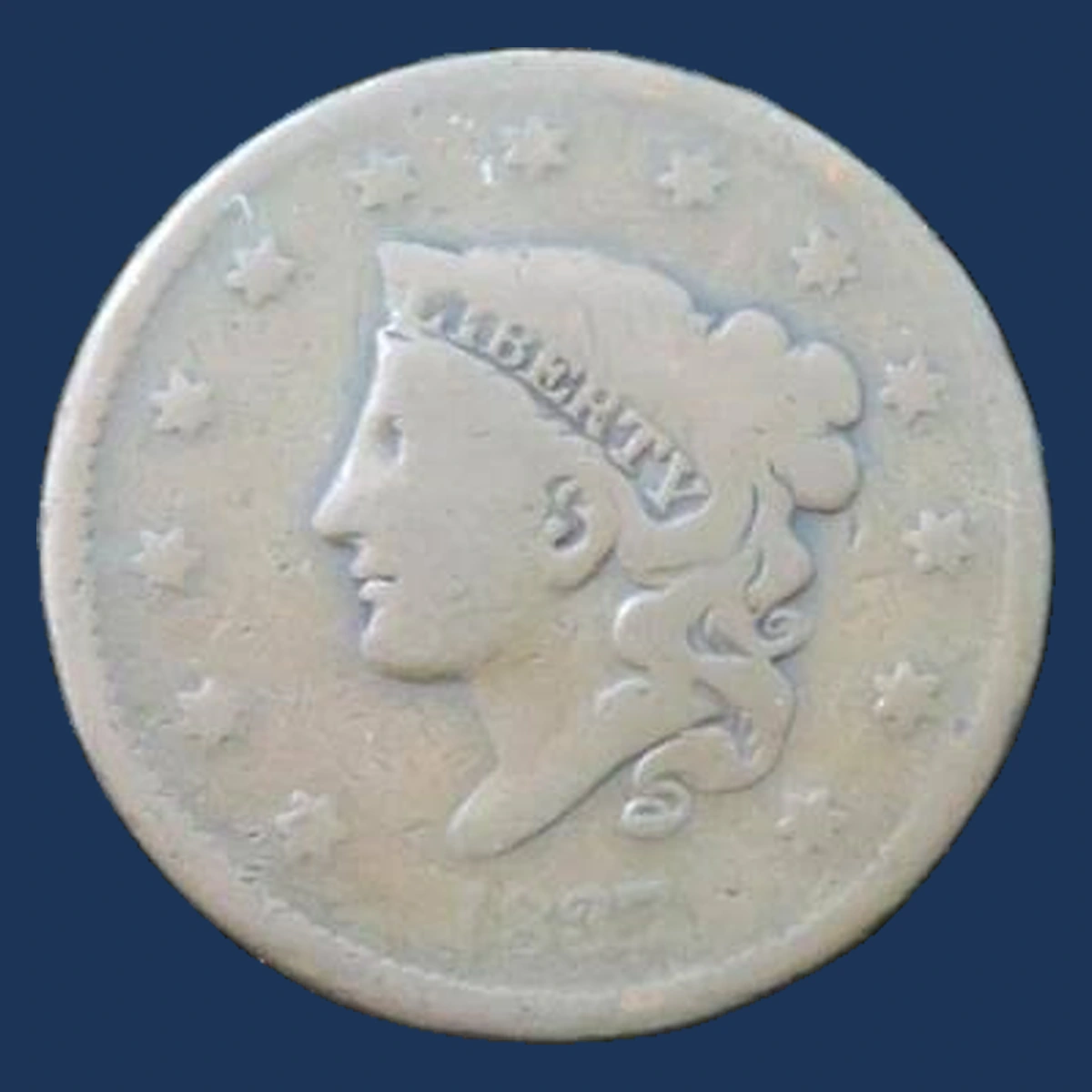
The wreath can face sideways or upside down after an upright portrait is flipped top to bottom. That difference records the angle between the two stamping tools.
An Early American Coppers study of the 1837 N-9 variety reports examples with ninety-degree and one-hundred-eighty-degree rotations. These mean a quarter turn and a half turn from normal alignment.
The account does not give a clockwise direction for every example. Each coin needs its own measurement.
Normal United States coin alignment makes the back upright after that top-to-bottom flip. A half-turn error leaves it upside down, while a quarter-turn error leaves it sideways.
Estimated Value
For circulated 1837 cents with substantial rotation, estimate $50–$400. Better-preserved examples can fit roughly $400–$3,000, depending on their surfaces and the visible turn.
An 1840 Small Date example with ninety-five-degree clockwise rotation sold for $72 including premium in May 2025 at catalog grade F15. A widely rotated 1852 NGC MS65+ Red-Brown cent brought $2,350 in November 2014.
Those different-year sales show how strongly condition affects the comparison. Neither amount is a recorded price for the study’s 1837 examples.
How to Identify
Imagine an upright clock face on the back: a quarter turn moves its top toward three or nine, while a half turn moves it toward six. The same distinction helps separate the two reported rotations.
Hold the portrait upright, then flip top to bottom without turning sideways. Photograph the result against a fixed vertical line and use a protractor to measure the wreath’s tilt.
A 10× magnifier can help locate the wreath’s center on a worn coin. For a loose example, a scale and calipers check 10.89 g and about 28 mm.
Repeat with the same fixed line before recording a direction. Two separately straightened photographs conceal the very angle you are trying to measure.
4. 1837 Coronet Head Cent Liberty’s Face Showing through the Back Design
A faint face can appear behind the wreath and lettering. Stack’s Bowers described Liberty’s face in clash marks on an 1837 N-11.
A clash happens when the front and back stamping tools strike one another without a blank between them. Their damaged surfaces can then transfer traces of the opposing design onto later coins.
The described cent uses the portrait style called Head of 1838. That is a normal design used during 1837, not an incorrect date.
The same cent has cracks and a rim break. Fine lines from worn tools are not automatically part of the facial outline.
Estimated Value
Estimate $50–$300 for recognizable clash marks on circulated 1837 cents. Clear examples without circulation wear can fit roughly $300–$3,000, with condition accounting for much of that difference.
The described N-11 was graded PCGS MS64 Brown, meaning an unworn coin with good preservation. No completed auction price for that specific example is assigned here.
Its clash, cracks, and small rim break belong to one cent. Estimate that complete coin once rather than adding separate prices for each visible mark.
How to Identify
Compare a clear photograph of Liberty’s front profile with an enlarged view of the back. Use a mirrored comparison of the portrait to test whether the faint back lines form the same facial shapes.
A 10× magnifier and light from two directions help separate those curves from the normal wreath. The N-11 catalog description distinguishes the face from surrounding lines left by worn tools.
For a loose example, measure about 28 mm with calipers and compare 10.89 g on a scale. The meaningful match is a connected sequence of facial contours, not an isolated scratch that happens to resemble a nose or chin.
5. 1837 Coronet Head Cent Raised Cracks and Rim-Connected Breaks
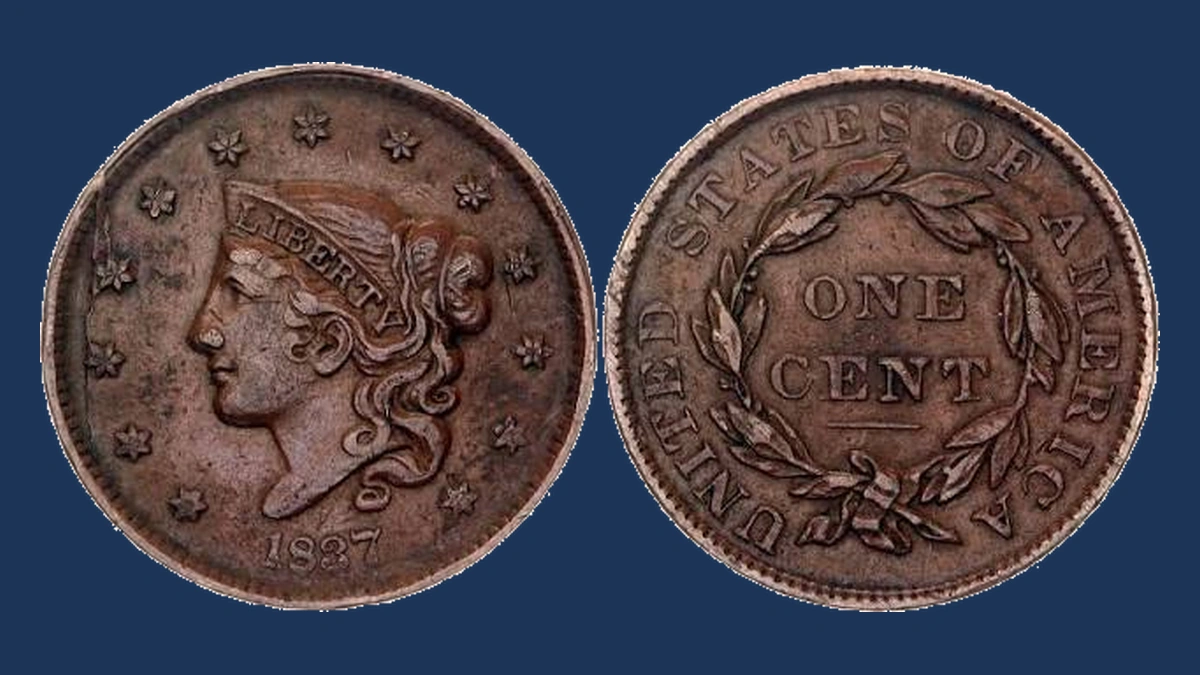
A horizontal raised crack behind Liberty appears on a late N-9 example. A different N-11 shows a line left of the date’s 1.
Both reflect cracks in the stamping tools, which let copper rise into the openings. Larger missing pieces of a tool can produce rim-connected patches called cuds.
Reported cuds occur near stars 3–5 and the right edge, below or beside the date, and between STATES and OF on the back. These locations belong to different examples.
Match each shape to its position on the individual coin. These separate reports do not describe one coin with every mark.
Estimated Value
Estimate $20–$200 for modest cracks on circulated 1837 cents, or about $100–$3,500 for clear cuds across stronger examples and better conditions. These are estimated whole-coin prices.
A strong back cud on an 1852 PCGS MS64 Brown cent sold for $1,920 in 2021. That unworn other-year example is a comparison for substantial tool damage, not a price for an 1837 crack beside the date.
Small marks can wear flat. A dramatic earlier photograph should not determine a more worn coin’s price.
How to Identify
Choose the location first: behind Liberty, beside the 1, or at the rim near the named stars or letters. Use a 10× magnifier to follow the particular line or patch.
The plain edge can help expose later alteration. Check for copper folded inward by a rim blow or added material hiding the original border.
On a loose cent, a scale checks the 10.89 g standard and calipers record several widths around 28 mm. Do not squeeze a raised patch between the jaws.
For a crack, move the light across the line and check whether it rises above the surface.
For a cud, follow the patch all the way to the rim; an isolated lump away from the edge is not the same feature.
Conclusion
The useful clues on an 1837 cent range from a thin peeling layer to a whole face transferred onto the back. A turned wreath needs an alignment check instead of a surface inspection.
Estimated whole-coin prices here span $20–$3,500. Match the actual feature, remaining detail, and portrait variety before choosing a comparison.
“Head of 1838” describes a normal portrait used in 1837; it does not mean the date was changed or the coin was struck in the wrong year.