1820 Cent Error List with Pictures

An 1820 penny can preserve the end of the previous year inside its date. The 1820/19 overdate carries traces of 19 beneath 20, and an unworn example brought $10,925 in February 2009.
This 1820 Coronet Head cent error list also includes a curved clip, raised tool cracks, and other reported minting faults. Estimated whole-coin ranges run from $20–$15,000.
Read the checks below to separate an earlier date from damage and to understand what each unusual edge or surface reveals.
1. 1820 Coronet Head Cent Rotated Back Design
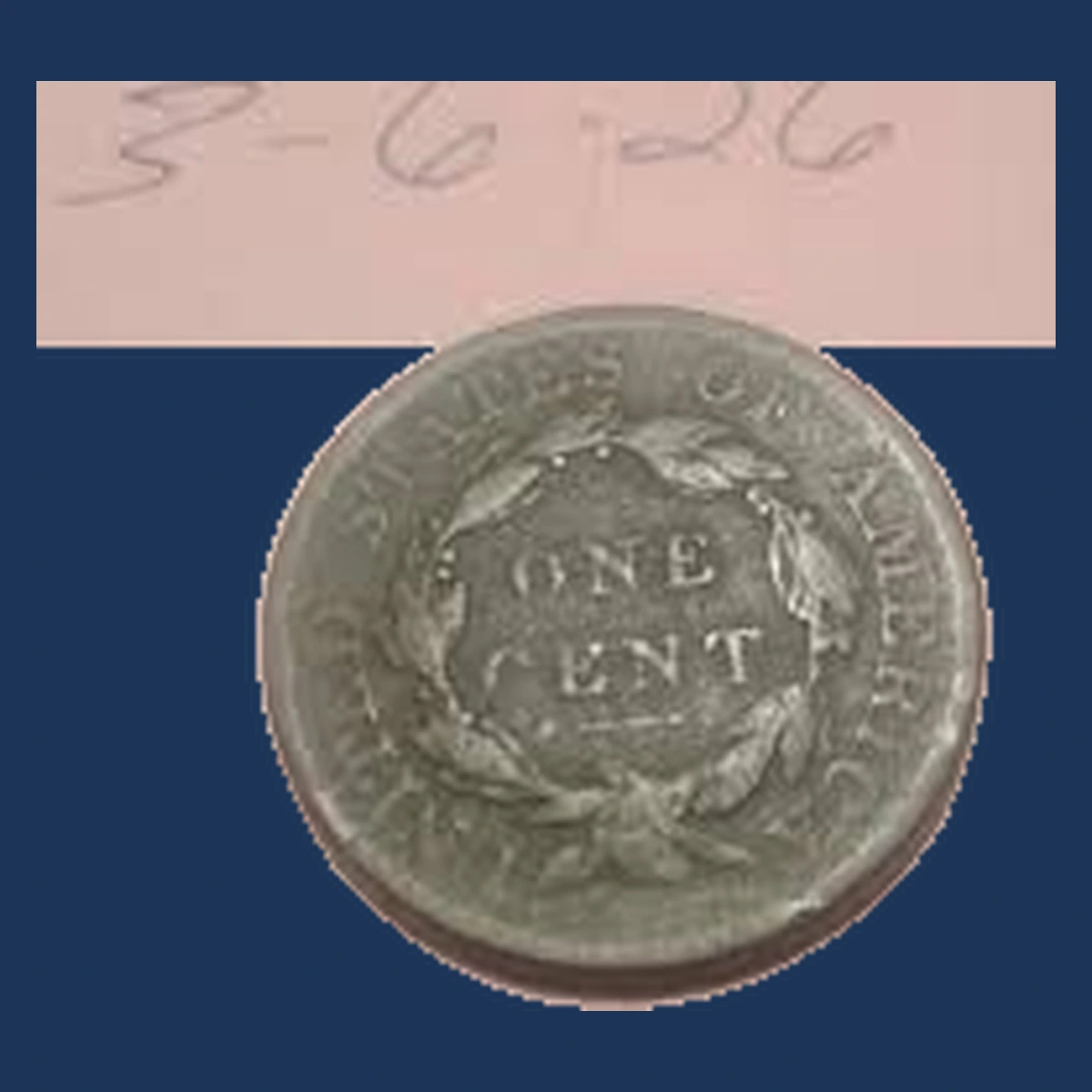
A tilted back may be invisible while the coin rests in an album. Turn it top to bottom and the relationship between the two designs becomes clear.
The back normally finishes upright when the front began upright. If a stamping tool turned from its intended angle, the coin can instead carry a tilted back.
An 1820 rotation has been reported without an angle supplied for the example here. It should not be assigned a ninety-degree or half-turn angle from a photograph.
The designs can remain complete and centered. Their relative direction, rather than missing lettering, identifies the kind of mistake.
Estimated Value
For a confirmed 1820 rotation, estimate $20–$2,500 across small tilts and more noticeable examples in different conditions. Ordinary value remains part of the whole-coin price.
A published year guide reports an 1820 rotation sold for $151, without enough sale details to make it a precise condition comparison. Treat it as a reported result.
A major turn can attract more attention than a slight tilt. The reported amount does not establish the angle or value of another cent.
How to Identify
Keep a fixed top point while turning the coin, rather than turning two photographs until their lettering appears unusual. Start with Liberty upright and flip top to bottom over a soft surface.
Check the back, then repeat the movement. An accidental sideways twist can create a false appearance of rotation.
For a loose coin, use a scale and calipers to compare 10.89 grams and approximately 28 millimeters. Inspect the plain edge under a 10× magnifier for a seam joining different faces.
Check the date separately for an overdate before comparing prices. Record the actual angle of the back from upright; the published report does not supply an angle to copy.
2. 1820 Coronet Head Cent Impression from Material Caught during Striking
An object between a blank and a stamping tool can leave its shape pressed into the copper. Detail beneath it may be weak or missing because the tool could not reach the metal normally.
Collectors call this a struck-through error. The obstructing material can fall away after the blow, leaving only an impression.
This category is reported generally for 1820 cents without an authenticated example here. Its price range applies to an impression confirmed as part of the original strike.
A later dent can also flatten detail. The mark’s boundary must explain when it formed, not just where it lies.
Estimated Value
Allow an estimated $40–$3,000 for authenticated 1820 struck-through errors on normal-date cents. The outline, surviving detail, and condition determine the useful comparison.
An 1843 large cent described as struck through thread was offered for $890 at an unworn MS64 Brown grade. That is a dealer’s asking price for another date, not an auction result for 1820.
The estimate does not assume the same obstruction. Material still attached to a coin also requires examination and should be left in place.
How to Identify
Examine how normal lettering or portrait detail approaches the impression under a 10× magnifier. A struck-through mark can interrupt the design where material blocked the tool.
Compare that boundary with any nearby dents. Later blows may flatten completed detail and leave displaced copper piled at their edges.
For a loose coin, use a scale against 10.89 grams and calipers against about 28 millimeters. A light obstruction need not change either measurement.
Inspect the plain edge and avoid moving anything still attached. A wire, thread, or other object should be named only when its shape or remaining material supports that description.
The position alone cannot identify what was caught during striking.
3. 1820 Coronet Head Cent Separating Metal Layer
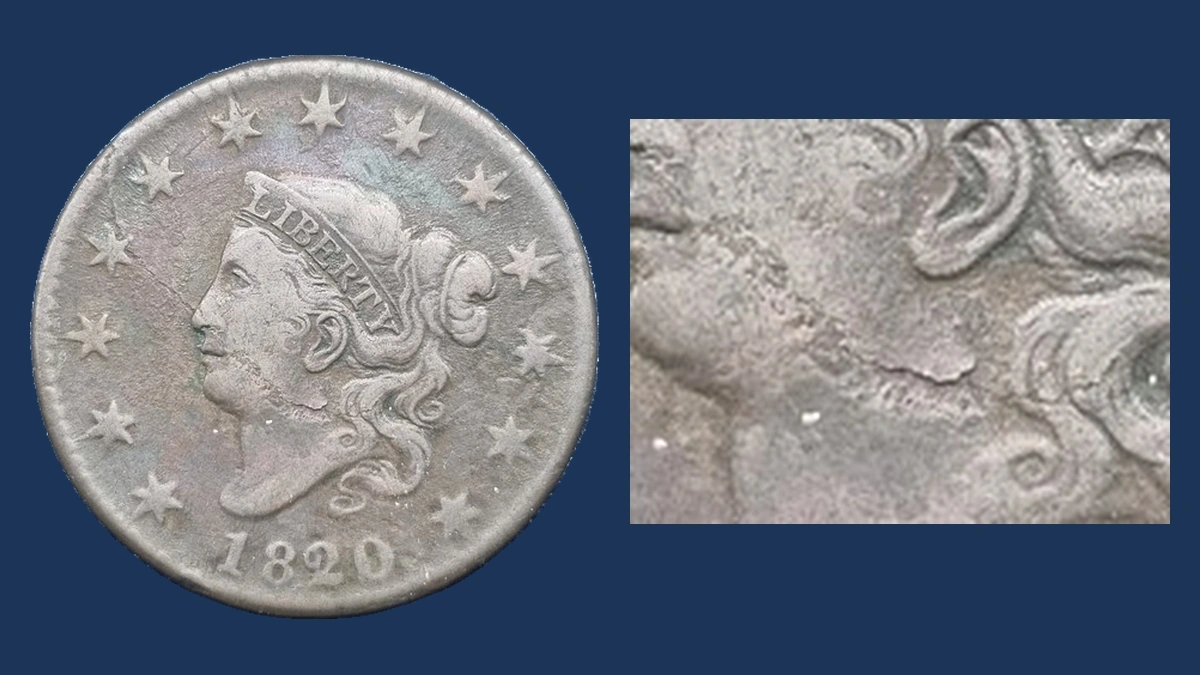
A weak sheet within the copper may begin to peel without the coin being struck again. The resulting flap or missing patch is called lamination.
The blank’s metal did not hold together evenly. Separation can expose a thin layer below the surface, rather than a groove cut down from above.
The 1820 reference gives an explanation without identifying an example here. An actual coin needs a visible layer boundary before this classification applies.
Not every rough patch is peeling metal. Corrosion can eat into copper, while scraping removes part of an already finished coin by a different process.
Estimated Value
For a genuine lamination on a normal-date 1820 cent, estimate $25–$3,500 across worn examples and attractive coins with visible separation. Large missing patches can reduce the remaining design’s appeal.
An 1839 large cent with two front laminations brought $600 before the buyer’s fee in January 2026. The auctioneer graded it AU50, or lightly worn.
That later-date sale is a comparison for the mechanism. An 1820 overdate with the same fault must also be compared with its own variety’s value.
How to Identify
Before handling a possible flap, photograph it from several low angles. Avoid pressure, cleaning, or an attempt to unfold the copper.
For a loose coin, use a scale against the usual 10.89 grams. Calipers compare intact areas with approximately 28 millimeters, without touching a projecting fragile layer.
Under a 10× magnifier, follow the seam from solid surface into the opening. An attached sheet should have continuity with the coin, unlike an unrelated piece stuck on top.
Check the plain edge if the opening reaches it. Raised ridges copied from broken stamping tools do not themselves reveal a layer underneath.
Look for separation within the copper rather than rough pits scattered across an exposed surface.
4. 1820 Coronet Head Cent Five-Percent Curved Clip
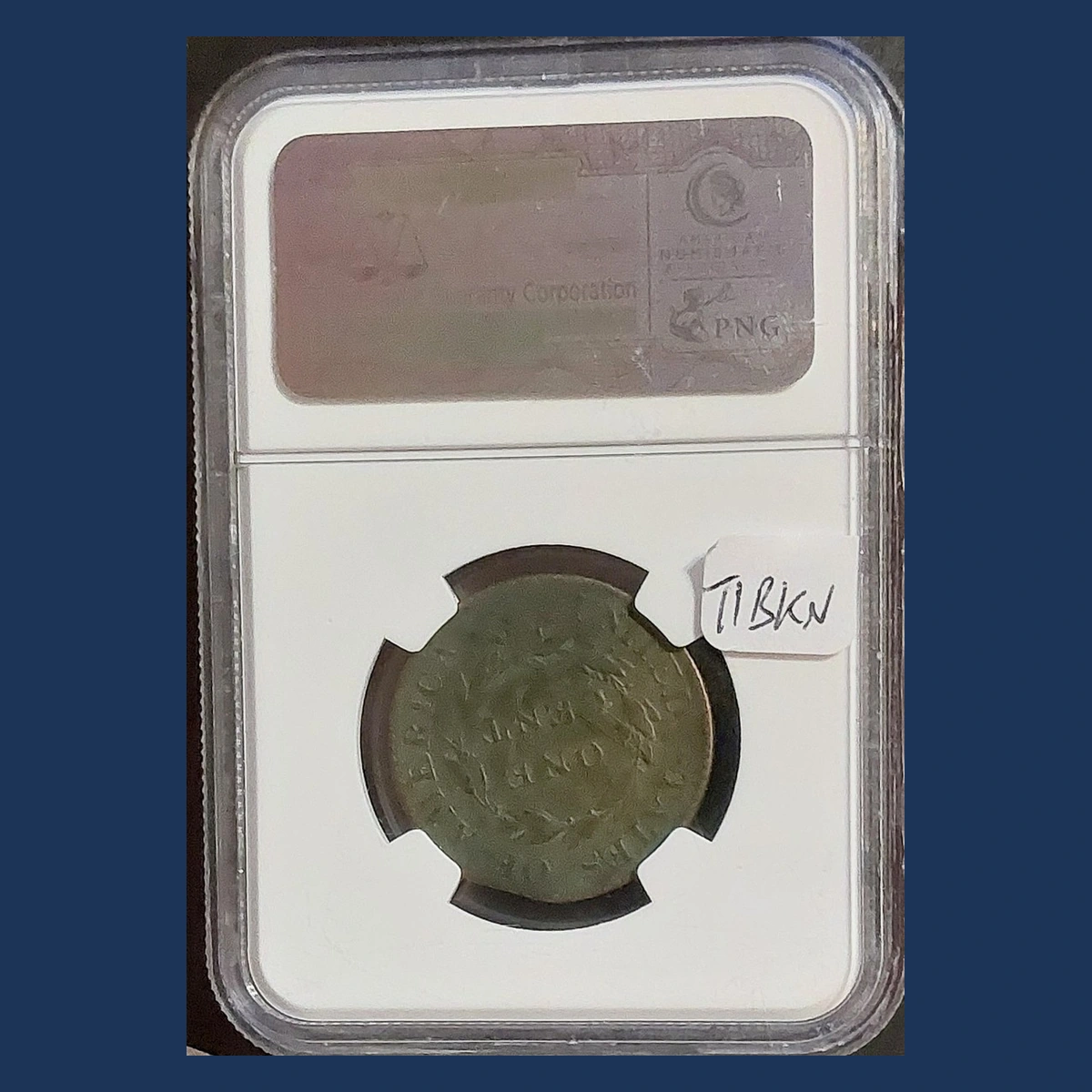
The 1820 clip removes a curved section near seven o’clock when the date is upright. A dealer catalog described the missing portion as five percent of the blank.
PCGS graded the coin VF30, meaning moderate wear with clear main details. That grade describes preservation, not the missing section.
A curved clip can begin when the blank-cutting punch overlaps an earlier hole in the copper strip. The incomplete disc is then struck with the cent design.
The gap should show metal flow consistent with that sequence. Cutting a finished coin later can create a similar outline without the same rim formation.
Estimated Value
The dealer catalog offered its PCGS VF30 five-percent clip for $250. That published asking price is not a recorded sale.
Estimate $50–$4,000 for genuine 1820 clips, with preservation and the missing section considered together. A larger gap need not outrank a smaller clip on a more attractive coin.
An unworn 1852 clipped large cent sold for $384 in June 2024 at NGC MS63 Brown. It provides later-date context without changing the 1820 example’s grade.
How to Identify
Put the date upright to find the reported seven-o’clock gap. Examine both ends of the struck rim there with a 10× magnifier, then inspect the curved boundary from the side.
Look for edge formation that belongs beside an already incomplete blank. Saw grooves or filing through finished detail point toward metal removed later.
For a loose coin, use a scale to compare the remaining weight with 10.89 grams. Measure intact spans with calipers against about 28 millimeters rather than measuring through the missing portion.
Inspect the opposite rim and remaining plain edge as well. Local weakness can help support a genuine clip, but it must agree with the gap’s own surface and border.
5. 1820 Coronet Head Cent Cracks around the Stars and Rim Cuds
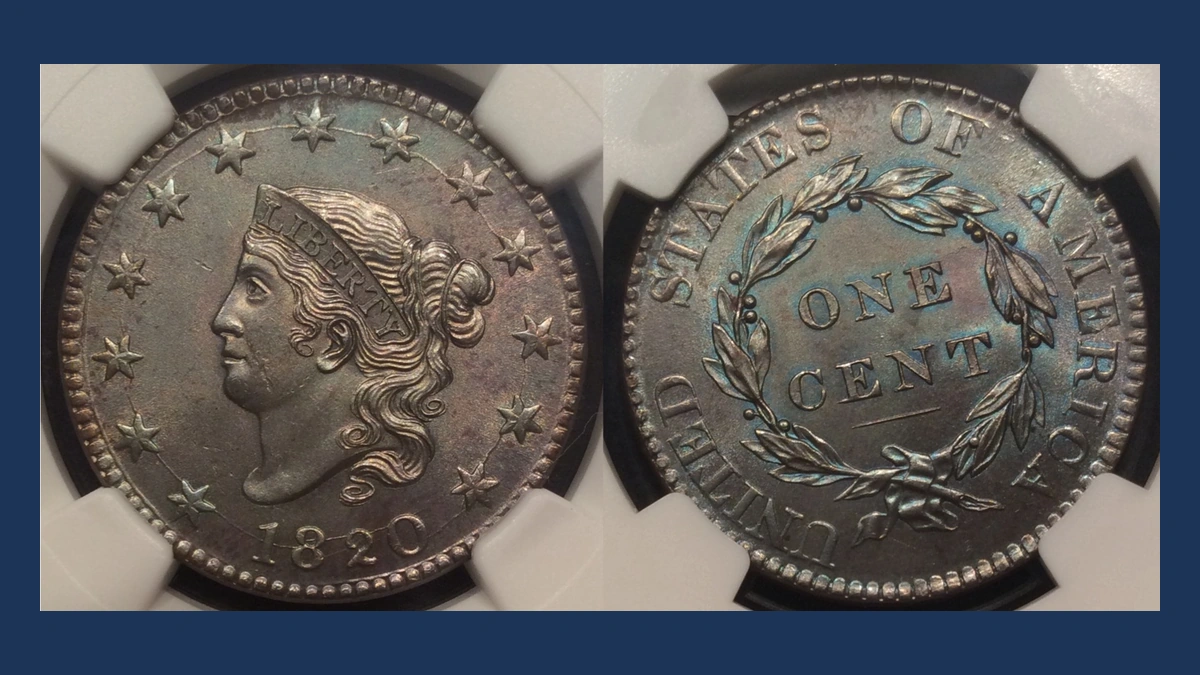
Raised lines can connect the stars and date around the front of an 1820 cent. This pattern is associated with the variety collectors call N-13.
The die, a steel tool that stamps the coin, cracked as it was used. Copper entered those openings and copied them as ridges.
A separate Small Date N-5 coin is reported with a cud, a raised patch connected to the rim. Its seller identified an ANACS AG3 grade, meaning very heavy wear.
These are different coins and tool patterns. The cud’s position should not be inferred from the ring of cracks on the N-13 example.
Estimated Value
Small cracks on worn 1820 cents can fit $20–$150, while distinct cuds and attractive unworn crack examples can span $100–$6,000. These are estimated whole-coin ranges.
A different-year 1836 cent with a front cud and back crack brought $2,040 in August 2020 at PCGS MS65 Brown. It was unworn with relatively few marks.
The reported 1820 AG3 cud is much more worn. Its price comparison should reflect that difference rather than copying a high-grade result for another variety.
How to Identify
Start by matching the date size and the whole front. The connected N-13 cracks and the seller’s Small Date N-5 cud should not be assembled into one imaginary coin.
Under a 10× magnifier, trace the raised lines around the stars and date. A scratch can leave narrow lips beside it, but its center cuts below the original surface.
For the cud, inspect where the raised patch meets the rim and compare surviving nearby design. Very heavy wear may soften the boundary without changing how the original fault formed.
For a loose coin, use a scale and calipers against 10.89 grams and approximately 28 millimeters. Check the plain edge for folding or added metal beside the patch.
6. 1820 Coronet Head Cent Off-Center Design
A design pushed toward one side can leave part of the blank untouched by the stamping tools. Some intended outer detail misses the metal on the opposite side.
The blank sat outside its proper position during the blow. That is an off-center strike, rather than metal removed from the finished coin.
An 1820 off-center cent appears in a year guide with a listed price but no percentage used here. The amount and direction must come from the coin.
The date remains important. A broad crescent on an undated early cent does not by itself identify it as an 1820 example.
Estimated Value
The year guide records an 1820 off-center example listed at $185. That wording describes an offer rather than establishing a completed sale.
For authenticated normal-date examples, estimate $100–$8,000 across worn modest shifts and stronger unworn pieces. A readable date and original surfaces help guide comparisons.
An 1855 large cent with a seventy-percent off-center strike sold for $1,092.50 in January 2009 at PCGS Fine 15. Its different date, heavy wear, and large displacement must remain part of the comparison.
How to Identify
For a loose example, weigh the coin and record several widths before concentrating on the bare area. Compare with the normal 10.89 grams and approximate 28-millimeter diameter.
A shifted blow does not itself remove copper. Marked weight loss therefore needs an explanation such as wear, damage, or another blank fault.
Use a 10× magnifier to examine the transition from struck design to untouched metal. Grinding lines or a cut through completed lettering would suggest later alteration.
Check the plain edge and photograph both faces with their full outlines. Both designs should fit the misplaced blank; a shift confined to one face can instead come from one misplaced stamping tool.
7. 1820 Coronet Head Cent 1820 over 1819 Date
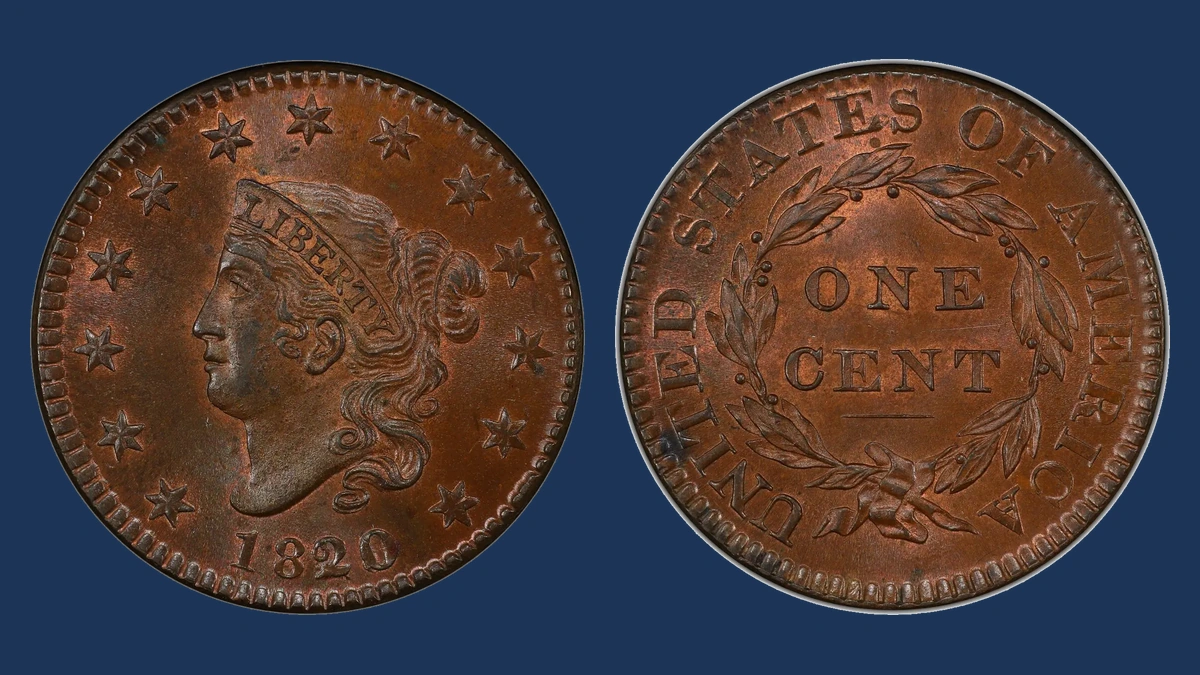
Two digits can contain traces of a different year. On the 1820/19 overdate, part of a 1 survives beneath the 2, while part of a 9 remains within the 0.
The worker changed the date on the stamping tool. The new numerals did not erase the earlier ones before coins were struck.
A normal blow could therefore transfer both sets of strokes at once. The cent did not have to circulate as an 1819 coin first.
Large and small overdate forms belong to this same kind of date correction. Ordinary large or small numerals alone do not establish an overdate.
Estimated Value
An 1820/19 example graded MS65 sold for $10,925 in February 2009. MS65 describes an unworn coin with relatively few marks.
Estimate $40–$15,000 across worn identifiable overdates and exceptional unworn examples. Different tool varieties and preservation account for much of that wide range.
The extra strokes must match the earlier 19. A large normal date, a flat doubled shelf, or a damaged 0 should not receive an overdate price merely because the numerals look unusual.
How to Identify
For a loose coin, use a scale against 10.89 grams and calipers against roughly 28 millimeters. Examine the plain edge and the area around the numerals for alteration.
Enlarge the 2 and 0 together rather than isolating a single bump. Their earlier 1 and 9 should make sense as the end of the same earlier date.
With a 10× magnifier, compare those remnants with photographs of the corresponding large or small overdate. Keep the ordinary 1820 date alongside for comparison.
Change the light to separate actual raised strokes from shadows, dirt, or incised cuts. Follow the older shape inside the 0 and beneath the 2 instead of accepting thick numerals alone.
Conclusion
An older 19 under the date, a gap near seven o’clock, and a ridge around the stars have different origins. The first came from tool preparation, the second from an incomplete blank, and the third from broken steel.
Estimated whole-coin values span $20–$15,000. Keep asking prices separate from auction results and compare the same date variety and condition.
Photograph both complete faces before concentrating on a small unusual feature.