1822 Cent Error List with Pictures

An undated off-center large cent attributed to 1808 sold for $6,462.50 in February 2018. That different-year result shows how striking mistakes can add interest beyond a copper coin’s age.
The 1822 penny errors below have estimated values of $30–$3,000. They include an incomplete blank, a broken stamping tool, and a design that missed part of the coin.
All concern the large Coronet Head cent, also known as the Matron Head cent. Each check begins with a visible feature you can compare.
1. 1822 Coronet Head Cent Clipped Blank
An incomplete copper disk can still pass through the press and become a coin. The missing section remains as a gap in the finished cent’s outline.
This is called a clipped blank, or clipped planchet. The blank is simply the piece of metal on which the design is struck.
A seller listed an 1822 large cent as a clipped N-1 example. N-1 identifies a particular pairing of stamping tools, rather than the size or direction of the gap.
The report does not establish a clock position. A later cut or filed edge must still be ruled out.
Estimated Value
For a genuine 1822 clip, estimate $30–$200 in worn condition and $200–$700 for a clearer, better-preserved example. These ranges value the whole coin.
An unworn 1852 clipped large cent sold for $384 in June 2024. It provides a different-date comparison rather than a sale record for the reported 1822 cent.
A readable date and original gap help buyers judge the coin. Heavy scratches or a badly corroded surface can reduce its appeal even when the clip is genuine.
How to Identify
Photograph the whole date and both faces before concentrating on the gap. That records which coin is being examined and keeps later scratches separate from the missing section.
On a loose cent, a scale compares the remaining weight with the original 10.89 grams. Calipers measure intact areas against roughly 28–29 millimeters, avoiding the opening itself.
With a 10× magnifier, inspect the gap’s wall and both ends for repeated file strokes or saw marks. A later cut may interrupt an already completed design.
The opposite border may show weakness from striking an incomplete disk, though wear can hide it. Examine how the surrounding original metal meets the gap rather than relying on that one clue.
2. 1822 Coronet Head Cent Die Crack and Rim Cud
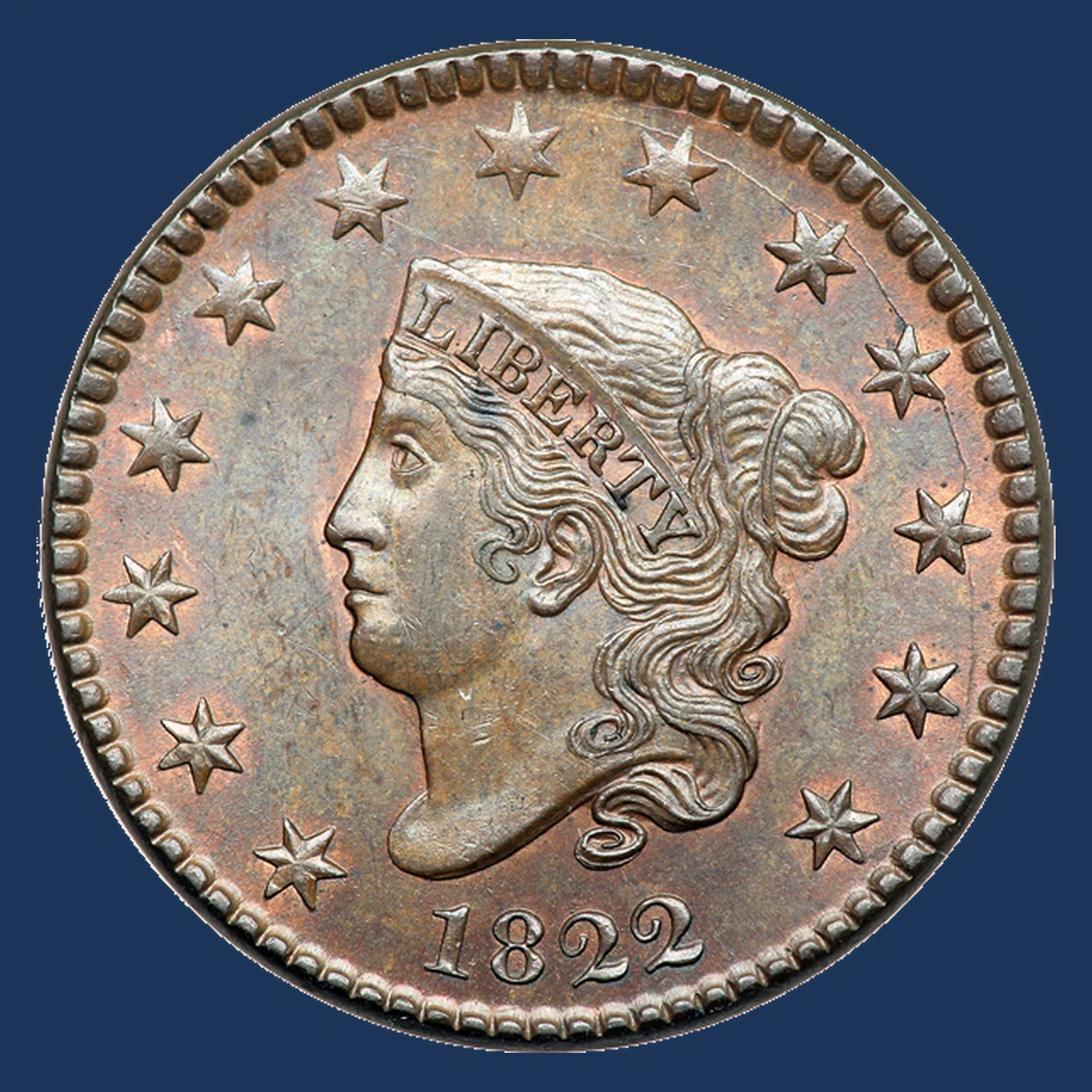
The letters TES in STATES provide a useful starting point on the back. The Early American Coppers grading guide describes a crack across their tops on the 1822 N-9 variety.
N-9 names a pairing of stamping tools. A crack in the steel tool leaves a raised line on the copper coin.
Later, the tool section between that line and the rim broke away. The missing steel let copper rise into a broad patch called a cud.
An earlier coin can show only the thin line, while one struck after more steel broke away has the larger patch.
Estimated Value
Estimate $40–$200 for a worn cent with a clear crack and $200–$1,000 for a stronger rim cud on an attractive coin. Small cracks may add little beyond the cent’s ordinary value.
For comparison, an 1829 large cent with three cuds brought $810 in September 2020. That is another year and a different pattern of broken steel.
A broad original patch is easier to recognize than a faint line. Added solder and rim damage do not receive a cud premium.
How to Identify
TES at the end of STATES gives you a precise place to start. Under a 10× magnifier, follow the tops of those letters for a raised ridge or a broader patch extending outward.
The later cud reaches from the letters to the rim, replacing design where the steel broke away. Move a lamp across that area to see whether the copper belongs to the struck surface or is added material.
Use a scale and calipers on an intact loose cent to compare 10.89 grams and roughly 28–29 millimeters. Then inspect the plain edge beside TES: a continuous raised patch differs from a dent pushing the rim inward.
3. 1822 Coronet Head Cent Off-Center Strike
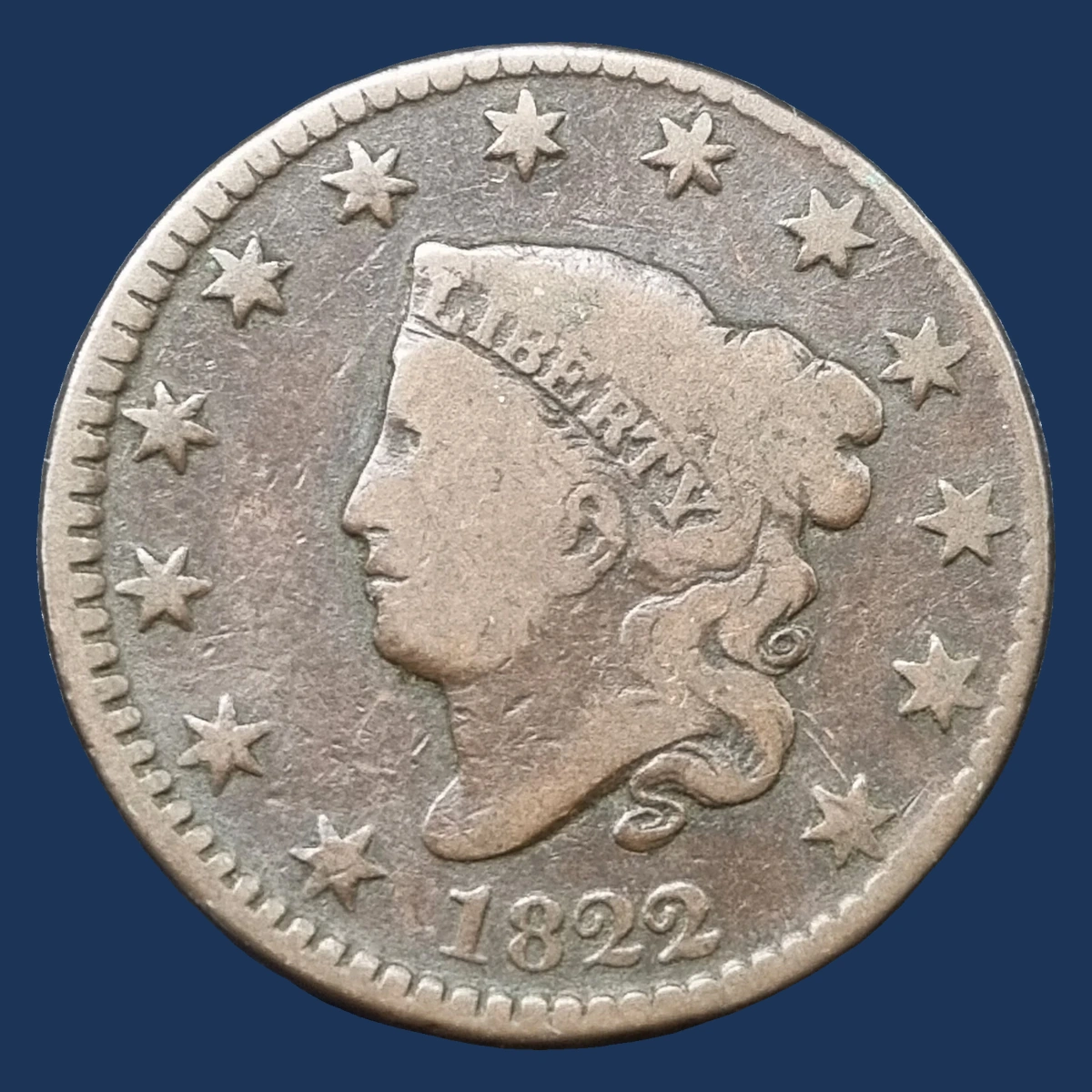
An off-center strike leaves unused metal beside the design. The blank sat in the wrong position, and part of the intended image fell beyond its edge.
A Heritage auction index records an 1822 large cent struck twenty percent off center. Its NGC Details description also notes scratches on the front.
Those scratches are later damage, separate from the original striking mistake. They do not explain the misplaced design.
The index does not establish the direction of the shift. Another seller’s 1822 off-center coin should not automatically be treated as that same specimen.
Estimated Value
Estimate $200–$800 for a worn, dated off-center cent and $800–$3,000 for a sharper, more attractive example. Front scratches would affect where the reported coin fits.
An undated cent attributed to 1808, thirty percent off center with very light wear, brought $6,462.50 in February 2018. Its different date, preservation, and displacement make it a higher comparison, not a price for 1822.
The twenty-percent description alone cannot set a value. Preservation and visible identity matter too.
How to Identify
Find the year before estimating how far the design moved. Include the complete outline in photographs so the unstruck area remains visible beside the letters and portrait.
Check the back as well: both faces should support the same misplaced blank. A shift on only one face needs a different explanation.
A loose cent normally began near 10.89 grams and roughly 28–29 millimeters. A scale and calipers help document its weight and outline without assuming that a displaced design means missing metal.
Inspect the bare area and plain edge under a 10× magnifier. Grinding marks can reveal later removal of design.
Record the front scratches separately. Their presence affects condition, while the original blank area explains the off-center strike.
Conclusion
Look for three different clues on an 1822 cent: an absent edge section, raised metal near TES, or unused copper beside a shifted design. Estimated whole-coin values range from $30–$3,000.
The shape of the metal is more useful than a dramatic seller’s label. Keep later scratches separate from the original mistake, photograph both faces, and leave the surface untouched so its details remain available for comparison.