1975 Nickel Error List with Pictures

The small D beside Jefferson can be worth checking before any dramatic-looking damage. A misplaced High D brought $1,080, while a nickel attributed to 1975-S on a Liberian blank sold for $1,955 in September 2010.
This 1975 nickel error list explains both subtle and obvious mistakes, with estimated values of $10–$3,000. Continue below to compare the mintmark, metal, and surviving designs before deciding what you have.
1. 1975 Jefferson Nickel An Extra Outline beside the D
The D can show a second curved outline beside the main letter. In 1975, workers punched mintmarks into individual dies, the steel tools used to stamp coins.
If another punch landed slightly away from the first, coins could repeat both shapes. This is a repunched mintmark, often shortened to RPM.
A year guide reports this type for 1975-D without establishing a particular numbered example. A filled center in the D does not demonstrate a second punch.
Look for an actual repeated letter shape rather than judging thickness or a single small lump.
Estimated Value
For authenticated minor repunched mintmarks, estimate $10–$50 on worn coins and $50–$150 on attractive unworn examples. This is a working range for the reported type, not a specific 1975-D auction result.
A clearly separated extra curve offers more to compare than a thick or filled D. Ordinary strike doubling and metal filling the letter’s center should not receive the same premium without evidence of a second punched impression.
How to Identify
Compare the D with an ordinary Denver example under a 10× magnifier. Look around the outer curve for a repeated letter shape, keeping the filled center separate from any proposed second impression.
Light the coin from two directions before deciding that a shadow is extra metal. A flattened shelf next to the D can come from movement during striking and is not enough to prove repunching.
Check a loose coin with a scale against 5 grams and calipers against 21.2 millimeters, then inspect its plain edge for damage. Photograph the whole date-and-mintmark area for a variety specialist rather than submitting an isolated crop of the thickest point.
2. 1975 Jefferson Nickel Repeated Letters on the Front or Back
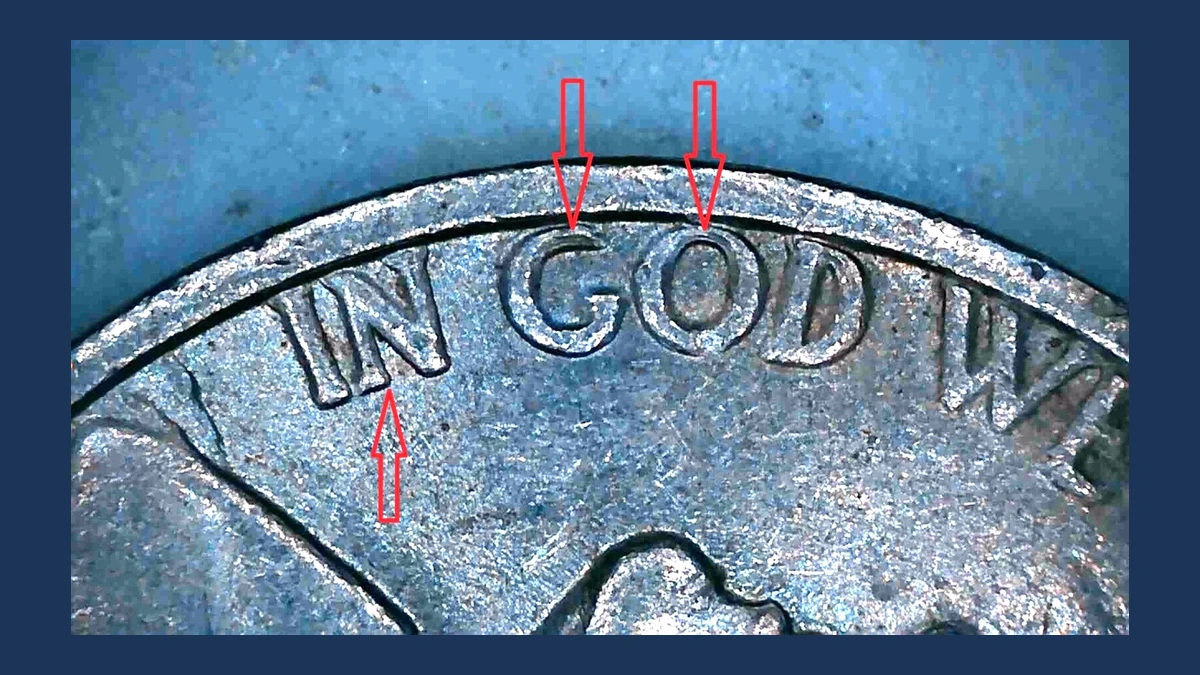
A split corner on a letter may reveal more than ordinary wear. If the stamping tool received a doubled design during its manufacture, each coin struck from it could carry matching extra outlines.
Collectors call that tool a doubled die. Front and back doubling are both reported for 1975, but they need separate matching photographs.
Movement during the coin’s strike can instead produce flat ledges beside otherwise normal letters. This common look-alike does not establish that the design was doubled in the tool.
Two similar-looking marks can therefore have different causes and values.
Estimated Value
Allow an estimated $20–$75 for modest verified doubling and $75–$250 for stronger examples with little wear. These ranges are estimates for genuine repeated designs, not confirmed prices for a named 1975 die variety.
The extra outlines should remain clear without relying on extreme enlargement or a single lighting angle. A coin showing flat strike doubling or damaged lettering should not be priced as a doubled die solely because its letters look wide.
How to Identify
Keep both faces available when comparing the reports. A doubled front on one coin does not establish a doubled back on another.
Use a scale and calipers on a loose nickel to record the normal reference measurements of 5 grams and 21.2 millimeters. Examine the plain edge for squeezing or other alteration before concentrating on small letters.
Through a 10× magnifier, compare several affected corners and curves. Look for a consistent repeated design rather than a single bright reflection.
Tilt the coin gently and check whether the apparent extra edge remains. Flat shelves differ from rounded, separate letter edges.
Retain clear photographs of nearby normal lettering too. A specialist can compare that full pattern with a documented stamping tool.
3. 1975 Jefferson Nickel Two Curved Gaps and an Unfinished Cut
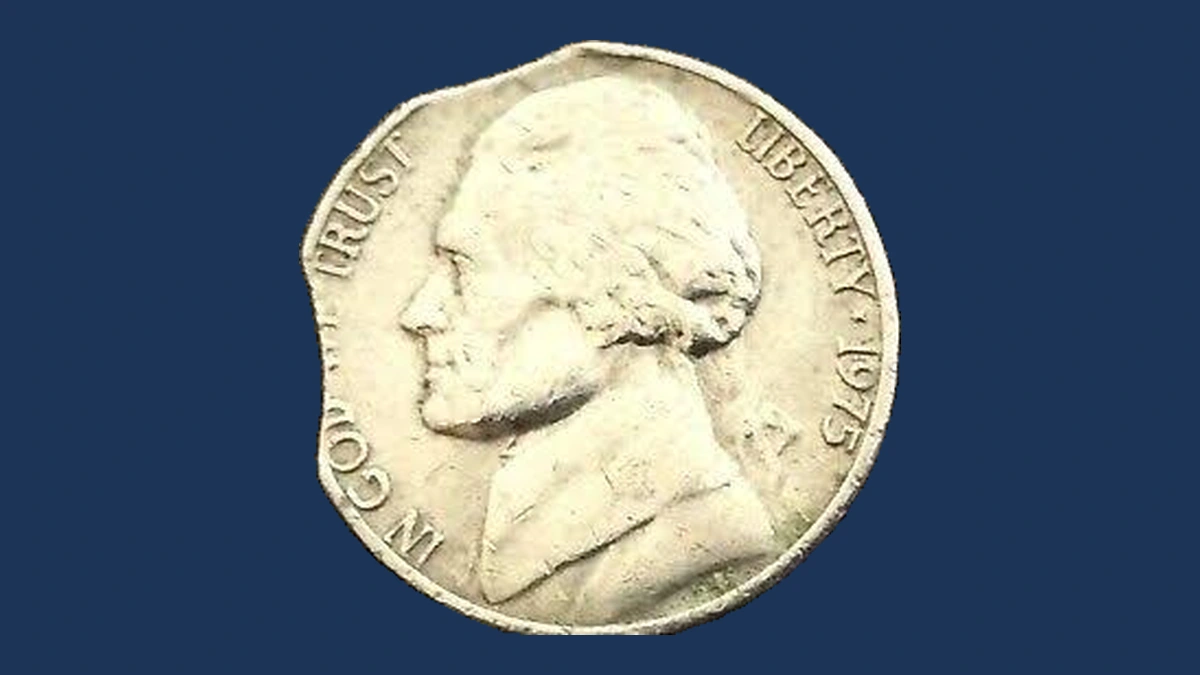
Two missing curves can interrupt the edge while another cutting mark remains inside the surviving metal. The blank-cutting punch overlapped earlier openings and also left an incomplete cut.
The disk was then struck with those defects still present. A recorded example carries both double curved clips and an incomplete-clip description.
The unfinished cut is different from a crack made by bending a finished nickel. Metal can remain attached because the original punch did not cut completely through.
This combination lets a collector compare missing metal and a retained cutting trace on the same coin.
Estimated Value
An NGC MS62 1975 example with double curved and incomplete clips sold for $288 in October 2019. Estimate $50–$150 for worn combinations and $150–$400 for clearer, attractive examples.
The unfinished cut adds interest when its original nature is recognizable. Do not try to open it further: breaking off attached metal can damage the coin and remove the very evidence that explains the combination.
How to Identify
Leave the unfinished cut closed. Flexing the nickel can create fresh damage and make the original boundary harder to judge.
Use a 10× magnifier to follow each missing curve and the remaining punch trace. Compare how the design meets all three areas rather than assuming every line has the same cause.
A scale will usually record less than the normal 5 grams when clips remove metal. Use calipers across intact sections against the standard 21.2 millimeters.
Check the plain edge for later sawing or filing. A weak border opposite a clip can help, but its absence does not automatically reject the coin.
Photograph both complete faces so the unfinished cut remains connected to the surrounding design in the comparison.
4. 1975 Jefferson Nickel A Nickel Struck on an Unusually Thin Blank
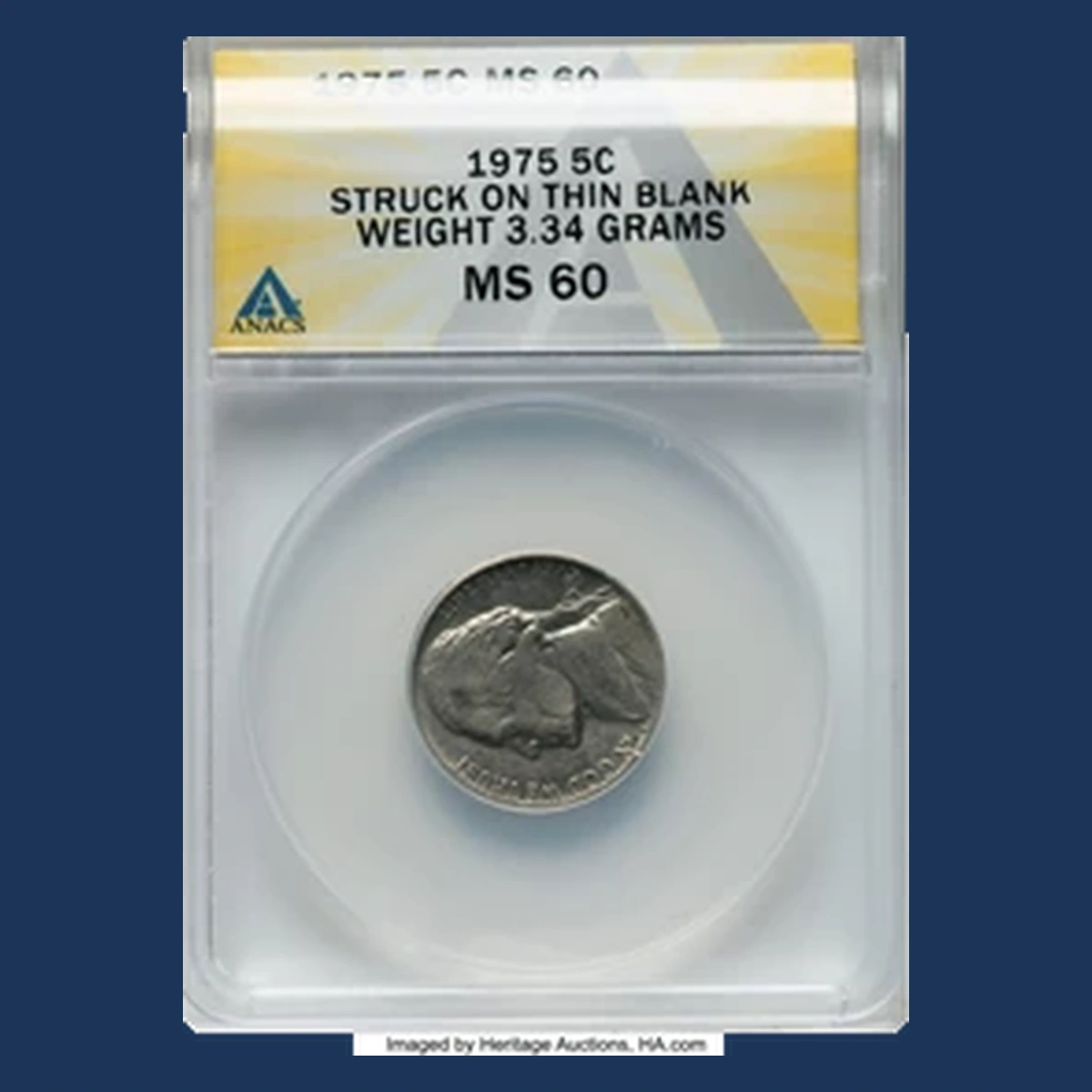
A coin can be much too light without having a smaller outline. A thin blank contains less metal than the press expects, which can affect how fully the design forms.
An auction summary records a 1975 nickel on a thin blank weighing 3.34 grams. That figure is well below the normal five grams.
The weight does not identify a foreign country or denomination by itself. Grinding, acid damage, and heavy wear can also make an ordinary nickel lighter.
The original surface and thickness must explain the reduced weight together before the thin-blank description fits.
Estimated Value
Estimate $75–$200 for worn, authenticated thin-blank examples and $200–$500 for attractive coins with convincing original surfaces. These are estimates for the reported 3.34-gram type, not a quoted sale for that specimen.
A different-year 1987-D nickel on a rolled-thin blank sold for $73 in September 2024. Its 3.7-gram weight and condition differ, but that sale shows that a low weight alone does not guarantee a large premium.
How to Identify
Zero a reliable scale, then weigh the loose coin more than once to confirm the reading. The reported example weighs 3.34 grams, compared with the normal nickel standard of 5 grams.
Use calipers to compare its width with 21.2 millimeters and its thickness with an ordinary nickel. A thin blank and a smaller wrong blank can both be light, so weight alone will not separate them.
Inspect both faces and the plain edge through a 10× magnifier for grinding, porous chemical damage, or heavy scraping. The design should sit on original metal rather than a surface that someone thinned after striking.
Record the measurements without assigning a foreign denomination. A specialist can assess the metal and the way the design formed.
5. 1975 Jefferson Nickel A Copper Fragment on the Back
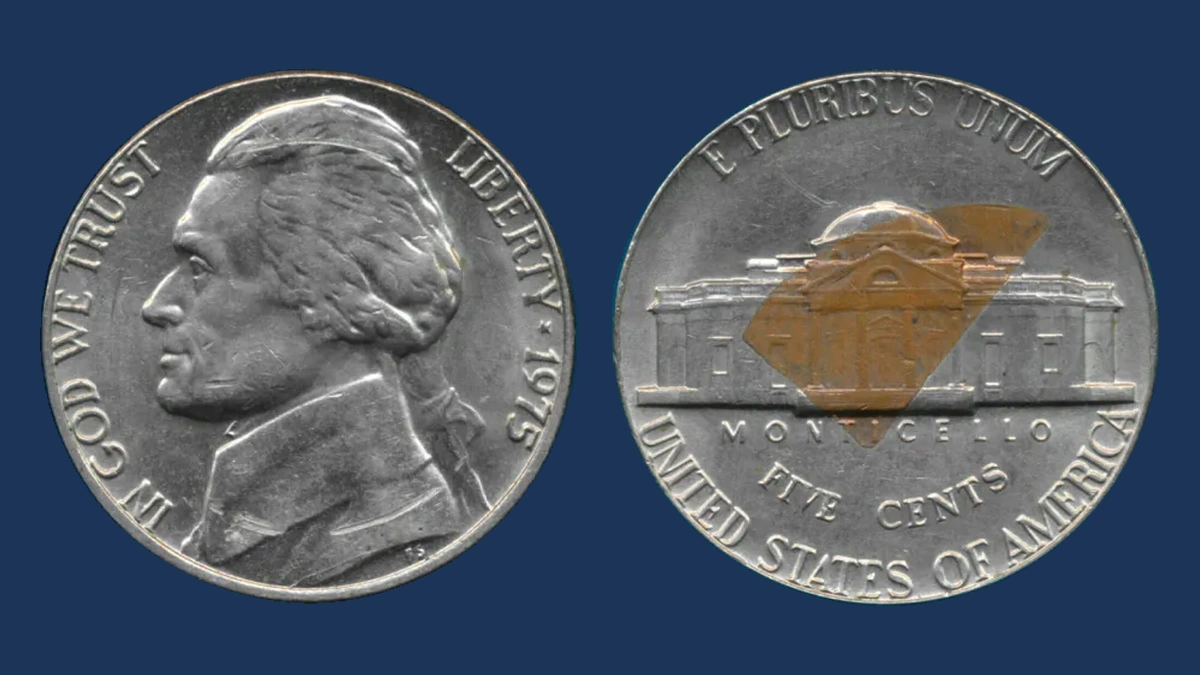
A copper-colored piece can remain on an otherwise gray nickel. The important distinction is whether actual extra material is attached, rather than the surface merely having changed color.
A Heritage example was described as having a copper fragment on the back and damage on the front. NGC gave it an AU Details grade, meaning light wear with a condition problem.
Normal 1975 nickels use one uniform copper-nickel alloy. They do not have a separate copper core under removable outer layers.
The fragment’s boundary needs examination before explaining how the two metals became joined.
Estimated Value
The recorded nickel with a back copper fragment and front damage sold for $228 in March 2023. Estimate $100–$300 for authenticated pieces with wear or damage and $300–$600 for stronger examples with a clearly original attachment.
These estimates concern actual attached material, not an ordinary brown stain or plated surface. The damaged coin’s sale also shows why the condition of both faces matters, even when the unusual fragment is on only one.
How to Identify
Do not pry at the copper-colored area. A loose-looking boundary may be essential evidence, and removing the fragment would change the coin.
Look along the boundary with a 10× magnifier and low side lighting. Determine whether a separate piece is present or whether the same surface simply changes color.
Inspect the front as well, since the auctioned example has damage there. Do not assume an opposite dent explains how the back fragment originally arrived.
For a safely handled loose coin, record the weight on a scale against 5 grams and the width with calipers against 21.2 millimeters. Photograph the plain edge and both faces before asking a specialist to examine the attachment and metal.
6. 1975 Jefferson Nickel Part of the Design Misses the Metal
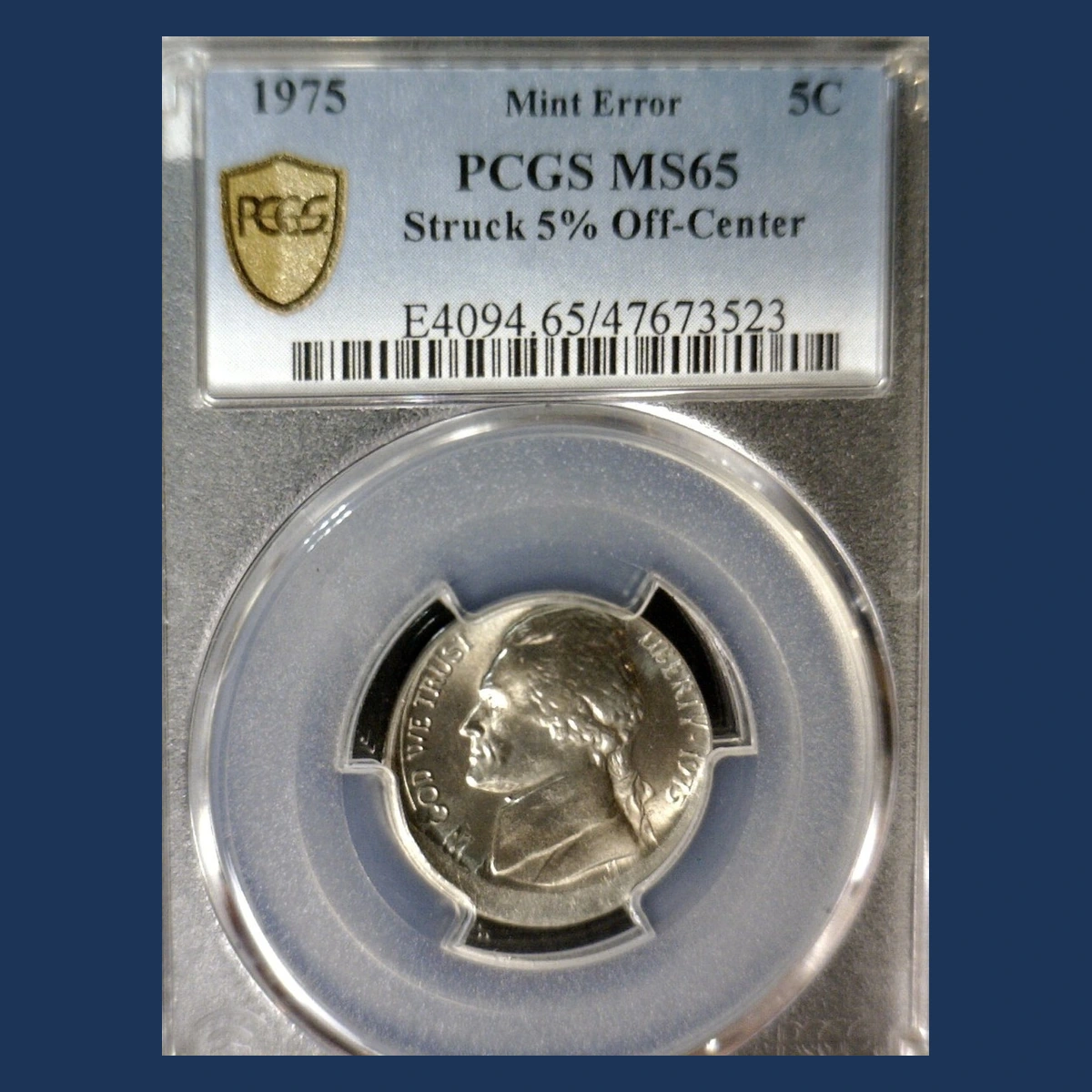
An off-center strike leaves a bare area beside a design that has slid toward the opposite edge. The metal disk was out of position when the tools came together.
Parts of the lettering or portrait therefore missed the disk. The unused area is still solid metal, unlike a clipped coin with a piece absent.
Both faces need to support the same shift. One uneven border by itself can come from a single tool being out of alignment.
For a 1975 example, enough of the date must survive to establish the year rather than relying on a seller’s guess.
Estimated Value
For authenticated 1975 off-center nickels, estimate $25–$150 for modest shifts and $150–$750 for dramatic examples with readable dates. Attractive surfaces and a clear design can outweigh a slightly larger percentage.
A 1999-D nickel struck sixty-five percent off center sold for $75 in September 2024. That different-year comparison helps keep expectations grounded; an impressive blank crescent alone does not guarantee the top of the estimated range.
How to Identify
Keep the date and the entire outline in the same photograph before estimating the shift. Compare both faces using one physical edge as a reference, so a rotated photograph does not hide their relationship.
Under a 10× magnifier, follow the transition between unused metal and the struck design. Ground-away lettering leaves damaged surface rather than the natural unused area of an off-center strike.
Weigh a loose coin against 5 grams on a scale and compare intact spans with 21.2 millimeters using calipers. Inspect the plain edge for trimming or hammering, and do not mistake a missing piece of metal for missing design.
7. 1975 Jefferson Nickel A Second Strike across the Earlier Design
A second impression can cut across the first when a coin stays in the press. Movement between the blows changes where the next portrait and lettering land.
A 1975-D auction example is described as double struck with counting-wheel damage. The overlapping struck designs and the later scrape have different causes.
The scrape does not count as another Mint mistake. Likewise, a narrow shelf beside a letter does not by itself demonstrate an entire second strike.
Look for a sequence that explains surviving parts of both impressions, including areas where the later blow flattened earlier detail.
Estimated Value
Estimate $100–$400 for worn or damaged 1975 double strikes and $400–$1,500 for attractive examples with distinct overlapping impressions. These ranges allow for the amount of design preserved and the ease of reading the sequence.
For comparison, a 1987-P double-struck nickel graded NGC AU58 brought $159 in March 2025. That separate-year sale is not a price for the 1975-D coin, whose counting-wheel damage also affects its appeal.
How to Identify
Look at the whole design before studying its smallest doubled edge. Find two recognizable impressions and determine which one crosses or flattens the other.
A scale and calipers can record a loose coin against 5 grams and the normal 21.2-millimeter diameter. Striking again can spread the outline, so unusual width does not by itself mean the metal was wrong.
Use a 10× magnifier to separate raised overlapping letters from scratched paths across the surface. A counting-wheel mark cuts or scrapes the finished coin rather than adding another complete design.
Check the plain edge for squeezing and compare where the designs overlap on both faces. Preserve wide photographs showing the overlaps, rather than cropping away the later damage.
8. 1975 Jefferson Nickel The D Positioned Unusually High
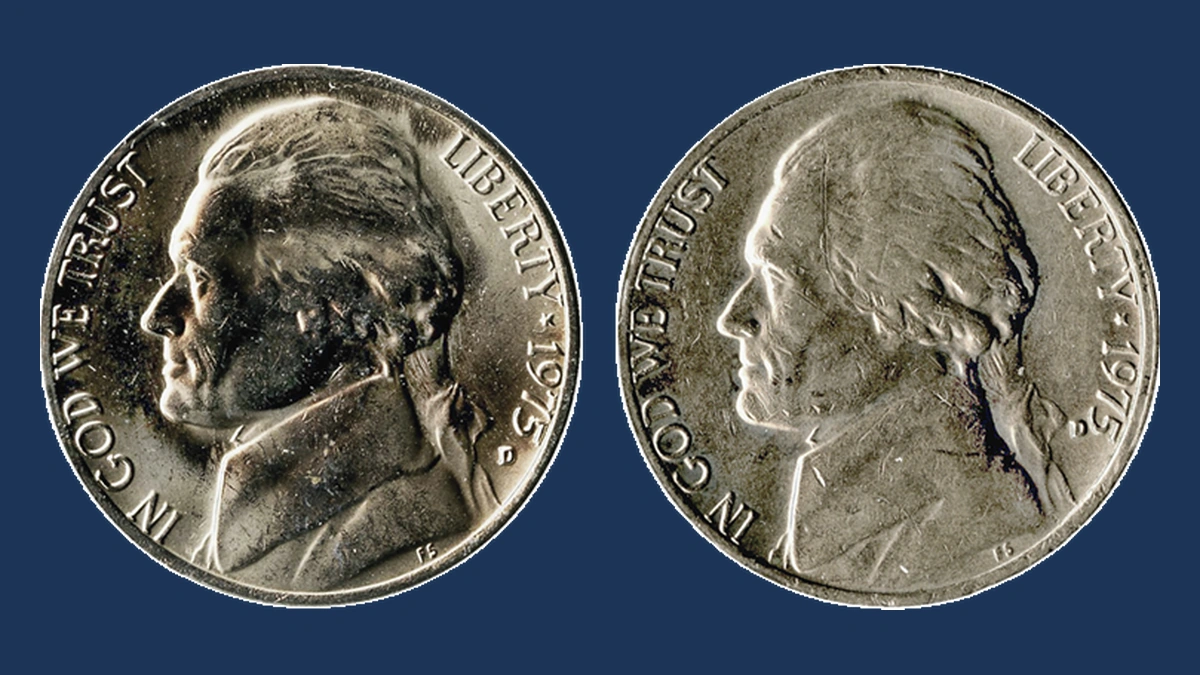
The D can sit noticeably higher than on an ordinary Denver nickel. The recognized High D appears between the back of Jefferson’s head and the final digit of the date.
This is a placement error in the stamping tool. It concerns where the whole letter sits, not whether the letter has a second outline.
A worn example from the Fred Weinberg Collection was graded NGC XF40 and auctioned as a high misplaced mintmark. Normal small differences in position should not automatically be treated as the same scarce variety.
Estimated Value
The NGC XF40 High D sold for $1,080 in May 2022. Estimate $250–$1,200 for authenticated worn examples, with $1,200–$2,000 reserved as an estimate for especially attractive pieces.
The price follows the specific misplaced position, not simply the presence of a Denver D. A slightly higher ordinary mintmark should not inherit this range without matching the recognized placement and original surface.
How to Identify
Put an ordinary 1975-D beside the candidate with both portraits upright. Compare the entire distance from the D to Jefferson’s head and the final 5, rather than measuring from a tilted photograph.
The marked difference in position should remain obvious at ordinary enlargement. Under a 10× magnifier, inspect the letter’s base and nearby surface for scratches, added metal, or signs of moving a feature.
Photograph the full date-and-portrait area before handling the coin further.
Use a scale and calipers on a loose example to check roughly 5 grams and 21.2 millimeters, and inspect its plain edge. Have the specific position matched to an authenticated High D before paying the variety’s premium.
9. 1975 Jefferson Nickel A Penny, Dime, or Foreign Blank in the Nickel Press
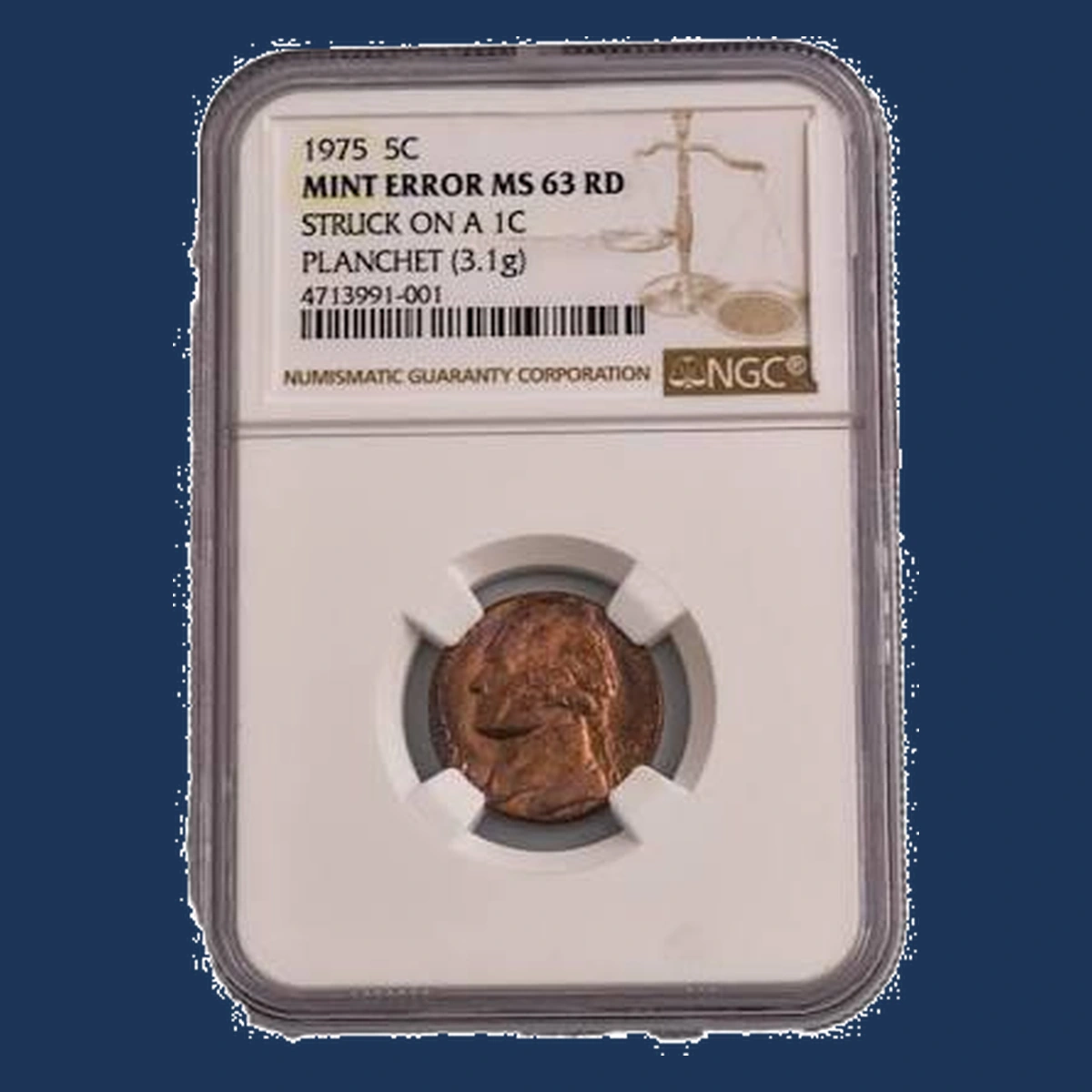
Small blanks cannot hold the full nickel design. A Denver copper example weighs 3.1 grams, while another Denver nickel on a dime blank weighs 2.3 grams.
The dime metal has bonded layers, often called clad. The penny blank is the older copper alloy, not modern copper-plated zinc.
A Proof example, specially made with mirrored surfaces, is attributed to 1975-S on a Liberian ten-cent blank. It weighs 1.91 grams and has much of the date missing.
That year and mint identification comes from its auction attribution, rather than a complete readable date and mintmark.
Estimated Value
Estimate $200–$1,000 for authenticated cent- or dime-blank examples, depending on wear and design clarity. The attributed Liberian-blank Proof fits an estimated $800–$2,500 range.
The Liberian example graded NGC PR66 Cameo brought $1,955 in September 2010; a later attributed example brought $1,140 in July 2021. The 1975-D dime-blank coin appeared in a five-coin sale, so that lot’s total is not its individual price.
How to Identify
Weigh a loose candidate first, keeping the actual examples separate: 3.1 grams for copper, 2.3 for the dime blank, and 1.91 for Liberia. A normal nickel weighs 5 grams.
Calipers can compare its outline with the nickel’s 21.2 millimeters and the smaller starting sizes of a cent or dime. Those U.S. blanks measure about 19.05 and 17.9 millimeters before spreading.
Examine the cropped design and plain edge with a 10× magnifier. Plating, filing, or acid damage can imitate unusual metal or size.
For the attributed Proof, preserve the mirrored surfaces and its grading information. An incomplete date does not justify assigning another small undated coin to 1975-S without expert comparison.
10. 1975 Jefferson Nickel Lincoln Cent Details beneath Jefferson
Monticello and the Lincoln Memorial can share one piece of copper. A finished cent entered the nickel press and received Jefferson’s design over its existing images.
One auction example is specifically described as a 1975 nickel over a 1975 cent. Another has Memorial columns across Jefferson’s cheek and part of Lincoln’s coat crossing E PLURIBUS.
The earlier date on that second coin is indistinct. It should not be supplied merely because the nickel date is clear.
This is a double denomination: two different face-value designs on the same coin, rather than a nickel struck on an empty copper blank.
Estimated Value
A 1975 nickel over a 1975 cent graded NGC MS64 Brown sold for $900 in August 2022. A separate PCGS MS64 Brown example with an indistinct earlier date brought $516 in September 2019.
Estimate $400–$1,000 for worn or less distinct examples and $1,000–$3,000 for attractive coins with easily read overlapping designs. The amount of recognizable penny detail can matter as much as the nickel’s numerical grade.
How to Identify
Turn the coin through several angles under a 10× magnifier and locate features belonging to the cent. On the described example, Memorial columns cross Jefferson’s cheek and Lincoln’s coat edge crosses E PLURIBUS.
Follow those details into their overlap with the newer nickel design. The underdesign should be part of the struck metal, not a backward impression added by squeezing two coins together.
Check the plain edge for a seam or attached pieces. Do not assume both dates are readable on every example.
A loose coin should be compared with the older cent’s 3.11 grams on a scale. Use calipers to compare its spread outline with a 19.05-millimeter cent and a normal 21.2-millimeter nickel.
Conclusion
The estimated $10–$3,000 range covers several very different 1975 nickel errors. A misplaced D needs a position match, while an unusually light coin needs careful measurements and a metal assessment.
Save both sides in your photographs, especially when older penny details survive beneath Jefferson. Leave embedded pieces and incomplete cuts untouched so a specialist can examine the evidence that makes the coin unusual.