1812 Cent Error List with Pictures

A backward portrait can make an early cent far more than an ordinary worn coin. For comparison, an 1817 brockage brought a $7,500 winning bid before fees in January 2015.
The 1812 penny errors below include similar reversed designs, misplaced strikes, and smaller metal flaws. Estimated whole-coin values run about $100–$20,000, depending on the error and condition.
The 1817 result concerns a different design and year. Read on to see which visible features distinguish the reported 1812 examples.
1. 1812 Classic Head Cent Lamination and Small Surface Flaws
A small opening above ONE appears on a cataloged Large Date cent. The auction describes it as a two-millimeter flaw in the blank, the disc used to make the coin.
That description alone does not establish peeling. A separate year guide reports lamination, where a weak layer separates from the copper beneath it.
An attached flap or a shallow missing sheet can help identify that process. The two reports should not be treated as photographs of the same defect.
Neither report establishes a coin split completely into two thinner pieces.
Estimated Value
For a worn 1812 cent with a modest original metal flaw, allow an estimated $100–$600. The Large Date example above ONE received a catalog estimate of $115–$140, rather than a reported sale price.
It was ANACS F15 Details, with moderate wear and corrosion noted. Those surface problems affect the entire coin’s value.
A clearer peeling layer on sound copper may attract more interest. Size alone does not overcome heavy corrosion or damage.
How to Identify
The auction description places its small flaw above ONE on the back. Examine that spot under a 10× magnifier without assuming every nearby pit belongs to the original flaw.
To assess peeling elsewhere, follow the edge of the thin layer under low-angle light. Leave an attached flap in place; lifting it destroys the relationship you need to see.
A normal loose cent is copper, about 10.89 grams and 28–29 millimeters across, with a plain edge. A scale and calipers help record missing material without touching a fragile area.
Corrosion usually leaves rough pits rather than one clearly separating sheet. Photograph the boundary where the suspected layer still joins the coin.
2. 1812 Classic Head Cent Raised Die Cracks and Reported Rim Breaks
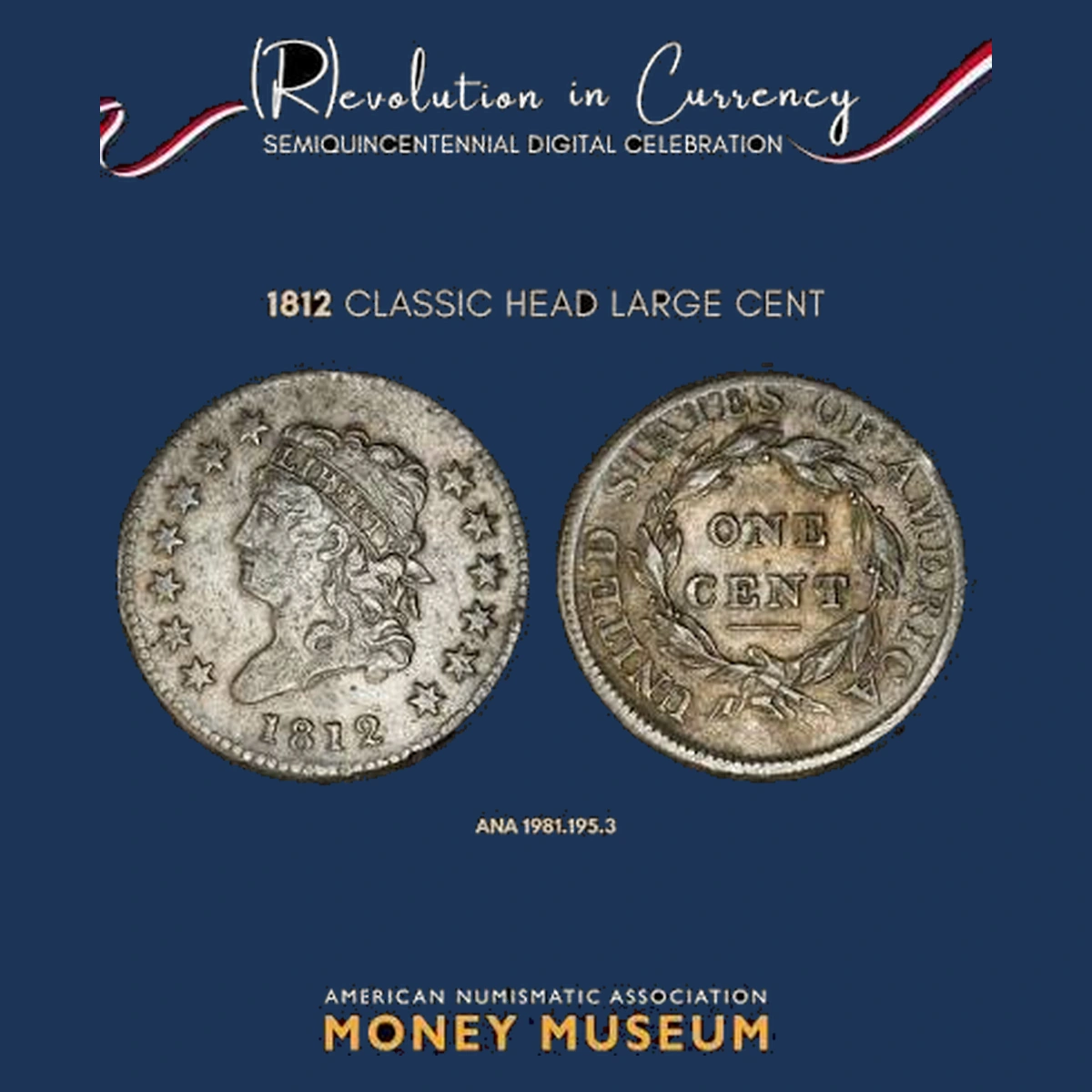
A fine raised line above Liberty’s head identifies a known Small Date pattern. Other descriptions trace cracks through nearby stars or along the base of the date.
These lines came from cracks in a die, the steel tool that stamped the coin. Copper filled the opening during the strike and formed a raised line.
A larger break reaching the rim can produce a raised patch called a cud. The year guide discusses this possibility without identifying a specific 1812 example.
The documented head crack therefore does not establish a broad rim break.
Estimated Value
Worn 1812 cents with visible tool cracks fit an estimated $100–$1,000 range. Most of that amount can come from the coin’s date and overall condition.
As a different-year comparison, an 1829 Coronet cent with three rim breaks sold for $810 in September 2020. It was PCGS AU50, with light wear.
That sale does not price an established 1812 cud. A broad original break would need its own photographs and condition assessment.
How to Identify
A suspected cud needs an edge view before a tiny head crack does. With a 10× magnifier, inspect whether a rim dent pushed copper inward beneath the raised patch.
For the known Small Date crack, move a lamp across the line above Liberty’s head and compare the surrounding stars. The line should stand above the copper, unlike a scratch, and it must be distinguished from normal hair and star details.
Weigh a loose example with a scale against 10.89 grams, then use calipers to compare its roughly 28–29-millimeter outline and inspect the plain edge. Photograph any broad rim patch separately from the thin head crack so a specialist can judge each feature.
3. 1812 Classic Head Cent Struck on a Cracked Blank
Here the opening belongs to the copper itself, rather than the stamping tool. A blank can contain a crack before the press forces the design into its surface.
The blow may spread the opening or change its edges. That makes the relationship between the design and the crack especially useful.
GreatCollections lists an 1812 cent as struck on a cracked blank, graded ANACS VF25 Details. The grade describes moderate wear, with an additional problem noted by the grading service.
The listing does not give the crack’s position or explain the separate Details problem.
Estimated Value
A worn 1812 cent with a confirmed original blank crack fits an estimated $200–$1,500 range. This is an estimate for the whole coin, not a quoted sale for the ANACS example.
A separate 1829 Coronet cent graded VG was offered at $395 with a cracked blank. That asking price provides a modest comparison for a heavily worn piece.
A deep visible split can attract interest, but corrosion and later bending reduce confidence and value.
How to Identify
Do not flex the coin to see whether the crack opens. Examine it in place with a 10× magnifier and photograph both ends.
A line raised above intact copper suggests a cracked tool instead. Here you need an actual opening or separation in the coin’s metal.
Follow any surviving letters or other design beside the opening. Their shape can help a specialist decide whether the crack was present when the coin was struck.
If handling is safe, weigh the loose cent on a scale against its normal 10.89 grams. Calipers can record intact widths against about 28–29 millimeters without pressing the split.
Include the plain edge in your photographs. Fresh tearing or a bend beside the opening may indicate damage after minting.
4. 1812 Classic Head Cent Faint Clash Marks around ONE CENT
Faint shapes inside the wreath can come from the front design, even though they appear on the back. They form when the two stamping tools strike each other without a blank between them.
A later coin copies the transferred marks. Collectors call this a die clash.
A Small Date auction description places clash marks on both sides of ONE CENT. A Large Date owner separately reports light repeated clash marks on the back.
The owner also notes a line at the base of N. That line needs a design match before it can be called a clash mark.
Estimated Value
Clashed 1812 cents in worn but collectible condition fit an estimated $250–$2,000 whole-coin range. Strong surviving detail and smooth surfaces matter more than the number of faint extra lines.
The owner of a Large Date PCGS VF35 example reported paying $1,500 at a show in November 2025. VF35 means light to moderate wear.
This is an owner-reported purchase, not an auction result. Its price covers the complete coin and cannot be assigned entirely to the clash.
How to Identify
An 1812 cent has a left-facing portrait and a wreath around ONE CENT; photographs of both faces are essential here. For a loose coin, a scale and calipers can check the normal 10.89 grams and roughly 28–29-millimeter diameter, with a plain edge.
Place the front photograph beside an enlarged back view and compare shapes within the wreath using a 10× magnifier. Turn or mirror the front image to understand how the tools faced one another, moving the light to reveal faint lines.
A true clash should match a detail from the opposite face instead of merely forming a random ridge. Test the Large Date coin’s N-base line this way, rather than assuming it is a shared marker for every 1812 clash.
5. 1812 Classic Head Cent Reported Double Strike
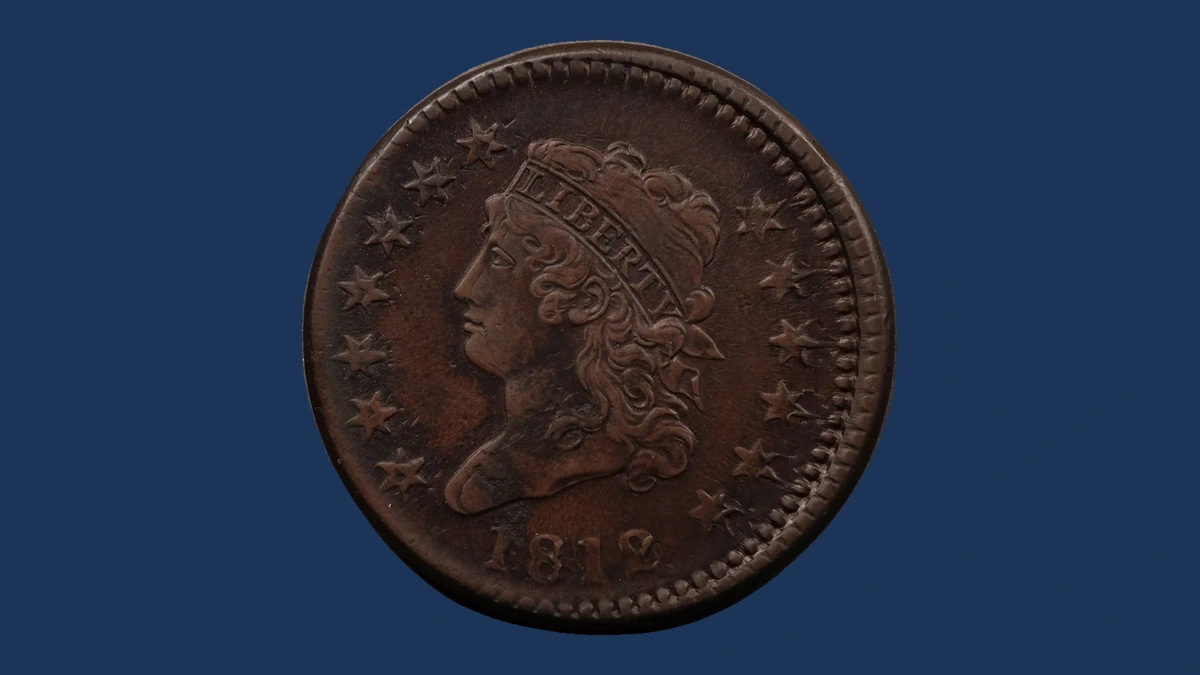
A collector presented an 1812 cent as double struck, pointing to overlapping design details. Other collectors questioned whether the front instead showed tool misalignment or a nearly overlapping second blow.
The back’s E in CENT was also discussed. The photographs prompted different explanations rather than a settled grading-service identification.
A true double strike happens when a coin receives another blow after the first. Movement between those blows can leave displaced letters, a second portrait outline, or other overlapping parts.
This differs from a single shifted design, which does not establish two separate strikes.
Estimated Value
For a confirmed worn 1812 double strike, use an estimated $250–$4,000 range. This does not assign that value to the debated forum coin before its features are examined.
An 1817 Coronet cent with a second strike ninety-five percent off center sold for $264 in June 2019. It had heavy wear and environmental damage.
That low result shows why a dramatic percentage alone is insufficient. Clear overlapping designs and healthier copper can command substantially more.
How to Identify
The collector discussion points to the portrait and E in CENT. Compare both under a 10× magnifier before choosing an explanation.
Trace any repeated outlines through neighboring details. A second blow should explain their relative movement, while a single uneven border can have another cause.
Examine the plain edge for later squeezing. Such damage can affect both faces and imitate overlapping design details.
If the coin is loose, use a scale against the normal 10.89 grams and calipers against about 28–29 millimeters. Record any stretched or flattened area rather than treating those measurements as proof by themselves.
Send complete front and back photographs to a specialist. Ask whether one striking sequence accounts for both the portrait and the E.
6. 1812 Classic Head Cent Shifted Front Tool with Brockage
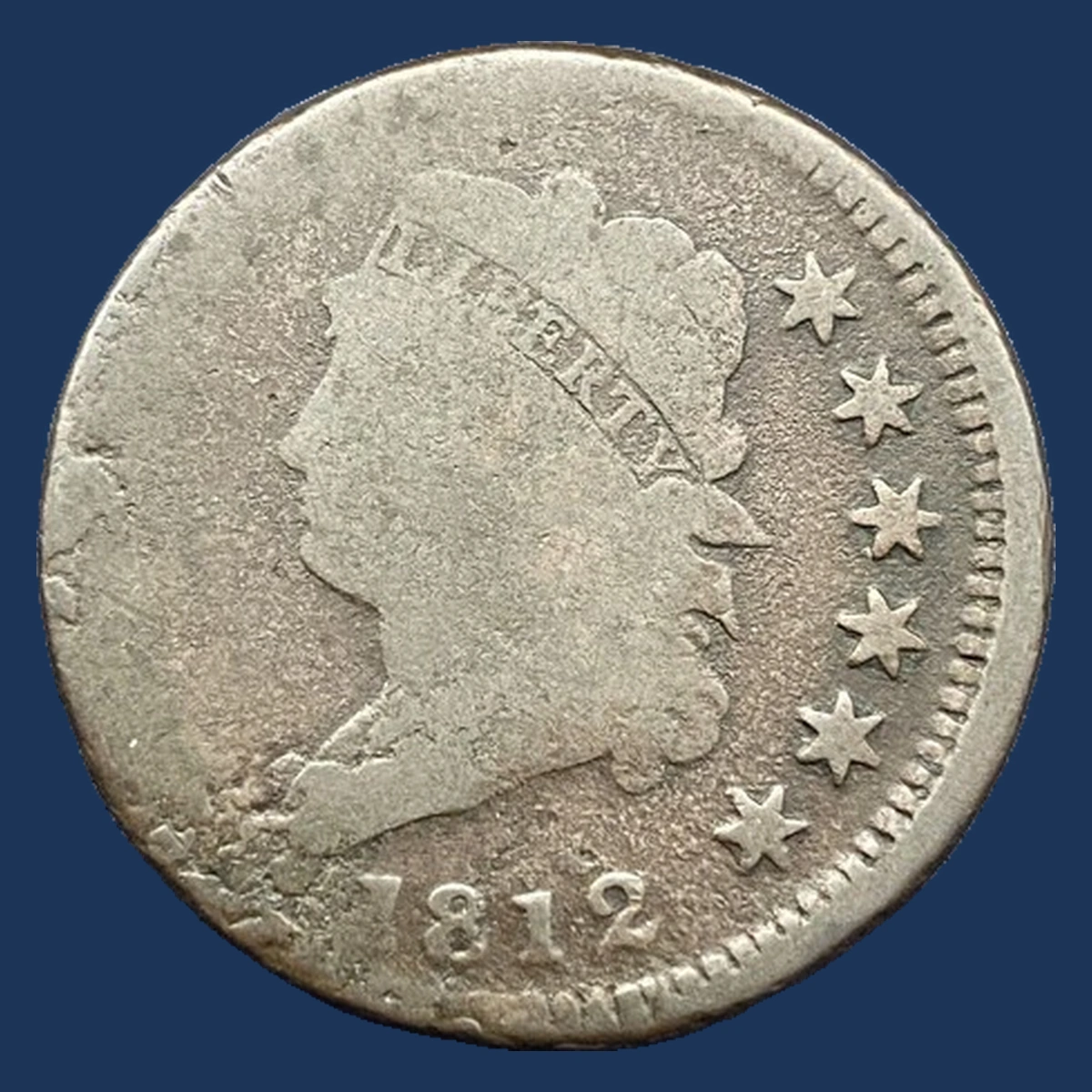
One recorded 1812 error combines a slightly shifted front design with a backward impression on the other face. The front displacement runs toward nine o’clock.
The shift concerns the stamping tool’s position. It is not a rotation, where a design remains centered but points in a different direction.
The backward impression is a brockage, made when a previously struck coin contacts a fresh blank during the blow. Both features therefore occur on one piece.
The historical record gives no displacement percentage. A slight shift should not be redrawn as a large missing part of the design.
Estimated Value
This combined error fits an estimated $3,000–$10,000 range for a worn, clearly identifiable example. The backward impression is likely to drive more interest than the small front-tool shift.
The 1817 brockage mentioned above provides a different-year comparison at a $7,500 winning bid before fees. It was graded NGC VF20, with moderate wear.
No sale amount is assigned to the recorded 1812 combination. Treat both features as parts of one coin, without adding two full prices.
How to Identify
The recorded front design moves toward nine o’clock, so compare the spacing on that side with the opposite border through a 10× magnifier. Then photograph the second face without changing the coin’s orientation and check its centering separately.
Grinding or a rim dent can also change the apparent spacing, making the plain edge an important part of this examination. On a loose coin, use a scale against 10.89 grams and calipers against the normal 28–29-millimeter size to record its copper outline.
The accompanying backward design should be sunk into the metal rather than standing above it. Keep that brockage evidence distinct from the unequal front borders: the two observations explain different features of this same piece.
7. 1812 Classic Head Cent Off-Center Strike with Brockage
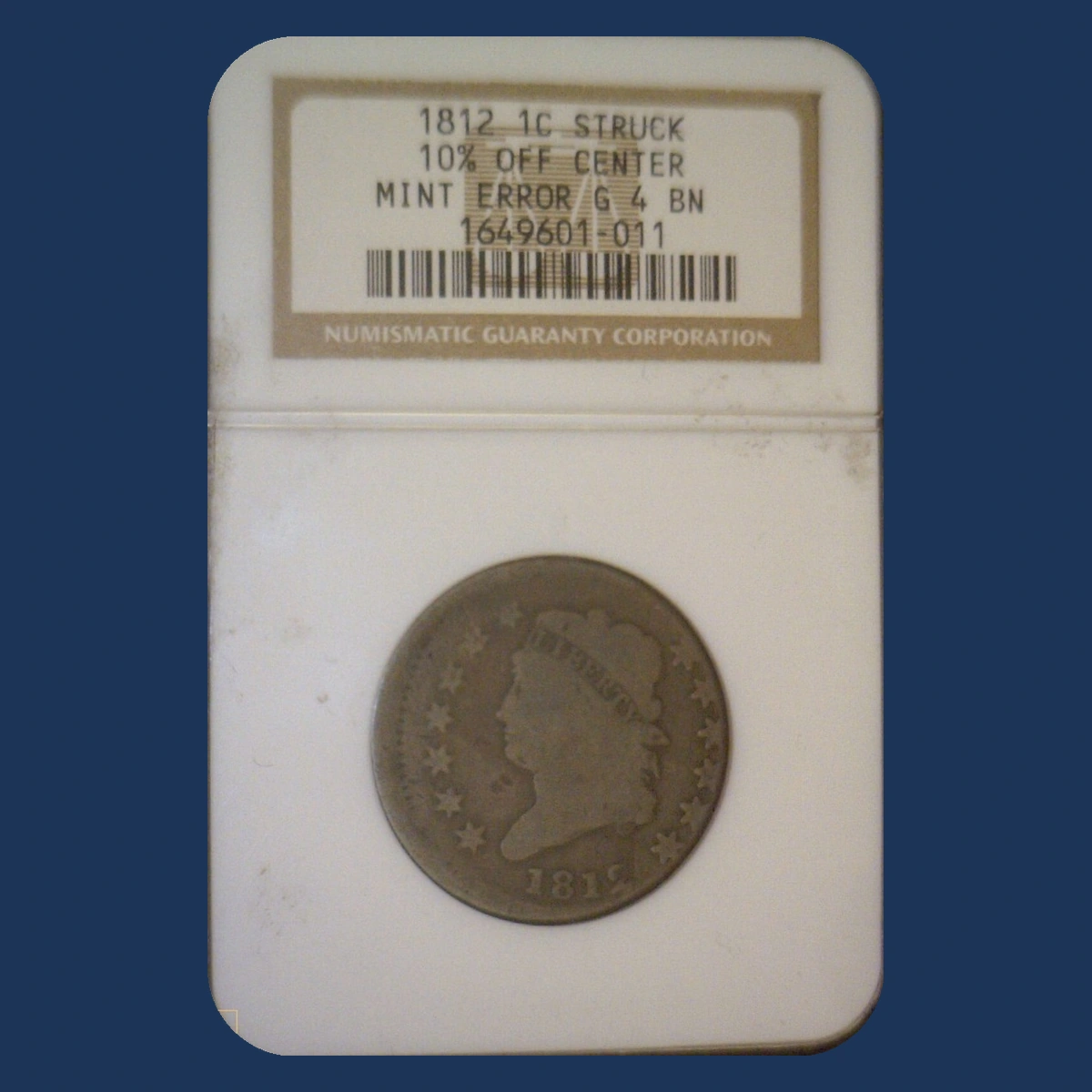
Part of the design lands too close to the edge when the blank is out of position. The opposite side can retain an arc of untouched copper.
An early-cent reference records an 1812 example ten percent off center toward one o’clock. This coin also carries a backward impression, or brockage.
That combination differs from the separate example with a slightly shifted front tool. Here the blank’s position and the backward impression must be understood together.
The ten-percent figure belongs to this particular coin. It does not describe every 1812 brockage or establish a second striking event.
Estimated Value
A recognizable 1812 off-center brockage fits an estimated $4,000–$15,000 whole-coin range. The quality of the backward design may matter more than the modest ten-percent displacement.
The other-year 1817 brockage’s $7,500 winning bid before fees helps place a clear early copper example in context. It does not provide a sale price for the 1812 piece.
Heavy surface damage, a weak mirrored design, or a hard-to-identify date can pull an example toward the lower end.
How to Identify
Look for the boundary between the struck design and untouched copper. Under a 10× magnifier, the blank area should differ from a surface where someone ground the design away.
With the normal portrait upright, compare the recorded movement toward one o’clock. Keep the second face aligned with the same piece of copper rather than rotating it for a better-looking picture.
The backward design must also be examined. It should be sunk into the metal and reversed, rather than simply a faint raised trace from the opposite stamping tool.
Use a scale and calipers if the coin is loose: the original copper blank was about 10.89 grams and 28–29 millimeters. Inspect the plain edge beside the unstruck arc for cutting or later filing.
8. 1812 Classic Head Cent Backward Sunken Design
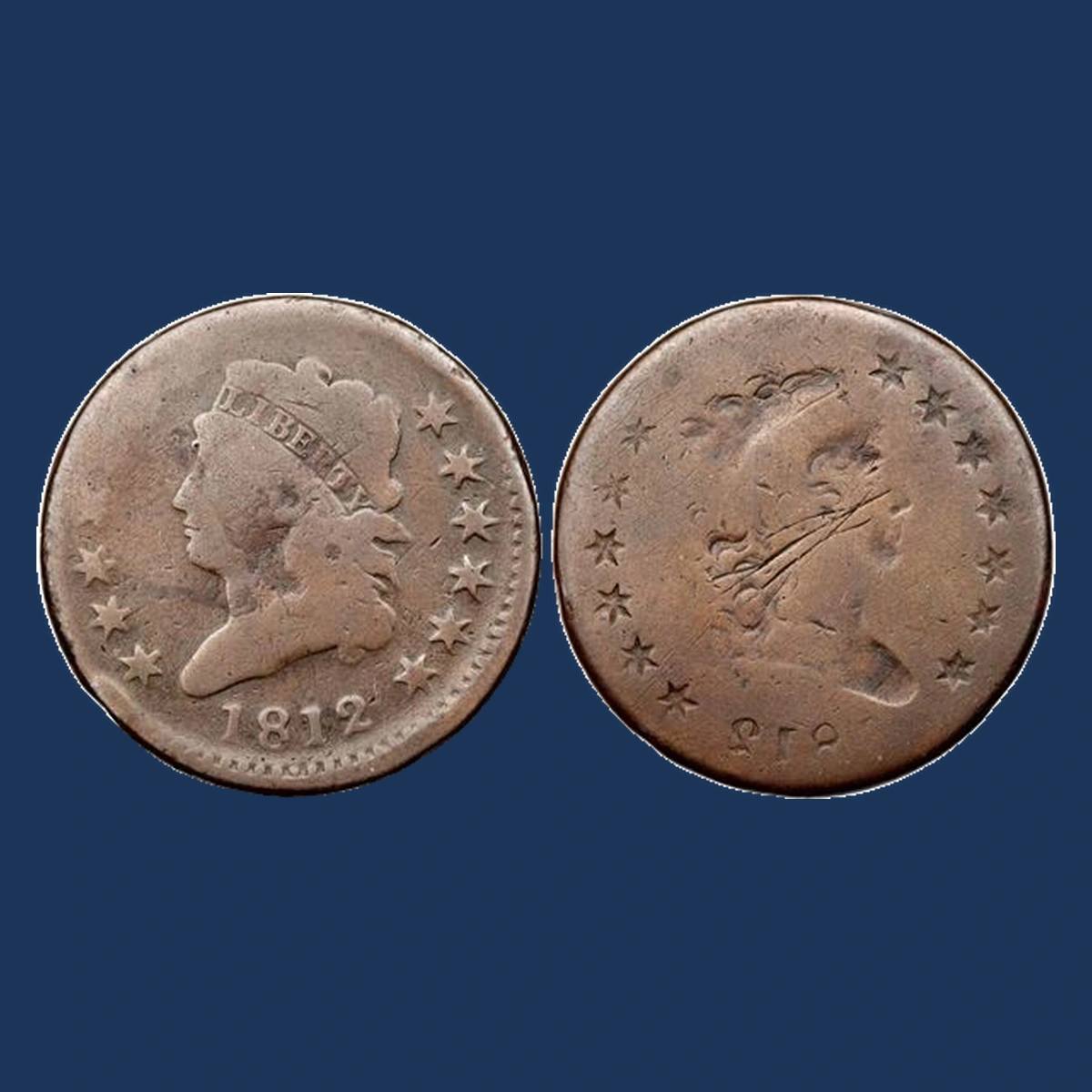
A face can show familiar letters running backward and pressed into the copper. That combination is the key to a brockage.
A struck coin remained in the press and impressed its design into the next blank. The affected face therefore copied another coin instead of receiving the normal tool’s design.
The early-cent record includes 1812 examples involving the portrait and others involving the wreath side. These are different pieces, not two views that should be combined into one imaginary coin.
Some recorded brockages also carry an off-center impression or a shifted tool. Those added features need the matching specimen.
Estimated Value
A clear 1812 brockage can fit an estimated $4,000–$20,000 range, depending on wear, surfaces, and the extent of the reversed design. Complete, recognizable impressions tend to be easier for collectors to appreciate.
The different-year 1817 NGC VF20 brockage reached a $7,500 winning bid in January 2015, before buyer fees.
It is a useful comparison, not an 1812 transaction. A coin already valued with an off-center brockage should not receive this amount again.
How to Identify
Read one letter on the unusual face through a 10× magnifier. It should run backward and sit below the surrounding surface.
A reversed photograph can imitate backward writing, but it cannot establish whether the design is raised or sunken. Use angled light to examine that difference.
The early-cent reference records both portrait-side and wreath-side 1812 examples. Compare the normal face with the backward face on the same coin.
Weigh a loose candidate against 10.89 grams on a scale and measure its roughly 28–29-millimeter outline with calipers. Include its plain edge in photographs.
A specialist should also examine the normal face for pressure damage. Later squeezing against another coin may imitate the backward impression while damaging the opposite design.
Conclusion
An 1812 cent can show anything from a small metal flaw to a backward impression covering an entire face. The estimated whole-coin range here is $100–$20,000.
Check whether a strange line rises above the surface or opens into the copper. For larger errors, compare both faces before judging how the coin moved.
Keep the Small Date and Large Date examples separate, and have a specialist examine unusual overlapping or reversed designs.