2022 Nickel Error List with Pictures

A missing piece can be worth a closer look: a clipped 1997-P nickel sold for $124 in March 2025. That different-year sale provides a comparison for the clipped blanks reported among 2022 nickel errors.
The estimated ranges below run from $5–$300. Some features are tiny raised lines; others change the coin’s entire outline.
Start with what you can see, then follow the checks for that feature. Jefferson’s modern, forward-facing portrait is the correct design for this year.
1. 2022 Jefferson Nickel Weak Hair Detail from a Blocked Tool
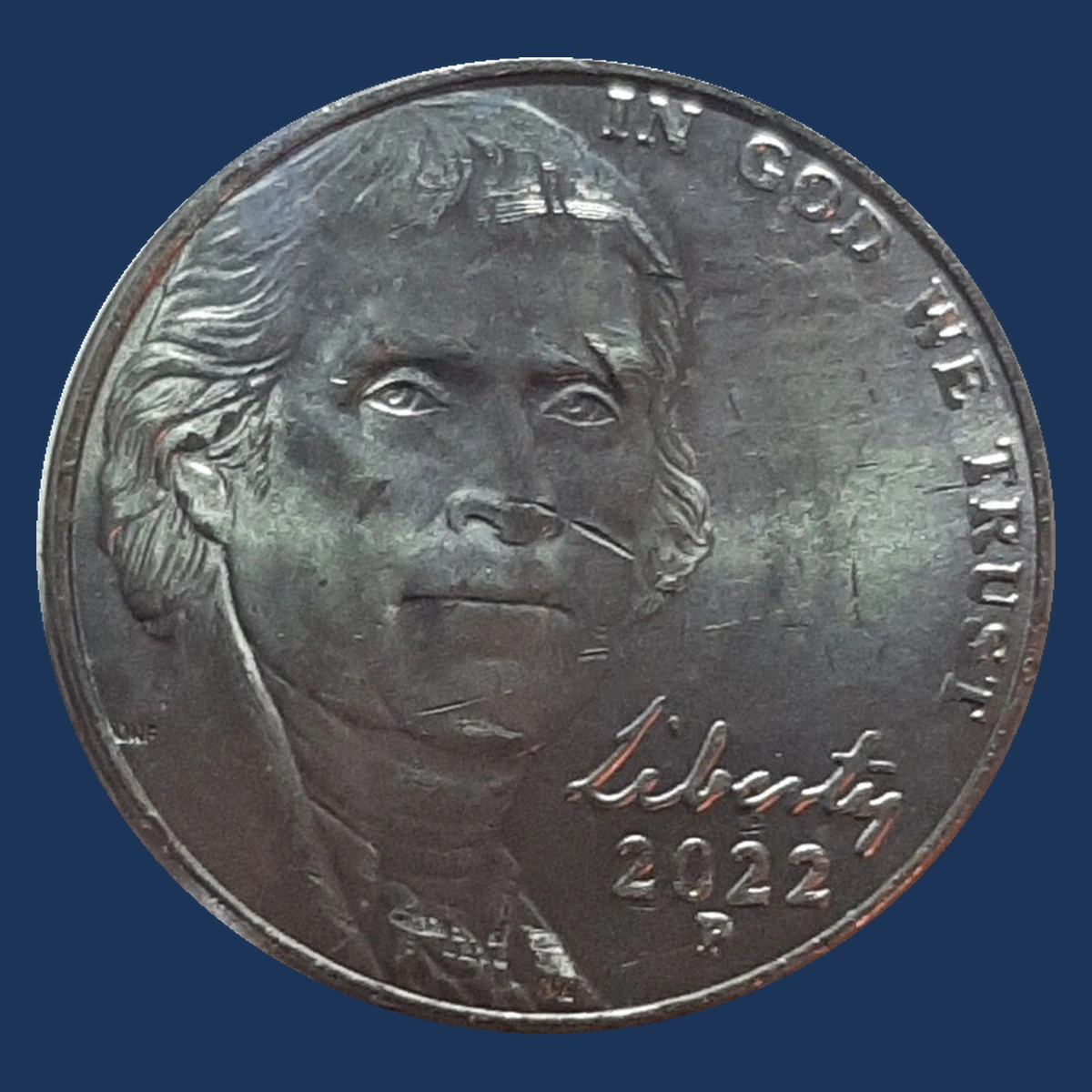
One patch of Jefferson’s hair may look soft while nearby strands remain sharper. A report for 2022-D places this weakness in the upper-right hair area.
Grease or debris in the stamping tool can prevent metal from filling part of its design. The resulting coin lacks detail in that spot.
This is often called a grease strike-through. The visible weakness does not establish a trapped wire or piece of cloth, which would need different evidence.
Wear, polishing, and a generally weak strike can also soften the hair. Compare the surrounding surface before choosing a cause.
Estimated Value
A modest genuine blocked area is estimated at $5–$25. The clearest examples show an obvious contrast between the missing hair detail and the sharper nearby design.
This range estimates a genuine Mint error, rather than quoting a completed 2022 auction. A faint patch on a worn coin may add little beyond ordinary collector value.
The estimate assumes the weakness formed during striking. A polished or scraped portrait should not receive the same premium simply because some hair is missing.
How to Identify
Compare the entire portrait with a normal 2022-D nickel before enlarging the upper-right hair, because ordinary wear can soften many features together. Check whether Jefferson’s cheek and the nearby letters remain sharp while that one patch looks weak.
A 10× magnifier can reveal shallow surviving strands, polishing lines, or scraped metal within the affected area. Move the light without rubbing the coin, and photograph the weak patch beside the clearer design under the same conditions.
For a loose specimen, use a scale and calipers against 5 grams and 21.21 millimeters, also examining the plain edge for damage. Keep the local weakness and surrounding sharp details together in the photograph; a close-up of only the blur cannot explain its cause.
2. 2022 Jefferson Nickel Raised Lines and Small Tool Chips
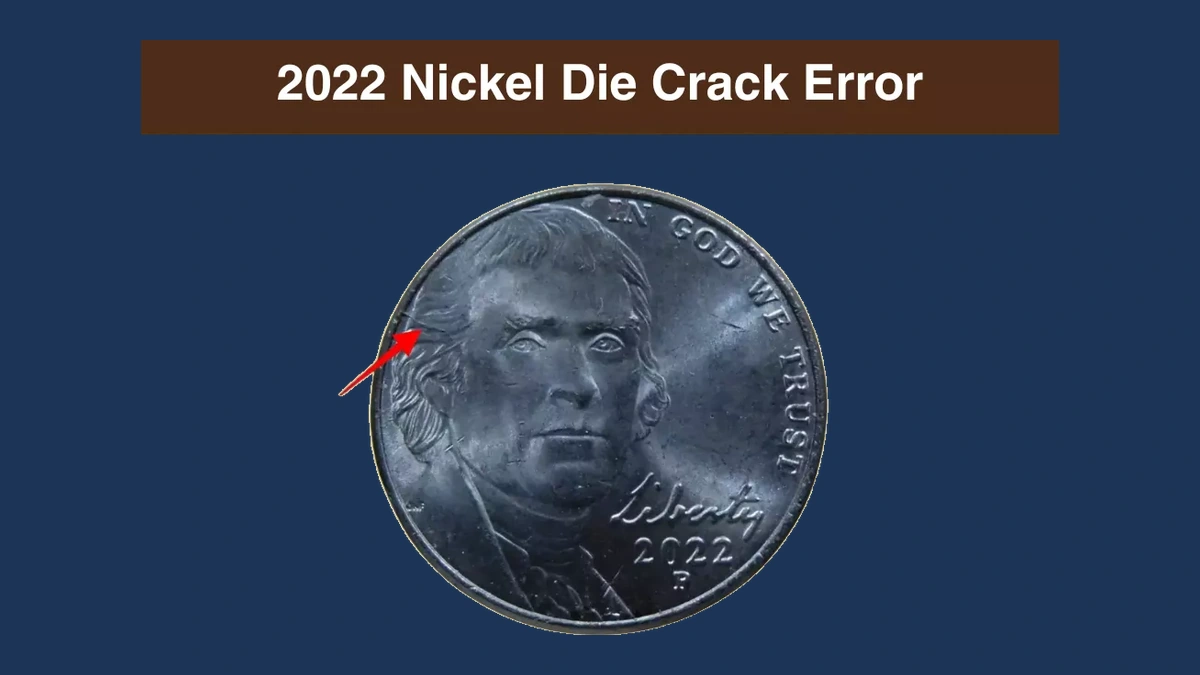
A bump on Jefferson’s nose or a line near an eye can come from a damaged die, the steel tool that stamps the design. Metal enters a crack or missing chip in the tool.
The finished coin receives raised metal in that place. Specialist listings describe chips near the eyes and nose, plus cracks around the building’s dome.
Nicknames such as Speared Nose or Scarred Eye describe appearances rather than new minting mechanisms. They do not establish that every nicknamed coin came from the same tools.
An isolated eye bump is not a rim-connected break simply because it is raised.
Estimated Value
For small original cracks and chips, estimate $5–$30. A clear nose projection or eye-area lump is easier to collect than a fine line hidden by wear.
These figures concern minor tool damage reported for 2022, not a price assigned to every nickname. Coins carrying the same pattern can differ in condition and visibility.
Do not add a separate full value for each tiny bump on one coin. The buyer is judging one piece and its overall appearance.
How to Identify
First compare the eyes and nose with an ordinary 2022 nickel. The normal sculpture already includes raised eyelid contours.
Photograph the extra feature from two lighting directions through a 10× magnifier. Does it remain a solid part of the coin, or resemble loose dirt or a fiber?
For a line, follow its center. A scratch cuts inward, whereas a cracked stamping tool leaves a raised ridge.
The loose coin should be near 5 grams on a scale and 21.21 millimeters across with calipers. Examine the plain edge for impact damage.
Match the particular raised pattern to the correct mint’s example. A Philadelphia eye or nose feature should not automatically name a Denver coin.
3. 2022 Jefferson Nickel Ghost Design beneath Monticello
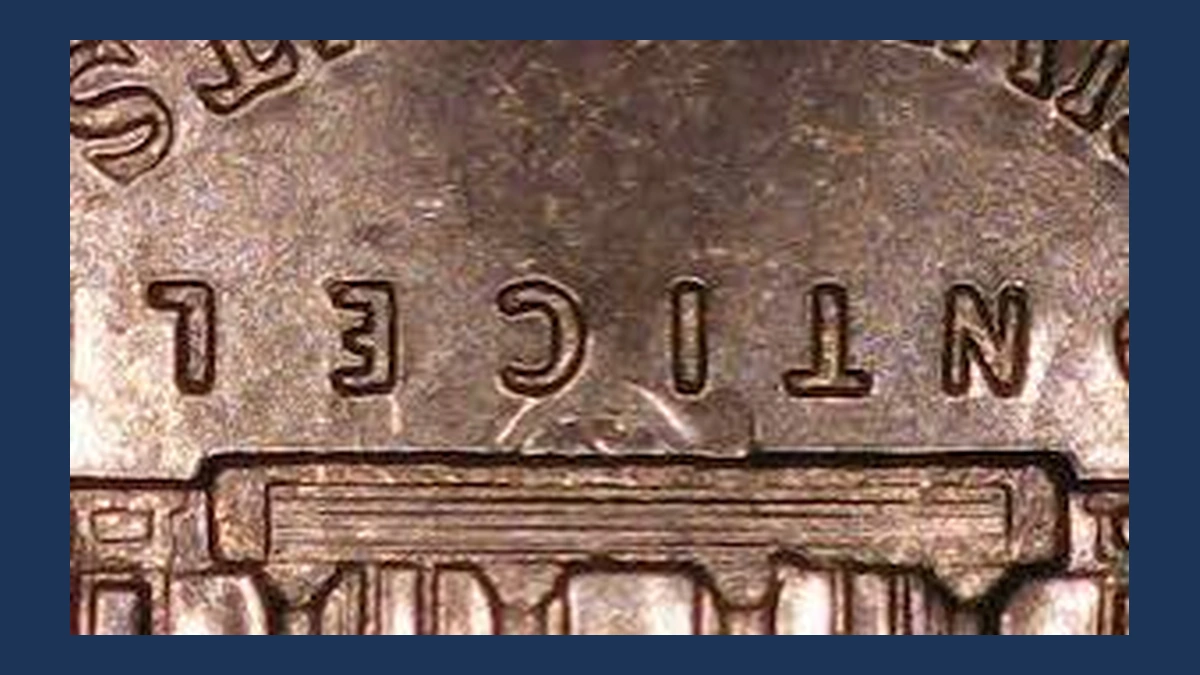
Faint pieces of Jefferson’s design can seem to appear beneath the building on the back. Year reports call this appearance Peeping Tom.
The proposed cause is a die clash: the two stamping tools touched when no blank was between them. Marks from that contact then appeared on coins struck afterward.
The explanation depends on matching recognizable parts of the opposite design. An unexplained line below the steps is not enough.
A 2022 nickel uses the forward-facing portrait. Comparisons based on the older side-view portrait can therefore lead you to the wrong shapes and locations.
Estimated Value
Estimate $10–$50 for recognizable original clash traces on a 2022 nickel. Stronger, easily photographed fragments generally have more appeal than lines that need extensive explanation.
The year reports describe the nickname without establishing a matched auction result for one identified specimen. This is an estimate for the reported type, not a claim that every ghost-like patch sells.
Good surrounding detail helps the comparison. Scratches or damage pressed into the coin later do not qualify for the same range.
How to Identify
Look below Monticello’s steps and identify several connected shapes, rather than starting with the nickname. Compare them with the modern forward-facing Jefferson portrait on the opposite face.
A 10× magnifier helps separate faint design traces from scratches and ordinary building lines. Turn the coin over and look for related building traces on the front, allowing one face to be weaker than the other.
On a loose coin, record the usual 5 grams and 21.21 millimeters with a scale and calipers. Inspect the plain edge and both faces for squeezing or other later pressure damage.
Keep the steps visible in photographs of the unusual marks. Recognizable pieces fitting the opposite design are stronger evidence than an isolated arc.
4. 2022 Jefferson Nickel Doubled Letters, Eyelids, or Door Details
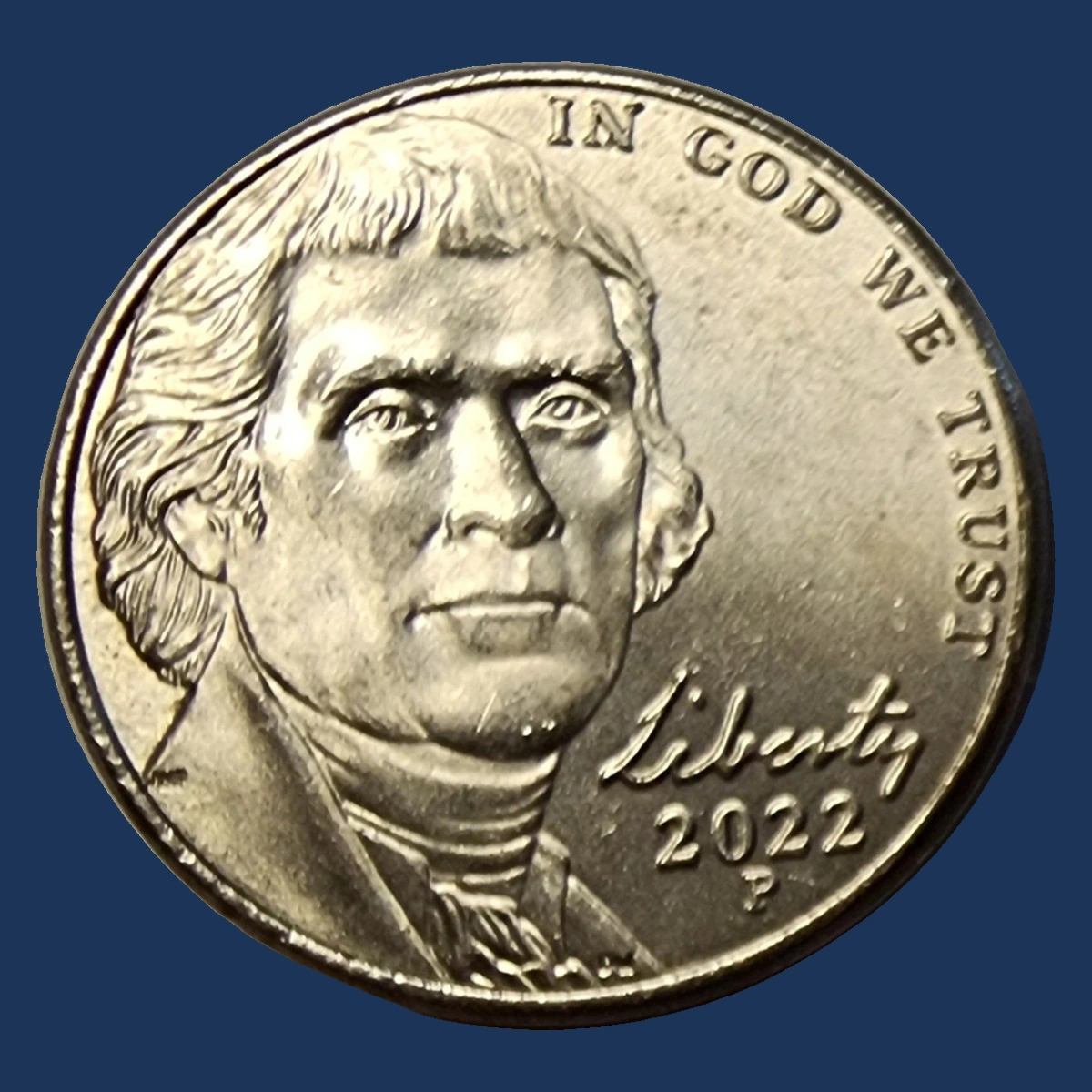
Two outlines can appear where a stamping tool should have carried one. The doubled design was built into the tool and repeated on coins struck from it.
One 2022-P example has doubling in the date, P, Y of LIBERTY, and motto. Another has repeated outlines at both eyelids.
Back varieties include extra detail at the center doorway and in the words around Monticello. Some recorded coins combine front and back doubling.
The P was part of the design by this period. Its doubled outline is not a second mint letter punched by hand into an individual tool.
Estimated Value
For clearly matched minor varieties, estimate $10–$30, with stronger examples around $30–$75. These are estimates for the documented patterns, not verified sales for each catalog number.
Extra outlines that are easy to photograph have more appeal than thick lettering alone. Original surfaces also help a collector see what is present.
A coin with doubling on both faces receives one whole-coin valuation. Its two sets of details do not automatically double the price of a comparable single-sided example.
How to Identify
Check the mint letter and finish before choosing a photograph: these catalog examples are Philadelphia circulation coins. An S Proof, made specially for collectors, needs a different comparison.
For a loose nickel, use a scale and calipers against 5 grams and 21.21 millimeters, including its plain edge. Normal measurements help establish the coin, but cannot prove a doubled design.
Enlarge the date, eyelid, or doorway with a 10× magnifier, keeping the whole shape visible. Compare it with the matching Philadelphia variety photographs, rather than combining the date-and-motto pattern with the separate eyelid pattern.
Look for the cataloged extra outlines instead of flat shelves or ordinary door-frame lines. The repeated P belongs to design doubling, not an old-style hand-punched mintmark.
5. 2022 Jefferson Nickel Dark Color from Improper Annealing
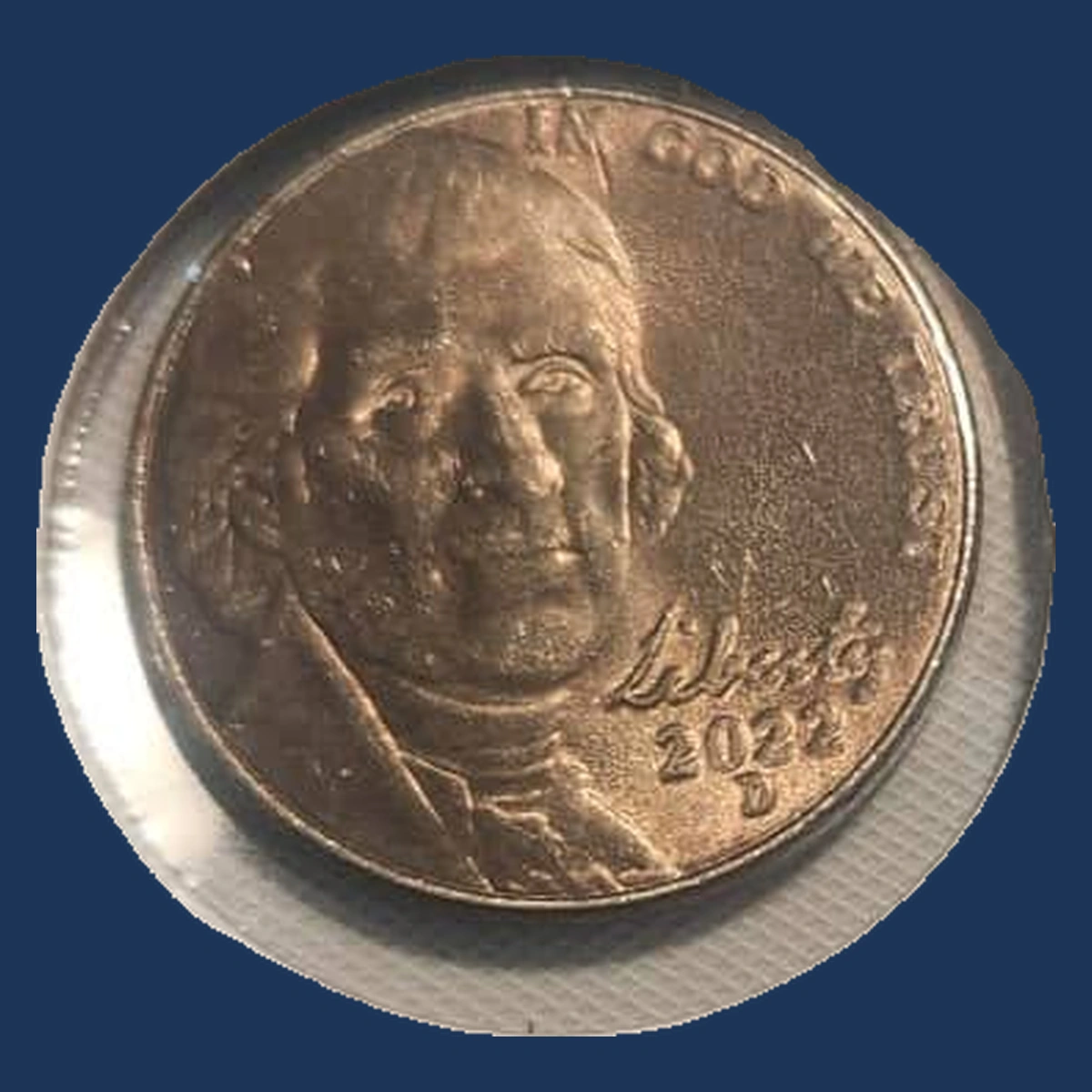
A brown or black nickel may have changed color during the heating used to prepare its blank. That softening step is called annealing.
Year sources report unusually dark Denver examples from 2022. Their color is a clue to investigate, not proof of when the change occurred.
A normal nickel contains one copper-nickel alloy throughout. It does not have a removable outer nickel layer over a copper center.
Chemicals, burial, and heating after minting can also darken the surface. Original shine and texture must be considered with the color rather than treating every brown coin as a Mint error.
Estimated Value
For a properly identified heating error, estimate $15–$100. Small color differences usually have less appeal than a strong, original-looking surface change on a clean coin.
As a different-year comparison, a 2005-D nickel labeled improperly annealed sold for $119 in December 2022. That is a sale of a 2005 coin, not proof of a similar result for this date.
The range excludes ordinary staining and later heat damage. A darker shade alone does not establish a higher value.
How to Identify
A loose dark nickel should first be checked with a scale and calipers against 5 grams and 21.21 millimeters. A much smaller or lighter copper-colored coin needs a different investigation from a normal-sized nickel with changed surface color.
Place it beside an ordinary nickel under neutral light and turn both together, watching how the original surfaces reflect. With a 10× magnifier, inspect protected spaces beside letters and the plain edge for paint, crusts, corrosion, or a peeling coating.
Do not scratch through the color or polish a test patch, because those actions remove evidence about the surface. Preserve it for specialist examination; an even shade and normal measurements cannot distinguish Mint heating from every later treatment.
6. 2022 Jefferson Nickel Curved or Straight Missing Sections
A coin blank can be incomplete when cut from metal strip. An overlapping cut may reach a previous hole, while a cut at the strip’s edge can leave a straight missing section.
Both shapes are reported for 2022 nickels. The remaining metal receives the normal design, with the opening already present.
The reports do not fix one percentage, direction, or mint letter for every example. Those details belong to the actual coin.
A later cut can produce a similar outline. The surrounding struck detail and the surface inside the opening help explain when the metal went missing.
Estimated Value
Estimate $15–$75 for modest genuine clips and $75–$150 for larger, attractive examples. The readable date and intact original surface matter alongside the missing-metal percentage.
A 1997-P twenty-percent clip sold for $124 in March 2025. That different-year comparison supports the general range without assigning its size to a 2022 coin.
A sawed or filed notch does not become valuable just because it resembles a curved or straight Mint clip.
How to Identify
Confirm that the gap lacks metal, rather than containing an unstruck crescent. Then photograph the date and mint letter together with the missing section.
Weigh the loose coin against the normal 5 grams and measure intact spans with calipers against 21.21 millimeters. Later cutting also lowers weight, so neither result proves a Mint clip.
Use a 10× magnifier along the opening’s ends and its plain edge. Look for design flowing or fading toward an original boundary, then check for saw marks or file strokes across finished details.
Finally inspect the opposite rim for weakness, which can support a clip but is not essential in every case. The boundary’s original striking effects carry more weight than the gap’s shape alone.
7. 2022 Jefferson Nickel An Expanded Strike with Complete Design
An unusually wide nickel can form when the ring around the blank fails to contain it. This ring is called the collar.
The metal spreads during the blow, creating a broadstrike. The complete design stays on the coin even if the border looks wider on one side.
Year reports include this type for 2022 without establishing one specimen’s exact width. A normal nickel’s plain edge is not itself evidence that the ring failed.
Later squeezing or hammering can also make a coin wider. Those processes distort already struck surfaces instead of allowing the design to form across freely spreading metal.
Estimated Value
A working estimate for a genuine 2022 broadstrike is $30–$250. Strong expansion with clean, complete design generally brings more interest than a barely widened border.
For comparison, a 1999-P broadstruck nickel brought $89 in March 2025. That recent sale concerns a different year, while the 2022 range remains an estimate.
The full outline and both faces should support the cause. A flattened pocket coin does not earn a broadstrike premium merely by exceeding normal diameter.
How to Identify
Measure the widest and narrowest spans with calipers before judging the uneven border. Compare both with the normal 21.21-millimeter diameter.
A scale should read close to 5 grams when the metal has spread instead of disappearing. Photograph the measurements of a loose coin.
Follow the outer lettering around both faces. A simple broadstrike retains the complete design, even when the extra border is uneven.
With a 10× magnifier, inspect the widened metal for hammer marks, crushed high points, or squeezed lettering. These suggest flattening after the design was formed.
The edge is normally plain, so that feature proves nothing by itself. Confirm complete design on the expanded blank, rather than using extra width alone to name the error.
8. 2022 Jefferson Nickel A Design Struck Away from the Center
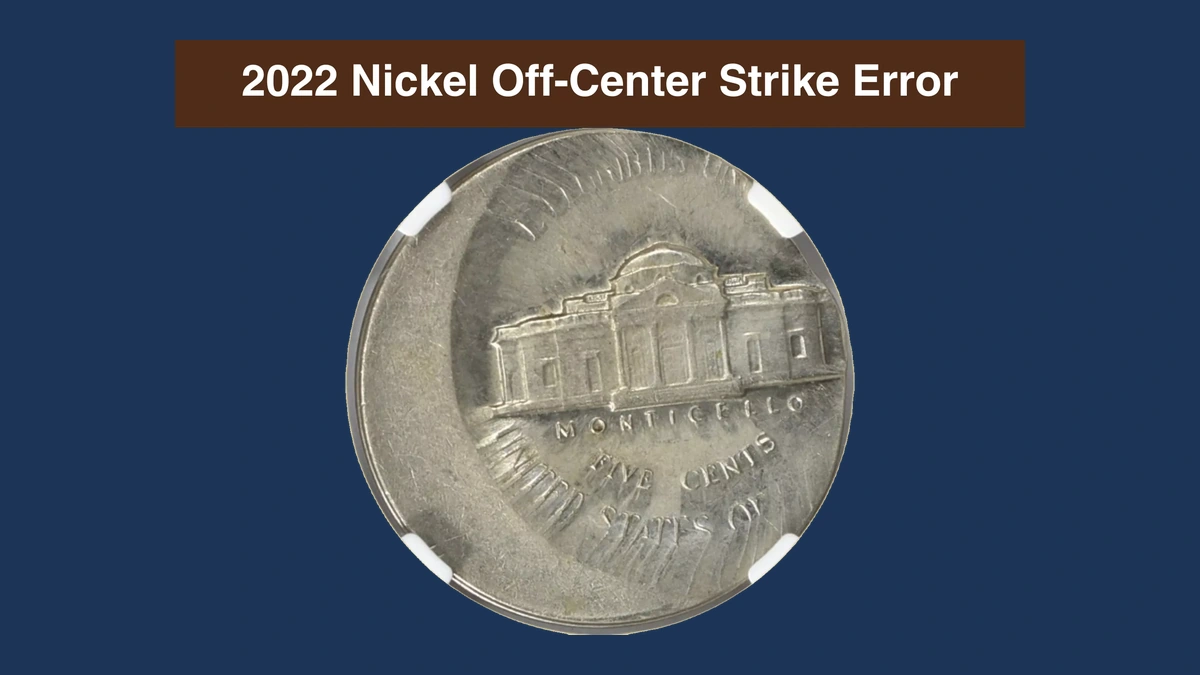
The blank can enter the press in the wrong position. One part receives the portrait and building while another part misses the tools and stays unstruck.
Off-center examples are reported for 2022. Their exact mint letters, directions, and percentages need to be read from individual pieces.
This is different from a clip, where metal is absent. On an off-center coin, the blank area still contains the original metal.
A border uneven on only one face may indicate a shifted tool instead. Compare both faces before deciding that the entire blank was misplaced during striking.
Estimated Value
For readable-date examples, estimate $20–$100 for modest offsets and $100–$300 for more dramatic, attractive pieces. These figures are estimates for the reported type.
A 1984-P nickel struck fifty percent off center sold for $132 in March 2021. Its date and degree of displacement belong to that separate comparison.
The largest blank area does not always command the most money. Losing the year or acquiring heavy scratches can make an otherwise dramatic coin less appealing.
How to Identify
Orient the date upright and find the area with no design before estimating a percentage. Through a 10× magnifier, check for an untouched surface rather than one ground smooth afterward.
Compare that area with the design cut off on both faces. One misplaced blank should explain both sides; a shifted design on only one face calls for another cause.
The original metal can remain despite an irregular shape. Use a scale against 5 grams and calipers against the normal 21.21-millimeter outline to document a loose specimen.
Inspect the plain edge for trimming and photograph all surviving date digits. Keep the unstruck metal and the corresponding missing design in the same record before calling the coin off center.
Conclusion
These 2022 nickel errors have estimated values of $5–$300. A small blocked hair patch and a dramatically misplaced strike need very different comparisons.
Begin with the simplest visible clue: raised metal, missing metal, repeated detail, or an enlarged outline. Keep the modern portrait and correct mint letter in every comparison, and leave suspicious surfaces uncleaned so the original evidence remains available for a closer look.