2017 Nickel Error List with Pictures

Two denominations on one coin can be worth thousands: a 1977-S collector nickel struck over a dime brought $7,800 in January 2022. A different, ordinary-finish 2017-P nickel is also recorded over a struck dime.
This 2017 nickel error list spans estimated values of $0.05–$6,000, from a slight alignment shift to that much more unusual mistake. Most small marks belong near the lower end.
The checks below explain what happened to the metal and which details distinguish similar-looking errors.
1. 2017 Jefferson Nickel Misaligned Die
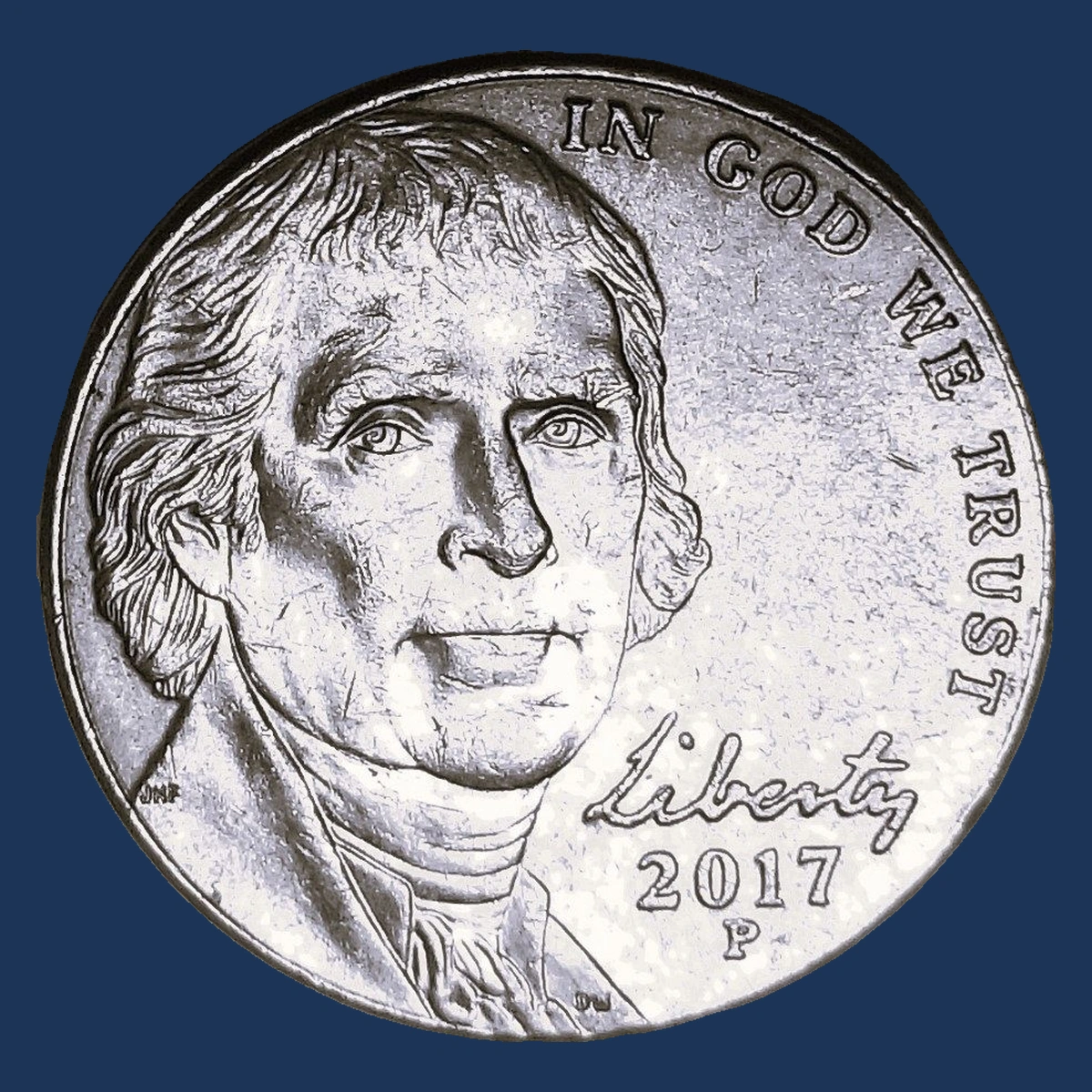
The border can be narrow on one side of Jefferson without the whole coin being struck off center. If the opposite face stays centered, a shifted stamping tool is a better explanation.
This is called a misaligned die. The metal blank may have been correctly positioned while one tool sat slightly to the side.
A 2017 owner’s discussion describes just such a small shift, with a narrow lower-left border. The discussion identifies the effect as minor misalignment rather than a true off-center strike.
Estimated Value
Estimate $0.05–$5 for the slight shift described here. At the low end, the coin is simply worth its five-cent face value.
This is a modest collector estimate, not a completed sale of the forum coin. Small changes in border width are not usually enough to create strong demand.
A buyer may pay a little for a clear teaching example. Prices for dramatic off-center strikes should not be transferred to a centered coin with a narrow rim.
How to Identify
Set the nickel beside a normal example with Jefferson upright. Compare the lower-left border with the opposite border, keeping the whole coin in view.
Turn it over and inspect Monticello’s spacing inside the rim. A 10× magnifier helps separate a thin struck border from one flattened by a later impact.
For a loose nickel, measure the round outline with calipers against 21.21 millimeters and weigh it against 5.00 grams. Minor tool misalignment should not remove a crescent of metal or require an oversized blank.
Check the smooth edge for dents where the border looks narrow. The useful distinction is whether one face is shifted while the other remains centered.
2. 2017 Jefferson Nickel Broadstrike
Extra space outside a complete design can reveal a broadstrike. The nickel spread outward because the surrounding metal ring, called the collar, did not fully contain it during striking.
A 2017-P report describes an expanded coin with slightly uneven spacing around the designs. Both faces keep their complete design despite that uneven shape.
That combination is sometimes called an uncentered broadstrike. It differs from a true off-center strike, where part of the intended image misses the blank.
The nickel’s ordinary edge is already smooth. A lack of grooves therefore tells you nothing about this error.
Estimated Value
An estimated $20–$100 covers modest through clearly expanded examples with complete designs. The year guide reports a $75 transaction in 2018 for an MS64 coin, an unworn grade with visible marks.
The guide reports the amount without identifying the original auction lot. The coin’s expansion and condition determine how closely it fits another example.
A later flattened nickel does not receive the same premium merely because it also measures wider.
How to Identify
Measure the outline in several directions with calipers, then photograph both faces at the same scale. The normal diameter is 21.21 millimeters, but the actual shape matters more than one widest reading.
Weigh a loose example: about 5.00 grams is normal because the error spreads the original metal rather than removing it. Under a 10× magnifier, inspect the outer letters for flattening caused by later hammering.
The rim may have formed unevenly, so do not require equal empty space all around. Follow the complete front and back lettering around the expanded outline: missing design at one edge calls for a different explanation.
3. 2017 Jefferson Nickel Doubled Die Obverse
The 2017-D doubled-die report points to Jefferson’s eye, hair, collar, and LIBERTY. Extra outlines at those places are the features to compare, rather than a general blurry appearance.
A doubled die is a stamping tool made with a doubled part of the design. It can repeat that extra detail on more than one coin.
The year guide describes this Denver example, but does not provide an original variety listing to match. Flat ledges from movement during striking are a common lookalike and should not be called this variety simply because they look doubled.
Estimated Value
The guide cites an $80 result in 2020 for the reported Denver doubling. Without an identified original auction lot, use it as a guide-reported figure.
A practical estimated range is $20–$100 for a clearly matched example. The price depends on actual extra design, rather than every flat step beside a letter.
Sharp photographs of the eye, hair, collar, and lettering help buyers judge the match. A blurry image cannot support the upper end.
How to Identify
Examine the eye and nearby hair before moving to the collar and LIBERTY. Use a 10× magnifier, with the coin lying flat so a tilted view does not stretch the details.
Rounded extra outlines should remain in a fixed place as you move the lamp. Flat, shelf-like edges can come from movement during striking instead.
Check the D below the date. This report concerns Denver’s ordinary coin, not San Francisco’s specially made collector finishes.
An intact specimen should remain near 5.00 grams and 21.21 millimeters, measured with a scale and calipers. Keep any graded coin in its holder.
Compare several reported features together; a lone flat ledge on LIBERTY is not a convincing match.
4. 2017 Jefferson Nickel Die Clash
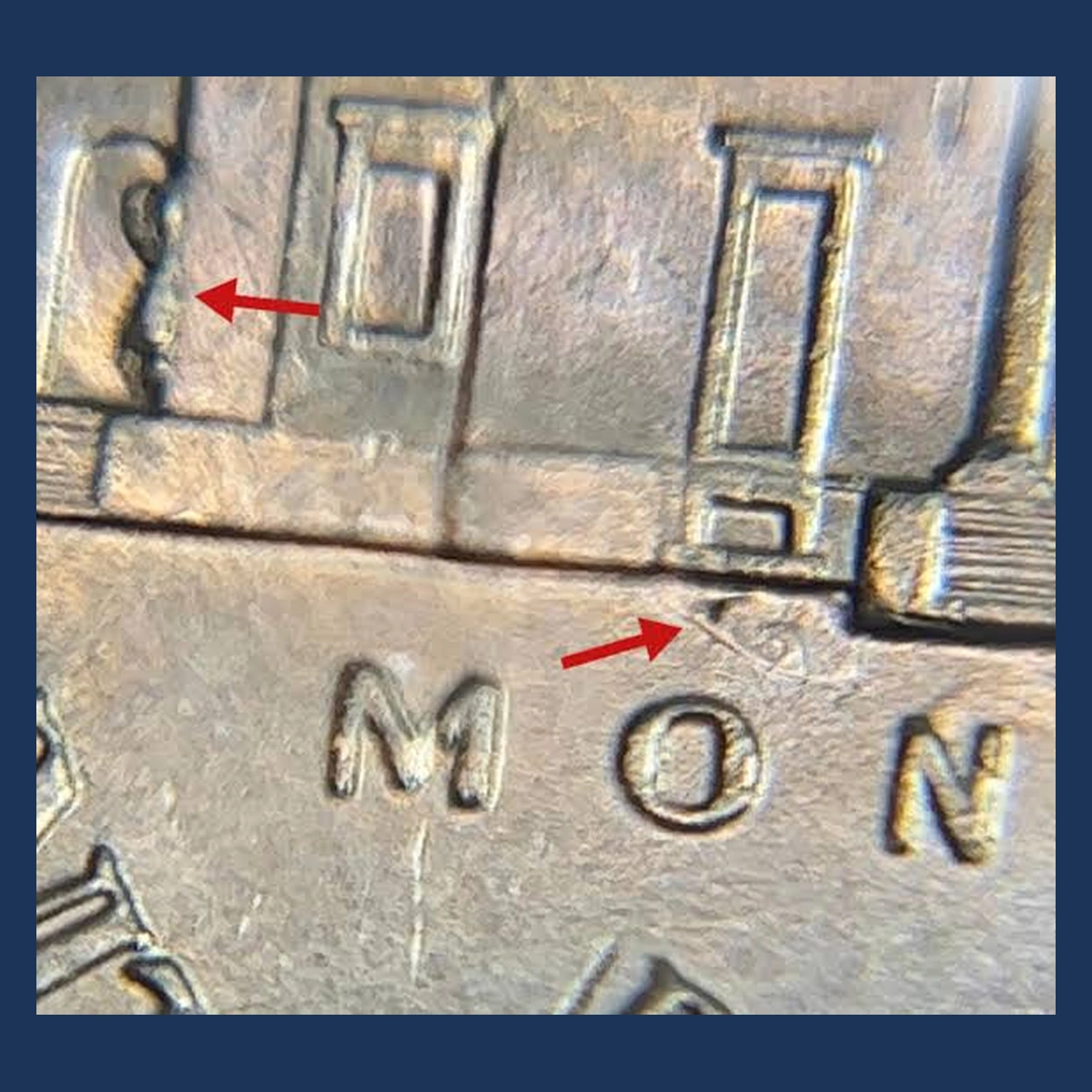
A faint jaw-shaped line beside Monticello is out of place. The year guide reports that kind of trace on 2017-P nickels, along with building-like lines on the portrait side.
Such fragments can form when the front and back stamping tools strike each other without a blank between them. Their unwanted marks then appear on coins struck afterward.
This is a die clash. It does not mean that a finished nickel was pressed against another coin.
A true match must follow part of the opposite design. Random scratches and fine polishing lines do not meet that test.
Estimated Value
The estimated range is $25–$100 for a clear, genuine clash. The available year guide also puts visible examples in roughly this price category, rather than identifying a particular 2017 auction sale.
Faint traces needing careful lighting belong lower than a recognizable fragment that is easy to see. Condition still matters.
Several related lines from one clash describe one coin. They should not be priced as separate errors and added together to inflate its value.
How to Identify
Photograph Monticello and compare the strange line beside it with Jefferson’s jaw in a correctly turned front image. Then check whether the portrait-side lines follow features of the building.
Use a 10× magnifier to inspect their shape, not just their brightness. A scratch can catch the light, while a polishing line can be raised, so height alone does not prove a clash.
A scale and calipers should still give about 5.00 grams and 21.21 millimeters for a loose intact nickel. Check the plain edge and surrounding metal for signs of squeezing between other coins.
A recognizable design fragment in the correct position is stronger evidence than several unrelated lines.
5. 2017 Jefferson Nickel Die Cracks, Chips, and Cuds
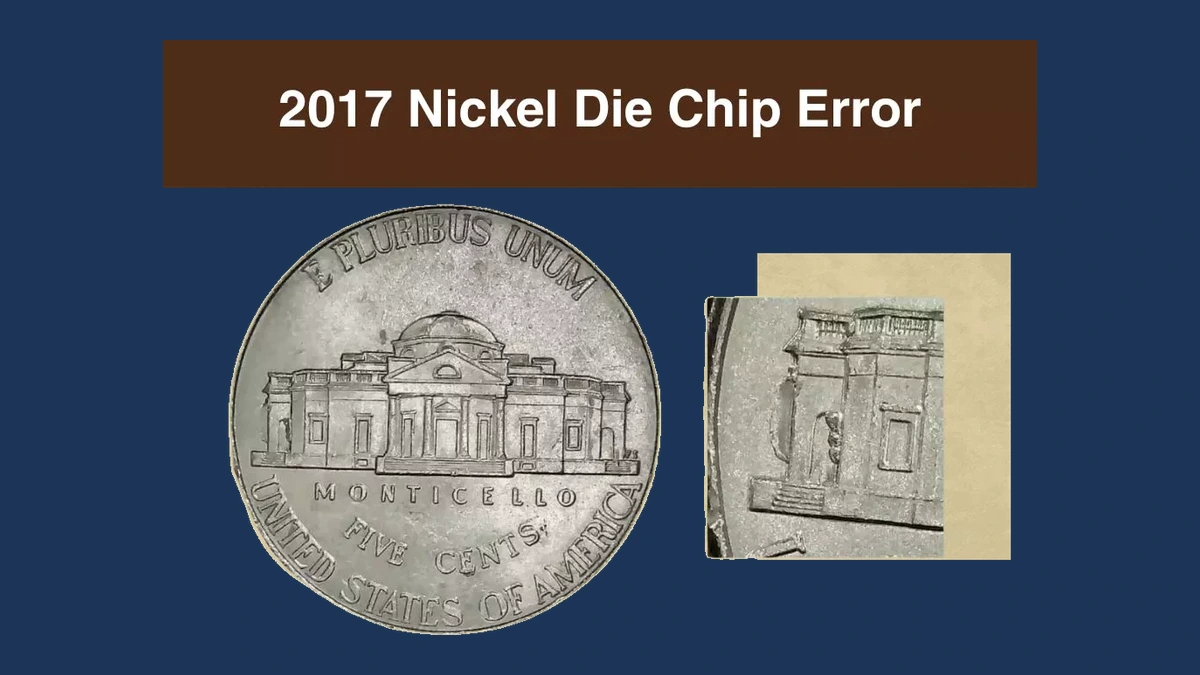
A thin raised line, a small lump, and a broad rim patch can all begin with broken steel in a stamping tool. The size and location give them different names.
A crack leaves a ridge. A chip leaves a small lump, while a cud joins the coin’s rim and replaces part of the normal design.
Reports include a Philadelphia front crack and a separate rim cud. Denver examples have small lumps on the portrait and Monticello.
The internal Philadelphia chip discussed by collectors is another example. It does not become a cud unless the break reaches the rim.
Estimated Value
Use an estimated $5–$125 across this group, with small interior chips at the low end. A large raised patch or prominent crack can draw more interest than a barely visible bump.
The year guide reports amounts of $70 for a rim cud, $85 for a front crack, and $120 for two-sided chips. Its figures should be treated as secondary reports.
The estimates concern complete coins; several small lumps do not guarantee the highest price.
How to Identify
First decide whether the raised metal touches the rim. A broad connected patch can be a cud; an isolated bump inside the portrait or building is a chip.
With a 10× magnifier, tilt the light across the feature without scraping it with a fingernail. Added glue or solder may show a separate boundary or surface texture.
A normal loose nickel weighs about 5.00 grams on a scale and measures 21.21 millimeters with calipers. Weighing can expose a large addition but cannot authenticate a tiny bump.
For a thin line, inspect its center for a cut rather than assuming the bright edges are a crack. Photograph where any larger patch meets the original rim.
6. 2017 Jefferson Nickel Struck Through Grease
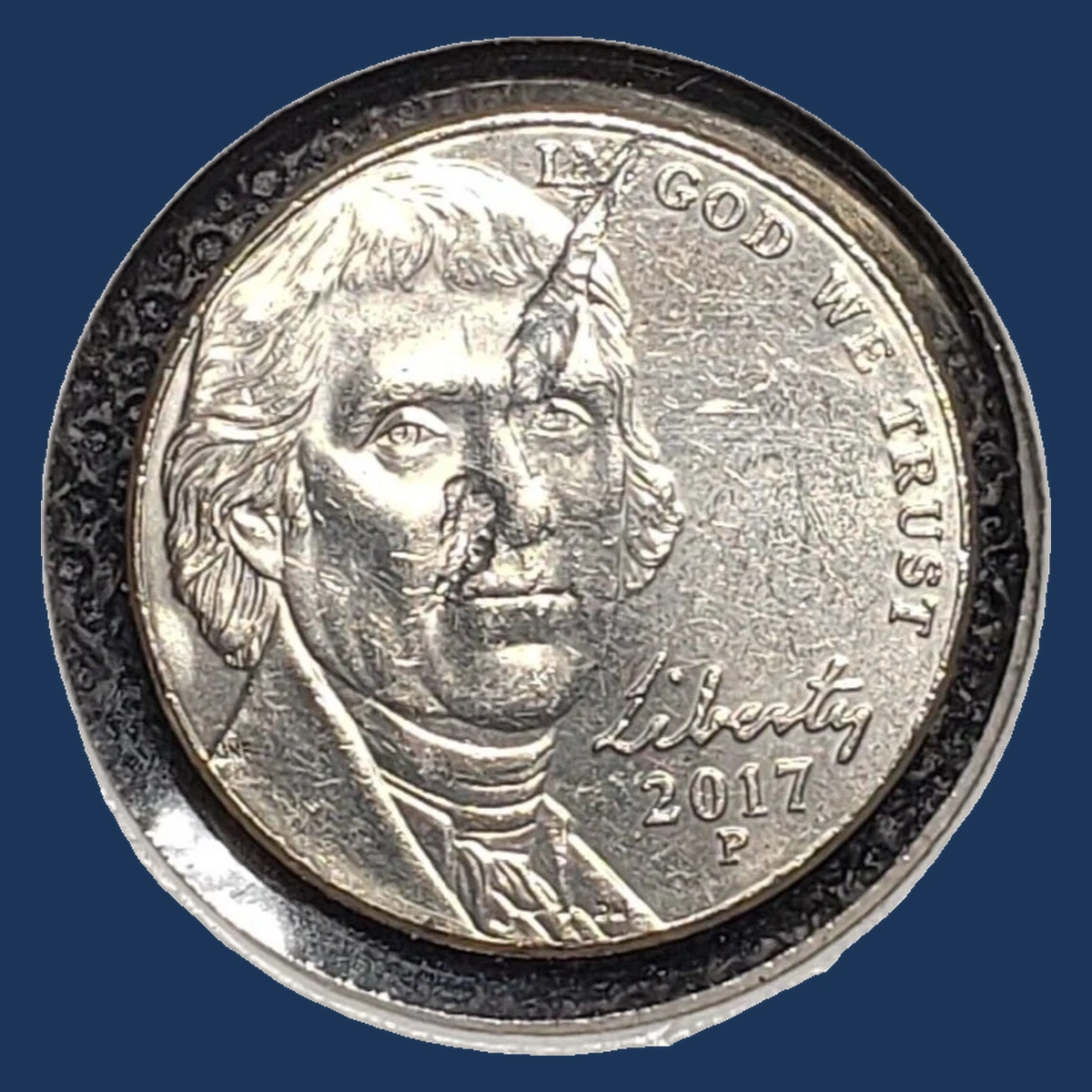
A feature that should be raised may instead be weak or missing. Grease trapped in the stamping tool can block the metal from filling that part of the design.
The resulting coin may show a smooth patch surrounded by sharper detail. This is called a strike through grease.
The 2017 error guide reports a Philadelphia example, without enough detail to assign its patch a precise position. General examples involving hair or building columns should not be mistaken for that coin’s exact features.
Wear and a weak overall strike can also erase detail.
Estimated Value
A large area of missing design attracts more interest than a tiny soft spot. Estimate $5–$150, with the coin’s remaining detail and surface condition also affecting the price.
The guide reports $132 in 2019 for a 2017-P example graded MS61, meaning unworn but noticeably marked. It does not identify an original auction lot.
The upper end fits a clearly blocked patch on a well-preserved coin. Ordinary softness on a worn nickel is a poorer comparison.
How to Identify
Compare the high points across the coin before concentrating on the blank-looking patch. General wear lowers many exposed details, whereas grease can affect a limited area beside well-formed features.
A scale should show around 5.00 grams because blocking a design does not normally remove coin metal. With calipers, check the normal 21.21-millimeter outline if the loose coin also looks distorted.
Examine the patch under a 10× magnifier and a low lamp. Fine sanding lines, scraping, or a lowered surface can show that someone removed design after minting.
The exact location of the reported Philadelphia patch is not established here. Let the transition from sharp surrounding details to blocked design guide the examination of your own coin.
7. 2017 Jefferson Nickel Improper Annealing
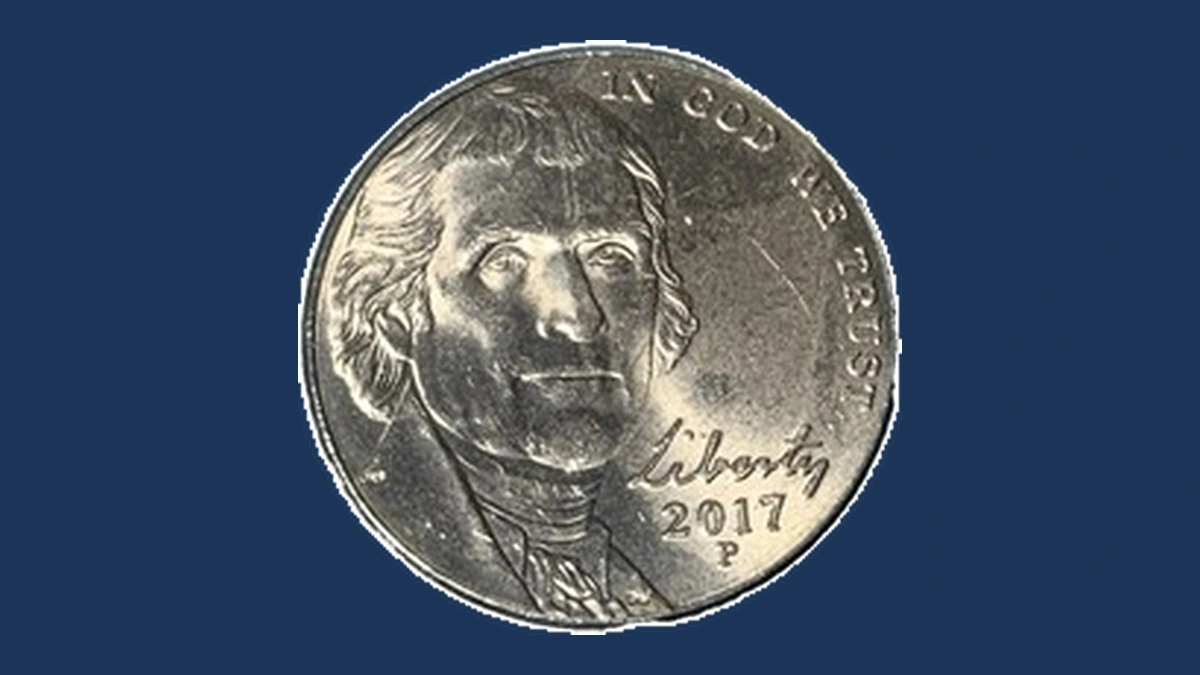
An unusual yellow, brown, purple, or dark surface may lead a collector to suspect a heating problem. The 2017-P guide includes an example described as improperly annealed.
Annealing is the heating used to soften blanks before striking. A problem during that process can change their surface appearance.
The nickel is a solid copper-nickel alloy, not a plated coin with a thin silver-colored skin. An odd color does not automatically mean a layer is missing.
Later heat and chemicals can produce similar colors. The claim therefore depends on the original metal surface, not an attractive photograph alone.
Estimated Value
Once identified as a minting error, an example can be estimated at $30–$225. The guide reports a $215 eBay transaction in 2018 for an MS60 coin, an unworn example with substantial marks.
That reported price is not proof that any similarly colored nickel has the same cause. The range is conditional on the heating error being established.
Original surface texture and a convincing specialist identification matter more than the number of colors visible.
How to Identify
Under neutral light, compare the coin with a normal nickel and inspect both sides together. Warm lighting can exaggerate yellow or brown tones.
The metal should remain about 5.00 grams and 21.21 millimeters, checked on a loose coin with a scale and calipers. Those readings rule out some alternatives but cannot prove improper annealing.
Use a 10× magnifier at the edge and where the color changes. Look for crust, pits, painted deposits, or scratches that expose different material.
Do not polish a test spot. That removes the surface a specialist needs to examine.
Ask whether the original struck surface continues through the colored area, rather than judging the coin by color intensity alone.
8. 2017 Jefferson Nickel Off-Center Strike
The reported Denver example has roughly fifteen percent of the strike off center while its date remains readable. An empty crescent lies beside the shifted image.
The blank entered the press in the wrong position, so part of the intended design landed beyond its edge. The missing design is the important difference from an uncentered broadstrike.
This report does not specify the direction of the shift. A picture of another 2017 nickel should not supply that missing direction.
A one-sided narrow rim is different again. Both faces must support the same misplaced blank before the coin is called off center.
Estimated Value
An estimated $75–$300 suits a clear, dated off-center example, with condition and displacement setting the position within that range. The guide reports $220 in 2020 for the roughly fifteen-percent Denver coin.
It describes an MS62 grade, which means unworn with noticeable marks. This is a guide-reported eBay amount, rather than an auction lot with a published photograph and full description.
A larger blank crescent can improve visual appeal, but losing the complete date can make the coin harder to sell.
How to Identify
Find 2017 and the D before measuring the blank crescent. Keep the entire outline in both photographs so the amount of missing design is not exaggerated by cropping.
Turn the nickel over and follow the same physical edge, checking how the back design meets the blank area. A 10× magnifier helps distinguish untouched metal from a surface ground flat after striking.
The weight should stay near 5.00 grams, measured on a scale, because an off-center strike does not itself cut away the blank. Use calipers to record the outline against the normal 21.21-millimeter diameter.
Check that some intended design actually falls outside the edge; complete designs within a wide border instead suggest an uncentered broadstrike.
9. 2017 Jefferson Nickel Struck Over a Roosevelt Dime
A nickel design can cover a dime that already carried Roosevelt and the torch. Both denominations then remain on the same piece of metal.
The Mint Error News specimen list records a 2017-P example graded PCGS MS65, an unworn coin with relatively few marks. It changed hands in a trade, without a stated cash price.
This is different from striking a nickel on an unused dime blank. The previously struck dime must leave recognizable old design beneath the newer nickel image.
The dime’s own date is not established by that listing.
Estimated Value
Estimate $2,000–$6,000 for the recorded type, allowing for its visible dime details and preservation. The 2017 trade supplies no actual sale amount.
As a comparison, a 1977-S nickel struck over a 1977-S dime brought $7,800 at Heritage in January 2022. It was a highly preserved Proof, a specially made collector coin.
That different finish helps explain the higher comparison price. It should not be copied directly onto an ordinary-finish 2017 nickel.
How to Identify
The decisive evidence is two recognizable designs, not just a small nickel. Search with a 10× magnifier for Roosevelt, torch details, or dime lettering surviving beneath Jefferson and Monticello.
A modern dime starts at 2.268 grams and 17.91 millimeters, compared with a normal nickel’s 5.00 grams and 21.21 millimeters. A loose overstruck coin can be weighed on a scale, though the later blow may have expanded its original dime diameter.
Use calipers only where safe, and leave a certified piece in its holder. Its grading record and clear photographs can provide the measurements instead.
Mirror-image dents may come from squeezing coins together later. Follow old dime detail beneath the new design rather than accepting any extra mark as an earlier strike.
Conclusion
A slight one-sided shift may add almost nothing, while a nickel design over a dime belongs in a different price category. The estimated overall range here is $0.05–$6,000.
Compare both faces before naming an error. Complete designs suggest broadstrike; missing design and bare metal suggest off-center striking.
For the double denomination, surviving dime details and the lighter coin are essential clues. Preserve those details and avoid cleaning any unusual surface.