2014 Nickel Error List with Pictures

A 2014-P nickel listed as struck on a dime carried a $4,500 dealer asking price. That was an offer, not a confirmed sale.
The 2014 Jefferson Nickel errors below also include much smaller finds, such as an extra nose outline or parallel raised lines. Estimated values run from $5–$5,000.
For this year, some of the best clues lie in the relationship between the design and the coin’s edge. Start with a normal nickel beside your candidate.
1. 2014 Jefferson Nickel Raised Cracks and Small Tool Chips
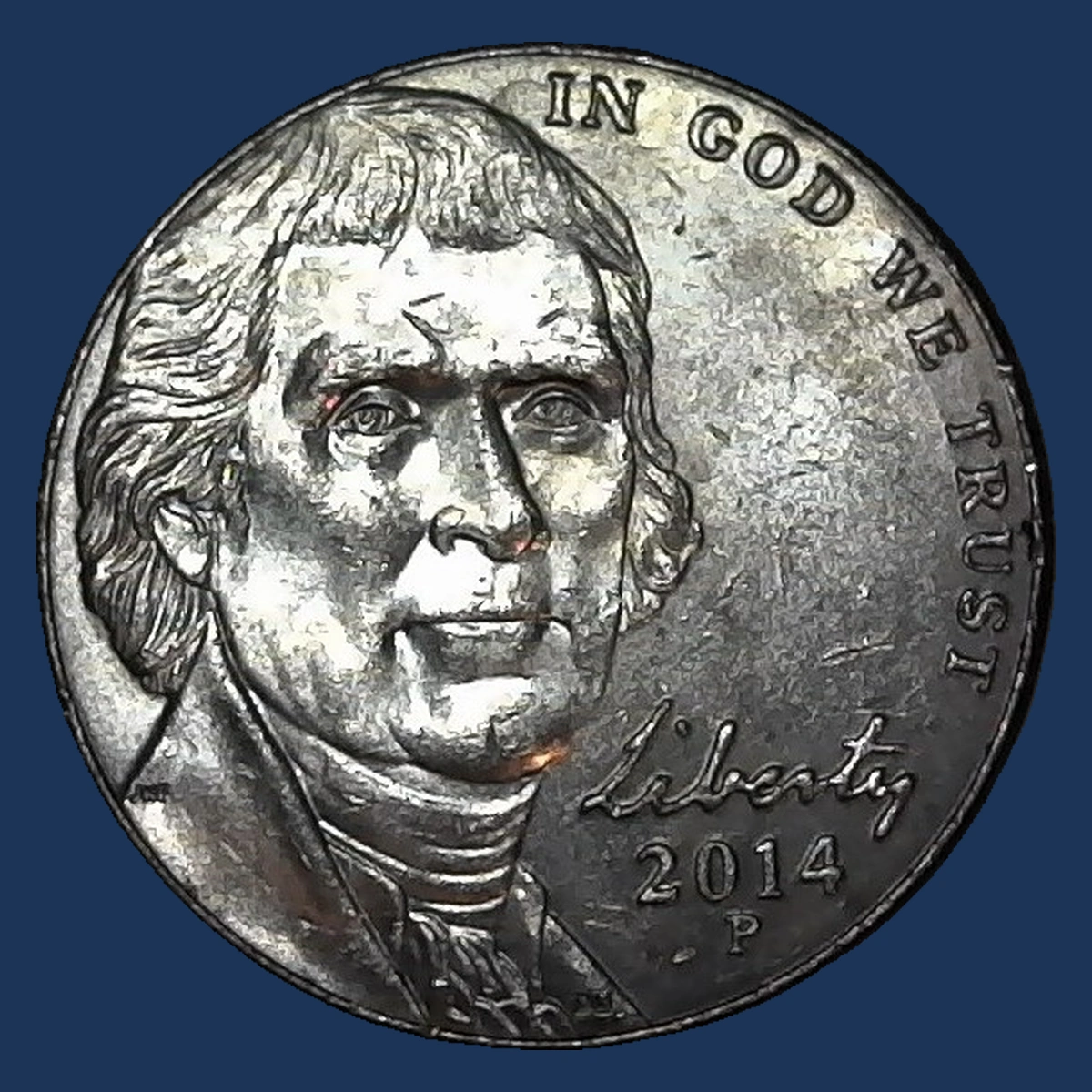
A fine raised line can reveal a crack in the tool that stamped Jefferson’s portrait. Metal filled the opening during striking and became a ridge on the finished coin.
The steel stamping tool is called a die. When a small piece breaks away instead, the missing space can leave a raised lump.
Both forms are reported for 2014-P. The reports do not establish one shared location or prove that a large broken tool section moved.
A scratch usually cuts into the coin. Dirt and metal pushed up by a later hit can also imitate a small extra feature.
Estimated Value
For modest original cracks and chips, estimate $5–$50. Larger, clearer features can attract more interest than a fine line hidden by ordinary wear.
These are estimates for the reported types, not auction prices attached to every front lump. A large raised patch needs its own examination before it receives the price of a major broken-tool error.
The feature should be made of original struck metal. Added material and damage around a dent do not qualify for the same premium.
How to Identify
Move a light low across the surface and follow the mark with a 10× magnifier. A raised line can come from a cracked tool, but a scratch may also have a raised lip beside its sunken center.
For a lump, inspect the opposite face and plain edge for an impact that could have pushed metal upward. Check the loose coin against 5 grams and 21.21 millimeters with a scale and calipers before comparing the raised patch.
Leave any suspected dirt in place rather than scraping the surface to test it. Photograph the feature under more than one lighting angle, checking that it is original coin metal instead of an attached deposit.
2. 2014 Jefferson Nickel Extra Nose and Doorway Outlines
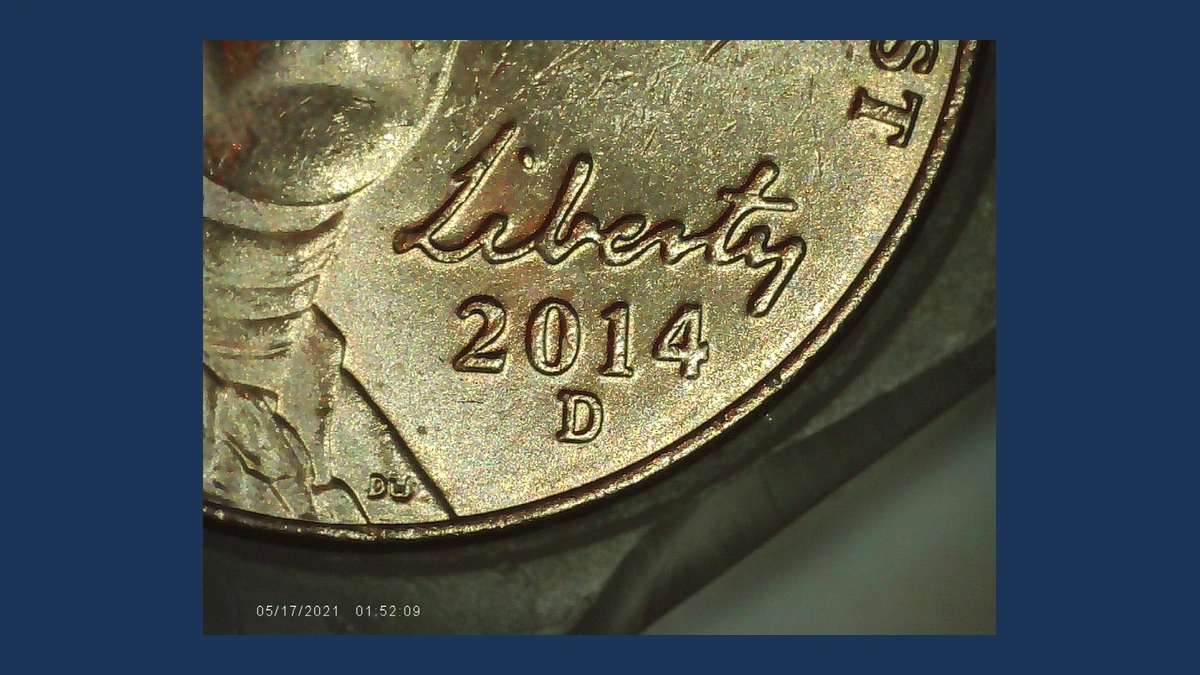
An extra outline on the lower-right side of Jefferson’s nose can belong to a Philadelphia doubled-die variety. The repeated detail was present on the stamping tool before it struck the coin.
Back varieties from Philadelphia and Denver have extra detail near Monticello’s central door. Some Philadelphia examples show horizontal bars below the upper frame or doubling at an upper corner.
These small features do not require the entire face to look doubled. Each pattern belongs to its own tool.
A flat shelf beside a letter can instead result from movement during striking, rather than a doubled design.
Estimated Value
Matched minor varieties are estimated at $10–$30, with clearer, attractive examples around $30–$100. The extra shape must agree with the specific front or back variety.
A thick letter or unusual shadow does not carry the same value by itself. A small clean feature is easier to compare than one covered by wear or scratches.
These ranges are estimates rather than individual sales for every catalog listing. Front and back features on one coin receive one total valuation.
How to Identify
Choose the feature before choosing a catalog number: the lower-right nose edge is a Philadelphia front clue. The central doorway needs a back comparison for the correct P or D mint.
Inspect the shape with a 10× magnifier and compare the 2014 variety photographs. The Denver listing also places its doubling below the upper door frame.
Keep the whole nose or doorway visible in your photograph. Normal architectural lines and shadows can be misleading when tightly cropped.
A loose coin should measure about 5 grams and 21.21 millimeters with a scale and calipers, including its plain edge.
The extra nose edge or doorway bar must match a photographed variety; normal measurements alone do not prove doubling.
3. 2014 Jefferson Nickel Parallel Lines from a Damaged Tool
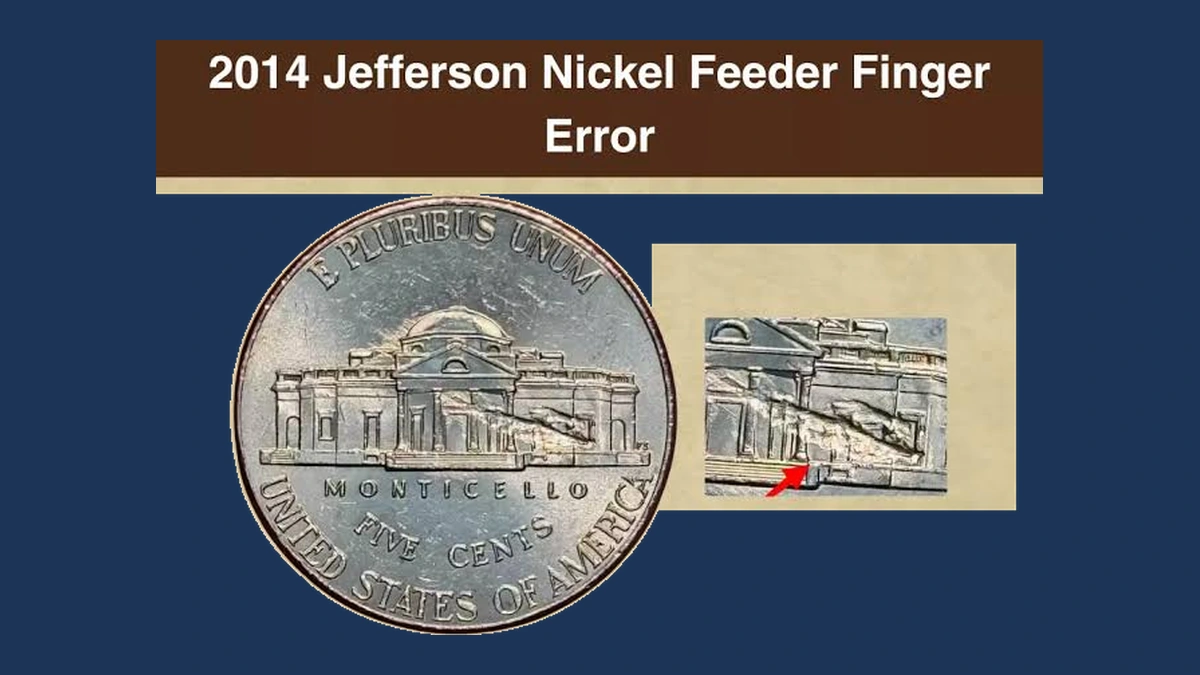
Several parallel raised lines can record damage to the stamping tool rather than scratches cut into the coin. Year reports describe this appearance on a 2014-D nickel.
A moving press part called a feeder finger helps position blanks. If it scrapes the tool, the resulting grooves can leave raised lines on later coins.
This differs from an object trapped directly against one coin during a strike. The direction and height of the lines are important to the explanation.
The report does not establish one path across Jefferson. Judge the original surface instead of naming every parallel mark a feeder-finger error.
Estimated Value
For clear original feeder-related tool marks, estimate $10–$125. Readily visible raised lines on an otherwise clean coin are more useful than faint marks lost among scratches.
This range concerns the reported mechanism and does not assign a completed auction to the Denver example. More lines do not automatically mean a more valuable coin.
If the marks are cuts made after striking, they are damage. The value comparison depends on showing that the lines came from the stamping tool.
How to Identify
Examine a line from two lighting directions through a 10× magnifier. Establish whether it is a ridge on the coin or a groove cut into it.
Then follow several lines together. Their parallel arrangement may support a scraping event, but does not identify the press part by itself.
Compare the lines where they meet letters and the portrait. Later abrasion can cut across finished details and leave disturbed metal.
A loose specimen should be near 5 grams on a scale and 21.21 millimeters across with calipers. Inspect the plain edge for other handling damage.
Photograph the full group of raised lines before requesting a specialist comparison. A single isolated bright streak is too little to establish the cause.
4. 2014 Jefferson Nickel Unusual Color from Improper Annealing
The metal disk is heated to soften it before striking. This preparation is called annealing, and a problem during heating can change its surface color.
A Philadelphia example is reported for 2014. Its unusual shade should be examined together with the surface texture and any remaining original shine.
An ordinary nickel contains copper and nickel mixed throughout. A brown area therefore does not prove that an outer layer has fallen off to expose pure copper.
Chemicals, burial, and heat after minting can also change the color. Those later effects are different from a Mint heating error.
Estimated Value
A properly identified example can be estimated at $15–$150. Strong original color on a well-preserved surface usually offers a better comparison than slight uneven staining.
A 2005-D nickel labeled improperly annealed brought $119 in December 2022. That different-year result helps frame the range without serving as authentication for a 2014 piece.
The estimate excludes later burning or chemical treatment. An even dark shade and normal weight alone do not establish that the heating occurred at the Mint.
How to Identify
A much lighter or smaller brown coin needs a wrong-blank check before a heating explanation. Use a scale and calipers against the ordinary nickel’s 5 grams and 21.21 millimeters.
Then inspect protected spaces beside the letters with a 10× magnifier. Look for corrosion, crusts, or an added coating before deciding whether the color belongs to the original surface.
Place it beside a normal nickel under neutral light and turn them together, keeping both faces and the plain edge visible. Surface shine can survive around dark areas, but it cannot prove where heating occurred.
Leave the color untouched for specialist examination. Polishing a test patch removes the very surface needed to distinguish Mint heating from later treatment.
5. 2014 Jefferson Nickel Peeling Within the Coin’s Metal
A thin piece can separate from the nickel’s surface if the original alloy contains an internal weakness. Collectors call this a lamination.
The reported 2014-D type concerns separation within the metal. It does not require an outer layer to come off a copper center.
A normal nickel has one copper-nickel mixture throughout, unlike a dime made from bonded metal layers. A split can still run through that uniform mixture.
A loose flap may remain attached or leave a shallow rough area after falling away. Scraping, corrosion, and a peeling added coating need to be considered before identifying the cause.
Estimated Value
Estimate $5–$50 for a small original separation and $50–$200 for a larger, clearly visible example. A retained flap can make the metal flaw easier to understand.
The Denver report provides no confirmed individual sale for this range. Value depends on the actual separation, preservation, and amount of design remaining.
Extensive damage can reduce appeal even when a genuine flaw is also present. Leave attached metal alone rather than enlarging the opening to make it more dramatic.
How to Identify
If a flap is visible, photograph it from the side without lifting it. A 10× magnifier can show whether the opening continues into the original coin metal.
Follow any design across the flap and adjacent surface, checking for scraping marks or pits. An added coating can peel above finished letters without exposing a weakness within the blank.
Weigh a loose specimen against 5 grams and measure its width against 21.21 millimeters with a scale and calipers. An attached flap may leave the weight nearly normal, while a missing piece can reduce it.
Inspect the plain edge if the separation reaches the side.
A visible split within the original metal is more convincing than a patch of roughness or an unusual color.
6. 2014 Jefferson Nickel A Missing Section of the Blank
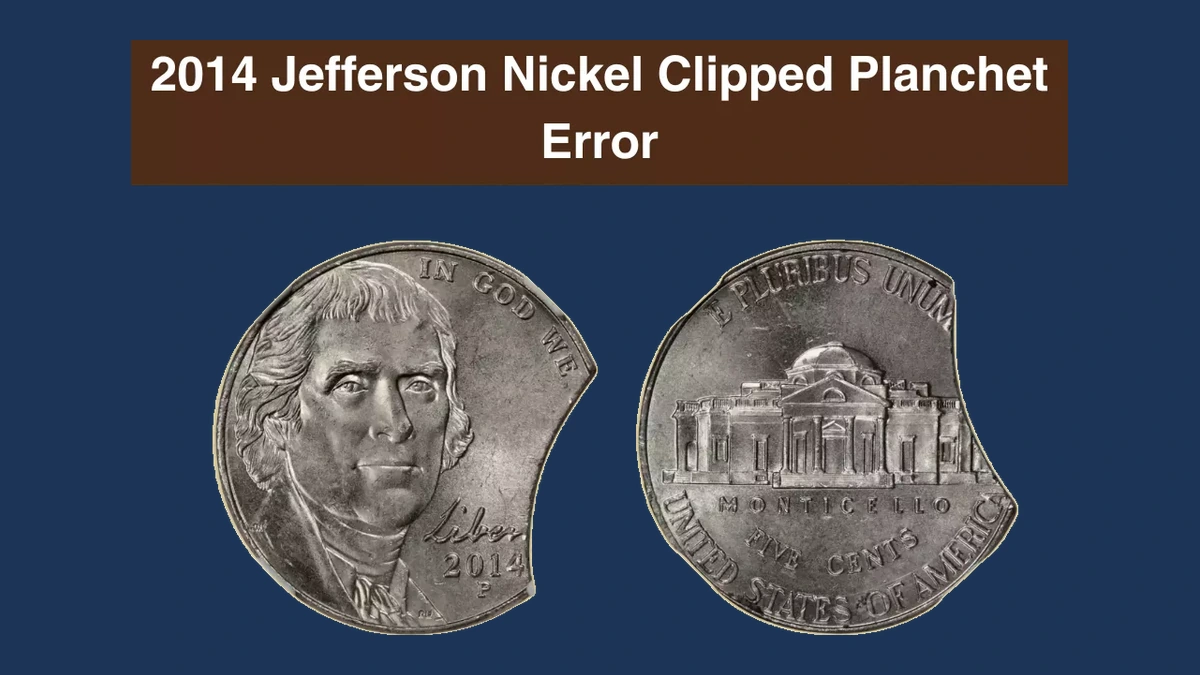
Part of a nickel can be missing before its design is struck. The incomplete disk is called a clipped blank.
One way this happens is when the blank-cutting punch overlaps a hole already made in the metal strip. The resulting piece carries an opening instead of a complete round outline.
A Denver example is reported for 2014 without a confirmed shape or percentage in the supporting record. Those details should come from the coin itself.
The remaining design can flow toward the gap during striking. A later cut can imitate the outline while leaving different marks at its boundary.
Estimated Value
For a genuine clipped blank, estimate $15–$100, rising to $100–$250 for a larger, attractive example. A readable date and original missing-metal boundary support a stronger comparison.
A 1997-P nickel with a twenty-percent curved clip sold for $124 in March 2025. That different-year coin offers context without supplying a shape or percentage for the reported 2014-D piece.
The estimate does not apply to a sawed or filed coin simply because a similar amount of metal is absent.
How to Identify
Check that the opening actually lacks metal. A solid crescent without a design is a different feature and may belong to an off-center strike.
Weigh the loose coin against 5 grams and measure intact spans with calipers against 21.21 millimeters. Later removal also reduces weight, so keep inspecting the boundary.
With a 10× magnifier, look for softened detail or natural metal flow at the opening’s ends. File strokes and sharp burrs can point to a later cut.
Photograph the plain edge within the gap and the opposite rim. Weakness opposite a clip can help, but the way the surviving design meets the original boundary matters more than that clue alone.
7. 2014 Jefferson Nickel A Ten-Percent Off-Center Strike
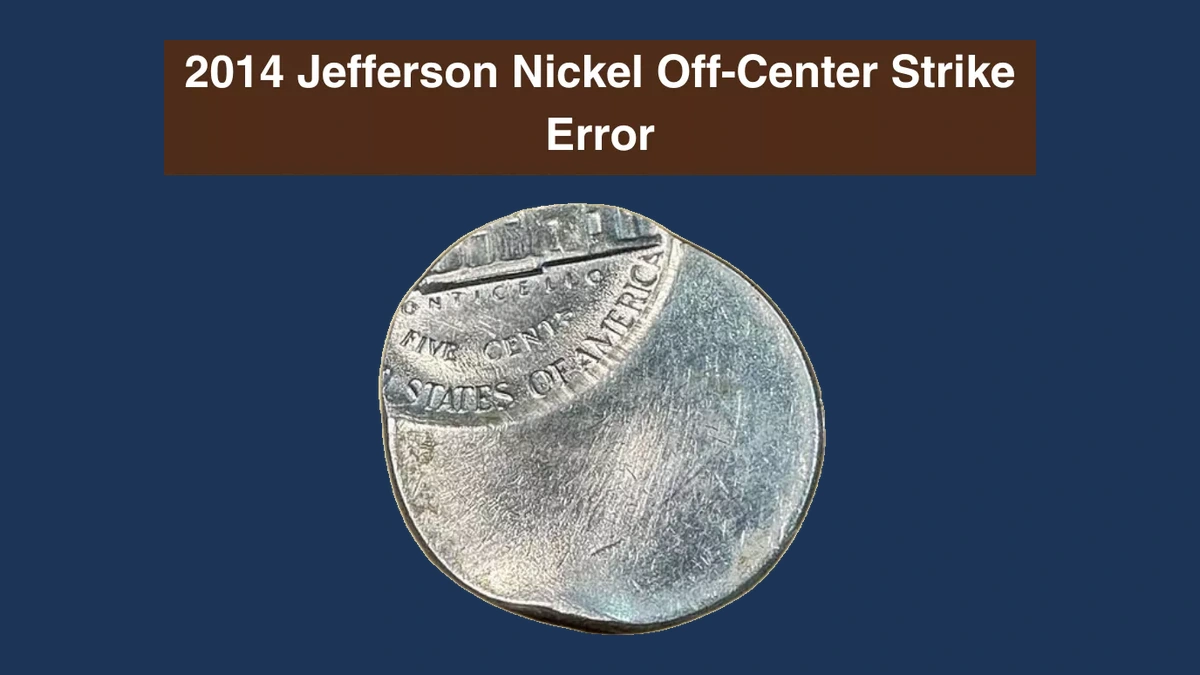
A blank caught away from the center can receive only part of the intended design. The opposite part of its surface remains unstruck.
The Philadelphia report for 2014 describes a shift of about ten percent. No single clock direction is established by that description.
Both faces should fit the same misplaced blank. An uneven front rim beside a centered back instead points toward a tool-alignment problem.
The unused crescent remains solid metal, so an off-center strike need not weigh less than a normal nickel. A missing section or ground smooth area calls for another explanation.
Estimated Value
A modest, genuine offset is estimated at $25–$100, with stronger, attractive examples around $100–$350. The upper range is not a recorded price for the reported ten-percent piece.
For comparison, a 1999-P nickel struck fifteen percent off center brought $64 in March 2025. Its date, condition, and amount of shift belong to that separate coin.
Deep scratches or an unreadable year can reduce appeal. Compare the remaining design and surface together rather than using percentage alone.
How to Identify
Photograph the surviving date upright and include the unused metal in the same view. Repeat on the back before assigning a percentage.
Compare the designs lost beyond the edge. One misplaced blank should explain both faces.
Use a 10× magnifier where struck detail meets the untouched crescent. Scraping lines can expose an area that was made blank-looking later.
For a loose coin, check weight against 5 grams and record its outline against 21.21 millimeters with a scale and calipers. Some spreading can alter the shape without removing metal.
Follow the plain edge for trimming or impact damage. The solid unused area beside displaced designs is more meaningful than one uneven stretch of rim.
8. 2014 Jefferson Nickel An Oval Blank
A nickel can begin as a disk that is oval rather than round. The error is often called an elliptical blank.
A collector’s PCGS registry lists a 2014-P example graded MS64, meaning unworn with some marks. The entry identifies its unusual blank shape without supplying measured dimensions or weight.
The design should fit the original oval boundary. That differs from a round finished coin later squeezed or rolled into a longer shape.
A photograph can also make a round coin appear oval when taken at an angle. Viewpoint must be ruled out before naming the error.
Estimated Value
Use an estimated $75–$400 for an authenticated oval-blank nickel with a clear date and original boundaries. The collector’s 2014-P registry entry does not provide a completed sale.
A different-year 2001-D elliptical-blank nickel sold for $104 in August 2006. Its recorded 4.06-gram weight belongs to that coin, not the 2014 example.
The amount of distortion and the intact design both matter. A coin flattened after minting should not receive an original oval-blank premium.
How to Identify
Take a straight-down photograph before measuring the outline. A tilted camera can create an oval image from an ordinary round nickel.
Use calipers to record the longest and shortest dimensions against the normal 21.21 millimeters. Weigh the loose coin against 5 grams; the comparison coin’s 4.06-gram result is not a measurement of this example.
With a 10× magnifier, examine the plain edge and the way the outer lettering meets it. Crushed rims, stretched portraits, and roller marks can reveal later squeezing.
The collector’s registry photograph offers a comparison with the reported type. Match the complete outline and the design’s position inside it, rather than accepting any oval-looking nickel.
9. 2014 Jefferson Nickel Outer Letters Crowding the Rim
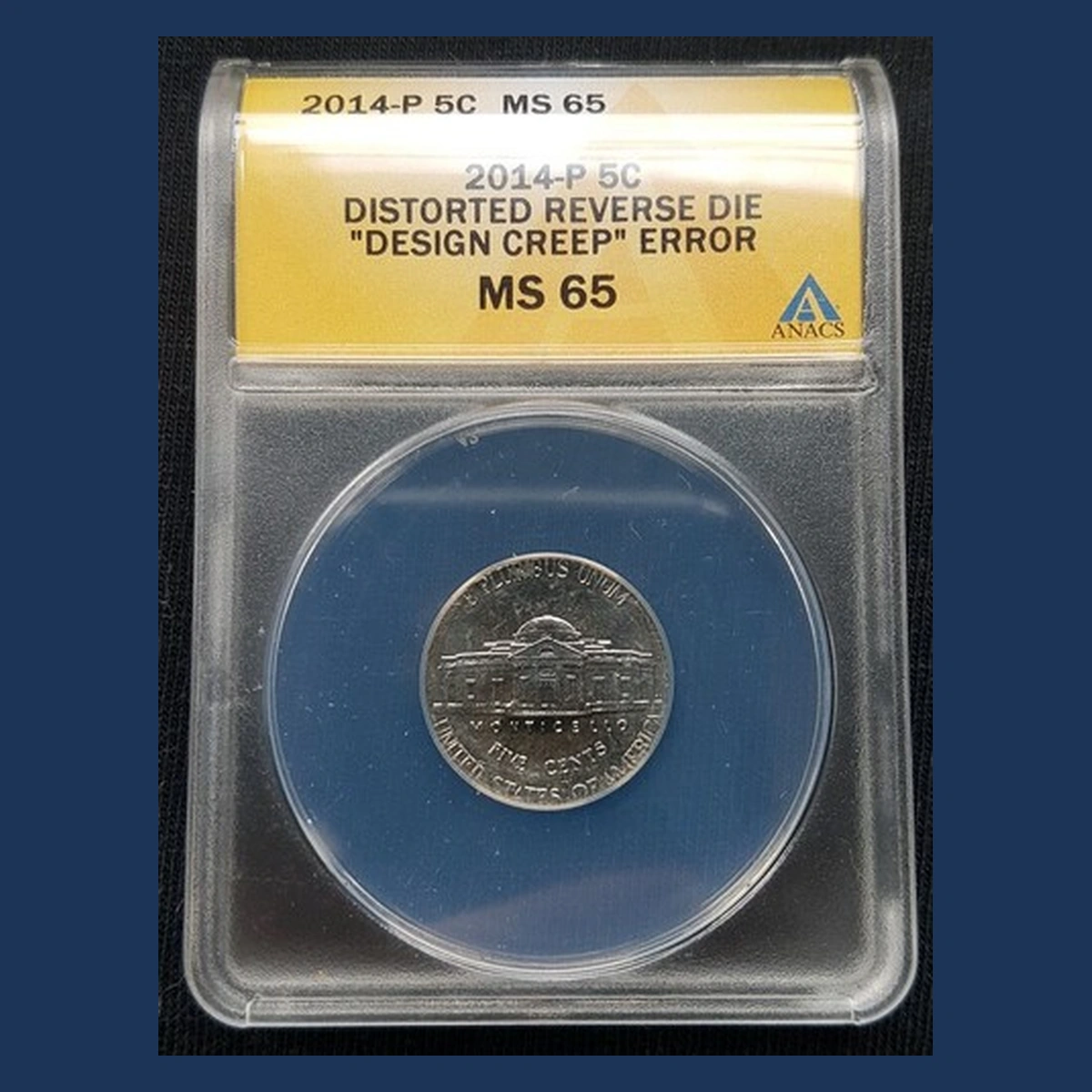
Words around the back can crowd the edge even though the coin remains its normal size. On a documented 2014-P example, the stamping tool’s working face spread outward during use.
The enlarged tool design placed outer details closer to the rim or beyond it. Mike Diamond described this effect as design creep.
The problem concerns the tool’s shape. It should not be confused with a broadstrike, where the coin’s own metal spreads beyond its normal outline.
Compare with an ordinary 2014 nickel at the same scale. A close-up without a size reference can exaggerate the crowding.
Estimated Value
For a clearly matched design-creep example, estimate $30–$100 with modest crowding and $100–$500 for a stronger, well-preserved piece. These are estimates for the documented effect.
The specialist report explains the discovery without giving a completed sale price. Its importance as an unusual tool problem does not establish a fixed auction value.
An uneven rim alone is not enough for this range. The expanded placement of the design must be distinguished from a shifted tool or altered coin.
How to Identify
Measure the coin before studying the crowded lettering. A loose nickel should be near 21.21 millimeters with calipers and 5 grams on a scale.
Place it beside a normal 2014 example and photograph both straight down at the same scale. Compare several outer words, not just the closest single letter.
The documented Philadelphia example has an expanded back design. One narrow rim opposite a wide rim can instead indicate a shifted tool.
Use a 10× magnifier on the plain edge and nearby lettering to check for filing or later damage. The combination of normal coin size and an outward-spread design is the relationship to establish.
10. 2014 Jefferson Nickel A Nickel Design Struck on a Dime
A nickel design can be struck onto a smaller piece intended for a dime. The unusual 2014-P example is listed by Mint Error News among coins involving two denominations.
The record identifies an NGC MS63 piece, an unworn coin with noticeable marks. Its short description says nickel on dime rather than describing the older design in detail.
For a finished-dime overstrike, recognizable Roosevelt or dime-back details should survive beneath the nickel impression. An unused dime blank would have no earlier design.
That distinction matters when comparing the piece. Small size alone cannot settle which object entered the press.
Estimated Value
For an authenticated finished-dime overstrike matching the listed type, estimate $2,000–$5,000. Mint Error News records a $4,500 Sullivan asking price for the 2014-P NGC MS63 example.
The offer is not a confirmed sale. Its grade, original surfaces, and identifiable earlier design must remain part of the comparison.
If examination instead establishes an unused dime blank, use a separate estimated $400–$1,500 range for that mechanism. Do not transfer the higher overstrike estimate solely from small size.
How to Identify
Search both faces for recognizable parts of Roosevelt or the dime’s back design under a 10× magnifier. Follow any older details where they cross the later Jefferson or Monticello impression.
If only nickel designs are visible, small size alone does not establish a finished-dime overstrike.
Use a scale against a standard dime’s 2.268 grams, compared with a nickel’s 5 grams. Calipers can compare its outline with a dime’s starting 17.91 millimeters, allowing for spreading toward 21.21 millimeters.
Inspect the edge for a copper core between lighter outer layers, and compare with the nickel’s usual plain edge. Grinding or coating can imitate some clues.
Identify recognizable earlier dime details before choosing the finished-dime description or its higher price range.
Conclusion
Estimated values of $5–$5,000 cover a wide variety of 2014 nickel mistakes. A tiny raised line needs a different check from an oval blank or a nickel design on a dime.
For crowded outer letters, compare the whole back at the same scale as a normal coin. For mixed designs, look for remnants of the earlier denomination before using the higher overstrike range.
Keep surfaces untouched while recording those clues.