1943 Nickel Error List with Pictures

Look above Monticello on a 1943 nickel: the large P, D, or S belongs there. This wartime issue normally contains silver, but some mistakes involve the date, overlapping letters, or entirely different metal.
A superb 1943/2-P overdate sold for $16,675 in June 2008. Estimated values for the 1943 Jefferson Nickel errors below span $5–$17,000, with condition making a major difference.
Explore the pictures and checks below to separate a small collectible feature from an expensive error.
1. 1943 Jefferson Nickel Repeated P, D, or S Mintmark
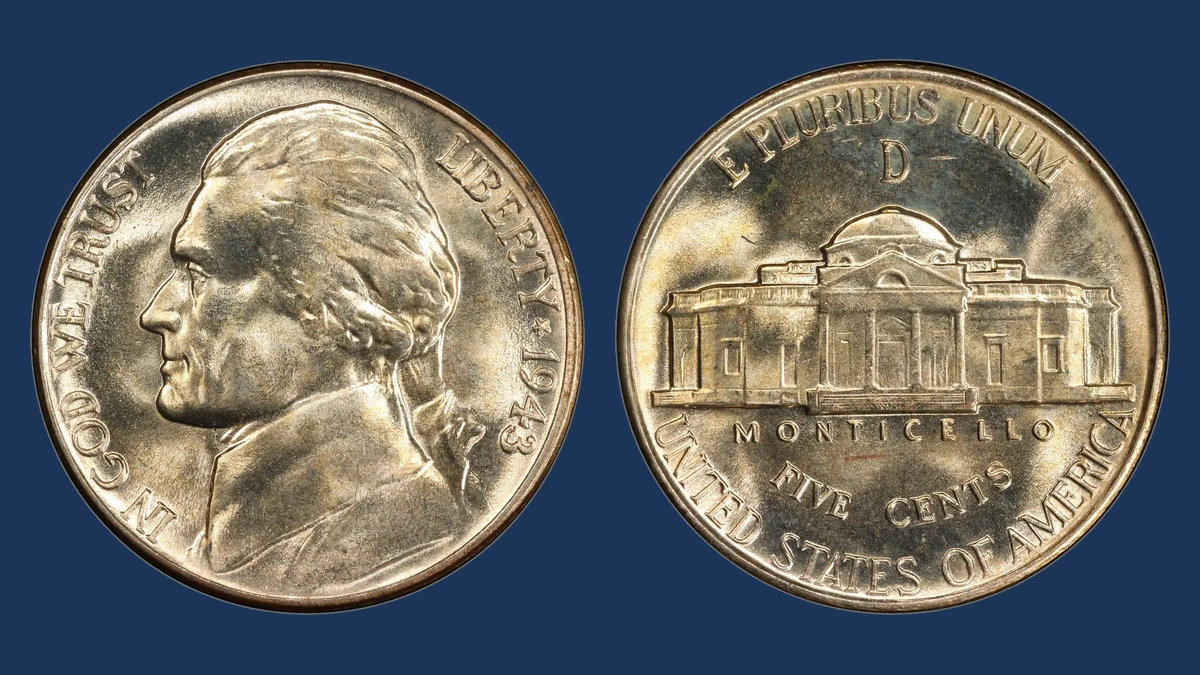
An extra stroke beside the large mintmark may be part of another impression of that same letter. Workers added mintmarks to the steel stamping tools by hand, and a repeated punch could land slightly out of position.
This is a repunched mintmark. Some 1943 examples show two outlines; others preserve parts of three impressions.
The extra marks can lie above, below, or beside the main letter. Their individual shapes matter because several different varieties share the same direction, and a swollen letter is not automatically a second punch.
Estimated Value
A clear but modest example may be worth an estimated $10–$75. Stronger, attractive unworn examples can fall around $75–$250, with the exact variety affecting demand.
These amounts price the whole coin, including its condition, rather than each visible mintmark outline. They are estimates and do not assign an individual auction sale to every numbered P/P, D/D, or S/S variety.
Cleaned surfaces and indistinct extra strokes usually make the premium harder to justify.
How to Identify
Set aside any coin whose claimed mintmark is beside the building rather than above its dome. The 1943 wartime design uses the large letter at the top.
Check the main letter with a 10× magnifier, then trace any extra curve separately. Wexler’s 1943 photographs distinguish individual shapes that a direction such as left or below cannot identify by itself.
For example, P WRPM-005 has extra impressions above and below, while D WRPM-001 has an extra D below. Compare a loose coin with the normal 5 grams on a scale and 21.2 mm using calipers, including its plain edge.
A second recognizable letter stroke is the key feature, rather than a random bump touching the mintmark.
2. 1943 Jefferson Nickel Peeling Patches of Metal
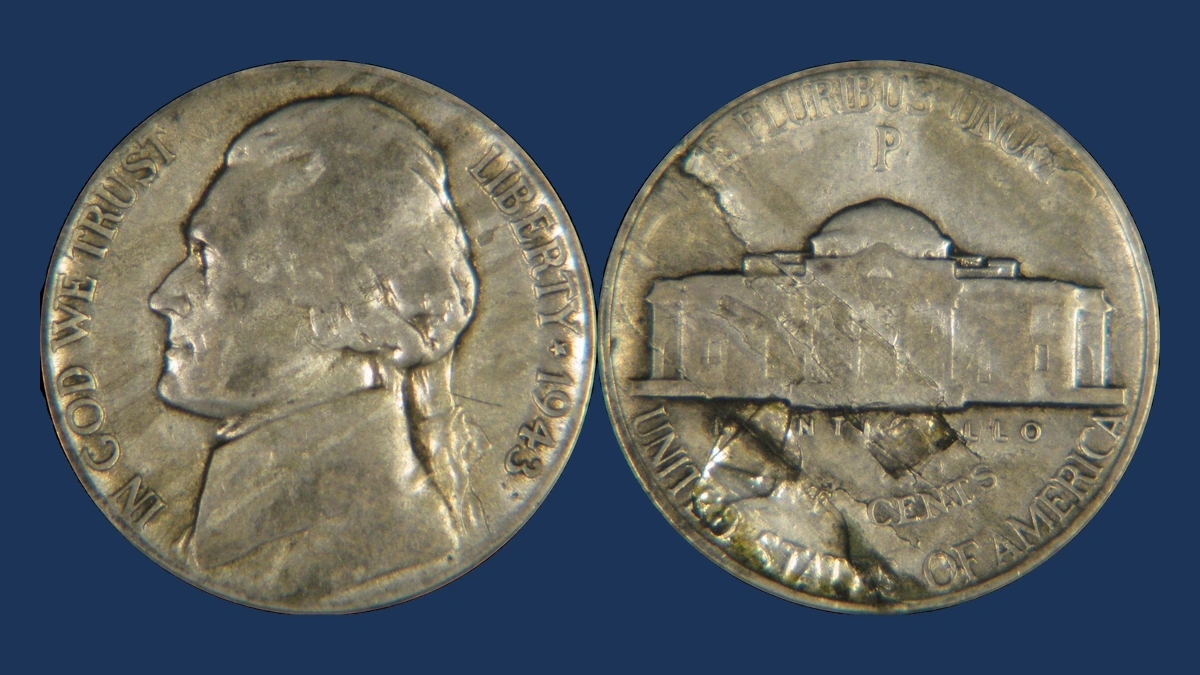
A patch of the coin can flake away along a weakness within its metal. One Philadelphia example has a large affected area on the lower portrait and the open surface beneath it.
Other coins show a retained flap on the back, including one near AMERICA on an overdate. A San Francisco example has peeling near NT and also shows a broadstrike.
This peeling is called lamination. The normal wartime mixture contains copper, silver, and manganese throughout, so it is not a plated outer skin coming away from a different core.
Estimated Value
Estimate $5–$60 for small peeling areas and $60–$300 for larger, clear flaws on attractive coins. An intact flap can make the error easier to understand and more appealing.
A valuable overdate with a small retained flake should still be priced mainly as that variety. Its full price is not the value of the flake alone.
The scratched or cleaned examples also need reductions for those later problems, separate from the natural metal fault.
How to Identify
Begin at the boundary of the peeling patch, leaving any attached flap untouched. A 10× magnifier and light from the side can show whether a thin layer separates naturally from the surface.
On the recorded Philadelphia front example, examine the lower portrait and the area below it. A fresh gouge often pushes metal aside instead of following a thin layer.
Use a scale to compare the remaining metal with the normal 5 grams. An attached flap may leave the weight near normal, while a lost piece reduces it.
Measure about 21.2 mm with calipers and inspect the plain edge.
A layered break with a rough floor gives stronger evidence than discoloration or a single cut across the design.
3. 1943 Jefferson Nickel Marks Left by Trapped Debris
A small object caught during striking can stop part of the design from reaching the coin. The result may be a shallow depression or a locally missing feature, surrounded by otherwise normal detail.
A 1943-S example was graded MS64 and described as struck through debris. That description does not identify the material as cloth, grease, or wire.
A separate Denver coin has a small flaw left of Monticello. Its appearance needs to distinguish trapped debris from faulty blank metal, so that mark should not automatically be given the San Francisco coin’s explanation.
Estimated Value
A small, clearly identified debris strike can fit an estimated $20–$100, with a larger, distinct impression around $100–$400. These figures are estimates rather than a recovered sale price for the recorded MS64 coin.
For the Denver flaw, use roughly $10–$75 if examination supports a small Mint-made defect. A later dent does not qualify for that error premium.
The depth, visibility, and surrounding surface condition matter more than an unsupported name for the trapped material.
How to Identify
First compare the small Denver mark with the surrounding surface left of Monticello. A sunken patch and a lifting metal layer suggest different causes, even when both interrupt the same part of the picture.
Under a 10× magnifier, inspect the boundary for displaced metal, scraping, or an attached flap. The San Francisco debris example needs comparison with its own auction photographs, without assuming the same location or material.
Check a loose coin with a scale and calipers against 5 grams and 21.2 mm, including the plain edge. A clean impression interrupting the original struck surface is more persuasive than a gouge with a raised lip.
4. 1943 Jefferson Nickel Broadstrike
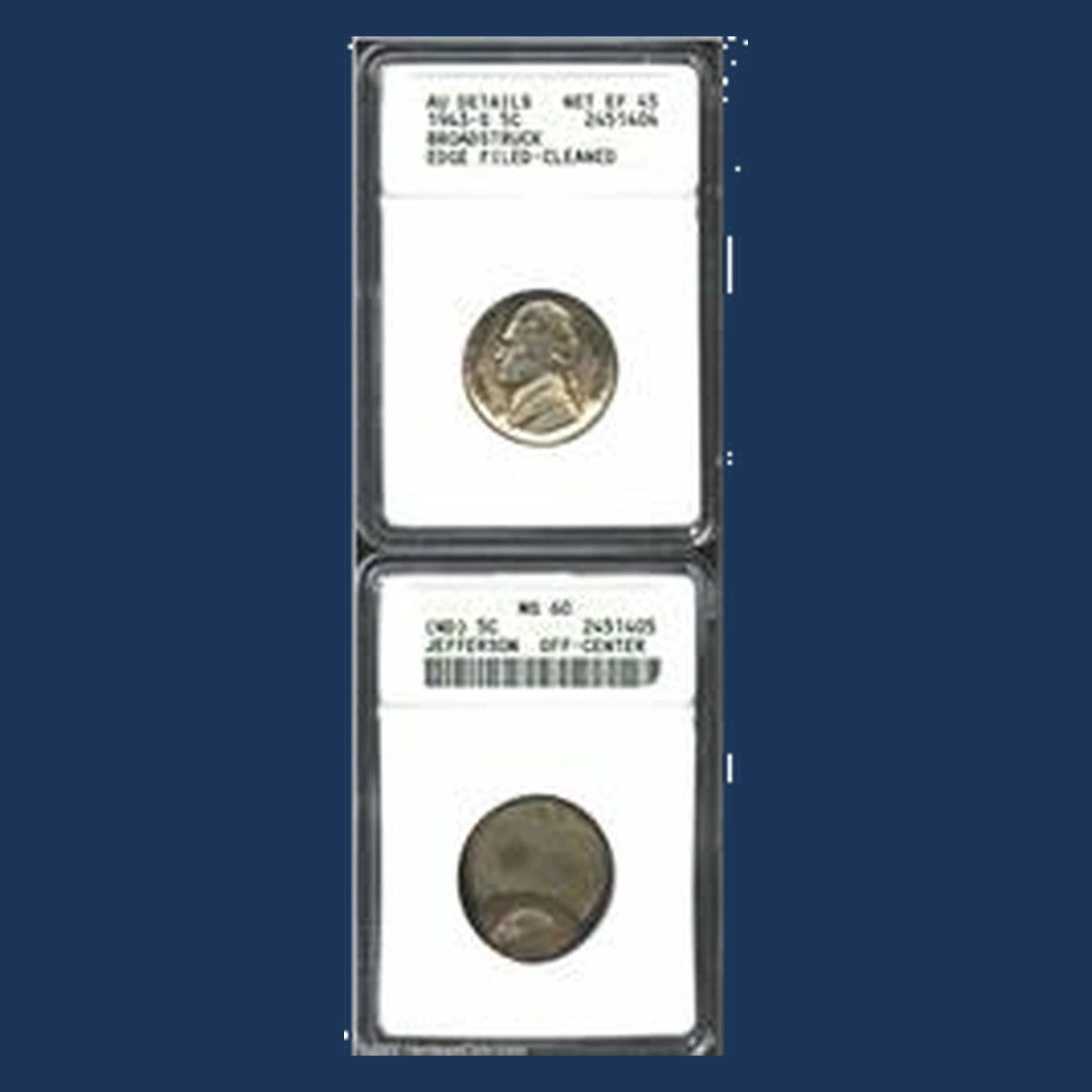
The design can spread across an unusually wide coin when the surrounding ring fails to hold the metal normally. That ring is called the collar, and the resulting coin is a broadstrike.
A recorded 1943-S example also has a filed edge and cleaned surfaces. Those later changes must be considered separately from the original spread during striking.
Peeling metal near NT appears on the same coin. Its combination of features illustrates why an error coin can still have damage, and why the altered edge alone cannot explain the original striking mistake.
Estimated Value
Use an estimated $40–$150 for worn or impaired examples and $150–$500 for attractive, clearly spread coins. The recorded San Francisco piece belongs toward the impaired end because of its filed edge and cleaning.
As a different-year comparison, a 1999-P broadstrike sold for $89 in March 2025. Its later copper-nickel alloy differs from this wartime silver mixture.
The amount of natural spread and the preservation of the whole design help determine the premium.
How to Identify
The filed edge on the recorded example means its present diameter cannot be treated as its original struck size. Begin with both faces, following the outer lettering to see whether the design remains complete.
Calipers can record the present outline against the normal 21.2 mm diameter. A scale reading below 5 grams may reflect metal lost through later filing, not a different blank.
Use a 10× magnifier to distinguish outward flow beside the letters from scratches left by cleaning. A normal nickel has a plain edge, but file marks across it are later damage.
Compare the surviving spread on both faces rather than identifying a broadstrike solely from this altered coin’s rim.
5. 1943 Jefferson Nickel Separated Front Layer
A split nickel can leave a thin piece carrying Jefferson’s portrait and the date. The recorded 1943 front piece was graded Fine12, indicating substantial circulation wear.
Its back half is absent, taking the mintmark with it. The surviving date identifies the year but cannot establish whether the coin came from Philadelphia, Denver, or San Francisco.
Unlike a small peeling patch, this separation involves a whole face of the coin. It follows a weakness through the metal, although the surviving piece needs examination to determine when the separation occurred.
Estimated Value
For a recognizable separated face, estimate roughly $75–$200 with wear and $200–$500 for an especially clear, attractive example. Those values are for one surviving piece rather than a complete matching pair.
A 1947-S nickel split after striking sold as a pair for $149.50 in August 2010. That different-year, different-alloy pair is a general comparison, not the price of this 1943 front layer.
A readable date and an undamaged inner surface help its appeal.
How to Identify
Weigh the piece before searching for its mintmark. It should be lighter than the original 5-gram coin, but the exact reading depends on the thickness of the surviving layer.
Use calipers to record both thickness and diameter against a normal 21.2 mm nickel. Portions of the original plain edge may remain.
Examine the newly exposed inner surface with a 10× magnifier. Natural separation can leave a rough texture, while sawing or grinding often produces repeated tool marks.
Then confirm that the front carries a genuine 1943 design, without pretending a missing mintmark means Philadelphia.
A thin dated face and a naturally separated underside distinguish this piece from a normal coin with a worn back.
6. 1943 Jefferson Nickel Incomplete or Oval Blank
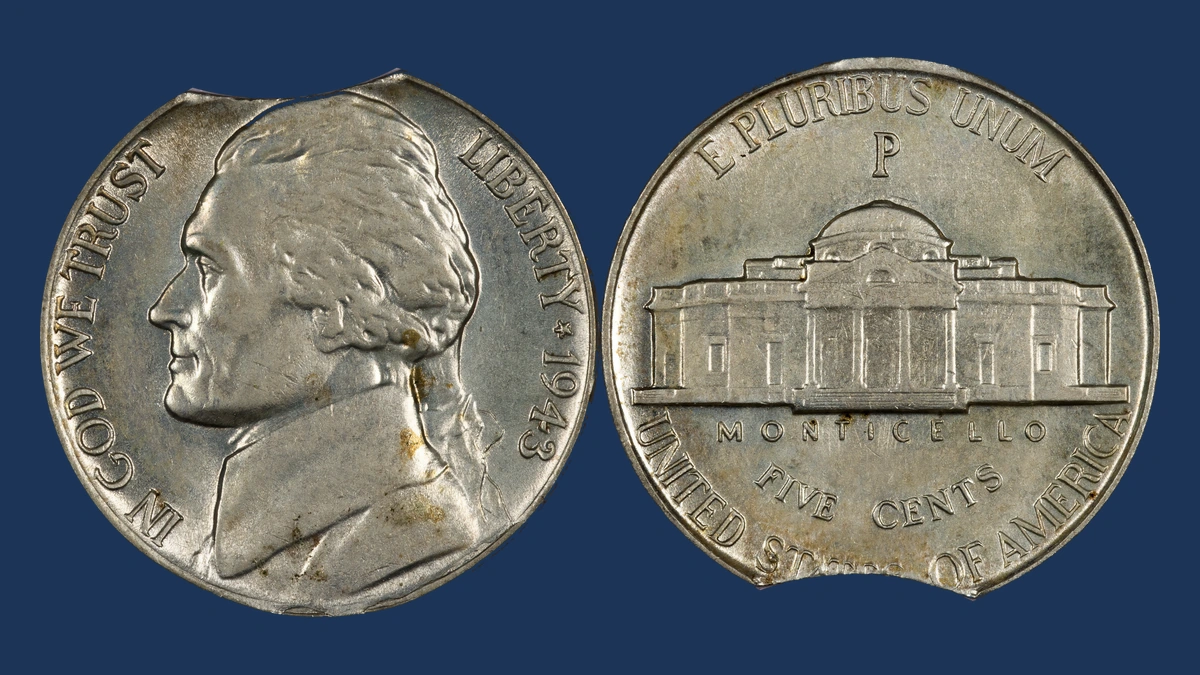
A coin’s starting metal disc, called a blank, can be incomplete or unusually shaped. A recorded 1943-P nickel has an oval outline and was graded AU55, meaning it has light wear.
Another Philadelphia example has a curved piece missing from its edge. That curved clip and the oval coin do not have the same documented shape.
The oval example’s precise formation has not been established here. Its appearance should be compared with the graded coin, rather than assuming that every stretched or squeezed nickel began with a faulty blank.
Estimated Value
A straightforward curved clip may fall around an estimated $25–$150. Allow roughly $150–$750 for a clear oval-blank error, depending on shape, wear, and confidence in its identification.
For a general clip comparison, a much later 1997-P nickel with a 20% missing section sold for $124 in March 2025. That sale does not establish the value or missing percentage of either 1943 example.
The oval coin’s estimate reflects its different shape, not a claimed individual sale.
How to Identify
Lay the coin flat and compare its outline with a normal round nickel. Use calipers along the longest and shortest dimensions, recording both rather than describing the shape from one measurement.
A normal diameter is 21.2 mm and the standard weight is 5 grams; use a scale to see whether metal is missing. Check the plain edge under a 10× magnifier for cutting, filing, or crushing.
For a curved clip, follow the gap into the original design on each face. For the oval example, compare the entire outline and placement of the lettering with the graded specimen, not just one unusual-looking side.
7. 1943 Jefferson Nickel Off-Center Strike
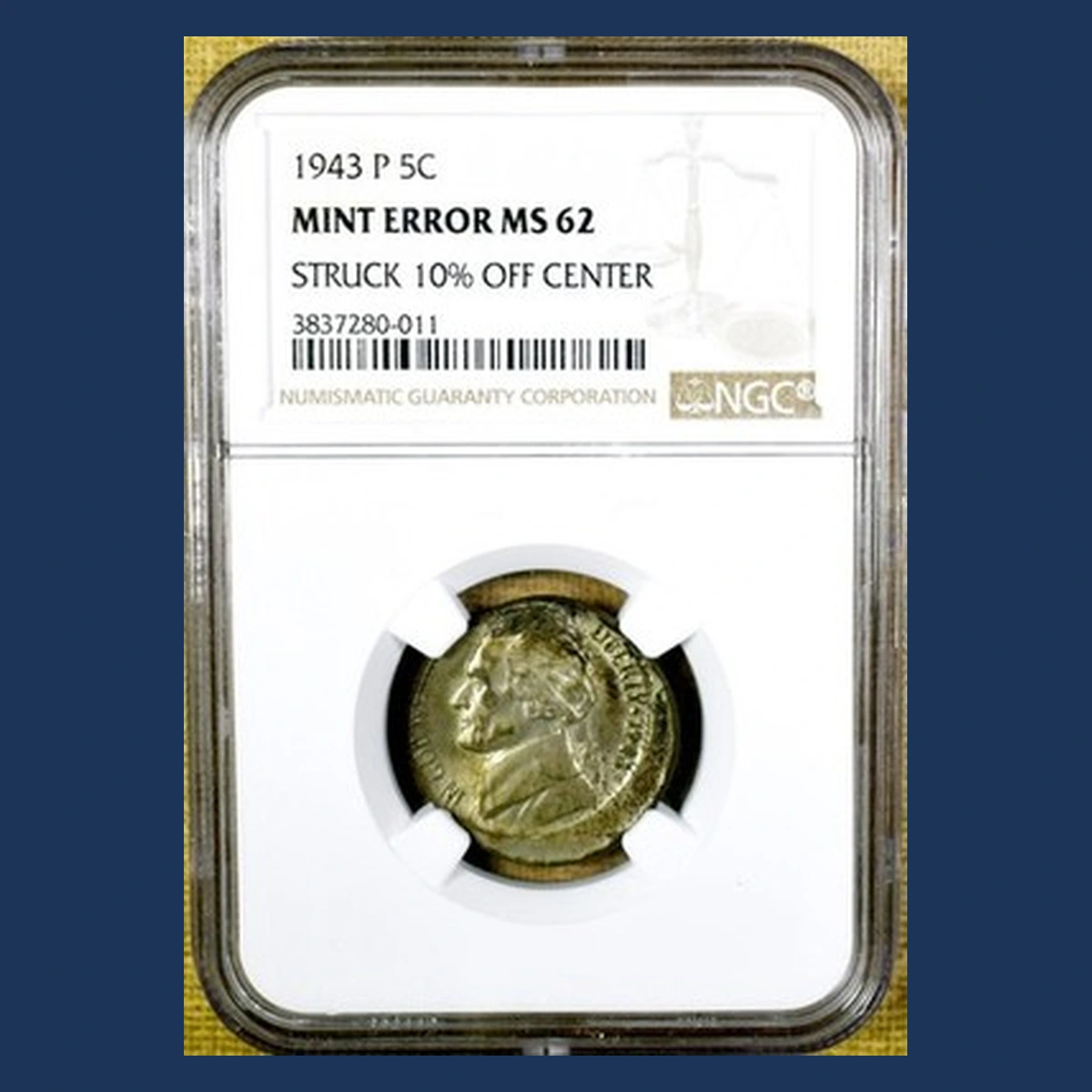
An empty crescent beside the design can show that the blank entered the press out of position. The tools struck only part of the metal, while some of the intended picture fell beyond its edge.
A Philadelphia example is recorded in an ANACS MS64 holder. That grade describes an unworn coin with marks, not the percentage of the shift.
The date and large P need to be checked on the coin itself. The recorded example’s precise angle and percentage are not assigned here, and a slightly uneven border alone does not establish an off-center strike.
Estimated Value
A small but clear shift can fall around an estimated $50–$150, with stronger dated examples around $150–$800. That range is not a recovered auction price for the recorded MS64 nickel.
A 1955-D nickel struck 15% off center sold for $402.50 in October 2010. It used the later copper-nickel alloy, so its sale provides a general comparison rather than an exact match.
A legible date, attractive surfaces, and a strong visible shift support the higher estimates.
How to Identify
Turn the coin over while keeping the blank crescent in the same position. Missing design on both faces is more useful than a narrow rim on only one side.
Find the date and the large mintmark, then inspect the empty metal with a 10× magnifier. Grinding scratches or a freshly cut edge suggest that the blank area was made later.
The unused metal should connect naturally to the struck part.
A scale should remain near the normal 5 grams because displacement does not normally remove metal. Calipers can record its altered outline compared with 21.2 mm, and the remaining edge should be plain.
Look for matching unstruck space and missing outer design, rather than judging the error from rim width alone.
8. 1943 Jefferson Nickel Rotated Double Strike
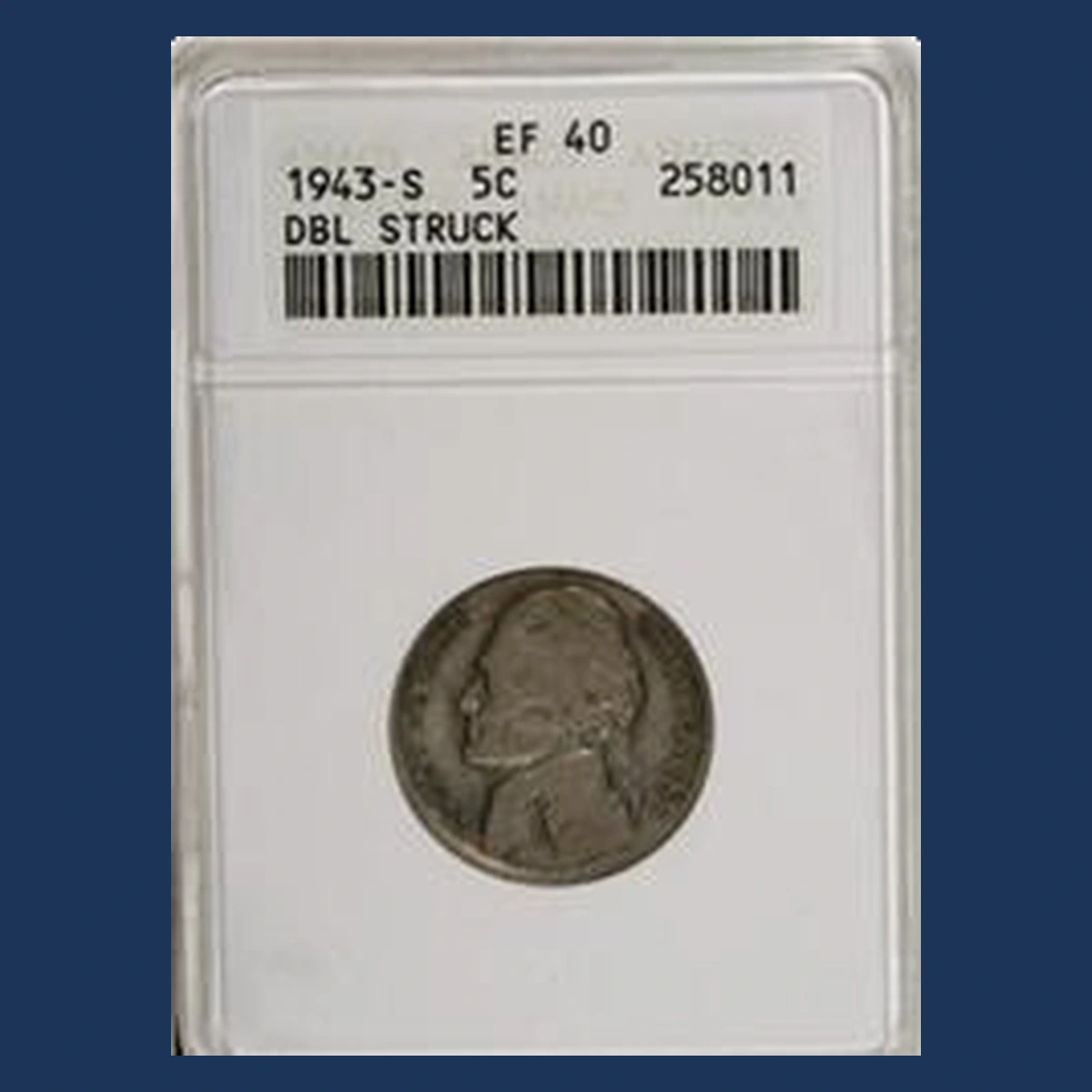
Two displaced versions of the design can appear when a coin receives another strike after turning. A 1943-S example was struck twice inside the collar, with the second impression rotated about 30 degrees.
The restraining ring kept the metal from spreading freely outward. That makes a normal-looking diameter possible even though the design is badly overlapped.
This is a movement of the coin between strikes, rather than a faulty tool repeating a few letter outlines. The recorded piece was graded XF40, so wear also affects how much of each strike remains visible.
Estimated Value
Allow an estimated $150–$400 for worn examples with recognizable overlapping designs and $400–$1,000 for especially clear pieces. Those figures are estimates, not a recovered sale price for the recorded XF40 coin.
A different kind of double strike, a 1947 flipover nickel graded AU55, sold for $216 in March 2023. It is a related comparison, but flipping a coin differs from rotating it without turning it over.
Both designs should remain understandable to support a strong premium.
How to Identify
Choose a prominent feature, such as the date or portrait outline, and locate its second position. Check whether other surviving details follow the same turn of roughly 30 degrees, without assigning a clockwise direction not established for this specimen.
A 10× magnifier helps separate worn earlier details from scratches crossing both designs. Two full design positions are different from closely doubled edges on letters.
The collar can keep the coin close to 21.2 mm, so normal size does not rule this error out. Use calipers and a scale to check that outline and roughly 5 grams, including the plain edge, then compare the corresponding features on both faces.
9. 1943 Jefferson Nickel Wrong Copper-Nickel Alloy
An ordinary-looking 1943 nickel can be unusual because of the metal inside it. This year’s standard mixture was 56% copper, 35% silver, and 9% manganese, rather than the copper-nickel mixture used before the wartime change.
A Denver example was identified as struck on a copper-nickel blank and graded MS64. A worn Philadelphia example has also been reported.
The suspected mix-up involves old-alloy blanks entering wartime production. Color alone cannot reveal this mistake, because normal silver-alloy nickels can turn dark or otherwise change appearance with age.
Estimated Value
The Denver copper-nickel example sold for $1,840 on December 5, 2008. Its unworn condition and identified wrong alloy contributed to that whole-coin price.
Use an estimated $1,000–$2,500 for worn or less attractive authenticated pieces and $2,500–$5,000 for stronger examples. These ranges do not assign the Denver sale to the separate Philadelphia coin.
A normal wartime nickel with unusual color should not receive this premium without a reliable test of its metal.
How to Identify
First confirm the large 1943 mintmark above Monticello and inspect both faces with a 10× magnifier. This rules out confusing a prewar nickel with the wartime issue.
A scale and calipers may still show about 5 grams and 21.2 mm, with a plain edge. Those normal readings cannot separate two alloys used for coins of similar size.
Do not use an acid scratch test on the surface.
Instead, obtain a nondestructive metal test from a qualified service and compare the result with the standard wartime silver mixture. That test checks the elements present without cutting the coin.
Identification rests on the measured metal content, not simply the color, weak steps, or lack of a magnetic response.
10. 1943 Jefferson Nickel Struck on a Different Coin’s Blank
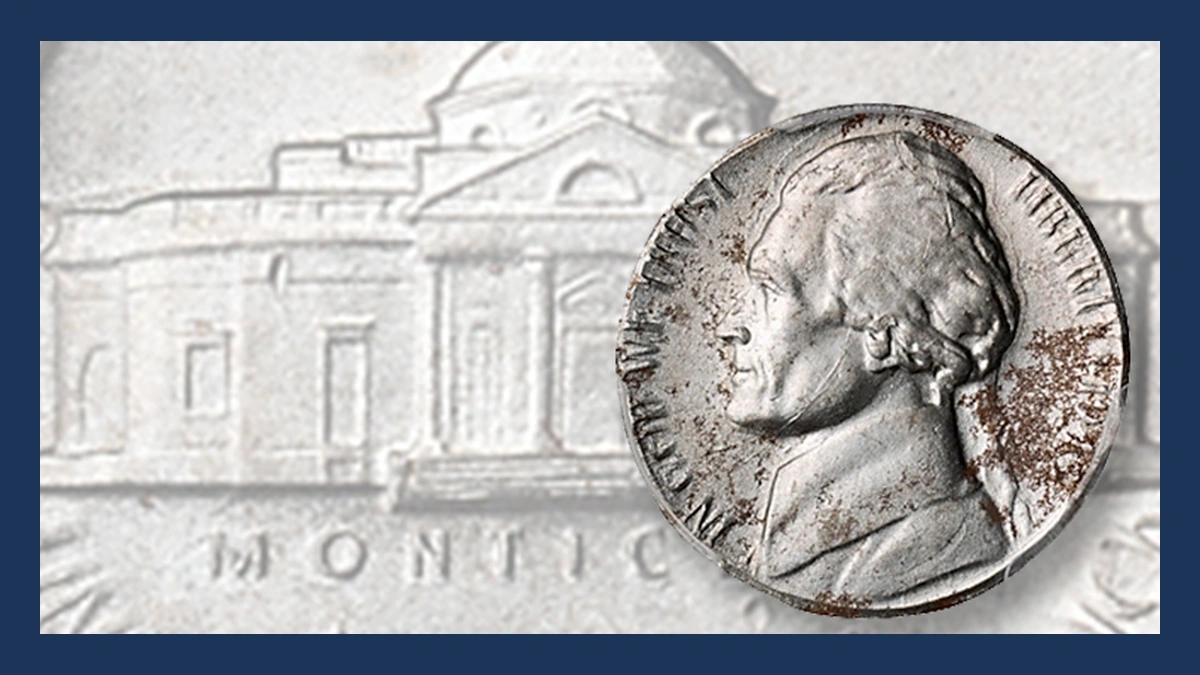
A small 1943 nickel with cropped outer lettering may have been struck on metal intended for another coin. Recorded mistakes include steel-cent blanks and a silver Australian sixpence blank.
The Australian-blank example is a 1943-S weighing 2.8 grams, with its design shifted slightly toward the top. It still carries Jefferson and Monticello, not a mixture of American and Australian designs.
Philadelphia steel examples include a reported 2.8-gram coin and a roughly 2.9-gram piece struck on an unfinished blank. A separate San Francisco steel-cent example was graded AU55.
Estimated Value
The 1943-S steel-cent blank coin sold for $3,120 in December 2023. The Australian sixpence blank example brought $2,185 in February 2010.
Allow an estimated $1,500–$3,500 for worn but clear examples and $3,500–$6,000 for stronger pieces. The different blank types and condition affect where a coin fits.
Neither sale establishes a price for every Philadelphia steel example, and the Australian coin needs separate metal identification.
How to Identify
Use a scale to compare the candidate with a normal 5-gram nickel before guessing which blank it used. The recorded Australian example weighs 2.8 grams, but weight alone cannot establish that foreign origin.
Measure its smaller outline with calipers against the normal 21.2 mm diameter. Under a 10× magnifier, check for naturally crowded or cropped lettering rather than a filed-down edge.
A nearby magnet can help identify steel without touching or dragging it across the surface. It will not identify the silver sixpence blank.
Inspect the edge against the nickel’s usual plain edge, and retain both date and mintmark in the comparison. The wrong-blank identification needs the design, measurements, and professionally identified metal to fit the same explanation.
11. 1943 Jefferson Nickel Doubled Designs and the 1943/2 Date
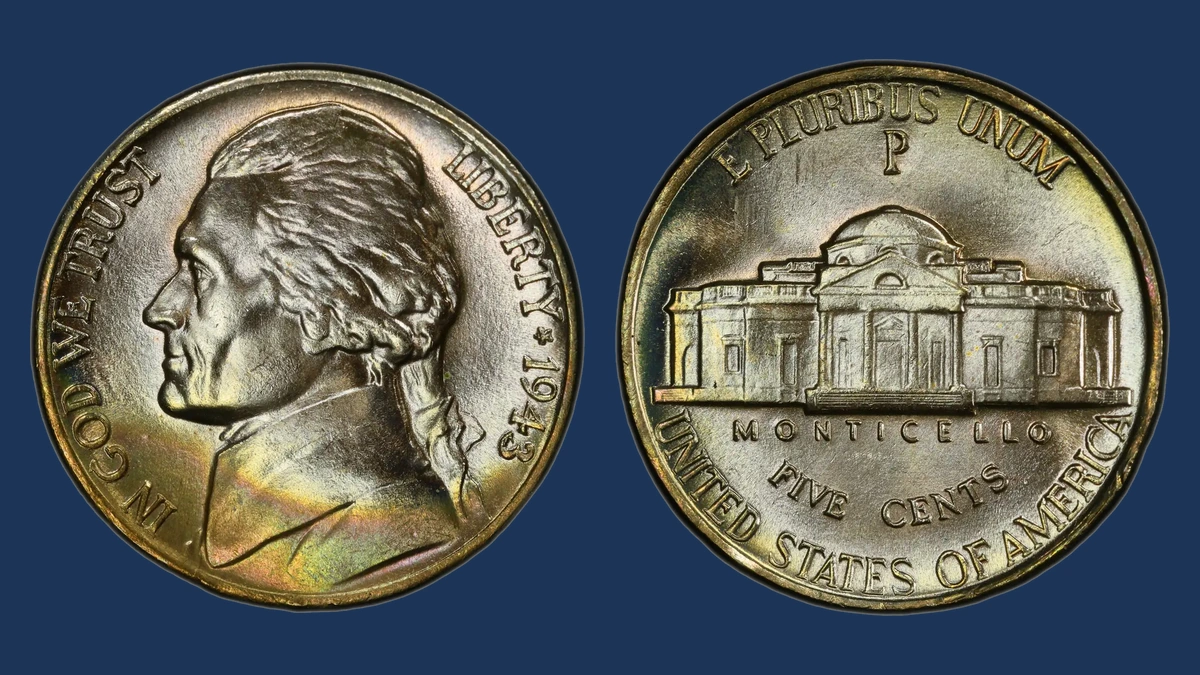
A small remnant of 2 beneath the final 3 makes the 1943/2-P date look crowded. The earlier date entered the stamping tool while the design was being transferred, before that tool struck coins.
Another Philadelphia variety has a second eye below and to the left of Jefferson’s main eye. Other varieties repeat lettering on the front or back.
These are doubled dies: steel stamping tools carrying repeated design details. Some also have repunched mintmarks, while the overdate can show faint repeated back lettering that becomes harder to see as the tool wears.
Estimated Value
Modest identified doubled designs may fit $20–$200; stronger varieties and overdates can reach $200–$6,000. Exceptional overdates with outstanding condition and sharply defined Monticello steps can reach an estimated $6,000–$17,000.
One MS67 Full Steps overdate sold for $16,675 in June 2008, then $3,840 in August 2021, according to PCGS auction records. That history shows why a high older sale is not a guaranteed present price.
Full Steps describes sharp detail, not another error.
How to Identify
Choose the feature you are trying to match before studying the entire coin. For the Philadelphia overdate, use a 10× magnifier to find the remaining 2 beneath the 3; for the doubled-eye variety, look below and left of the main eye.
Other patterns need their own comparisons in Brian’s 1943 listings. Denver and San Francisco lettering should not be assigned a Philadelphia variety number.
Check several repeated features, because a scratch beside one digit can be misleading.
A scale and calipers should show approximately 5 grams and 21.2 mm, with a plain edge. There were no 1943 Proof collector issues.
Separate raised outlines matching the same photographed design identify a doubled die more reliably than flattened shelves beside letters.
Conclusion
The large mintmark and silver alloy are normal features of a 1943 nickel. Extra letter outlines, missing metal, or designs struck on the wrong blank need separate checks.
This guide’s estimated $5–$17,000 range covers modest faults through exceptional varieties. Start with the feature you can see, keep auction condition in mind, and use a professional metal test before treating an ordinary-looking coin as a rare alloy error.