1997 Nickel Error List with Pictures

Almost all of Monticello can disappear beneath an impression from another blank. Greysheet lists a $780 Heritage sale in March 2025 for a 1997-P nickel with that dramatic back indent.
This guide to 1997 nickel errors covers estimated values from $5–$1,200. A missing section, a sunken area, and a smaller coin can each point to a different cause.
Use the shape, weight, and surviving design together as you work through the examples below.
1. 1997 Jefferson Nickel Spike Head Die Crack
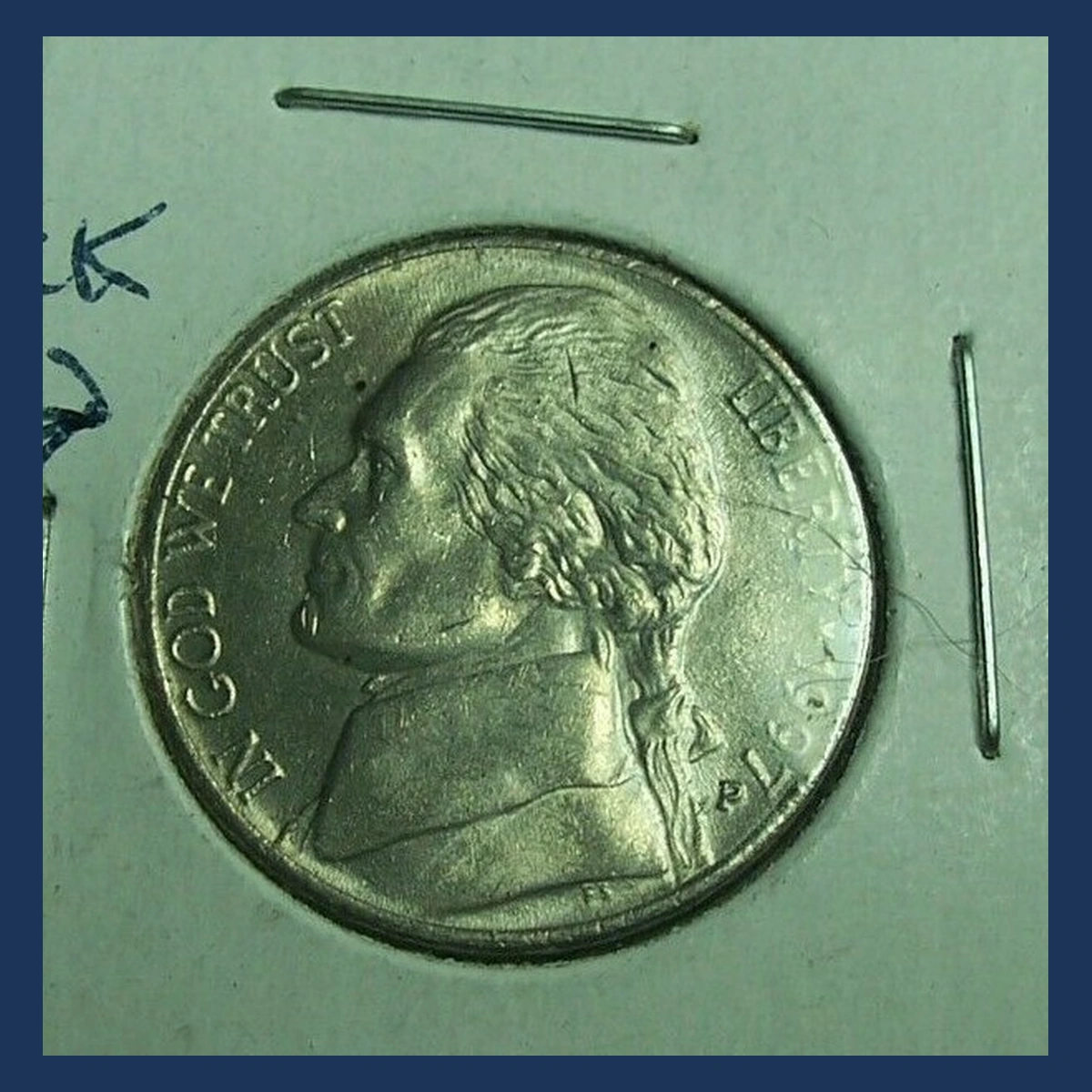
A narrow ridge can seem to connect Jefferson’s head to the rim. Collectors sometimes call this appearance a Spike Head crack.
The ridge comes from a split in a die, the steel tool that stamps the coin. Metal fills the split during striking and becomes a raised line on the finished nickel.
A 1997 year guide reports this feature without identifying a specific mint letter or direction. The nickname describes its general appearance, not one exact line that every suspected coin must reproduce.
Estimated Value
An estimated $5–$75 suits a clear head-to-rim crack, depending on thickness, visibility, and the coin’s condition. A fine line on a worn nickel belongs near the lower end.
The year report does not provide a matched sale for one identified specimen. The range therefore follows comparable small raised cracks on modern nickels.
Paying more makes sense only when the raised feature is easy to see and remains part of the original surface.
How to Identify
Place the coin under a low lamp and inspect the point where the line meets Jefferson’s head. A 10× magnifier can show whether it rises from the metal or cuts down into it.
A hair or thread lying on the coin may cast a similar shadow. Do not scrape the surface to test it.
Follow the whole ridge toward the rim and compare nearby hair details with an ordinary nickel.
Use a digital scale and calipers on a loose coin against 5.00 grams and about 21.21 millimeters. These checks help identify major alteration, but the crack itself should not add separate material.
Look for a continuous raised ridge without the fresh trench or pushed edges of a scratch.
2. 1997 Jefferson Nickel Struck-Through Grease
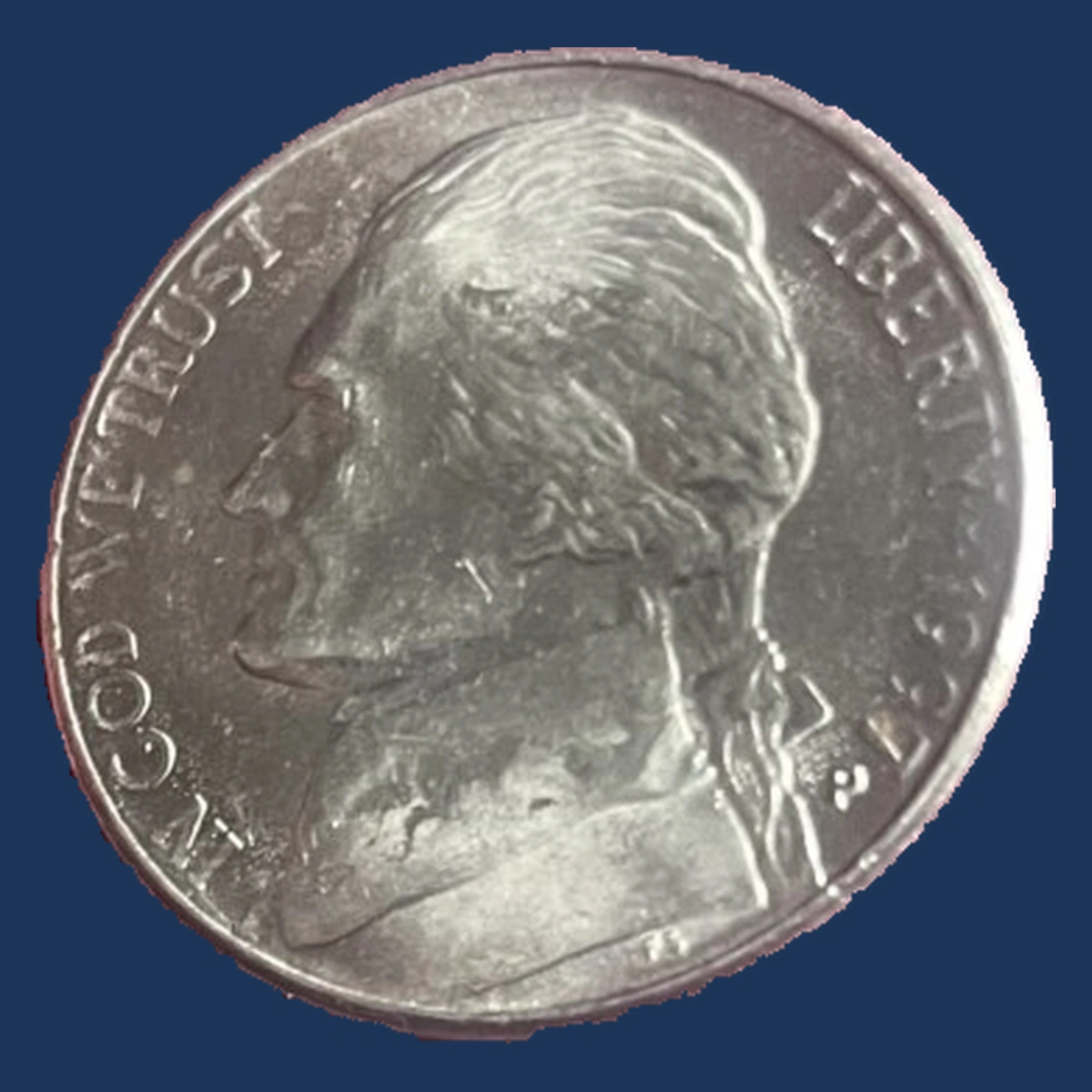
A small part of the design can fade while the rest remains clear. Grease mixed with debris may have filled a recessed part of the stamping tool and blocked the image.
Year guides report this kind of weakness for 1997 without establishing the exact affected area on one identified coin. Jefferson and Monticello therefore need to be examined individually.
The result is often called a grease strike-through. Its appearance can vary with the trapped material, so a shallow depression does not automatically rule it out or prove it.
Estimated Value
For a recognizable blocked area, estimate $5–$100. A slight missing detail on a worn nickel has less appeal than a broad interruption surrounded by sharp original design.
No directly matched 1997 sale accompanies the year report. This range is a comparison-based estimate for ordinary striking errors of the same kind.
A coin polished smooth after leaving the Mint does not gain error value simply because a word has disappeared.
How to Identify
Choose a sharp nearby letter as a reference before examining the weak patch with a 10× magnifier. A blocked part of the tool can leave a local gap while adjacent details strike normally.
Check Jefferson’s exposed high points for ordinary wear. If the entire portrait and building are similarly flat, localized grease may not explain the weakness.
A loose nickel normally weighs 5.00 grams on a digital scale and measures about 21.21 millimeters with calipers. A low weight together with widespread roughness can point toward chemical damage.
Move the light across the boundary of the missing detail. Watch for fine scratches from polishing, rather than assuming that every smooth empty patch formed during striking.
3. 1997 Jefferson Nickel Doubled Die
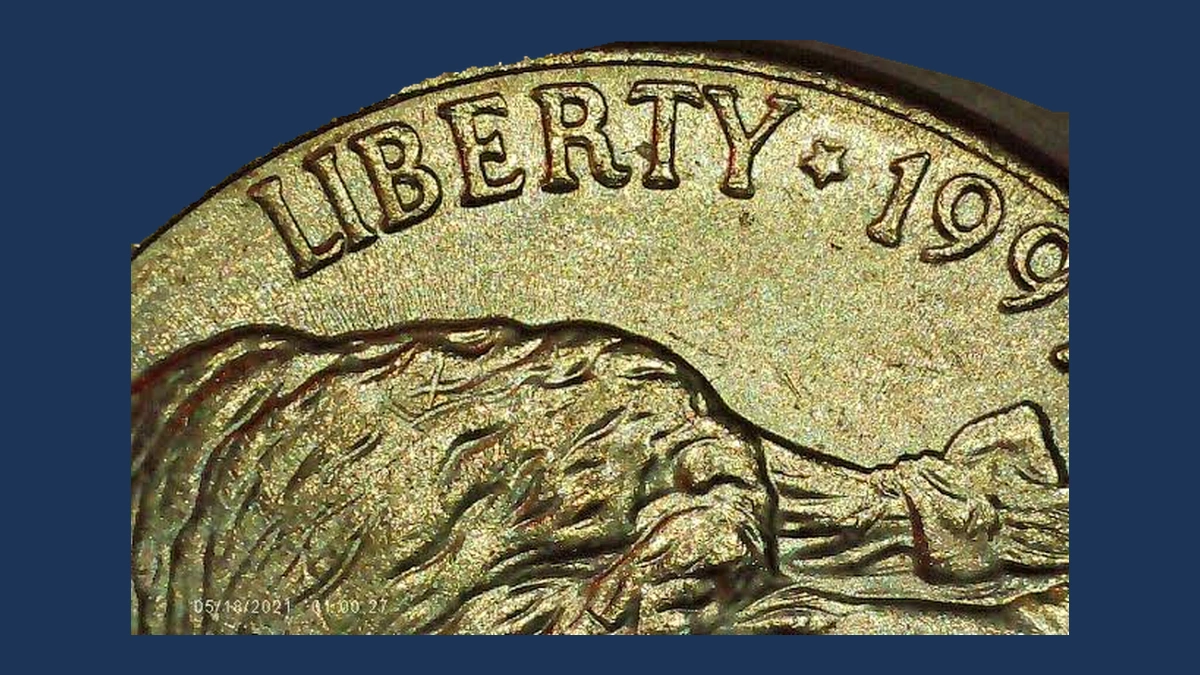
Letters may show an extra rounded edge or a split at their tips. A doubled die produces such details because the stamping tool carries a doubled image.
The 1997 reports name front lettering, including LIBERTY and IN GOD WE TRUST, and back lettering below Monticello. They do not establish one exact mint and finish combination for every reported feature.
A thick letter is not enough by itself.
Movement during striking can also leave a flat shelf beside a normal letter, without the tool having a doubled design.
Estimated Value
Use an estimated $10–$150 for identified minor doubled details with useful close-up photographs. Stronger separation on clean surfaces generally attracts more interest than thick lettering without a clear second outline.
The year reports do not supply a directly matched cataloged specimen and sale for each face. These figures are therefore estimates for the reported type.
An ordinary nickel with flat machine doubling should not be priced as a confirmed doubled die.
How to Identify
Choose a comparison with the same mint letter and finish before examining the letters. San Francisco Proofs are specially made collector coins, and the Philadelphia Matte Finish issue has a dull surface unlike ordinary coins.
A digital scale and calipers can check a loose nickel against 5.00 grams and about 21.21 millimeters. Once its basic identity is established, enlarge the reported front or back words with a 10× magnifier while keeping complete letters in view.
Look for rounded extra outlines or split tips that repeat consistently within the design. A flat low shelf alongside a normal letter often comes from movement during striking and should not be mistaken for a doubled tool.
4. 1997 Jefferson Nickel Broadstrike
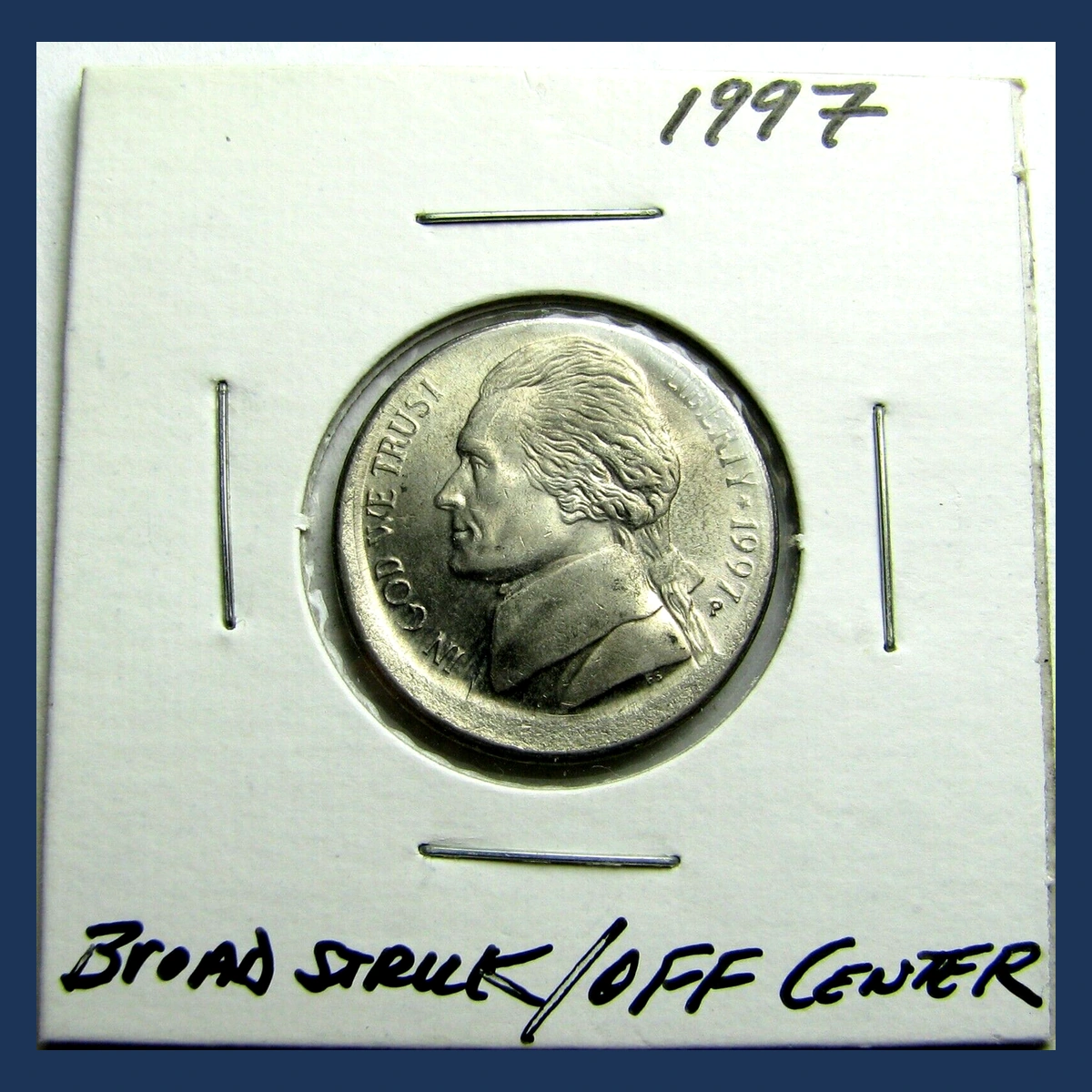
A broadstruck nickel spreads beyond its usual diameter while retaining the full design. The surrounding metal ring did not hold the blank in its normal round space during the blow.
Collectors call that ring the collar. Without its restraint, the coin’s edge can flare outward and become noticeably wider.
Recorded Philadelphia pieces include a PCGS MS66 example, meaning an unworn coin with few marks. Another nickel combines a broadstrike with a large indent, but the added depression belongs to that particular coin rather than every broadstrike.
Estimated Value
An estimated $30–$200 covers many clear broadstrikes of this date. A Philadelphia coin graded PCGS MS66 is listed at $64 in a December 2024 Heritage sale.
That amount gives a more useful comparison than an expensive ordinary coin with unusually sharp steps on Monticello. Sharp steps describe striking quality and are not an error.
A broadstrike with an additional major indent needs a whole-coin comparison that includes both features.
How to Identify
Trace the entire outer lettering on both faces with a 10× magnifier. A broadstrike keeps the full design, even when the expanded border is much wider on one side than the other.
Next, measure across that spread metal with calipers against the normal 21.21-millimeter diameter. Examine the border for compressed design, impact marks, or grinding that could reveal a coin flattened after striking.
Place a loose coin on a digital scale to check whether it retains about 5.00 grams. A broadstrike spreads that metal instead of removing it; the combination of extra width and complete design matters, while a plain edge is normal for every ordinary nickel.
5. 1997 Jefferson Nickel Improper Annealing
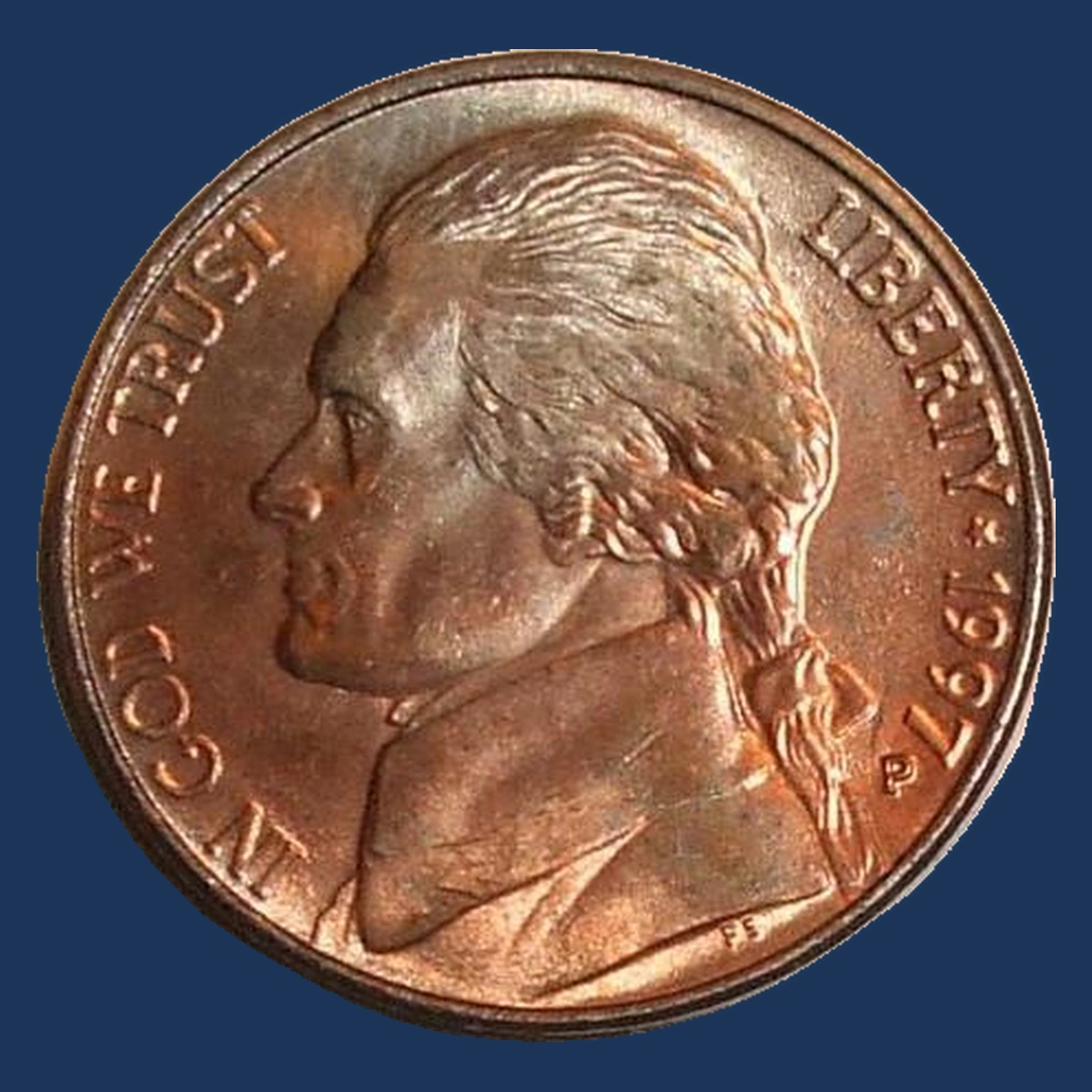
A reddish or bronze nickel may have its normal alloy beneath an unusual surface. The color can develop during annealing, the heating step used to prepare a blank for striking.
An auction record identifies a Philadelphia 1997 example graded NGC MS62 as improperly annealed. Other year reports describe coppery color on both faces.
These nickels are made from one copper-nickel alloy rather than separate outer layers over a core. Their changed color must be distinguished from added copper plating, burial damage, and heating after the coin left the Mint.
Estimated Value
For an identified annealing error, use an estimated $25–$200. The Philadelphia NGC MS62 example appears in auction records at about $41 in March 2023.
MS62 describes an unworn coin with numerous visible marks. More attractive original surfaces can support a higher price, but color alone does not establish the error.
The range is for confirmed Mint-related heating effects, not every brown or reddish nickel found in circulation.
How to Identify
Inspect the edge first under a 10× magnifier, looking for a coating that curls or peels away. A normal nickel is one copper-nickel alloy, so a peeling copper-colored skin may indicate later plating.
Compare the two faces under neutral light without cleaning a dark patch. A certified annealing example can help you judge the surface texture, whereas color alone cannot distinguish Mint heating from later chemical exposure.
Use a digital scale on a loose piece against 5.00 grams and calipers against approximately 21.21 millimeters. A smaller, lighter copper-colored coin needs a wrong-blank assessment; a normal-sized coin still needs its original color and texture examined together.
6. 1997 Jefferson Nickel Clipped Planchet
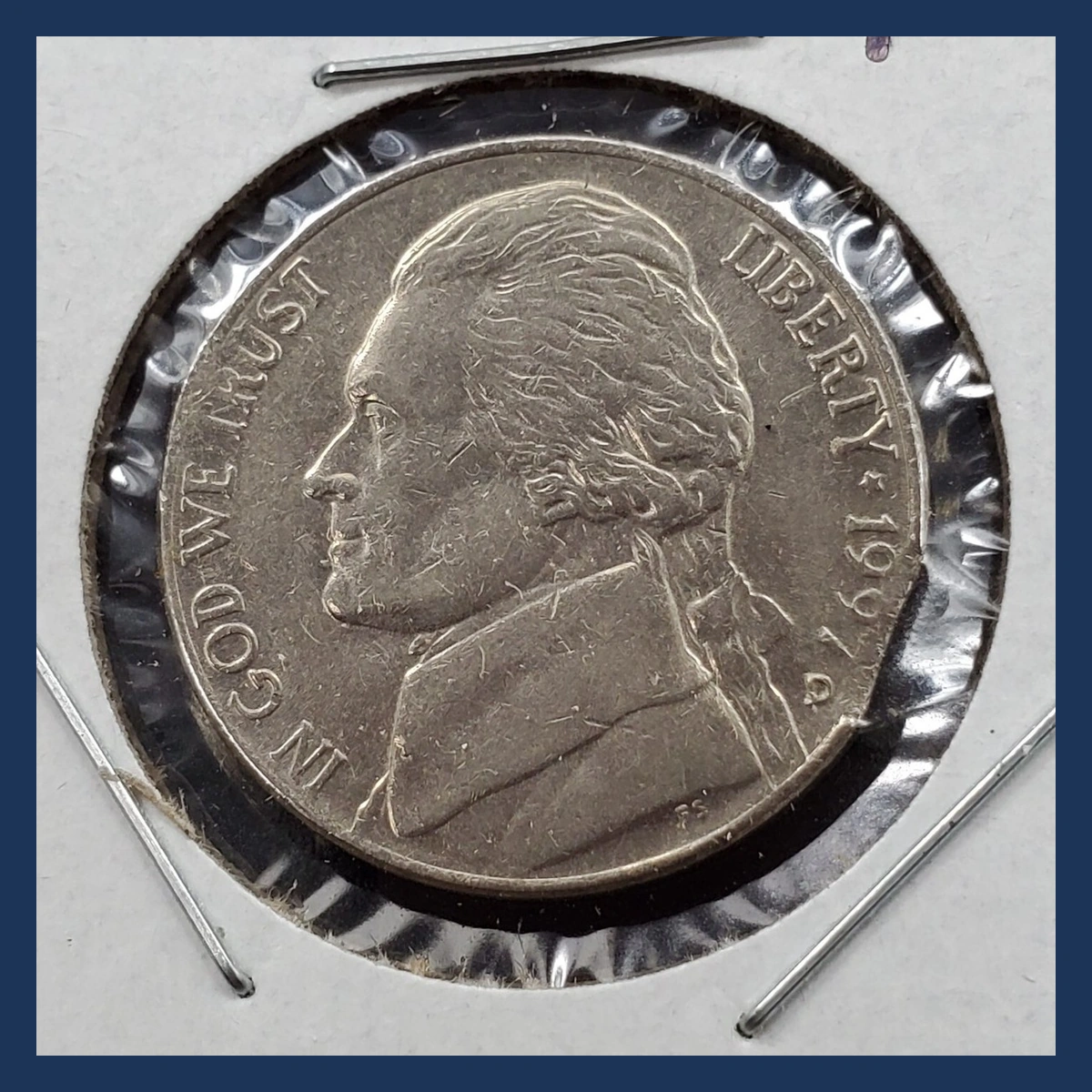
An incomplete blank leaves a bite-shaped opening or a straight missing section when it becomes a coin. Some 1997 nickels have more than one opening.
Philadelphia examples include a twenty-percent curved clip, a small triple clip, and a coin combining curved and straight missing sections. These shapes share the same basic problem: part of the blank was absent before striking.
The surrounding design can show how metal moved near the gap. A later cut removes already struck detail instead, so the boundary is more informative than the missing shape alone.
Estimated Value
Expect an estimated $30–$250 for clear genuine clips, with the amount of missing metal and surface quality affecting demand. Auction records list about $124 for a twenty-percent curved clip and $79 for a four-percent triple clip in March 2025.
Those Philadelphia coins were graded PCGS MS62 and MS63 respectively, both unworn with visible marks. The larger missing section brought more despite its lower numerical grade, showing why three small openings need not outprice one large clip.
How to Identify
Compare the ends of the design beside each gap under a 10× magnifier. Striking can draw metal toward an original opening, whereas filing can leave straight cuts across finished letters.
Look across the coin for a weak opposite rim, often called the Blakesley effect. It can support a genuine clip but is not required on every example.
Use calipers across an intact span against the normal 21.21-millimeter diameter, then weigh the loose coin on a digital scale against 5.00 grams. Larger clips should remove more of its original mass.
With a triple clip, check all three boundaries independently. One genuine opening does not guarantee that a second suspicious cut was also made before striking.
7. 1997 Jefferson Nickel Very Weak Strike
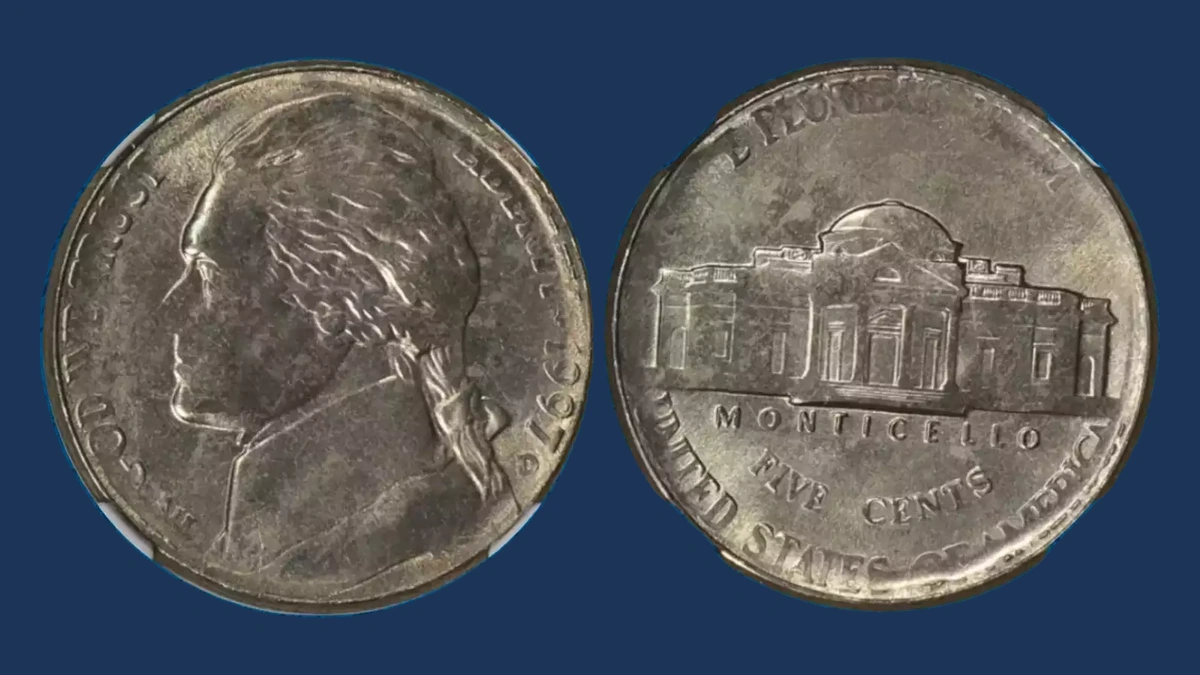
Both faces can carry only shallow outlines when the press fails to push metal fully into the design. This is different from one small area being blocked by grease.
A year report describes a Denver example using the older name “die adjustment strike.” The visible weakness does not, by itself, show that an operator deliberately made a test coin.
The useful evidence is the shallow design and original surface. Wear, acid treatment, or a coin covering a stamping tool can also erase detail, so the name alone cannot settle the cause.
Estimated Value
For a genuine, substantial weak strike, estimate $50–$350. A coin with broad weakness and intact unworn surfaces is a stronger candidate than one faint word on an otherwise normal nickel.
The Denver report does not supply a directly matched original auction for use here. The range reflects comparable low-pressure nickel errors rather than an assumed special testing history.
Worn or chemically reduced coins remain outside this estimate even when their designs are very faint.
How to Identify
Use an ordinary nickel as a map of the high and low parts of the design. Under a 10× magnifier, compare Jefferson’s cheek, lettering, and Monticello rather than studying just one missing word.
Wear tends to rub exposed high points first. Broad shallow details without that rubbing fit a weak strike more closely.
Check the rim to see whether metal filled its full height. A strongly struck border beside one erased patch may require a different explanation.
For a loose coin, a digital scale and calipers should give roughly 5.00 grams and 21.21 millimeters. Acid can reduce those measurements and leave rough surfaces.
Look for weak design across both faces while the original surface remains intact.
8. 1997 Jefferson Nickel Off-Center Strike
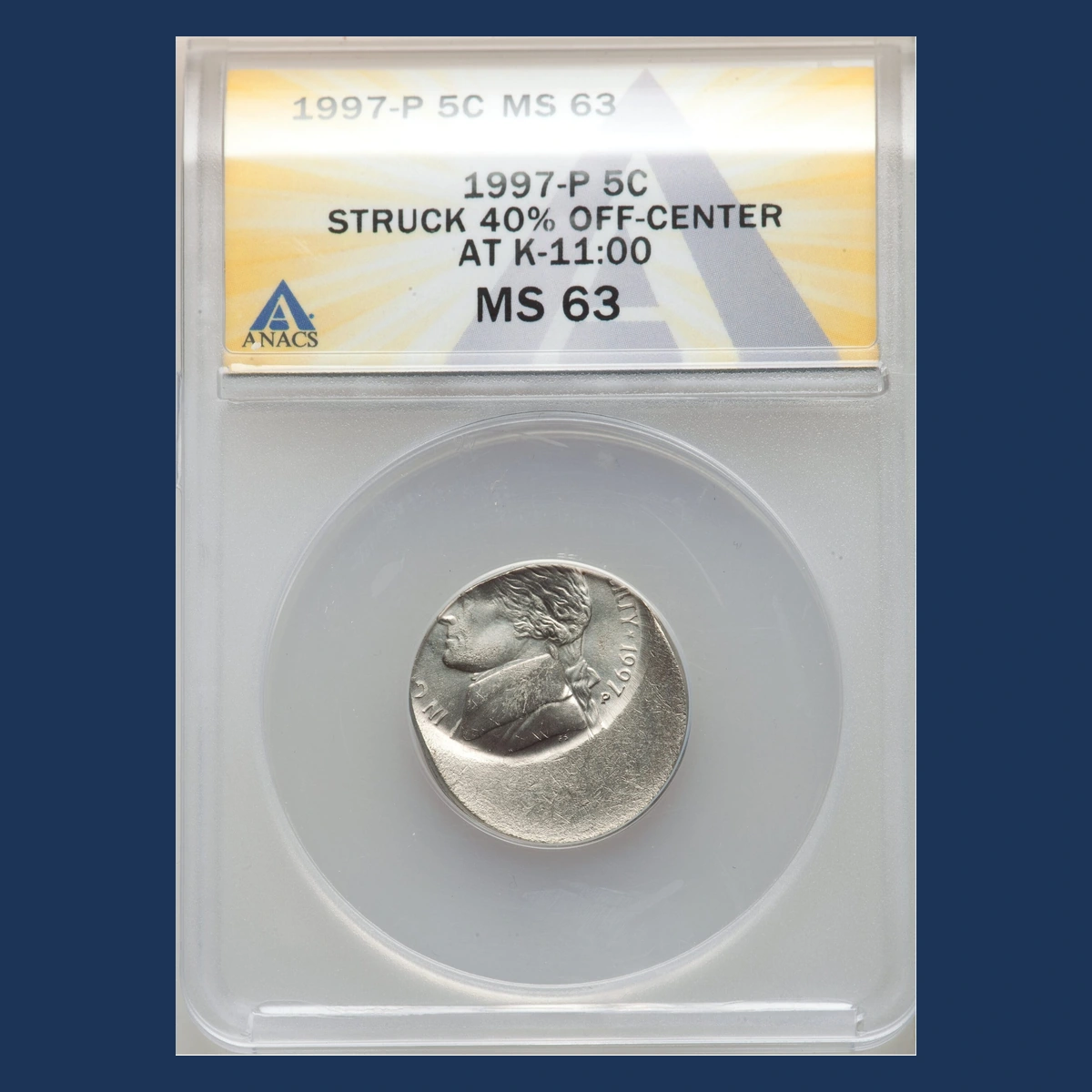
A blank crescent sits beside the design when a nickel is struck away from the center of its blank. The opposite border may lose lettering or part of the portrait.
GreatCollections records a Philadelphia example graded ANACS MS66. Its listing establishes the off-center error but does not specify a direction or percentage to apply to every coin.
An uneven border by itself is not the same thing. Compare both faces to see whether the blank was misplaced, rather than only one stamping tool shifting during an otherwise centered blow.
Estimated Value
An estimated $30–$400 covers many readable-date off-center examples, depending on the displacement and condition. The Philadelphia MS66 listing supplies a specific example but no usable public price in the available record.
The range therefore draws on comparable modern nickel errors. Larger shifts can bring more interest when the date remains clear.
Missing identity, heavy scratches, or damage across the unused metal can pull a coin lower.
How to Identify
Check the unstruck metal for a surviving original surface under a 10× magnifier. Grinding away the design can create a blank-looking patch, but often leaves scratches or a changed texture.
Photograph both faces, including the full outline. Their missing design should correspond to the same displaced blank.
A digital scale can check the normal 5.00-gram starting weight, since an off-center strike usually keeps its metal. Record the shape with calipers against a normal 21.21-millimeter nickel rather than forcing the spread piece to match that diameter.
Read the date and mint letter from the actual coin. The unused arc paired with lost design on the opposite border is the important combination.
9. 1997 Jefferson Nickel Double Strike with a Blocked Back
A second impression extends below the first design on the reported Philadelphia coin. Its second blow landed seventy percent off center toward six o’clock.
The back of that second strike was blocked, so it did not receive the matching back design normally expected. Collectors describe that side as uniface, meaning struck without the usual image on that face.
The coin is recorded as ANACS MS63 in a specialist auction catalog. Its extra strike and blocked back belong to one event sequence, rather than two unrelated nickels with different problems.
Estimated Value
For a comparable double strike, estimate $100–$500, depending on the separation and surviving design. The specialist listing identifies the coin but does not provide a completed sale result.
As a different-year comparison, a 2001-D double strike with its second blow sixty-five percent off center sold for $307.44 in June 2026. That piece supports the general range without establishing this 1997 coin’s price.
The blocked back must also be clear in photographs.
How to Identify
Find the first portrait and date, then follow the second impression downward toward six o’clock. A 10× magnifier should reveal parts of a separate strike rather than a narrow shelf beside one letter.
The corresponding back needs equal attention.
The specialist catalog identifies the second back area as blocked, so a matching second Monticello image is absent there. Keep that specific feature separate from an ordinary two-sided double strike.
Use calipers to record the expanded outline against an ordinary 21.21-millimeter nickel. A digital scale can check whether a loose example retains its normal 5.00 grams.
A later dent cannot supply a genuine second portrait. Match the displaced front impression with the blocked area on its opposite side.
10. 1997 Jefferson Nickel Indent from a Cent Blank
A broad depression can replace most of Monticello without adding another recognizable design. A cent blank lay between the nickel blank and a stamping tool during the blow.
The recorded Philadelphia coin is described as ninety percent indented on the back. The blank pressing against it had no finished cent image to transfer.
This differs from a reversed impression made by an already struck coin.
Another reported nickel combines a large indent with a broadstrike, showing that missing design and an expanded outline can appear together on one piece.
Estimated Value
A substantial genuine indent can be estimated at $150–$1,000. Greysheet’s auction record lists $780 in March 2025 for the Philadelphia PCGS MS62 coin with a ninety-percent back indent.
MS62 means an unworn piece with noticeable marks. The large affected area makes it a better comparison for dramatic indents than for a small ordinary dent.
A separate broadstruck example with an indent needs its own whole-coin valuation.
How to Identify
Turn to the depressed Monticello side and inspect its boundary with a 10× magnifier. The remaining design should show how the nickel was struck around the overlapping blank, rather than simply cut away afterward.
Look inside the depression for an earlier image. The recorded cent-blank indent does not need a Lincoln portrait; such an image would instead suggest contact with an already struck cent.
Check the front and plain edge for later hammering, then weigh a loose coin against 5.00 grams with a digital scale. Calipers can compare its outline with the normal 21.21 millimeters, while any spreading should fit the same strike that produced the depression.
11. 1997 Jefferson Nickel Struck on a Dime Blank
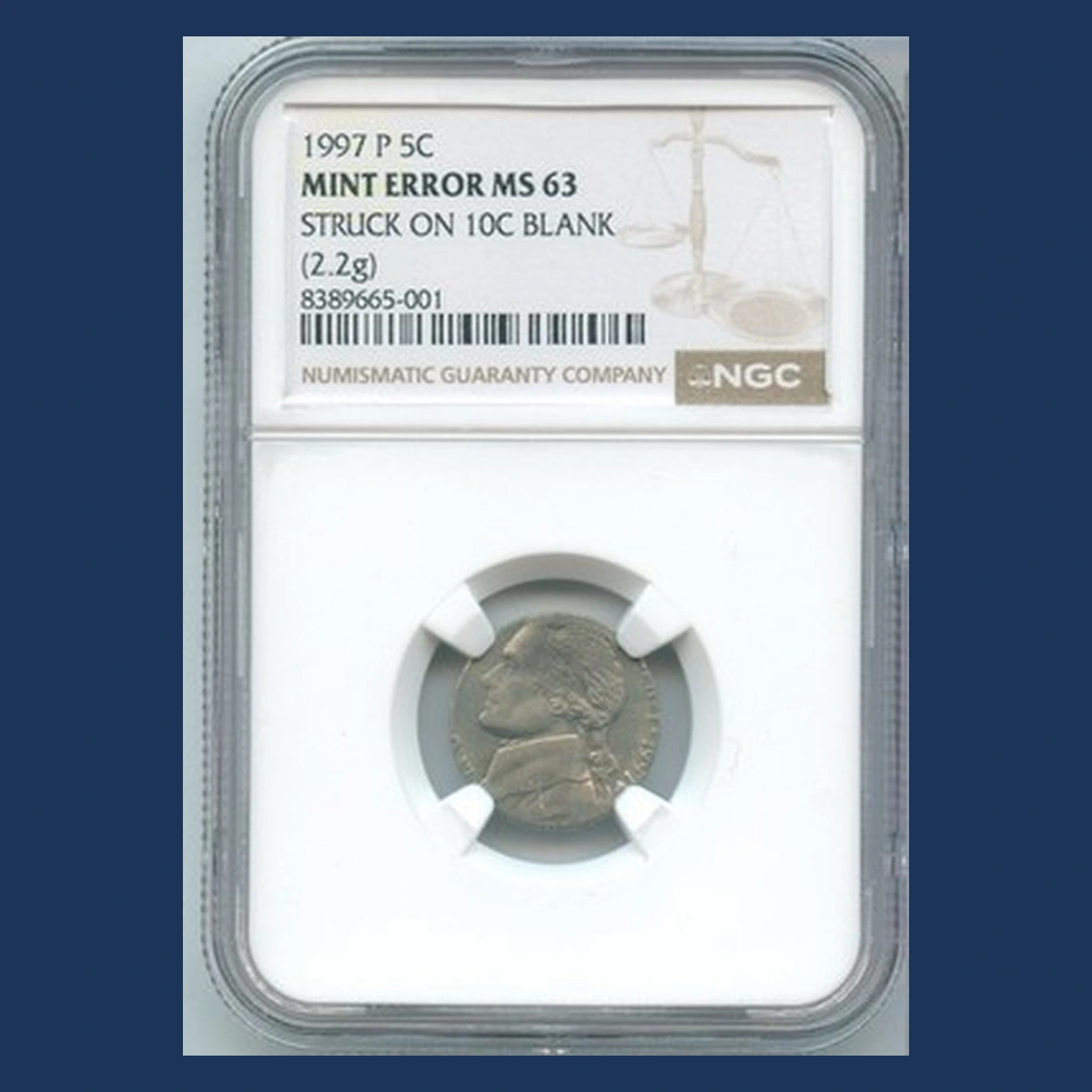
Jefferson’s design is too large for a dime blank, so parts of the outside lettering cannot fit. The result is a small, light coin with nickel images instead of Roosevelt and a torch.
A Philadelphia example graded PCGS MS62 appears in auction records. It was struck on an unused clad dime blank, which has outer copper-nickel layers over a copper core.
The layered edge contrasts with a normal nickel’s single alloy. This is a wrong-blank error, not a finished dime struck again with nickel designs.
Estimated Value
An estimated $400–$1,200 is appropriate for a clearly identified example with readable date and mint letter. The 1997-P MS62 coin is listed at about $748 in an April 2006 Heritage result.
A later lot combining a 1997-P example with a separate 1998-P dime-blank nickel sold for $630 in August 2023. That was a two-coin price and cannot be assigned to either piece alone.
The surviving design and surfaces influence the comparison.
How to Identify
Weight is especially useful here: a standard clad dime blank starts near 2.268 grams, compared with 5.00 grams for a nickel. Use a digital scale rather than judging the difference by hand.
Check the edge with a 10× magnifier for the copper core between lighter outer layers. A normal nickel does not have that layered construction.
Calipers can compare the smaller coin with a dime’s original 17.91-millimeter diameter and a nickel’s 21.21 millimeters. Striking can spread the dime blank, so its finished width need not equal the starting figure.
Keep the date and mint letter visible in a full photograph. The strongest combination is nickel images on a lighter, layered blank, with no earlier Roosevelt design beneath them.
Conclusion
Estimated values of $5–$1,200 reflect a wide range of 1997 nickel errors, from a small raised crack to a nickel struck on a dime blank. A severe indent can also attract strong bidding.
Do not judge all weak or unusual surfaces alike. An enlarged coin, an incomplete blank, and a blocked design need different checks.
Preserve the original surface and keep the date, mint letter, and entire outline visible in photographs.