1991 Nickel Error List with Pictures

Start on the back when checking a 1991-D nickel for doubled letters. Two recorded varieties show extra detail in E PLURIBUS UNUM, while other 1991 mistakes change the coin much more dramatically.
A 1991-P nickel struck over a finished cent sold for $660 in December 2024. This 1991 Jefferson nickel error list covers estimated values from $5 to $6,500, including ordinary blanks, altered designs, and metal meant for other coins.
Read on for the visible clues and practical checks behind each range.
1. 1991 Jefferson Nickel Doubled Letters in the Back Motto
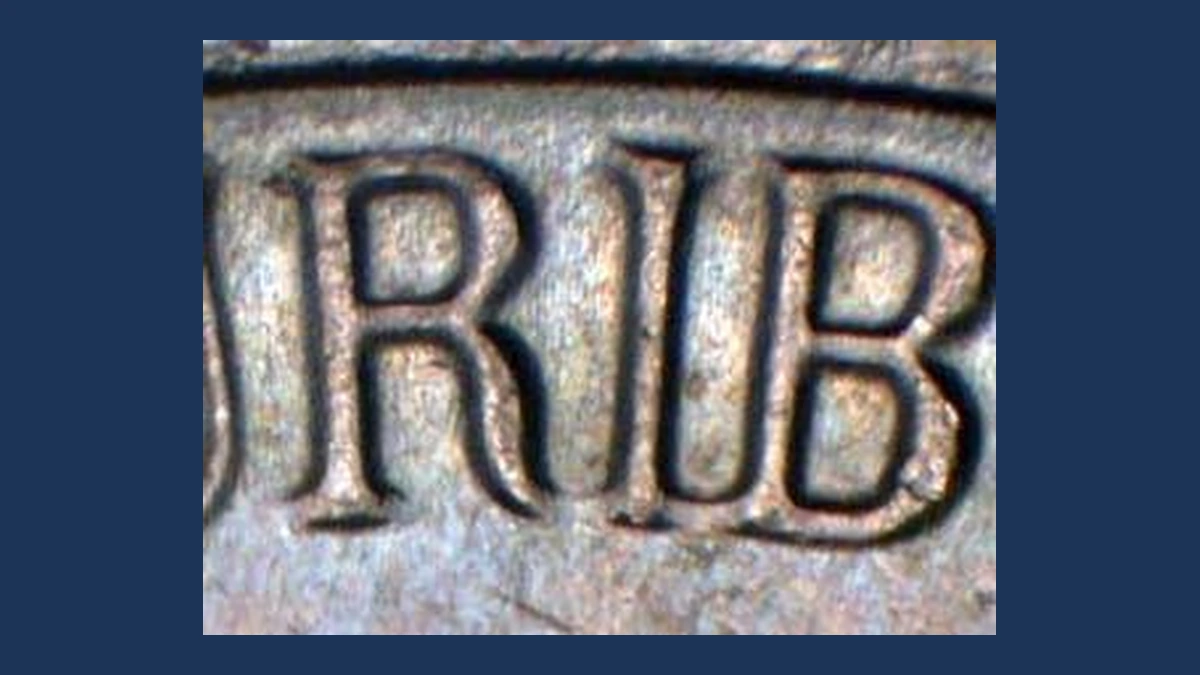
Small extra contours appear in E PLURIBUS UNUM above Monticello on two recorded 1991-D varieties. The letters were duplicated in the die, the steel tool used to stamp that face.
A single blow then copied the tool’s doubled detail onto the nickel. The coin did not need to move and receive a second strike.
The two examples are listed as WDDR-001 and WDDR-002. Both concern Denver nickels, so the D mint letter matters when matching them.
Flat ledges beside letters can instead come from movement during striking and should not be confused with these varieties.
Estimated Value
Estimate $5–$40 for clear examples with wear and $40–$100 for attractive unworn pieces matching a listed variety. These are estimated variety values, not reported auction records for the two catalog entries.
The small letter changes need to remain visible enough for comparison. A high grade without a matching doubled pattern is not the same purchase.
Ordinary flattened letter edges receive no doubled-die premium, even when a close-up makes their bright borders look dramatic.
How to Identify
Locate the D on the front before enlarging the motto on the back. With a 10× magnifier, compare E PLURIBUS UNUM against the two recorded Denver varieties.
The first has two small raised marks below Jefferson’s nostril; the second has a vertical tool line inside O in OF. These supporting marks belong to different examples, so do not demand both sets on one coin.
Inspect rounded extra contours instead of relying on a shiny, flattened ledge beside a letter. Check that the pattern remains visible as the light changes.
For a loose nickel, use a scale and calipers near the ordinary 5 g and 21.2 mm. Look around the plain edge for alteration and across the lettering for polishing that could distort its shape.
2. 1991 Jefferson Nickel Faint Outlines from the Opposite Design
A faint outline from the opposite face can appear beside the normal design. It forms after the two stamping tools strike each other with no metal disc between them.
That collision leaves marks on the tools, which later transfer to coins. Collectors call the process a die clash.
Clashes are reported for 1991 nickels, but a particular location must be matched to the actual coin. An unexplained line near the hair or building is not enough by itself.
This differs from pressing two finished coins together, which can leave a deep, backward impression.
Estimated Value
For recognizable 1991 clash traces, estimate $10–$100, rising to about $150 for a particularly clear pattern on attractive surfaces. These amounts assume that the unexpected lines match parts of the opposite design.
The range is an estimate for the reported category, not a transaction attached to a specific 1991 variety. Faint marks hidden by wear belong near the modest end.
A random scratch or pressure dent does not gain value merely because its outline resembles part of another design.
How to Identify
Make a mirrored copy of a normal nickel photograph and use it to compare the unexpected line with the opposite design. A clash mark should have a sensible shape and position when the two faces are aligned.
Use a 10× magnifier under angled light to distinguish a shallow transferred outline from a scratch cut through the surface. Look beyond the most suggestive fragment rather than matching one short line by imagination.
A loose nickel should remain near 5 g on a scale and 21.2 mm with calipers. Examine the plain edge and opposite face for squeezing damage, since later pressure can make misleading design impressions without any collision between Mint tools.
3. 1991 Jefferson Nickel Peeling or Missing Flakes of Metal
A narrow split may widen into a thin flap or a shallow missing patch. A weakness inside the coin’s metal can let a layer separate, an error called lamination.
Normal 1991 nickels are made from a uniform copper-nickel mixture. They do not have a copper center sandwiched between different outer layers.
The reported peeling therefore concerns separation within that mixture, rather than the loss of a normal outer coating. Dirt, corrosion, and scratches can imitate parts of the same appearance.
A retained flap is useful evidence and should be left attached to the coin.
Estimated Value
Allow an estimated $10–$150 for an identifiable 1991 nickel lamination. Clear separation with undamaged surrounding design supports more interest than a tiny rough spot.
This range applies to the reported metal flaw, not a nickel struck on a lighter blank intended for another coin. A low weight by itself cannot establish which problem occurred.
Wear, corrosion, and attempts to peel the flap can reduce the value. A loose fragment should stay with its original coin when possible.
How to Identify
Look across the affected area with low, sideways light so a thin lifted layer becomes visible. Through a 10× magnifier, follow its attachment into the surrounding metal without touching or prying at it.
Compare the surface inside a missing patch with nearby scratches and corrosion. A fresh scraped trench or a rounded impact pit requires a different explanation.
Calipers should touch intact parts when checking the normal 21.2 mm diameter, and a scale can compare a loose nickel with 5 g. A small detached flake may cause only a small loss.
Finally examine the plain edge for a split that continues into the affected face. Preserve the boundary as found; cleaning can destroy the difference between natural separation and later surface damage.
4. 1991 Jefferson Nickel Complete Design on an Expanded Coin
A nickel can spread wider than usual without losing its intended design. During a broadstrike, the collar ring fails to contain the blank as the stamping tools press it.
That ring normally sets the coin’s width and restrains the edge. Without full support, metal can flow outward and make an enlarged border.
The Smithsonian collection records a 1991-D broadstruck nickel. It provides a specific Denver example of this error, apart from general reports for the year.
A smooth edge does not establish the mistake. Ordinary nickels already have a plain edge.
Estimated Value
An estimated $25–$150 suits worn or marked 1991 broadstrikes, with $150–$300 for cleaner examples showing strong outward spread. These are whole-coin values.
A 1999-P broadstrike graded PCGS MS63 sold for $89 in March 2025. That unworn, later-year coin provides a comparison for the same process; the museum’s 1991-D specimen is not being assigned an auction price.
A flattened nickel damaged after minting does not qualify simply because its diameter has become larger.
How to Identify
The Smithsonian’s Denver example gives a useful whole-coin comparison. Begin with the placement of the complete portrait and building, rather than judging only the width of the border.
Measure a loose coin in several directions with calipers against 21.2 mm. Use a scale to check for roughly 5 g, since outward spread does not normally remove metal.
Now inspect the expanded border through a 10× magnifier. The raised lettering should fit the original strike instead of looking crushed by later pressure.
Follow the plain edge for folds, sharp lips, or recent tool marks. Missing design beyond the blank points toward an off-center strike; an enlarged outline carrying the intended design supports broadstriking.
5. 1991 Jefferson Nickel A Hollow or Missing Detail from Trapped Material
A local hollow can interrupt otherwise normal lettering or portrait detail. Something between the blank and a stamping tool blocked the design during the blow.
This is a struck-through error. Soft material may leave blurred detail, while a harder object can press a more defined shape into the surface.
The 1991 reports do not establish one particular trapped object. A narrow groove therefore should not automatically be called wire, nor a rough patch identified as cloth.
The rest of the design helps show whether the interruption was local or whether the coin simply wore down.
Estimated Value
Estimate $10–$75 for small, clearly mint-made interruptions and $75–$300 for larger, well-defined impressions. The surrounding surface needs to support the explanation.
These are estimated values for the reported 1991 type, rather than a price assigned to an identified piece of wire or cloth. A recognizable object outline can be easier to judge than a vague weak area.
Later scratches, dents, or missing detail caused by ordinary wear do not receive the same premium.
How to Identify
Compare the height of the nearby letters before examining the hollow itself. Strong detail immediately beside a weak patch suggests a local interruption, while broadly worn high points suggest circulation wear.
Use a 10× magnifier to inspect the boundary for a cut, dragged metal, or a lip thrown up by an impact. Those signs can explain a later dent.
If material remains attached, do not lift it. Photograph the contact area from several angles while keeping it intact.
A scale and calipers can check a loose coin near 5 g and 21.2 mm. Inspect the plain edge and the opposite face for squeezing or other damage associated with the hollow.
Name a specific trapped material only when the surviving shape or material actually supports it.
6. 1991 Jefferson Nickel Shallow Designs on Both Faces
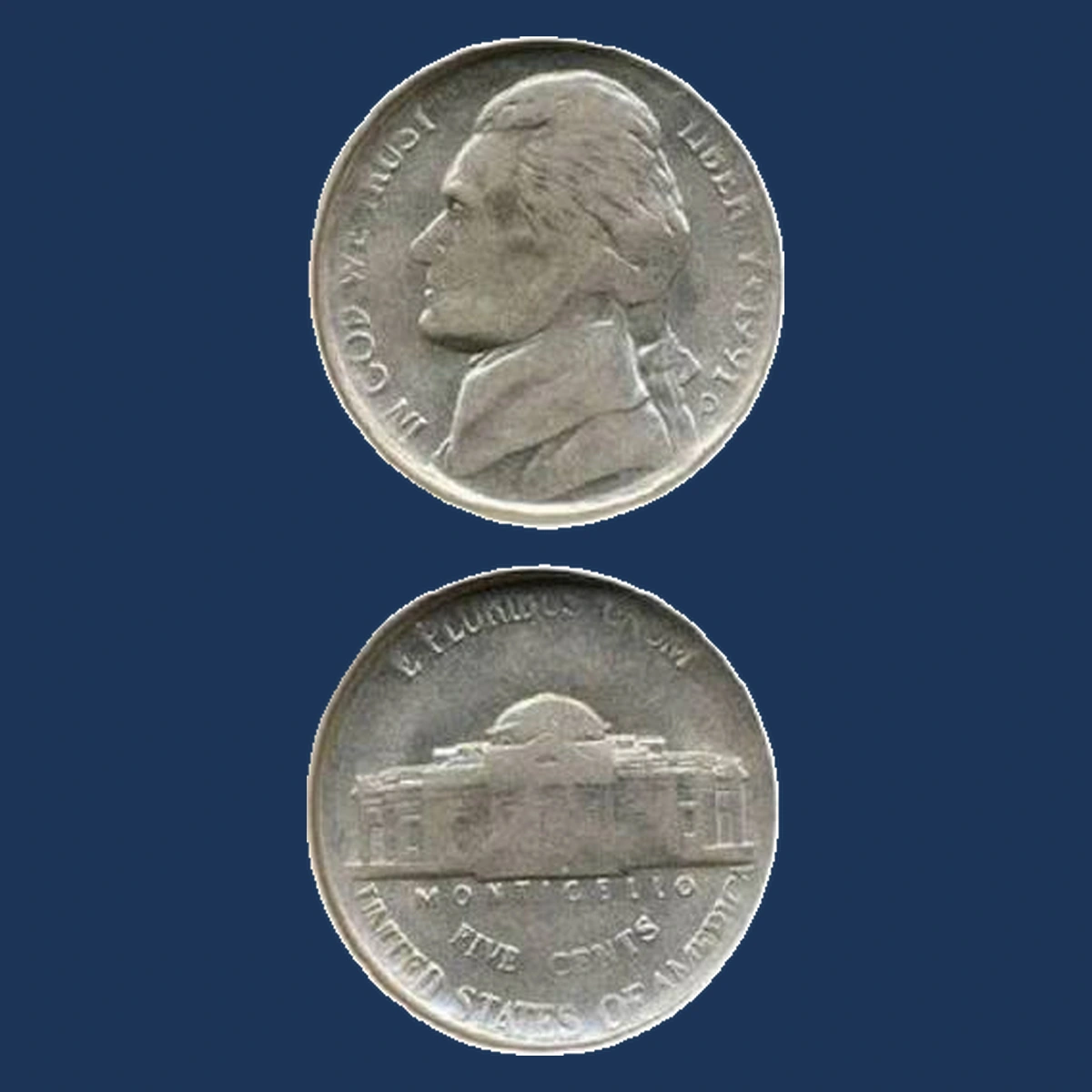
Both designs can remain unusually shallow when the press does not apply enough force. Metal fails to fill the deeper spaces inside the stamping tools, leaving parts of the intended design weak.
A reported 1991-D nickel was identified as a low-pressure strike by error specialist Mike Diamond. That diagnosis concerns the visible result of insufficient pressure.
The coin alone does not prove that a worker deliberately adjusted the press. Equipment trouble could also leave a weak strike.
Low pressure differs from heavy wear, which removes raised detail after a coin has entered circulation.
Estimated Value
For an authenticated low-pressure 1991-D strike, estimate $50–$350. A readable date with widespread, original weakness is more useful than a nearly featureless piece whose identity cannot be established.
This estimate assumes that the shallow design formed during minting. Marks, corrosion, or rubbing on the rest of the coin still affect its condition and price.
Do not add a special premium for an alleged press test without supporting evidence. The observed shallow strike is the feature being valued here.
How to Identify
Start with weight because missing metal can also leave an unusually thin-looking coin. A scale should put a loose, intact nickel near 5 g, with calipers showing roughly the normal 21.2 mm diameter.
Use a 10× magnifier on both faces, comparing the widespread weakness with the appearance of the surrounding surface. Heavy wear tends to smooth exposed high points, while low striking pressure may leave detail poorly formed from the start.
Inspect the plain edge for later flattening, then compare the coin with the discussed 1991-D example. A local greasy patch or a missing metal layer should not explain the overall weakness better than low pressure does.
7. 1991 Jefferson Nickel Straight Missing Edge with an Off-Center Design
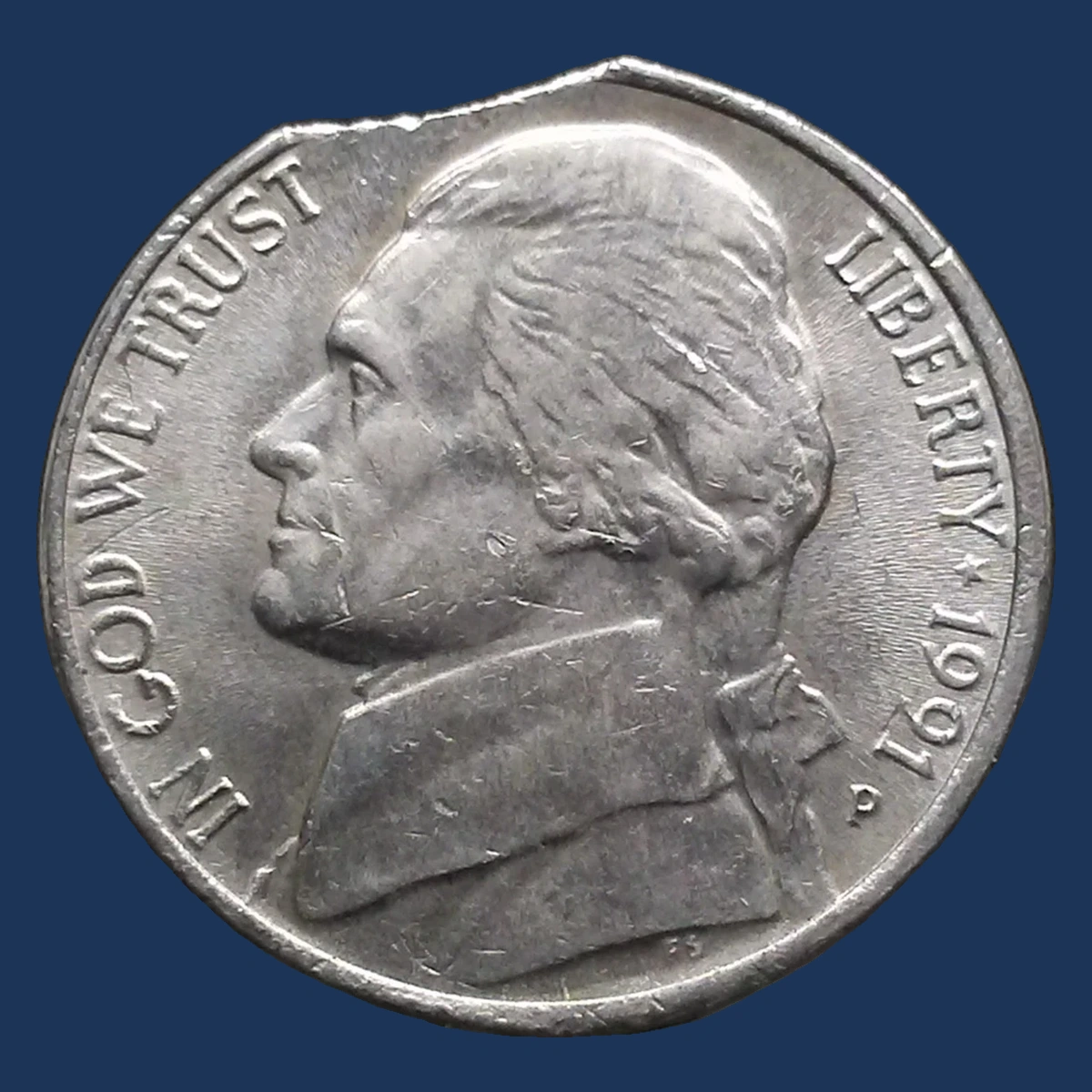
A straight missing section and a shifted design can appear together on one nickel. The first feature comes from an incomplete blank, while the second comes from that blank sitting out of position during striking.
A seller described a 1991-P example with both a straight clip and an off-center strike. These are two features of the same offered coin.
The metal missing at the straight edge differs from the plain metal left beside the shifted design. One area was absent before striking; the other remained present but did not receive the design.
Estimated Value
For a confirmed straight-clip and off-center 1991 nickel, estimate $25–$250, reaching about $500 for an attractive, strongly displaced example. This is a combined value for one coin.
A different 1999-P nickel with a twenty-percent curved clip and a five-percent off-center strike sold for $54 in March 2025. Its curved gap and measured displacement are not features to copy onto the reported 1991 piece.
Original edges and a readable date are more useful than an unsupported percentage claim.
How to Identify
Separate missing metal from unstruck metal with the coin in hand. Along the straight clip there is no disc; beside an off-center design there may still be a plain crescent.
Inspect both ends of the straight gap with a 10× magnifier for cuts through completed lettering or fresh filing marks. Then turn to the back and check whether its shifted impression fits the same off-center position.
Weigh a loose example against 5 g on a scale and measure intact spans against 21.2 mm with calipers. Both a genuine clip and a later cut lower the weight, so examine the surviving plain edge rather than accepting a low reading as proof of the error.
8. 1991 Jefferson Nickel A Smaller Blank Meant for a Cent or Dime
The large Jefferson design may run off the edge of a smaller disc. An unused blank intended for a cent or dime can receive nickel designs if it enters the wrong press.
The 1991 reports include both cent- and dime-blank types without establishing a single measured example. Their expected weight and metal differ from an ordinary five-cent blank.
A modern cent blank has a thin copper coating over zinc. A dime blank uses bonded metal layers, while a normal nickel has a uniform copper-nickel mixture.
An unused blank has no earlier Lincoln or Roosevelt design beneath Jefferson.
Estimated Value
Estimate $200–$800 for an authenticated 1991 nickel struck on an ordinary cent or dime blank. A clear date, natural edges, and reliable identification of the smaller blank support the comparison.
A 1995-P nickel on a dime blank sold for $336 in July 2022. Three 1999-P cent-blank examples brought $360–$588 in September 2024.
Those later-year sales guide the estimate; they are not 1991 transactions. A copper-colored coating added after minting does not create a wrong-blank error.
How to Identify
Check the material before choosing a weight standard. Modern cent blanks normally weigh 2.5 g, and modern dime blanks about 2.27 g; neither should automatically be called a 3.1 g blank.
Measure a loose candidate using a scale and calipers. The normal nickel is 5 g and 21.2 mm, compared with starting diameters near 19.05 mm for a cent and 17.91 mm for a dime.
A nickel strike can spread the smaller metal disc beyond those starting dimensions. Use a 10× magnifier around the edge for filing, added plating, or visible bonded layers.
Look for the larger design ending naturally at the boundary. The edge need not show dime grooves, because an unused dime blank struck with nickel tools is not a finished dime.
9. 1991 Jefferson Nickel Extra Impressions from Repeated Blows
Two portraits or sets of letters can overlap when a nickel receives another blow after moving. The later impression may partly flatten the earlier one rather than leaving two complete designs.
Repeated strikes are reported for 1991 nickels. The individual coin must establish how it moved, so no fixed second-strike angle applies to the whole year.
A small second impression can remain near an edge, while a closer repeat can crowd the original lettering. Those appearances differ from fine doubling already present in a stamping tool.
Later squeezing can also leave confusing extra shapes.
Estimated Value
A recognizable 1991 double strike can be estimated at $150–$1,500, depending on movement, preservation, and the clarity of both impressions. Visible overlap matters more than a dramatic seller description.
For comparison, a 1995-P broadstruck, repeatedly struck nickel sold for $154 in December 2025. That later coin combined outward spread with extra blows, showing that a genuine repeated strike can still sell near the modest end.
The reported 1991 type has no specific sale amount assigned here.
How to Identify
Choose one letter or portrait outline that you can follow through the overlap with a 10× magnifier. Check where a second raised impression crosses it rather than counting every shadow as another strike.
Look on the opposite face for an impression that fits the same movement. A matching displaced design is more useful than a flat shelf beside one isolated letter.
Compare a loose coin’s weight with 5 g using a scale. Take caliper readings in several directions against 21.2 mm because extra blows can distort the outline.
Examine the plain edge for fresh pressure marks or trimming. Where the order of blows remains visible, the newer design should interrupt the older one; do not invent a sequence from areas that were flattened beyond recognition.
10. 1991 Jefferson Nickel A Cup Shape or a Strike through a Coin Cap
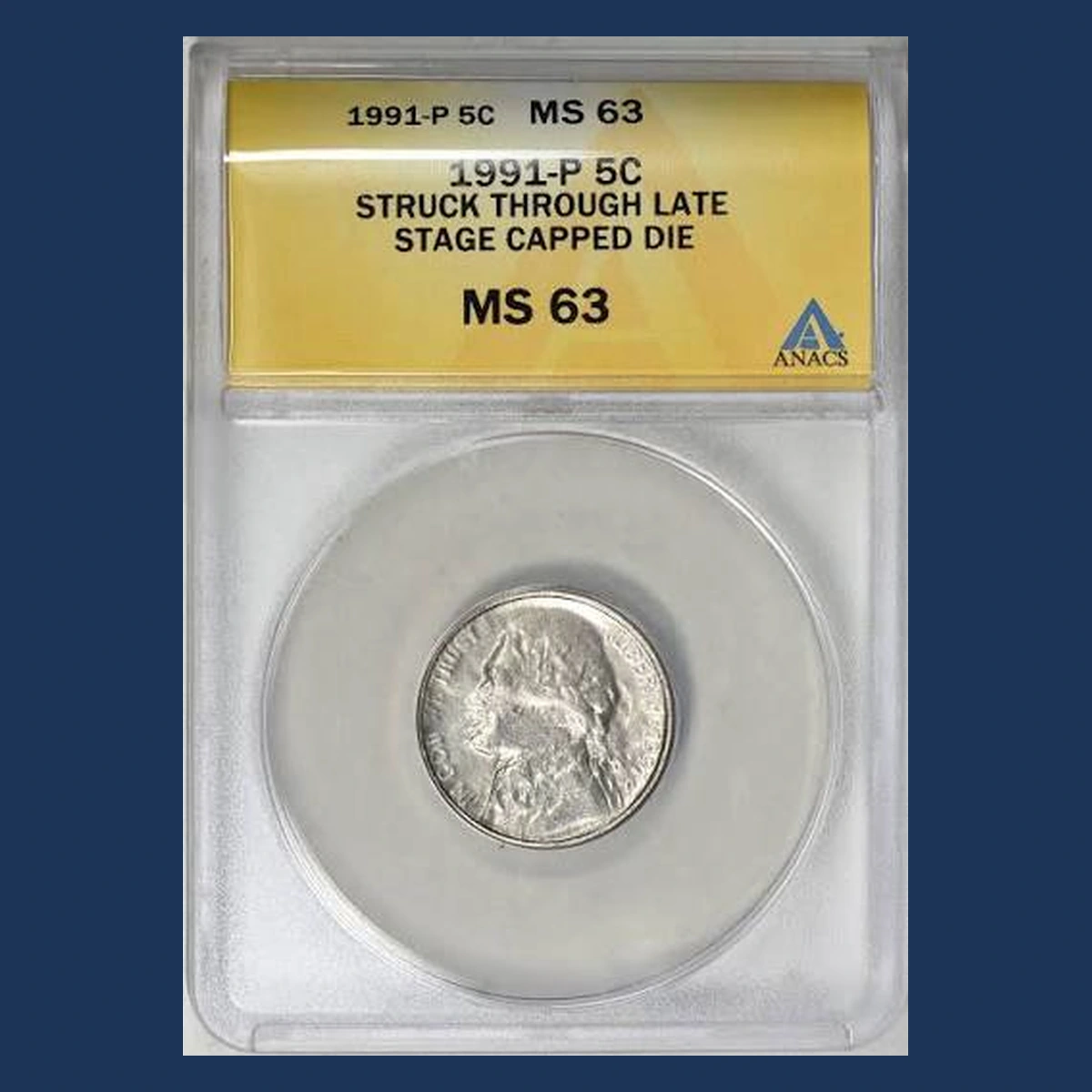
A cup-shaped nickel and a nickel with a blurred design can result from related events in the press. A coin that sticks to a stamping tool can spread around it and form a cap.
Later blanks struck beneath that covering may receive weak or distorted impressions. They are cap-struck coins, rather than necessarily being the cup-shaped cap itself.
The 1991-P report mixes these descriptions, so the visible shape must determine which form a coin actually shows. Tall stretched walls support a cap, while a flatter blocked impression needs a different comparison.
Estimated Value
For a confirmed 1991-P cap-struck nickel, estimate $50–$300. A genuine cup-shaped cap instead fits an estimated $300–$2,000, depending on depth, preservation, and the remaining design.
A 2000-D cap-struck nickel sold for $84 in September 2025. That sale supports the flatter blocked-strike comparison, not the value of a deep cup.
These alternatives prevent one mixed description from setting the price. Match the actual object to its shape before applying either estimated range.
How to Identify
View the coin from the side before studying Jefferson. Does it have a real stretched wall, or does an otherwise flat face simply carry a weak impression?
Under a 10× magnifier, a possible cap should show natural metal flow into its walls. Sharp folds, tool marks, or a crushed rim can reveal later bending instead.
For the flatter form, compare weak front detail with the opposite design. Ordinary wear or a local blocked letter does not by itself prove a trapped coin covered the tool.
Record a loose example on a scale against the 5 g starting standard. Use calipers gently around its altered outline, remembering the ordinary 21.2 mm diameter and plain edge.
Never flatten a cup to measure it. Preserve its shape for a specialist’s inspection.
11. 1991 Jefferson Nickel Designs Stamped over a Finished Cent or Dime
An upside-down Lincoln Memorial crosses Jefferson on one recorded 1991-P nickel. On its back, traces of LIBERTY and Lincoln’s head remain beside Monticello.
Those details came from a finished cent that received a later nickel strike. The cent’s original date is not established by the clear 1991 nickel date.
A separate example was struck over a 1990-P dime and graded NGC MS64, an unworn grade. It combines nickel designs with remnants of Roosevelt’s coin.
These double-denomination errors carry two different face-value designs. They are distinct from nickels struck on unused smaller blanks.
Estimated Value
The NGC MS62 cent overstrike sold for $432 in September 2019. Another 1991-P cent overstrike graded PCGS MS64 brought $660 in December 2024.
Estimate $350–$2,000 for clear cent overstrikes and $1,500–$6,500 for convincing dime overstrikes. A 1999-P nickel over a struck dime brought a reported $5,462.50 in 2008, providing a different-year comparison.
Prices depend heavily on how clearly the older design survives beneath the nickel impression.
How to Identify
On the recorded cent overstrike, locate the inverted Memorial across Jefferson before turning to the back. A 10× magnifier should reveal cent lettering and part of Lincoln near the left side of Monticello.
For the separate dime example, match surviving Roosevelt or torch details to a 1990-P dime. Do not transfer that date to the underlying cent.
Check the older raised designs where the later impression crosses them. A mirror image pressed into a finished coin is a different kind of mark.
Weigh a loose piece and measure it with calipers against the nickel’s normal 5 g and 21.2 mm. A dime begins at 2.27 g; cents have different weights depending on their date.
Inspect the edge for plating or filing while allowing for spread caused by the second coin design.
Conclusion
Estimated 1991 nickel error values run from $5 to $6,500, with small design varieties and major two-denomination mistakes occupying very different levels. The known Denver doubled letters belong on the back motto, while the Philadelphia overstrikes preserve parts of older coin designs.
Use both faces and the edge to choose the right explanation. Then compare like with like: a weak strike, a cup-shaped cap, and a thin wrong-blank coin require different evidence.