1979 Nickel Error List with Pictures

A tiny 1978 date behind Jefferson’s head tells an unusual story: a finished penny entered the nickel press. One resulting 1979 nickel brought $2,990 in January 2011.
This 1979 nickel error list also covers missing metal, weak letters, and coins shaped like cups. Estimated prices run from $5 to $4,000, depending on the mistake and the coin’s condition.
Read on to compare those features and see which checks separate a Mint error from later damage.
1. 1979 Jefferson Nickel Weak or Missing Letters from a Blocked Tool
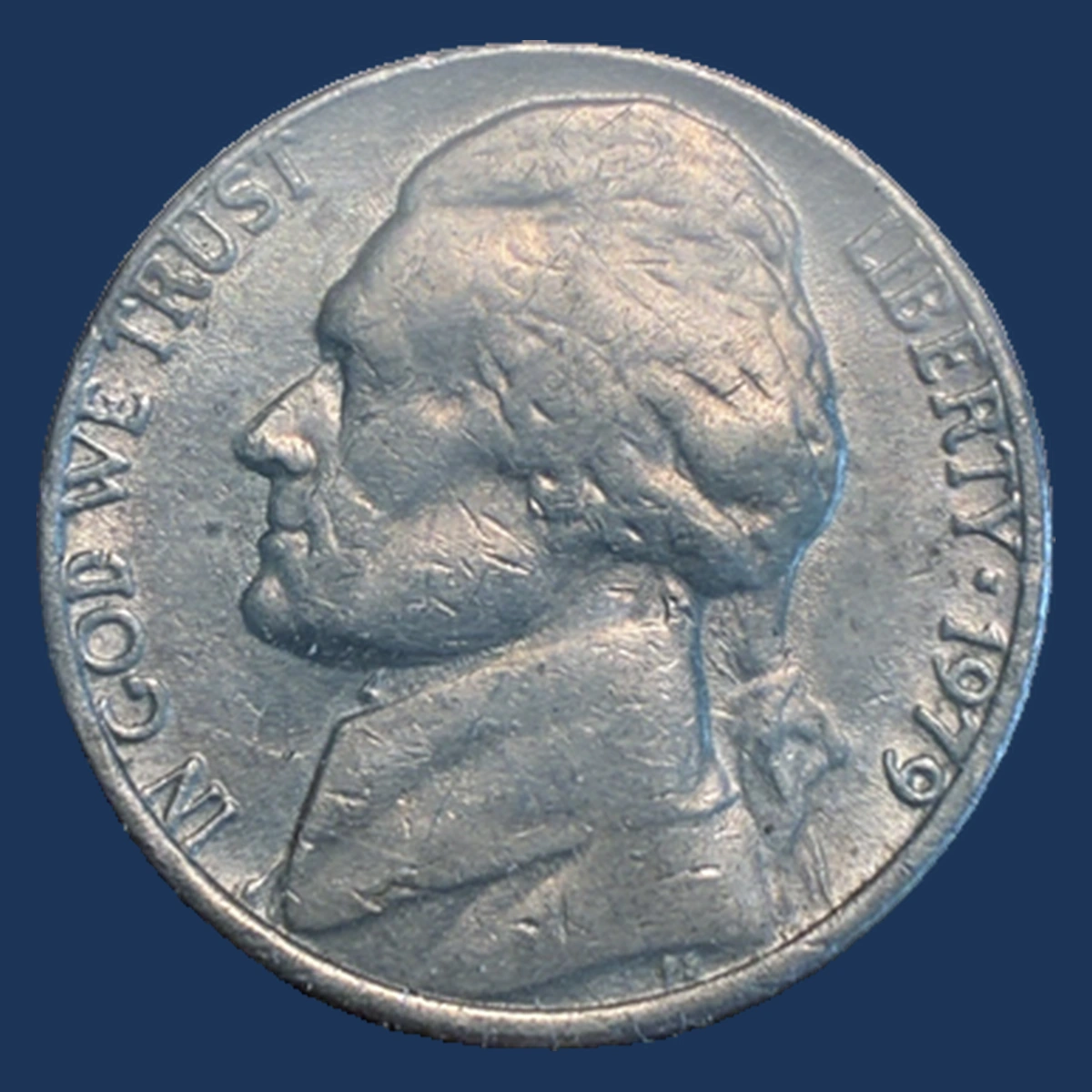
Letters may fade while the metal beneath them stays in place. Grease or dirt packed into a die, the steel tool that stamps the coin, can prevent parts of its design from forming.
The result is called a grease-filled die error. A 1979 year guide reports this type without identifying a particular affected word or mint.
Wear also makes letters disappear, but it usually affects other high points too. Compare the surrounding portrait and building before deciding that one weak area came from a blocked tool.
Estimated Value
Estimate $5–$40 for modest confirmed examples and $40–$100 for stronger missing design on an otherwise well-preserved coin. These are estimates for the reported type, not prices for a particular certified 1979 specimen.
A missing letter is generally less desirable than a large, clearly original blank area. Worn or damaged coins do not gain this premium simply because some lettering has become difficult to read.
How to Identify
Place the coin beside an ordinary 1979 nickel and compare the portrait, lettering, and building together. If all the highest details are smooth, circulation wear may explain the missing letters.
A 10× magnifier helps you inspect the weak area without scraping it. Look for continuous original surface instead of filing lines or a sunken patch.
The metal itself should remain present. Use a scale and calipers on a loose coin to check roughly 5 grams and 21.2 millimeters.
Examine the plain edge for heavy damage as well. A coin battered around its entire outline needs a different explanation from one small area of missing design.
Photograph the weak detail and nearby sharp features in the same light for a specialist to assess.
2. 1979 Jefferson Nickel A Reported Second D beside the Mintmark
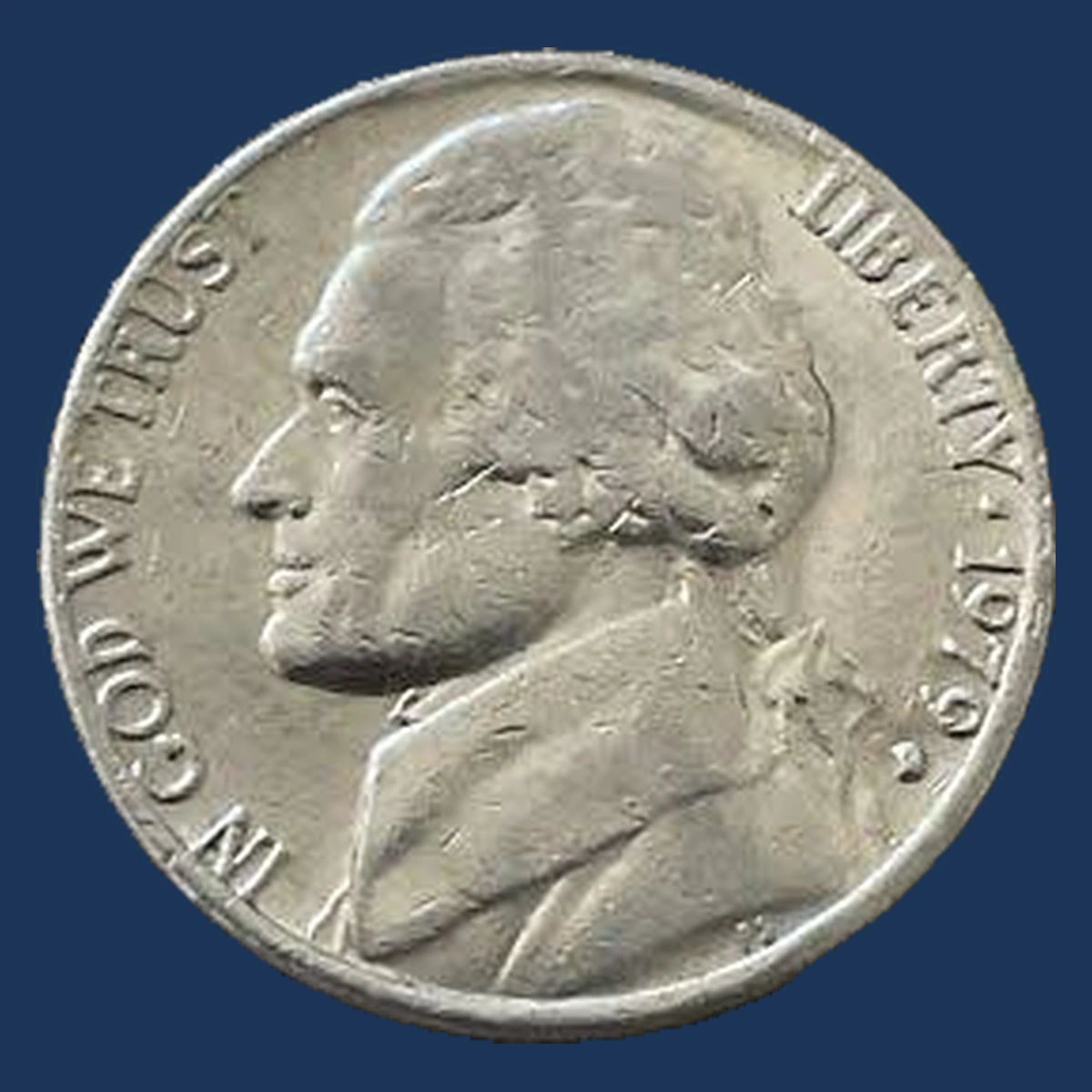
A second curved edge beside the D may look like another mintmark. In this period, a mintmark could be punched into a working steel tool more than once.
A shifted punch left overlapping shapes that then appeared on coins. Collectors call this a repunched mintmark, or RPM.
A year guide describes a 1979-D example with the extra impression southeast of the main D. That report needs a matching nickel specimen before its proposed catalog number can be accepted.
A flat shelf or a scratch beside the D is a different feature.
Estimated Value
For a verified minor repunched D, use an estimated $10–$50 on worn coins and $50–$150 on attractive unworn examples. The estimate assumes an authentic repeated mintmark, not just a thick-looking letter.
The reported 1979 variety has no established sale attached to this range. Its proposed number should not add a premium until the actual coin matches an accepted nickel listing and photographs.
How to Identify
Find the D beside the date, since Philadelphia nickels normally have no mintmark in 1979. Photograph it through a 10× magnifier, then examine the reported lower-right area for a second curved shape.
Compare that shape with a documented nickel example rather than a similarly numbered Lincoln cent variety. Flat ledges, scratches, and reflections can create a misleading extra edge, so move the light before judging the image.
Use a scale and calipers to record about 5 grams and 21.2 millimeters for a normal loose nickel. Check the plain edge and the surface around the D for damage or signs of added metal.
3. 1979 Jefferson Nickel Faint Outlines from the Opposite Design
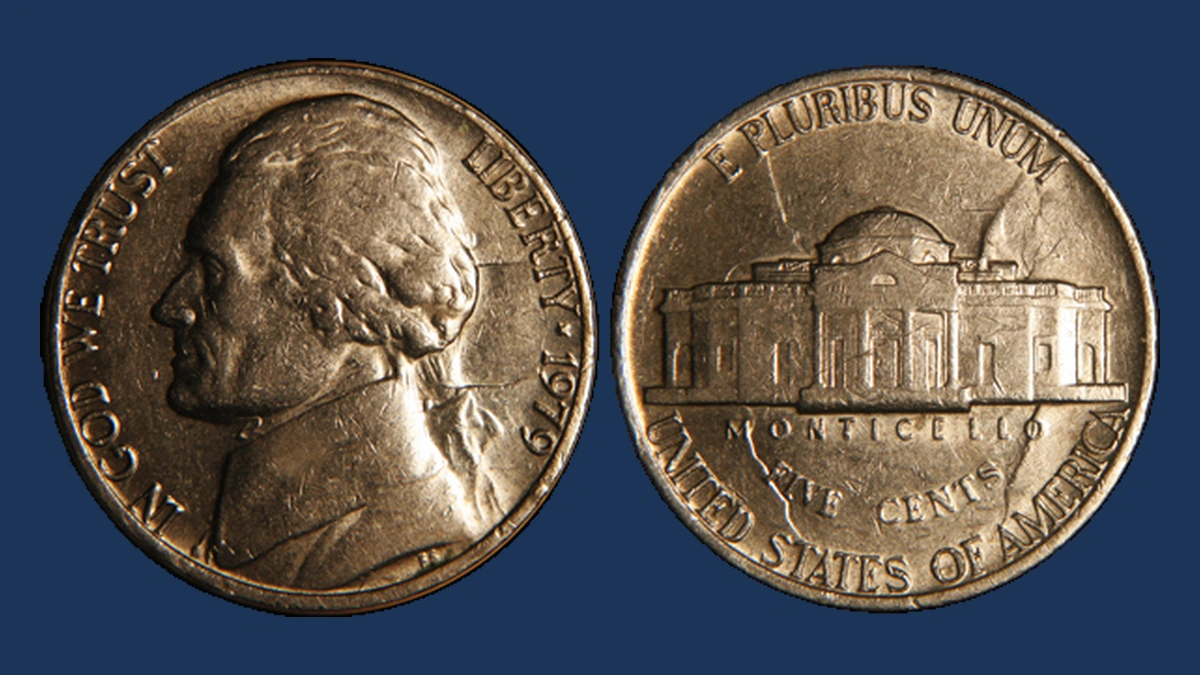
A faint outline can appear where no such feature belongs. It may come from the other side’s design rather than from something scratched into the coin.
When the two stamping tools meet without a blank between them, they can damage each other. Later coins can carry traces of that contact, called a die clash.
A 1979 year guide reports clashing, but an exact location is not established for every example. Random lines inside Monticello should not automatically be called transferred portrait details.
The important question is whether the unexpected outline fits the opposite design.
Estimated Value
For confirmed 1979 clashes, estimate $10–$75 for faint but recognizable examples and $75–$200 for strong outlines on attractive coins. These ranges are estimates for the visible effect rather than a quoted 1979 auction result.
Clarity matters more than the number of unrelated scratches. If a coin also has a rim break, assess its overall appearance instead of adding the highest estimated price for each feature.
How to Identify
An ordinary loose nickel measures about 21.2 millimeters with calipers and weighs 5 grams on a scale. Inspect its plain edge for a seam or squeezing before interpreting unexpected lines.
Now compare the suspected outline with the opposite design. Try to identify the part of the portrait or building that could have produced it.
Low side lighting through a 10× magnifier helps show the whole shape. Several matching curves are more useful than one isolated straight mark.
Monticello already has fine architectural lines, so compare a normal nickel too. Keep the original surface untouched.
Photograph the suspected transfer and its matching design feature together. An expert can check whether the two shapes fit contact between the stamping tools.
4. 1979 Jefferson Nickel Unusual Color from Heating before Striking
Brown or coppery color can cover a nickel even when it was made from normal nickel metal. Heating before striking can change the surface when the conditions are wrong.
That preparation step is called annealing. A 1979-D example was graded PCGS MS63 with a mis-annealed description.
The coin is still made from a uniform copper-nickel alloy. It does not have a separate outer layer that can go missing like the layers on a modern dime.
Later fire, chemicals, and added plating can also change color. Appearance alone cannot establish when the change happened.
Estimated Value
The PCGS MS63 1979-D example sold for $111 in June 2023. For authenticated coins of this type, estimate $40–$125 with light wear and $125–$250 for attractive unworn pieces.
The sale is a useful guide to an ordinary graded example, not a guarantee for every brown nickel. Color caused by later heating or plating does not qualify for these error estimates, even when it looks dramatic.
How to Identify
Check the weight before treating coppery color as evidence of a penny blank. A normal loose nickel should be near 5 grams, with a diameter around 21.2 millimeters on calipers.
Those measurements separate many small copper-blank errors from full-size colored nickels. They do not establish whether the color formed at the Mint.
Under a 10× magnifier, compare the color across the raised design, flat areas, and plain edge. Peeling coating, blistering, or obvious heat damage calls for a different explanation.
Leave the surface untouched and compare it with a certified mis-annealed example. A specialist needs the original surface to distinguish pre-strike heating from later treatment; photographs of color alone may not settle that question.
5. 1979 Jefferson Nickel Reported Doubled Front Lettering
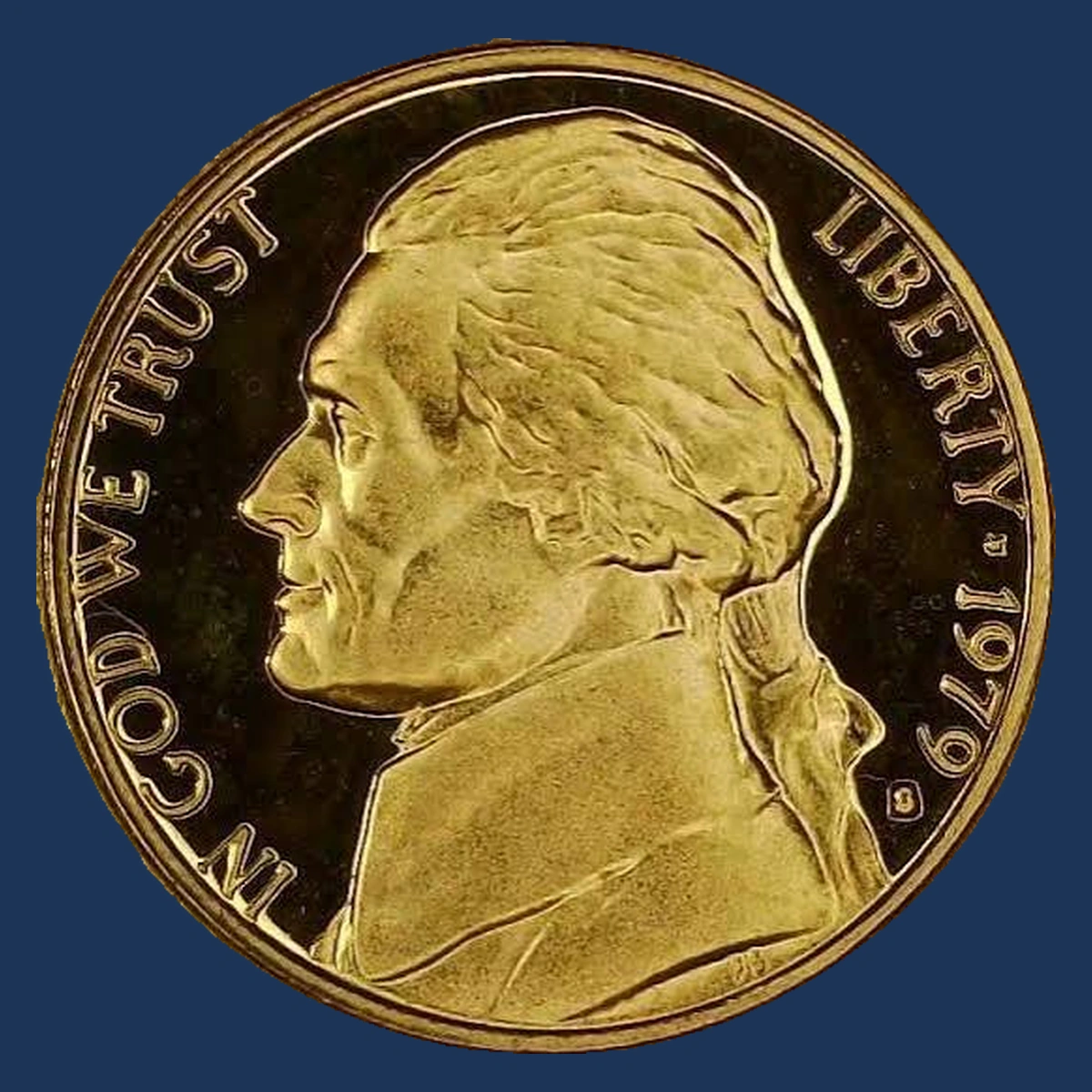
Extra outlines around letters can make the front design appear doubled. A true doubled die has the repeated design in the stamping tool itself, so more than one coin can show the same pattern.
This differs from movement during a single strike, which can leave flat steps beside letters. Damage and reflections can imitate extra edges too.
A 1979 error guide includes a doubled front design. The report does not establish a particular numbered nickel variety or a dependable set of matching marks.
A candidate needs more than one enlarged letter to support that identification.
Estimated Value
Estimate $20–$100 for a verified minor doubled front design and $100–$300 for a strong, attractive example. These figures apply only after the repeated design has been identified as a genuine doubled die.
They are working estimates, not a claimed sale for the unresolved 1979 report. Flat strike doubling is common and generally does not receive the same premium, regardless of how large it looks in a close-up.
How to Identify
Photograph several affected letters at the same angle through a 10× magnifier, looking for split corners or rounded extra edges. A scale and calipers can also check a loose coin against the normal 5 grams and 21.2 millimeters.
Tilt the coin so reflections move, and inspect its plain edge for damage or signs of squeezing. Flat, shelf-like steps beside the letters point toward movement during striking rather than a doubled design in the tool.
Before comparing another example, record the date and mintmark, if present, since matching letters must belong to the same issue. Ask for a variety assessment before paying extra for the reported doubled die.
6. 1979 Jefferson Nickel A Wide Coin with the Whole Design
A broadstrike can look larger than the nickel beside it while still carrying the whole design. The metal spread outward because the surrounding restraining ring, called the collar, did not hold it normally.
The design does not need to sit perfectly in the middle. What matters is whether the full design remains, unlike a strike that misses part of the blank.
A 1979 example graded ANACS MS60 Details appeared in an auction group. Its counting-wheel damage is a separate later problem, not the cause of the extra width.
Estimated Value
Use an estimated $25–$100 for worn or marked broadstrikes and $100–$300 for attractive unworn examples. The complete design and amount of natural spreading guide the comparison.
A 1987-P broadstrike graded ANACS MS64 sold for $53 in December 2011, providing a different-year example of this type. The 1979 coin with counting-wheel damage should not inherit a group-lot price as though it sold by itself.
How to Identify
Start with calipers on a loose coin and compare several widths with the normal 21.2 millimeters. A scale reading near 5 grams helps show that the wider shape still contains approximately a nickel’s worth of metal.
Now check the entire outer lettering on both faces. Missing outer design can point to an off-center strike instead of a full broadstrike.
Use a 10× magnifier to inspect the plain edge and the area beyond the design. Rounded spreading should not be confused with a thin hammered edge.
Counting-machine scrapes can run across otherwise original surfaces. Keep those scratches separate from the enlarged outline, and compare the whole coin with an authenticated broadstrike rather than relying on width alone.
7. 1979 Jefferson Nickel Missing Edge Sections, Sometimes with a Shifted Strike
A clipped nickel has metal missing from its outline. The disk was incomplete before striking, so the press could only place a design on the metal that remained.
Recorded 1979 examples include a straight clip estimated at ten percent. A Denver coin has two curved clips together with an off-center strike.
A different Denver example combines an approximately seven-percent straight clip with a ten-percent off-center strike. Those percentages describe different features on the same coin.
The empty edge gap and the unused metal beside a shifted design should not be mistaken for each other.
Estimated Value
Estimate $15–$100 for modest clips and $100–$400 for striking combinations with clear gaps and an off-center design. Original boundaries and a readable date are especially helpful.
A 1997-P nickel with a twenty-percent clip sold for $124 in March 2025, a useful different-year comparison. The 1979-D straight-clip combination appeared in a three-coin lot, so its individual value cannot be found by assigning or dividing the lot total.
How to Identify
A clip interrupts the physical outline, while an off-center strike leaves unused metal that is still part of the coin. Separate those two areas when a specimen shows both.
Weigh a loose coin against 5 grams and use calipers across intact spans against 21.2 millimeters. A low weight alone cannot distinguish an original gap from a later cut.
Inspect the plain edge and both ends of each opening with a 10× magnifier. Saw marks or fresh cuts through finished letters suggest damage after striking.
A weak border opposite a clip can support the identification, but it is not equally visible on every genuine example.
Photograph the entire outline rather than just the largest gap. The Denver coin with two curved clips and the one with a straight clip need separate comparisons.
8. 1979 Jefferson Nickel Raised Metal Joined to the Rim
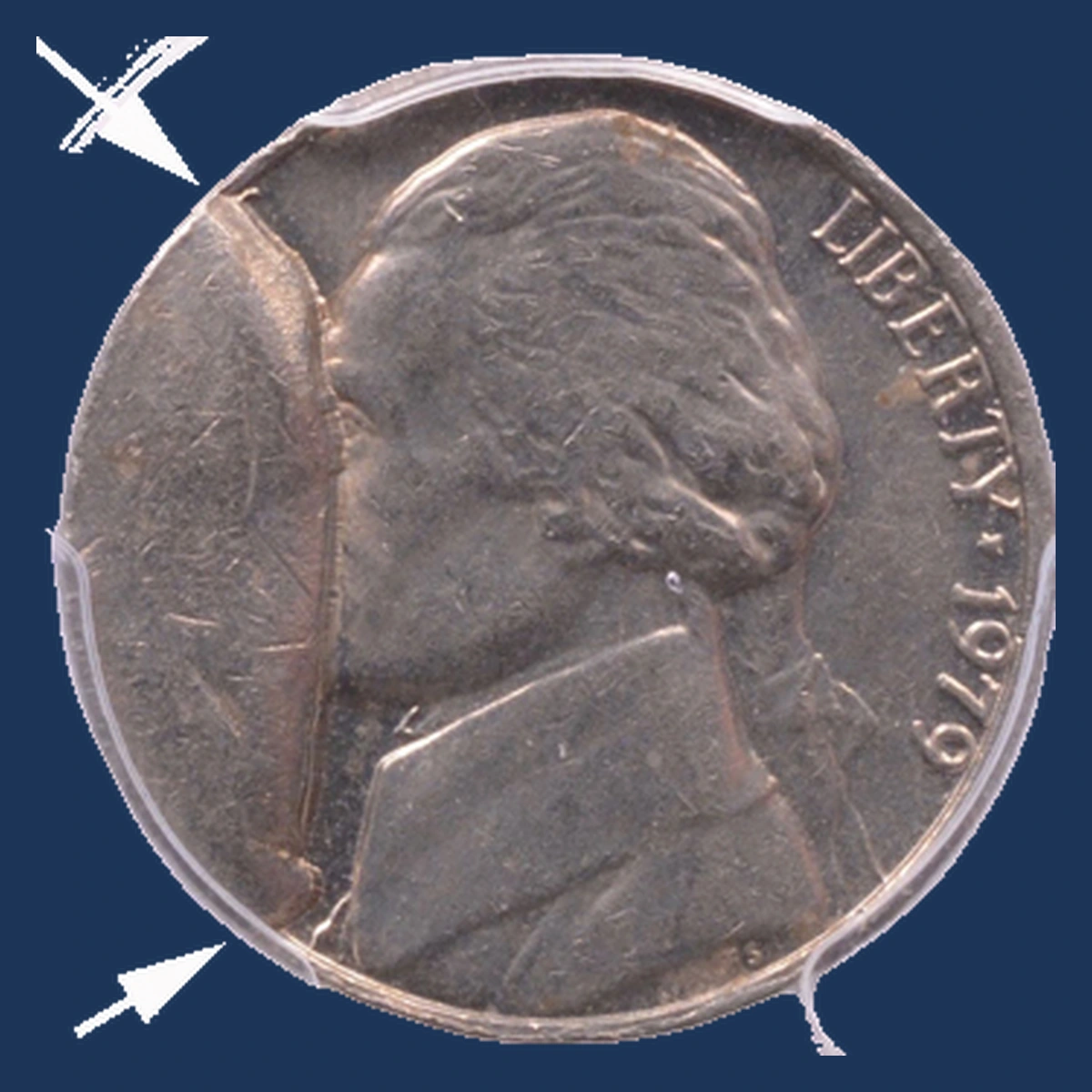
A raised patch can swallow part of the border and nearby design. It forms when a piece breaks from a stamping tool and coin metal fills the newly opened space.
Collectors call a rim-connected patch a cud. Separate 1979 Philadelphia and Denver examples appear in specialist listings.
An ANACS MS64 auction coin and a cleaned AU58 Details dealer coin also carry major-break descriptions. Cleaning affects the surface, but it did not create the original raised patch.
The shape and position must be matched on the actual coin; not every listed example has the same break.
Estimated Value
For genuine rim breaks, estimate $20–$150 on worn or cleaned examples and $150–$600 on attractive coins with a strong patch. Size, visibility, and surface quality all matter.
A lightly worn 1983-P example sold for $63 in July 2022, offering a lower-priced comparison from another year. These estimates do not assign the same value to every 1979 catalog listing or treat cleaning as an additional Mint error.
How to Identify
A cud redistributes metal within the coin rather than adding a new piece. On a loose candidate, use a scale and calipers to compare its weight and size with 5 grams and 21.2 millimeters.
With side lighting and a 10× magnifier, look for a raised patch joined to the rim. Inspect the adjacent plain edge for a dent, seam, or added metal.
Then turn the coin over. Detail opposite the patch can be weak because metal flowed into the broken tool’s opening.
Keep cleaning scratches separate from the original raised shape. Match the patch’s complete boundary with a documented coin from the same mint before selecting a catalog number.
9. 1979 Jefferson Nickel A Large Unstruck Crescent beside the Design
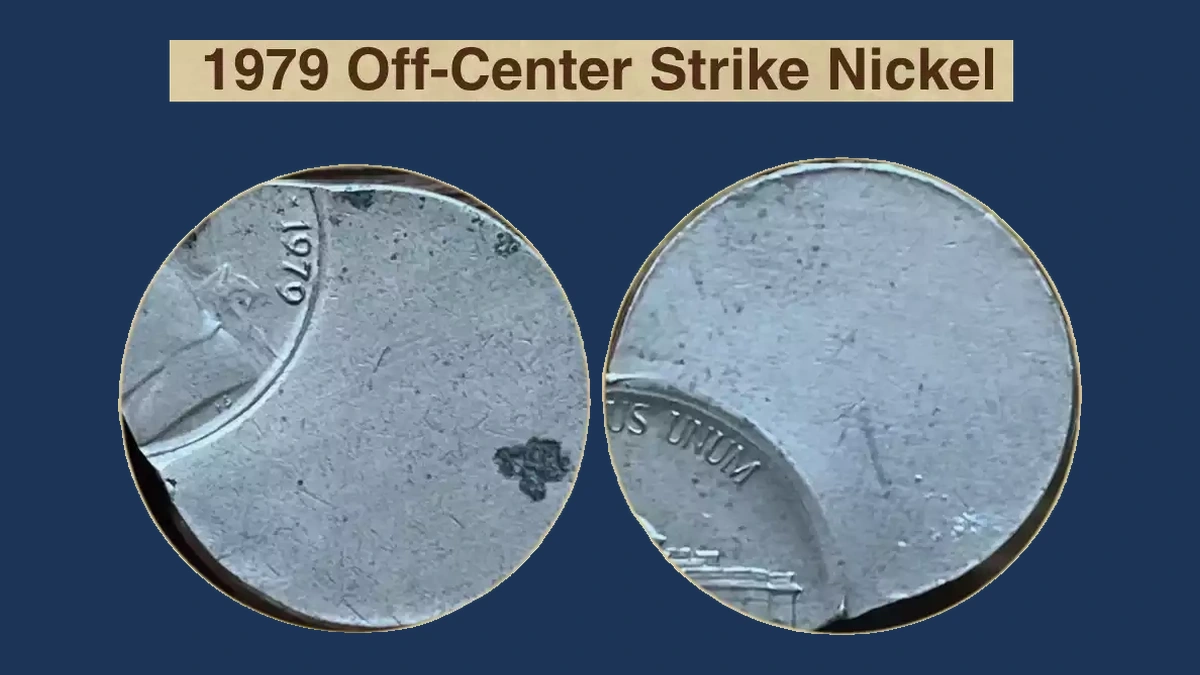
More blank metal than design can remain on a strongly off-center nickel. The metal disk missed its normal position, and the stamping tools caught only part of it.
An ANACS MS63 Philadelphia example is described as sixty percent off center toward about eleven-thirty. Its lack of a mintmark is normal for a Philadelphia nickel of this year.
The percentage refers to the amount of design missing, not to metal cut away. The unused crescent remains attached to the struck portion.
A readable date makes a dramatic example much easier to collect by year.
Estimated Value
Estimate $40–$150 for modest off-center strikes and $150–$750 for dramatic, attractive examples with readable dates. A clear year can be more useful than a slightly larger estimated percentage.
A 1999-D nickel struck sixty-five percent off center sold for $75 in September 2024. That different-year sale shows why a large shift alone does not guarantee a high price; the 1979 range also allows for condition and visual appeal.
How to Identify
Confirm that 1979 is readable and photograph it with the complete outline, rather than assigning a year to an undated fragment. The recorded strike lies near eleven-thirty, between the top and upper left with Jefferson upright.
Compare both faces through a 10× magnifier, checking the transition from design to unused metal for grinding or other damage. The blank crescent should be an original surface, not an area where someone removed lettering.
A scale can compare a loose coin with 5 grams even when its outline is irregular. Use calipers against the normal 21.2-millimeter size and inspect the plain edge for trimming or hammering.
10. 1979 Jefferson Nickel A Hole Formed in Defective Metal
A hole through a nickel does not always come from a drill. A defect in the original metal can leave an opening that survives the strike.
Heritage sold a 1979 example described as a blow-hole defective planchet. Planchet means the metal disk prepared for striking.
PCGS graded that coin AU58, indicating very light wear. Its description does not justify assigning the same cause to every holed nickel.
The opening’s boundary matters most. Metal shaped during striking looks different from a bore cut through an already finished coin, though a close examination is needed.
Estimated Value
The PCGS AU58 1979 blow-hole example brought $253 in June 2008. Use estimated ranges of $150–$400 for worn genuine examples and $400–$1,000 for attractive pieces with clearly original openings.
That older sale supports the type’s collector interest, while the ranges allow for condition and appearance. An ordinary drilled nickel does not receive this premium, and a larger hole is not automatically a more valuable Mint defect.
How to Identify
Do not put a probe through the hole or smooth its rim. The untouched boundary carries evidence of when the opening formed.
If the coin can be handled safely, weigh it on a scale against the normal 5 grams. Missing metal may lower the result, but drilling would also remove weight.
Use calipers across intact spans against 21.2 millimeters and inspect the plain outer edge. Leave the opening itself untouched.
A 10× magnifier and angled light help show circular cutting marks, sharp burrs, or a fresh bore through finished details.
Compare the nearby design with the opening’s boundary to see whether they were shaped together during striking. Submit a convincing candidate for professional authentication rather than accepting any hole as a Mint defect.
11. 1979 Jefferson Nickel The Nickel Design on a Copper Penny Blank
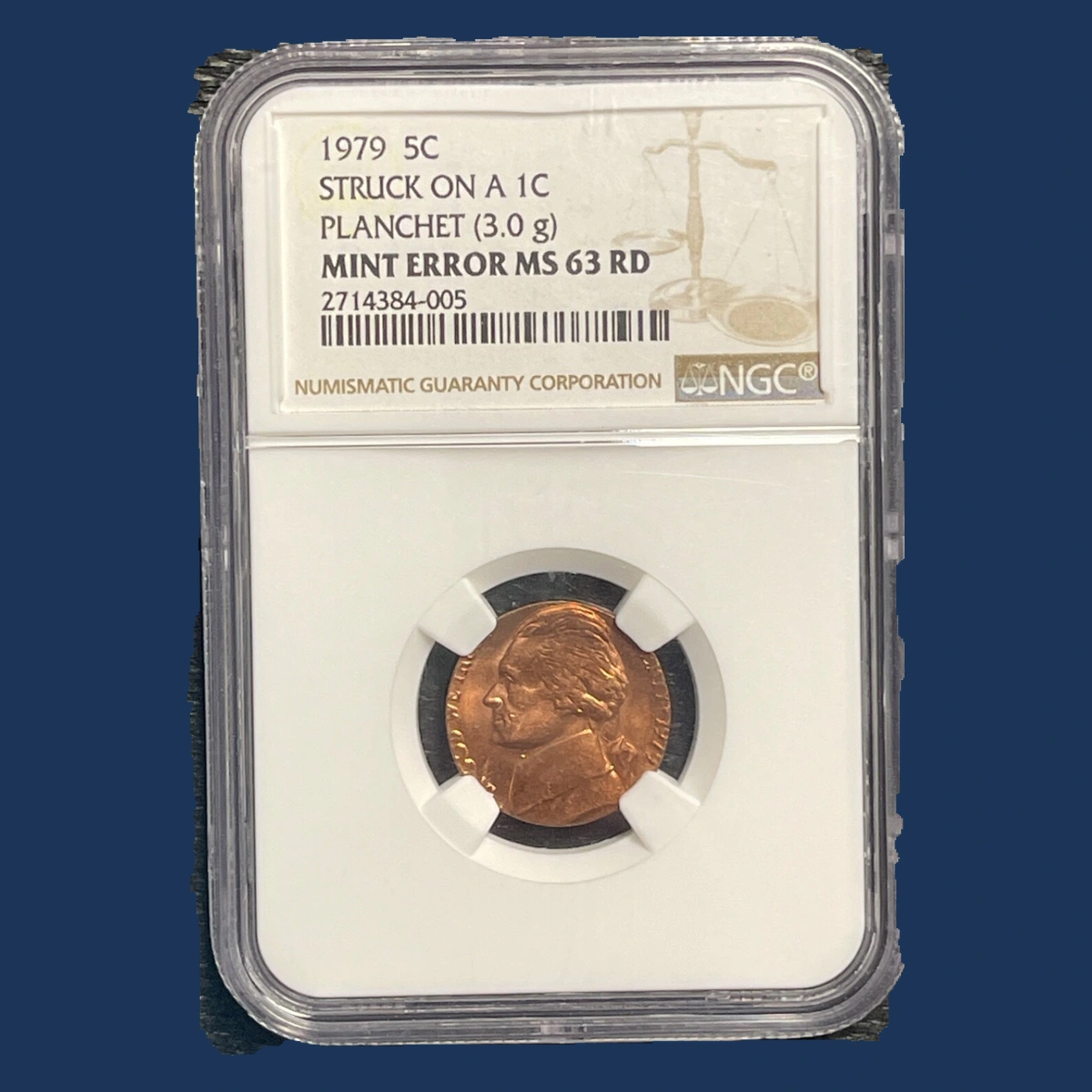
Jefferson’s design can run out of room on a small brown or reddish disk. A penny blank entered the nickel press, so parts of the larger design missed its edge.
The penny metal used then weighed about 3.11 grams, not the 2.5 grams of later zinc cents. Recorded examples include a Philadelphia coin at 3.1 grams and a Denver coin at 3.04 grams.
A separate Denver example was described as a defective cent blank at 3.2 grams. Its flaw should not be explained as missing zinc simply from that weight.
Estimated Value
A 1979-D cent-blank error graded ANACS MS64 Red brought $516 in June 2025. Another Denver example, NGC MS65 at 3.1 grams, sold for $552 in June 2024.
Estimate $200–$500 for worn or less attractive coins and $500–$1,500 for strong unworn examples. The defective-blank combination needs its own condition assessment; a flaw does not automatically improve a coin’s value over a sound copper blank.
How to Identify
Place the loose coin on a scale before judging its color. A result around 3.1 grams is much closer to a contemporary penny than to a normal 5-gram nickel.
Use calipers to compare its size with a penny’s 19.05-millimeter starting blank and the nickel’s normal 21.2 millimeters. Striking can spread the smaller disk, so measurements should support the visible design cutoff.
Examine the plain edge and surfaces with a 10× magnifier for plating or later grinding. A true empty-blank error should not carry an earlier Lincoln portrait or Memorial.
Keep the defective 3.2-gram example separate when comparing surfaces. Its reported weight does not identify the flaw’s exact nature or position, and the metal should be professionally checked before assigning the error.
12. 1979 Jefferson Nickel Repeated Strikes with Overlapping Designs
A second design can cross the first after a nickel shifts inside the press. One 1979-D example has a second strike sixty-five percent off center and a backward, sunken image on the back.
That backward image is a brockage, made by contact with another struck coin. A different Denver double strike has a plain depression from another blank instead.
Other reports include a second strike ninety percent off center at twelve o’clock and a Philadelphia triple strike. The triple-struck coin’s counting-wheel damage happened later; it is not another strike.
Estimated Value
The 1979-D double strike with a backward back impression, graded PCGS MS65, sold for $552 in April 2020. Estimate $100–$600 for modest or worn repeated strikes and $600–$2,000 for attractive, complex examples.
A clearly readable sequence can matter more than the number of blows alone. The triple-struck 1979 coin appeared in a five-coin lot, so the group’s total should not be presented as that one coin’s sale price.
How to Identify
Begin with both faces in view, since the overlapping designs and contact marks explain different parts of the same event.
Follow a repeated letter or portrait edge through a 10× magnifier until it crosses the earlier design. Merely thick lettering does not establish a second blow.
The sixty-five-percent Denver example has a sunken mirror image on the back. The other double-struck coin’s plain depression does not have that same feature.
A scale can compare a loose coin with 5 grams; calipers can record spreading beyond the normal 21.2-millimeter starting size. Check its plain edge for vise marks.
The ninety-percent second strike touches the top at twelve o’clock. Keep later scraping, including counting-wheel marks on the triple strike, separate from the overlapping struck designs.
13. 1979 Jefferson Nickel A Deep Cup Formed around a Stamping Tool
Instead of lying flat, a nickel can develop tall walls around a cup-shaped center. It stayed attached to a stamping tool and changed shape as the press continued working.
This is a die cap. A recorded 1979-D example formed on the front tool and was graded PCGS MS66.
The portrait side sits within the cap while the other surface becomes distorted. A deep wall shows much more movement of metal than a merely bent rim.
Artificially cupped nickels can imitate the shape, so the surviving design and stretched surfaces need to support the same explanation.
Estimated Value
The PCGS MS66 1979-D deep front cap sold for $840 in July 2021. Estimate $400–$1,000 for worn or less attractive genuine caps and $1,000–$3,000 for strong, well-preserved examples.
Cup depth and recognizable original design help explain differences in price. Later bending does not create a cap error, and damage from trying to flatten a genuine example can reduce both its appeal and the evidence of its formation.
How to Identify
Support the cup gently and photograph its inside, outside, and wall without pressing it flat. A scale can check a loose cap against 5 grams, while calipers record height and width beyond the normal 21.2-millimeter outline.
Use a 10× magnifier to examine Jefferson’s design at the base and the metal stretching toward the wall. Check the plain edge for tool bites or a sharply forced fold that could reveal artificial shaping.
Turn it carefully to examine the distorted back as well, keeping the entire shape visible in your photographs. A mechanically bent coin with an otherwise normal design does not explain the repeated pressing that produced a genuine cap.
14. 1979 Jefferson Nickel A 1978 Penny Struck Again as a 1979 Nickel
Two years can appear on one small copper coin. Jefferson’s 1979 design was stamped over a finished 1978 Lincoln cent, leaving parts of the earlier design beneath it.
On an NGC MS65 Red and Brown example, the earlier date remains within the curve behind Jefferson’s head. That placement helps explain why the coin belongs to the 1979 nickel series.
A second example was graded PCGS MS63 Red and Brown. These are double-denomination errors: the same metal received designs for two different face values.
An empty copper blank would not carry the older cent’s details.
Estimated Value
The NGC MS65 example sold for $2,990 in January 2011. Estimate $1,000–$2,000 for worn but readable examples and $2,000–$4,000 for attractive unworn coins with clear surviving penny details.
The readable 1978 date makes the sequence especially easy to understand. These ranges concern an authenticated coin with two denominations, rather than a copper-colored nickel or a piece made by squeezing two finished coins together.
How to Identify
Look behind Jefferson’s head for the older date on the illustrated example. Then find surviving Lincoln-cent details elsewhere, rather than treating one isolated curved line as proof.
Through a 10× magnifier, follow where the newer nickel design crosses the earlier cent design. Pressing two coins together later often creates sunken backward impressions instead of this normal raised overlap.
A scale should put a loose example near the bronze cent’s original 3.11 grams, rather than the nickel’s 5 grams. Calipers can compare the spread metal with a cent’s 19.05-millimeter starting size and the nickel’s 21.2 millimeters.
Inspect the plain edge for a seam or added coating. Preserve both readable dates in photographs before having the two-design sequence authenticated.
Conclusion
With estimated values of $5–$4,000, these 1979 errors reward careful comparison of the entire coin. A small brown nickel might be on a penny blank, while surviving Lincoln details reveal a different mistake.
Keep coins with missing metal separate from coins with missing design. Photograph both faces and the edge, record safe measurements, and have valuable candidates examined before paying for a claimed variety.