1965 Nickel Error List with Pictures

Jefferson’s portrait on a silver dime blank brought $6,000 at auction in July 2021. The metal underneath the design made that 1965 nickel especially unusual.
This 1965 nickel error list runs from small raised cracks to folded blanks, with estimated prices of $5–$8,000. No mint letter is normal for this year, so an absent D or S is not an error.
Read on to compare the shapes, surfaces, and prices of the examples below.
1. 1965 Jefferson Nickel Die Cracks and Interior Chips
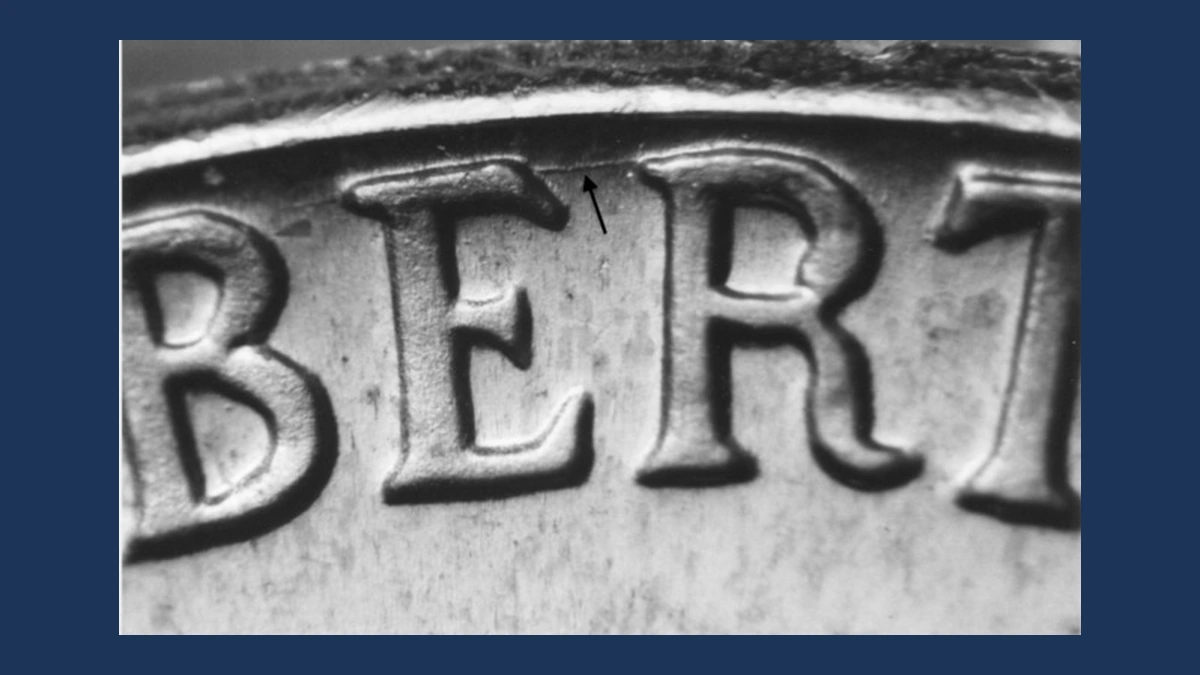
A raised line between letters can come from a cracked die, the steel tool that stamps the coin. Metal fills the tool’s crack during striking and forms that narrow ridge.
One listed 1965 doubled-die example also has a crack running from the upper E toward the R in LIBERTY. The crack and doubling can therefore appear together on one coin.
A separate collector report describes an interior raised lump. That may be a small broken area of the die, but a lump away from the rim is not a rim cud.
Estimated Value
Small genuine cracks and interior chips are estimated at $5–$50. Larger, clear raised features are easier to sell than a faint line that needs strong magnification.
The reported interior lump needs confirmation before applying this range. For the coin with both a LIBERTY crack and doubled lettering, consider the whole coin once; its two visible features do not create two separate sale prices to add together.
How to Identify
The known crack offers a specific place to look: the upper E and the R in LIBERTY. A 10× magnifier should show a raised line rather than a cut into the letters.
A loose coin normally weighs 5.00 g and measures about 21.21 mm. Check with a digital scale and calipers, then turn the light sideways to see whether the suspect feature rises above the surface.
For an interior lump, examine its border and nearby design. Impact damage may scrape the surface or push a small ridge around a dent.
Do not call every raised patch a cud. That name requires a break reaching the rim; an isolated lump remains an interior feature.
2. 1965 Jefferson Nickel Possible Die Clash
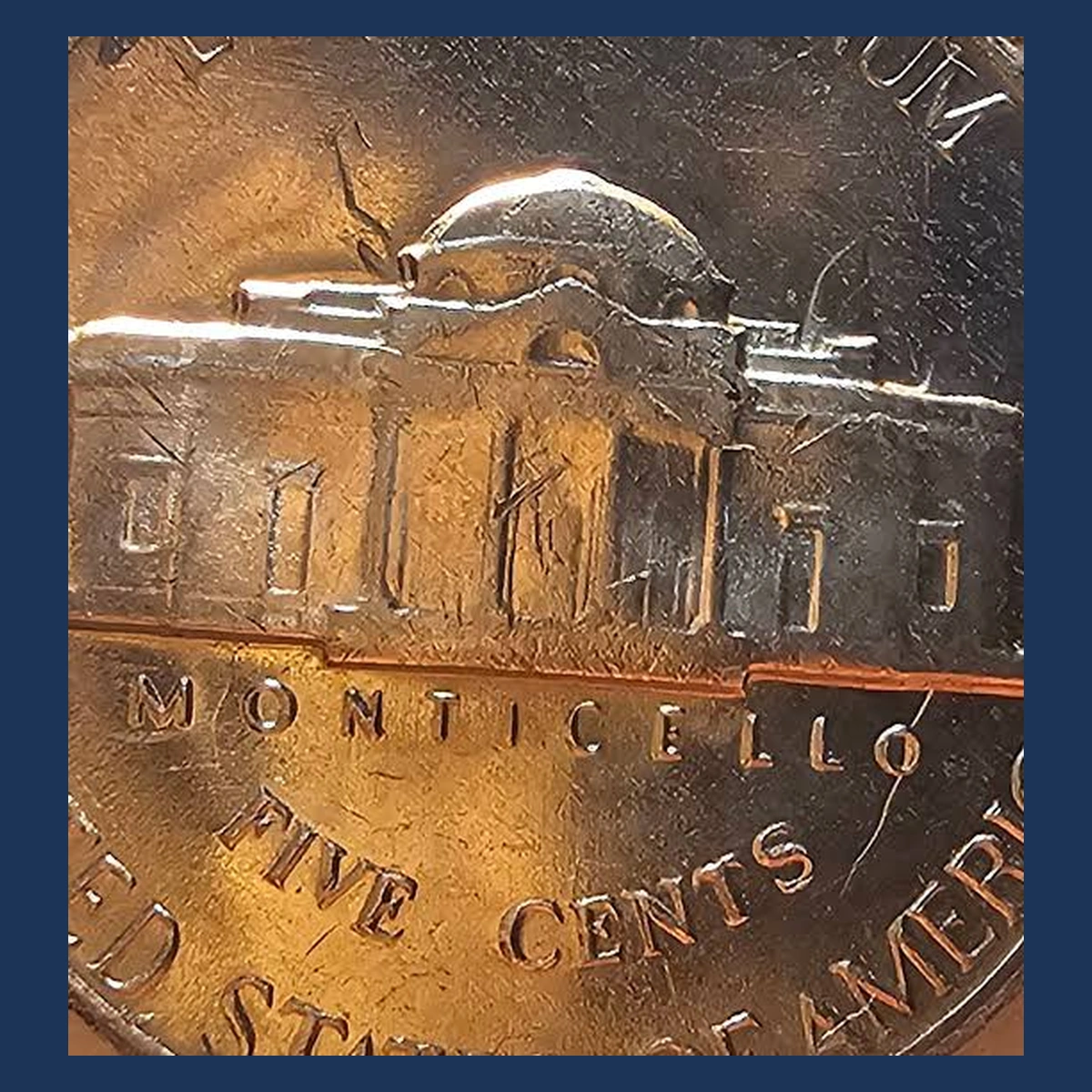
An unexpected outline beside the normal design may come from the opposite stamping tool. If the tools hit each other without a blank between them, they can damage one another.
Coins struck afterward may carry short pieces of that transferred design. Collectors call this a die clash.
A 1965 guide mentions clashes as a possibility, rather than identifying a particular coin. Treat a suspected example as something to check, not as a known variety with a fixed location.
A scratch or random rough patch does not become a clash merely because it resembles a line.
Estimated Value
If a genuine clash is confirmed on a regular 1965 nickel, a modest example is estimated at $10–$100. A clear, recognizable part of the opposite design would be more persuasive than an isolated mark.
This is a conditional estimate for a possible error, not a recorded 1965 clash sale. The guide’s general mention cannot establish a premium for an ordinary coin with scratches or rough surfaces.
How to Identify
Choose a clear normal coin for comparison before examining the suspected mark. Jefferson’s profile and Monticello’s lines give you shapes to compare, without guessing a fixed location for this year.
Use a 10× magnifier and low side lighting to follow the extra outline. A transferred design fragment should fit a real feature on the opposite side, while a scratch often cuts across nearby details without that relationship.
A digital scale and calipers can check a loose coin against 5.00 g and 21.21 mm. Normal measurements do not prove a clash; the telling clue is a recognizable opposite-side shape remaining alongside the normal design.
3. 1965 Jefferson Nickel Lamination
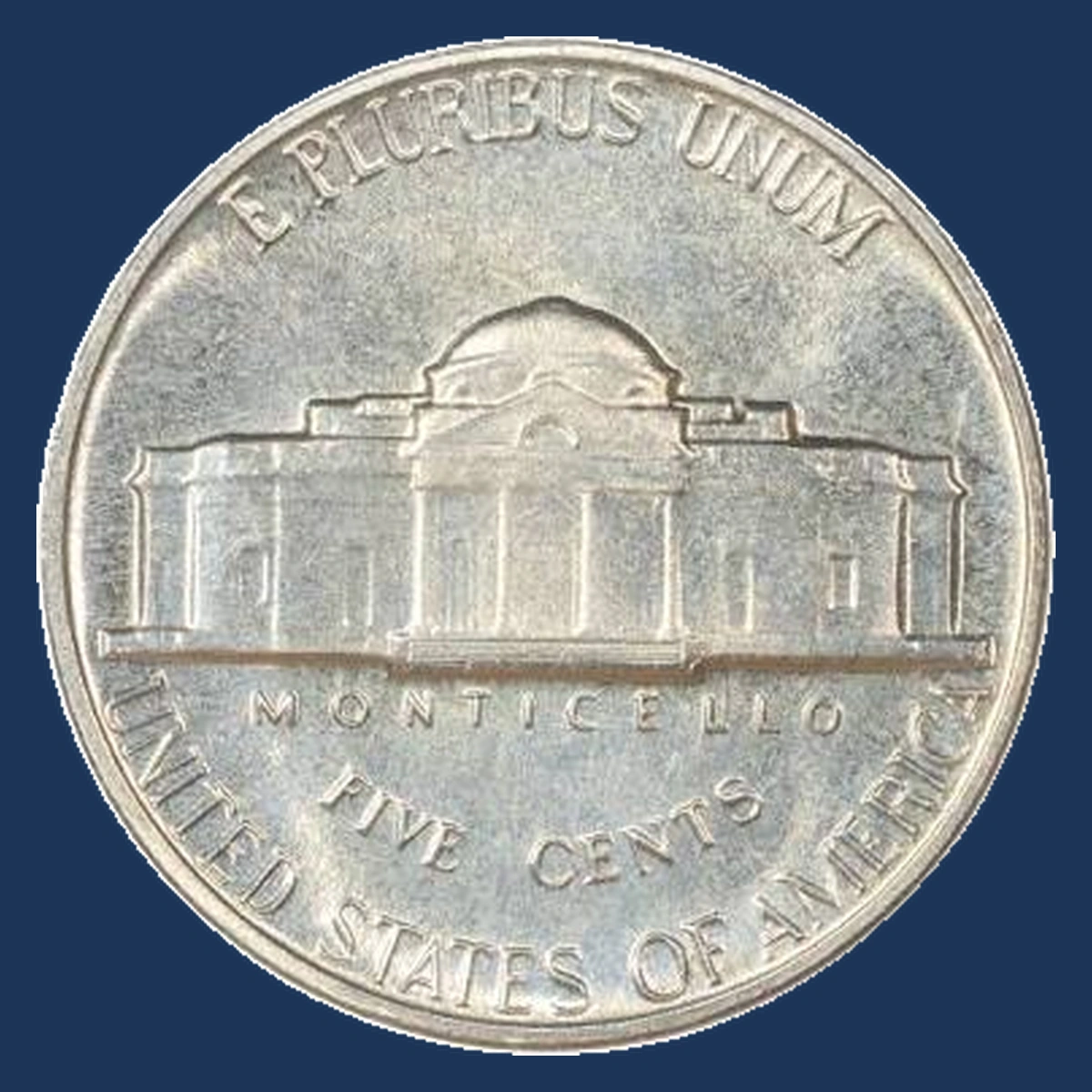
A thin patch of metal can crack or peel away from a nickel’s surface. This is called lamination, usually caused by a weakness within the metal used to make the blank.
A 1965 price guide lists this error, though it does not tie the description to a specific graded coin. The affected side and shape must therefore come from the individual example.
Normal 1965 nickels use a copper-nickel mixture throughout. A peeling area is not a missing silver layer, and it should not automatically be described as a missing copper-core covering.
Estimated Value
For a confirmed small lamination on a regular 1965 nickel, estimate $10–$100. A larger attached flake or a clear patch of original metal separation can draw more interest than minor roughness.
That range is an estimate for the listed type, rather than a sale of an identified 1965 specimen. Corrosion, digging, and scraped surfaces can also remove metal, but do not qualify for the same error premium.
How to Identify
Leave a loose flap where it is. Pulling at it can destroy the thin connection that shows how the metal separated.
Look along the flap with a 10× magnifier and angled light. An old split may continue beneath nearby surface metal, while a gouge usually shows a path where something dug into the coin.
Check the plain edge too. A broader separation can extend through more of the blank than the surface patch suggests.
A scale should read near the normal 5.00 g unless metal has been lost. Calipers provide the usual 21.21 mm diameter check without pressing on the loose area.
The useful feature is a natural-looking layer boundary, not simply a rough or dark patch.
4. 1965 Jefferson Nickel Doubled Die
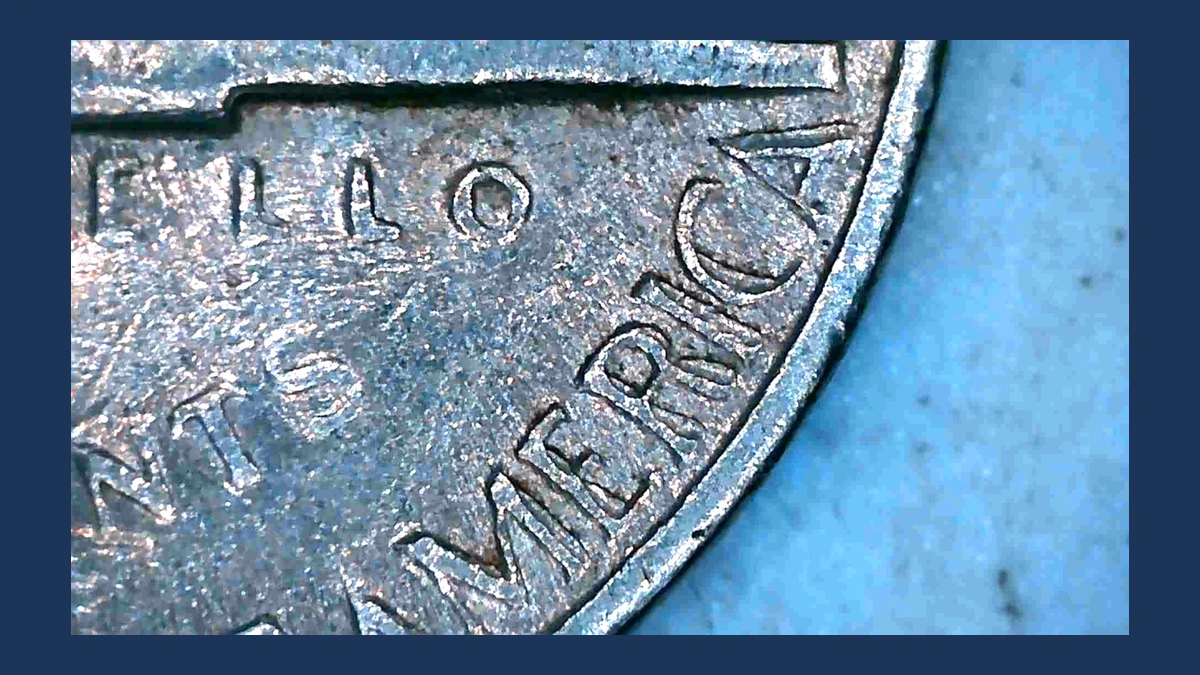
Look for extra letter edges or unusually thick rounded strokes. These can come from a doubled design in the stamping tool, rather than two separate strikes on the same coin.
Two listed 1965 back varieties show closely spaced doubling. One grows stronger from left to right across the affected lettering.
A front variety belongs to SMS coins, the specially made pieces sold in Special Mint Sets. It shows thicker lettering, with subtler changes in IN GOD WE TRUST.
These different appearances share one cause, but an SMS comparison should not identify a regular coin automatically.
Estimated Value
Identified minor doubled dies of this date are estimated at $10–$150. Clear extra outlines and attractive surfaces generally suit the upper part of that range better than barely visible thickening.
The range is an estimate, not a separate auction record for each catalog number. SMS condition can affect the whole coin’s value, and a matching variety photograph is more useful than a seller’s unsupported claim that any thick letter is doubled.
How to Identify
The choice of comparison matters before you look through a magnifier. Use a normal SMS coin for the SMS front variety, because its rounded thick strokes may show no wide gap between outlines.
For back doubling, a 10× magnifier helps separate the close letter edges shown in Brian’s listings. A loose coin’s normal 5.00 g and 21.21 mm can be checked with a scale and calipers, but those numbers cannot prove doubling.
A flat ledge beside a letter may come from movement during striking rather than a doubled tool. Compare the same letter stroke under the same light, looking for the extra rounded edge shown on the matching variety.
5. 1965 Jefferson Nickel Clipped Blank
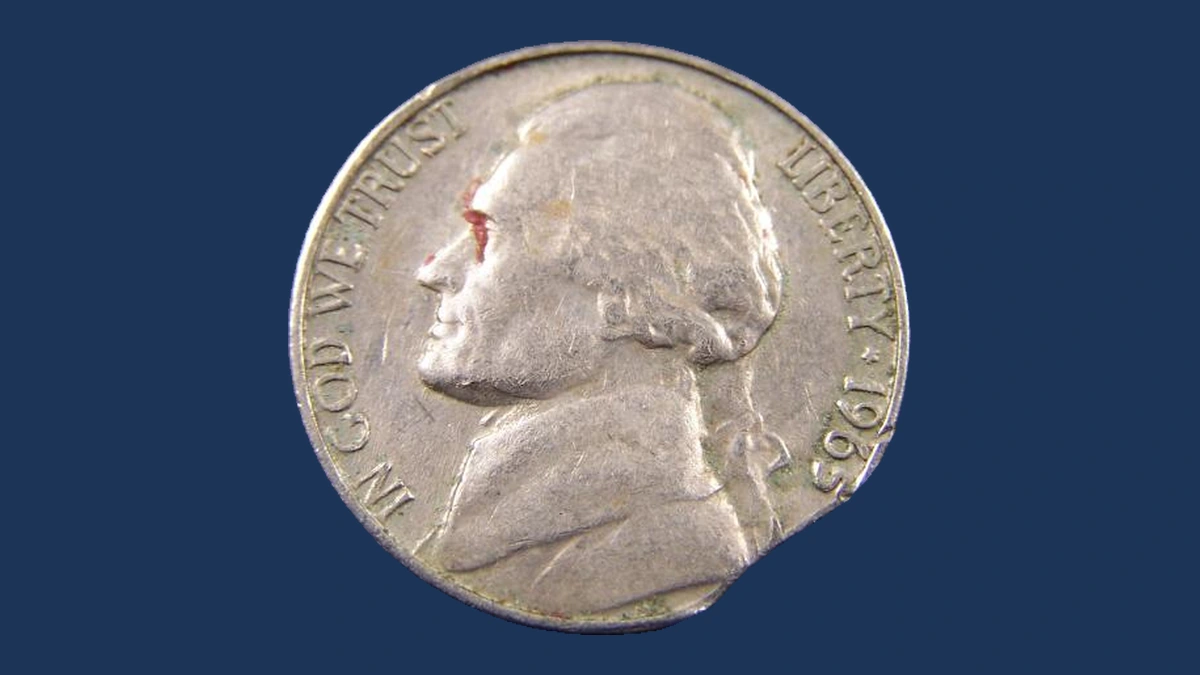
Two curved gaps can make a nickel look as though something took bites from its edge. The missing areas can originate when the machine cutting blanks overlaps holes already punched in the metal strip.
The incomplete blank then receives the normal nickel design. Letters and rim details close to the gaps may form weakly because metal spreads toward the open spaces.
A double-curved-clip 1965 nickel was graded NGC MS66. That describes an unworn coin with very few marks, rather than two extra strikes or a pair of separate coins.
Estimated Value
Coin World’s auction table records $53 for the MS66 double-curved-clip coin in October 2021. Genuine 1965 clips are estimated at about $20–$200, depending on their size, visibility, and the coin’s surfaces.
Two gaps do not automatically make an example worth twice as much as one gap. The price applies to the complete coin, and a readable date with natural Mint-made boundaries matters more than simply counting missing pieces.
How to Identify
A digital scale can confirm that a clipped coin has less metal than a normal 5.00 g nickel. The remaining diameter can be compared with 21.21 mm using calipers, but weight alone cannot explain who removed the metal.
Examine each gap with a 10× magnifier. Lettering and rim detail near its ends may weaken or flow toward the opening, showing that the gap existed when the coin was struck.
A fresh tool cut can leave sharp edges or repeated cutting marks instead. The rim opposite a genuine clip may be weak, but that clue is not present on every example.
Check both gaps independently. A natural struck boundary is more convincing than a perfectly shaped bite by itself.
6. 1965 Jefferson Nickel Struck Through Material
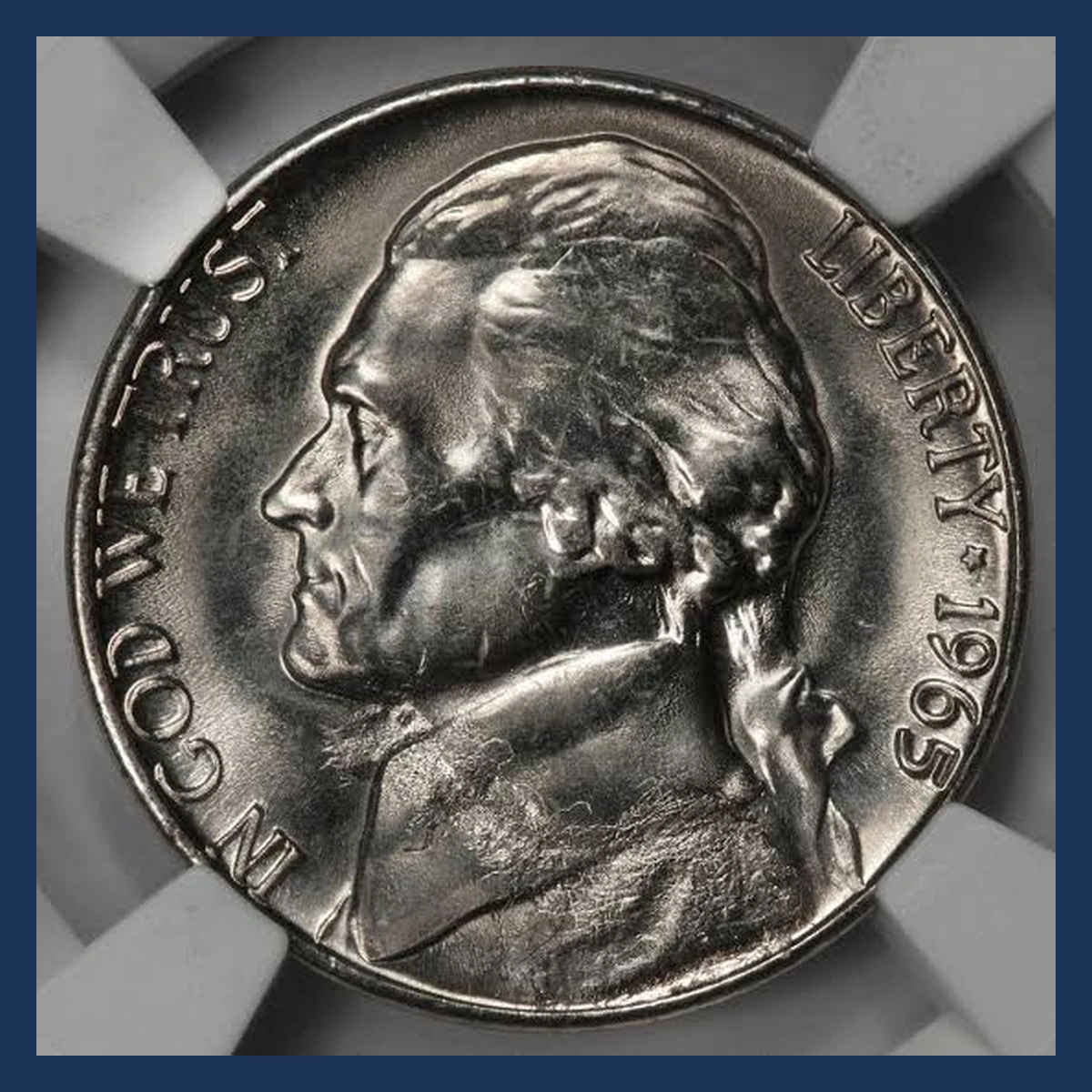
A patch of missing design can record something caught between the blank and a stamping tool. The obstruction stops normal details from forming and sometimes leaves a texture of its own.
A 1965 SMS nickel graded PCGS SP66 has a struck-through area on the back. SP is the grading label used here for the special collector strike.
A separate year-guide report describes a cloth impression. That report should not make every SMS depression a cloth error, because the material and the coin’s finish need to be identified independently.
Estimated Value
A confirmed cloth impression on a regular coin is estimated at $25–$200. For a clearly identified SMS struck-through example, a working range is $100–$500, depending on size and condition.
These ranges are estimates rather than a completed-sale price for the SP66 listing. A broad visible interruption or a clear woven texture can attract more attention than a small smooth depression that is difficult to distinguish from damage.
How to Identify
For the SMS example, examine the back before choosing a name for the material. The GreatCollections listing identifies a struck-through error without calling it cloth.
A cloth claim needs a different clue: repeated woven lines within the impression. Look with a 10× magnifier and change the light angle to distinguish texture from scratches.
Preserve any material that remains attached. Scrubbing can erase the surface relationship that helps explain the strike.
Use recorded measurements for holdered coins; loose nickels can be checked with a scale and calipers against 5.00 g and 21.21 mm. Follow the normal design into the impression and see exactly where it stops.
7. 1965 Jefferson Nickel Indent with Broadstrike
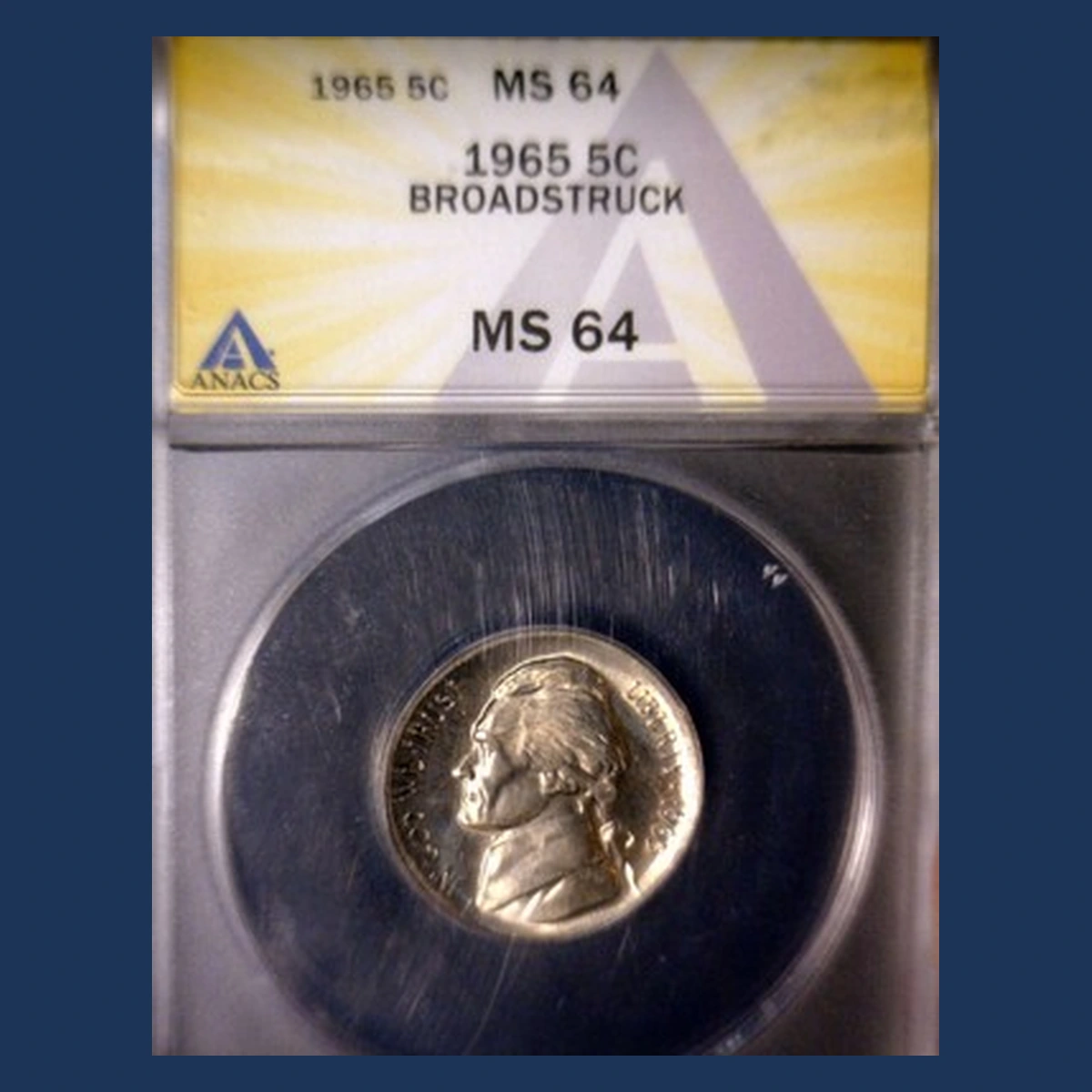
A broad nickel with a deep curved depression can result when another blank overlaps it during striking. The overlapping piece blocks part of the design and presses its own outline into the metal.
The nickel can spread outward at the same time if the edge-holding collar does not contain it. This combination may give the coin a mushroom-like shape.
A year guide reports a 45% indent with broadstriking for 1965. The feature belongs to an unlettered nickel, since genuine 1965 nickels do not carry a D mint mark.
Estimated Value
For a confirmed 1965 indent combined with broadstriking, estimate $150–$700. A deep, well-defined curve and a clear date are more appealing than a shallow patch that could be ordinary damage.
The 45% guide report is not a verified auction result, so the range is an estimate for that combination. The indent and the enlarged outline are two effects on the same coin, not prices that should be added separately.
How to Identify
The broad shape is only half the story. Find the smooth curved boundary of the alleged indent before deciding that an overlapping blank caused it.
A 10× magnifier should show where normal letters stop at that boundary. A later vise mark can instead flatten lettering that was already there.
Compare the outline with an ordinary 21.21 mm nickel using calipers. A digital scale should remain near 5.00 g if the error retained all its metal.
The guide’s 45% figure does not tell you the direction or shape of every new candidate. Keep those details tied to the actual coin.
Inspect the curve and expanded metal together. A normal dent on an otherwise broad coin does not establish this combination.
8. 1965 Jefferson Nickel Off-Center Strike
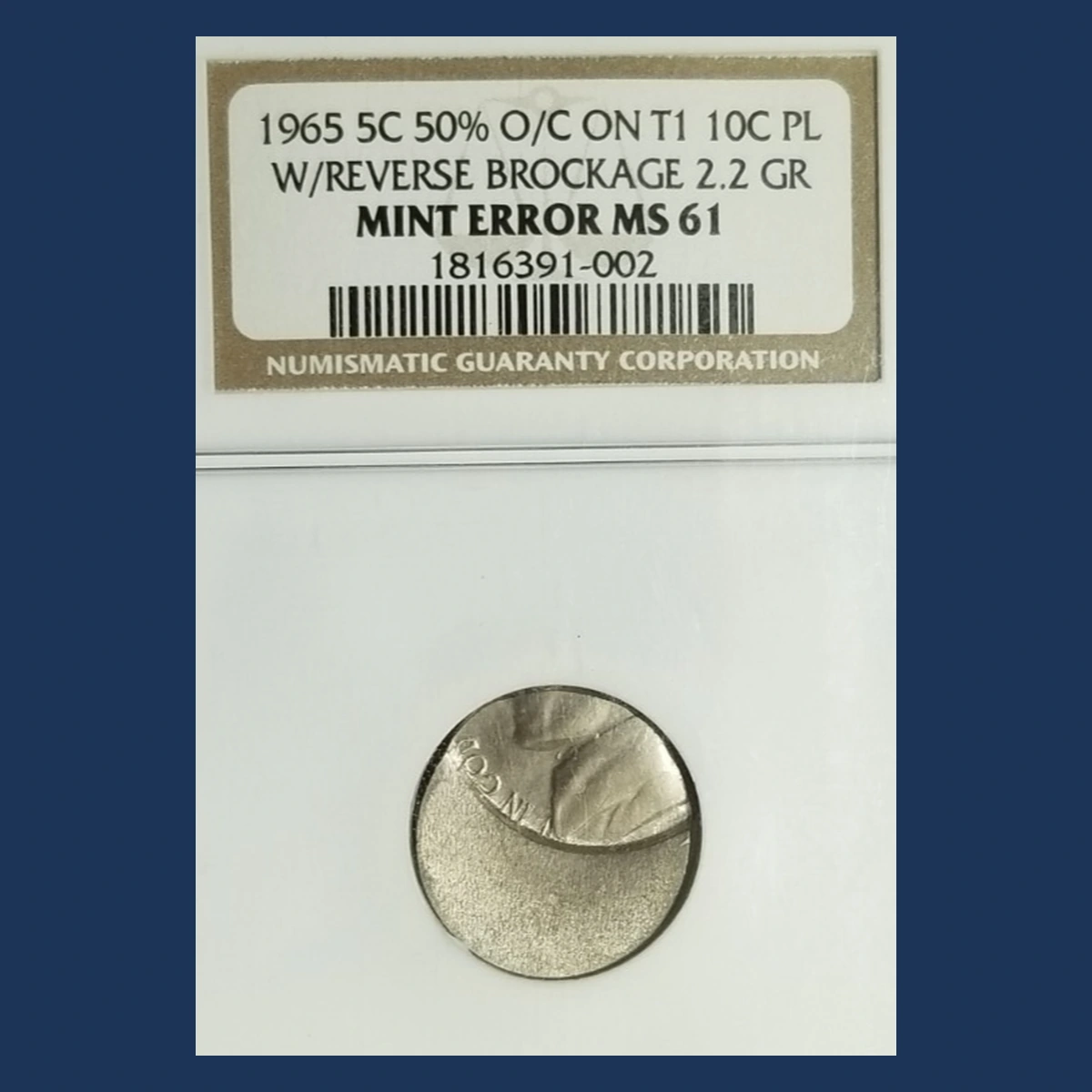
Jefferson and Monticello can shift toward one side when the blank enters the press off center. Part of the design misses the metal, leaving an unstamped section next to the surviving image.
Reports include an approximately 10% example whose striking finish was not specified. Separate SMS examples show shifts of about 5% and 10%.
SMS means Special Mint Set, not Proof. The blank date and mint-mark area may look ordinary, so the absence of a mint letter cannot identify an SMS coin or tell you which facility made it.
Estimated Value
A 10% off-center SMS nickel graded NGC MS64 is recorded at $705 in June 2014. Estimate about $300–$1,000 for comparable identified SMS examples.
Less unusual regular off-center nickels may fit $25–$200. A regular coin with a similar percentage should not receive the SMS price.
An unspecified-finish listing does not prove that its coin came from a Special Mint Set. Identify the finish before choosing the price comparison.
How to Identify
Special-strike identity comes before price comparison. A shiny surface alone does not prove SMS, so check the grading description or a known original-set history when available.
For the error itself, compare both faces using a 10× magnifier. Part of the design should be missing beside unstamped metal.
An uneven border with all lettering intact can instead come from one shifted tool. Do not measure an off-center percentage from border width alone.
A loose coin should normally remain near 5.00 g because no metal had to be removed. Calipers can compare its outline with the standard 21.21 mm.
Keep the date visible in your photographs. The clear clue is cut-off design beside the portion of blank that escaped the strike.
9. 1965 Jefferson Nickel Double Strike
The second strike can be far from the first, or it can overlap the design inside the normal outline. Both patterns occur in reports of 1965 double-struck nickels.
A PCGS MS65 example received a second strike 25% off center. Another coin, graded NGC MS66, rotated between strikes while still inside the edge-holding collar.
That second case can keep a nearly normal shape while showing shifted letters or design details. It is different from a rotated die, where the two sides face different directions but the coin was struck only once.
Estimated Value
The 25% off-center second-strike example sold for $432 in July 2021. Coin World records $646.25 in August 2013 for the separate MS66 coin struck twice inside the collar.
Comparable double strikes are estimated at $250–$1,200. Separation between the images, a readable date, and clean surfaces influence the result.
MS65 and MS66 describe unworn coins with relatively few marks. They do not describe the number or strength of the strikes.
How to Identify
Try tracing two separate outlines of the same feature, such as Jefferson’s head or the date. A doubled die usually shows much closer extra detail in the tool’s design, rather than two shifted whole impressions.
The in-collar example needs particular care because its round outline can look normal. With a 10× magnifier, follow the rotated second design instead of looking only for a large blank crescent.
A scale and calipers can check roughly 5.00 g and 21.21 mm, although an off-center second strike may spread the coin. Turning a coin over to find a tilted back does not prove double striking; the decisive feature is two overlapping impressions on the same face.
10. 1965 Jefferson Nickel Small Planchet Void
A tiny hollow above Monticello’s door was described on a PCGS MS67 nickel. The catalog calls it a planchet void, meaning a small empty space in the metal blank.
This is different from a thin sheet peeling away. It is also separate from the ordinary small contact mark on Jefferson’s upper cheek mentioned for the same coin.
The example is notable for its high condition as well as the small cavity. A similar pit on a worn nickel would not automatically make that coin as desirable as this carefully preserved piece.
Estimated Value
The entire MS67 coin sold for $2,093.63 in November 2019. That is a high-grade coin price, not a $2,000 premium for the small void alone.
An ordinary nickel with a confirmed small void might be estimated at $5–$50. A similarly exceptional MS67 example may fit roughly $1,500–$2,500, but its overall preservation drives that comparison; a worn or damaged coin belongs in a very different price discussion.
How to Identify
Find Monticello’s doorway on the back, then enlarge the arch immediately above it. PCGS describes the small void there on the MS67 example.
The cheek mark is a separate feature. Do not use it as a second blank defect.
With a 10× magnifier, study the cavity’s border for cutting, disturbed metal, or corrosion. One photograph may not distinguish a naturally empty area from damage.
A small void may barely change the weight. A digital scale and calipers still provide the normal 5.00 g and 21.21 mm checks for loose coins.
Compare the actual doorway cavity and the surrounding original surface. High grade alone cannot identify what made the hollow.
11. 1965 Jefferson Nickel Foldover Strike
This nickel entered the press almost upright instead of lying flat. The stamping tools crushed and folded the blank, producing an oval shape rather than an ordinary round coin.
The known NGC MS64 example still has a clear date. LIBERTY and AMERICA stretch toward its edge, while E PLURIBUS is missing.
The ends of the folded seam appear near 4 and 9 o’clock. Those seams and the stretched design explain more than the odd outline alone.
A finished nickel bent afterward can look unusual too, but its design was not formed during the fold.
Estimated Value
The folded 1965 nickel brought $4,312.50 in August 2010. Its grade, MS64, indicates no circulation wear with some visible marks.
For a comparable professionally identified foldover, estimate $2,500–$6,000. A readable date and convincing folded structure are important within that range.
Severe damage can reduce appeal even when the original error is real. A nickel bent outside the Mint does not receive the same valuation.
How to Identify
Do not try to flatten the coin for a measurement. A foldover keeps its value as an unusual struck object, and straightening it can destroy the seams that explain what happened.
A normal starting blank weighs 5.00 g and measures 21.21 mm. Use a scale for retained weight and calipers only to record the distorted final outline.
Now inspect the edge with a 10× magnifier. On the known example, seam ends appear near 4 and 9 o’clock.
The letters LIBERTY and AMERICA stretch toward the edge as the metal spreads. Follow that stretched lettering toward the seams; design formed on the folded metal is stronger evidence than a bent shape alone.
12. 1965 Jefferson Nickel Wrong Planchet
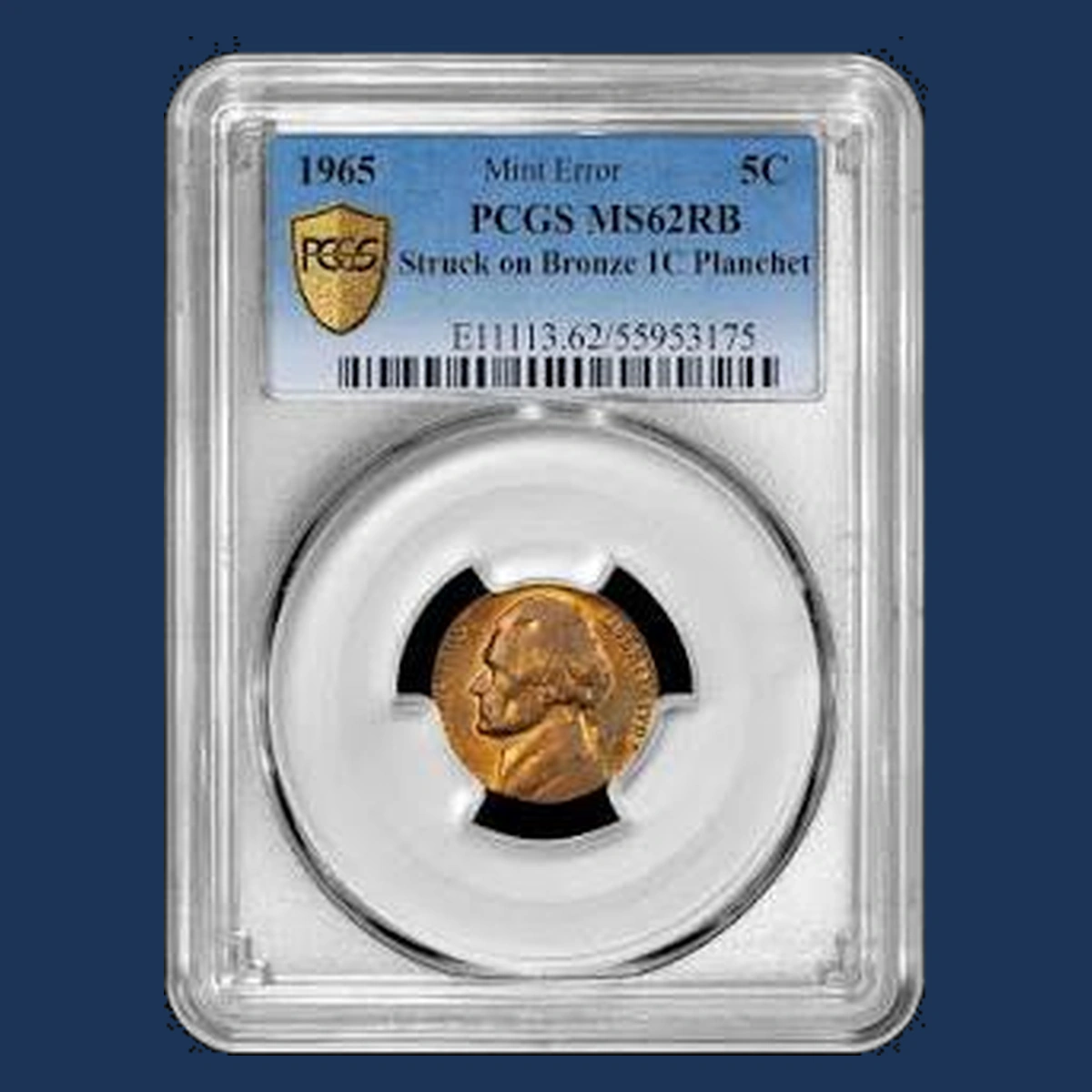
The metal under Jefferson can belong to a different denomination. A planchet is the blank piece placed in the press, and the wrong one can be struck by nickel tools.
A copper cent-blank example appears smaller, with parts of the outer design close to or beyond its edge. A separate silver dime-blank nickel weighs 2.5 g.
A clad dime-blank example is also reported; clad means a copper core with outer metal layers. The silver and clad dime blanks are different materials, so neither color nor a small diameter alone settles which one was used.
Estimated Value
The silver dime-blank nickel graded NGC MS62 sold for $6,000 in July 2021. A cent-blank MS64 example brought $805 in January 2004.
Estimate $4,000–$8,000 for comparable identified silver dime blanks, $400–$1,500 for copper cent blanks, and $200–$800 for the reported clad-dime type. The last range is an estimate, not that reported coin’s sale; the metal identification must support the comparison.
How to Identify
A silver-colored surface cannot identify a silver blank. Check the edge under a 10× magnifier, then combine its appearance with a reliable weight.
The documented silver dime-blank nickel weighs 2.5 g. Normal cent and clad dime blanks start near 3.11 g and 2.27 g respectively, compared with 5.00 g for a nickel.
Use a digital scale and calipers on loose candidates. The standard nickel diameter is 21.21 mm, but a smaller blank can spread when struck, so its original size is not a required final reading.
Plating or grinding can imitate unusual color and weight. Look for naturally cut-off nickel details on the smaller blank, then have the metal identified before treating it as the valuable silver type.
Conclusion
A small crack and a silver-blank mistake can both belong in a 1965 nickel collection, but their prices differ sharply. The estimated range here is $5–$8,000.
Look at the visible feature before choosing its name. Keep SMS coins separate from regular strikes, and remember that missing mint letters are normal.
For a valuable candidate, save clear images and its measured weight, then compare the actual coin with a professionally identified example.