1952 Nickel Error List with Pictures

A tiny change in Jefferson’s hair ribbon can matter more than a large scratch. One specially made collector coin, called a Proof, brought $600 on eBay in March 2018, as recorded by PCGS.
These 1952 nickel errors also include copper blanks, split metal, and designs struck far from the center. Estimated values run from $10 to $1,200, with different prices for small varieties and dramatic striking mistakes.
Read on to see which features deserve a closer look.
1. 1952 Jefferson Nickel Doubled Dies
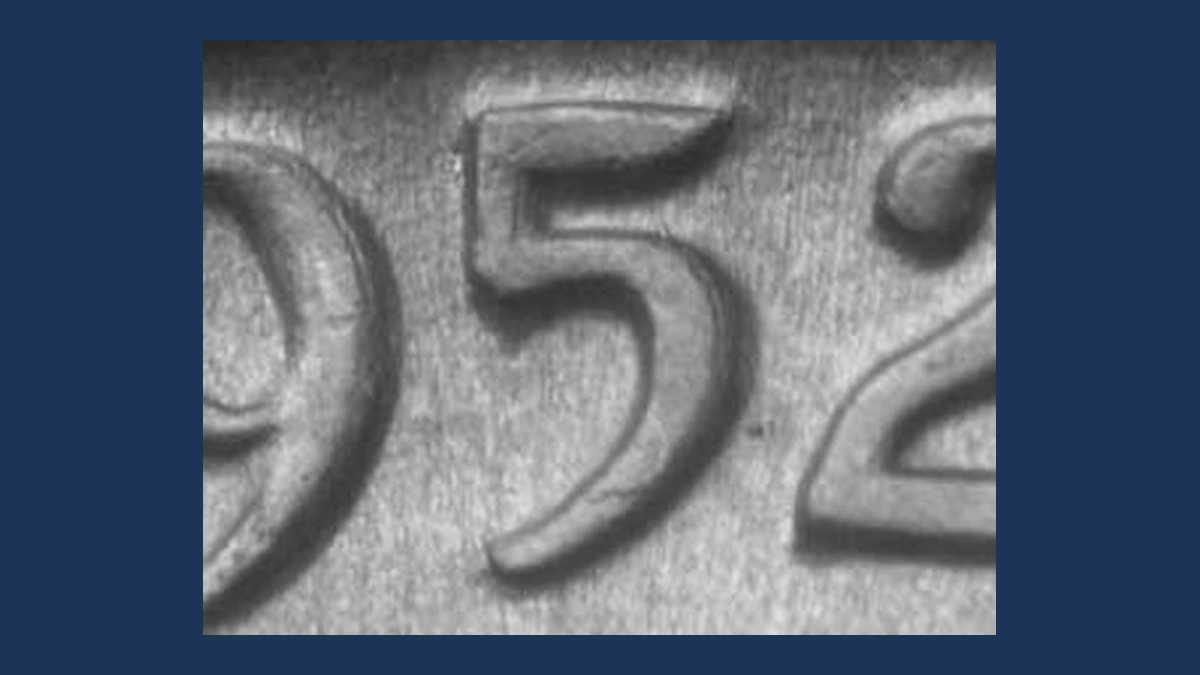
An extra edge on a letter can begin in the tool that stamps the coin. This steel tool is called a die; when its design is doubled, matching coins repeat the same detail.
San Francisco examples show small separations in IN GOD WE TRUST or E PLURIBUS UNUM. Separate Philadelphia and Denver front varieties affect LIBERTY, the nearby star, and the date.
A Denver back variety also affects PLURIBUS UNUM. These small features need magnification, and a doubled front does not automatically mean that the back is doubled too.
Estimated Value
Allow an estimated $10–$150 for the small doubled-die varieties described here. Clear lettering on an unworn coin belongs toward the upper end; faint detail on a worn piece belongs lower.
This is an estimate for these modest varieties, not a recorded sale for every catalog number. An ordinary high-grade nickel can already carry value, so its full selling price should not be treated as payment for the extra outline alone.
How to Identify
Move the light before deciding that a letter has two edges. A bright reflection can disappear as the coin turns, while a real raised outline stays in place.
With a 10× magnifier, compare the appropriate lettering on a known example from the same mint. Check IN GOD WE TRUST for the San Francisco front variety, or LIBERTY, star, and date for the Philadelphia and Denver reports.
On the back, examine E PLURIBUS UNUM; do not transfer one mint’s exact spread to another. Flat shelves beside letters can result from movement during striking and need a different diagnosis.
A loose normal nickel should measure about 5 grams and 21.2 millimeters with a scale and calipers. Its edge is plain; matched raised letter outlines establish the variety, not those normal measurements.
2. 1952 Jefferson Nickel Repunched Mintmarks
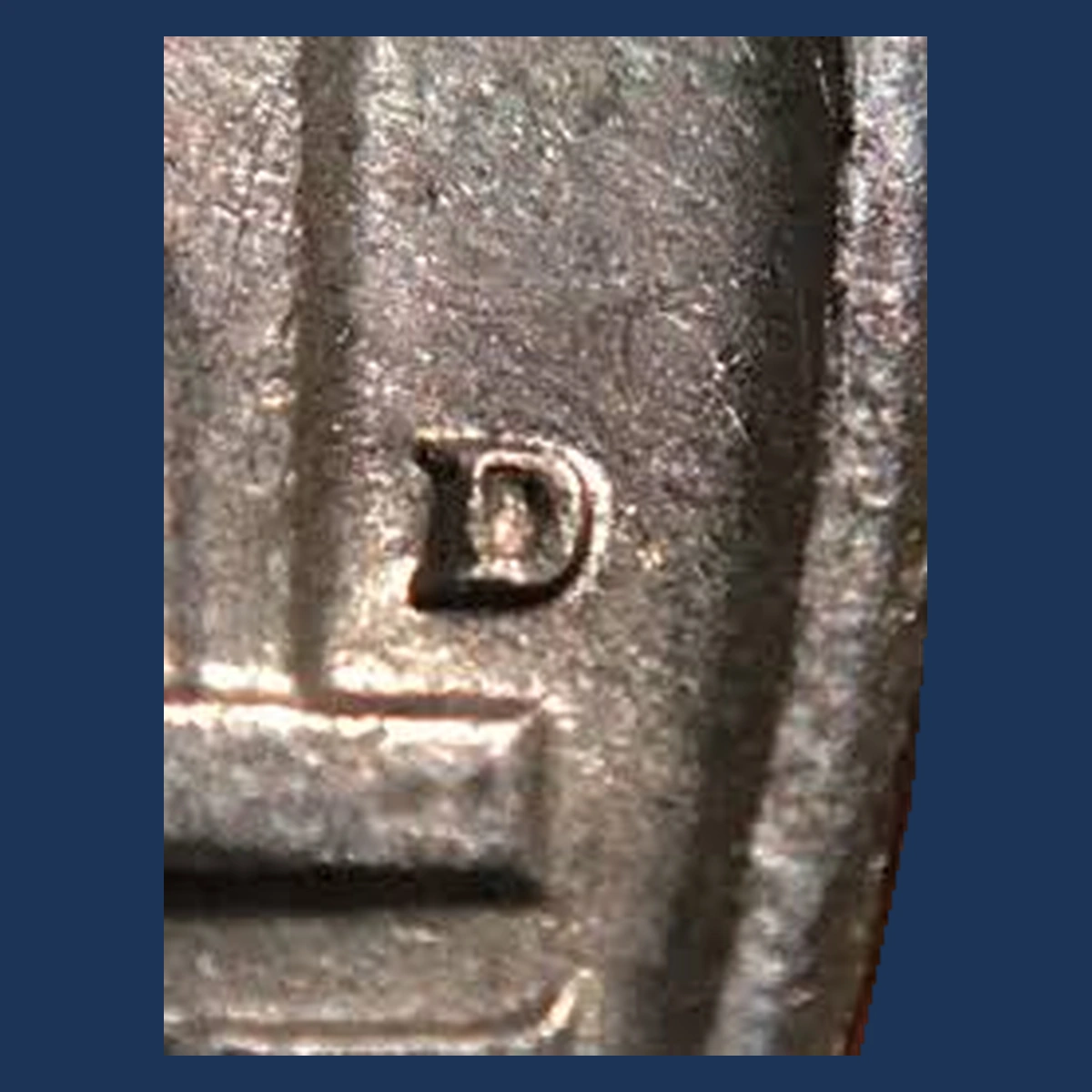
The small D or S beside Monticello can have part of another letter beside it. In 1952, these mint letters were punched separately into the die, the steel tool used to stamp coins.
A second punch placed slightly differently left overlapping shapes. This is called a repunched mintmark, and the extra outline appears on every coin made from that tool.
Denver examples include sideways, lower, and tilted remnants. San Francisco examples show several sideways spreads, including a larger S shape; matching one direction alone does not identify the exact variety.
Estimated Value
For the minor repunched mintmarks covered here, use an estimated $10–$150. The letter must be clear enough to identify, and attractive unworn surfaces can support the higher part of that range.
A larger or more complete secondary outline usually attracts more interest than a tiny fragment. These figures are collecting estimates rather than separate auction records for every D and S listing; ordinary condition value remains part of the whole coin’s price.
How to Identify
Find the mint letter to the right of Monticello on the back. Philadelphia coins have no letter there, so an unmarked example cannot have a doubled D or S.
Draw the main letter and any extra curve you see through a 10× magnifier. Compare that shape with a close photograph in Wexler’s 1952 mintmark listings, paying attention to where the two outlines meet.
Two varieties can both spread left yet have different curves. A nick that cuts into the letter is not the same as an extra raised punch outline.
For a loose coin, use a scale and calipers to compare 5 grams, 21.2 millimeters, and a plain edge. Keep the letter upright in photographs so a tilted punch can be compared without rotating the whole coin.
3. 1952 Jefferson Nickel Tapered Blank
One side of this nickel began thinner than the other. The uneven metal blank, also called a planchet, left less metal available to fill part of the design.
A 1952 Philadelphia example was graded MS65 by NGC, meaning unworn with relatively few marks. Its auction description identifies a tapered blank, rather than simply calling the strike weak.
The important difference is thickness across the coin. Wear can flatten details without creating the same original wedge-shaped blank, while grinding can remove metal later and leave a different surface.
Estimated Value
The known MS65 example sold for $41 at Heritage in August 2013. That modest result shows why a weak-looking area should not automatically suggest a very expensive error.
An estimated $25–$200 covers recognizable tapered-blank pieces. Greater thickness differences and stronger remaining detail can support the upper end.
A subtle taper or later surface damage reduces appeal. The 2013 sale is a historical example, not a guaranteed current price.
How to Identify
Compare thickness at several points around the edge rather than taking only one diameter reading. For a loose coin, use calipers gently and weigh it beside the normal 5-gram standard.
The normal diameter is about 21.2 millimeters, with a plain edge. A taper need not make every measurement unusually small, and the original example has no published thickness readings to copy.
Next, follow the thinner part into the adjacent design with a 10× magnifier. Weakly filled letters should make sense beside the reduced metal, rather than appearing only on the highest worn points.
Grinding tends to leave cuts, an altered outline, or a disturbed edge. Photograph the thickness change from the side; an overhead picture of weak lettering alone cannot show why the blank was tapered.
4. 1952 Jefferson Nickel Broadstrike
A broadstrike often looks too wide for its design. The metal spread outward because the surrounding collar, a ring that normally controls the edge, did not contain it properly.
The 1952 Denver example is reported as MS60 and cleaned. MS60 describes an unworn coin with noticeable marks, while cleaning describes later treatment of its surface.
Neither term explains the enlarged outline by itself. The striking error is the outward spread of metal, and it should be distinguished from an off-center coin whose design runs beyond the edge.
Estimated Value
For a genuine 1952 broadstrike, estimate $40–$250, with cleaning pushing an otherwise similar example toward the lower end. The reported Denver coin has no established sale price used here.
A later-year comparison offers scale: a 1999 Philadelphia broadstrike sold for $89 in March 2025. That is a different date and specimen, but it helps place an ordinary expanded nickel below spectacular wrong-metal or multiple-strike errors with stronger collector demand.
How to Identify
Measure a loose candidate in several directions with calipers, using 21.2 millimeters as the normal comparison. A scale reading near 5 grams helps show whether the wider shape reflects spreading rather than added metal.
Now follow the outer letters around both faces with a 10× magnifier. Broadstriking leaves the design on the blank, while an off-center strike sends part of that design beyond its edge.
Examine the expanded plain edge and nearby surface for hammering or filing. A battered rim can look wide without showing natural metal spread.
The small D beside Monticello connects a candidate to the reported Denver example. Its cleaned surface describes later treatment, so do not mistake bright cleaning lines for evidence of the original striking error.
5. 1952 Jefferson Nickel Rim Die Break
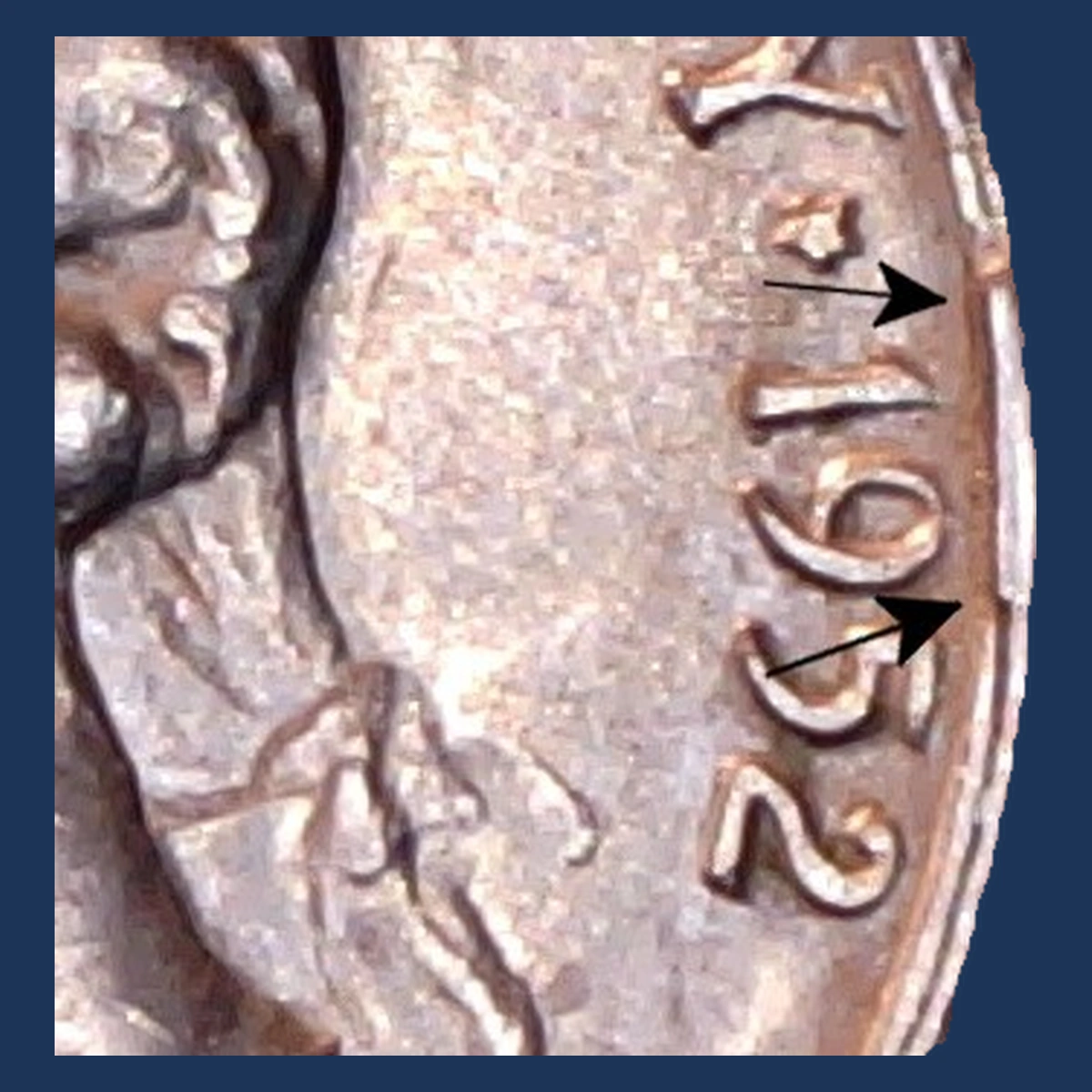
A small lump at the rim may come from missing metal in the stamping tool rather than added metal on the coin. Collectors call this kind of edge-related break a rim cud.
The die is the steel tool that stamps the design. When part of its rim breaks away, coin metal can rise into the empty space during striking.
A Denver example appears in the Cuds on Coins catalog. Its exact position should be checked against the illustrated coin; a random raised rim on another nickel is not enough to match it.
Estimated Value
An estimated $20–$300 is reasonable for a confirmed rim break, depending on its size and the coin’s condition. A small rim lump belongs much lower than a large break extending into the design.
For comparison, a worn 1983 Philadelphia nickel with a cud brought $63 in July 2022. That later coin is a price guide for the general error type, not a sale of this particular 1952 Denver rim break.
How to Identify
Check the normal rim first on an undamaged nickel. It already stands above the surface, so height alone does not prove that a piece of the die broke.
Under a 10× magnifier, look for an added raised area that changes the rim’s normal shape. Compare its outline and nearby details with the Denver catalog photograph instead of choosing a clock position from memory.
A folded rim from a blow usually shows metal pushed inward or a damaged outer edge. Examine that side view before treating the lump as mint-made.
If the coin is loose, weigh it and measure its diameter against 5 grams and 21.2 millimeters. Keep its plain edge intact; a matching raised shape without a corresponding impact is the useful feature to photograph.
6. 1952 Jefferson Nickel Broken Blank in Two Pieces
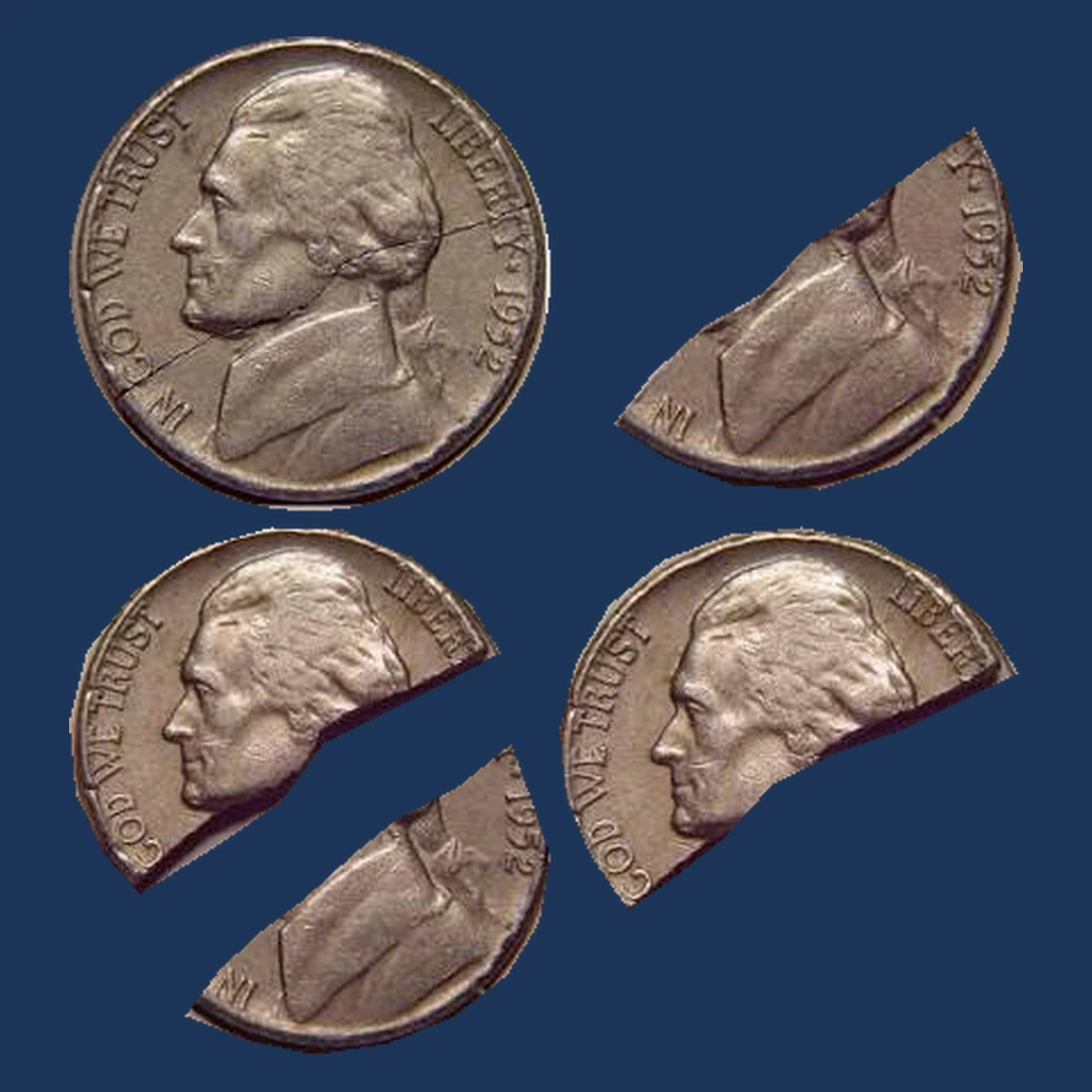
This error survives as two pieces rather than one complete disc. The pair was certified AU58 by PCGS, a grade describing only slight wear, and sold together at auction.
The auction calls it a broken planchet, meaning a broken coin blank. That wording does not establish the precise moment the fracture occurred or its direction through the coin.
It also does not automatically describe a front layer peeling from a back layer. The matching broken edges and surviving design need to be examined before treating these fragments as the same thing as a split-layer pair.
Estimated Value
Both pieces brought $186 at Heritage on August 19, 2018. That amount belongs to the complete pair, not to each fragment separately.
Use an estimated $100–$400 for a comparable matched pair with a convincing mint-error identification. Keeping both pieces preserves the evidence and helps their value.
Missing fragments or later damage would change the comparison. A coin broken outside the Mint should not inherit that auction result.
How to Identify
Begin with photographs of the two fragments together and apart. Follow the design across their matching boundaries without pressing the pieces into one another.
Their shared outline can support a common origin, but it does not by itself prove a mint error. A coin broken deliberately later can also produce two matching fragments, so the surfaces of the break matter.
Use a 10× magnifier to look for cuts, fresh bending, or added material. For safely handled loose fragments, combined weight can be compared with 5 grams, and the reconstructed outline with 21.2 millimeters and a plain edge.
Do not force calipers across the broken surfaces. Keep both pieces protected for examination of the fracture, especially where metal flow might help distinguish a defective blank from later breakage.
7. 1952 Jefferson Nickel Separating Metal Layers
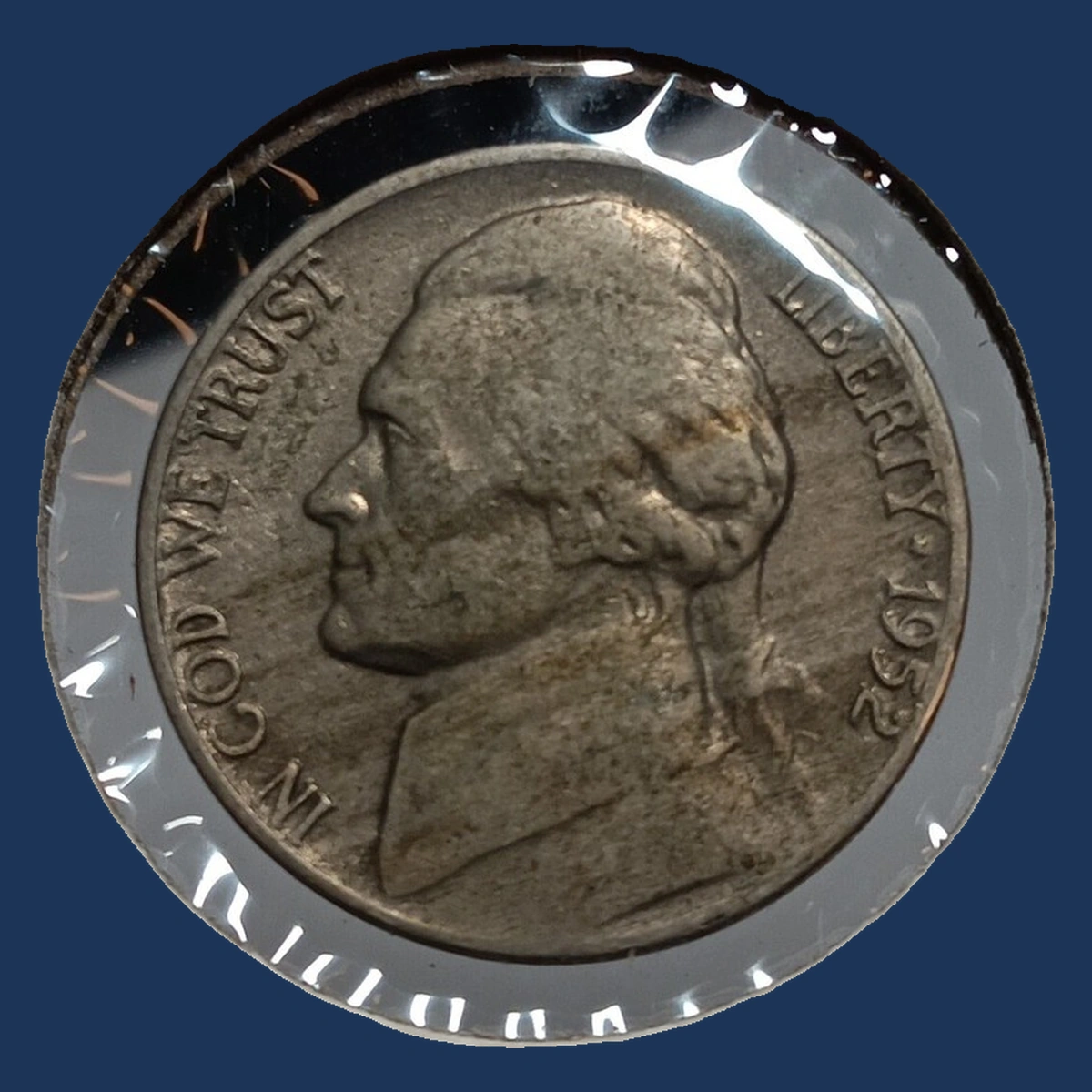
A peeling patch and a coin opening like a shell can begin with the same problem: weak bonding inside the metal. A small separation is called a lamination; a hinged opening is often called a clamshell.
Neither is a missing plated coating. The normal 1952 nickel is made from copper and nickel mixed throughout.
A worn Philadelphia clamshell survives, along with a different Philadelphia pair that split into front and back pieces after striking. The complete pair preserves design on its outside faces, while the separated inner faces expose the broken metal.
Estimated Value
Estimate $15–$500 across this group, from a small peel to a desirable complete split pair. The different shapes should not all receive the same price.
Greysheet’s auction index records a 1952 clamshell at $36 in February 2012. A separate pair, split after striking, sold together for $322 in August 2006.
Those are historical results for different coins. A loose half from another specimen does not carry the value of a complete matching pair.
How to Identify
Do not open a hinged flap to get a better photograph. Support the coin so its existing gap can be viewed with a 10× magnifier without moving either layer.
A shallow peel affects a patch of the surface, while a clamshell shows a deeper separation reaching the plain edge. If two pieces have come apart completely, compare their outer designs and rough inner faces without rubbing them together.
For a loose complete coin, the normal figures are 5 grams and about 21.2 millimeters. A scale can check combined fragment weight, but calipers must not squeeze a fragile flap; missing metal and separated metal give different weight readings.
A lone front fragment cannot reveal a mintmark that belonged on the missing back. Keep that mint identification open instead of treating the absence of the back as a Philadelphia feature.
8. 1952 Jefferson Nickel Nonstandard Alloy Blank
This nickel’s unusual metal was established by more than its color. The auction describes a 4.66-gram blank containing 63% copper, 26% zinc, and 11% nickel.
A normal 1952 nickel contains 75% copper and 25% nickel. The extra zinc and altered proportions therefore matter more than a slight change in shade.
NGC described the coin as lightly worn but scratched. The scratches are later damage, not the mint error; neither the composition nor the auction description identifies a particular foreign denomination as the source of this blank.
Estimated Value
The unusual-alloy coin sold for $288 in January 2019. Its scratches are part of that specimen’s condition and should remain in mind when comparing it with another piece.
An estimated $200–$600 suits a confirmed nonstandard-alloy example of similar interest. Better surfaces could support a higher figure within that range, but a yellowish ordinary nickel does not qualify; the value depends on a credible material identification rather than color alone.
How to Identify
Ask what the metal test actually found before relying on a seller’s color description. The documented mixture contains 26% zinc, unlike the normal copper-nickel alloy, and a specialist can test this without scratching the coin.
Then check the measurements that belong to that specimen: 4.66 grams, rather than the usual 5 grams. For a loose candidate, use calipers against the normal 21.2-millimeter diameter and a 10× magnifier along the plain edge to look for removed metal.
Filing, corrosion, or a coating can change weight or appearance without producing the reported alloy. Even a matching composition does not identify a particular foreign denomination; keep the result as an unusual-alloy blank unless its original purpose can be established.
9. 1952 Jefferson Nickel Off-Center Strike
The portrait sits far from its intended position on the known San Francisco example. About half the design was struck beyond the blank because the metal entered the press out of position.
One side retains a broad blank area, while lettering and other details are cut off on the opposite side. This is an off-center strike, not simply an uneven border.
The example was graded MS64 Full Steps. MS64 means unworn with some marks; Full Steps describes clear steps on Monticello and is a quality description, not another error.
Estimated Value
For 1952 off-center nickels, use an estimated $75–$750. A small displacement on a worn coin sits toward the lower end, while a dramatic dated example with good surfaces can reach the upper part.
The reported 50% San Francisco piece represents a stronger error than a mild shift. As a later-year comparison, a 1999 Philadelphia nickel struck 15% off-center sold for $64 in March 2025; it is not the price of the 1952-S specimen.
How to Identify
Find the date and mintmark before judging how dramatic the shape looks. A missing mintmark area cannot prove that a coin came from Philadelphia; the known example here is San Francisco.
Compare the blank crescent with the opposite side where the design runs off the metal. Both are needed to understand the shift, and both faces should be photographed.
With a 10× magnifier, check whether the blank area has been ground smooth or the struck edge has been cut. An off-center strike displaces the design without normally removing blank metal.
For a loose coin, compare weight with 5 grams and measure its shape using calipers against the usual 21.2 millimeters. Inspect the plain edge beside the clipped-looking design to distinguish missing design from genuinely missing metal.
10. 1952 Jefferson Nickel Double Strike
A narrow second patch of nickel design can reveal another blow from the press. The known NGC MS62 example was struck twice, with the second strike landing about 90% off-center.
MS62 means unworn but noticeably marked. Most of the second design missed the coin, so the surviving overlap matters more than expecting two complete portraits.
A separate published example combines a similar large second displacement with a one-sided strike. That means one face was blocked from its normal stamping tool; it should not automatically be treated as the same coin as the auctioned MS62 piece.
Estimated Value
Greysheet’s auction index records the MS62 double strike at $196 on October 31, 2010. The result concerns the example with its second strike about 90% off-center.
Allow an estimated $150–$750 for comparable 1952 double strikes. Strong overlapping details, a clear date, and attractive surfaces help support the upper range.
The separate one-sided example may differ in appearance and price. The same auction result should not be assigned to it automatically.
How to Identify
Trace one recognizable design first, then look for a second piece that does not belong in that position. A repeated letter, portrait segment, or border is more helpful than a random dent.
Use a 10× magnifier where the two impressions overlap. On a second strike roughly 90% off-center, expect only a small part of that later impression to remain on the metal.
Turn the coin over to see whether the other face received a matching second impression or was blocked. A blocked face does not need to display the same clear duplicate.
A scale and calipers can compare a loose coin with the usual 5 grams and 21.2 millimeters, allowing for reshaping during the second blow. Examine the plain edge near the overlap, where a blow from a tool after minting may leave different crushing or cuts.
11. 1952 Jefferson Nickel Proof Re-Engraved Ribbon
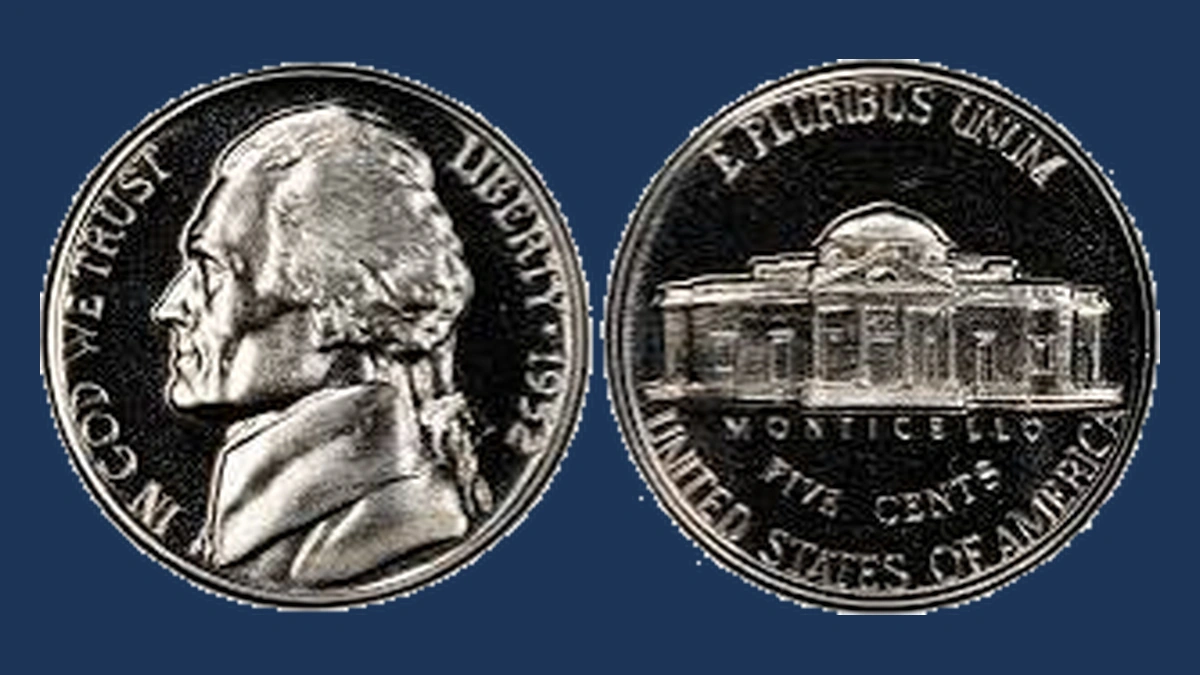
Extra raised lines around Jefferson’s hair ribbon distinguish these collector coins. They were made as Proofs, using specially prepared dies and blanks to create carefully finished surfaces.
The dies, or steel stamping tools, had parts of the front design cut again by hand. Those cuts appeared as raised details on the coins struck from them.
Four cataloged versions cover different re-engraved shapes. They are separate varieties to compare, not four proven stages of one tool; the alteration belongs near the ribbon at the back of Jefferson’s head, not the building’s steps.
Estimated Value
Estimated values are $75–$800, depending on the exact variety and the quality of the Proof surfaces. PCGS lists a $600 eBay result for FS-403 in March 2018.
That example graded PR68, a very well-preserved Proof. Other listed results include FS-401 at $495 in August 2019 and FS-402 at $378 in March 2021; those prices belong to different varieties and should not be assigned to FS-404.
How to Identify
A bright surface alone does not make a coin a Proof. Compare the overall finish with a genuine collector example before studying the ribbon, and leave certified coins in their holders.
The altered area lies at the back of Jefferson’s head. Under a 10× magnifier, follow the raised lines around the ribbon rather than counting every nearby scratch.
Match their positions with one cataloged version. Scratches cut into the surface, while the extra lines from the reworked tool stand above it.
For a loose coin, a scale and calipers should agree broadly with 5 grams and 21.2 millimeters. The plain edge and normal size do not distinguish the four ribbon shapes.
Here, FS-401 through FS-404 name varieties. They do not describe the sharpness of Monticello’s steps.
12. 1952 Jefferson Nickel Silver Dime Blank
The nickel design does not fit comfortably on this smaller silver blank. Outer letters can run off its edge because the press used a dime blank instead of the correct nickel blank.
A PCGS AU58 example is known; that grade means only slight wear. A separate NGC AU55 example was described at 2.4 grams.
A normal silver dime blank was about 2.5 grams, much lighter than a five-gram nickel blank. These are unused blanks receiving the nickel design, so remnants of a previously struck dime are not required to identify this error.
Estimated Value
Estimate $350–$1,000 for a confirmed 1952 nickel on a silver dime blank. Greysheet’s auction index records the separate AU55, 2.4-gram example at $476 in April 2014.
The PCGS AU58 coin later appeared with a 1956 nickel struck on a cent blank. That two-coin lot sold for $870 in August 2023.
The $870 is a combined result, not the price of either coin alone; surface quality and identification still matter when valuing a single specimen.
How to Identify
A lighter nickel needs a material check before it is called a dime-blank error. The normal nickel blank is 5 grams; a silver dime blank begins around 2.5 grams and 17.9 millimeters.
Use a scale and calipers on a loose candidate, then examine how the larger nickel design meets the smaller outline. Filing a normal 21.2-millimeter nickel down can also remove outer letters, but it leaves altered edges and surfaces.
Under a 10× magnifier, inspect the edge and cut-off lettering for natural striking flow. Do not require dime-style edge grooves: this blank received a nickel strike, not a normal dime strike.
A professional silver test can separate genuine wrong metal from a reduced ordinary nickel. The reported 2.4-gram measurement belongs to the AU55 coin, not automatically to the separate AU58 example.
13. 1952 Jefferson Nickel Copper Cent Blank
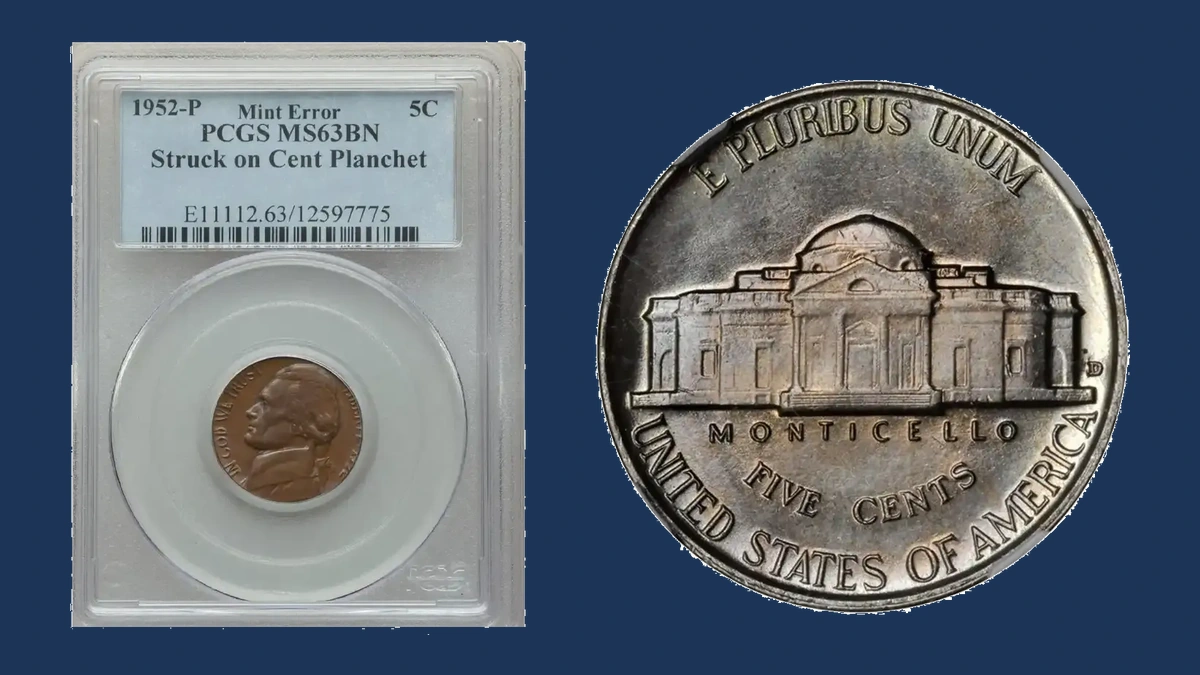
A reddish Jefferson nickel can be a nickel design stamped onto the wrong coin blank. The documented Philadelphia example used a copper cent blank weighing 3.1 grams.
NGC graded it MS63 Red, meaning unworn with visible marks and substantial original red copper color. Another recorded example has brown copper surfaces and a different certification.
The color difference does not create another error type. The smaller cent blank cannot hold the entire nickel design, leaving some outer details cut off; unlike an overstrike, it need not show any surviving Lincoln portrait or cent lettering.
Estimated Value
The red MS63 example sold for $504 at Heritage on March 31, 2025. That result belongs to the 3.1-gram copper specimen, not the heavier nickel made from an unusual three-metal mixture.
An estimated $350–$1,200 covers desirable copper-cent-blank examples. Original red color and well-preserved design can help appeal, while wear or damaged surfaces can lower a price.
A reddish coating on a normal nickel does not create comparable value.
How to Identify
Begin by separating copper color from copper construction. A plated normal nickel may look convincing from above but still have the wrong weight, size, or edge appearance.
For a loose coin, use a scale and calipers: an ordinary 1952 cent blank was about 3.11 grams and 19 millimeters. A normal nickel is 5 grams and 21.2 millimeters, with a plain edge.
Inspect that edge and the remaining nickel lettering with a 10× magnifier. Look for coating seams, filing, or a freshly cut perimeter before interpreting the missing outer design as a striking error.
The known red example’s 3.1-gram reading fits a copper cent blank. If the measurements and surviving design agree, preserve the surface and obtain identification of the metal rather than testing it with a scratch.
Conclusion
A second mintmark outline and a copper-colored nickel call for very different checks. Start with the visible feature, then compare the correct mint and kind of coin.
The estimated $10–$1,200 span covers small varieties through desirable wrong-blank pieces. Keep paired fragments together, and treat a two-coin auction total as a group price.
Close photographs, careful measurements, and untouched surfaces make the next identification step much easier.