1963 Nickel Error List with Pictures

A tiny staple can turn a five-cent coin into a collector’s prize. A 1963-D nickel still holding one brought $552 at auction in October 2017.
The 1963 Jefferson Nickel errors below also include repeated letters, missing metal, and designs struck on the wrong blanks. Estimated values run from $10 to $1,500, depending on the mistake and condition.
Read on to learn which details deserve a closer look and how to separate them from ordinary damage.
1. 1963 Jefferson Nickel Repunched D Mintmark
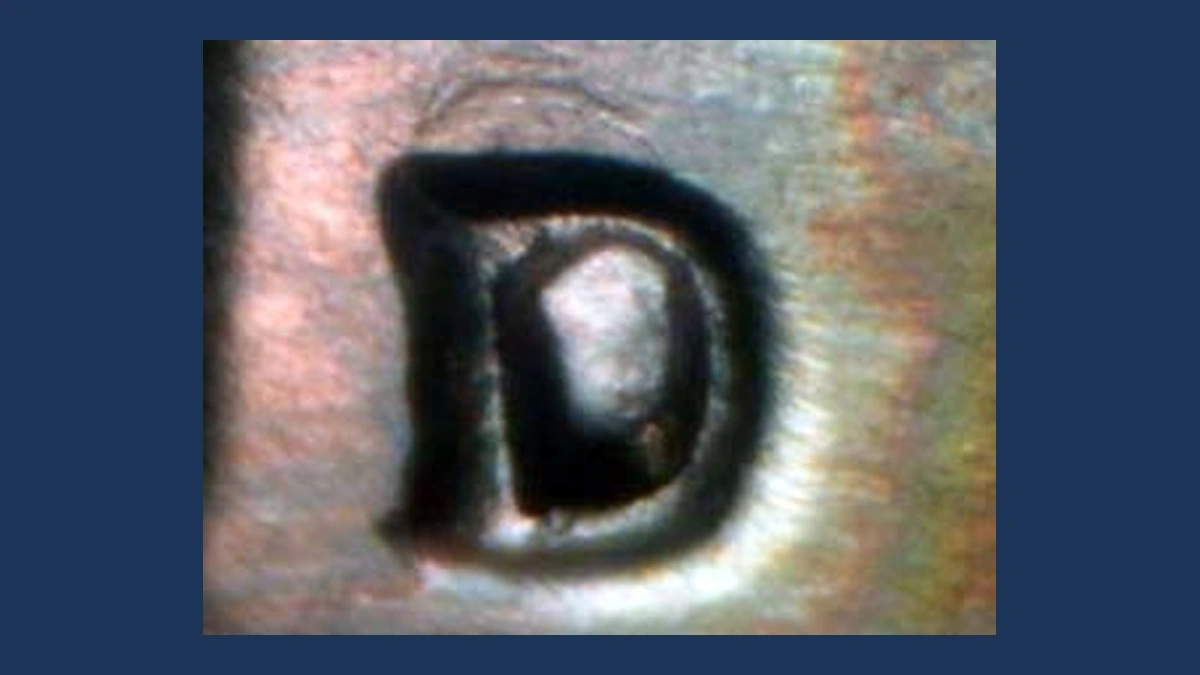
The small D beside Monticello can show part of another D underneath. This is a repunched mintmark: a repeated letter made when the Mint worker punched the mintmark into the stamping tool twice.
For 1963-D WRPM-001, the extra impression lies south, or below the main D. The repeated letter was already in the tool before the coin was struck.
It is separate from doubling across the date or motto. A thick D alone does not establish the variety, and damage beside the letter can create a misleading extra outline.
Estimated Value
A clearly matched example has an estimated value of $10–$40 when worn or $40–$100 when unworn. These are estimates for the repeated mintmark, rather than an auction price for a specific WRPM-001 coin.
Sharp edges on both D impressions make the feature easier to appreciate. Heavy wear can hide the smaller impression, while cleaning lowers appeal even when the repeated letter remains visible.
How to Identify
Locate the D on the back, to the right of Monticello. A Philadelphia nickel has no mintmark here, so it cannot match this D-over-D variety.
With a 10× magnifier, look below the main letter for the smaller D outline. Compare its shape with the WRPM-001 photographs in Wexler’s nickel listings.
Then check the surrounding surface for cuts or displaced metal that could imitate an extra stroke. A scale and calipers should give roughly 5 grams and 21.2 mm for a normal loose coin, with a plain edge.
The useful first match is the lower D outline itself; a nearby scratch is not a second mintmark.
2. 1963 Jefferson Nickel Rotated Design
Monticello should stand upright when you turn an upright Jefferson nickel from top to bottom. If it leans sideways instead, the two designs may be out of alignment.
A rotated die error starts when one stamping tool sits at the wrong angle to the other. The coin can otherwise look completely normal, with no missing design or strange outline.
This error is reported for 1963, but no single angle applies to every candidate. Pictures taken separately can also make a normal coin seem rotated if the photographer turned one image.
Estimated Value
For an authenticated rotation, estimate $20–$75 for a modest angle and $75–$250 for a large, clearly measured turn. These ranges assume the coin has not been altered.
A different-year comparison is a 2015-D nickel with a ninety-degree clockwise rotation, graded MS64, which sold for $79 in October 2021. That sale helps set expectations without assigning its exact angle or price to an unmeasured 1963 coin.
How to Identify
Try the turning test before using magnification. Hold Jefferson upright, then turn the coin top to bottom without twisting it sideways.
Monticello should finish upright. Repeat the movement with a normal nickel beside it, then use a protractor to measure any remaining lean.
Photograph both positions with the same fixed grip, so another person can repeat your measurement. Do not measure the angle between two loose photographs.
For a loose coin, use a scale and calipers to check the normal 5-gram weight and 21.2 mm diameter. Inspect the plain edge with a 10× magnifier for a join suggesting two coin halves were combined.
A lean that repeats through the same top-to-bottom turn is the key observation.
3. 1963 Jefferson Nickel Dark Surface from Improper Annealing
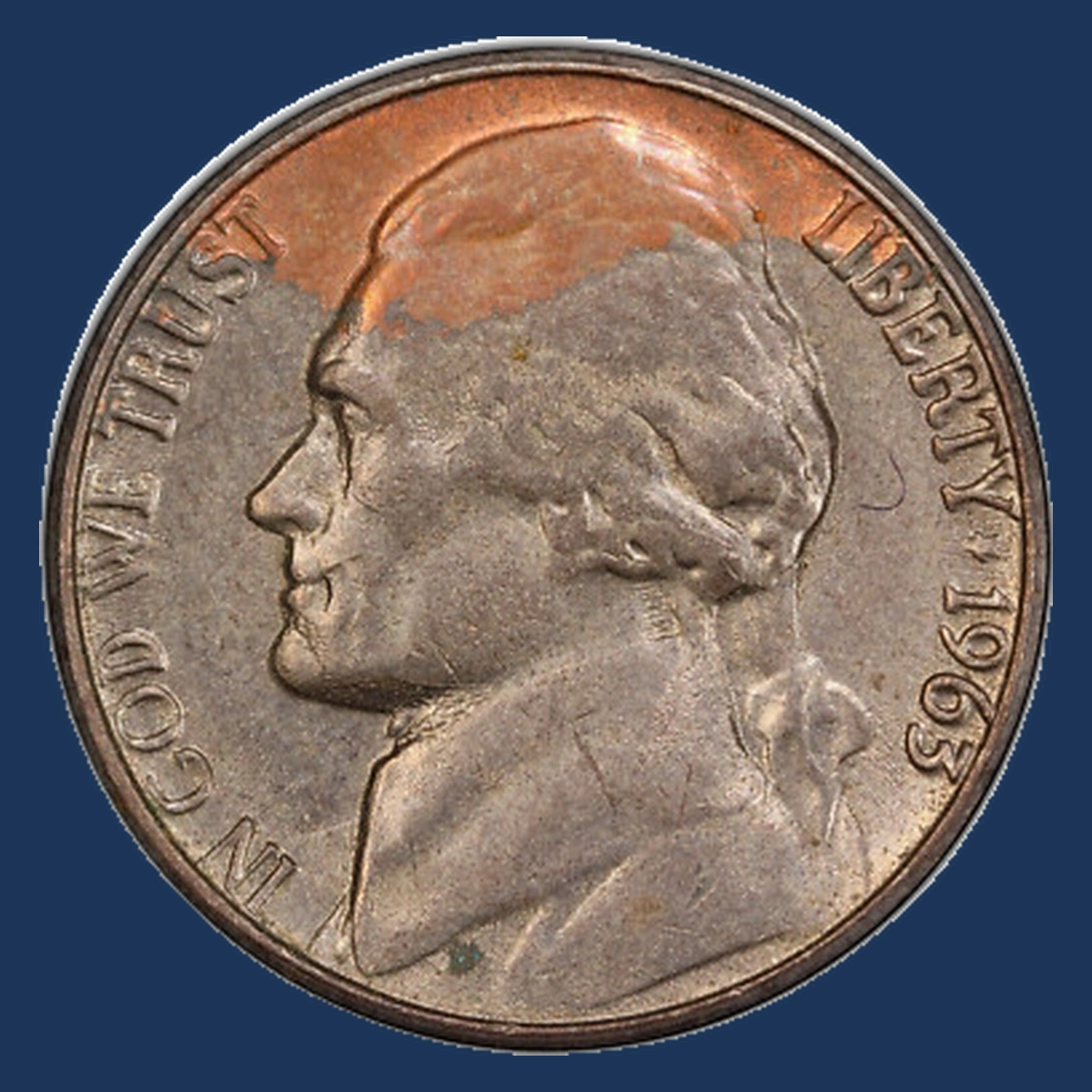
A dark gray or nearly black 1963 nickel may be described as a “Black Beauty.” The name refers to its appearance, not a separate metal recipe.
Annealing is the heating step that softens coin blanks before striking. A problem during that step can leave an unusual surface on the finished coin.
A normal 1963 nickel is one copper-nickel alloy throughout, so this is not a missing outer layer. Dark coins can also result from storage, chemicals, or later heating, making color alone a poor way to identify a Mint error.
Estimated Value
Use an estimated $25–$100 for a verified, lightly worn example and $100–$300 for a pleasing unworn coin. Ordinary staining does not qualify for these error prices.
For comparison, a 1971-D nickel graded MS65 and labeled improperly annealed sold for $149 in July 2022. That coin also had a low D mintmark, so its price should guide expectations rather than set a fixed value for 1963.
How to Identify
Do not clean a dark nickel to test what lies beneath the color. Cleaning removes the surface evidence you need.
Under a neutral light, compare it with an ordinary 1963 nickel. Turn both coins slowly and look for original shine beneath the dark surface, rather than a dull coating covering everything.
A 10× magnifier helps reveal corrosion pits, paint, or rough chemical damage. Those features point away from a simple Mint heating error.
The normal 5-gram weight, 21.2 mm diameter, and plain edge remain useful checks with a scale and calipers. They cannot date the discoloration, however; confirmation requires the original surface to be examined by an error specialist.
4. 1963 Jefferson Nickel Defective Blank
A coin blank is the piece of metal that receives the design. If it begins with a flaw or missing material, the finished nickel can be lighter than normal.
One 1963 example was graded NGC MS65 and described as struck on a defective blank. Its recorded weight is 4.4 grams, compared with the normal 5 grams.
That weight difference is meaningful, but it does not name the flaw’s shape. It should not be called a curved clip, a hole, or a thin-strip error without the physical evidence for that particular explanation.
Estimated Value
An estimated $50–$150 suits a modest authenticated blank defect, with $150–$350 for a more visible example in strong condition. The 4.4-gram coin supplies a real example, but no sale amount is used here.
As a related comparison, a 1979 nickel with a blank hole sold for $253 in June 2008. Its visible hole differs from the unspecified 1963 flaw, so the estimate is not a claim that they share one shape.
How to Identify
Start with a scale that reads hundredths of a gram. The recorded coin weighs 4.4 grams, but another light nickel does not automatically share its Mint-made defect.
Use calipers to compare the diameter with the normal 21.2 mm, then inspect the plain edge and both faces under a 10× magnifier. Look for grinding lines, acid damage, or an evenly shaved outline that could explain metal lost later.
At the actual flaw, examine how the struck design meets the abnormal surface. A natural boundary affected by the strike supports an earlier defect, while a fresh cut crossing finished details points to later damage.
Have that boundary assessed together with the measured weight before accepting the defective-blank label.
5. 1963 Jefferson Nickel Doubled and Tripled Design Details
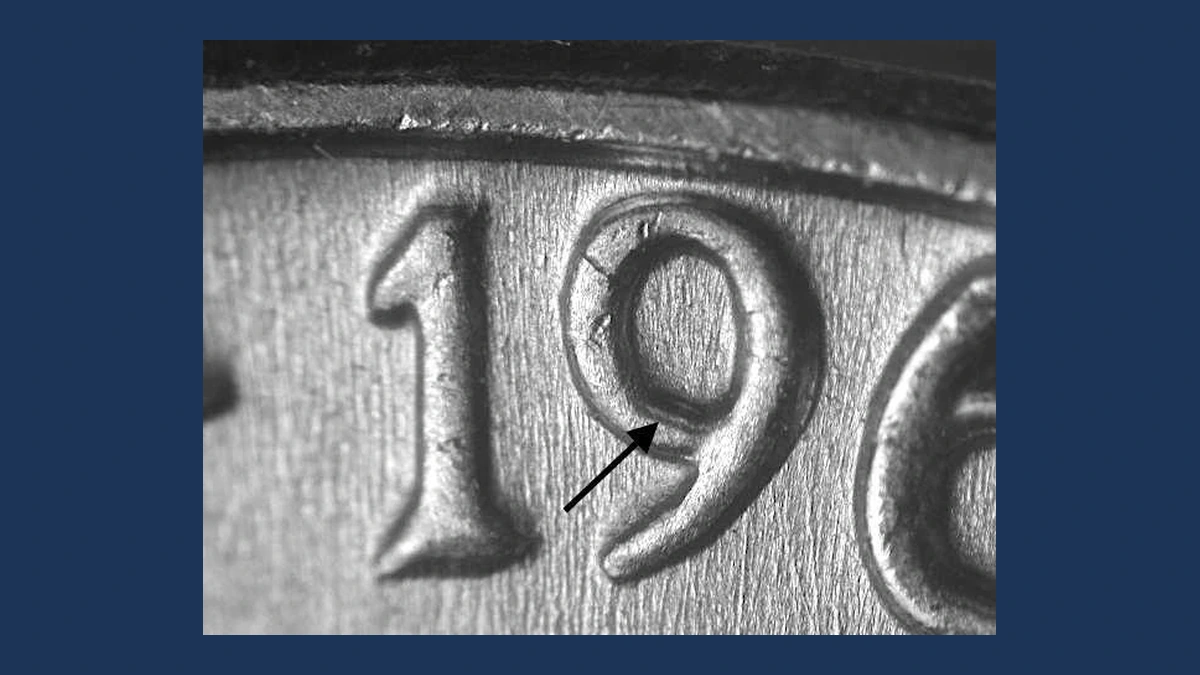
Extra edges around letters or numbers can be built into the steel tool that stamps a coin, called a die. Every coin struck from that tool then repeats the same feature.
The Philadelphia FS-801 shows strong tripling in E PLURIBUS UNUM, with doubling or tripling elsewhere on the back. Denver WDDO-001 instead shows separation at the upper curve of the date’s 6.
Proof coins, specially made for collectors, have separate varieties on both faces. Small shared patterns can also come from an earlier design tool, so not every doubled letter identifies a scarce variety.
Estimated Value
Estimate $10–$75 for minor clearly identified examples and $75–$400 for stronger varieties in attractive condition. Very small shared doubling need not bring the same premium.
PCGS records an FS-801 graded MS64 at about $277 in October 2014. This ordinary Philadelphia coin is a useful price example, but it does not price every Proof variety or the separate Denver date doubling.
How to Identify
Separate ordinary coins from Proofs before matching photographs: both Philadelphia finishes lack a mintmark, so the empty space beside Monticello cannot settle that question. A loose normal example weighs 5 grams on a scale and measures 21.2 mm with calipers, with a plain edge.
For FS-801, study E PLURIBUS UNUM through a 10× magnifier, then compare the extra edges in AMERICA with the matching variety photographs. For Denver WDDO-001, turn to the date instead and examine the upper curve of the 6 for its repeated outline.
Flat, scraped-looking shelves can result from movement during striking rather than a doubled die, and thick letters alone prove little. Follow the specific rounded outlines in the correct catalog photographs, keeping the ordinary, Proof, and Denver examples separate.
6. 1963 Jefferson Nickel Off-Center Strike
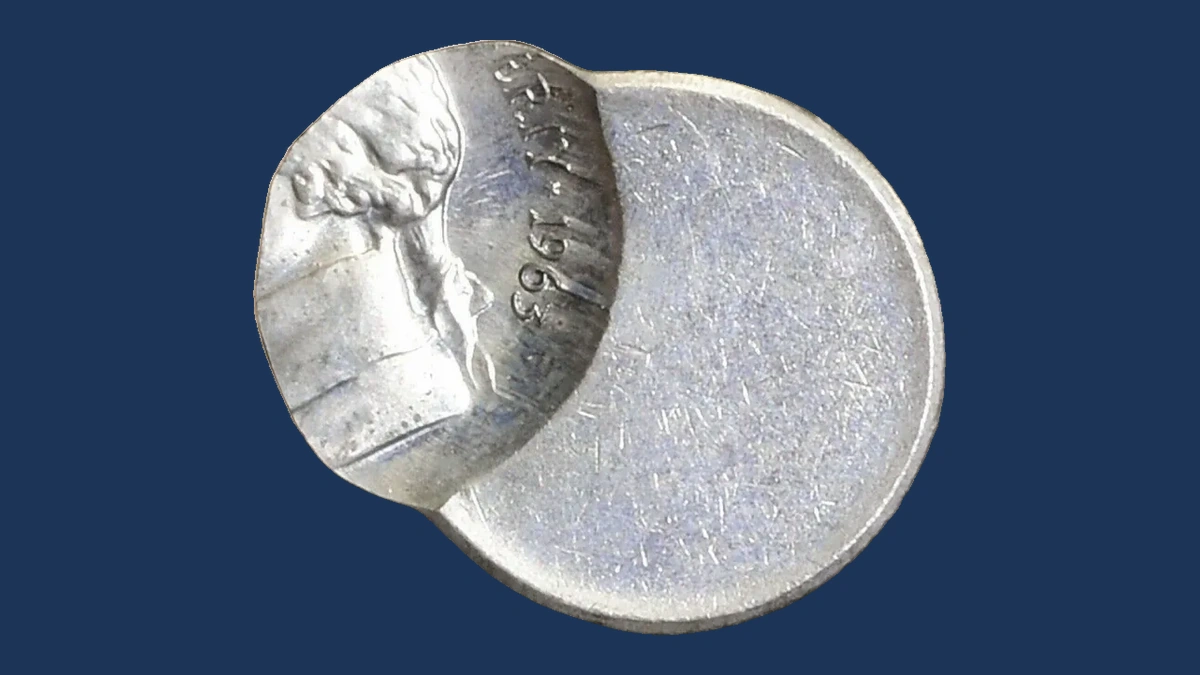
Look for a crescent of metal with no coin design on it. Beside that empty area, part of Jefferson or Monticello should be cut off where the design reached beyond the blank.
The blank entered the press in the wrong position. Because it sat partly outside the stamping tools, only part of it received the designs.
Off-center nickels are reported for 1963 without one fixed percentage or direction. A complete date makes an example easier to collect, while a wide border on just one face can have a different cause.
Estimated Value
Estimate $50–$150 for a modest genuine offset and $150–$400 for a more dramatic example with a readable date. These are type estimates, not an auction result assigned to an unidentified 1963 coin.
An especially large offset can become less attractive if it removes the entire year. Judge how much design remains, the coin’s condition, and whether both faces show the same displacement before applying the range.
How to Identify
Place the coin beside a normal nickel and compare both faces, not only Jefferson’s portrait. Missing outer design on both sides, beside an untouched crescent, is stronger evidence than an uneven rim alone.
Keep the date in view while estimating the offset. Use a 10× magnifier along the border between the struck area and the empty metal, checking for later scraping or added markings.
The metal is displaced rather than simply removed, so a normal-alloy example should remain near 5 grams on a scale. Calipers can compare its outline with the usual 21.2 mm diameter, although an off-center strike may change the shape.
Follow the plain edge around to the unstruck crescent and check that no cut produced the apparent missing design.
7. 1963 Jefferson Nickel Curved Clip
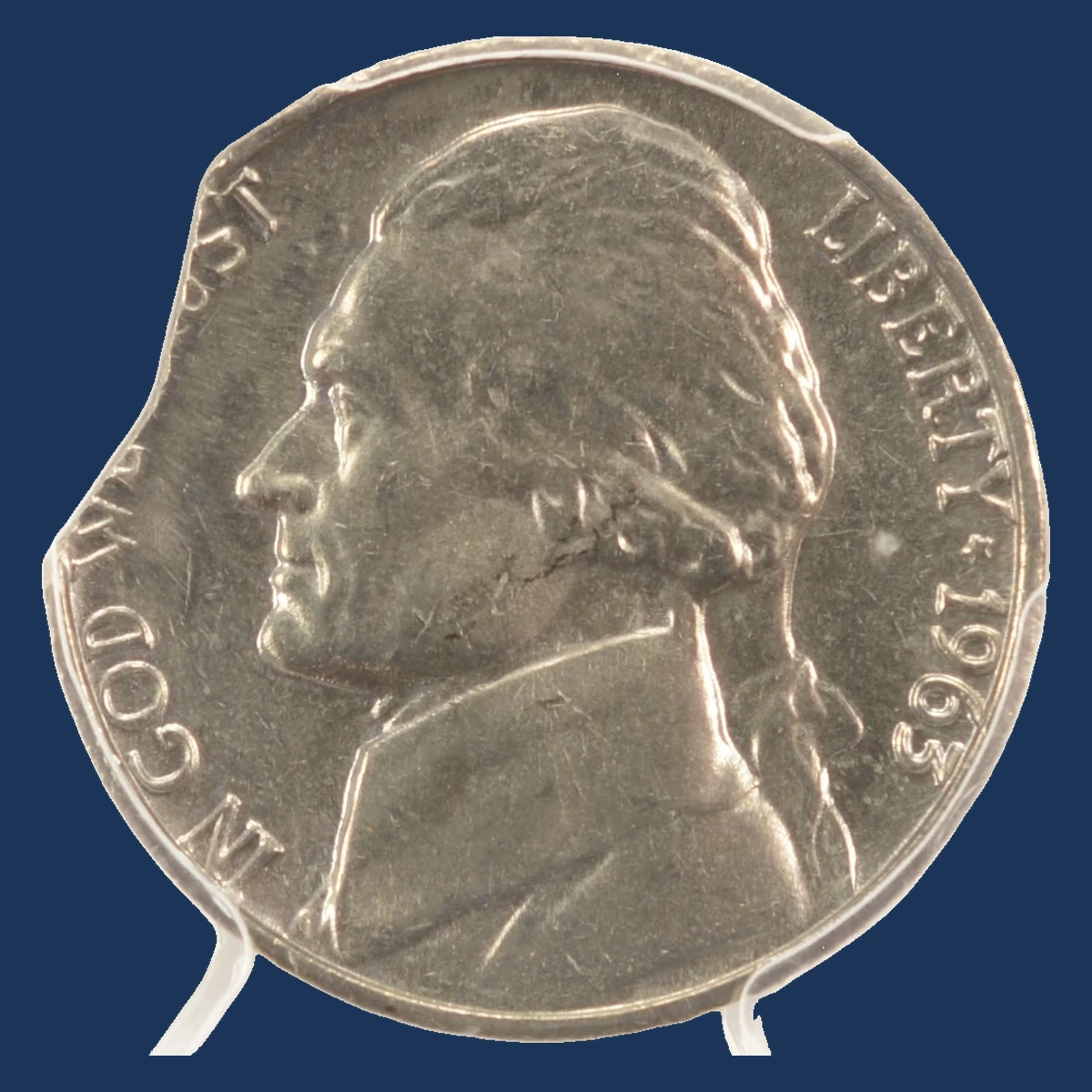
A large curved section is absent from the recorded 1963 clipped nickel. The auction description gives the missing portion as forty percent and the grade as NGC MS64.
This kind of gap begins before striking. When blanks are punched from metal strip, an overlapping cut can reach a hole left by an earlier blank.
The shortened blank still enters the press and receives a coin design across the remaining metal. Unlike an off-center strike, the empty-looking section contains no metal at all, and the edge around the gap needs careful inspection.
Estimated Value
A reasonable estimate is $25–$150 for smaller genuine clips and $150–$600 for a large, attractive example. A forty-percent missing section is substantial, but the readable date and remaining design still matter.
The recorded 1963 coin was sold with four other nickels, so that lot cannot supply an individual price. A 1997-P twenty-percent clip brought $124 in March 2025, providing a different-year comparison for a less extensive gap.
How to Identify
Keep a severely clipped coin supported; do not grip it across the missing section. Its reduced weight is expected, and a scale can document that without proving how the gap formed.
Compare the surviving outside arc with a normal 21.2 mm nickel using calipers. The original outside edge should be plain.
With a 10× magnifier, examine the cutaway curve for natural metal flow and softened design near the boundary. A weak rim opposite the gap can provide another useful clue.
A saw or file may leave parallel marks, sharp burrs, or a fresh wall cutting through finished details. Check those surfaces first when deciding whether the missing crescent predates the strike.
8. 1963 Jefferson Nickel Double Strike
Two sets of design details can overlap on the same nickel when it is struck twice. The second blow may fall in a new position and flatten parts of the first impression.
A double-struck, off-center 1963 example has been reported in MS60 condition. Its precise offset and mintmark are not established here, so neither should be borrowed from another coin.
This differs from doubled letters already present in a stamping tool. A true second strike can move whole parts of the portrait, building, or border together, rather than just adding a thin edge.
Estimated Value
For a genuine double strike, use an estimated $100–$300 for a modest example and $300–$750 for a clearer, more dramatic overlap. The range depends on how easily both strikes can be followed.
A 1987-P double-struck, off-center nickel graded AU58 sold for $159 in March 2025. That is a different-year comparison, not the price of the reported 1963 MS60 coin; severe later damage would reduce a similar coin’s appeal.
How to Identify
A scale reading near 5 grams is compatible with two strikes, because the second blow need not remove any metal. Compare the outline with the usual 21.2 mm diameter using calipers, noting expansion rather than expecting a perfectly normal shape.
Trace each impression separately on a photograph, following Jefferson or the building from one position to the other without marking the coin itself. Under a 10× magnifier, examine places where the second blow flattened raised details left by the first.
Then turn the coin over and look for the corresponding changes on the other face, also checking the normally plain edge for impact damage. Follow an earlier letter into an area flattened by the later strike; that overlap explains more than an isolated extra line.
9. 1963 Jefferson Nickel Retained Staple
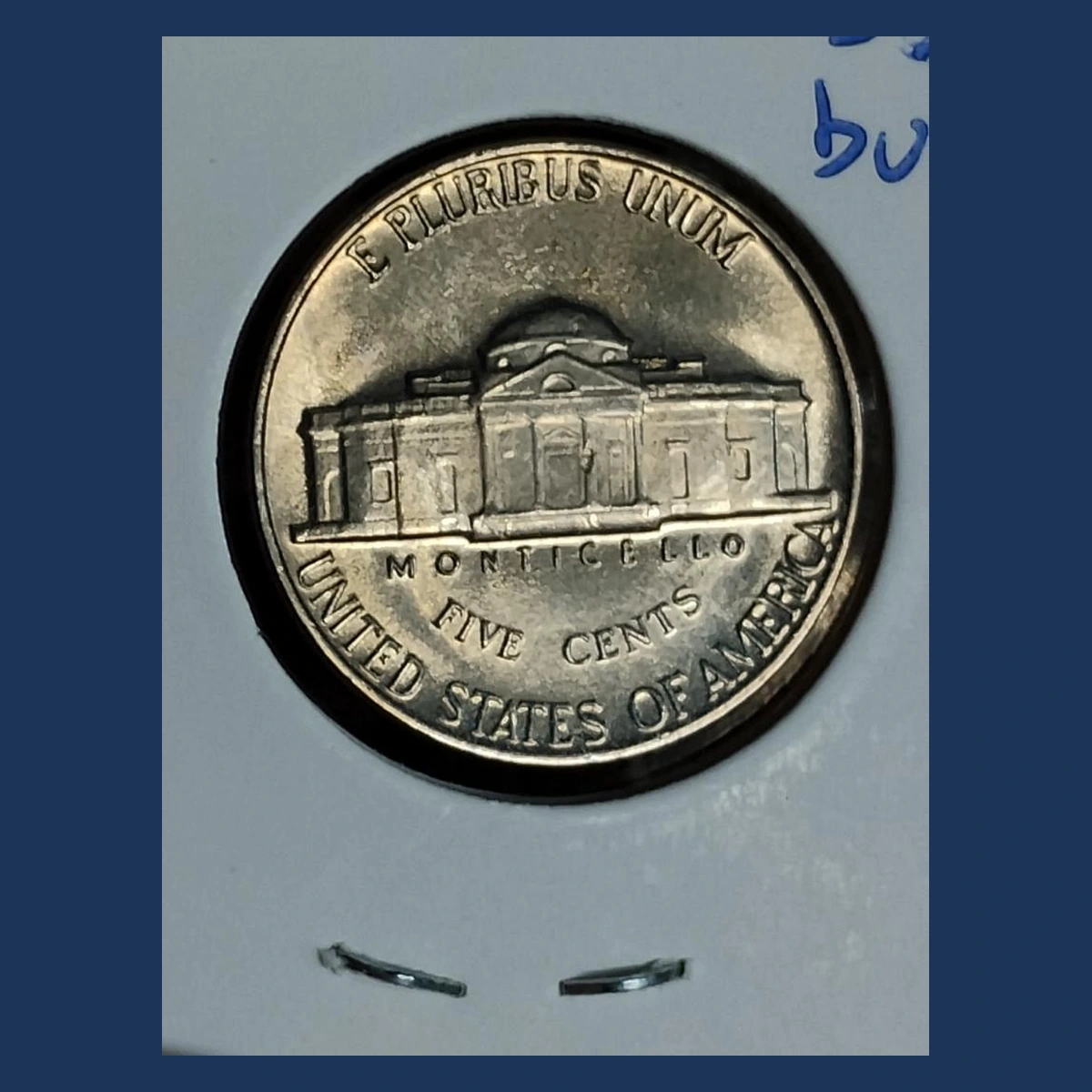
A foreign object can leave more than a hollow mark on a coin. On the recorded 1963-D nickel, a staple remained embedded after the coin was struck.
The staple became trapped between the blank and a stamping tool. Pressure pressed it into the surface while the surrounding coin design was being formed.
Collectors call this a retained strike-through because the object is still there. The recorded example was graded ANACS AU50, showing some wear, and should be distinguished from a loose staple glued or pressed onto a finished nickel much later.
Estimated Value
The ANACS AU50 retained-staple nickel sold for $552 on October 31, 2017. That is a real sale of the 1963-D error, not a seller’s asking price.
Estimate $300–$1,000 for an authenticated example with the staple securely retained. Visibility, surface preservation, and damage around the object influence the price; an empty depression or an object added later does not deserve the same estimate.
How to Identify
Leave the staple exactly where it is. Pulling it out would destroy part of the evidence and change the collectible error.
Look through a 10× magnifier at the places where the object meets the coin. The surrounding metal and interrupted design should show pressure from the same strike, rather than glue or a fresh gouge.
Check both faces for signs that the staple was forced in afterward. A matching modern impact on the opposite face would deserve close attention.
For a loose coin, note the weight on a scale without trying to separate the staple. Compare the diameter with 21.2 mm using calipers and inspect the plain edge; normal nickel weight is 5 grams before any foreign object.
An undisturbed object with original struck metal around it is the essential feature to confirm.
10. 1963 Jefferson Nickel Wrong Blank
A copper-colored nickel can actually have been made on a cent blank. Both Philadelphia and Denver examples from 1963 are recorded at 3.1 grams, well below a normal nickel’s weight.
The smaller cent blank cannot hold the entire nickel design, so outer details may run off the edge. Its metal is copper-rich, rather than the nickel’s usual silvery alloy.
A separate PCGS MS63 coin was described as struck on a foreign copper-nickel blank. That piece has a centered but very weak design; its intended country and denomination have not been identified.
Estimated Value
The Philadelphia cent-blank coin graded NGC MS63 Full Steps sold for $264 in January 2018. A Denver example graded NGC MS64 Brown brought $408 in September 2023.
Estimate $250–$750 for comparable cent-blank pieces and $500–$1,500 for an authenticated foreign-blank example. The foreign estimate uses the broader wrong-blank market, not a recorded sale for that coin; a weak strike alone does not establish foreign metal.
How to Identify
Weigh a loose copper-colored candidate before judging its color. Around 3.1 grams fits the recorded cent-blank examples, while a plated normal nickel should remain much closer to 5 grams.
Use calipers to compare its size with the nickel’s normal 21.2 mm diameter. A cent blank starts smaller, though striking can spread it; inspect the plain edge and cutoff design with a 10× magnifier.
For a silvery, weakly struck candidate, the same shortcut is insufficient. Have its metal, weight, and dimensions checked before naming any foreign denomination.
The Philadelphia coin’s “Full Steps” label describes clear building steps, not another error. For the cent-blank type, start with the combined 3.1-gram weight and naturally truncated nickel design.
Conclusion
For 1963 Jefferson Nickel errors, estimated values range from $10 to $1,500. A small repeated D sits near the affordable end, while unusual wrong blanks can cost much more.
Keep the coin’s finish, weight, and visible mistake together when judging it. A dark surface alone proves little, but an embedded staple or a clear missing crescent gives you something concrete to examine.
Leave promising coins uncleaned.