1961 Nickel Error List with Pictures

A Proof, a specially made collector coin, struck 30% off center appears in Heritage’s August 2008 records at $4,025. That large shift is easier to see than the close letter doubling found on many 1961 Proofs.
This 1961 nickel error list covers both kinds, plus unusual blanks and a retained staple. Estimated values span $5–$6,000.
Follow the sections below to find the visible feature, check the coin’s identity, and compare its price.
1. 1961 Jefferson Nickel Bar-Shaped Die Break
A narrow raised strip can resemble a bar laid across the coin. If it formed during striking, it may record a cracked or broken area of the die, the steel stamping tool.
Metal flows into the damaged tool and stands above the nearby surface. A 1961-D year report lists this bar-shaped break without establishing one exact location for every example.
The feature needs to be part of the coin’s metal. A retained staple is a separate object pressed into the coin, even when its shape also looks like a short bar.
Estimated Value
A genuine small bar-shaped break on a 1961-D nickel is estimated at $5–$75. A clear raised feature with original surfaces is more appealing than a vague line under difficult lighting.
The retained-staple coin’s auction price does not value this type. Those errors have different causes, and the bar-break report supplies no individual sale; the estimate applies only after the raised strip is identified as damage copied from the stamping tool.
How to Identify
Use low side lighting to see whether the alleged bar rises from the coin or cuts into it. A 10× magnifier can reveal a scratch with pushed-up edges that only looks raised from one direction.
Examine the ends of the strip. An attached wire or staple may have a separate boundary, while solder can leave an added mass over completed detail.
The D for this year belongs on the back, to the right of Monticello. On a loose coin, a scale and calipers provide the usual 5.00 g and 21.21 mm checks.
Follow the bar into the surrounding original surface. It should be continuous coin metal, rather than an object sitting on top.
2. 1961 Jefferson Nickel Split Blank Before Striking
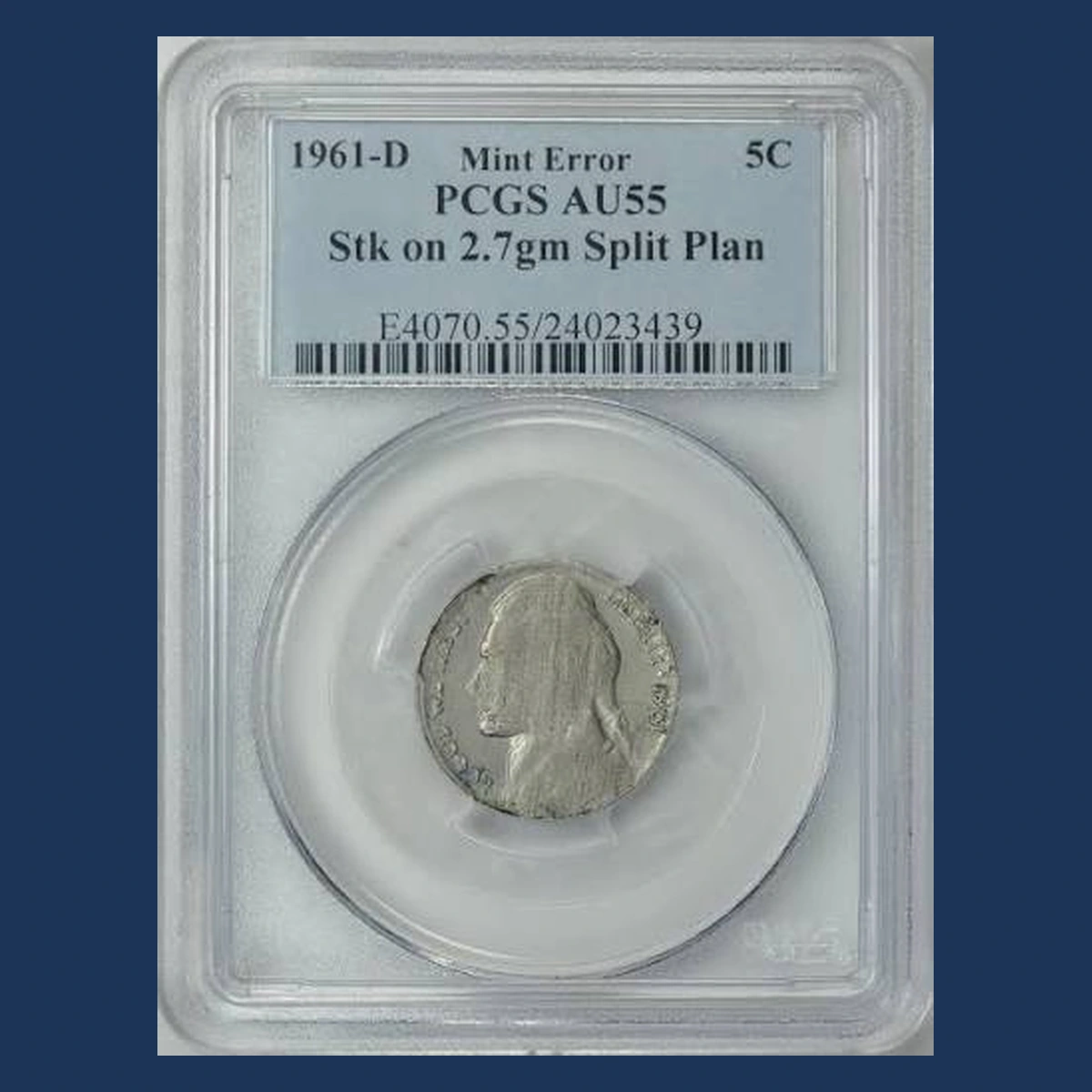
This nickel is thin because its blank separated before the press made the design. The surviving piece was then struck as a coin instead of being removed from production.
A collector’s recorded 1961-D example weighs 2.7 g and is graded PCGS AU55, indicating light circulation wear. It is much lighter than the normal 5.00 g nickel.
The rough separated surface can still show traces of the later strike. That order distinguishes a split before striking from a layer breaking away afterward.
The nickel’s single copper-nickel mixture should not be mistaken for layered dime metal.
Estimated Value
Estimate $40–$180 for a comparable identified 1961-D split blank. The recorded 2.7 g AU55 piece has no individual sale price used here.
A different-year 1969-D split-before-strike nickel weighing 4.2 g sold for $64 in December 2024. That sale offers a related example, not the weight or value of the 1961 coin; the amount of metal remaining and the clarity of its struck design affect the estimate.
How to Identify
The 2.7 g weight belongs to one recorded example, not every split blank. Check a loose candidate on a digital scale and note how far it falls below the normal 5.00 g.
Calipers can compare the outline with the usual 21.21 mm without pressing on a fragile area. A thin split piece may keep much of the original diameter even after losing substantial weight.
Look with a 10× magnifier across the rough face for design pressed onto that exposed metal. Grinding usually leaves its own parallel marks or flattened details, while genuine design on the split surface helps show that separation happened before striking.
3. 1961 Jefferson Nickel Cracked Planchet
A crack can run through the nickel itself rather than through the tool that made it. A planchet is the metal blank used for striking, and a weakness in that blank can leave an actual opening.
A 1961 Philadelphia example was graded PCGS XF45 and cataloged as a cracked planchet. XF45 describes a circulated coin with much of its detail still visible.
This differs from a raised die-crack line copied onto otherwise solid metal. It also differs from a saw cut or a finished coin bent until the metal breaks.
Estimated Value
For a professionally identified cracked blank of this date, use an estimated $30–$200. The size of the opening, surviving design, and surface condition affect the comparison.
The XF45 catalog entry identifies the type without a selling price used here. A stable, clearly visible Mint-made crack is more useful to a collector than an opening enlarged by handling, and later bending or cutting should not receive the same error valuation.
How to Identify
Do not flex the nickel to see whether the crack opens farther. Its present shape is evidence, and forcing it can turn a stable coin into two pieces.
Inspect the opening from both faces with a 10× magnifier. A crack in the metal has depth, unlike a thin raised line left by a cracked stamping tool.
Follow it toward the plain edge. Saw grooves or fresh bent metal may explain damage after minting.
A scale should remain near 5.00 g if no pieces have broken away. Calipers provide the normal 21.21 mm comparison, but avoid closing them across the crack.
The actual opening through the metal is the feature to distinguish from a raised surface ridge.
4. 1961 Jefferson Nickel Repunched D Mint Mark
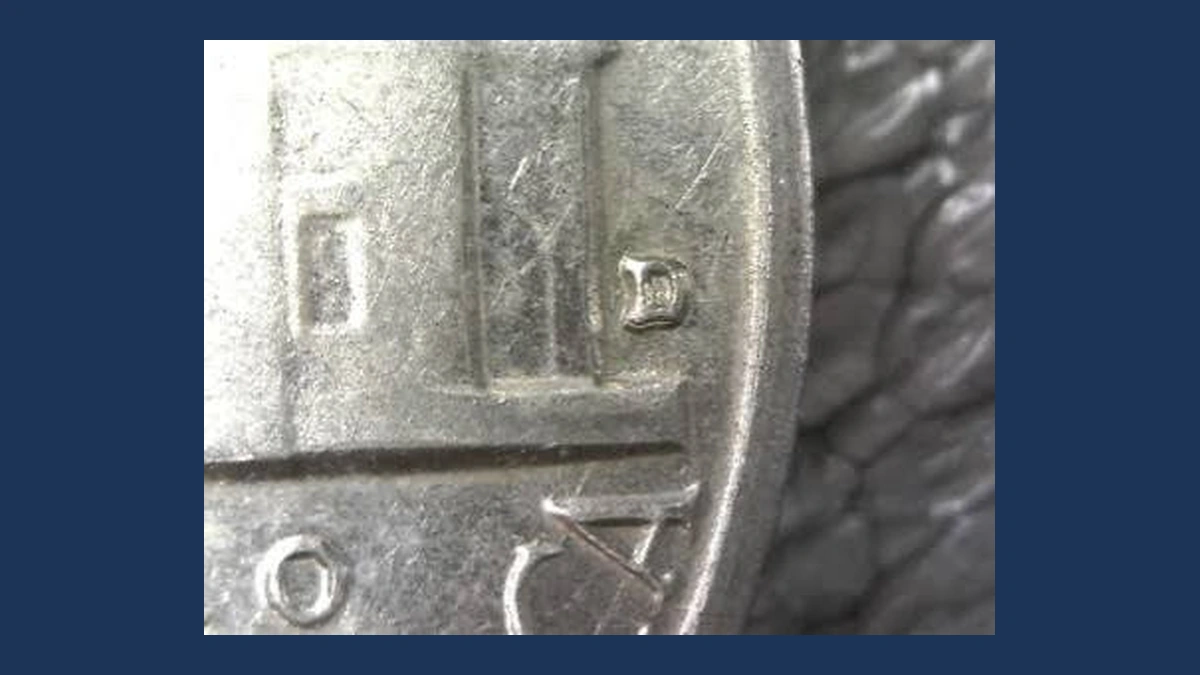
A second part of the D can survive beside the main mint letter. The worker who punched the mark into the stamping tool sometimes left a misplaced earlier impression.
Listed 1961-D examples include tilted extra strokes and another D placed lower than the stronger mark. The coin copies both impressions from the tool.
Unlike modern Jefferson nickels, the mint mark for 1961 sits on the back beside Monticello. Philadelphia coins have no mint letter.
A flattened shelf beside the D may instead come from movement during striking, so two apparent edges need careful comparison.
Estimated Value
For identified repunched D varieties, estimate about $10–$200. A strong extra stem or curve on an attractive coin will generally be easier to sell than a faint trace.
These are estimates across the listed forms, not an auction record for each catalog number. A well-preserved coin can also have value for its condition; do not assume all of its price comes from the small mint-mark feature or from a seller’s variety label.
How to Identify
Ignore the front mint-mark position used on later nickels. Find the D to the right of Monticello, then compare it with the same variety in Wexler’s listings.
A 10× magnifier helps separate an extra rounded stem from a flat shelf on either side of the letter. The listed forms point in different directions, so a tilted extra D does not identify the lower-D variety.
For a loose coin, check the plain edge and approximately 5.00 g and 21.21 mm with a scale and calipers. Those normal measurements cannot distinguish the varieties; the useful evidence is the same secondary D stroke in the same position.
5. 1961 Jefferson Nickel Clipped Blanks and a Clamshell Split
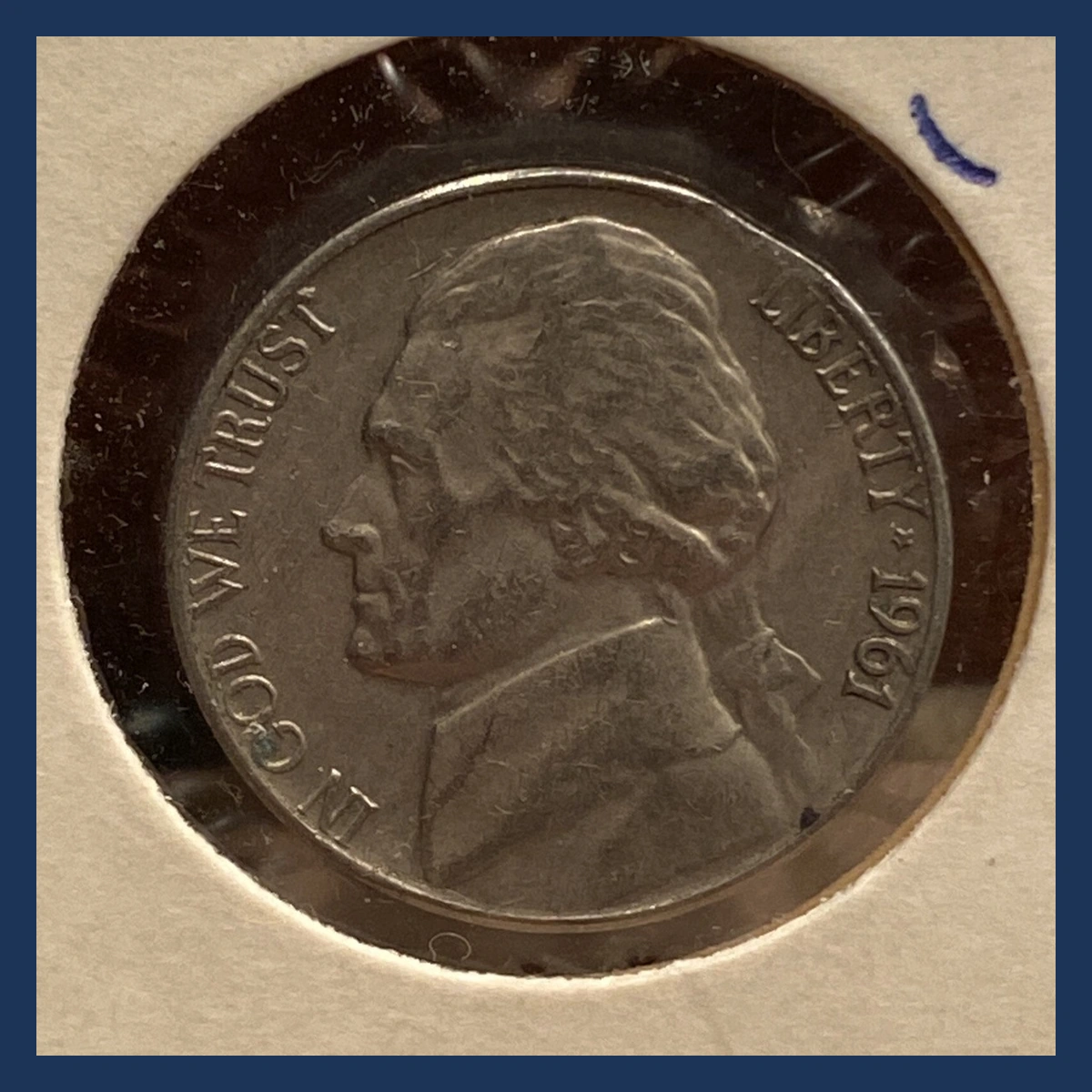
Clipped blanks are missing metal before they enter the press. A 1961 Philadelphia nickel has two small curved clips, while a separate Denver example is missing a much larger straight section.
The Denver coin also has a clamshell split. Part of its metal opens like two halves of a shell, rather than merely losing a thin surface flake.
The straight clip and the split occur together on that one coin. They should not be combined with the small curved clips on the other example or treated as damage with identical shapes.
Estimated Value
The Philadelphia 2% double-curved clip, graded PCGS MS65, sold for $61 in September 2024. The Denver 25% straight clip with a clamshell split brought $126.50 in August 2010.
Estimate $20–$150 for smaller genuine clips and $100–$400 for comparable clip-and-split combinations. The latter price covers the whole coin; the straight gap and opening layers do not receive separate values that should be added together.
How to Identify
The two examples call for different edge checks. On the small curved clips, inspect where the struck rim weakens toward each gap under a 10× magnifier.
A scale should show less than the normal 5.00 g when metal is missing. Use calipers across the intact outline against 21.21 mm, rather than measuring straight across a clip.
For the Denver combination, examine the straight boundary and the opened thickness separately. A clamshell split reaches into the coin’s body, not just its outer surface.
Leave the opening untouched. Forcing it wider can break the remaining connection.
Natural struck edges support the clip, while the deep connected separation explains the clamshell part of the same coin.
6. 1961 Jefferson Nickel Doubled and Tripled Dies
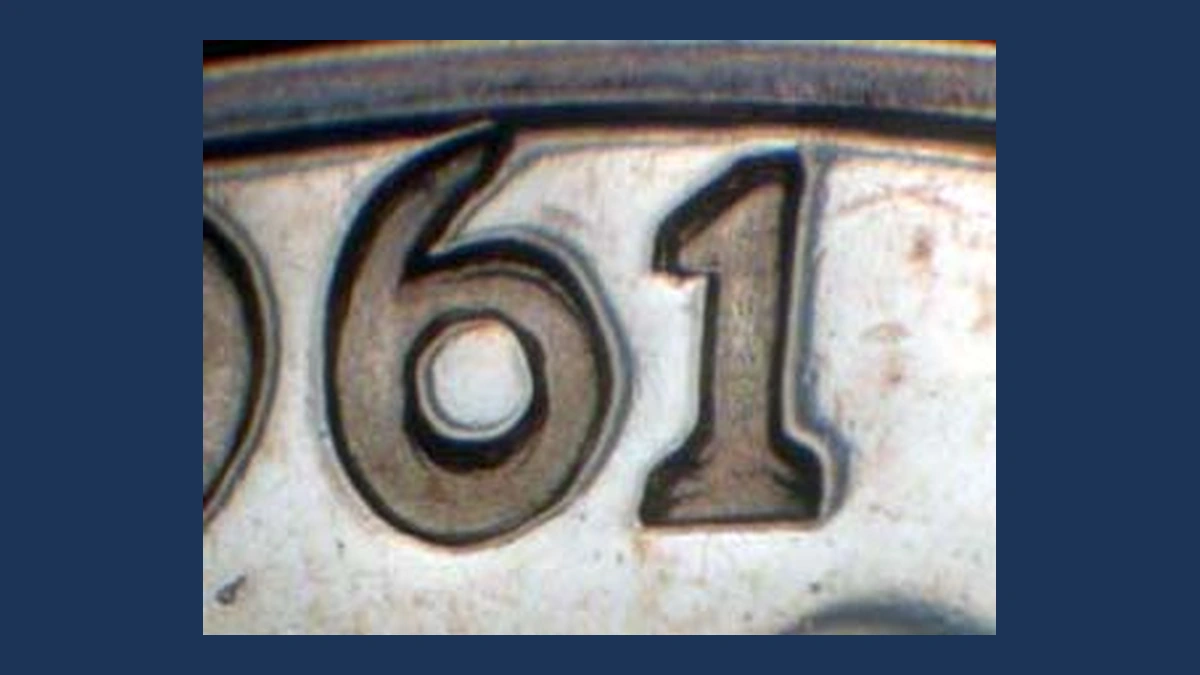
Some 1961 Proofs show two or even three close outlines around letters. Proofs are specially made collector coins, and these extra outlines were already present in the stamping tools.
Front examples affect the motto, LIBERTY, date, or star. Back examples can show repeated details in the country name, E PLURIBUS UNUM, denomination, and parts of Monticello.
The strongest patterns differ greatly from tiny traces visible only under magnification. Some slight repeated features were shared by several tools, so their presence alone does not make a coin a rare individual variety.
Estimated Value
Minor identified doubling may fit $10–$75, while stronger Proof doubled or tripled designs are estimated at $75–$500. Clear separation and clean collector surfaces help distinguish the more desirable examples.
These ranges are estimates rather than a price assigned to every fine catalog listing. Small shared details can add little by themselves, and a high Proof grade does not prove that its particular doubled pattern commands the upper value.
How to Identify
With a 10× magnifier, choose one affected word and trace the extra outlines across several letters. Brian’s catalog shows how the spacing changes between the listed examples.
A tripled design may have three closely spaced raised outlines. It does not mean that the finished coin was struck three times in different positions.
Study a known Proof comparison for the same pattern. A shiny regular coin is not automatically a Proof.
A loose normal nickel weighs 5.00 g and measures 21.21 mm, checked with a scale and calipers. Keep holdered Proofs protected and use their recorded details.
At the letter’s edge, separate rounded repeated strokes from a low flat shelf left by movement during striking.
7. 1961 Jefferson Nickel Double Strike
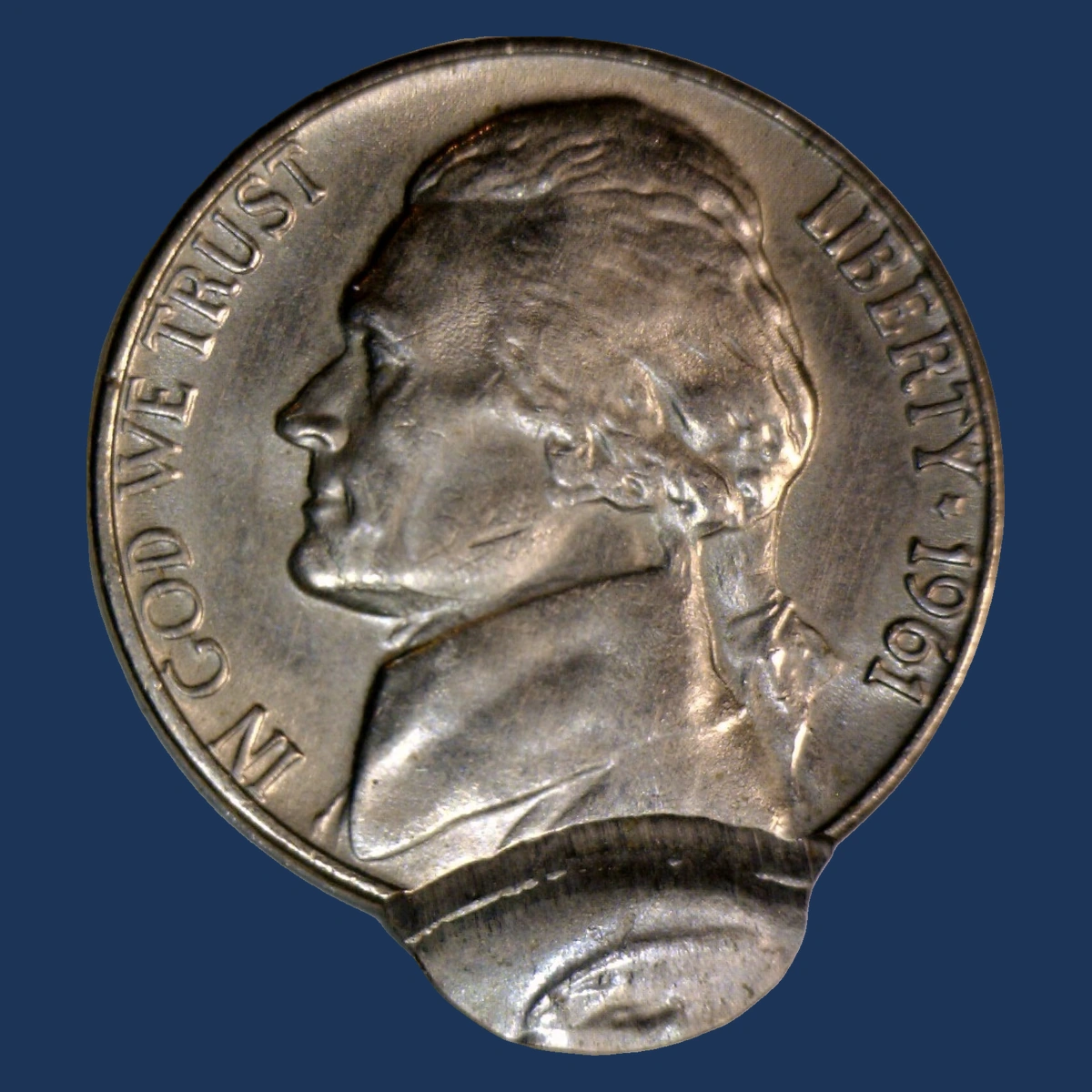
A coin can remain in the press long enough to receive another blow in a new position. A second portrait or date may then overlap the first design.
A Denver example was described with its second strike 50% off center and graded NGC AU58. A separate CACG AU58 example has a second strike 93% off center.
AU58 indicates very slight circulation wear. The percentages belong to two different coins, even though their date and grade level are similar.
The second strike can flatten earlier detail, so both impressions will not always look equally sharp.
Estimated Value
Sullivan Numismatics listed the 93% second-strike example at $175. That is an asking price, not a completed auction result.
Estimate roughly $125–$650 for comparable 1961-D double strikes. Surviving second design, visible date, and surface condition matter.
A larger off-center percentage does not guarantee a higher price when little of the second image remains. The separate 50% coin needs its own comparison.
How to Identify
Begin where the two impressions meet, not at the largest blank area. Under a 10× magnifier, follow a later design across an earlier portrait or letter.
The 93% example is separate from the documented 50% piece. Match the actual arrangement on the coin in front of you.
Check the back for the D beside Monticello. Do not look for it below the front date as on later nickels.
A scale and calipers can record the shape against a normal 5.00 g and 21.21 mm. Repeated blows may expand the outline without removing metal.
Look for two overlapping stamped images, rather than the closely spaced extra letter edges of a doubled die.
8. 1961 Jefferson Nickel Struck Through a Retained Staple
A staple remained on this coin after the press forced it against the blank. The foreign object blocked part of the front design and became caught in the metal.
A Denver example was graded NGC XF45, meaning it had circulated but retained substantial detail. The retained object is part of what collectors examine.
This is not a raised bar made entirely from nickel metal. Nor is it an ordinary staple attached to a finished coin with glue.
The important relationship lies where the original strike, the staple, and the surrounding surface meet.
Estimated Value
Heritage records a 1961-D retained-staple nickel at $345 in September 2010. An estimated $200–$800 range suits comparable identified pieces, depending on wear and how clearly the object’s relationship to the strike is visible.
A January 2010 listing also records $345, but it should not be assumed to represent another distinct specimen. These figures value the complete retained-object coin, not a general die crack or a loose staple by itself.
How to Identify
Leave the staple in place. Removing it could destroy the evidence that links it to the strike.
Examine its border with a 10× magnifier and angled light. Look for the original design stopping or changing where the object blocked the stamping tool.
Glue, solder, fresh scratches, or an object sitting over uninterrupted letters may indicate later attachment. A valuable candidate should remain protected while that relationship is examined.
A scale and calipers give normal comparisons of 5.00 g and 21.21 mm for loose nickels. The attached object can affect a measurement, so the ordinary weight is not an exact target for the combined piece.
The key detail is struck metal meeting the trapped object, not simply a staple present on a coin.
9. 1961 Jefferson Nickel Wrong Planchet
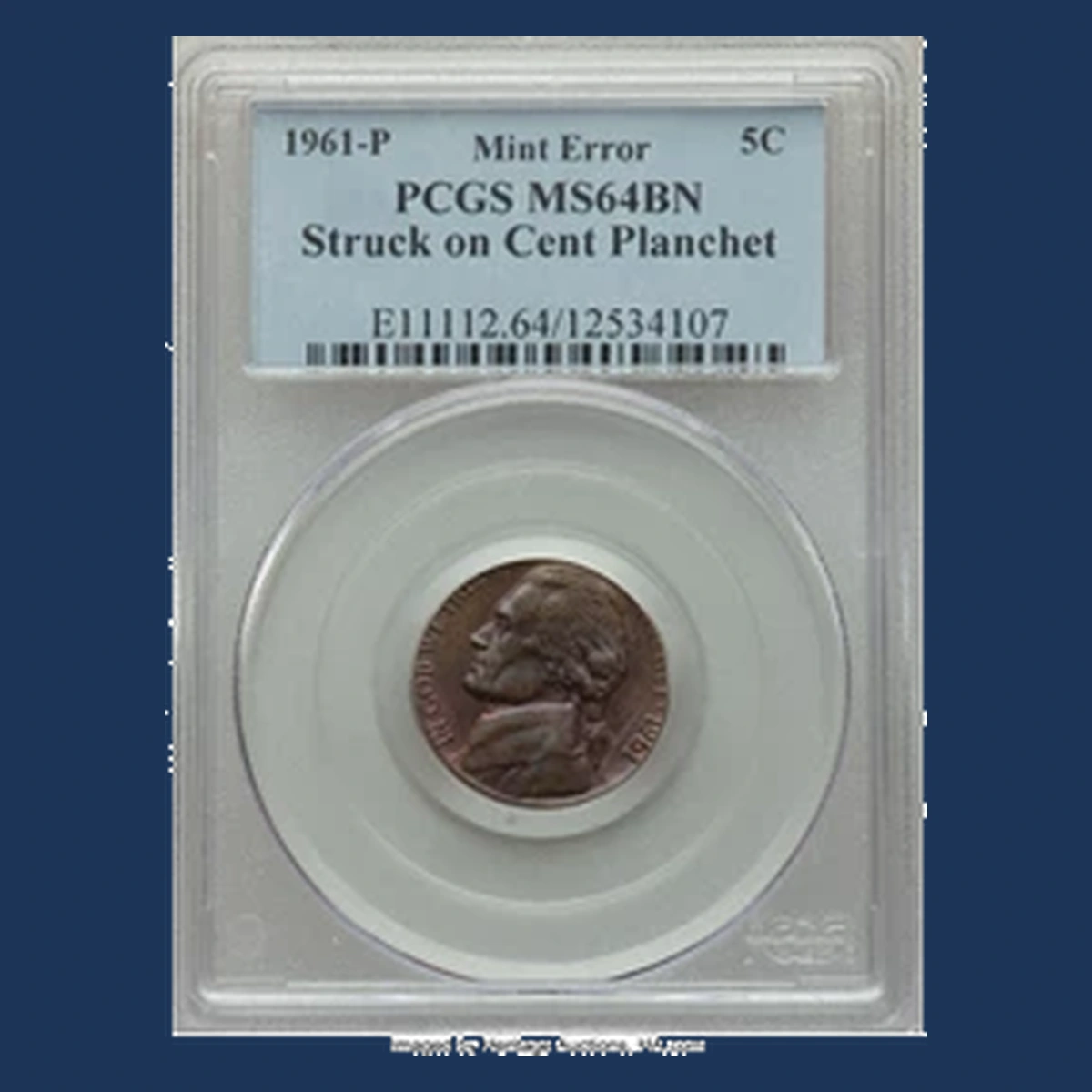
A small blank can carry an incomplete nickel design if it enters the wrong press. A planchet is simply the metal blank before it becomes a coin.
Recorded 1961 examples include a Philadelphia nickel on a copper cent blank and a Denver nickel on a silver dime blank. Both can lose outer lettering because the starting metal is smaller.
Philippine ten-centavo blanks were also used by mistake. The listed Philadelphia example weighs 2.04 g, while a separate Denver piece weighs 2.0 g.
The unusual weight must match the identified metal, not just a seller’s description.
Estimated Value
The cent-blank MS63 Brown coin sold for $576 in July 2022. The scratched Denver silver-dime example brought $747.50 in August 2006, and the 2.04 g Philippine blank $402.50 in January 2011.
Estimate $300–$1,200 for comparable cent or silver-dime blanks, and $300–$1,800 for identified Philippine blanks. The Denver foreign-blank coin appeared in a $1,175 two-coin lot; that total cannot be assigned to it alone.
How to Identify
Copper color suggests a cent blank, but plating can imitate it. First combine a scale reading with the edge and the way the nickel design fits the smaller piece.
A period cent blank normally starts near 3.11 g and a silver dime blank near 2.50 g. Those are standards, while 2.04 g and 2.0 g are the recorded Philippine examples’ actual weights.
Calipers can compare the result with a normal nickel’s 21.21 mm, allowing for metal spreading during striking. Under a 10× magnifier, check that outer letters end naturally at the small blank’s boundary.
The normal nickel weight is 5.00 g. A much lighter piece needs the correct alloy identification as well as genuinely truncated design.
10. 1961 Jefferson Nickel Proof Off-Center Strike
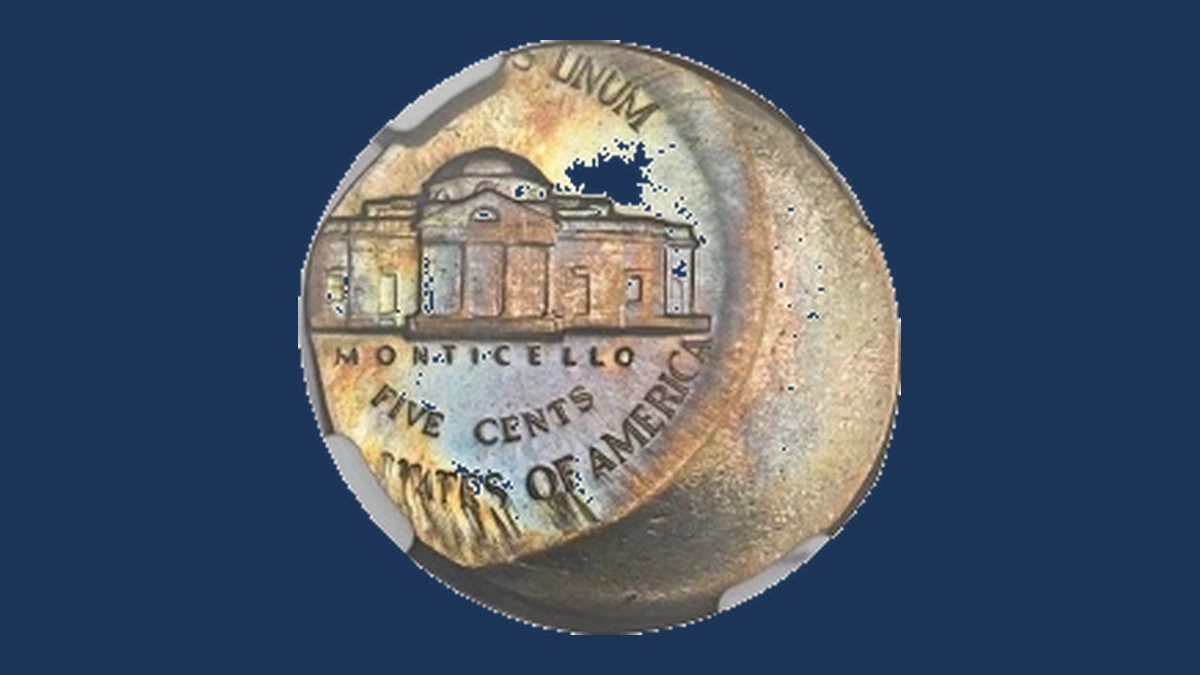
A Proof’s carefully prepared surfaces do not prevent a blank from entering the press in the wrong position. This 1961 collector issue shows a 30% off-center design.
The coin was graded NGC PR66, a high Proof grade with relatively few marks. Part of the design misses the metal while a broad section remains unstamped.
Philadelphia made the 1961 Proofs without a mint letter. That absence is normal and does not explain the error.
An ordinary circulation strike shifted by a similar percentage is a different price comparison, because its method of manufacture is different.
Estimated Value
Heritage’s August 2008 records list a 30% off-center PR66 example at $4,025. A December 2008 catalog appearance of this type was marked not sold, rather than another completed transaction.
For a comparable identified 1961 Proof, estimate $2,500–$6,000. Proof surfaces, readable identity, and the dramatic shift support that comparison; the range should not be applied to a regular nickel or a polished coin merely because it looks shiny.
How to Identify
Confirm the Proof identity before using its auction comparison. Polishing a circulation coin can make it reflective while leaving scratches and changing the original surface.
With a 10× magnifier, study the boundary between struck and unstamped metal on both faces. The missing design should fit the same displaced strike, rather than one face simply having an uneven border.
A normal nickel begins at 5.00 g and 21.21 mm. A scale and calipers can record a loose coin without assuming the spread final outline must be perfectly round.
Keep a graded Proof in its holder. The visible evidence is a partial Proof design beside original unstamped blank metal, not brightness alone.
Conclusion
The estimated $5–$6,000 span includes small die breaks, unusual blanks, and the dramatic off-center Proof. Start with what the coin actually shows rather than an error name in a listing.
A Denver mint mark belongs beside Monticello on the back. Keep ordinary coins and specially made Proofs separate when comparing prices.
Preserve loose flakes and retained objects, and use clear photographs to show how the unusual feature meets the original design.