1950 Nickel Error List with Pictures

Jefferson on a small silver disk is a clue worth measuring. A 1950 nickel struck on a silver dime blank has a reported $2,040 auction result from May 2022.
This 1950 nickel error list spans estimated values of $5–$3,000. It also covers raised cracks, incomplete blanks, and repeated or misplaced designs.
The checks below explain where to look and how to compare each feature with ordinary damage.
1. 1950 Jefferson Nickel Raised Cracks on the Back
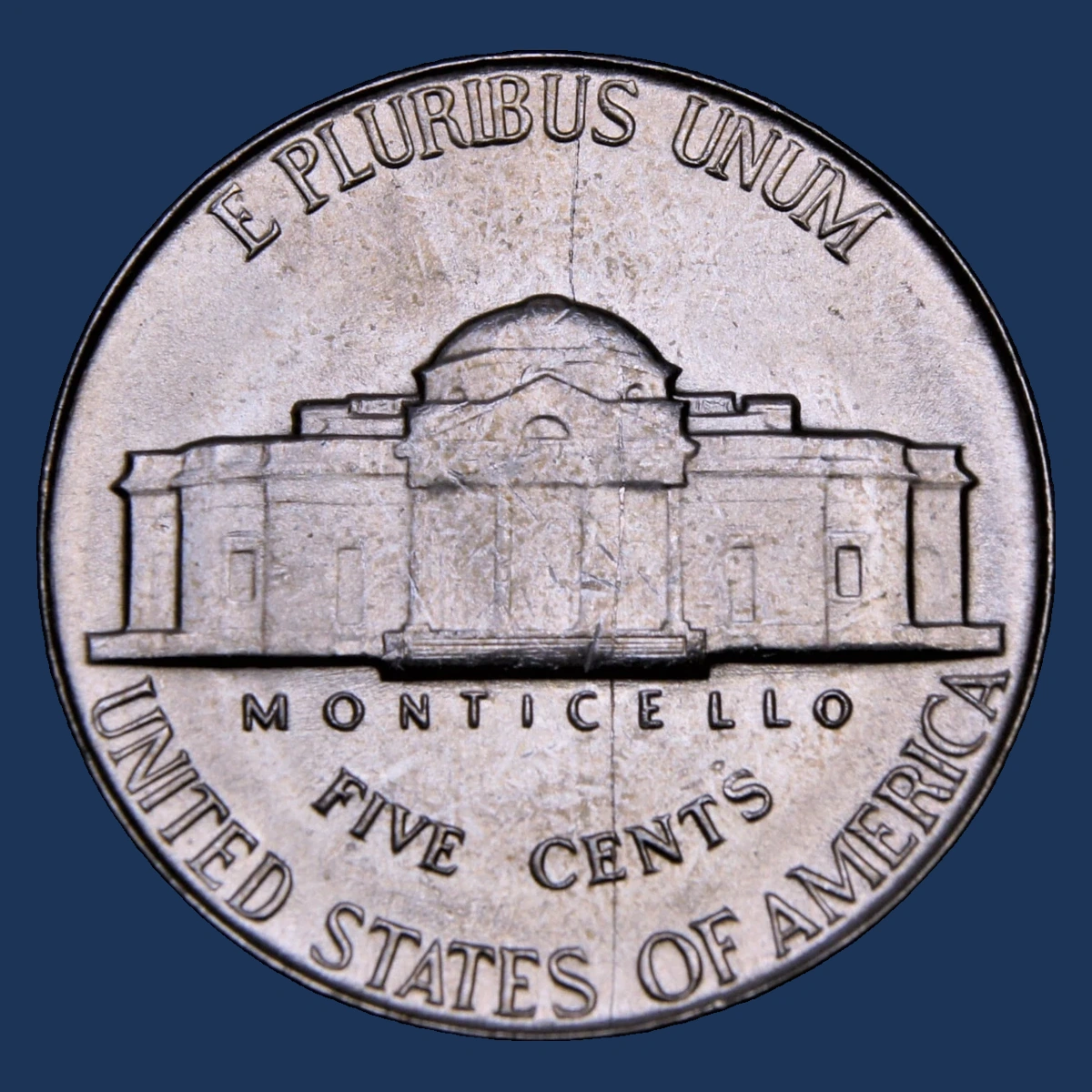
A raised line across Monticello’s steps can look like damage at first. It may instead record a crack in the steel stamping tool, known as a die.
Metal entered that crack when the coin was struck. The finished nickel carries a ridge where the tool had a narrow opening.
A collector reports a step crack on a Philadelphia 1950 nickel. Another auction-listed coin combines a back crack with a large off-center strike.
These reports do not establish the same crack path. A line through the steps should not be extended across the entire building without evidence on that coin.
Estimated Value
Estimate $5–$100 for ordinary 1950 nickels with clear small tool cracks. A faint ridge usually contributes less than a strong visible line on attractive original surfaces.
The coin combining a crack with a sixty-five-percent off-center strike belongs in a different comparison. Its larger striking mistake can dominate the whole price.
Judge small cracks against coins with similar wear and surface quality. Scratches, corrosion, or a poor photograph can hide the feature and limit its appeal to collectors.
How to Identify
Look across the steps with light coming from the side. A 10× magnifier should help distinguish a raised ridge from a cut through the original design.
Follow the line only as far as it remains visible. The reported step crack does not establish one fixed route across every Philadelphia coin.
Inspect the plain edge for an impact near the affected area. For a loose nickel, use a scale and calipers against 5 grams and 21.21 millimeters.
Normal measurements cannot identify a cracked tool, but can expose major alteration. The deciding close-up shows raised metal continuing through original surface rather than a scratch with pushed-up edges.
2. 1950 Jefferson Nickel Reported Repunched D Mintmark
The tiny D on the back tells you that the coin was made in Denver. An extra portion of that same letter can remain when workers punched it into the stamping tool twice.
Collectors call this a repunched mintmark. The misplaced earlier outline belongs to the tool, not to a second strike on the finished coin.
The 1950 year guide reports D-over-D without supplying one specific direction or catalog pattern. A matching example therefore needs more than a thick-looking letter.
Flat shelves from movement during striking, nearby scratches, and wear can all make the small mintmark confusing.
Estimated Value
For an identified 1950-D repunched mintmark, estimate $20–$250 across ordinary collectible examples. The price includes the underlying Denver coin as well as any interest in the extra letter.
The earlier punch must remain clear enough to match a genuine pattern. An attractive unworn coin with recognizable extra curves can appeal more than a worn piece with one vague bump.
This estimate does not assign a premium to every thick D. Preservation and a convincing match both matter.
How to Identify
Find the D to the right of Monticello rather than beside the front date. Use a 10× magnifier to compare any extra stroke with the curved and straight parts of a normal D.
Change the lighting to separate a rounded additional outline from a flat ledge. A seller’s named variety needs a photograph showing the same extra letter shape; there is no one direction required for every reported D-over-D.
For a loose coin, use a scale and calipers to check about 5 grams and 21.21 millimeters, and inspect its plain edge. Normal measurements cannot prove another mintmark punch, so return to the magnified D and look for recognizable parts of the earlier letter.
3. 1950 Jefferson Nickel Rim and Straight Clips
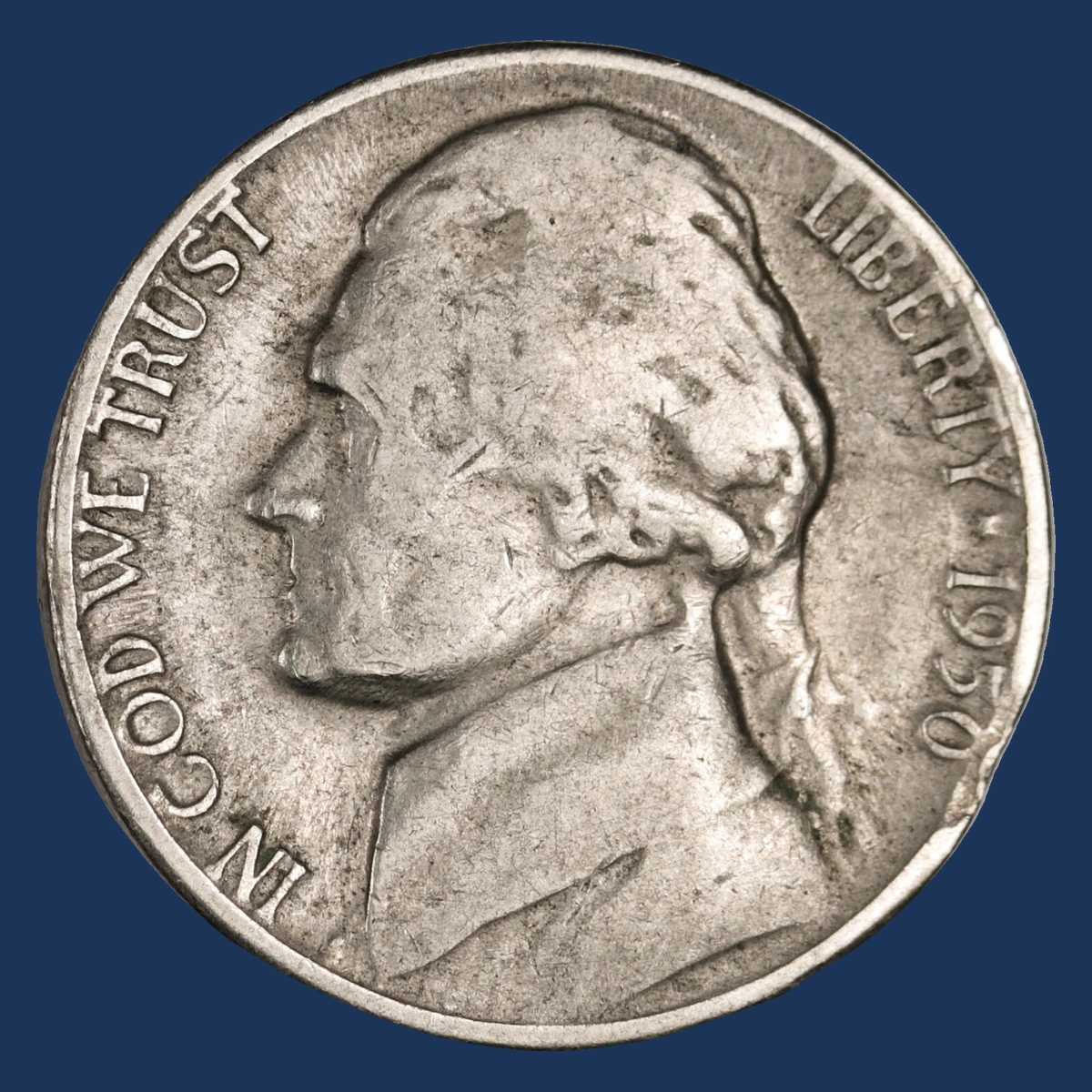
A gap can be present before the design reaches the coin. The blank-cutting process sometimes produces a disk with part of its edge missing.
One recorded 1950-D nickel has a rim clip near eight o’clock and a PCGS MS64 grade. That describes an unworn coin with visible marks.
A separate Denver straight clip weighs 4.91 grams and was graded ANACS MS65. Its shortage follows a straight line rather than establishing the same gap as the first coin.
The 4.91-gram weight belongs to the straight clip, not the eight-o’clock example. Later cutting can imitate either outline while damaging already formed design.
Estimated Value
Allow an estimated $30–$400 for genuine Denver clips across the reported general quality levels. The size of the gap, its natural edges, and the coin’s preservation influence the comparison.
A 1974 nickel with two curved clips sold for $132 in July 2021. That different-year example gives context without pricing either 1950-D coin directly.
The 4.91-gram straight clip is only slightly light. Its original cut boundary matters more than the small weight difference alone.
How to Identify
Start with the holder or full photograph so the two examples stay separate. The MS64 rim clip has the eight-o’clock position; the straight clip has the recorded 4.91-gram weight.
Inspect each end of the gap with a 10× magnifier. Original details should approach the shortage naturally rather than being sliced through after striking.
Weigh a loose candidate against 5 grams. Both an original shortage and later filing can lower that reading.
Use calipers across intact spans against 21.21 millimeters and inspect the remaining plain edge. Tool marks or a sharply cut finished rim can expose alteration.
Rim weakness opposite a clip can help, but the natural boundary around the actual gap remains essential.
4. 1950 Jefferson Nickel Reported Broadstrike
A nickel can become wider when the surrounding metal ring fails to contain it during striking. That ring is called the collar.
Without its restraint, the metal spreads beyond the usual outline. A broadstrike retains the complete intended design, even when the border becomes uneven.
The 1950 year lists include this mistake without establishing one mint, finish, or measured diameter. Those details need to be checked on the actual coin.
A normal nickel already has a smooth, plain edge. The lack of grooves is therefore not evidence of a broadstrike, and later hammering can also make a coin wider.
Estimated Value
For a confirmed ordinary-strike 1950 broadstrike, estimate $25–$500, allowing for condition and the amount of visible spreading. A slight uneven border can be less appealing than a clear expanded outline.
A different-year Philadelphia broadstrike from 1974, graded MS64, sold for $24 in August 2021. That gives context for a modest example rather than a fixed price for this year.
The estimate requires original struck surfaces. Flattened lettering caused by later hammering does not receive the same mint-error premium.
How to Identify
Trace the complete outer wording on both faces before measuring the border. A design that runs off the metal beside an untouched crescent needs an off-center comparison instead.
Measure a loose coin in several directions with calipers against 21.21 millimeters, and weigh it against 5 grams. Spreading moves metal without necessarily removing any.
Use a 10× magnifier to inspect Jefferson, Monticello, and the plain edge for crushed detail or repeated hammer marks. Those can explain an enlarged coin without a Mint mistake.
Check the date, mintmark area, and finish independently. The reported category does not establish a particular Denver or Philadelphia specimen, so compare the full design within its naturally expanded border.
5. 1950 Jefferson Nickel Off-Center Strike with a Back Crack
Only part of the design reaches a blank that sits far outside the center of the press. An unstruck crescent remains beside the incomplete image.
A Philadelphia 1950 nickel is listed as sixty-five percent off center, with a cracked reverse die. Reverse means the back, and the crack is a raised trace from the damaged stamping tool.
PCGS graded that coin MS64, indicating an unworn example with visible marks. Its grade does not describe the size of the displacement.
Year lists also report Denver off-center coins. The Philadelphia percentage and back crack should not automatically be assigned to them.
Estimated Value
Greysheet’s auction records report $528 in July 2022 for the MS64 coin with a sixty-five-percent shift and back crack. That amount covers the complete combination.
Estimate $50–$1,000 for genuine dated 1950 off-center nickels across different shifts and preservation. A readable date can matter more than the amount of bare metal.
The crack is not a second full price to add. Damage or lost identification can also reduce interest in a dramatic-looking strike.
How to Identify
Find the surviving date and keep it in the same photograph as the bare portion. An incomplete Jefferson design alone cannot establish the year.
Use a 10× magnifier to compare both faces at the boundary between struck and untouched metal. They should fit the same misplaced disk.
Inspect the separate back crack as a raised line, without borrowing the step-crack path reported on another coin. The sixty-five-percent listing gives no required clock direction.
A loose piece may remain near 5 grams because no metal had to be cut away. Use a scale and calipers to record weight and the altered outline against 21.21 millimeters.
Finish at the plain edge, looking for filing or other later damage.
6. 1950 Jefferson Nickel Reported Double Strike within the Collar
Two sets of design details can appear even when a coin remains roughly round. The coin moved between blows while staying inside the metal ring around its edge.
That ring, called the collar, can limit spreading during both strikes. The two portraits or building details may overlap at different angles.
A year-page report describes a 1950 example labeled ANACS VF30, meaning worn with recognizable detail. Its mint and exact amount of rotation are not established by that report.
The proposed identification needs photographs showing actual repeated designs. A tilted reverse alone concerns alignment between faces, not proof of another blow.
Estimated Value
For a genuine 1950 double strike with visible repeated designs, use a conditional estimate of $200–$1,500. The year page reports $756 for its VF30 example, but supplies no dated auction record.
The estimate depends on how clearly both strikes can be followed through the wear. Two recognizable design positions are more persuasive than a few distorted letters.
Value the whole coin once. Neither the reported amount nor a general discussion of rotation establishes a particular angle on this specimen.
How to Identify
Compare the back’s angle with the number of impressions actually visible on each face. An upside-down back can come from rotated stamping tools without any second strike.
Now look for two recognizable portions of Jefferson or repeated building details. Use a 10× magnifier to follow each impression and see where one strike flattened the other.
The surrounding collar can hold the coin close to its normal 21.21-millimeter outline through both blows. For a loose coin, measure that outline with calipers and compare the weight with 5 grams on a scale.
Inspect the plain edge for squeezing or joins. A nearly normal circle is compatible with the reported error, but two genuinely overlapping designs are what distinguish it from a simple alignment problem.
7. 1950 Jefferson Nickel Struck on a Silver Dime Blank
A small silver-colored disk can carry Jefferson even though it was prepared for a dime. The nickel press received the wrong blank and stamped the larger design onto it.
Heritage cataloged a Philadelphia 1950 example from the Fred Weinberg Collection as PCGS MS62. That is an unworn grade allowing noticeable marks.
The contemporary dime blank was ninety-percent silver and normally half the weight of a nickel. Those are standard specifications, not measurements supplied for this particular coin.
A trimmed or plated normal nickel can also look unusual. The blank’s metal and dimensions must agree with the smaller struck design.
Estimated Value
The cataloged MS62 silver-dime-blank nickel is reported at $2,040 in May 2022. Estimate $800–$3,000 for comparable genuine examples, adjusting for condition and surviving date detail.
The error combines the wrong blank with a nickel design that cannot fit normally. A clear date and recognizable portrait make that mismatch easier to appreciate.
These are whole-coin values, not simply the price of its silver. Later plating, trimming, or heavy damage can make an apparently similar object a very different comparison.
How to Identify
Use a scale first on a loose candidate, comparing it with the dime standard of 2.50 grams and nickel standard of 5 grams. The MS62 coin’s own weight was not given in the auction description.
Calipers can compare the dime blank’s starting 17.91 millimeters with the nickel’s 21.21 millimeters. A smaller blank can spread during striking, so its final diameter may change.
With a 10× magnifier, inspect the outside lettering and edge for trimming or coating. The incomplete design should fit the available metal, as on the cataloged Philadelphia example.
Professional non-destructive testing can check the silver alloy when needed. A silver-colored coating alone cannot establish a dime blank, even if the coin appears smaller than normal.
Conclusion
The estimated $5–$3,000 range covers small tool cracks through a nickel design on the wrong silver blank. Start with the actual feature instead of assuming that every unusual mark has the same cause.
Keep the two Denver clips separate when comparing weights and positions. For a partly struck coin, preserve a photograph of the readable date; for a silver-colored candidate, check the metal and measurements as well as appearance.