1934 Nickel Error List with Pictures

A copper-colored 1934 Buffalo nickel sold for $4,600 in August 2004. It had been struck on a cent blank instead of the usual nickel blank.
The 1934 Buffalo nickel errors below include smaller clues too, from raised lines to an extra mint-letter stroke. Estimated prices range from $5 to $7,000.
Turn the coin over: a Denver D belongs below FIVE CENTS. Read on to check each reported error and its lookalikes.
1. 1934 Buffalo Nickel Die Cracks and Cuds
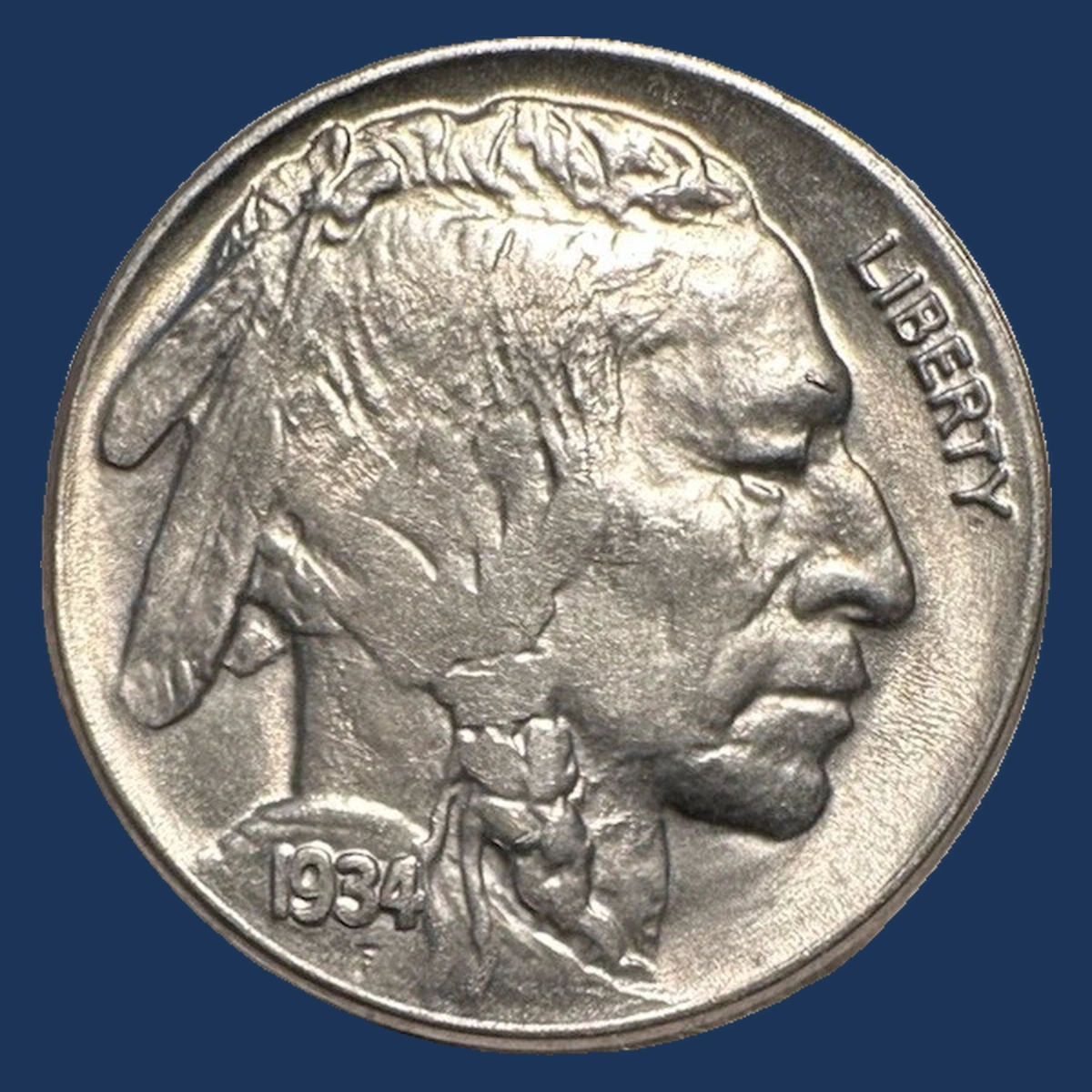
A raised line can record a crack in the steel tool that stamped a coin. This tool is called a die.
If part of the tool breaks away at its edge, metal can fill the larger opening. The resulting lump joins the coin’s rim and is called a cud.
Year guides report both features on 1934 nickels. Their shapes must be checked on each coin, rather than assumed to follow one fixed route.
A crack generally leaves a narrow ridge. A large break can replace part of a letter or picture with raised metal.
Estimated Value
For a small genuine crack, estimate $5–$30; a clear rim-connected cud can fit about $50–$150. These are practical ranges for the reported types, not individual 1934 auction results.
The larger break should visibly replace original design. A barely visible line usually attracts less interest than a clear lump affecting letters or the buffalo.
Condition still contributes to the whole coin’s value. An exceptionally high grade should not be priced as a crack premium alone.
How to Identify
Check whether the feature rises above the surface. A 10× magnifier and a lamp held low beside the coin make a narrow ridge easier to separate from a cut.
For a larger lump, follow it to the rim. A cud must reach that boundary, while an isolated bump needs another explanation.
A loose coin should remain near the normal 5.00 grams on a scale. Calipers check the usual 21.21-millimeter diameter, and the plain edge should not show a seam around attached metal.
Look where the raised feature meets a letter or the buffalo. A mint-made break interrupts the intended design without the scraped channel or pushed-up edge typical of later damage.
2. 1934 Buffalo Nickel Repunched Mintmark
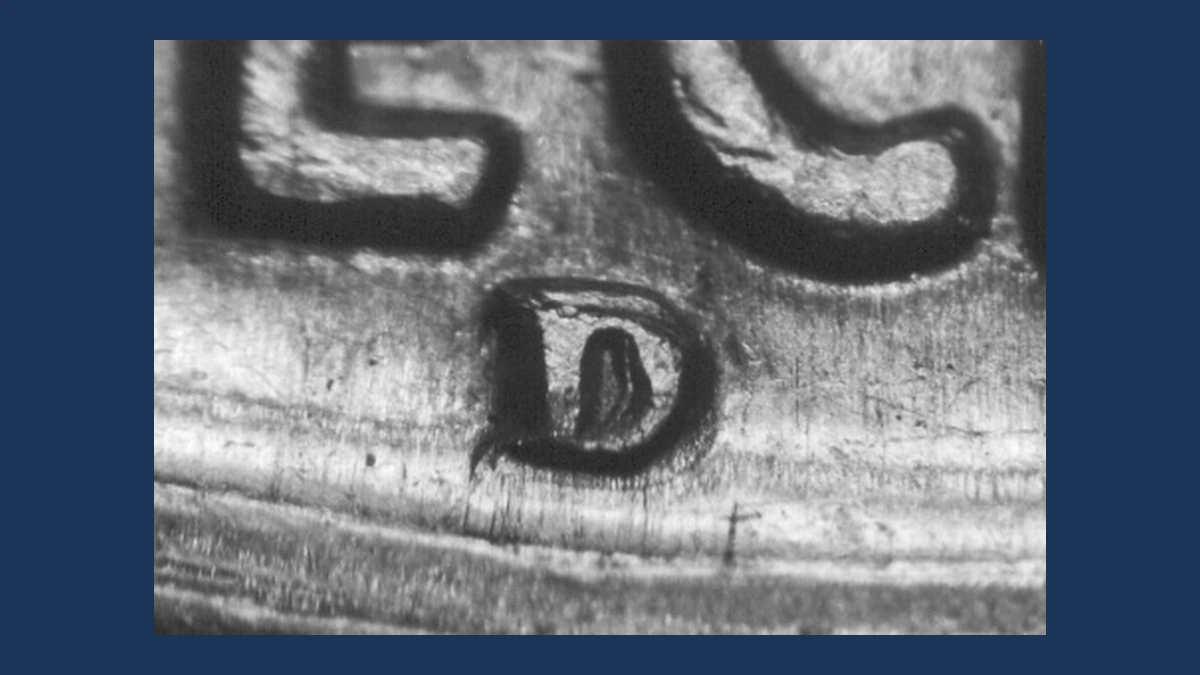
A faint extra stroke beside the D can come from an earlier mint-letter punch. The letter was added to the stamping tool by hand.
When punches overlapped imperfectly, the finished coins could show part of both impressions. This is a repunched mintmark.
Guides report several directions of D/D repunching for 1934. A small or large D, however, can simply reflect the shape of the punch used.
The letter’s size alone is not an error. The useful clue is a second stroke that fits another D beneath or beside the main one.
Estimated Value
Estimate $20–$250 for a correctly identified 1934-D repunched mintmark, depending on its strength and the coin’s condition. A faint extra stroke on a worn coin belongs nearer the lower end.
The year guide reports offers of roughly $21 and $185 for different examples. Those are seller asking prices, not evidence that either coin sold for that amount.
Confirm the overlapping letter before paying a premium; an ordinary large D is a different feature.
How to Identify
The D is below FIVE CENTS on the back, not above those words. The small F below the date on the front is the designer’s initial and is unrelated.
Photograph the entire D through a 10× magnifier, then trace its straight stem and curved side. An extra piece should fit the outline of another D, rather than resemble a random lump of dirt.
Check a loose coin’s normal 5.00-gram weight and 21.21-millimeter size with a scale and calipers. Repunching changes the small letter without changing the coin’s basic metal or size.
Compare the same letter shape under different lighting. Raised overlapping strokes should remain in place when a bright reflection disappears.
3. 1934 Buffalo Nickel Doubled Die
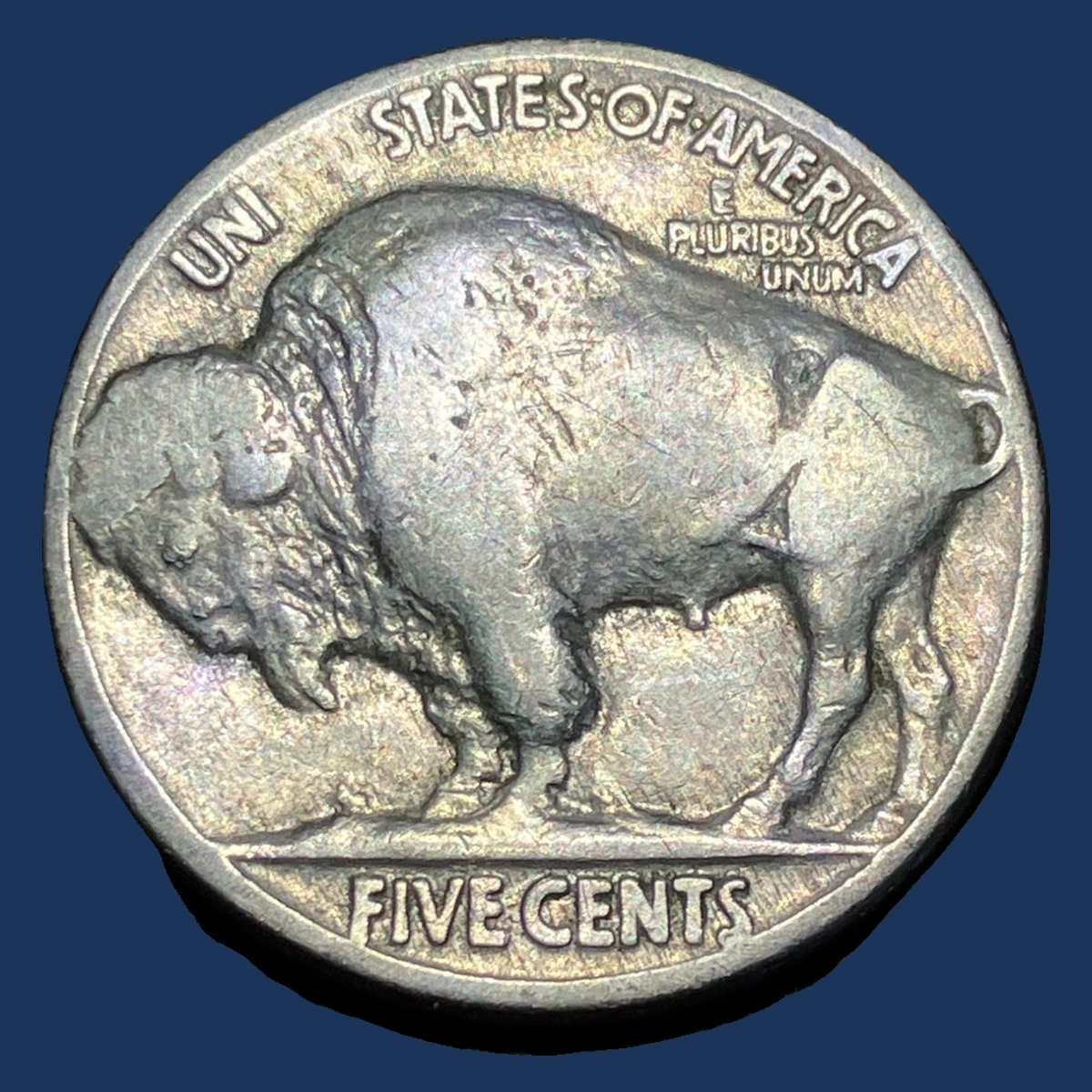
An extra outline can be part of the design on the stamping tool itself. Coins struck from that tool repeat the same doubling.
For 1934 Philadelphia nickels, guides report doubling on both faces. Suggested front checks include the date and LIBERTY.
Denver reverse reports mention E PLURIBUS UNUM and details near the buffalo’s hind leg and tail. The exact shape needs a matching example from that mint.
Thick letters alone are not enough. Wear, worn tools, and movement during the strike can create doubled-looking edges without producing a true doubled die.
Estimated Value
An estimated $20–$300 covers subtle, correctly matched 1934 doubled-die examples. This is a cautious range for the reported varieties, not a confirmed record for every front or back pattern.
Clear separation and a recognized match help support a premium. Wear can make the extra outlines hard to see.
Do not use prices for the much stronger 1935 doubled reverse as if they applied to a 1934 coin with slight thickening.
How to Identify
Choose one face and one mint for the comparison. A Philadelphia coin lacks the D below FIVE CENTS; Denver coins carry it.
With a 10× magnifier, inspect the reported area for split letter ends or separate raised outlines. On the front, try the date and LIBERTY; on the Denver back, examine the motto and the buffalo’s rear details.
Now compare several nearby features with a correctly identified example. They should share a consistent pattern, rather than show one isolated thick line.
There is no need for a size change: normal specifications remain 5.00 grams and 21.21 millimeters, checked with a scale and calipers. Reject flat ledges that shave away the original design instead of adding matching rounded outlines.
4. 1934 Buffalo Nickel Struck Through Material
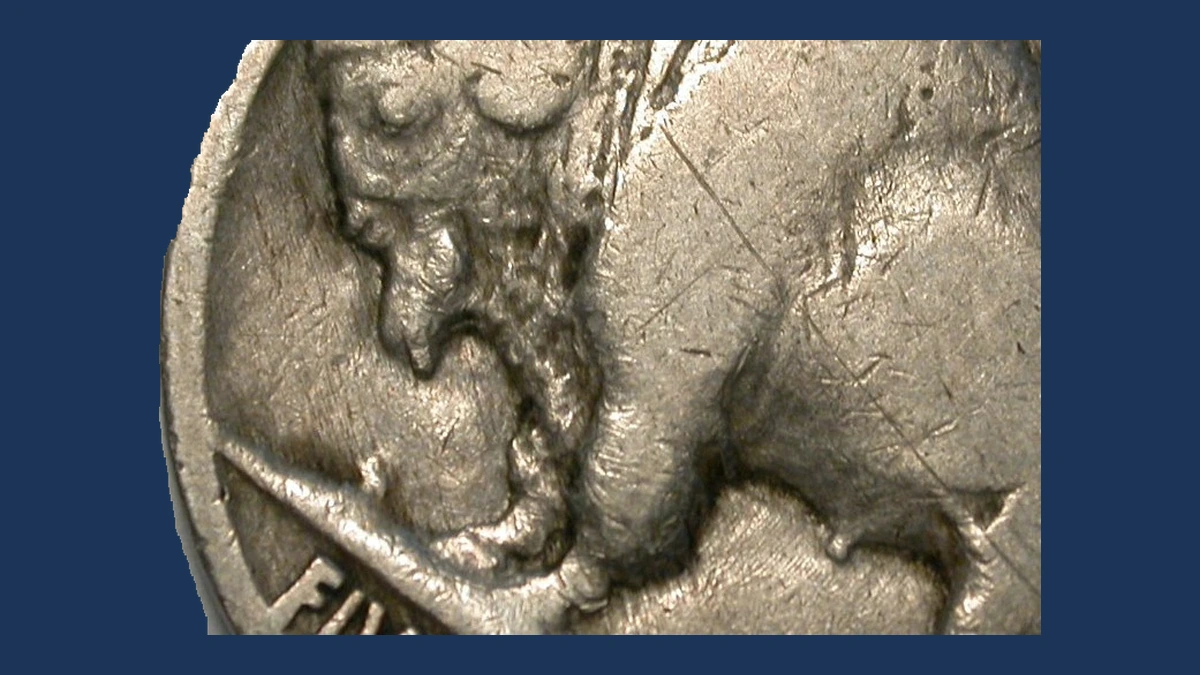
Something between a blank and the stamping tool can block the design. It may leave a depression, a weak patch, or details that never fully formed.
A collector’s Philadelphia example is described as a strong front strike-through and graded AU55, meaning light wear. The collector’s description does not establish the shape of the object involved.
A separate Denver report places a depression on the buffalo’s upper back. That needs to be compared with the reported Denver coin.
Buffalo nickels can also have weak central detail from ordinary striking. A soft-looking buffalo alone does not prove an obstruction.
Estimated Value
For confirmed 1934 strike-throughs, estimate $15–$300. Small blocked details occupy the lower end, while a distinct depression with sharp surrounding design can attract more interest.
The collector’s Philadelphia AU55 example has no individual sale price used here. Its grade does not certify what material caused the mark.
Judge the shape, preservation, and affected area together. An ordinary weak strike or a dent made after circulation does not receive the same error premium.
How to Identify
Are the coin’s high points worn flat, or is one patch interrupted beside sharp details? That difference matters more than whether the hollow resembles a familiar object.
Normal Buffalo nickels can have weak centers, especially Denver coins. A soft buffalo is not enough to identify an obstruction.
Inspect the patch boundary with a 10× magnifier under low light. A later hard blow can leave a lip of metal pushed up around a dent.
For a loose coin, a scale and calipers check the normal 5.00 grams and 21.21 millimeters. They cannot reveal whether grease, cloth, or another substance blocked the strike.
Keep the Philadelphia front and Denver back reports separate. Compare the affected details with the clear neighboring surface to see whether they were interrupted during striking.
5. 1934 Buffalo Nickel Uncentered Broadstrike
An unusually wide rim does not always mean part of the design missed the blank. A broadstrike can spread the coin while leaving the whole design present.
The collar is the ring that normally limits a nickel’s width during striking. Without proper support from that ring, metal can escape outward.
If the blank is not centered, one side may spread more than the other. This is called an uncentered broadstrike.
A year guide reports a 1934 Philadelphia example graded PCGS AU55. The important visible distinction is a complete design within the enlarged, uneven outline.
Estimated Value
Estimate $75–$350 for a genuine 1934 broadstrike, depending on wear, spreading, and original surfaces. The year guide reports a PCGS AU55 example selling at Stack’s Bowers in 2014 for $199.75.
Use that reported result as a comparison for a lightly worn coin. AU55 indicates light wear, so it should not set the price for every unworn example.
An uneven border with missing design must also be checked for an off-center strike.
How to Identify
Find the outermost letters first. A broadstrike should preserve the full intended design even when one side has a much wider border.
Measure the widest and narrowest spans with calipers against a normal 21.21-millimeter nickel. A scale should show a weight near 5.00 grams because spreading does not itself remove metal.
Next inspect the plain edge and expanded border through a 10× magnifier. Hammering a finished coin can spread it too, but often crushes raised details and leaves pressure marks.
Compare the enlarged outline with the intact date, LIBERTY, and reverse lettering. The combination to look for is outward metal flow around a complete design, without a flattened portrait or letters cut off at the edge.
6. 1934 Buffalo Nickel Clipped Planchet
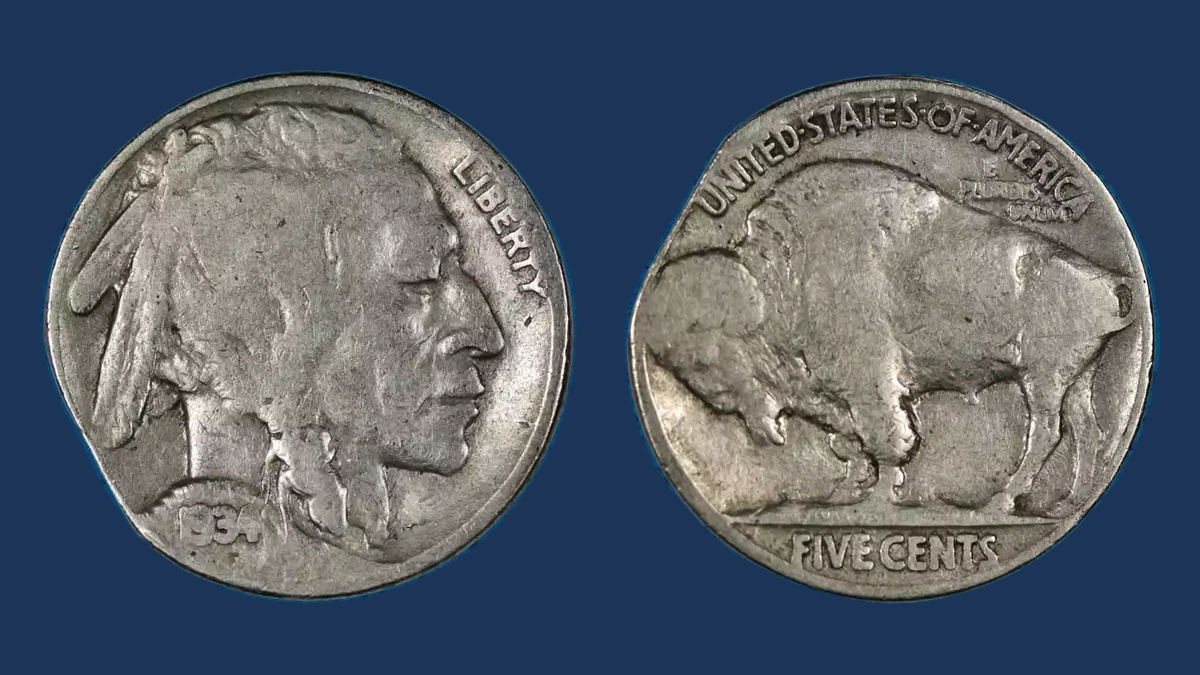
A blank missing part of its edge can still reach the coin press. The design then lands on an incomplete piece of metal.
This is a clipped planchet error; planchet is another word for the prepared blank. The missing area may have a curved, straight, or uneven outline.
Year-specific listings include clipped 1934 Buffalo nickels, but no single size or clock position applies to every possible example. The opening must be examined on the actual coin.
A coin cut after striking can look similar from a distance. The edge and nearby design usually provide better clues than shape alone.
Estimated Value
Use an estimated $40–$300 for modest, genuine 1934 clips, with large well-preserved examples potentially reaching $600. These ranges are estimates rather than a price assigned to a particular certified specimen.
A readable year and a clear original clip help collectors judge the coin. A damaged date can make the year difficult to establish.
The size of the missing piece matters, but a large saw cut has no clipped-blank premium.
How to Identify
Inspect both ends of the opening with a 10× magnifier, following how the rim runs into the missing section. The rim and nearby design should have formed around an already incomplete blank, without saw lines or a freshly filed wall.
The missing metal should reduce the normal 5.00-gram weight, which a scale can check on a loose coin. Use calipers on surviving full spans against the usual 21.21 millimeters, rather than measuring across the missing section.
An opposite rim can also be weak because the incomplete blank failed to form a normal raised edge there. Treat that as a supporting clue, then return to the opening to check whether the design and edge formed together.
7. 1934 Buffalo Nickel Off-Center Strike
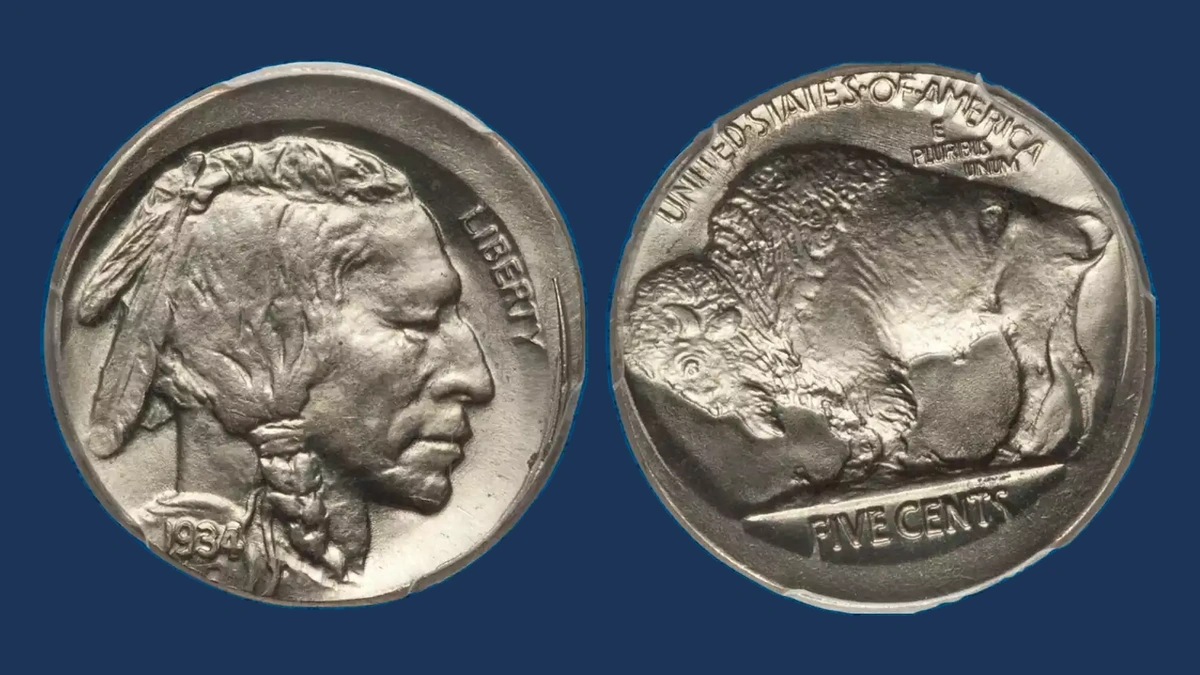
When a blank enters the press too far to one side, part of the design misses it. The coin keeps a bare area opposite the lost details.
The 1934 year guides report this type of error. A widely repeated ten-percent example, however, has conflicting 1934 and 1935 descriptions.
That specific coin cannot establish the size or grade of a 1934 example. A readable date is especially useful on this design, which often has a worn date.
An off-center strike loses part of the intended design. A broadstrike with a complete design and uneven borders is a different result.
Estimated Value
For a clearly identified 1934 off-center nickel, estimate $75–$800. The lower end suits smaller shifts, while strong displacement with a readable date can attract more interest.
This range does not adopt the repeated $580 claim for the ten-percent example with conflicting dates. It uses the broad spread of prices in the year guides as an estimate.
Check preservation and surviving details alongside the percentage. A larger shift does not always bring a higher price.
How to Identify
The date sits on the front below the portrait and often wears down. Check that it actually reads 1934 before comparing a dramatic off-center piece.
Now inspect both faces for corresponding displaced designs. An unstruck portion should remain beside them; if only one face shifts, a misaligned tool may be the better explanation.
Look through a 10× magnifier at the boundary between bare metal and design. Later grinding can remove details without leaving an original untouched surface.
No metal has to be missing, so a scale can still read near 5.00 grams. Use calipers to record the shape against the usual 21.21-millimeter nickel.
Follow the outer lettering to the edge and identify which details genuinely failed to land on the blank.
8. 1934 Buffalo Nickel Struck on a Cent Planchet
The buffalo and Native American portrait appear on copper-colored metal instead of the normal gray nickel alloy. A blank intended for a cent entered the wrong press.
Heritage recorded a 1934 example graded PCGS MS63, meaning no circulation wear but noticeable marks. The auction described a well-centered strike on the wrong blank.
The smaller blank cannot hold the full nickel design in the usual way. Outer details may be shortened or stretched near the edge.
This is not a nickel design struck over an already finished cent. The error begins with the wrong unstamped disk.
Estimated Value
The PCGS MS63 example sold for $4,600 on August 21, 2004. An estimated $3,000–$7,000 is appropriate for comparable identified 1934 copper-cent-blank errors, allowing for condition and surviving detail.
The actual weight was not stated in the auction information used here. A different guide’s MS62 reference should not automatically be treated as this same coin.
Copper color by itself does not justify the range. Correct metal, size, and striking features must agree.
How to Identify
Before looking for extra value, distinguish copper metal from a copper-colored coating. A normal Buffalo nickel contains 75% copper and 25% nickel throughout and weighs 5.00 grams.
A contemporary cent blank normally weighed about 3.11 grams and measured 19.05 millimeters. Those are comparison specifications, not a measured weight for the auctioned 1934 coin.
Use a scale and calipers on a loose candidate, then a 10× magnifier along its plain edge. The blank can spread during striking, but a ground-down nickel often shows altered edges or cut-off finished details.
Compare how the portrait and buffalo meet the small boundary. Professional metal testing can confirm the alloy; the visible design should fit a smaller blank struck in the nickel press.
Conclusion
From small raised breaks to a nickel design on a copper blank, estimated values here span $5 to $7,000. The $4,600 cent-blank sale shows why the starting metal can matter so much.
Other checks are simpler: find the mint letter, compare both sides, and inspect the edge. Keep normal weak detail apart from missing metal or interrupted design.
A correct year and a clear feature make any price comparison more useful.