1875 Nickel Error List with Pictures

Look above the shield before studying the date: the motto can carry a second outline on an 1875 nickel. One doubled-design example graded MS65 sold for $1,351 in August 2017.
This 1875 Nickel error list covers estimated whole-coin values of $15–$2,000. It also explains repeated date strokes, raised cracks, and an unusual tail on the back letter S.
The coins discussed are ordinary circulation strikes. Read on to separate marks made during production from scratches and wear.
1. 1875 Shield Nickel Raised Lines from Cracked Tools
A thin raised line can appear where a crack opened in the steel tool used to stamp the coin. Metal entered that opening during the strike and formed a small ridge.
Such cracks are reported on 1875 coins with doubled front details. More lines could develop as the same tool continued working.
A scratch behaves differently: it cuts into the coin or displaces metal beside a groove. A line on the clear plastic holder is another common distraction.
The exact crack pattern must belong to the coin being examined.
Estimated Value
For a worn 1875 coin with a small genuine tool crack, estimate $15–$250. Much of that value belongs to the underlying Shield Nickel, rather than the line itself.
A coin that also has the recognized doubled design should be priced as that complete variety. The recorded $780 MS63 doubled-design sale offers a separate condition comparison, not a crack-only sale.
Large premiums need more than a fine ridge or a scratched holder.
How to Identify
Change the viewing angle before deciding that a line is on the coin. A scratch in clear plastic can shift against the design or come into focus at a different height.
For a loose example, use a scale and calipers to check about 5 g and 20.5 mm. Inspect the plain edge for damage that continues onto either face.
Under a 10× magnifier, follow the line across the actual metal without touching it. A tool crack should stand above the surface, while a cut usually has a lowered channel.
Look separately for doubled letters if the coin has both features. Focus directly on the metal and check that the suspected crack is a raised ridge, not a groove.
2. 1875 Shield Nickel Repunched Date
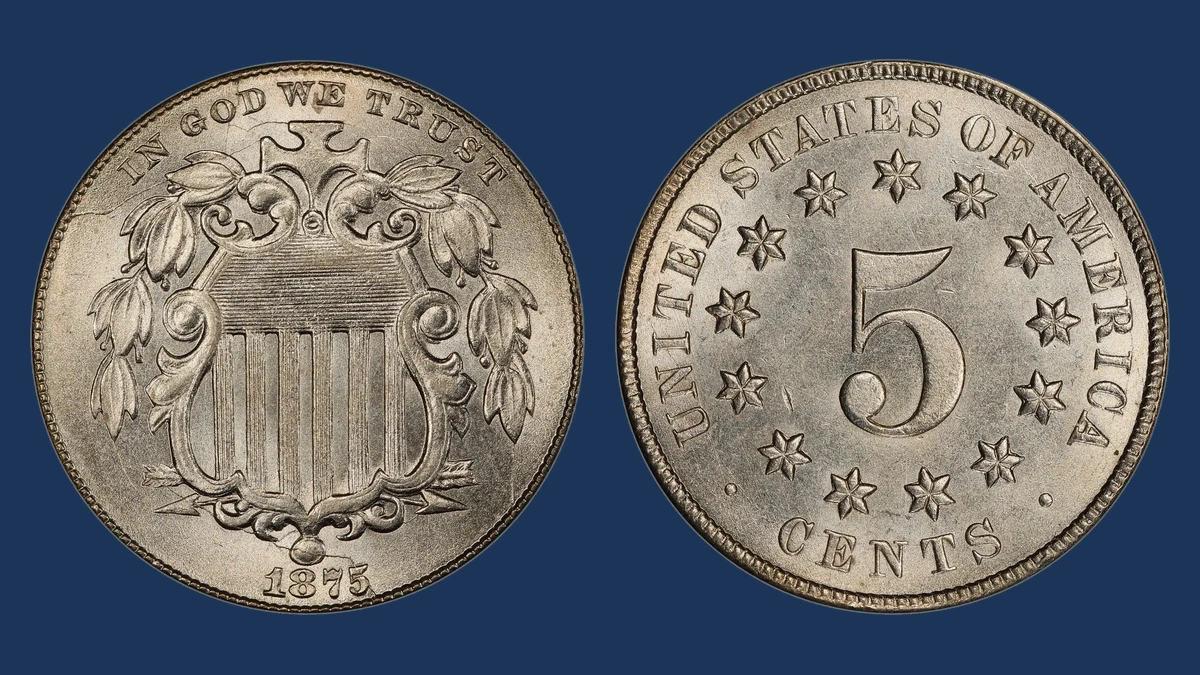
Extra strokes below the 8, 7, and 5 can reveal an earlier placement of the date. Another reported arrangement has a trace farther below the base of the 1.
These are repunched dates, made when a worker punched the numerals into the stamping tool more than once. A small shift left parts of the earlier impression visible.
The two arrangements need not appear together. Nor does a repeated date automatically mean that the motto is doubled.
Rounded remnants of actual digits distinguish this feature from random lines near the date.
Estimated Value
Identified repunched dates have an estimated whole-coin range of $30–$1,500, from worn pieces to attractive unworn coins. Strong, readable remnants are easier for collectors to appreciate.
A different-year comparison is an 1883 Shield Nickel repunched date graded MS66, which sold for $1,440 in August 2021. That price includes unusually good preservation.
It is not a sale of the 1875 variety. Cleaning, corrosion, or a weak date can sharply reduce the comparison’s usefulness.
How to Identify
Examine the whole date before zooming in. The numerals should have the normal shapes of a genuine 1875 Shield Nickel, not irregular forms copied onto a counterfeit.
Use a 10× magnifier to search beneath 875, then below the base of 1. Compare each possible remnant with an identified photograph of that particular arrangement.
The earlier strokes should rise from the coin. Flat ledges beside the main digits can instead result from movement during striking.
Weigh a loose coin near 5 g and measure 20.5 mm with calipers; its edge is plain. Normal measurements help check the coin, but do not prove a repunched date.
An extra stroke that follows the shape and position of the photographed earlier numeral is the useful match.
3. 1875 Shield Nickel Doubled Design and the Extra S Tail
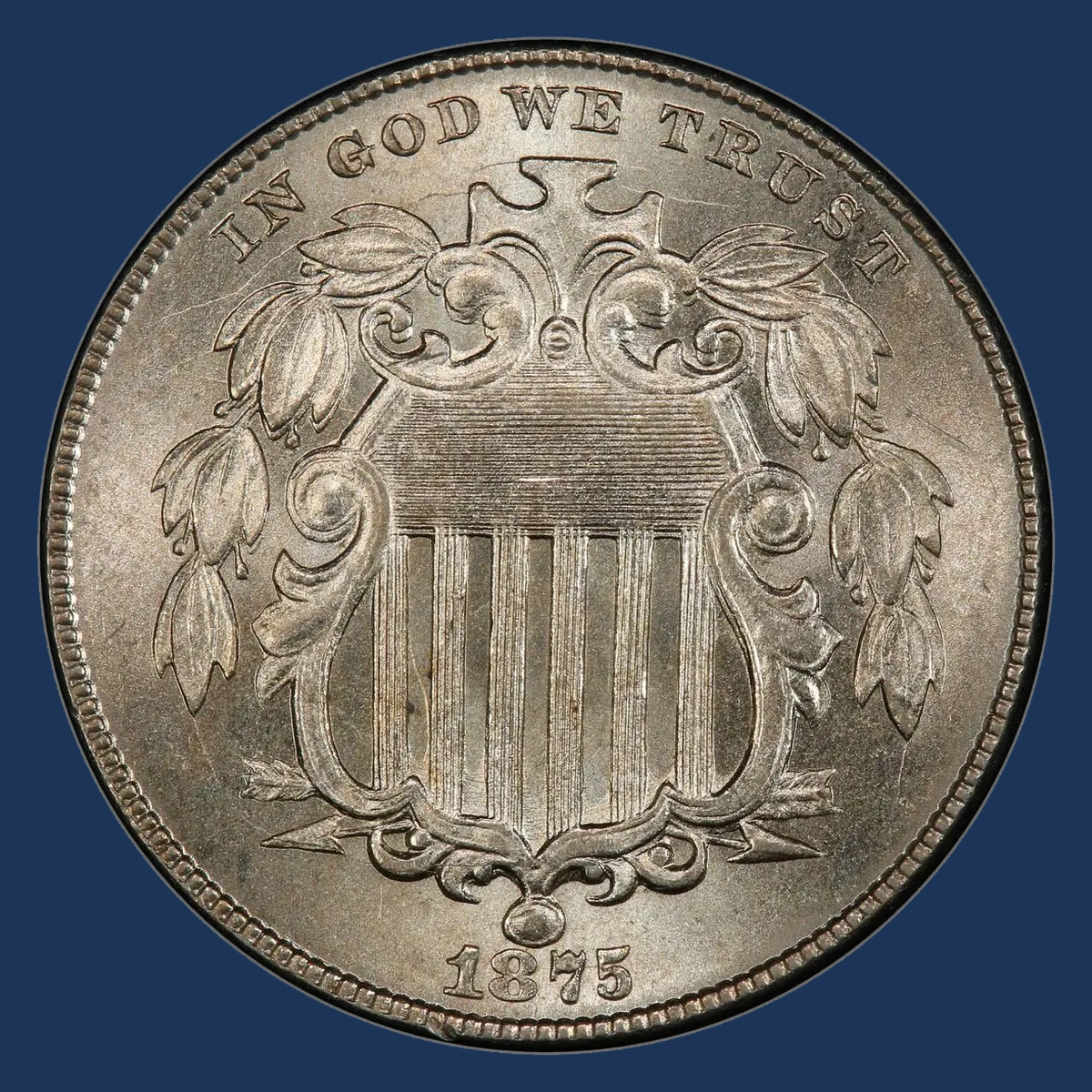
Some 1875 coins show repeated outlines in the motto and shield details, directed downward or toward the lower left. A doubled die is a steel stamping tool that already carries a repeated design.
Coins struck from it inherit that doubling in one blow. They were not necessarily struck twice.
A separate report describes an extra tail on the S in CENTS on the back. That tail may come from a doubled design or a groove in the tool.
An unusual S alone does not establish the same cause as the doubled front.
Estimated Value
The FS-101 doubled front sold for $780 in MS63 in August 2021. An MS65 example brought $1,351 in August 2017.
Estimate $150–$2,000 for identified doubled-front coins across collectible grades. MS grades describe unworn coins, with higher numbers indicating better preservation.
For the separate extra-S-tail report, use a conditional $20–$300 estimate until its cause is established. A tool groove should not receive a confirmed doubled-die premium.
How to Identify
Put a normal 1875 coin beside the suspect example, aligning the shield and motto. Compare the letter edges through a 10× magnifier, looking for rounded second outlines below or toward the lower left.
For the back, concentrate on the S in CENTS. The specialist report leaves its extra tail open to two explanations, so one projection is insufficient proof of doubling.
Check surrounding letters for related repeated details rather than treating every raised line as a second letter. A loose coin should measure 20.5 mm with calipers, weigh about 5 g on a scale, and have a plain edge.
To identify the doubled front, match several repeated motto or shield outlines to photographs of the recognized variety.
Conclusion
The motto, date, and back letter S offer different starting points on an 1875 Shield Nickel. A rounded second outline matters more than a broad, flat edge, while a genuine tool crack leaves a raised line.
Estimated whole-coin values span $15–$2,000. Clear variety identification and surface condition drive that range; several unusual features on one coin do not create several separate coin values.