1927 Nickel Error List with Pictures

A missing feather and a partly missing buffalo leg can share the same cause: a stamping tool polished too heavily. One 1927-D three-and-a-half-leg nickel brought $7,475 at Heritage in February 2012.
Other 1927 nickel errors involve extra design outlines, repeated mint letters, damaged tools, or an incomplete blank. The estimated ranges below run from $10 to $8,000, with the mint and condition making a large difference.
Look through the five groups to see which details deserve a closer check.
1. 1927 Buffalo Nickel Die Cracks and Chips
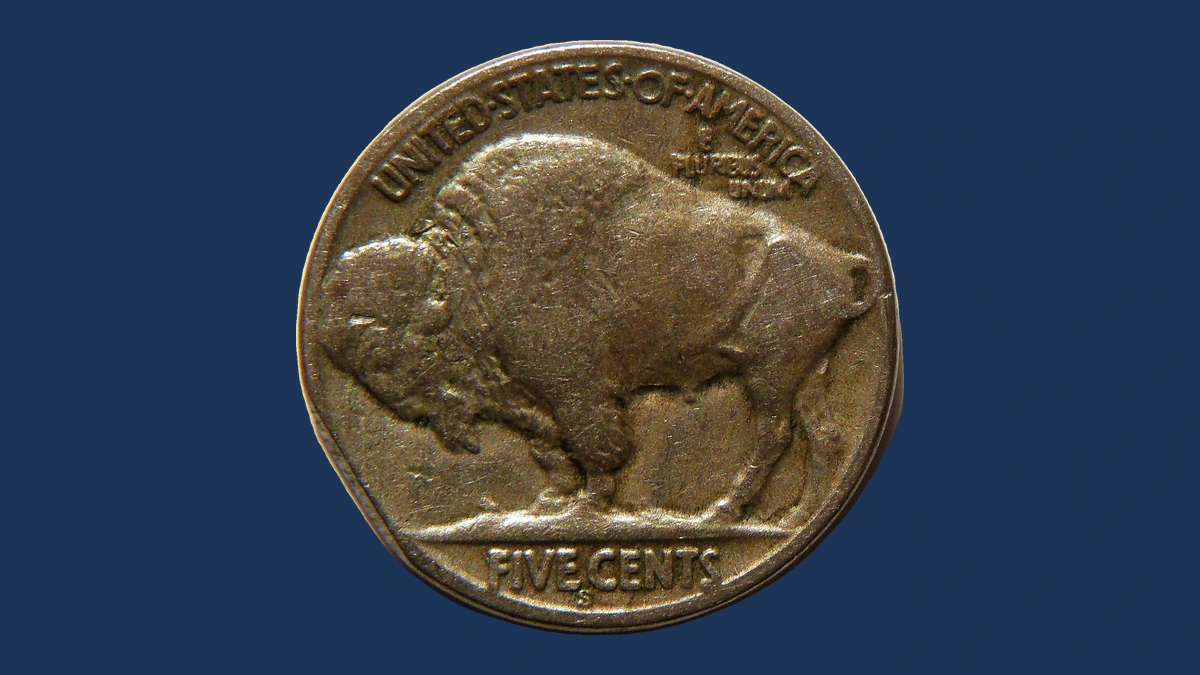
A crack in a die, the steel tool that stamps coins, can leave a raised line across the design. A small broken piece can leave a raised lump instead.
These faults are reported among 1927 nickels, although no single location or mint is established for the reported type. An interior lump is different from a larger break that joins the rim.
The coin itself has not necessarily cracked. Its metal simply filled a damaged part of the stamping tool, while a scratch or dent happened to the finished coin later.
Estimated Value
For a readable ordinary 1927 nickel with a small genuine crack or chip, estimate $10–$200. The line’s strength and the coin’s remaining detail both affect the total.
This range concerns modest examples, not every possible high-grade Denver or San Francisco coin. Their normal date-and-mint value can already be substantial.
No particular 1927 crack auction sets this estimate. An attached lump or a scratch should not receive a mint-error premium.
How to Identify
Put a normal Buffalo nickel beside the candidate and compare the same part of each design. A raised feature already present on the normal coin is not a new crack.
Use a 10× magnifier and low side lighting to see whether the suspicious line rises above the surface. A cut with displaced metal along one side needs closer attention before it is called a mint-made ridge.
For a loose coin, a scale and calipers should show about 5 grams and 21.2 millimeters, with a plain edge. Record the date and any D or S beneath FIVE CENTS.
Follow a lump to its boundary with the design. Note whether it sits inside the face or reaches the rim, and photograph that connection without scraping the surface.
2. 1927 Buffalo Nickel Clipped Planchet
A small missing section can begin before a coin receives its design. An incomplete blank, also called a clipped planchet, goes through the press without the full amount of metal.
Heritage sold a 1927 Philadelphia example described as 6% clipped. PCGS graded it MS64, meaning it was unworn but had some marks.
That percentage describes the missing portion rather than the direction of the gap. The remaining rim and design formed around the incomplete blank, which distinguishes this error from a notch cut into an ordinary finished nickel.
Estimated Value
The 6% clipped MS64 coin sold for $223.25 on August 16, 2015. It provides a same-year example without requiring a price borrowed from another denomination.
An estimated $40–$350 covers ordinary Philadelphia clips from worn pieces to attractive unworn coins. A full date and convincing untouched gap help value.
This is not a price for every 6% loss: a later cut removes metal without creating the same collectible mint error.
How to Identify
A reduced weight is useful here. Weigh a loose coin with a scale against the normal 5 grams, then use calipers on its intact diameter, normally about 21.2 millimeters.
Weight loss alone proves little. Under a 10× magnifier, inspect the missing section where it meets the design and the otherwise plain edge.
Metal shaped during striking should differ from fresh saw marks or a filed notch. Look across the coin for a weak stretch of rim opposite the gap, which can support a genuine clip.
The known example has no mint letter beneath FIVE CENTS. Match the date and whole outline with its photographs rather than guessing the gap’s position from the 6% label.
3. 1927 Buffalo Nickel Repunched Mintmark
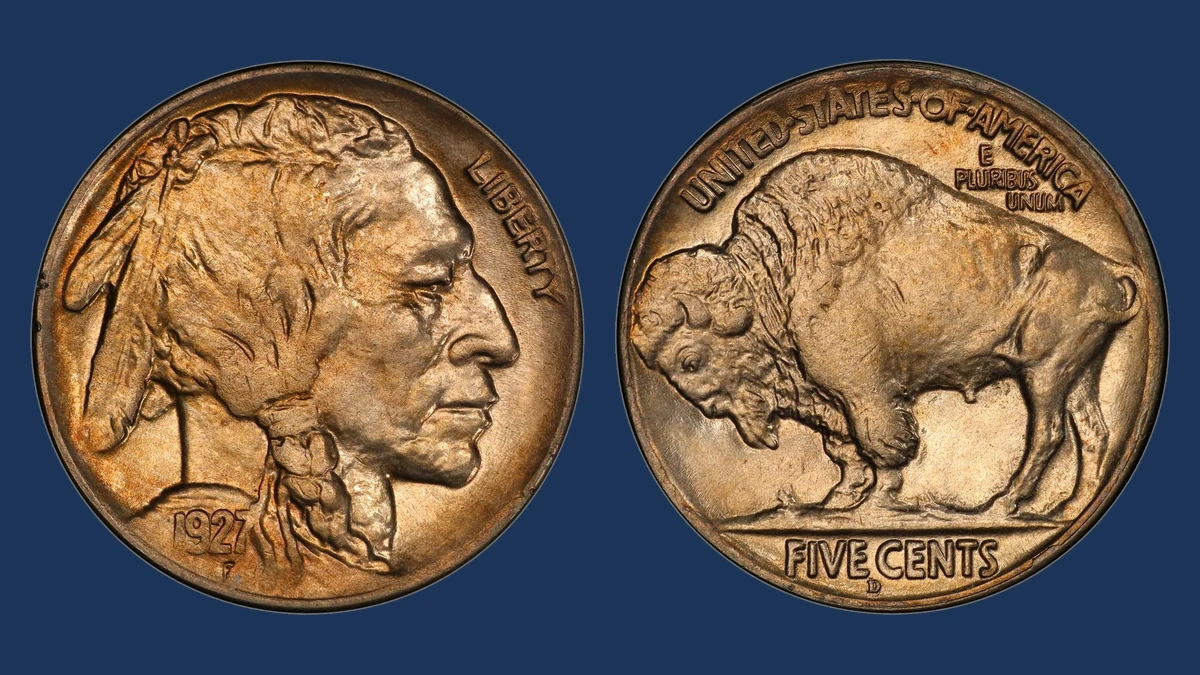
An extra outline around the D or S belongs to the mint letter, not the buffalo. In 1927 that letter was punched separately into the steel stamping tool.
A repeat punch placed slightly differently could leave part of an earlier letter visible. One Denver variety has extra D details both above and below the main letter; another has an extra outline above.
The reported San Francisco patterns spread right or upper-right. These are separate overlapping letter shapes, so a doubled-looking S should not be compared with a Denver D to choose its name.
Estimated Value
PCGS records a Denver FS-501 in XF40 at $335 on eBay in May 2021. That grade describes a worn coin retaining substantial detail.
Estimate $35–$500 for identifiable ordinary examples, with the stronger Denver pattern toward the higher end when well preserved. Minor patterns on worn coins can cost much less.
The recorded Denver sale does not price the two San Francisco patterns individually. Compare each coin’s mint, extra letter shape, and condition before using that result.
How to Identify
Keep FIVE CENTS upright while photographing the mintmark through a 10× magnifier. Turning the photo can make an upper extra outline look like a sideways one.
For Denver, inspect above and below the D before deciding between the two reported patterns. For San Francisco, compare the extra S curve to the right and upper-right.
The illustrated mintmark catalog helps match the full shape rather than one isolated bump.
A loose normal nickel measures roughly 21.2 millimeters with calipers and weighs 5 grams on a scale. Its edge is plain.
Change the light while keeping the letter upright. A flat shelf or damaged curve does not reproduce the raised segment of a separately placed D or S.
4. 1927 Buffalo Nickel Doubled Dies
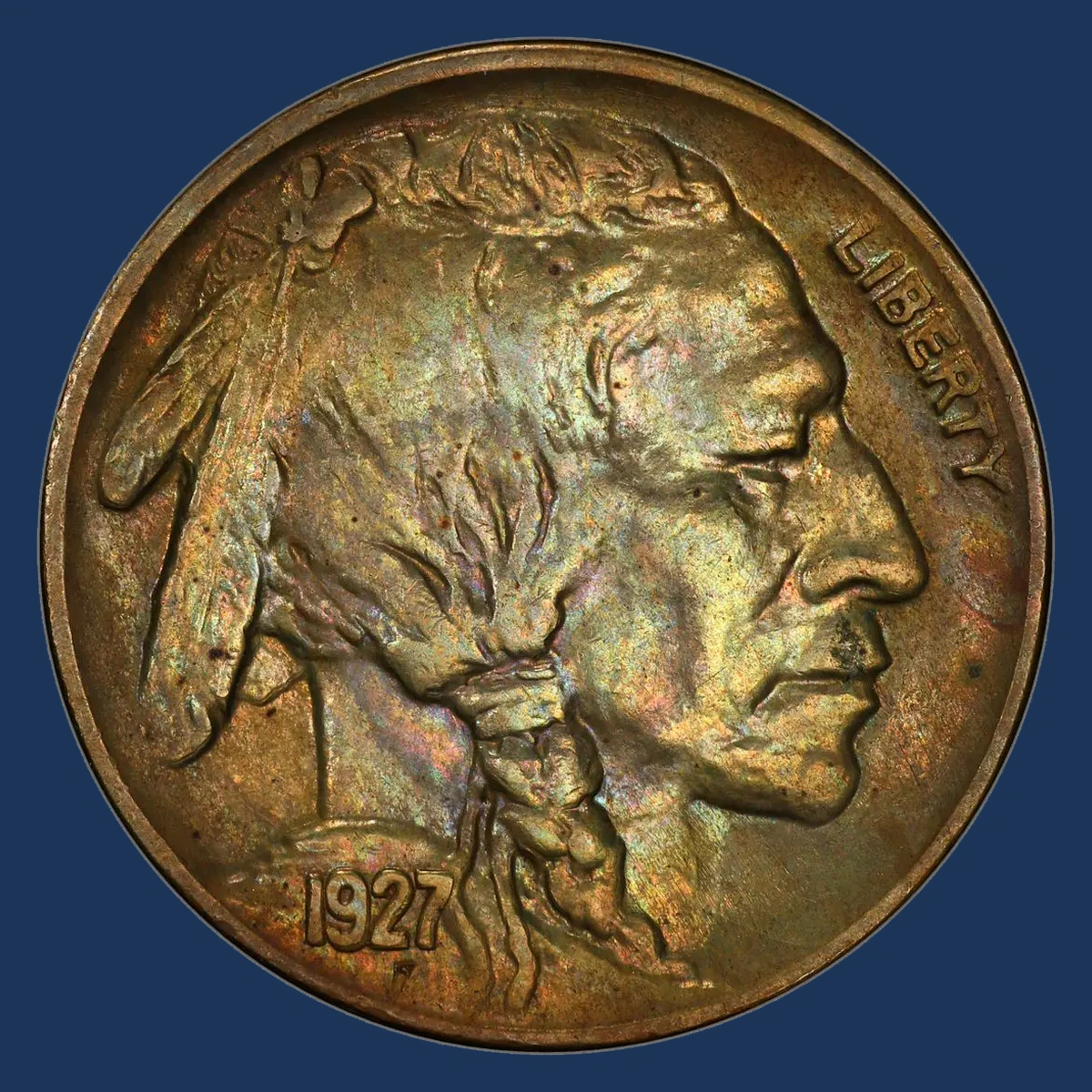
Two different doubled designs are cataloged for 1927-S. On the front, the date, braid, ribbon, small feather, and back of the neck can carry extra outlines.
A separate back variety doubles both front legs of the buffalo toward the upper-right. This adds a second outline, unlike the partly missing leg on the Denver polished-tool variety.
A doubled die is a steel stamping tool made with repeated design details. Those details transfer to coins struck from it, so the extra image does not mean that each coin passed through the press twice.
Estimated Value
A lightly worn AU58 example of the front FS-101 variety sold for $840 at Heritage in June 2019. The figure applies to that front pattern, not automatically to doubled buffalo legs.
For the front variety, estimate $100–$1,200 across recognizable worn and better-preserved examples. A working estimate for the less prominently documented back pattern is $75–$400.
Both ranges include the normal value of a 1927-S nickel. They are not amounts to add together when judging one coin.
How to Identify
For a loose nickel, record 5 grams and roughly 21.2 millimeters as the normal weight and diameter. Use a scale and calipers, and inspect the plain edge.
Next find the S below FIVE CENTS, since both listed patterns belong to San Francisco. A D nickel with a weak front leg belongs to a different check.
Under a 10× magnifier, follow the front date into the braid and ribbon. Several matching extra outlines are stronger evidence than a thick-looking numeral alone.
On a back candidate, look for raised copies of both front legs toward the upper-right. If the extra edge forms a flat shelf instead, compare it with normal letters elsewhere: movement during striking can leave those flattened edges without a doubled tool.
5. 1927 Buffalo Nickel Polished-Die Missing Details
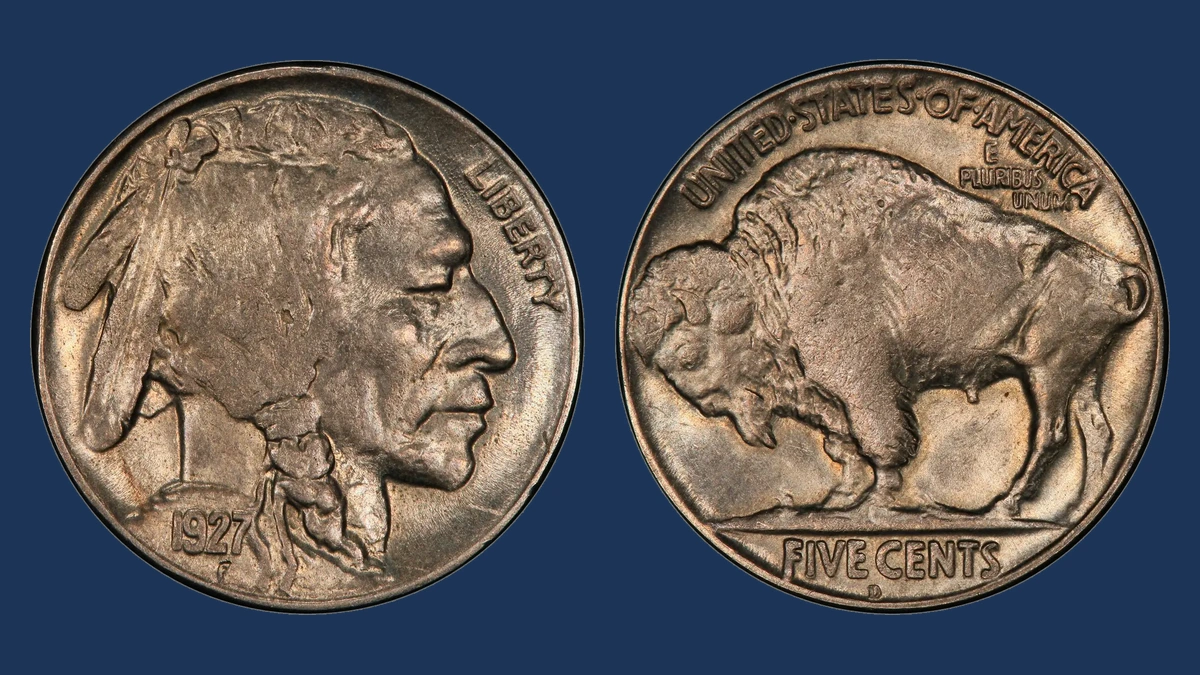
The buffalo’s partly missing front leg gives one Denver variety its three-and-a-half-leg name. Heavy polishing removed part of the design from the stamping tool before it made these coins.
The same process also produced two-feather varieties from Denver and San Francisco. Those coins have a missing or reduced small feather beside the two main feathers behind the portrait.
Some San Francisco examples retain a short feather remnant. A completely smooth gap is therefore not required, and the missing feather and partial leg should not be assumed to occur together on one coin.
Estimated Value
A Denver three-and-a-half-leg MS62 sold for $7,475 in February 2012; estimate $300–$8,000 across identifiable examples. MS62 means unworn with noticeable marks.
Two-feather coins have a separate estimated $75–$2,500 range. Heritage results include $400 for Denver XF40 in February 2017 and $2,280 for San Francisco MS63 in February 2021.
These are whole-coin prices for different varieties and conditions. A weakly struck ordinary leg or worn feather does not earn the same premium.
How to Identify
Look at both major feathers before judging the small one. Heavy wear across all three can erase detail without creating a two-feather variety.
Compare the mint with an illustrated example: the S version can retain a small remnant. For a Denver leg candidate, use the 1927-D three-and-a-half-leg variety, not a picture of the better-known 1937-D three-leg coin.
A scale and calipers can check a loose nickel against 5 grams and about 21.2 millimeters. Inspect the plain edge and surrounding surfaces for alteration.
Under a 10× magnifier, keep the buffalo’s body and hoof visible around the reduced leg. On the front, compare the little feather’s remaining outline without demanding a perfectly empty patch on every S example.
Conclusion
Count the details that remain, not only the ones that seem missing. A partly erased leg, a small feather remnant, and an extra raised leg outline point to different varieties.
Estimated values run from $10–$8,000, with the largest recorded price here belonging to the Denver three-and-a-half-leg coin. A small crack or ordinary clip occupies a different part of that range.
Keep the mint letter visible in close-up comparisons, and leave the surfaces untouched.