1883 Shield Nickel Error List with Pictures

A piece of an older 2 can remain beneath the final 3 on an 1883 Shield Nickel. An exceptional example of that overdate sold for $60,000 in August 2019.
This 1883 Shield Nickel error list spans estimated whole-coin values of $20–$60,000, from minor tool damage to a top-grade overdate. The Shield design is separate from the Liberty Nickel introduced that same year.
Follow the date, shield, and surface clues below to tell these features apart.
1. 1883 Shield Nickel Reported Slight Doubling below the Cross
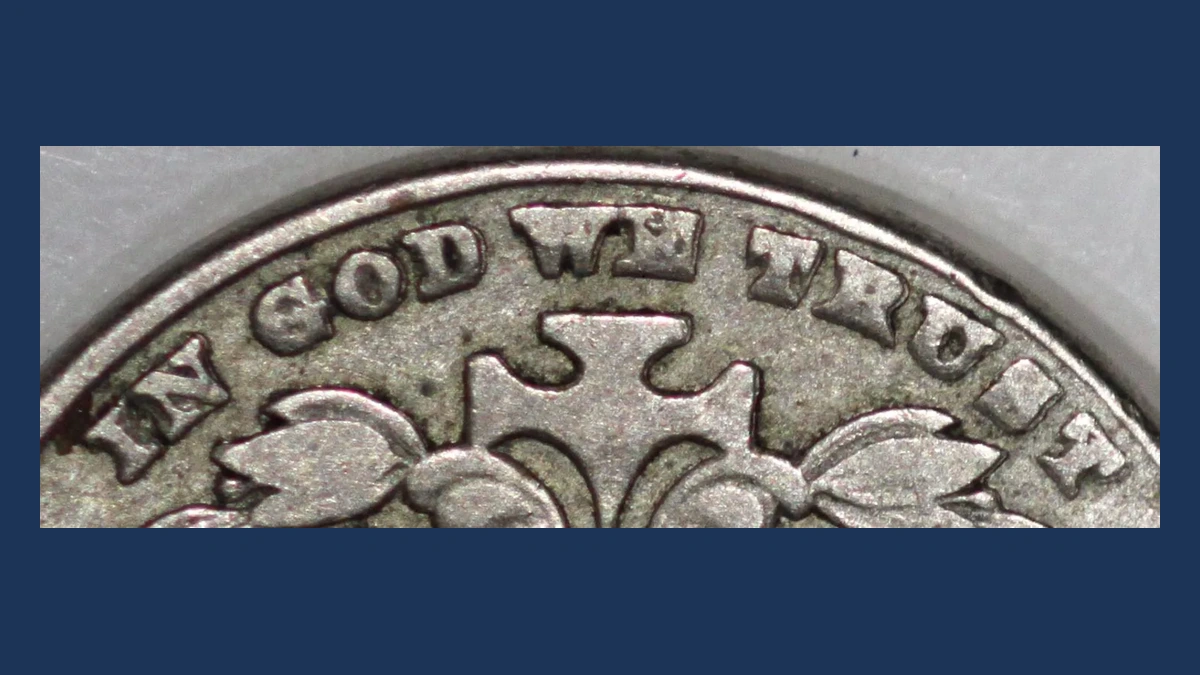
The small circular detail below the cross may appear thicker, with a faint extra outline toward the top. One specialist listing describes this as slight doubling in the front stamping tool.
A doubled die is a steel tool with a repeated design that passes the same outlines to coins. It is different from a coin receiving two blows.
The 1883 report is disputed between catalogs, so a thick circle should not be treated as a settled variety by itself. Worn tools and movement during striking can create similar-looking thickness without the same doubled design.
Estimated Value
For a positively identified example of the reported doubling, use an estimated $40–$600 whole-coin range. Its condition and a convincing match must support the comparison.
This is a conditional estimate, not a sale of an authenticated 1883 doubled-die specimen. The NGC overview and specialist listing do not agree on this year’s status.
An ordinary coin with a thick circle should therefore be priced for its own preservation rather than assigned an automatic error premium.
How to Identify
Compare the circle below the cross with several normal 1883 examples before enlarging a single suspect edge. Tool wear can make a rounded feature broader without producing a second design.
Use a 10× magnifier and move the light around that circle. Look for a distinct extra contour toward the top, rather than glare or a flat shelf.
A loose Shield Nickel should weigh near 5 g on a scale and measure 20.5 mm with calipers. Its edge is plain, unlike a coin with grooves around the side.
Keep photographs of the entire shield with the close-up. Have the extra contour compared with the specialist example before identifying the disputed doubled design.
2. 1883 Shield Nickel Repunched Date
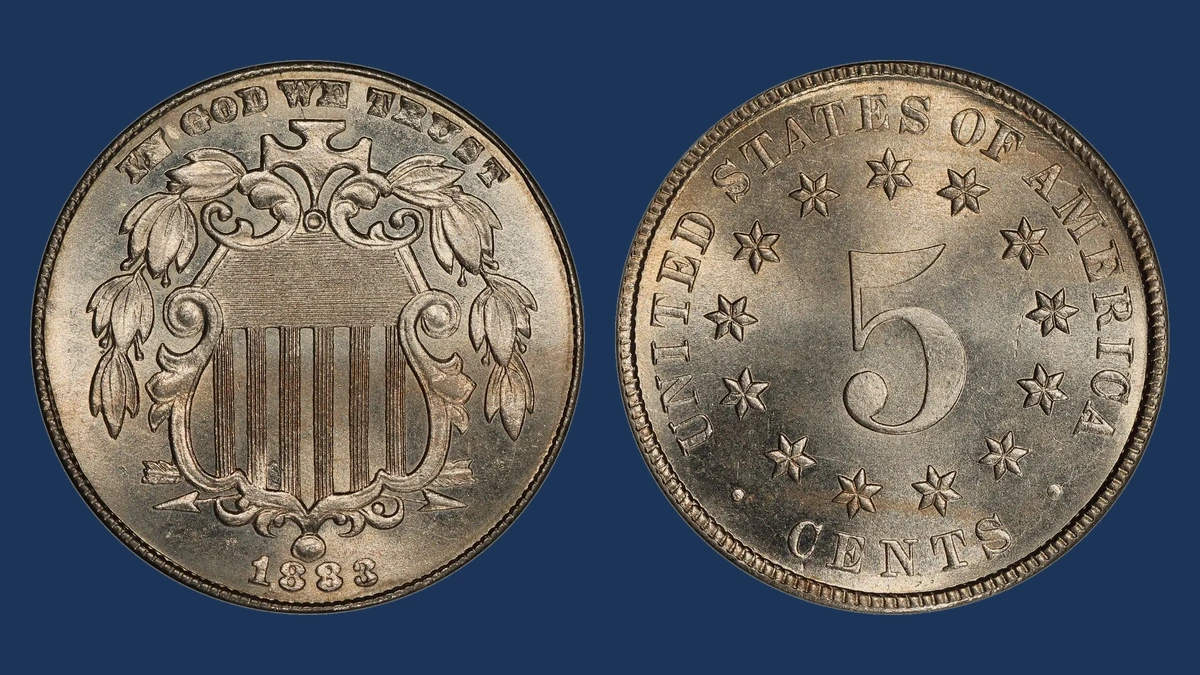
An extra base of a 1 or a second curve inside an 8 can come from repeated date punching. A worker placed the date into the stamping tool, and an earlier impression remained beside the final one.
Reported 1883 examples have different arrangements, including traces beside the 1 or below the first three digits. One FS-311 coin shows an extra 1 base between the main 1 and 8.
These are repunched dates. Repeating a digit from 1883 does not by itself establish the separate 1883/2 overdate, which requires evidence of an older 2.
Estimated Value
A high-grade FS-311 example, graded NGC MS66, sold for $1,440 at Stack’s Bowers in August 2021. Estimate $50–$2,000 for identified repunched dates across worn through attractive unworn condition.
MS66 indicates very well-preserved surfaces without circulation wear. That preservation is part of the price, rather than the entire amount being a premium for an extra digit.
Different repunched-date patterns need their own matches; one sale should not price every extra-looking stroke at the same level.
How to Identify
Start inside the date as well as outside it, checking both loops of the 8s through a 10× magnifier. Some traces can hide inside a finished digit instead of extending beyond its edge.
For the recorded FS-311 comparison, locate the extra 1 base between 1 and 8. Other reported arrangements require their own identified photographs, not every feature combined on one coin.
Check a loose coin against 5 g on a scale and 20.5 mm with calipers, including its plain edge. Inspect the date for cuts, added metal, or rough corrosion before trusting an extra line.
The repeated stroke should form part of the same numeral. Evidence of a different numeral 2 belongs to the overdate check instead.
3. 1883 Shield Nickel Cracked and Broken Stamping Tools
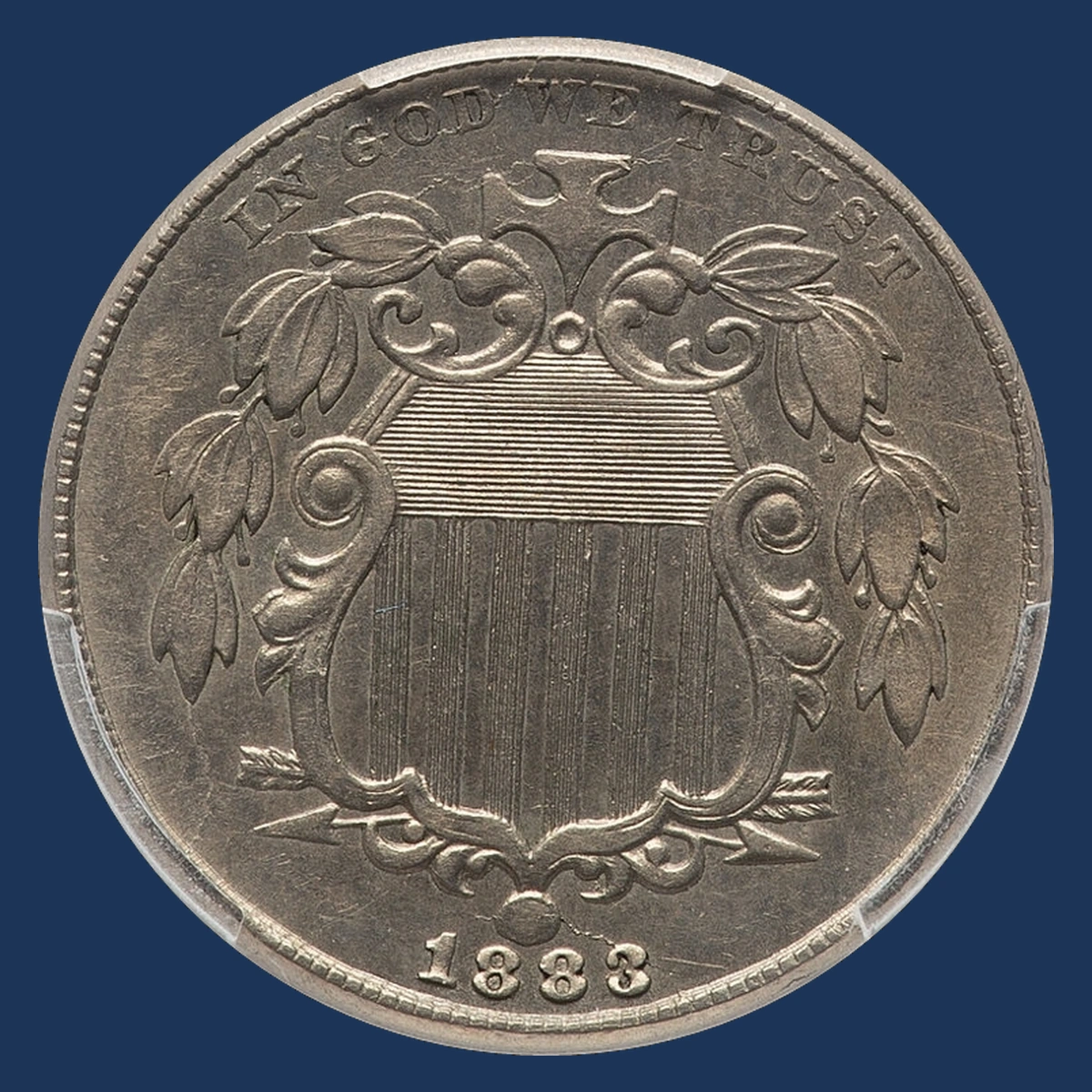
Raised lines can cross the shield or leaves when cracks open in the stamping tool. A larger piece breaking away can leave a raised patch instead of a fine line.
Reported locations include the cross, shield base, lower leaves, and a berry-like bump below the left lower leaf. Those features belong to different examples.
On related 1883/2 coins, breaks occur below 18, beside the right lower leaf, or above AMER on the back. A rim-connected break is called a cud; if the broken tool piece stays in place, some design can remain within it.
Estimated Value
For ordinary-date coins with modest cracks or interior breaks, estimate $20–$500. Clearer rim breaks on confirmed 1883/2 coins can place typical worn to lower-grade unworn examples around $300–$3,000 as complete coins.
The overdate’s own value is included, not added again as a separate error price. Exceptional high-grade overdates need the higher comparisons discussed below.
The specialist descriptions identify shapes and locations but do not provide an individual selling price used here.
How to Identify
Inspect the plain edge beside a raised patch for an impact that could have pushed metal onto the face. With a 10× magnifier, follow the patch into the rim and compare its boundary with the relevant specialist photograph.
Change the light across narrow lines to distinguish raised tool-crack impressions from scratched grooves or openings in the coin itself. A scale and calipers can check a loose coin against 5 g and 20.5 mm, but these dimensions do not identify the break.
Keep each recorded pattern separate when matching the cross, lower leaves, date, or back letters. Where a broken region retains detail, follow its fracture boundary and any shifted design rather than expecting a completely blank lump.
4. 1883 Shield Nickel Proof with a Reported Metal Wrinkle
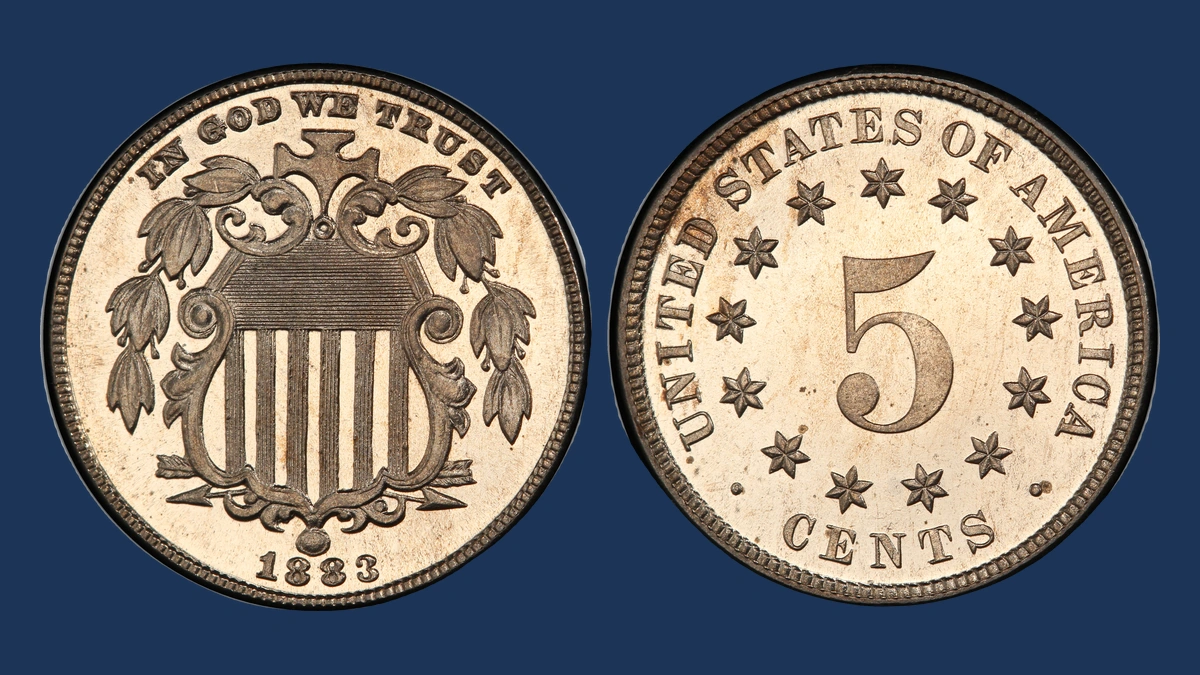
A thin wrinkle runs above NTS and through RICA on the back of one specially made collector Proof. Its description calls it a probable lamination, meaning a possible separation within the coin’s metal.
The coin is graded PCGS PR67 Cameo. Cameo describes frosted designs standing out against reflective surrounding surfaces.
That high grade does not independently certify the wrinkle as an error. The same description also mentions a different line above UNIT, so the suspected metal separation should not be automatically merged with every nearby crack or surface mark.
Estimated Value
The described PR67 Cameo coin sold for $5,522.50 in December 2019, after two recorded $2,760 sales in 2004. These are transactions for the complete Proof, not a proven lamination premium.
Estimate $300–$8,000 across comparable Proofs with an original wrinkle, allowing for grade and visual contrast. The finer example belongs toward the upper part of that range.
The 2019 auction should not be used to value any scratched or ordinary-strike nickel with a similar-looking line.
How to Identify
Keep a graded Proof in its holder.
Its reflective surface can pick up marks easily, and the reported wrinkle does not need to be touched.
Locate NTS and follow the feature toward RICA with a 10× magnifier and low side lighting. Look for a thin separation boundary rather than assuming a raised line is peeling metal.
Check the different line above UNIT separately. A copied tool crack, a scratch, and a separation inside the coin can have different shapes even when close together.
For a loose candidate, compare 5 g on a scale and 20.5 mm with calipers, inspecting the plain edge gently. Ask for an examination of the wrinkle’s layer boundary before treating its cause as confirmed lamination.
5. 1883 Shield Nickel 1883 over 1882 Date
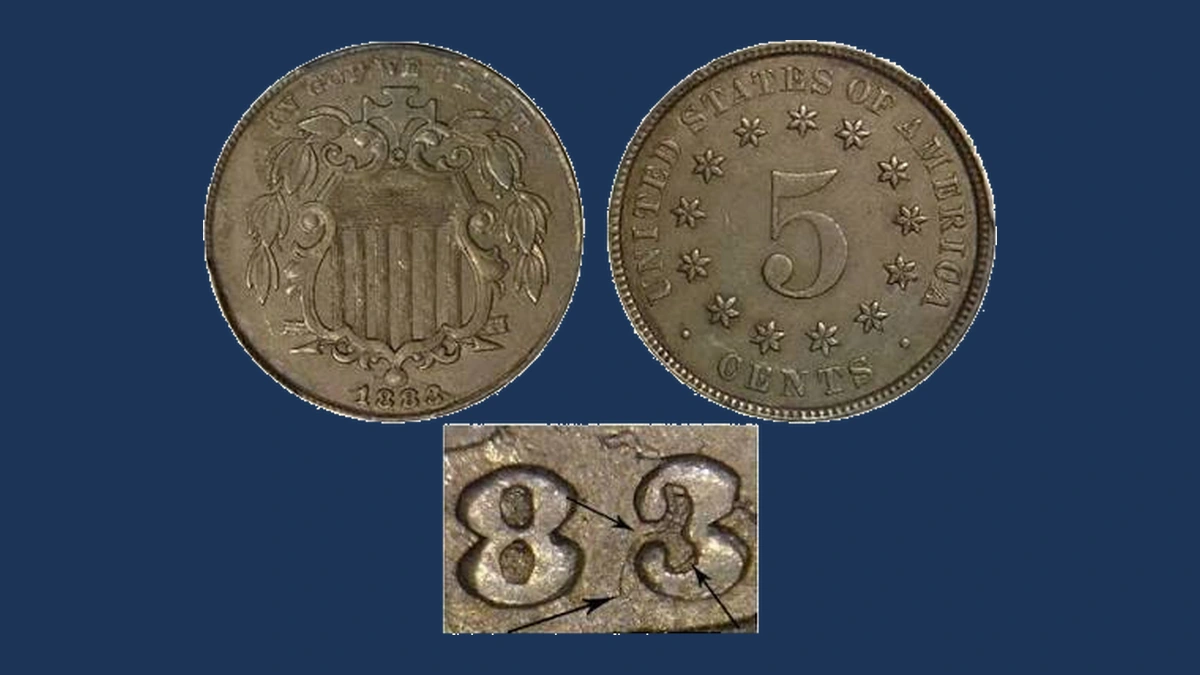
Part of a 2 can remain beside or beneath the final 3 in the date. An older 1882 stamping tool was updated for 1883, and the new digit did not fully erase its predecessor.
The result is the 1883/2 overdate. Different tools left the older digit in different positions, so not every genuine example has the same visible outline.
A real 2 is the essential clue. A crack beside the date, a repeated 3, or an 1882 coin whose damaged 2 looks like a 3 cannot be identified by the overdate name alone.
Estimated Value
Estimated values run from $300–$60,000, a wide span driven by condition and the particular overdate. Most circulated examples are far below the exceptional upper end.
A PCGS MS66+ FS-301 coin sold for $60,000 at Stack’s Bowers in August 2019, as recorded by PCGS. That result is for a remarkably well-preserved example, not a typical worn discovery.
If the same coin also has a tool break, its complete value should be assessed once rather than adding two full prices.
How to Identify
First read the whole final digit: it must be a genuine 3 over surviving parts of a 2. Under a 10× magnifier, follow the older shape beside or between the arms of the 3.
Compare it with an identified overdate from the same tool, because the positions vary. A repeated 3 without a recognizable older 2 is a different date-punching problem.
For a loose Shield Nickel, use a scale against 5 g and calipers against 20.5 mm, then inspect its plain edge. Examine the final digit for cuts or pushed metal that could alter an ordinary 1882 date.
Trace enough of the older 2 to distinguish it from a random spur or crack. That recognizable numeral is the decisive date check.
Conclusion
Values in this guide run from an estimated $20 to $60,000, with the highest figure tied to an exceptional 1883/2 overdate. Most small cracks and thick-looking details belong far below that level.
A repeated 3 is not the same as a surviving 2, and a Proof’s high grade can explain its price better than a surface wrinkle. Match the actual feature before choosing a comparison.