1926 Nickel Error List with Pictures

A missing piece of the buffalo’s leg can matter more than a large scratch. A 1926-D Three-and-a-Half Legs nickel graded MS66 brought $9,400 at Heritage in January 2015.
The 1926 Buffalo Nickel errors below have estimated whole-coin values from $20 to $15,000. Scarce 1926-S coins can be expensive even before an error enters the picture.
Read on to separate missing design details, doubled letters, and damaged metal without confusing their causes.
1. 1926 Buffalo Nickel Reported Flaw Near the Buffalo’s Head
An unusual area near the buffalo’s head may be raised, peeling, or sunken. Those differences matter more than the name attached to it.
One seller described a 1926 Philadelphia coin as having both a cud and a lamination. A cud is a raised blob caused by a broken edge of the steel stamping tool, called a die.
A lamination is metal peeling from the coin itself. The reported head-area flaw belongs here as a possible mint error, but its appearance must establish which process occurred.
Estimated Value
For a genuine small mint-made flaw on a circulated Philadelphia coin, allow an estimated $20–$300. A clear raised break or substantial peeling area can command more than a faint surface mark.
This range applies after the cause is established. It is an estimate for comparable Buffalo Nickel defects, not a recorded sale of the advertised coin.
Scraping, corrosion, and other damage do not qualify for that error premium.
How to Identify
Move a lamp across the buffalo’s head before reaching for a magnifier. A rising shadow can reveal a lump, while a thin lifted edge suggests peeling metal.
Follow any raised area toward the rim with a 10× magnifier. A true cud joins the rim, whereas an isolated lump needs a different explanation.
Do not lift a flap. Compare the date and the area below FIVE CENTS with a normal Philadelphia coin, which has no mint letter.
For a loose coin, use a scale and calipers against the normal 5 g and 21.2 mm specifications. Inspect the plain edge for cuts or crushing.
A raised rim-connected patch and a peeling layer are different findings, so identify the actual shape before naming this flaw.
2. 1926 Buffalo Nickel Repunched D Mint Mark
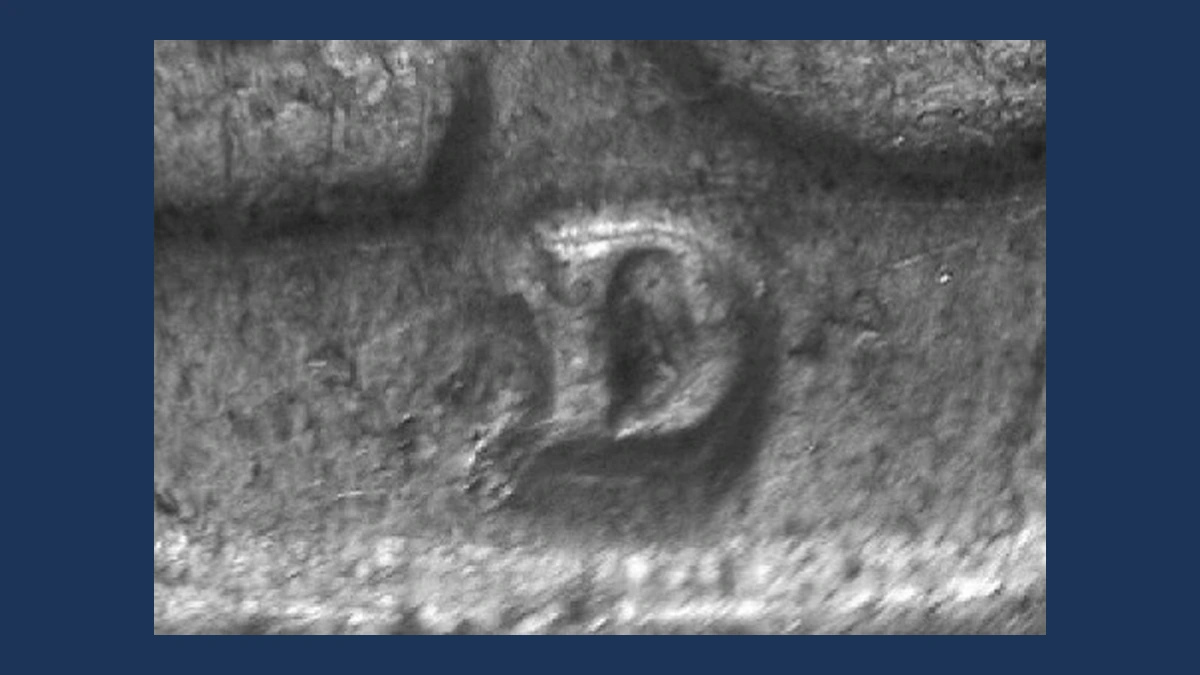
The small D below FIVE CENTS can carry a second, tilted outline. It looks like one letter was placed over another at a slightly different angle.
That happened when a worker punched D into the stamping tool more than once. Coins made with that tool repeated the overlapping mark, a feature called a repunched mint mark.
Wexler lists this 1926-D example as WRPM-001. Its tilted shape matters because a thick, worn, or damaged D can look unusual without having the same origin.
Estimated Value
An estimated $40–$750 covers circulated through attractive unworn examples with a clear matching D. The upper end assumes strong detail and a surface free of harsh cleaning.
As a nearby-year comparison, a 1930-S repunched mint mark coin graded MS62 sold for about $431 in 2011. That sale involved a different mint letter and variety.
Use it as a broad price comparison, not a sale record for WRPM-001.
How to Identify
First locate D below FIVE CENTS. Compare its tilt and extra outline with the photographs in Wexler’s Buffalo Nickel mint mark listings, using a 10× magnifier.
The normal coin has a plain edge, weighs 5 g, and measures 21.2 mm across. A scale and calipers can help reject an altered or incorrect coin, but cannot prove the extra D.
Look beyond the letter for supporting marks: a fine crack runs leftward from above the date. Another fine line lies below the crossbar of the final A in AMERICA and extends downward.
These small marks can wear away. The key comparison remains the second D’s tilted outline, rather than a flat shelf beside the letter.
3. 1926 Buffalo Nickel Off-Center Strike
A large blank crescent beside the design makes this error easy to notice. The metal disk entered the press too far to one side, so the tools struck only part of it.
The recorded 1926 example is about 40% off center and retains its full date. An older description places the shift toward four o’clock.
Its mint mark area fell outside the metal. That means the missing letter does not identify Philadelphia, and the coin should not be assigned to Denver or San Francisco either.
Estimated Value
A practical estimated range is $500–$2,500 for a substantial off-center example with a readable 1926 date. Wear, surface damage, and the amount of missing design affect where it falls.
The recorded PCGS MS63 coin offers an unworn example for comparison. A complete date is especially useful because it identifies a coin whose mint cannot be read.
This range is an estimate, not a claimed auction result for that specific coin.
How to Identify
Read all four date digits first. Without them, a dramatic Buffalo Nickel cannot safely be assigned to 1926.
Next compare both faces: each should lose design along the displaced strike, leaving part of the original blank unstamped. A normal design surrounded by an uneven rim points to a different error.
Check the transition into the blank area with a 10× magnifier for natural metal flow, rather than grinding. A scale should give roughly the normal 5 g unless metal was also lost.
Use calipers to compare the outline with the normal 21.2 mm diameter, allowing for spreading, and inspect the plain edge. On the recorded coin, the full date survives while the mint mark area lies beyond the struck metal.
4. 1926 Buffalo Nickel Clipped Blank
A clipped blank was missing metal before the design was stamped. Its gap can be curved or irregular, depending on how the unfinished metal disk was cut.
The 1926-S example has a roughly 10% ragged gap between three and five o’clock. The nearby design is weak, and an earlier auction recorded a weight of about 4.5 g.
A different Philadelphia coin has a small curved gap at twelve o’clock and was graded MS65. These two shapes share a cause, but they are separate coins.
Estimated Value
Allow an estimated $75–$3,000 across these clipped coins. The Philadelphia example’s small gap belongs toward the lower part of the range, depending on condition.
The scarce 1926-S coin graded AU58 sold for $1,860 on October 2, 2025, at Heritage. Its price includes the value of a desirable date and mint.
AU58 means only slight wear remains visible. That result does not make every small Buffalo Nickel clip worth the same amount.
How to Identify
The 4.5 g weight of the ragged-clip coin is a useful starting point beside the normal 5 g standard. Weigh a loose example, then use calipers across its intact sides to compare with 21.2 mm.
Inspect the missing section with a 10× magnifier. Look for weak design flowing toward the gap and an edge that lacks fresh saw marks or crushed metal.
The remainder should have the usual plain edge. Weakness opposite a clip can help, though its absence alone does not settle the question.
Check below FIVE CENTS for S when comparing the ragged example. The separate no-mint-letter coin has its small curved gap at twelve o’clock, so match the gap and mint together.
5. 1926 Buffalo Nickel Doubled Design
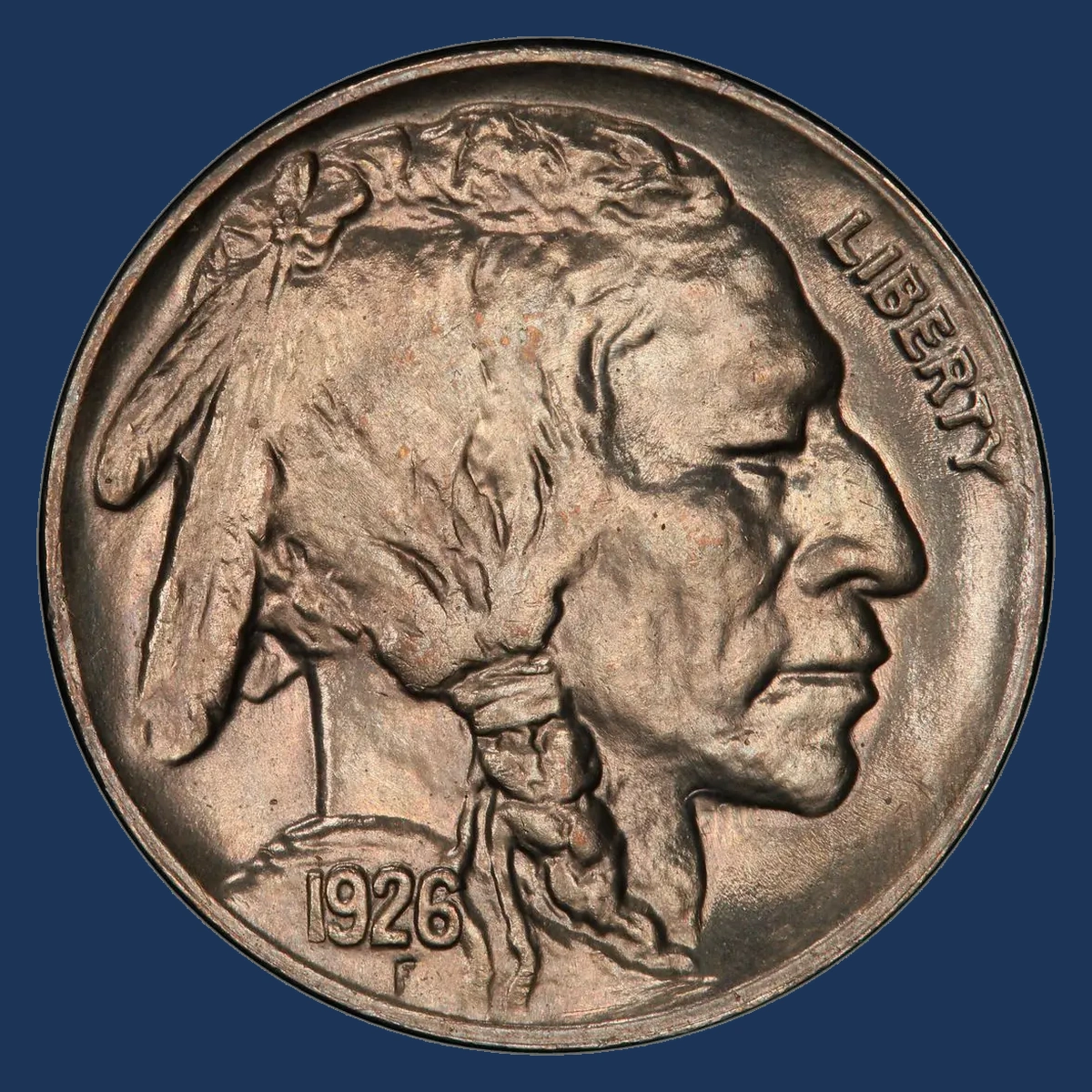
Extra outlines in LIBERTY or the back lettering can come from a doubled design in the stamping tool. Each coin struck with that tool then repeats the same detail.
One Philadelphia combination, FS-101/801, shows separated front lettering and lighter doubling in the hair. Its back lettering has slight downward doubling.
Other 1926 examples differ. Wexler WDDO-001 has a thickened date and lighter thickening in LIBERTY, while CONECA DDR-001 has doubled back lettering and a small forehead crack.
Those features should not be mixed into one checklist.
Estimated Value
Estimated values run from $30–$5,000, depending on the exact doubled design, wear, and strength of detail. The less dramatic thickening belongs below a sharp, desirable paired variety.
A 1926 FS-101/801 graded MS65 sold for $3,120 in November 2018 at Heritage. MS65 describes an unworn coin with relatively few marks.
That sale supports the paired variety’s price range, rather than assigning the same premium to every slightly thickened date.
How to Identify
Choose the feature you actually see before comparing photographs. Date thickening calls for a different comparison from the FS-101/801 combination with separated letters on both faces.
For that combination, examine LIBERTY, the upper hair, and E PLURIBUS UNUM through a 10× magnifier. The CONECA paired listing identifies the matching front and back tools.
For DDR-001, inspect the forehead crack as an additional clue. A loose coin should remain close to 5 g and 21.2 mm when checked with a scale and calipers, with a plain edge.
Worn metal and flat, shelf-like doubling can imitate extra lines. Compare the same letters on a named example instead of treating any doubled edge as a match.
6. 1926 Buffalo Nickel Missing Leg or Feather Detail
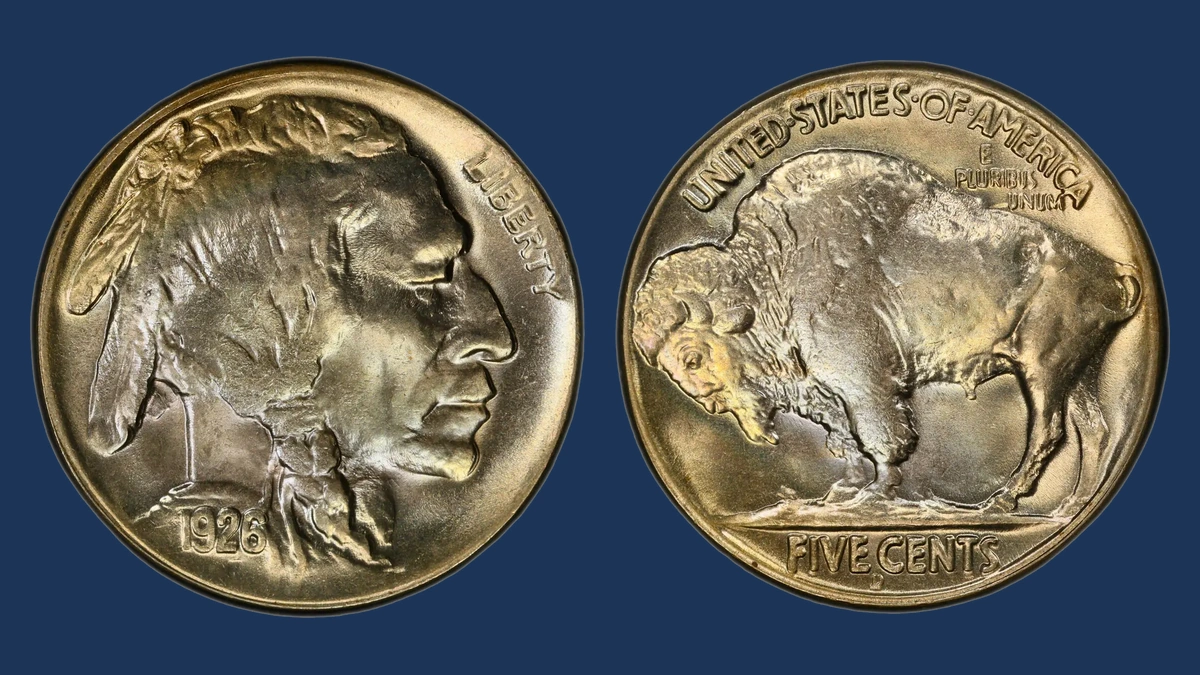
A partly missing front leg and a missing small feather can both result from excessive polishing of a stamping tool. The polishing removed shallow design details that should have appeared on later coins.
The 1926-D Three-and-a-Half Legs variety, FS-901, has part of one front leg weakened or absent. It is different from the famous 1937-D Three Legs nickel.
On the separate 1926-D Two Feathers variety, FS-401, the small inner feather behind the neck is weakened or missing. These names describe different coins, not a required combination.
Estimated Value
Estimate $100–$12,000 across the two varieties, with grade and the missing feature driving the difference. Three-and-a-Half Legs generally occupies the higher part of this combined range.
A PCGS MS66 Three-and-a-Half Legs sold for $9,400 in January 2015 at Heritage. The Two Feathers estimate is about $100–$1,500 for circulated through attractive unworn examples.
That second range is an estimate, not a sale of the leg variety.
How to Identify
A normal Buffalo Nickel weighs 5 g and measures 21.2 mm, with a plain edge. Check a loose coin with a scale and calipers, then locate D below FIVE CENTS.
Now compare the suspect feature with a normal 1926-D at the same angle. Broad wear weakens much more than one leg or one small feather.
For FS-901, follow the affected front leg from its upper attachment toward the hoof with a 10× magnifier.
For FS-401, inspect the inner feather beside the neck, including any remaining trace. Scratches or a depressed surface can reveal removal from the coin itself.
The missing area must match the correct 1926-D example while surrounding details remain consistent, so a 1937 photograph is not suitable.
7. 1926 Buffalo Nickel Peeling Metal
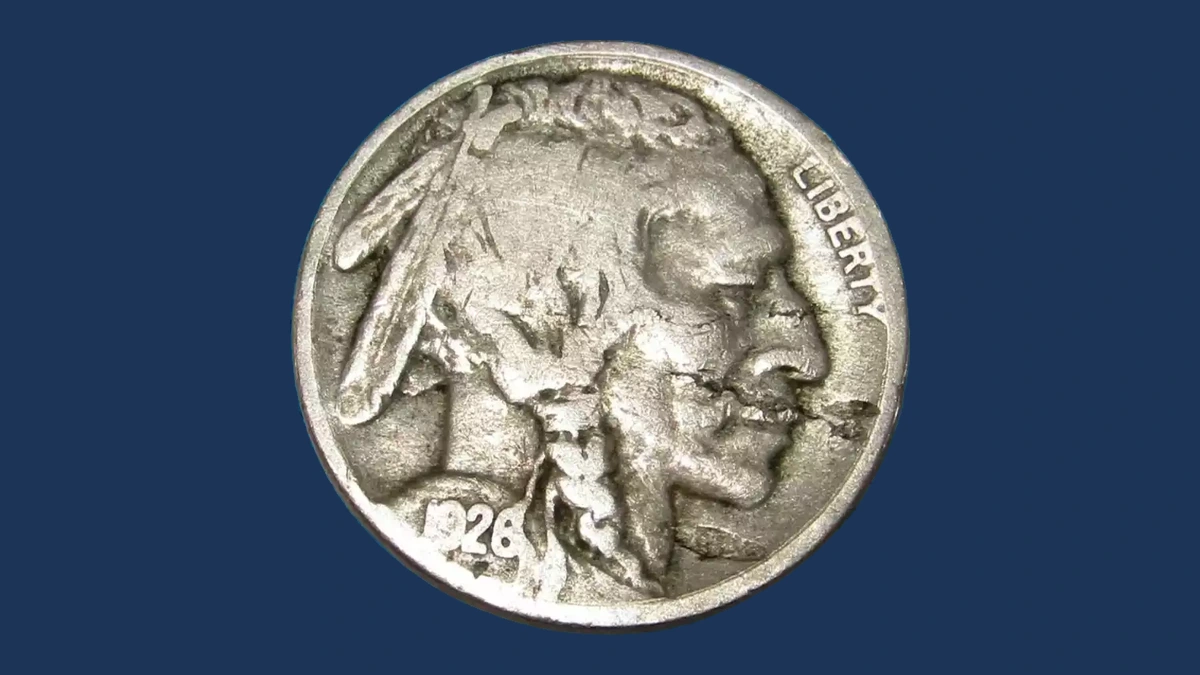
A thin split or peeling strip on the back can reveal a weakness inside the metal. This is called a lamination, and it begins with poorly bonded material rather than a second layer added later.
A 1926-S coin graded MS64 has been offered with a back lamination. Another auction description mentions a slight diagonal separation across the lower back.
The defect can stay attached as a narrow flap or leave a shallow missing patch. It does not mean the entire coin has split into two halves.
Estimated Value
For 1926-S coins with this defect, estimate $100–$15,000 from worn examples through attractive MS64 pieces. Much of that range reflects the scarce coin underneath the peeling metal.
As a normal-coin comparison, a 1926-S graded MS64 sold for $12,600 in July 2025 at Heritage. That was not a lamination sale.
A small defect can reduce appeal to date collectors even while attracting error collectors, so do not add a fixed error premium.
How to Identify
Keep the coin flat and leave any loose metal alone. Pressing or lifting a flap can turn a natural defect into fresh damage.
When safe to handle, use a scale and calipers to compare a loose coin with 5 g and 21.2 mm. A fine separation may barely affect weight.
Use a 10× magnifier and low side lighting along the lower back. A thin boundary beneath the surface differs from a gouge with pushed-up metal on either side.
Inspect both faces and the plain edge for other damage before judging condition.
The S below FIVE CENTS identifies a valuable date and mint even without an error. For the peeling itself, look for a thin layer boundary rather than relying on lightness alone.
Conclusion
The estimated $20–$15,000 range covers very different 1926 Buffalo Nickels. A small extra outline around D needs magnification, while a large off-center strike is visible immediately.
Keep the mint and condition in view, especially with valuable 1926-S coins. Compare missing feathers and legs with the correct Denver examples, and leave peeling metal untouched.
A matching error and an original surface matter more than an exciting label.