1916 Nickel Error List with Pictures

A 1916 Buffalo nickel with a doubled date reached $281,750 at auction in 2004. Its extra outlines came from the stamping tool, and they are much stronger than an ordinary blurry date.
These 1916 nickel errors span an estimated $15–$300,000, from small metal flaws to that rare doubled design. Start with the visible difference: missing metal, extra outlines, an uneven shape, or a feature absent from the design.
1. 1916 Buffalo Nickel Thin Flakes Around the Buffalo’s Back
Thin strips of metal lift or peel around the buffalo’s curved back on one Denver example. This surface separation is called a lamination, and the coin was described in a Stack’s catalog as lightly worn.
A weakness within the original metal lets a thin layer separate. The underlying coin can remain largely intact, unlike a nickel that splits into two broad halves.
Buffalo nickels use a solid copper-nickel alloy, not the layered construction of modern dimes. A peeling area therefore does not reveal a deliberately added copper core.
Estimated Value
Estimate $15–$200 for a genuine surface lamination, depending on its size and the coin’s condition. A clear flap with undisturbed surrounding detail generally attracts more interest than a tiny rough spot.
The 1916-D example appeared in a five-coin group, so any group price would not belong to this nickel alone. As a different-date comparison, a 1929-S nickel with a lamination flap sold for $149.50 at Heritage in April 2010.
How to Identify
Leave any partly attached strip in place. Prying it up can break it away and destroy evidence of the original split.
Find the D below FIVE CENTS, then inspect the buffalo’s arched back with a 10× magnifier. The thin openings should follow weakness within the metal rather than a scratch across its surface.
A retained strip can leave the weight close to the normal 5 grams. For a loose coin, use a scale and measure an unaffected span against 21.2 millimeters with calipers.
Examine the plain edge and the split ends for later scraping or prying.
Photograph the strip with the surrounding back design still visible. That view shows where the metal separated without making a small flap look like half the coin.
2. 1916 Buffalo Nickel A Tilted Buffalo After Flipping the Coin
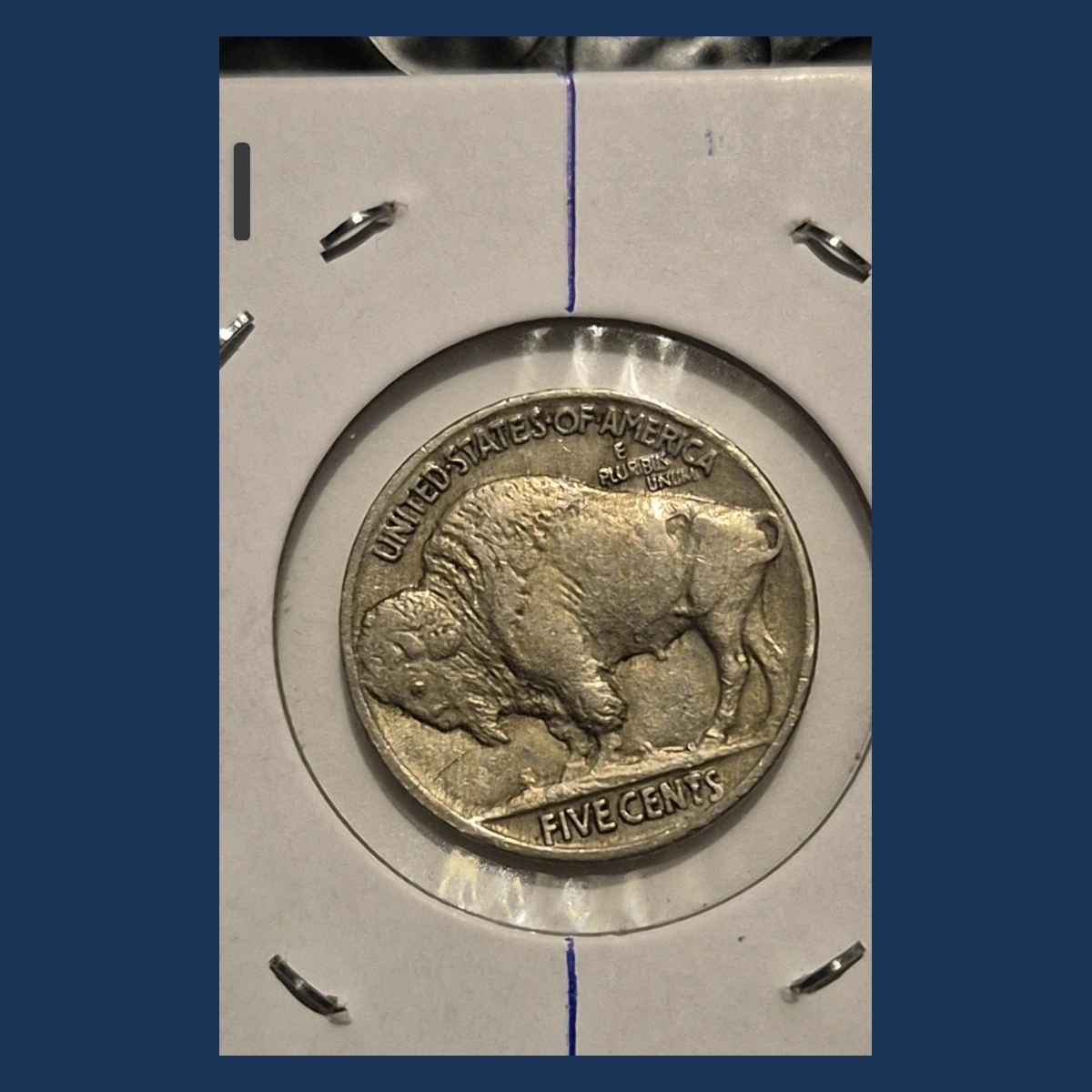
A buffalo that stays tilted after a careful flip can point to a rotated stamping tool. On an ordinary Buffalo nickel, holding the portrait upright and turning the coin top to bottom leaves the buffalo upright too.
A dealer listed a worn 1916 Philadelphia example as a rotated-die error. The description does not give an angle, so it cannot establish a dramatic quarter-turn or half-turn.
The important feature is the relationship between the two faces. Two photographs turned separately can make an ordinary coin appear to have this error.
Estimated Value
Use an estimated $30–$500 for a genuine rotation, with the angle and overall condition affecting the price. A small tilt generally attracts less interest than a large, clearly demonstrated turn.
The dealer’s worn 1916 example provides an identity comparison rather than a measured angle for every candidate. Film a continuous flip before comparing prices, and keep the date and surface quality visible in the same recording for a buyer.
How to Identify
Read the date and check below FIVE CENTS for the mint letter under a magnifier. The reported worn Philadelphia example has no letter, which is normal for that issue.
For a loose intact nickel, check roughly 5 grams and 21.2 millimeters with a scale and calipers, and inspect the plain edge. These physical checks do not measure the rotation; the relationship between the faces does.
Practice with an ordinary coin, holding the portrait upright and flipping top to bottom without turning it sideways. Repeat with the candidate while recording continuously, then repeat once more to see whether the same buffalo tilt returns each time.
3. 1916 Buffalo Nickel Cracks and Partly Broken Stamping Tools
A small cracked area reaches the back rim near eleven o’clock on a Denver nickel. Part of the broken die, or stamping tool, stayed in place, allowing some design to survive inside the affected patch.
Collectors call that a retained cud. A separate San Francisco coin has a front crack running near six to six-thirty, described as an earlier stage before a full break.
These are different coins with different positions. The cleaned surface of the San Francisco example does not turn its raised crack into a missing chunk of die.
Estimated Value
Estimate $25–$150 for the smaller crack and $100–$750 for a clearer retained rim break. Strong raised boundaries and readable surrounding design make useful price comparisons.
The Denver example is described as MS64, meaning unworn with some marks. The separate San Francisco coin was cleaned, which can reduce what collectors pay even when its crack is genuine.
A larger break may command more, but ordinary rim damage does not qualify for these ranges.
How to Identify
Choose the matching mint and face before tracing a line. The Denver comparison is a back break near eleven o’clock; the San Francisco example has a front crack near six to six-thirty.
A 10× magnifier should reveal surviving design within the Denver patch. That retained detail separates a partly displaced tool piece from a fully missing section.
On the San Francisco coin, follow the raised line without assuming that the whole surrounding area is a cud.
For a loose complete nickel, check 5 grams and 21.2 millimeters with a scale and calipers. Inspect the plain edge for a dent that pushed metal upward.
The crack or shifted patch must belong to the struck design, rather than added filler or damage beside it.
4. 1916 Buffalo Nickel An Impression Left by Trapped Material
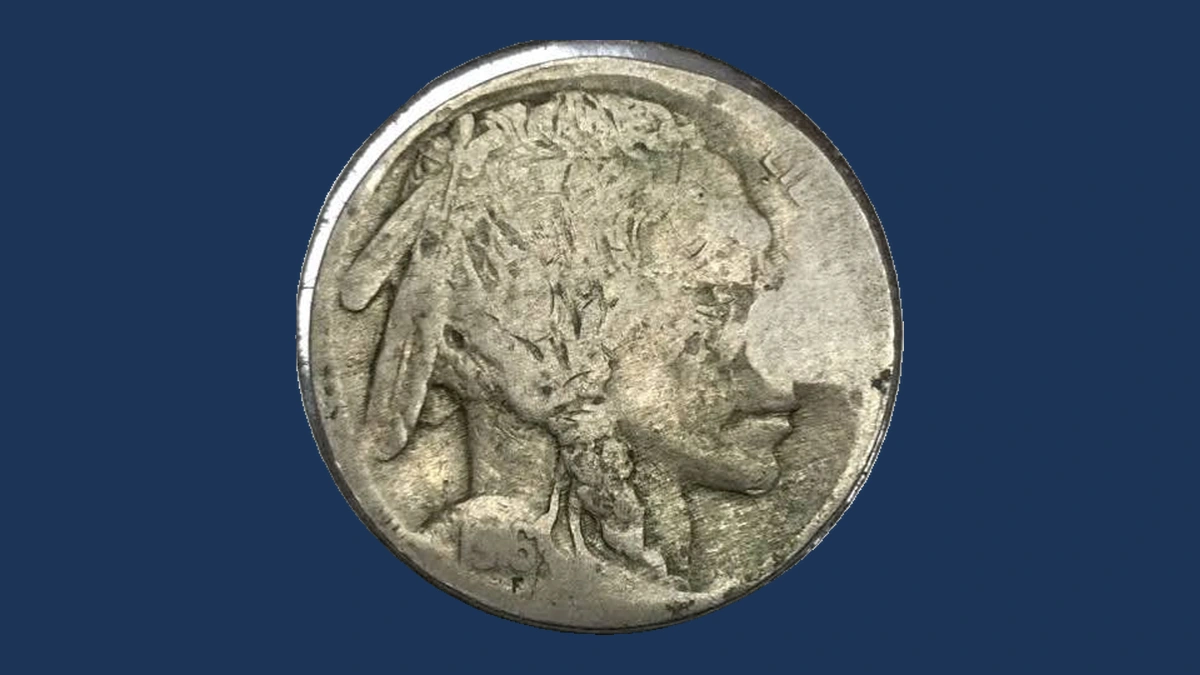
A piece of material between the blank and stamping tool can leave an impression where normal detail should appear. If cloth is involved, a repeating weave may survive in the affected area.
The year guide reports a 1916 cloth-related example, but it does not establish the mint or exact location through an original auction listing. The impression and any retained object also need to be distinguished.
A fabric pattern pressed onto a finished coin can look similar. Original nearby lettering and the texture inside the depression help separate those possibilities.
Estimated Value
Allow an estimated $25–$150 for a modest original impression and $150–$900 for a clear, larger fabric pattern. The year guide reports an $850 cloth example, which serves as a secondary comparison.
Visible texture, an undisturbed surface, and clear surrounding design support stronger prices. An empty impression should not receive an extra premium for a retained object, and a rough patch without identifiable striking evidence belongs outside the higher range.
How to Identify
Examine the depression before calling the trapped material cloth. Under a 10× magnifier and angled light, a repeating woven texture is more persuasive than random roughness.
For a loose coin, compare weight and diameter with 5 grams and 21.2 millimeters using a scale and calipers. Inspect the plain edge for evidence of a later blow.
Now follow the lettering and design into the affected area. Flattened surrounding details or fresh cuts may show that a texture was pressed onto a finished coin.
Photograph both faces and any object still present without trying to remove it. An empty fabric impression and retained fabric are different findings; the year report does not establish a particular mint or position for either.
5. 1916 Buffalo Nickel A Complete Design on an Expanded Coin
The letters can remain complete even when the nickel’s metal spreads outside its normal outline. A broadstrike happens when the collar, the ring that controls the blank’s width, does not hold the edge properly.
The collector gallery includes an unworn Philadelphia example, an unworn Denver piece with uneven borders, and a worn San Francisco coin. They should not be treated as one specimen.
The Denver piece’s uneven border is called an uncentered broadstrike. Its complete design separates it from an off-center strike that leaves some design beyond the metal.
Estimated Value
Estimate $75–$1,000 for these expanded strikes, with greater natural spreading and better preservation supporting the upper end. The worn San Francisco coin and cleaner unworn examples are different condition comparisons.
A wider border alone does not set the price. Buyers should see complete lettering, an original expanded edge, and surfaces free of later flattening.
The separate nickel with both a straight clip and expansion is valued together in the clipped-blank section.
How to Identify
Compare the candidate’s width with a normal 21.2-millimeter nickel, using calipers on a loose piece. A scale reading near 5 grams supports outward spreading without a missing piece of metal.
Read the outermost letters on both faces under a magnifier. The entire design should remain inside the expanded border, even when one side has more blank border than the other.
Inspect the plain edge and nearby letters for crushing or grinding. Those later actions can widen a coin but also flatten its original details.
Finally, read D, S, or the normal empty Philadelphia mint-letter area below FIVE CENTS. The worn San Francisco example and separate unworn pieces should be compared on their own condition, rather than width alone.
6. 1916 Buffalo Nickel A Straight Missing Edge with an Expanded Strike
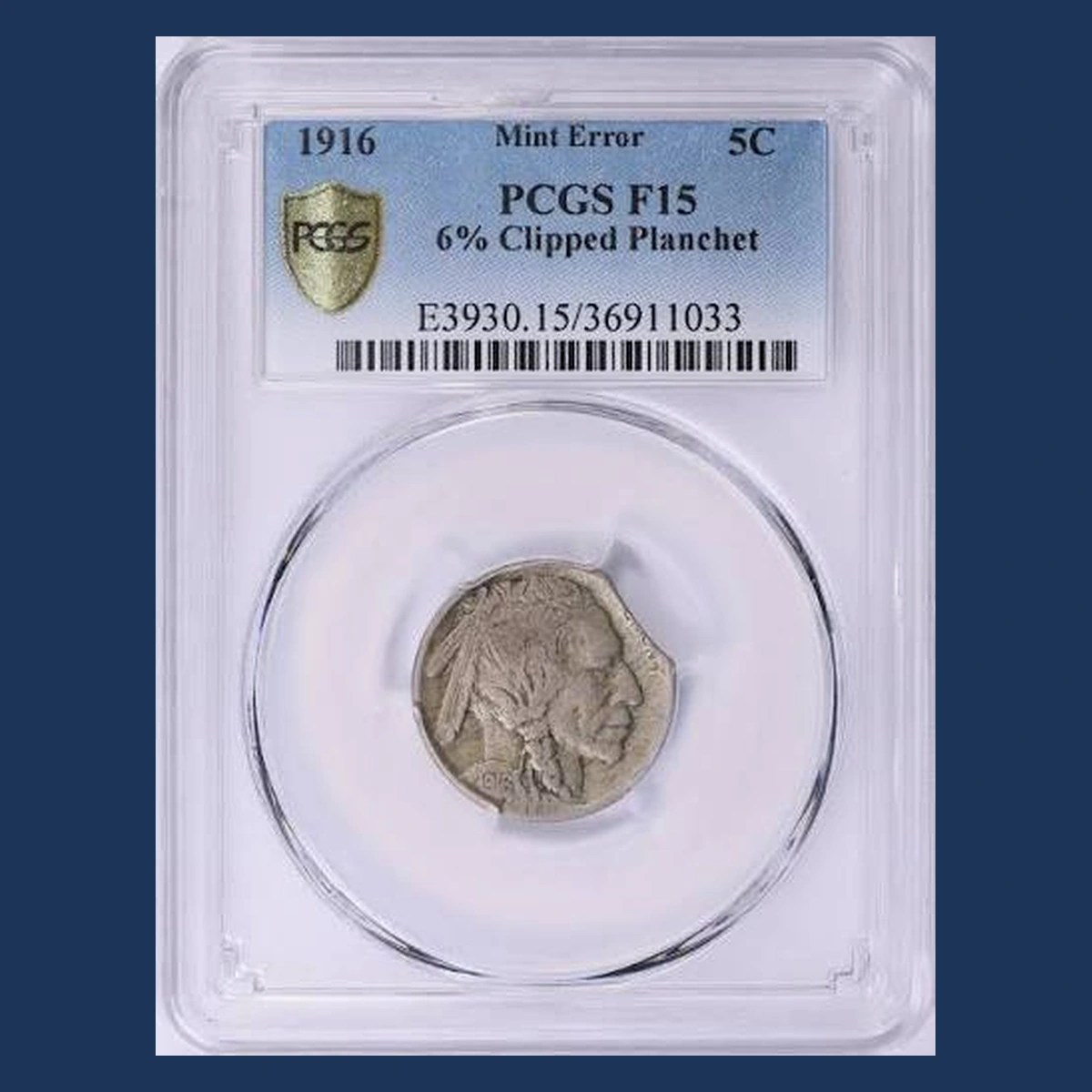
A straight missing edge changes the outline of this reported nickel. Mint Error News lists a 1916 example with a ten-percent straight clip together with a broadstrike, graded NGC MS62.
MS62 describes an unworn coin with noticeable marks. The straight gap began before striking, while the unsupported strike allowed the remaining blank to spread.
Both features belong to one coin. The listing does not establish its mint or the gap’s clock position, and those details should not be borrowed from another straight-edged coin pictured nearby.
Estimated Value
For the combined straight clip and expanded strike, use an estimated $150–$1,200. A clearly original gap, readable date, and undamaged surfaces can support more than a small or poorly preserved defect.
The MS62 listing describes an unworn example, so heavily worn candidates should not be treated as equivalent. Judge the clip and spreading together as one coin, rather than adding full separate error prices.
A nickel cut after minting does not qualify for this estimate.
How to Identify
A loose coin’s weight helps separate missing metal from simple outward spreading. Compare it with the normal 5 grams on a scale; the broadstrike can increase width without replacing metal lost to the clip.
Use calipers to record its spans against the usual 21.2 millimeters. The ten-percent description is not an exact measured weight for this coin.
Inspect both ends of the straight gap with a 10× magnifier. Look for struck metal flowing toward the opening, then check the opposite rim for possible weakness.
Examine the remaining plain edge for saw marks or fresh shearing.
The original gap and expanded border should explain the same object. Do not borrow an unstated mint or gap position from a nearby catalog image.
7. 1916 Buffalo Nickel The Missing Designer’s Initial
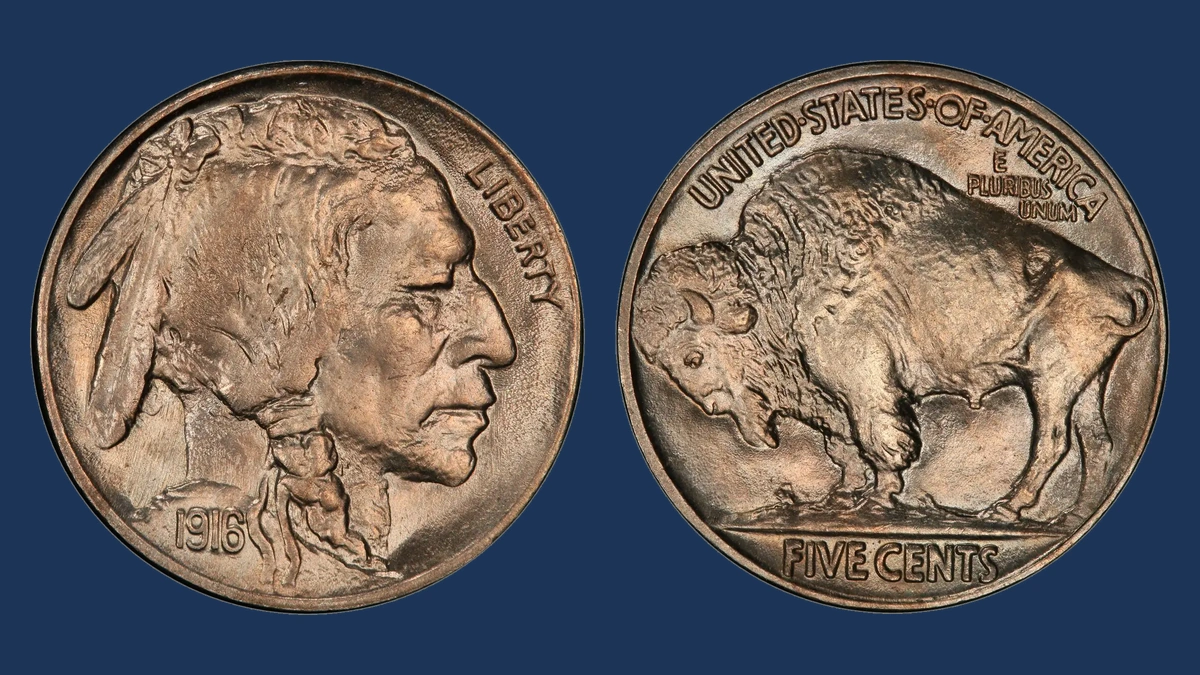
The small F below the date is the designer’s initial, not a mintmark. On the Philadelphia No F variety, that letter is absent from the design left by a heavily polished stamping tool.
The surrounding date and portrait can remain much clearer than the missing initial. This makes a useful comparison with a worn nickel whose small details have disappeared together.
Look closely at the original surface where the F belongs. Scraping, corrosion, and wear can remove the same small letter without producing this Philadelphia variety.
Estimated Value
Estimate $15–$150 for worn Philadelphia examples and $250–$1,800 for well-preserved unworn pieces. The year guide reports $1,675 for an MS65 example in 2021; MS65 means unworn with relatively few marks.
The stronger prices require the actual polished-tool variety, not an F lost through wear or scraping. A sharp date, attractive surfaces, and reliable variety identification give buyers better reasons to pay a premium than a missing letter alone.
How to Identify
Learn the F’s normal position below the date from an ordinary 1916 nickel. Then compare the suspect under a 10× magnifier, keeping the nearby numerals and portrait in view.
A loose intact nickel should be near 5 grams and 21.2 millimeters on a scale and calipers, with a plain edge. Check the back below FIVE CENTS for Philadelphia’s normal absence of a mint letter; the F itself is not a mintmark.
If the surrounding detail is also worn flat, the absent initial alone proves little. Look for scraping or a polished patch that removed metal from the coin, rather than the original missing feature left by the polished stamping tool.
8. 1916 Buffalo Nickel Only Two Clear Feathers
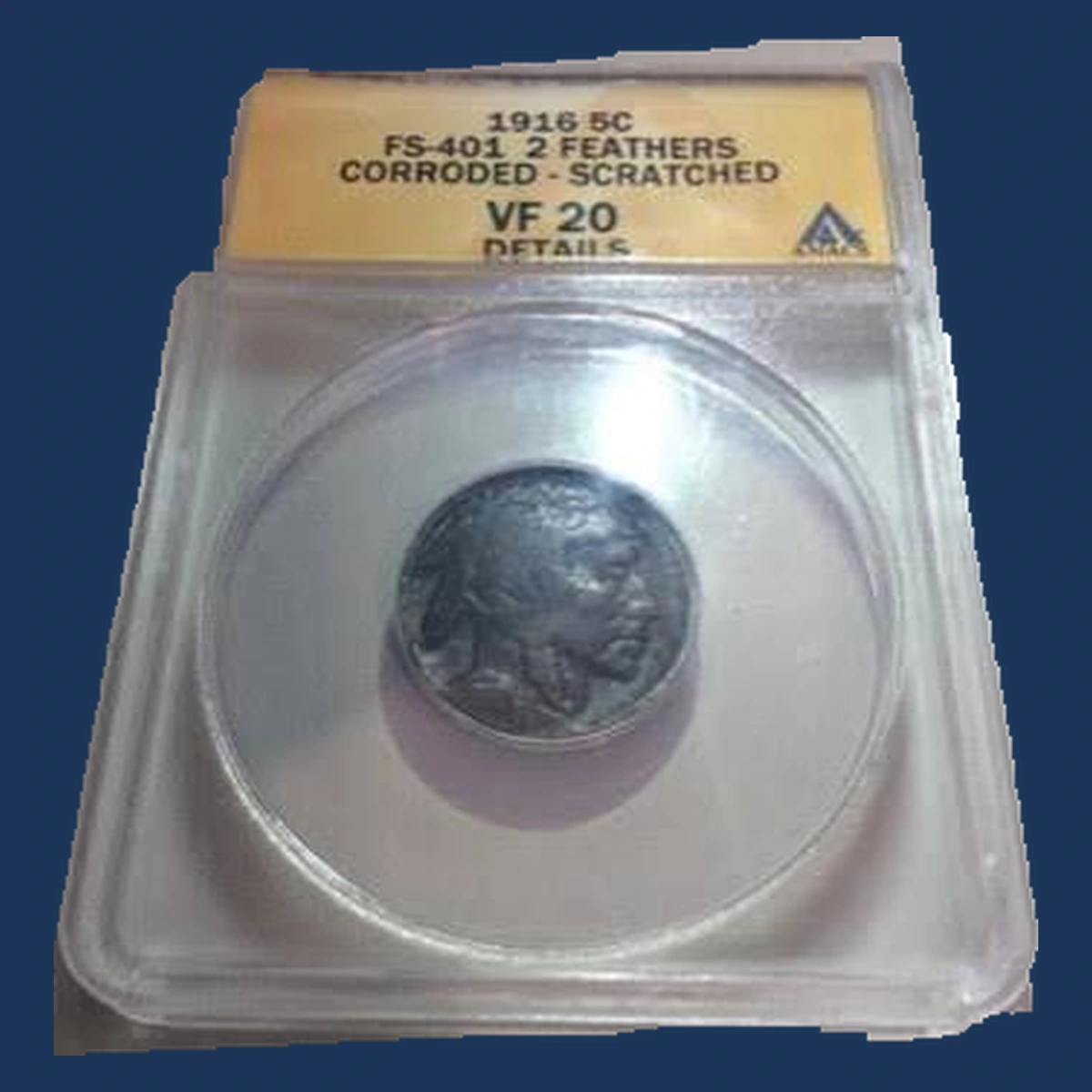
Two long feathers remain easy to see, while the short inner feather is missing or greatly reduced. This Philadelphia variety is listed as FS-402, a catalog number used to identify its particular design.
Polishing the stamping tool removed the small feather from the design it could transfer. That is different from circulation wear gradually flattening all the raised features on a finished nickel.
Examine the space between the neck and the longer feathers carefully. Any surviving trace should be compared with the actual variety rather than hidden or assumed absent.
Estimated Value
A worn example graded XF45 sold for $80 at Stack’s Bowers in January 2023. Another, lightly worn AU55, brought $125 there in July 2024.
Use an estimated $50–$250 for worn examples and $300–$2,500 for unworn pieces. An MS65 coin sold for $1,920 at Heritage in December 2018.
These results show why preservation matters: a clear missing feather on an attractive unworn coin is a different comparison from a worn, softened portrait.
How to Identify
Count the feathers under good light, then examine the short inner feather’s expected position with a magnifier. Counting only the two long feathers without checking that space can overlook a surviving third feather.
Compare the neck and nearby hair for wear, scratches, or weak detail. The missing feature should fit the polished-tool pattern rather than a scraped area.
For a loose coin, check 5 grams on a scale and about 21.2 millimeters with calipers. Inspect the plain edge for alteration, then confirm 1916 and the Philadelphia issue.
Use photographs identified as FS-402 to compare the exact remaining design. Leave faint original traces visible instead of cleaning the area to make the variety appear stronger.
9. 1916 Buffalo Nickel A Shifted Design with a Blank Crescent
A small blank crescent sits beside a design that runs beyond the opposite edge. That lost design separates an off-center strike from a broadstrike with uneven but complete borders.
The collector gallery shows a five-percent San Francisco example, while a Mint Error News list includes an unworn Denver piece. A year guide also reports a much stronger forty-percent shift.
These examples have different amounts of displacement. If the mintmark area lies outside the surviving metal, a missing mark cannot establish Philadelphia, and one coin’s shift direction should not be assigned to another.
Estimated Value
Estimate $100–$600 for smaller original shifts and $500–$2,500 for dramatic examples that retain a readable date. Condition and how much design remains visible both affect value.
The year guide reports over $1,500 for a forty-percent example without a visible mintmark. That is a secondary comparison, separate from the gallery’s five-percent San Francisco coin.
A large shift with the date missing can be less useful to a year collector than a smaller, fully dated example.
How to Identify
Read the date before judging how dramatic the shift looks. A magnifier can reveal surviving digits, but it cannot supply a missing numeral beyond the metal.
Compare the untouched crescent with the struck area on both faces. Both designs should follow the same displaced blank; a shift limited mainly to one face suggests a different tool problem.
For a loose coin, use a scale against 5 grams and calipers against the normal 21.2-millimeter diameter. Inspect the plain edge for filing or fresh cutting marks.
Locate the mint-letter area below FIVE CENTS if it survives.
An absent D or S only identifies Philadelphia when that area is intact. If the strike carried it beyond the metal, keep the mint unidentified.
10. 1916 Buffalo Nickel Two Matching Halves from One Split Coin
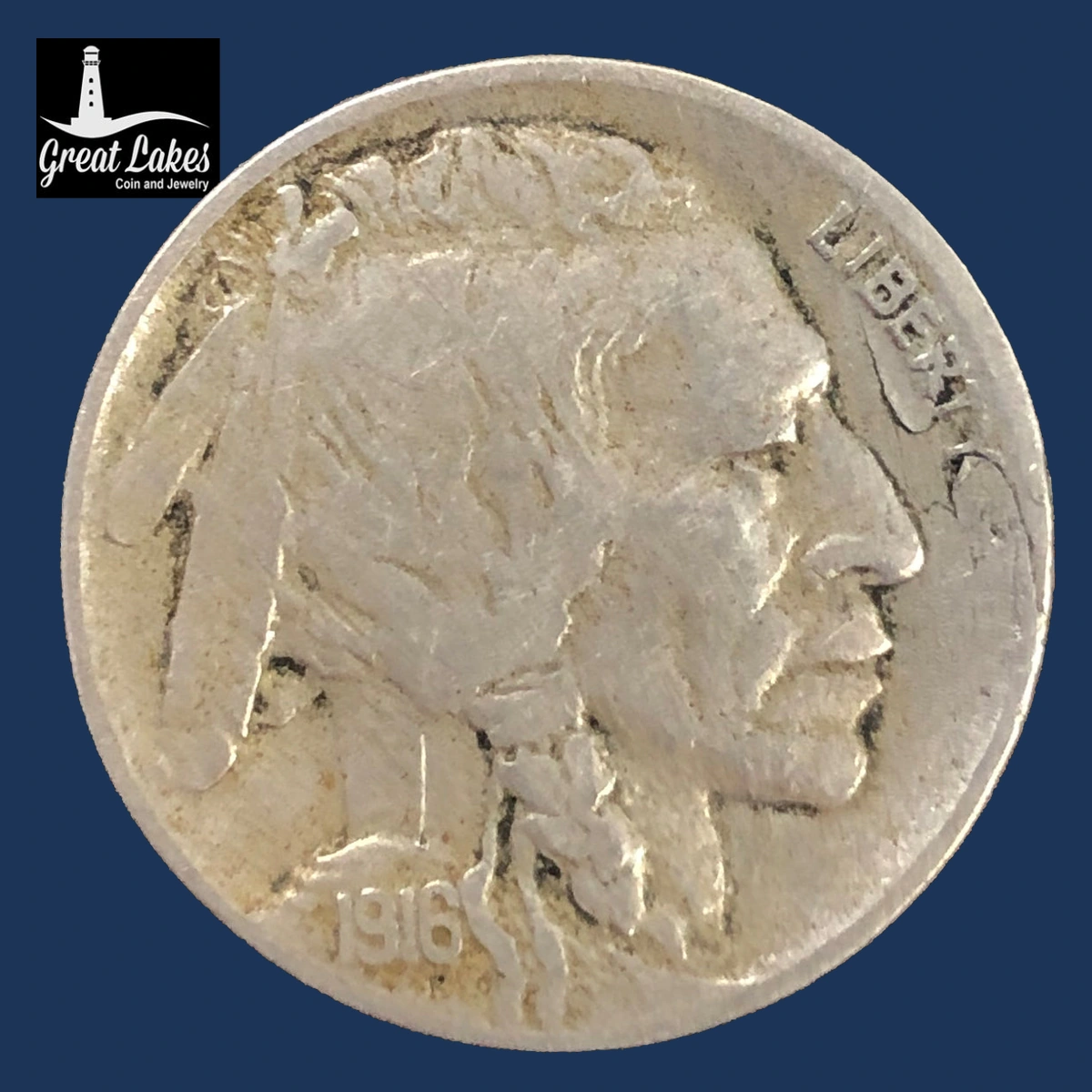
One half carries the portrait, and the matching half carries the buffalo. The collector gallery presents these as two pieces of the same Philadelphia nickel that split through its thickness after striking.
The pair preserves both outside faces and exposes the metal that once joined them. A weakness inside the solid copper-nickel blank allowed it to separate.
This is not a modern coin shedding an outer copper-nickel skin. Nor are the two halves separate complete nickels, even though the collector displays them individually and describes each as lightly worn.
Estimated Value
Use an estimated $400–$3,000 for a genuine matching pair with both outside designs preserved. Keeping the matching halves together can make the original event easier to understand and more appealing to collectors.
Their condition, fit, and undisturbed inner surfaces all affect the price. Two unrelated thin pieces should not receive the same estimate simply because one shows a portrait and the other a buffalo.
The range values the complete pair, not each half separately.
How to Identify
Keep the halves apart and supported while photographing their outer and inner faces. Rubbing them together can alter the exposed surfaces that help establish their match.
For loose pieces, record their weights separately and compare the total with a normal nickel’s 5 grams. Calipers can compare their outlines with 21.2 millimeters; small losses or wear can affect the weight, so an exact total is not required.
Under a magnifier, inspect the inner metal for saw marks, grinding, or fresh flattening. Compare their outlines and surviving plain-edge sections as well as the portrait and buffalo faces; a convincing pair needs matching separation features, not merely complementary pictures on two thin pieces.
11. 1916 Buffalo Nickel A Partly Missing Front Leg
The buffalo appears to have three full legs and only part of the fourth. On this Denver variety, the lower portion of the foremost leg is weakened after polishing altered the stamping tool.
Some leg detail remains, which explains the three-and-a-half-legs name. The feature should not be turned into the complete missing-leg claim associated with a different, better-known 1937-D variety.
The exact surviving outline matters more than the nickname. Wear and a weak strike can also soften a leg, especially when the buffalo’s other raised details are worn down.
Estimated Value
For an identified 1916-D variety, estimate $150–$500 in more worn condition and $600–$1,200 with lighter wear. Unworn examples can fit an estimated $1,500–$3,000 range using the year guide’s comparisons.
The remaining leg, clear Denver mintmark, and natural surface should support the identification. A vaguely weak leg on an ordinary worn nickel does not qualify for the same premium.
Do not apply prices for the different 1937-D three-legged variety.
How to Identify
Confirm the D below FIVE CENTS and the 1916 date before using variety photographs. The better-known 1937-D missing-leg pattern is a different comparison.
For a loose complete coin, a scale and calipers should find roughly 5 grams and 21.2 millimeters. Inspect the plain edge for alteration.
Now examine the lower part of the foremost leg with a 10× magnifier. Compare its remaining outline with photographs of the actual 1916-D variety.
Look across the other legs, body, and ground to judge overall wear. General weakness in several areas can explain a softened leg without this variety.
Scraping or a polished patch around the leg needs separate attention. Original remaining leg detail should fit the specific pattern rather than look removed from the finished coin.
12. 1916 Buffalo Nickel The Strongly Doubled Date and Portrait
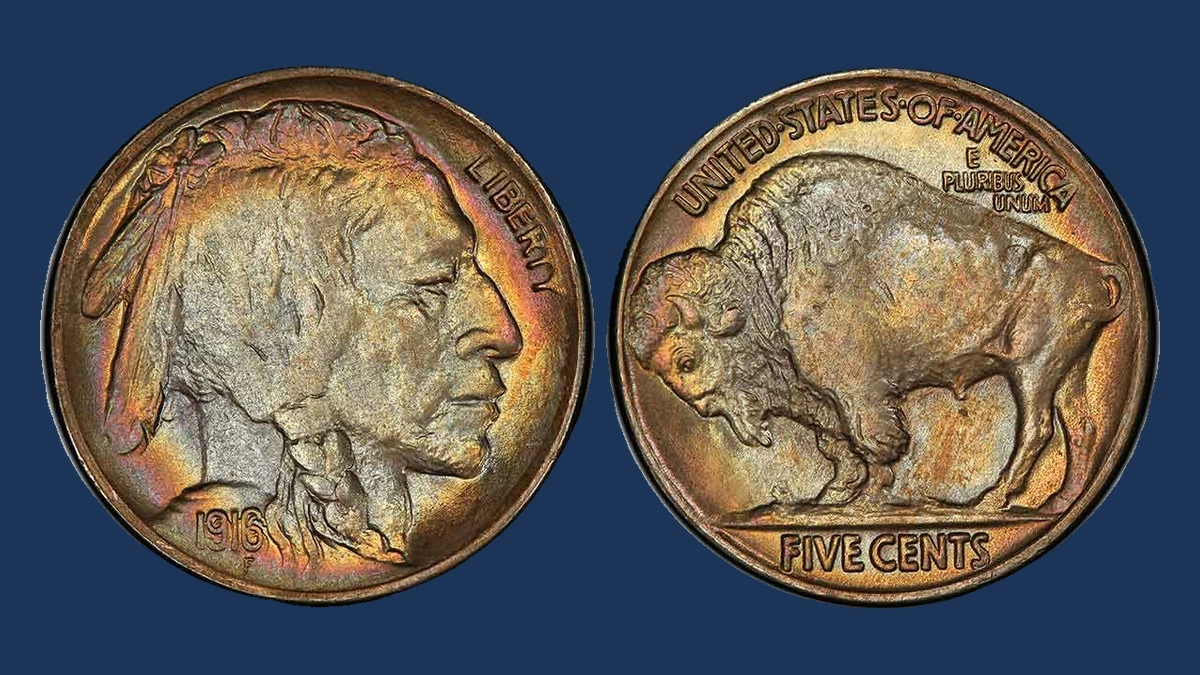
The date has a bold second outline, especially around the final 1 and 6. Extra detail also appears below and to the right of parts of the portrait, including the lips and chin.
This famous Philadelphia variety came from a doubled die: a stamping tool made with overlapping design impressions. A single strike from that tool could put the doubled design onto the coin.
It therefore does not require the finished nickel to have been struck twice. The strong repeated shapes are different from a shallow ledge beside a worn or scraped date.
Estimated Value
An unworn MS64 example reached $281,750 at Bowers & Merena in 2004, recorded by PCGS CoinFacts. MS64 means no circulation wear but some visible marks.
Use an estimated $5,000–$50,000 for identifiable worn examples and $50,000–$300,000 for lightly worn through exceptional unworn coins. Preservation and the strength of the remaining design have a large effect.
The rare doubled date must be authenticated before these ranges are applied to a candidate.
How to Identify
Begin with the final 1 and 6, where the extra date outline is especially clear. Under a 10× magnifier, trace the second shapes below and to the right of the main digits.
Continue to the lips and chin instead of judging the date alone. Several matching doubled features give a stronger comparison than a single thick number.
Confirm the Philadelphia issue by examining the intact mintmark area below FIVE CENTS. A normal loose nickel weighs 5 grams and measures about 21.2 millimeters, with a plain edge.
Use those scale and caliper checks to screen obvious alterations, then compare the complete doubling pattern. A professional examination should rule out an altered date, counterfeit, or flat ledge caused during striking.
Conclusion
Estimated values for these 1916 nickel errors run from $15 to $300,000, but the doubled-date rarity occupies a very different price level from ordinary surface flaws. Identify the visible feature before choosing a comparison.
Keep split halves together, check both faces of shifted strikes, and inspect missing design areas for wear or alteration. Clear photographs of the date, edge, and affected area make those comparisons much easier.