1904 Nickel Error List with Pictures

The color can be the first surprise: a 1904 nickel design struck on a cent blank sold for $3,525 in April 2013. Its brown metal belonged to a different denomination.
This 1904 nickel error list covers estimated values from $10 to $6,000. It includes clipped blanks, a flipped coin struck again, and mistakes reported on ordinary and collector coins.
Compare the visible features below before choosing a price range.
1. 1904 Liberty Nickel Reported Repunched Date
Tiny extra edges in the date are reported on a regular 1904 Liberty nickel. The year guide calls the feature a triple-punched date, meaning remnants of three punch positions.
The date was applied to a steel stamping tool, called a die. Slight movement between punch blows could leave more than one outline for the finished coins to repeat.
The report does not identify particular digits, directions, or a numbered variety. A thick-looking date alone is therefore not enough to establish three impressions.
Damage and flat mechanical doubling can make the same area confusing.
Estimated Value
For a correctly identified minor repunched date, estimate $10–$200 across worn through lower unworn examples. Most of that amount may come from the underlying coin’s condition.
The year guide describes very slight separation and no established large premium. No completed sale for a specific triple-punched specimen is assigned here.
Clear surviving punch traces could interest a specialist, but a seller’s “triple” label should not turn indistinct date thickness into a high-priced variety.
How to Identify
Examine the whole date through a 10× magnifier before counting outlines on one digit. Changing the light angle can remove a false second edge caused by a shadow.
A claim of three punch positions needs recognizable remnants of those positions, not three random raised spots. Compare the shapes with an identified example of the same date feature.
Look for flat ledges caused by movement during striking or marks left by later damage. Neither establishes a repeated date punch in the stamping tool.
Use a scale and calipers to screen a loose coin against 5.00 grams and 21.21 millimeters. The date photograph must carry the actual evidence: extra strokes should follow the shapes of the numbers.
2. 1904 Liberty Nickel Lamination
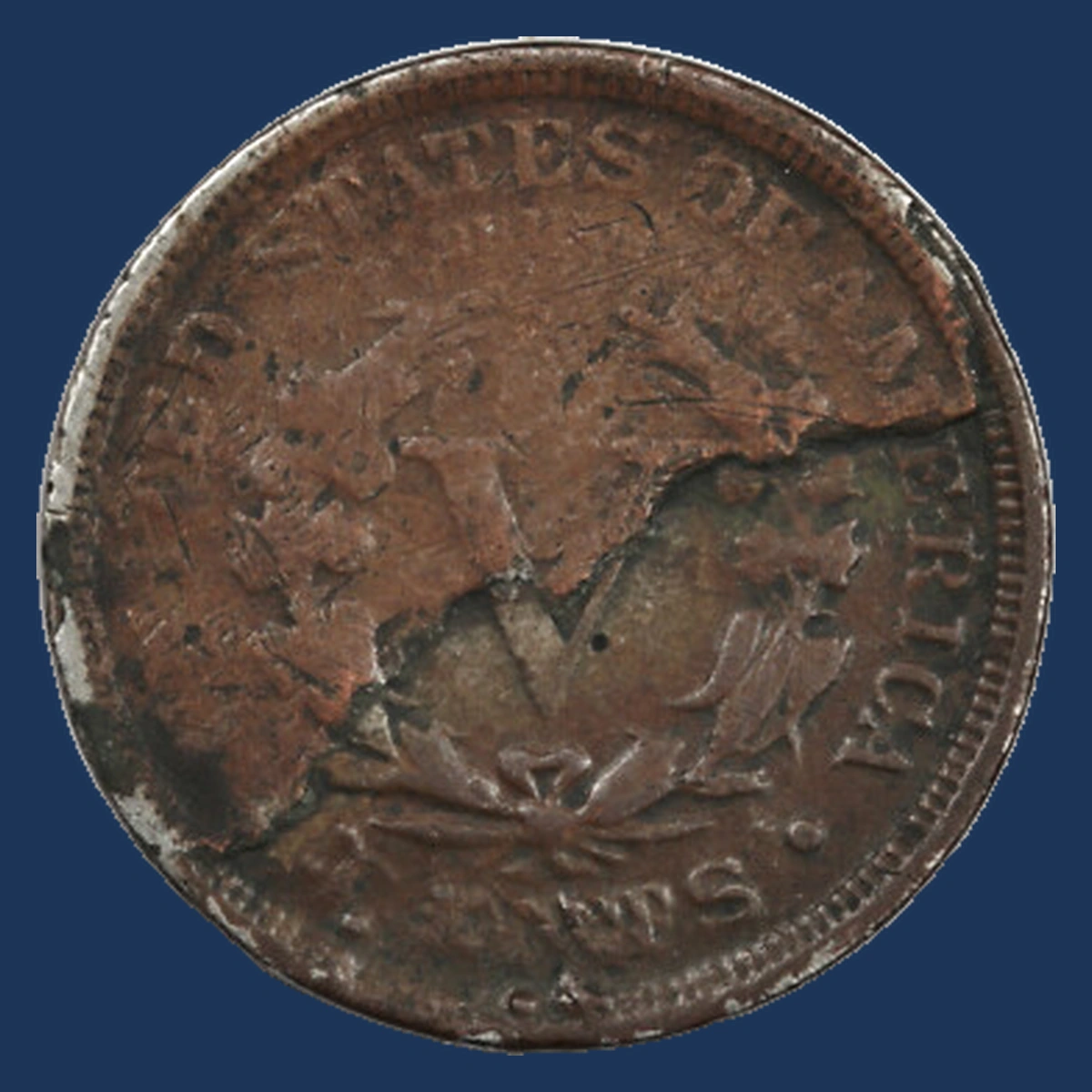
A patch can peel away from the coin while nearby letters remain intact. The split begins inside the metal used to make the blank, rather than in the design on a stamping tool.
This is lamination. The 1904 year guides report the flaw, including larger examples, without establishing a fixed location on either face.
The normal alloy is copper mixed with nickel throughout. A peeling layer should not be described as a missing silver coating.
A surface flake also does not establish that the complete coin separated into two pieces. Those are different degrees of separation.
Estimated Value
Estimate $15–$300 for confirmed 1904 laminations, from small flaws on worn coins to stronger visible separations. The size and condition of the affected area matter more than the word “lamination” alone.
No individual selling price is assigned to the year guide’s unspecified examples. An attached flap can be more interesting than a tiny rough patch.
Heavy corrosion or scraping can lower the coin’s appeal, even when a genuine metal flaw is also present.
How to Identify
Turn the coin under low, angled light and look for an edge that rises from the surface. A 10× magnifier can show whether a thin sheet remains joined to the metal beneath it.
Leave the sheet alone. Prying it up destroys the connection that helps explain the flaw.
If metal has already fallen away, compare the rough hollow with surrounding original detail. Tool marks or widespread pits may instead indicate scraping or corrosion.
Weigh a loose coin against 5.00 grams and measure it with calipers against 21.21 millimeters. A small attached flake may not change either figure noticeably.
A genuine peeling boundary is more useful than a dark patch; color alone cannot establish a split within the alloy.
3. 1904 Liberty Nickel Reported Rim Cud
A smooth lump joined to the rim can replace part of the intended design. It forms when the edge of the stamping tool breaks away and coin metal fills the opening.
Collectors call this kind of rim break a cud. A year list includes cuds among reported 1904 errors, but does not locate one on a particular specimen.
That means there is no fixed clock position to use for this year. The shape and rim connection have to be examined on the coin in hand.
A raised spot deep inside the design is a different feature.
Estimated Value
A working estimate for a confirmed 1904 rim cud is $50–$500. Larger breaks that clearly remove part of the design tend to interest collectors more than tiny, unobtrusive lumps.
This is an estimate for genuine examples, not a sale record for the year list’s unnamed coin. Grade and surface quality still affect the whole price.
A blob added afterward or a battered rim should not receive the same premium merely because it looks raised.
How to Identify
Follow the lump to the outer rim with a 10× magnifier. A true cud should be part of the struck coin and occupy an area where the missing tool could no longer form the normal design.
Inspect the boundary for a seam, solder, or color change suggesting added material. The opposite face may be weak where metal flowed into the opening, but that weakness alone cannot identify a cud.
A loose normal nickel weighs 5.00 grams on a scale and measures 21.21 millimeters with calipers. Use those figures to screen the coin, then concentrate on the natural rim connection and the interrupted design.
4. 1904 Liberty Nickel Curved and Straight Clips
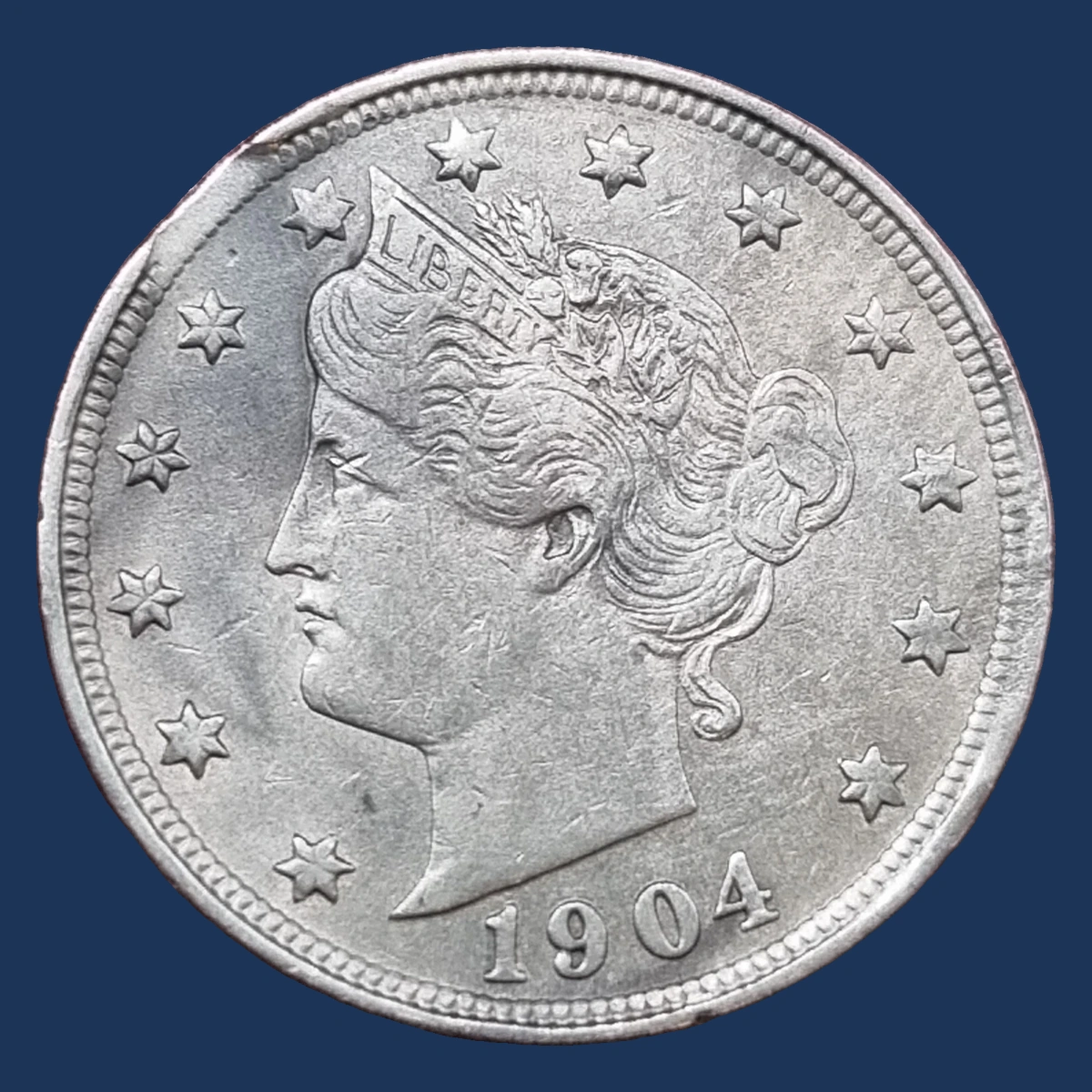
The missing metal can follow an arc or end in a straight line. Both can begin while blanks are being punched from the metal strip.
Heritage cataloged a ten-percent curved clip near 3:30, graded NGC AU58 for slight wear. A different coin has a ten-percent straight clip and a PCGS XF45 grade, showing somewhat more wear.
GreatCollections also listed a 4.69-gram example graded ANACS AU58 Details, meaning slight wear with a condition problem. These are separate coins.
Their shapes, weights, and grades should remain attached to the correct example.
Estimated Value
A heavily worn 1904 curved clip, graded ANACS Good 4 and weighing 4.84 grams, sold for $37 in March 2023. It is separate from the sharper AU58 and XF45 examples.
Estimate $35–$600 for recognizable 1904 clips across these general condition levels. Clear natural edges and a larger missing portion can support stronger interest.
The ten-percent descriptions do not make the curved and straight examples equal in price, and later cuts are not mint errors.
How to Identify
Identify the shape before comparing grades. The AU58 curved example has its gap near 3:30; the XF45 straight clip needs its own matching view.
With a 10× magnifier, inspect where the original rim meets the missing section. Fresh cuts can slice through finished details and leave burrs or filing marks.
Use a scale on a loose coin, comparing it with the normal 5.00 grams. The documented 4.69-gram and 4.84-gram pieces are different examples, not competing weights for one coin.
Calipers across intact spans can check the usual 21.21-millimeter size. Rim weakness opposite a gap can help, but the most useful close-up shows how naturally struck metal approaches the clip at its ends.
5. 1904 Liberty Nickel Struck Through Material
An obstruction can interrupt even a specially made collector coin. Heritage records a 1904 Proof nickel with a front strike-through, graded NGC PR64.
Proof refers to the way the coin was specially made for collectors, not simply a shiny surface. PR64 describes its level of preservation.
Material between the blank and the stamping tool blocked part of the design during the strike. The catalog identification does not establish what the material was or its exact position.
Regular 1904 strike-throughs are also reported, but they should not automatically receive the Proof coin’s identity or value.
Estimated Value
Estimate $25–$350 for ordinary 1904 strike-throughs and $200–$800 for comparable Proof examples. Preservation and the clarity of the interruption drive much of the difference.
A year guide reports the PR64 example at more than $180, but no exact primary sale amount is assigned here. That whole-coin figure includes the collector-strike value.
A bright, polished regular nickel is not a Proof, and later scraping does not earn a strike-through premium.
How to Identify
Determine whether the coin is a regular strike or a Proof before choosing a comparison. A reliable grading label can help; brightness by itself cannot decide how the coin was made.
Inspect the interrupted area through a 10× magnifier. Nearby original detail should help distinguish a local obstruction from general wear or a weak strike.
Look for displaced metal around a later dent and fine lines from cleaning. Do not assume that every smooth weak patch was caused by grease.
A loose example of either finish normally weighs 5.00 grams and measures 21.21 millimeters; use a scale and calipers gently. On a sealed Proof, compare photographs instead of opening the holder, concentrating on the interruption beside undisturbed surrounding detail.
6. 1904 Liberty Nickel Reported Off-Center Strike
A blank that sits partly outside the striking area cannot receive the complete design. The unused metal remains beside the image as a bare crescent.
The 1904 year pages report off-center strikes, but their named comparison is a 1906 coin. That different year does not establish a particular direction, percentage, or grade for 1904.
A genuine example should show the effects of the same displaced blank on both faces. An uneven border on just one side can have another cause.
The date is therefore as important as the unusual outline when matching an example.
Estimated Value
For a confirmed, dated 1904 off-center nickel, estimate $100–$1,000. The amount of missing design, preserved date, and condition all affect where an example fits.
The year guide’s comparison is a 1906 AU58 nickel reported at $750, not a 1904 sale. That grade describes a coin with only slight wear.
The comparison supports general interest in the mechanism, but it cannot set an exact price for a differently dated or differently preserved coin.
How to Identify
Check the date and bare crescent in the same photograph. A Liberty nickel with no readable year cannot be assigned to 1904 just because its design looks right.
Compare both faces under a 10× magnifier for matching lost design and original unstruck metal. If only one face has an uneven border, investigate a shifted stamping tool instead of immediately calling it off center.
An intact loose blank should remain close to 5.00 grams on a scale, though calipers may show spreading beyond the usual 21.21-millimeter outline. The deciding view pairs both faces so the displaced strike and untouched metal can be seen together.
7. 1904 Liberty Nickel Flipover Double Strike
Letters from the back can appear in front of Liberty’s face when the coin flips over and is struck again. The second blow stamps a new design over the opposite face of the first strike.
A cataloged 1904 PCGS MS64 example shows traces of UNITED before the portrait. On the back, RICA and date remnants survive toward the right.
The coin remained within the size-controlling ring during the second strike, so it need not have a wildly stretched outline. MS64 means unworn with some visible marks.
The overlapping front and back designs reveal the flip.
Estimated Value
Estimate $800–$3,500 for clearly identified 1904 flipover double strikes, depending on condition and the amount of recognizable earlier design. Strong letters from the opposite face make the error easier to appreciate.
A PCGS MS64 example sold through GreatCollections in May 2016, but its final amount is not assigned here. A 2012 catalog also describes the type.
Those listings do not establish two different surviving coins or a fixed market price.
How to Identify
Look in front of Liberty’s face for surviving letters from UNITED. Then inspect the reverse’s right side for the extra date fragments and RICA described in the catalog.
Use a 10× magnifier to follow how the earlier design overlaps the later one. The presence of recognizable details from the opposite face is more useful than a random double edge.
A flip inside the ring can leave the coin near its ordinary 21.21-millimeter diameter. Check that with calipers and compare a loose example with 5.00 grams on a scale.
Inspect the plain edge for signs that two altered pieces were joined. Photograph the opposite-face letters and date traces together, because that combination explains the flip more directly than the overall outline.
8. 1904 Liberty Nickel Struck on a Cent or Foreign Blank
Brown metal or an unusually small disk can reveal that a nickel design landed on the wrong blank. A cent-blank example graded PCGS MS62 Brown has an incomplete right border and weak corn on the left.
A separate 2.7-gram foreign-blank report concerns an NGC MS64 coin. One specialist suggested a Philippine half-centavo blank, while a collector described a silver Philippine ten-centavo blank.
Those descriptions do not establish the same metal or even the same specimen. Weight alone cannot resolve them.
The five-cent design is clear, but naming the original blank requires its own evidence.
Estimated Value
The PCGS MS62 Brown cent-blank nickel sold for $3,525 at Heritage in April 2013. A separate XF45 cent-blank example brought $2,280 in April 2020.
Estimate $1,500–$4,500 for cent-blank examples and $1,000–$6,000 for an identified foreign blank. Its metal and original denomination strongly affect the latter estimate.
Historical foreign-blank advertising quoted $4,500–$6,000 for a 2.7-gram MS64 coin; those were asking figures, not completed sales.
How to Identify
Weigh a loose candidate before naming its metal. A normal nickel is 5.00 grams, a contemporary cent blank starts near 3.11 grams, and the reported foreign example is 2.7 grams.
Use calipers against the normal nickel’s 21.21 millimeters and the cent blank’s starting 19.05 millimeters. Striking can spread a smaller disk.
Inspect the outer letters through a 10× magnifier for design that naturally runs out of space. The recorded cent example has a weak left corn ear and an incomplete right margin.
Check the edge for trimming or plating, since either can create a misleading appearance. A non-destructive metal test can help separate copper alloy from silver.
An exact foreign denomination needs agreement between composition, size, weight, and a reliable identification; 2.7 grams alone cannot settle it.
Conclusion
From an estimated $10 to $6,000, these 1904 nickel errors cover very different collecting budgets. The $3,525 cent-blank sale shows the appeal of a clear mismatch between metal and design.
Do not use weight alone to name a foreign blank. Compare color, size, surviving design, and a reliable identification together.
For smaller errors, preserve the original surfaces and photograph the exact feature without polishing or lifting any loose metal.