1900 Nickel Error List with Pictures

The word CENTS is worth a close look on a 1900 nickel. PCGS records a $1,320 auction result for the doubled-reverse variety in January 2018.
This 1900 nickel error list spans estimated values from $10 to $2,500. It covers extra design outlines, a sideways reverse, separated metal, and a blank intended for Nicaragua.
Use the checks below to connect each unusual feature with the mistake that produced it.
1. 1900 Liberty Nickel Die Crack
A narrow ridge can be a line of extra metal rather than a cut. It forms when the blank’s metal presses into a crack in the steel stamping tool.
The tool is called a die, which explains the term die crack. The raised line can cross smooth areas or parts of the design.
Year sources report cracks on 1900 nickels, including a circulated example that also has peeling metal. The two features can occur together without having the same cause.
No fixed route through the portrait or lettering is established for that reported coin.
Estimated Value
For a 1900 nickel with a clear small crack, estimate $10–$150. A well-preserved coin with an obvious raised line generally attracts more interest than a worn coin with a faint trace.
The reported circulated coin also has lamination, but no individual selling price is assigned here. Its two features do not create two separate whole-coin prices to add together.
Condition still matters, and a scratch mistaken for a crack adds no mint-error premium.
How to Identify
Look across the line under low side lighting. A 10× magnifier should show it rising above the original surface, while a normal scratch goes into the metal.
Check whether a loose layer is lifting beside it. A peeling seam belongs to the coin’s metal, unlike a solid raised line copied from a cracked tool.
Use a scale and calipers on a loose example to compare it with 5.00 grams and 21.21 millimeters. These figures do not confirm the crack, but can help expose substantial alteration.
Photograph where the line crosses an ordinary design feature. A continuous raised ridge through the original surface is easier to judge there than in an isolated crop.
2. 1900 Liberty Nickel Rotated Reverse
The large V can face sideways even though Liberty stands upright on the front. One stamping tool had turned from its normal alignment when the coin was made.
A Jim’s Coins catalog describes a 1900 example with its reverse turned ninety degrees clockwise. The coin was listed in Good condition, meaning heavily worn but still identifiable.
This error concerns the relationship between the two faces, not the position of the design within the border. A correctly centered coin can still have a rotated back.
Loose photographs can imitate the effect if one image has simply been turned.
Estimated Value
Estimate $20–$200 for confirmed 1900 rotations, depending on the angle, wear, and overall appearance. The reported quarter-turn is substantial enough to demonstrate without high magnification.
The Jim’s Coins listing gave its Good example a $15 minimum bid. That was the bidding threshold, not a completed selling price.
A sharper coin could attract more, but no mint-made rotation is established by a tilted photograph alone.
How to Identify
Hold Liberty upright and turn the coin over from top to bottom without twisting your fingers around its edge. The V should normally appear upright after that flip, so a sideways V deserves a second check.
Repeat the movement in a holder that keeps the coin from slipping and photograph both positions. The cataloged example’s back turns ninety degrees clockwise, but its angle should be matched using that controlled comparison.
Inspect the plain edge with a 10× magnifier for joined or altered pieces. A scale and calipers should place a loose normal nickel near 5.00 grams and 21.21 millimeters; the repeatable quarter-turn during the same flip identifies the unusual alignment.
3. 1900 Liberty Nickel Lamination
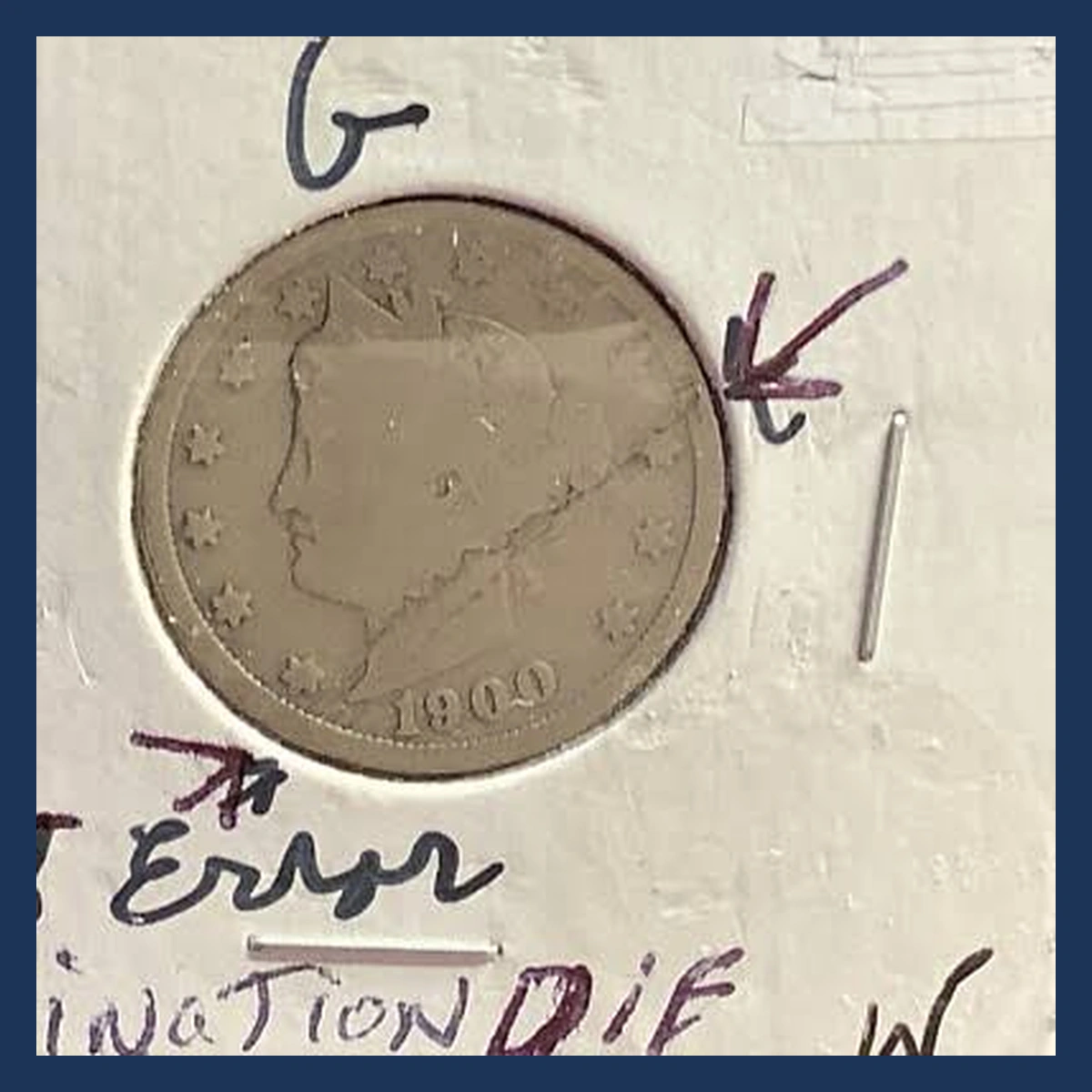
A thin layer of metal can lift while the design around it remains in place. The split develops inside the blank’s alloy and is known as lamination.
A year source reports a circulated 1900 nickel with lamination and die cracks together. The peeling belongs to the blank, while the raised crack lines came from the stamping tool.
The description does not place the peeling at a particular part of the portrait or reverse. Another year’s damaged area is not a location guide for this example.
Normal Liberty nickels are solid copper-nickel alloy, so this is not a lost silver coating.
Estimated Value
A confirmed 1900 lamination has an estimated $15–$300 range across common circulated and stronger examples. A larger natural split or attached flap can draw more attention than a tiny rough spot.
The reported coin with both lamination and cracks has no completed price assigned here. Value it as one coin with two visible features, rather than adding two full estimates.
Peeling can also reduce appeal to collectors seeking an undamaged example of the date.
How to Identify
Preserve any attached flap and avoid pushing a tool beneath it. Its joining edge can show how the surface layer separated.
Use a 10× magnifier to inspect that edge and the exposed metal. Scraped areas often show tool marks, while corrosion may leave pits instead of a lifted sheet.
Check the rest of the face for raised crack lines without assuming they caused the peel. The reported coin has both features, but they arise at different stages.
A scale and calipers can compare a loose example with the usual 5.00 grams and 21.21 millimeters. A small attached layer may change neither measurement.
The useful close-up shows the split boundary and neighboring original design together, without removing the metal that still connects them.
4. 1900 Liberty Nickel Repunched Date
The first half of the date holds the clues on a cataloged 1900 nickel. Stack’s described an MS64 example with the 1 and 9 repunched in its August 2010 sale.
A repunched date forms when a date punch meets the stamping tool more than once in slightly different positions. Part of an earlier impression can remain beside the final digit.
MS64 means an unworn coin with some visible marks. The catalog description does not give a direction for the extra strokes.
The last two zeros should not be treated as doubled merely because the first digits are repunched.
Estimated Value
Allow an estimated $25–$500 for clearly identified 1900 repunched dates across circulated and lower unworn grades. The extra strokes need to be visible enough for a useful comparison.
The 2010 catalog identifies an MS64 example, but no realized price is assigned to it here. Much of an unworn coin’s value can come from its preservation.
Extra marks caused by wear or damage do not establish a date-punching variety.
How to Identify
Focus the magnifier on the 1 and 9 rather than searching the whole coin for doubled edges. At 10×, compare any extra strokes with the curved or straight shapes of those original digits.
A light from a second direction can expose a flat shelf or damage that looked like another outline. Match the surviving strokes with a correctly identified 1900 example before applying a variety name.
Keep all four digits and the nearby border in the photograph. The catalog does not establish a fixed direction or repeated zeros.
For a loose coin, check 5.00 grams and 21.21 millimeters with a scale and calipers. Those measurements screen the coin, while recognizable extra portions of the 1 and 9 provide the specific comparison.
5. 1900 Liberty Nickel Broadstrike
A broad border can form when the blank is struck without proper support from the surrounding metal ring. That ring normally keeps the nickel close to its intended diameter.
Without its restraint, the metal spreads outward while the main design can remain complete. Collectors call the result a broadstrike.
An auction listing records a 1900 example certified PCGS Genuine with a scratch. The scratch is a separate condition problem, not a feature that proves the broadstrike.
An expanded coin still needs careful inspection because hammering after minting can also make a normal nickel wider.
Estimated Value
Coin World’s auction table lists the scratched 1900 broadstrike at $150. That is a reported whole-coin result for a problem example, not a fixed premium for every expanded nickel.
Estimate $75–$600 across genuine 1900 broadstrikes with different wear and surface quality. Clear expansion around a readable design helps collectors see the mechanism.
A severe scratch can lower demand even when the error is genuine; later flattening alone does not receive the same value.
How to Identify
Use calipers to compare the outline with a normal 21.21-millimeter nickel, measuring in several directions. A broadstrike can spread unevenly, so one narrow reading may miss its greatest expansion.
Weigh a loose candidate against 5.00 grams. Metal spreading outward does not require a piece to disappear.
Inspect the portrait, lettering, and border with a 10× magnifier. A naturally struck design should differ from lettering flattened by later hammer blows.
The normal edge is plain, so a lack of grooves adds no evidence. Inspect it for impact marks and other signs of squeezing.
Look for the complete main design inside the expanded metal; a design cut off beside an untouched crescent instead suggests an off-center strike.
6. 1900 Liberty Nickel Off-Center Strike
The design on a recorded 1900 nickel sits twelve percent off center. PCGS graded the coin VF30, indicating circulation wear with much of the design still clear.
This happens when the blank enters the press partly outside the area between the two stamping tools. Some design then misses the metal, leaving an unstruck portion beside the image.
The auction title does not give a clock direction for this example. Its percentage describes the displacement, not metal cut away from the coin.
A shifted tool on just one side can create a different kind of uneven border.
Estimated Value
The VF30 twelve-percent example sold for $322 in October 2008. That provides a dated result for an actual 1900 coin, rather than a different year used as a stand-in.
Estimate $100–$1,000 for confirmed 1900 off-center nickels across ordinary circulated and stronger examples. A readable date, natural surfaces, and a clear shift all affect the comparison.
A larger displacement is not automatically worth more if it removes the year or leaves the coin badly damaged.
How to Identify
Compare the untouched area on both faces with the part of the design that missed the blank. Matching displacement on both sides helps distinguish a misplaced blank from a shifted tool.
Keep the 1900 date in view when using a 10× magnifier to inspect the transition between struck and bare metal. Scraping away the design can leave marks that a genuinely unstruck area lacks.
Use a scale and calipers on a loose example against 5.00 grams and 21.21 millimeters, allowing for an uneven expanded outline. The twelve-percent cataloged coin should be matched by its surviving design and original blank area, without inventing a direction absent from the description.
7. 1900 Liberty Nickel Struck on a Nicaragua Five-Centavo Blank
A United States five-cent design can appear on metal intended for another country’s coin. A 1900 Liberty nickel was cataloged as struck on a Nicaragua five-centavo blank.
Heritage records an example graded PCGS AU50, a lightly worn coin. Mint Error News separately lists one at AU55, but those grade descriptions do not prove that two different specimens survive.
The original weight and metal composition are not given in the descriptions used here. They cannot be supplied by the normal Liberty nickel’s specifications.
Nor does the country name alone prove a finished foreign coin was struck again.
Estimated Value
The PCGS AU50 example brought $546.25 at Heritage in January 2010. Its foreign-blank identification is part of that particular coin’s description.
For comparable identified 1900 examples, estimate $400–$1,500. The clarity of the nickel design, preservation, and certainty of the original blank’s identity influence the price.
The AU55 listing has no separate realized amount assigned here. A normal nickel that was trimmed or plated belongs outside this wrong-blank estimate.
How to Identify
Read the grading description and compare it with the actual 1900 design before selecting a foreign denomination. An unusual color or small diameter alone cannot establish Nicaragua.
Record a loose coin’s weight with a scale and its diameter with calipers. The normal Liberty nickel is 5.00 grams and 21.21 millimeters, but those figures are not this specimen’s measured specifications.
Use a 10× magnifier to inspect outer letters and the edge for trimming or plating. Metal testing can help distinguish a different alloy from a changed surface.
If foreign lettering remains beneath Liberty, document it separately because it could indicate a previously struck coin. A reliable identification needs the metal, dimensions, and visible design to agree.
8. 1900 Liberty Nickel Doubled Die Reverse
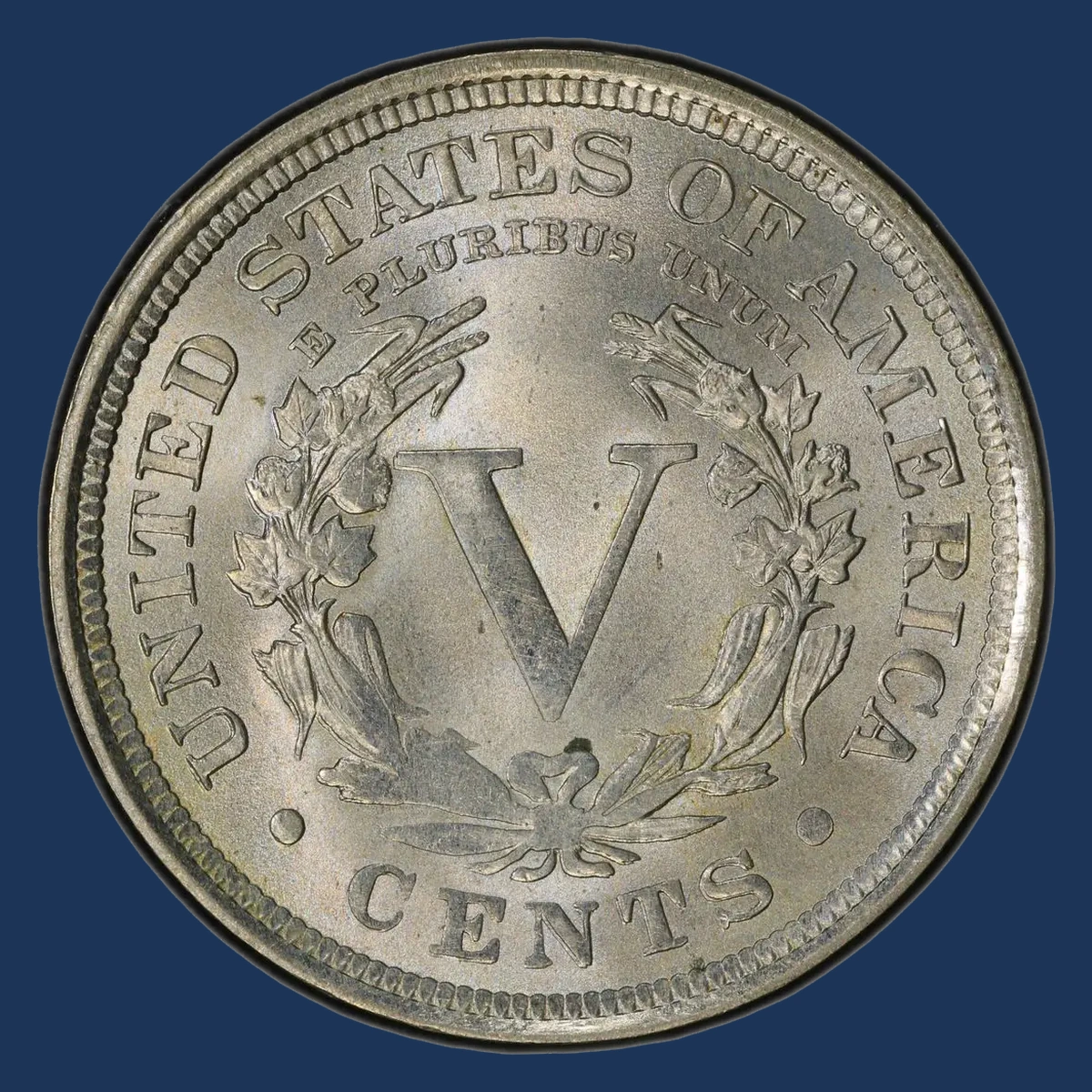
CENTS can show an extra rounded outline instead of one clean edge. The motto above the V and parts of the wreath can also carry repeated detail on the 1900 doubled reverse.
The repetition began when the reverse stamping tool received its design. It then passed that same pattern to the coins struck with it.
The variety is recognized as FS-801, a catalog label used to match the feature. Year descriptions highlight the wording and wreath rather than a doubled front date.
A flat shelf left by movement during striking is a common lookalike.
Estimated Value
PCGS records a $1,320 Heritage auction result in January 2018 for the FS-801 doubled reverse. That is an actual reported auction amount, unlike a seller’s asking price.
Estimate $150–$2,500 across identifiable examples with different wear and preservation. The pattern needs to match before the higher variety price becomes relevant.
Clean surfaces and clear separation in the lettering matter, while vague thickness or later damage cannot substitute for the recognized design.
How to Identify
Study CENTS with a 10× magnifier, paying attention to whether the extra contours keep their rounded shape. Then compare E PLURIBUS UNUM and the nearby wreath with an identified FS-801 photograph.
The same doubled-tool pattern should connect these checks. One thick letter or a flat ledge beside several details may come from another cause.
For a loose nickel, a scale and calipers should show close to 5.00 grams and 21.21 millimeters. A normal reading cannot confirm the variety, but helps screen the coin before comparing its fine design.
Use side lighting to separate true extra outlines from shadows. The most informative photograph includes CENTS and neighboring wreath detail, allowing the repeated pattern to be judged together.
Conclusion
Estimated values in this guide run from $10 to $2,500, with the $1,320 doubled-reverse result showing why small details can matter. The word CENTS, the date’s first digits, and the direction of the V each reveal different features.
Measure loose coins gently and keep peeling metal attached. A foreign-blank identification needs more than an odd color, while a rotation needs a controlled flip rather than two freely turned photographs.